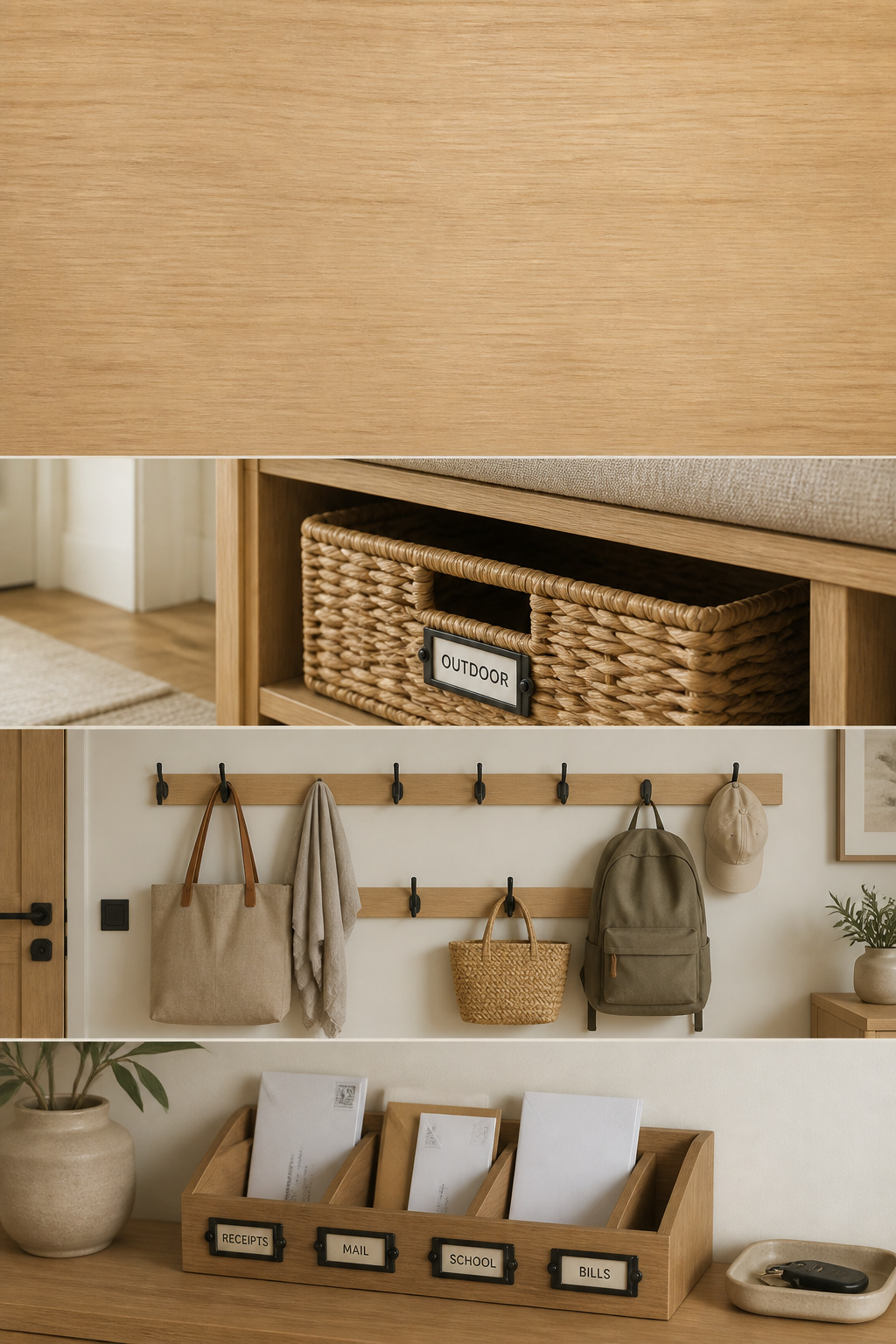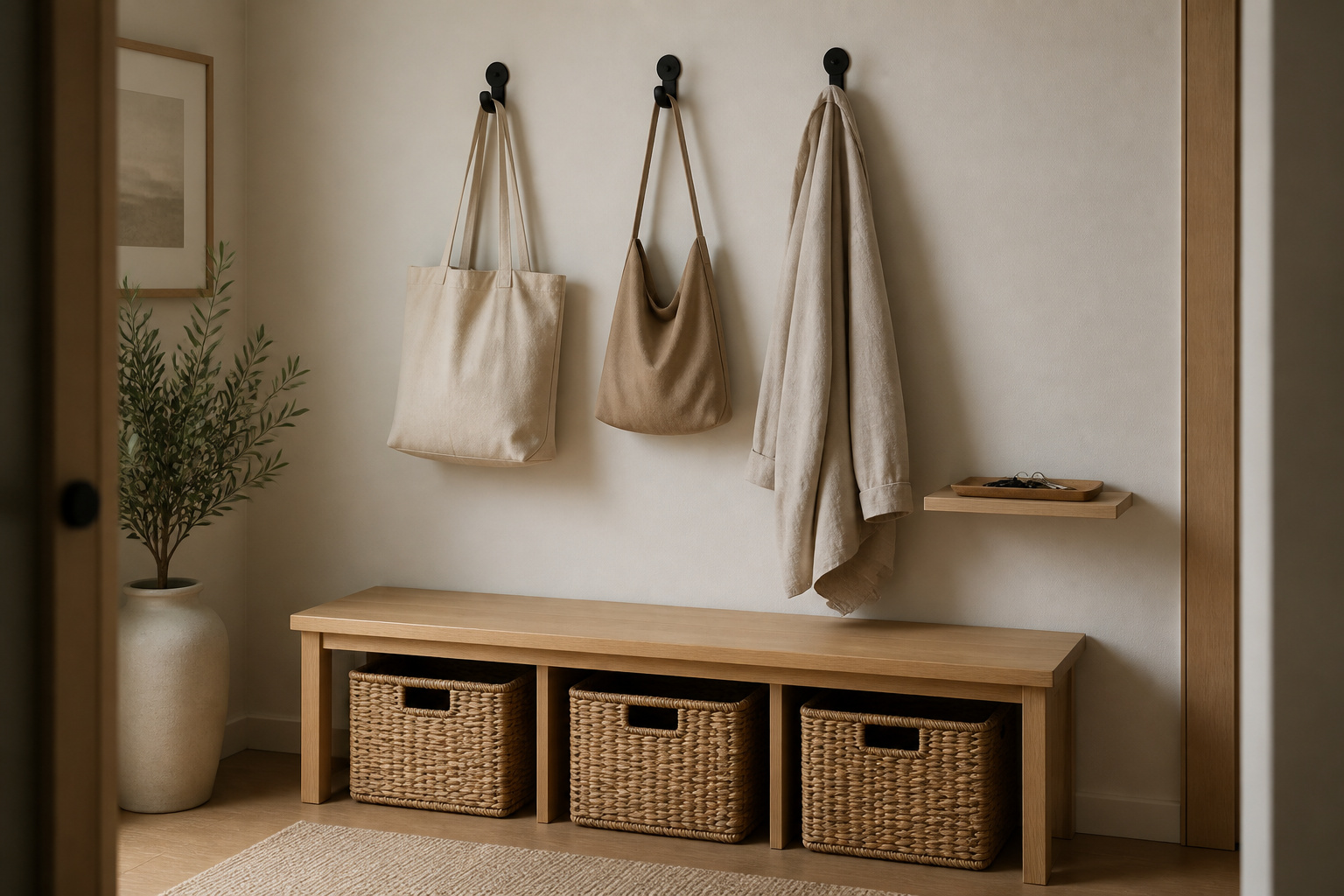
Your drop zone was tidy the day you finished it. Three weeks later it is a pile again, and somewhere in your mind sits the quiet verdict that your family is not disciplined enough. Set that verdict down. The honest starting point for how to keep a drop zone organized is that the pile is almost never a discipline problem — it is a design problem, which means it is fixable. A system that keeps failing tells you where your home stops supporting your routine, not where your household lacks willpower.
TL;DR
- A drop zone collapses within weeks because putting an item away takes more effort than dropping it, not because the household lacks discipline — the fix is layout, not willpower.
- Design around how people already drop things: put the easiest option closest to the door, label only genuinely ambiguous storage, and pin a five-minute reset to a habit you already do daily.
- When a system overflows, cut components before you buy more bins — decluttering always comes before adding storage.
The Quiet Verdict Most Families Reach, and Why It’s Wrong
A messy entryway looks like a lazy household. It rarely is.
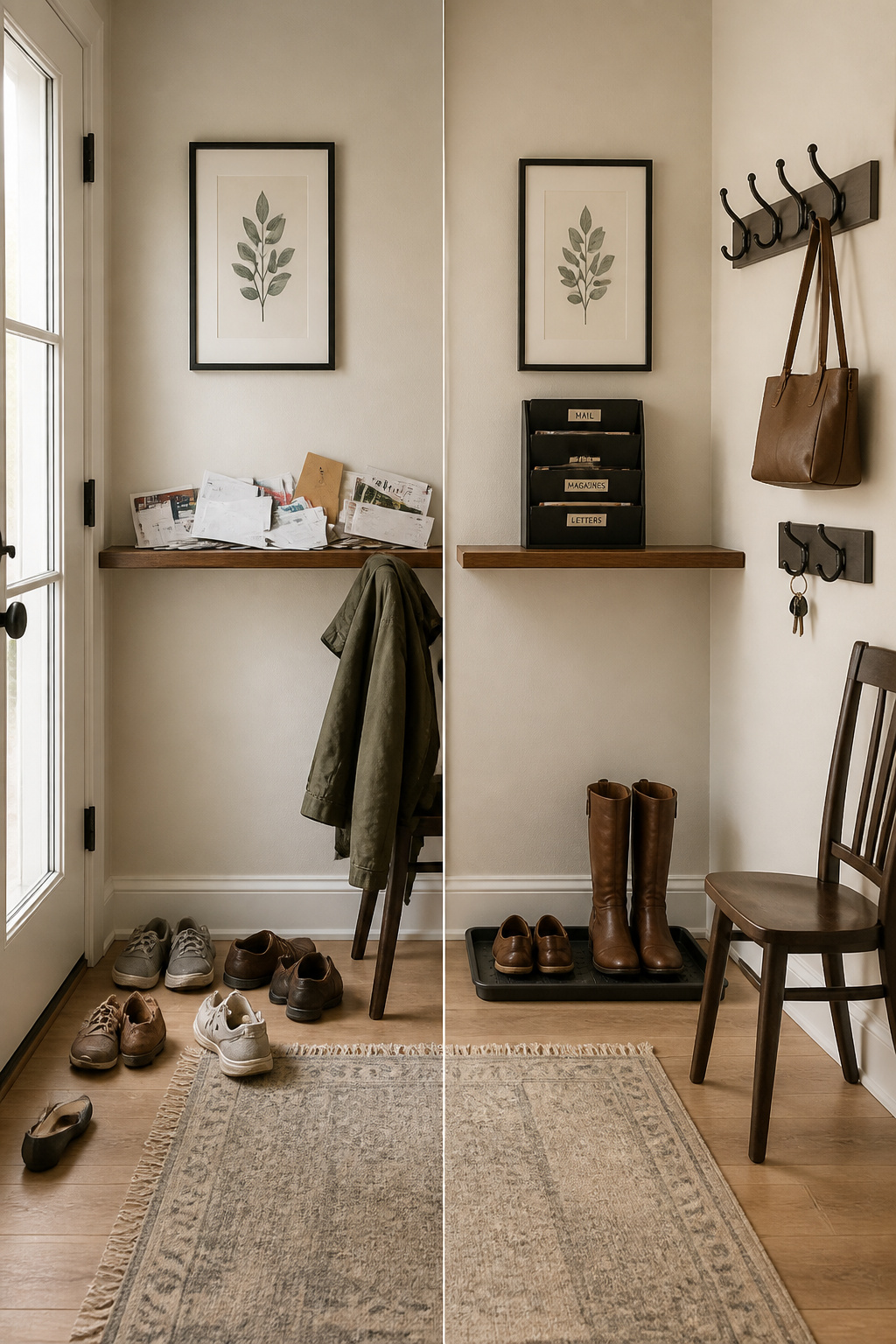
The pattern: organized on day one, a pile by week three
The failure takes the same shape every time. Keys, bags and mail have no assigned place, so they land wherever is closest — a documented, recurring pattern across entryway organizing content. Someone drops something meaning to return to it later, and later never arrives. The pile is proof the system was built for an ideal household.
Why blaming the household misses the design flaw
If putting an item away takes more than a few seconds, it will not happen consistently, and that holds for every family type. Someone coming in worn out takes the path of least resistance. Willpower is no fix, since relying on it to sustain a habit is documented to cause burnout — systems built around existing behavior last, and systems that need people to try harder do not.
The one question that reveals the real problem
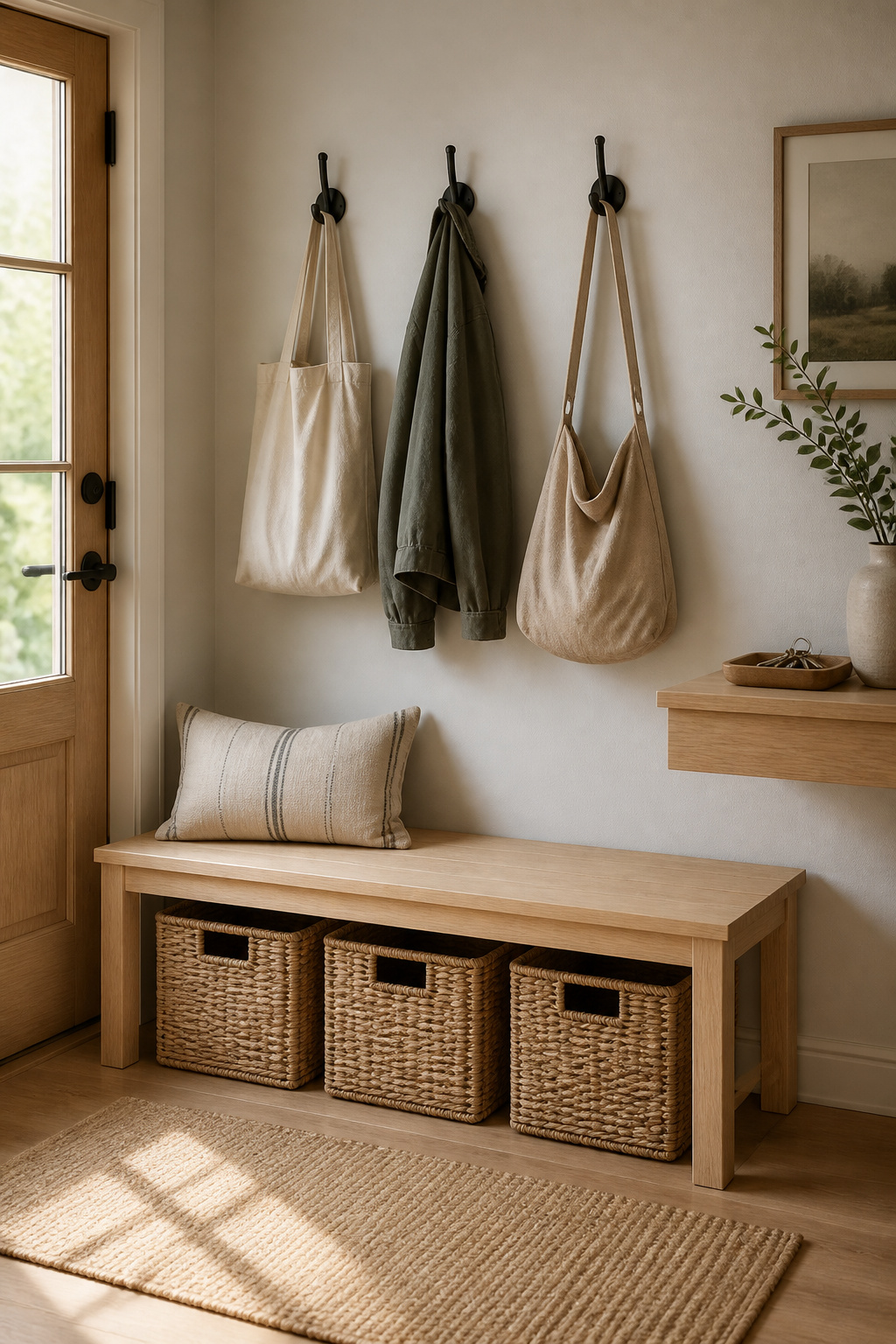
I keep one diagnostic for any storage decision: is the correct action easier than the mess? A hook at the right height beside the door makes hanging a coat zero extra effort, so the coat gets hung. If returning an item takes real effort it gets skipped; if it takes seconds, it happens without thought — the calmest homes are the ones where clutter has a place to land.
Design the System Around Actual Behavior
Watch what already happens before you assign a spot.
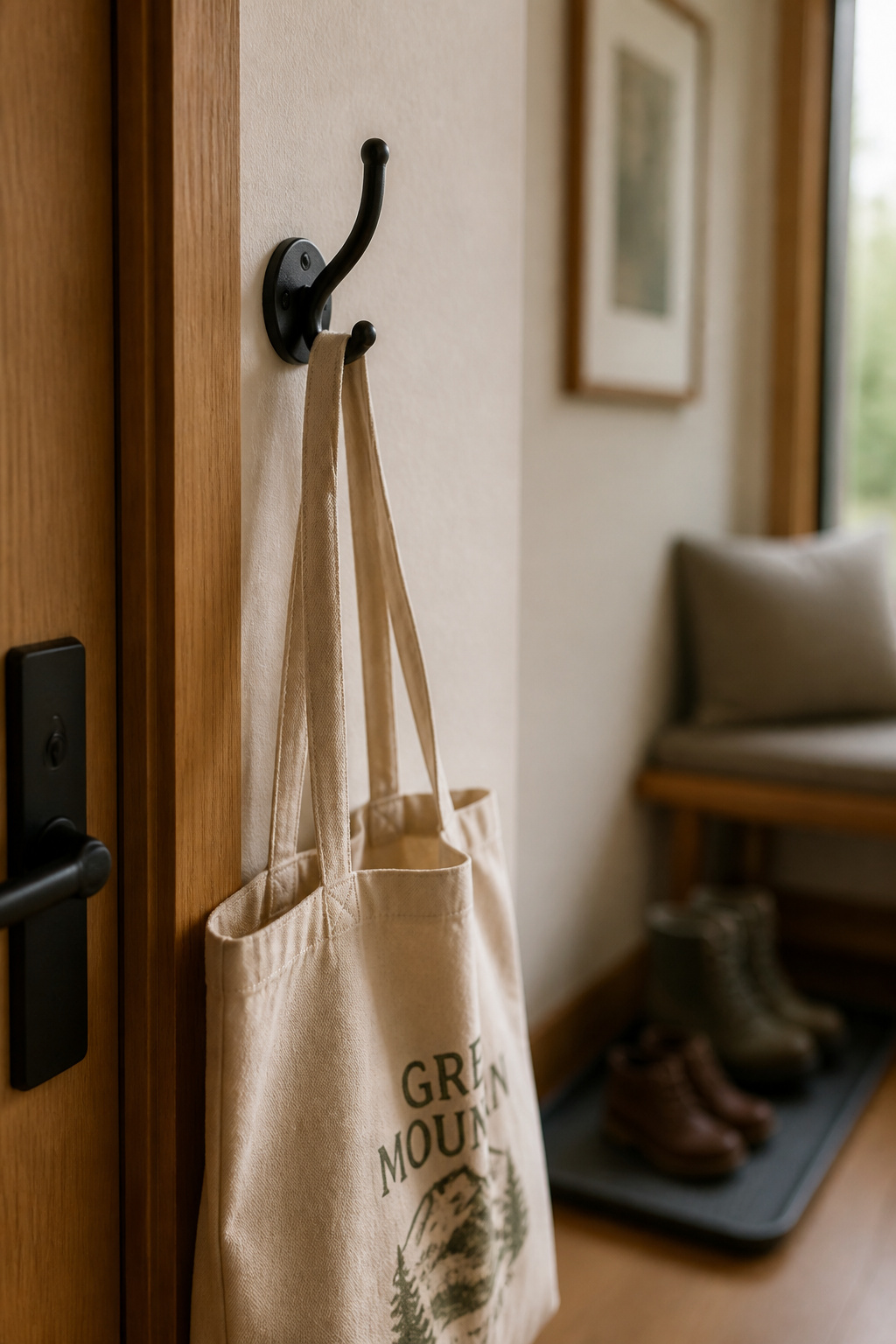
Watch how the household actually drops things
Observe where items naturally accumulate before assigning storage, then build around those behaviors. Watch for a week — where do the bags land, which shoe pile forms first? That accumulation point is data telling you where storage belongs.
Place the easiest option closest to the door
Put the lowest-effort option where things already land. A hook at the correct height beside the door removes the friction that sends coats onto chairs. Habit-stacking guides agree: put the highest-frequency action at the door’s first point of contact.
Why ‘put it away properly’ loses to ‘put it down easily’
An item’s proper home competes with its convenient one, and convenience usually wins. If the proper spot takes more than a few seconds to reach, people default to the nearest flat surface — a well-built unit in the wrong place still fails. Aim the design at the action you can repeat while tired.
Labeling That Actually Gets Used
Labels help in one situation and waste effort in most others.
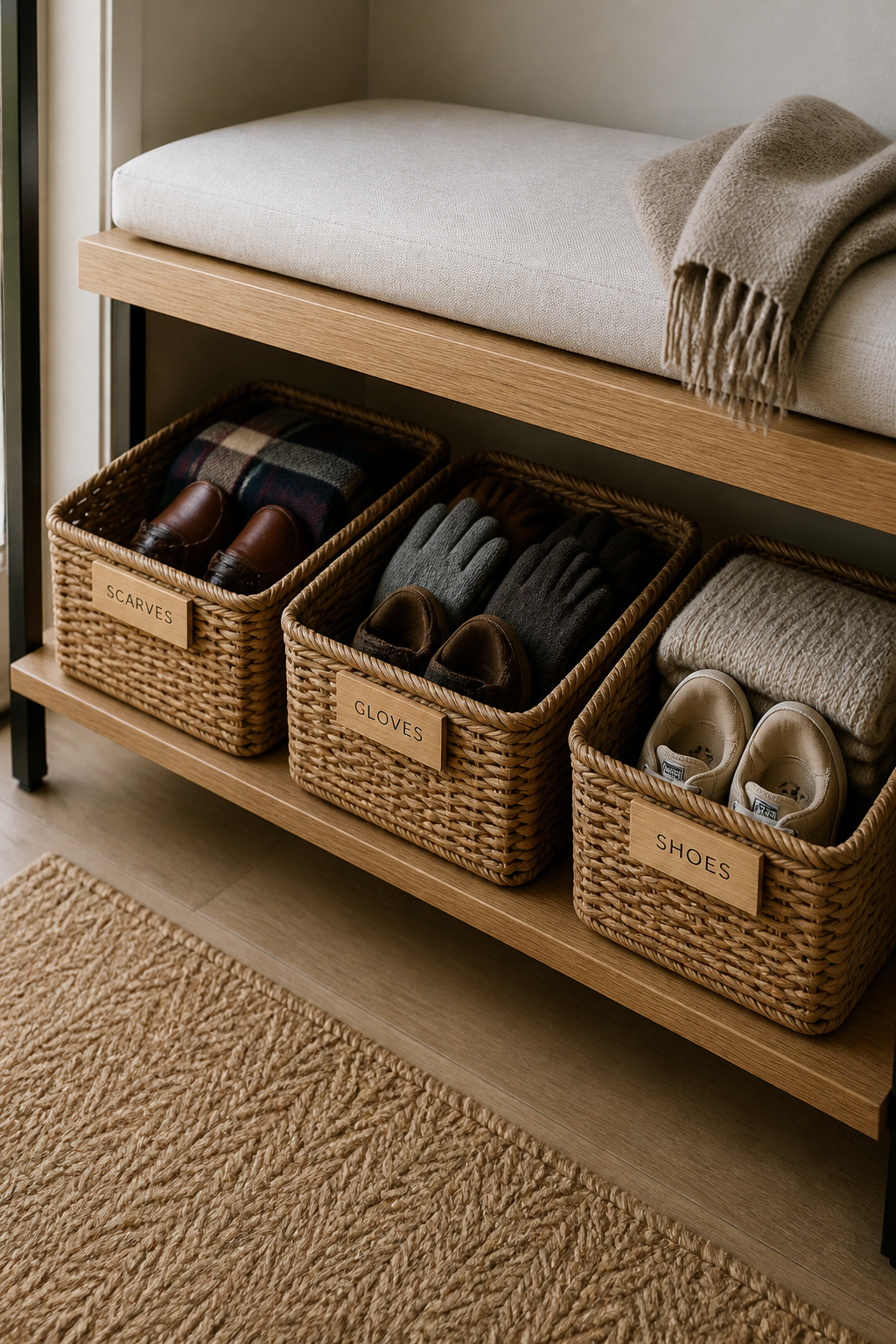
Labels for shared systems vs. labels that feel juvenile
Labeled bins and hooks earn their place where several people share one system, ending confusion about where things belong. But professional organizers have a name for labeling the obvious — a clear jar of cotton balls marked “cotton balls” — and it is performative organizing: tidy-looking, no function. A label that turns irrelevant still locks you into that setup because it reads as organized.
What to label and what to leave open
Good labels are concise and scannable — a category like “Winter Gear,” not an inventory. Declutter and organize first, then decide whether labels are needed; labeling before organizing means labeling a layout not yet confirmed to work. The exception is children — labels pairing a picture with a word let kids put things back on their own.
A simple test: can a guest use it without being told?
Here is a test I apply to any shared system, offered as my own rule rather than a cited standard: could a guest use it correctly without narration? If a visitor puts their coat and keys in the right place unprompted, the system has what organizers call visual quiet. If it needs a tour, it is too clever.
The Weekly Reset That Takes Five Minutes
No layout stays perfect on its own. The maintenance that holds is short and recurring.
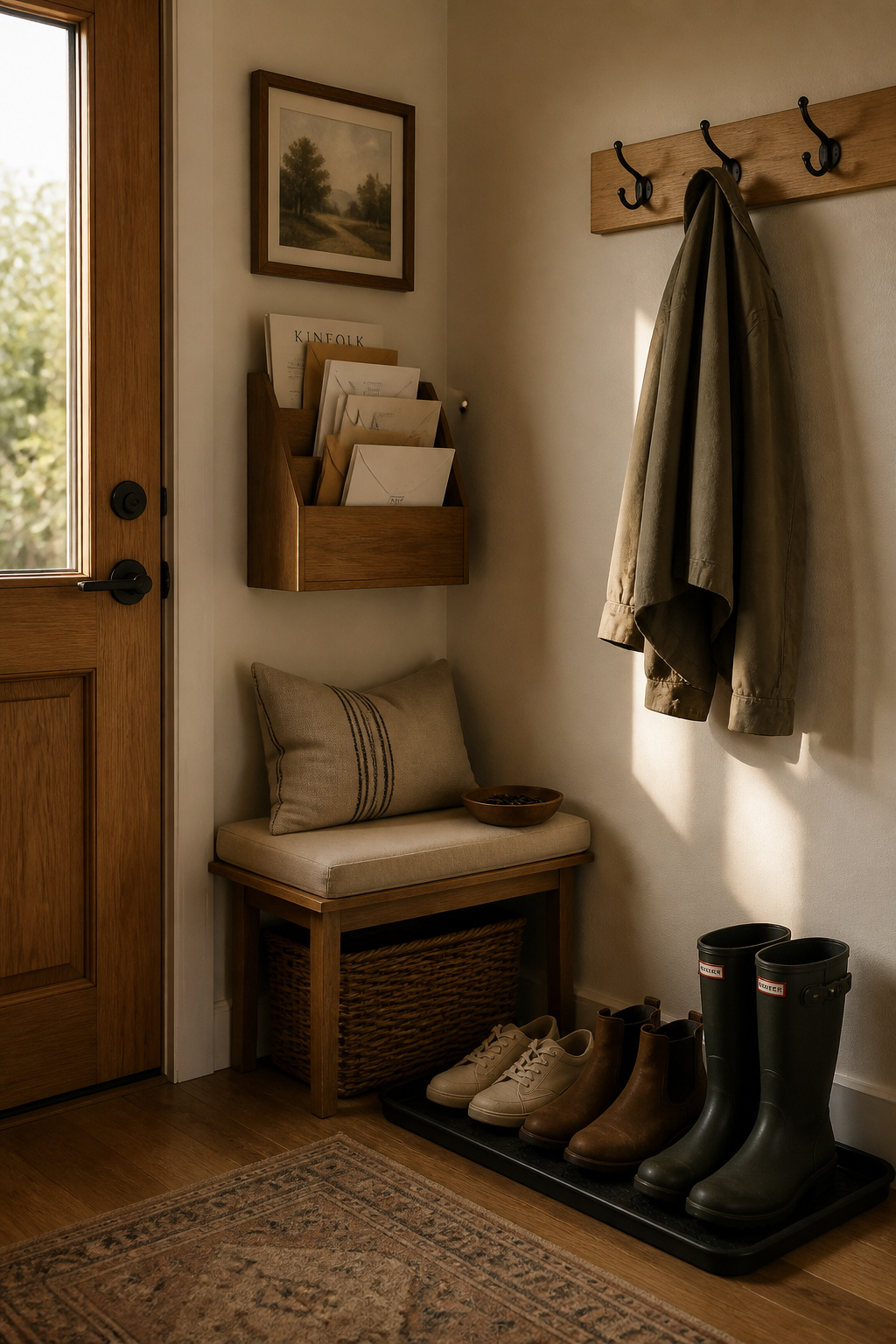
What a reset actually involves
A reset is not a deep clean. For a high-traffic zone it comes down to three quick moves:
- Line up the shoes.
- Clear out the mail.
- Return any stray items to their assigned spot.
Five to ten minutes every few days is the recommended baseline for entryway-type spaces — they need it more often than the rest of the home, which can wait for monthly or seasonal decluttering.
Attach it to a habit you already have
The trick that makes a reset survive is habit stacking: attach the new action to one you already do, using “after [current habit], I will [new habit].” A useful version is “after checking the mail, immediately toss junk and file what needs action,” pinned to a trigger that already happens daily. Start small.
What happens when the reset gets skipped for a month
Skip the reset for a month and the cost is not just a messier entry — it is a harder job to restart. High-traffic surfaces that miss their regular attention get flagged for monthly deep-cleaning instead: a reasonable inference from the maintenance tiers rather than a hard statistic, but the logic holds. I once had a client who kept apologizing for her small primary bathroom, certain its eighteen square feet were the problem, until I reframed the constraint as the clarity she needed. A neglected drop zone teaches the same lesson: the fix is a system matching how the room gets used, not more space or effort.
When to Shrink the System Instead of Adding to It
When a drop zone overflows, the instinct is to buy more storage. That instinct usually makes it worse.
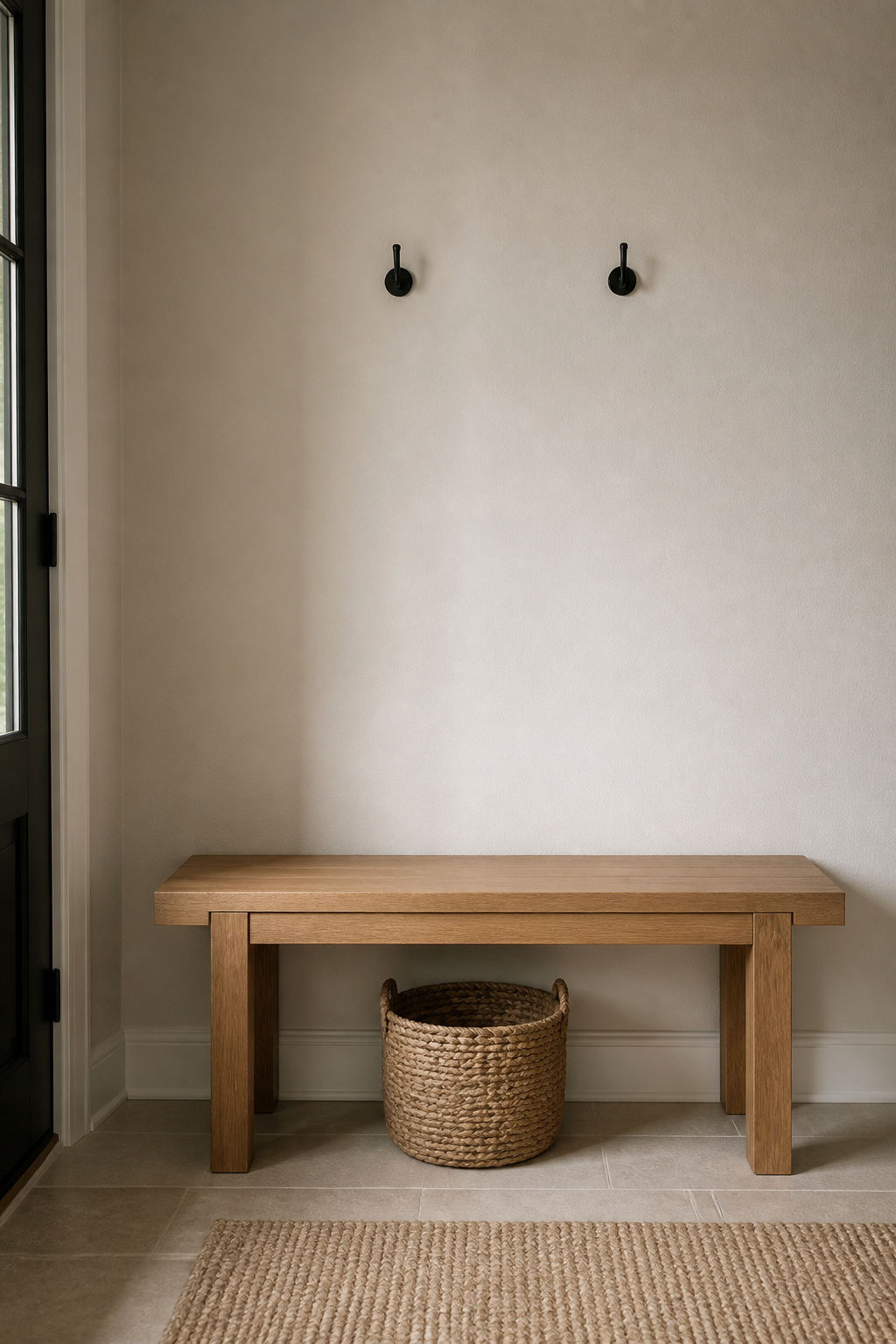
The instinct to buy more bins, and why it backfires
Buying bins before decluttering is one of the most common organizing mistakes; purging comes first. People who own too much then buy more containers to store it, enabling further accumulation instead of solving the volume problem. The bins themselves often become clutter.
Signs a drop zone is oversized for what it holds
There is a recognized failure mode, sometimes called the cult of storage, where containers exceed what the contents require. If half your baskets sit empty, the zone is oversized. Clear out as much as possible first, using a plain sort — keep, donate, sell, trash.
The quality-over-quantity case for cutting components
This is where a Scandinavian instinct earns its keep: fewer, well-made pieces that each do a clear job beat an accumulating pile of storage that breaks down and multiplies. No source ties this philosophy directly to entryways — the bridge is my own argument — but a pared-back entry is far easier to reset than a crowded one.
Seeing This in a Command Center Build
Every principle so far gets its hardest test at one component.
Why the command center is the highest-risk piece
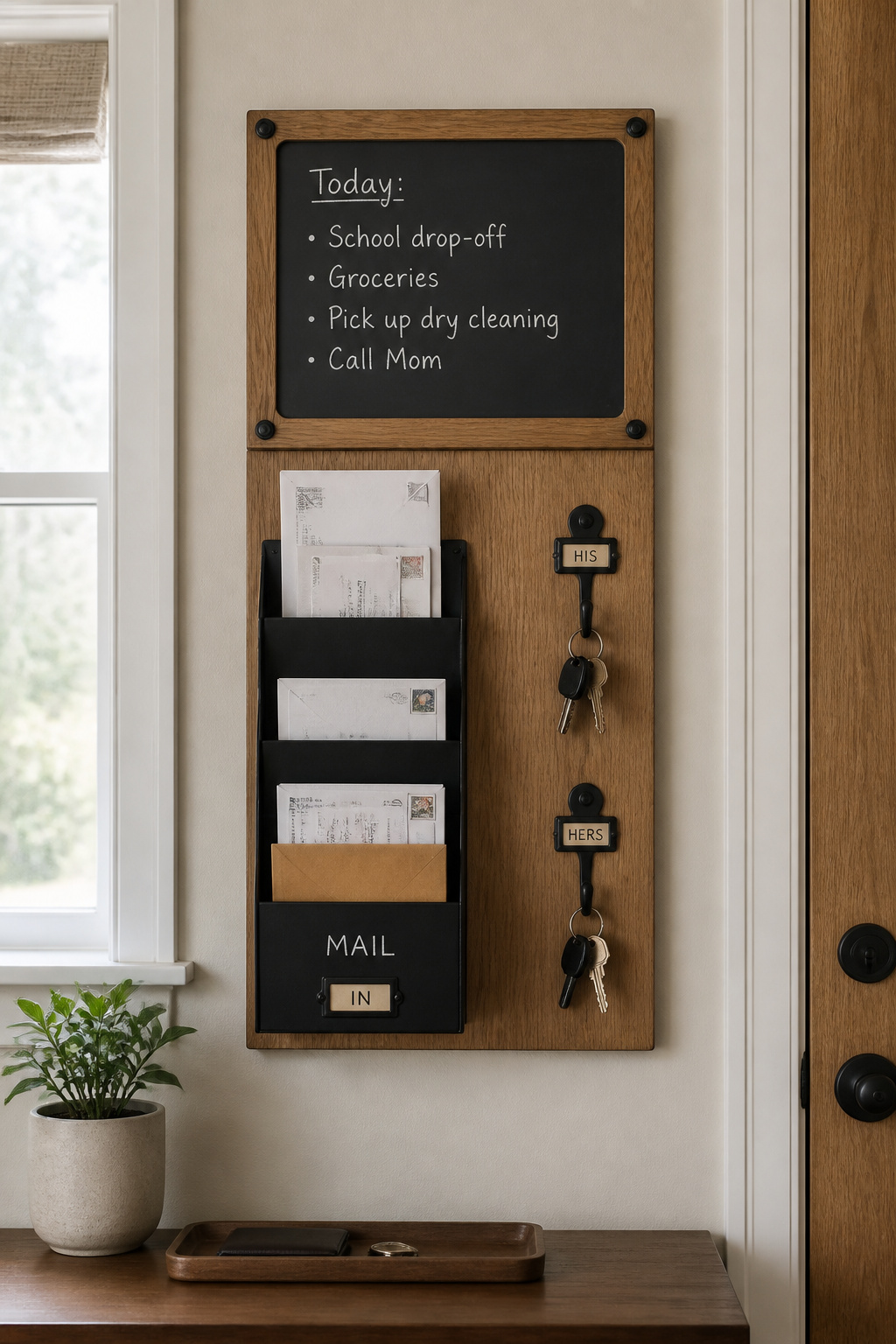
Mail and school papers are the number one source of paper clutter in most homes, and paper has no natural stopping point. Without a sorting routine used the moment mail enters, plus a place to put it afterward, it piles on counters. A vertical filing slot helps because it imposes a limit, filling up visibly the way a flat pile never signals.
How the reset habit applies to mail and paper
Mail gets sorted the moment it comes in: junk to recycling, bills and action items into an “action needed” slot, everything else filed or tossed. Labeled slots make at-a-glance sorting fast enough to happen daily. A functional command center can be built for under $50 in roughly three feet of wall, but size is not the deciding factor — the immediate-sort habit is. If you are building one, see this in a command center build in full.
Adapting the System as Kids Get Older
A drop zone is a moving target.
Why a system that worked at five fails at nine
What children need changes constantly as they grow, and most fixed storage does not keep up. Height is the clearest example: a documented two-row hook approach puts a lower row at 36 to 42 inches for kids and an upper row at 60 to 66 inches for adults. As children grow, the lower row is not removed — it transitions to bags, umbrellas or pet leashes.
What to revisit every year or two
Build in adjustability from the start: shelving and racks that raise and lower keep pace with a growing child instead of needing full replacement. Storage too far off the ground for a child’s height is a functional problem, so reassess it as they grow.
| Stage | Hook height |
|---|---|
| Under 10 | 36–42 in |
| Middle-school age | 48–54 in |
| Adult | 60–66 in |
Treat the under-10 row as the one to revisit first — it dates fastest. For the kid-specific depth, see adapting the system as kids get older.
How to Keep a Drop Zone Organized: The System, Not the Willpower
You started with a pile and a suspicion that your family was the problem. Set that suspicion down for good. The pile came from a system that asked more effort than dropping something took, and every fix here lowers that effort instead of demanding more resolve: watch where things land and put the easiest option there, label only what is genuinely ambiguous, pin a five-minute reset to a habit you already keep, and cut components before you add them when it overflows. Do that and the correct action becomes the easy one. For the wider view of what makes a drop zone succeed long-term, the system does the work, not your discipline.
FAQ
Why does my entryway always end up messy again?
Because items dropped at the door lack a clear, low-effort assigned spot, so they land on the nearest surface instead — a systems gap, not a discipline failure. The fix is redesigning the layout so the correct action, such as hanging a coat or filing mail, takes no more effort than dropping it does.
How often should you reorganize a drop zone?
High-traffic zones like entryways benefit from a short reset every few days to a week — lining up shoes, clearing mail, returning stray items — rather than a full overhaul. A bigger structural review, such as hook heights and storage sizing, is worth revisiting roughly every year or two, especially with growing children.
What’s the easiest habit for keeping an entryway tidy?
Attach a short sort-and-put-away action to a habit you already do daily, such as sorting mail right after bringing it inside — that makes the maintenance stick without extra willpower. A five-minute daily tidy of the entry surface — aligning shoes, hanging coats, filing mail — is the recommended baseline before any bigger reorganization.