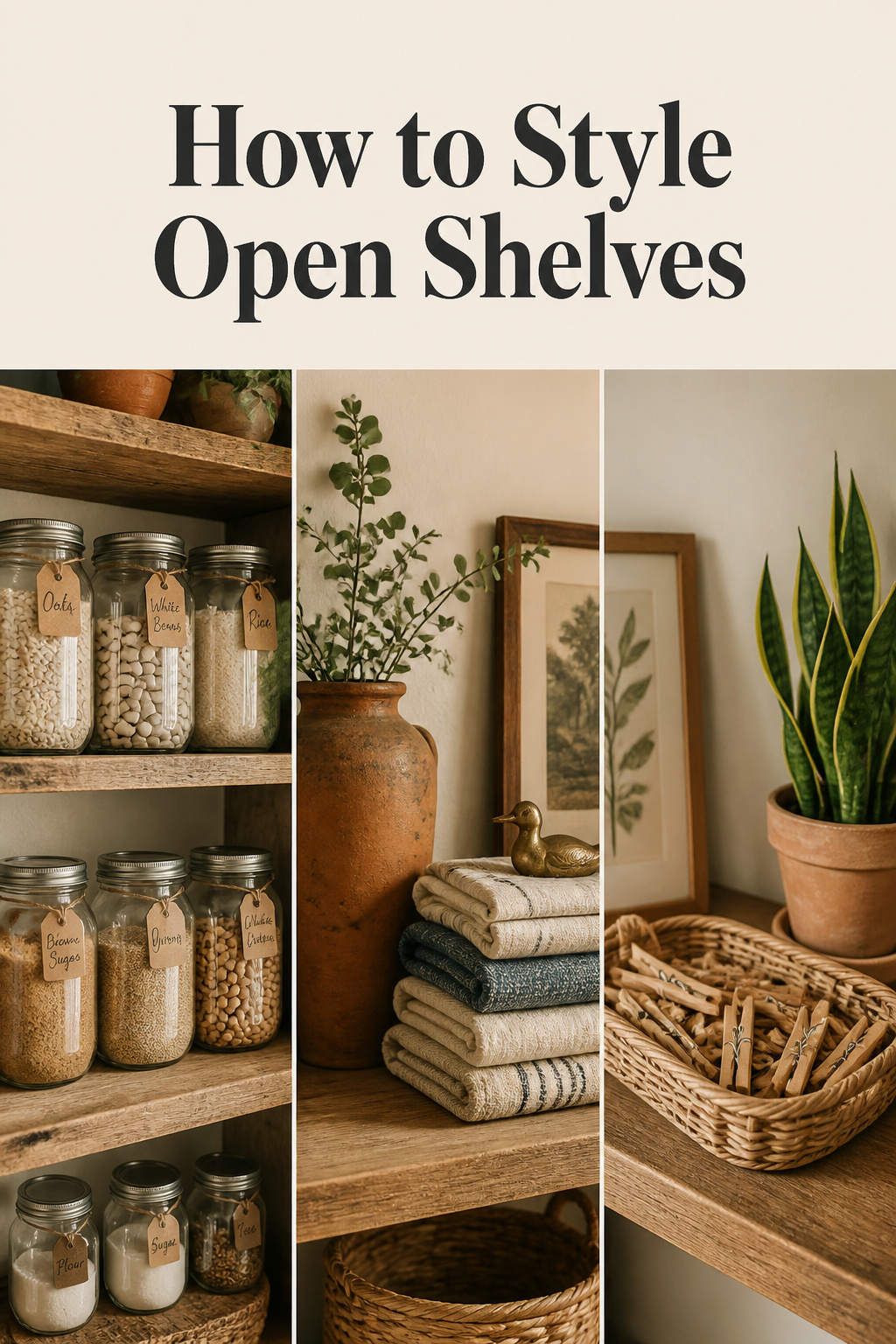
An open shelf in a laundry room holds the same quiet problem as a stack of unshelved books: everything is present, nothing is composed. The detergent jug, the dryer-sheet box, the stray clothespins each landed there by being used, not by being looked at, so together they read as storage rather than laundry room shelf decor. I spent a decade cataloguing collections before anyone paid me to style a room, and the fix is a librarian’s: decide what earns a spot, group the survivors in threes, and let deliberate empty space carry the rest.
TL;DR
- Keep each grouping to three items and leave roughly 40% of the shelf empty; the negative space is what separates a styled shelf from a stocked one.
- Decant the three highest-traffic supplies first — detergent, pods, clothespins — into matched glass, then build a tall-medium-short triangle of contrasting textures.
- Corral loose small things on a roughly 12-by-8-inch tray, add one plant and one leaning frame, and re-check the shelf after a real laundry day.
The Selection Standard for a Shelf That Doesn’t Look Like Clutter
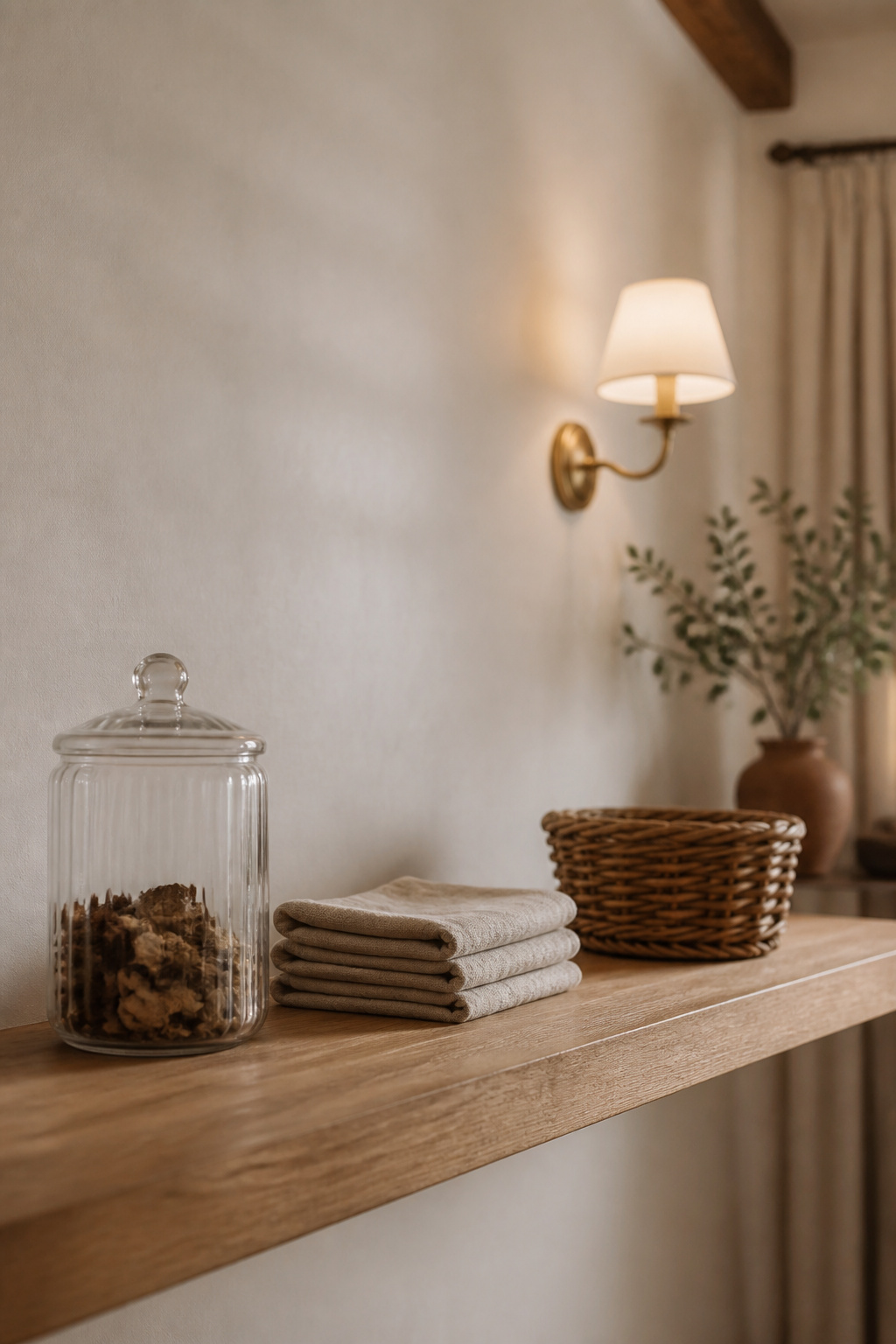
A shelf fails before you place a single object on it. Stylists converge on one ratio: keep about 60% of the surface occupied and 40% empty. That empty stretch keeps the eye from skimming past everything.
What earns a spot on the shelf
Reserve open shelving for what you handle every week; items in rotation stay clean on their own, while a seasonal thing just gathers dust. Before anything goes up, run it past three questions:
- Is it used most weeks? Handled things stay clean; idle ones only collect dust.
- Does it improve by being seen? Detergent behind glass becomes interest; a stain-remover pen does not.
- Can you name why it is out? An organizer’s decanting test — no clear reason, no shelf spot.
What gets decanted vs. what stays hidden
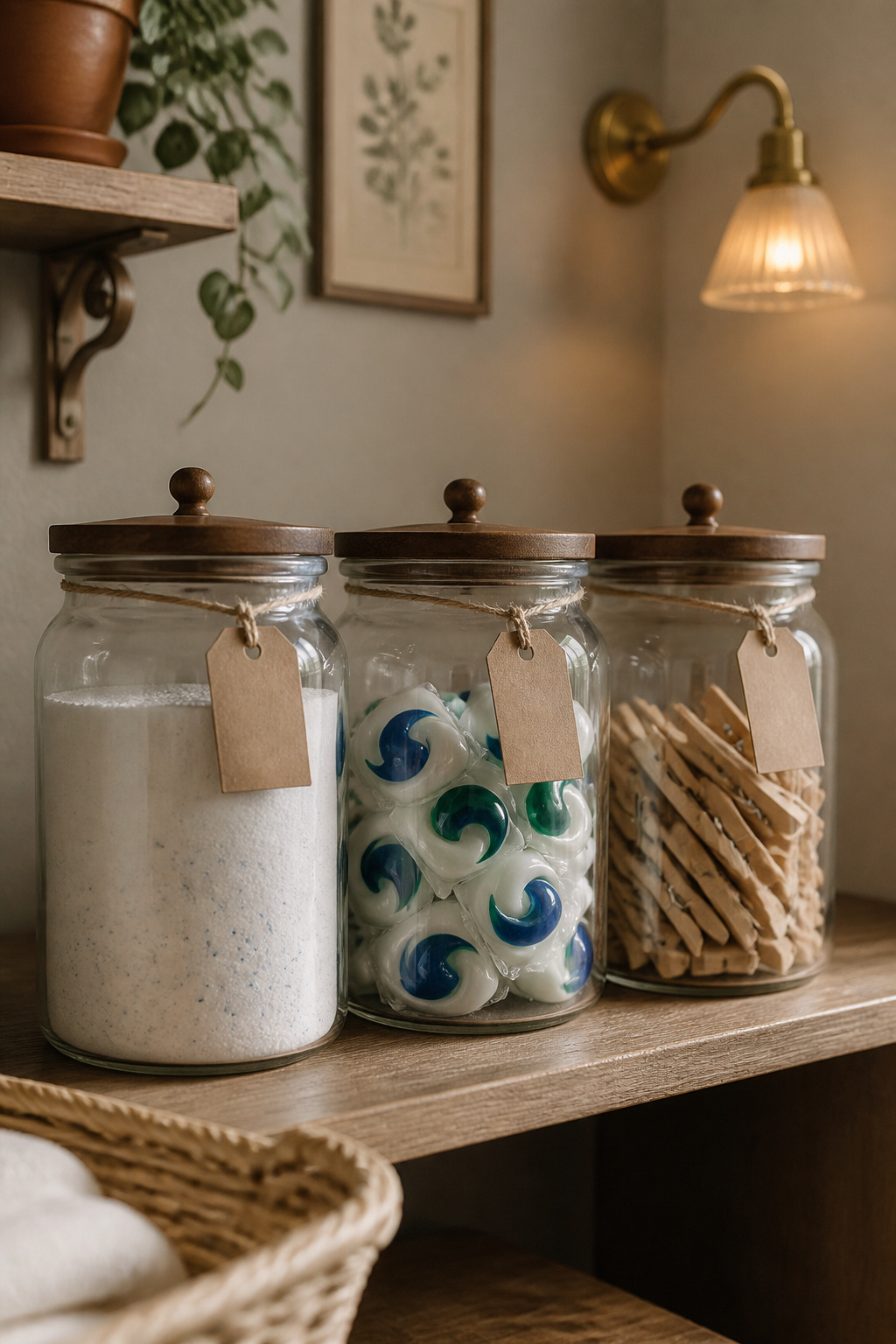
Decanting powder, pods and clothespins into matching containers is the highest-return move a shelf can get, because the transparency of glass turns the product itself into the display. The exceptions are items in purpose-built packaging — a resealable stain pen, a mesh delicates bag — already doing their job. Anything failing the “why” test belongs in closed storage.
The rule of three, explained
Odd numbers, threes above all, read as more considered than pairs or fours, because the eye cannot settle into easy left-right symmetry. Set a tall piece at the middle-back with two smaller pieces flanking it, and vary their heights and textures so the trio looks deliberate rather than matched.
Decanting Supplies Into Containers Worth Displaying
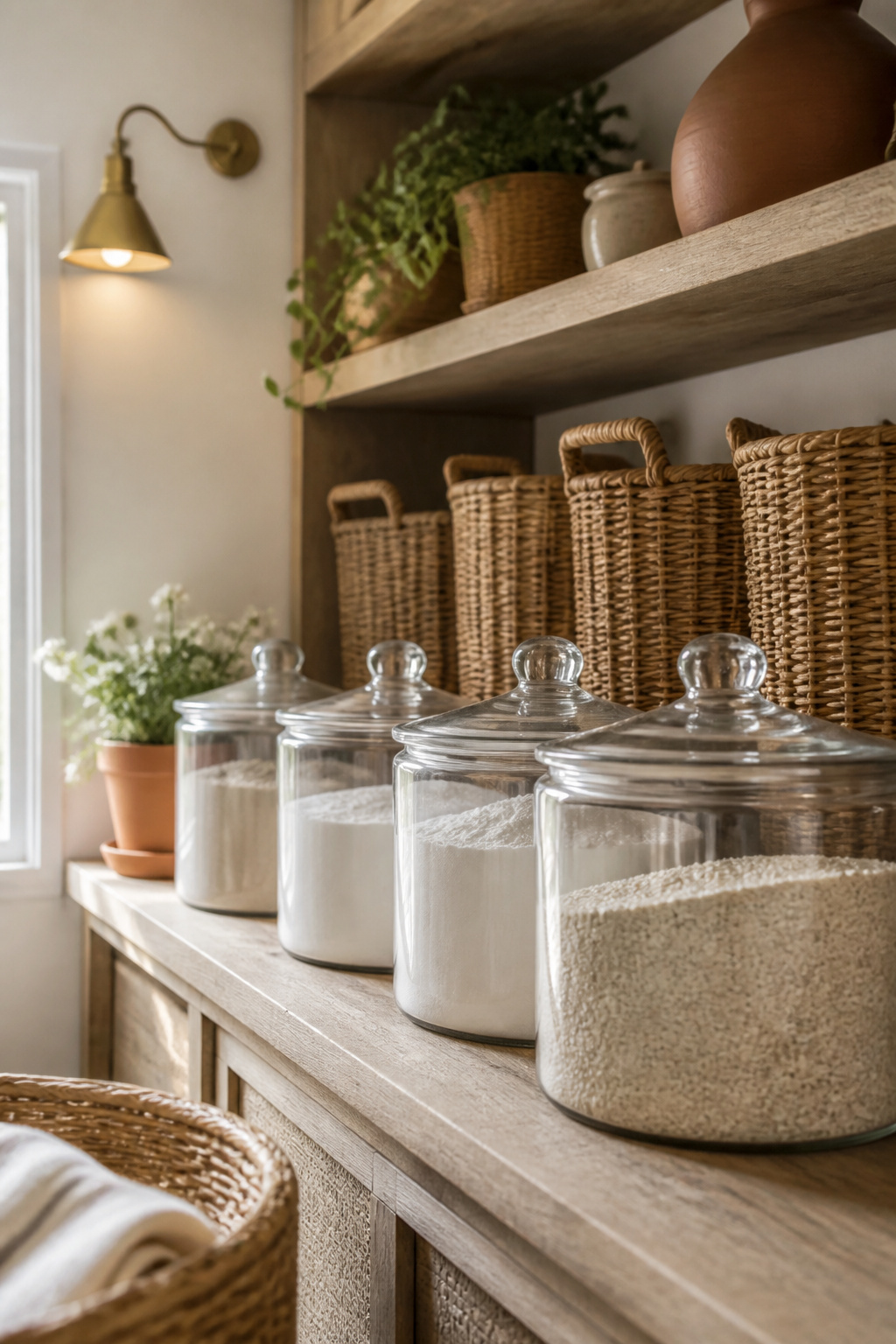
Two volumes cover almost every laundry supply. Glass canisters sell most commonly in half-gallon and one-gallon capacities, with airtight, gasket-sealed lids that keep powder dry and stop pods clumping. Buy a matched set, and the container — not the product inside — becomes the anchor.
Matched jars and canisters
For powder, durable glass, a lidded enamel bin or a lined wastebasket container all work; for liquid, choose glass with a secure lid or spout so a drip never reaches the shelf. The point is the repetition — three vessels sharing one lid style look like a single collection, even when they hold unrelated things.
Labeling without looking like a showroom
Water-resistant vinyl or polyester labels adhere to glass for years without lifting; an oil-based paint marker is the most durable option if you write by hand. Clothespins and dryer balls announce themselves, so reserve lettering for contents that are not obvious — powder versus pretreatment crystals.
What not to decant
Skip the fast-turnover items. A dryer-sheet box that empties in a couple of weeks never repays the effort, and anything already in sturdy packaging can stay as it is. An organizer’s test is the purpose behind the move: no clear why, skip the container.
Mixing Heights, Textures, and Shapes in One Vignette
Line three canisters of the same height in a row and you get a flat skyline — correct count, no composition. The triangle rule is the correction, and the technique the rest of this article slots its objects into.
The triangle rule for grouping objects
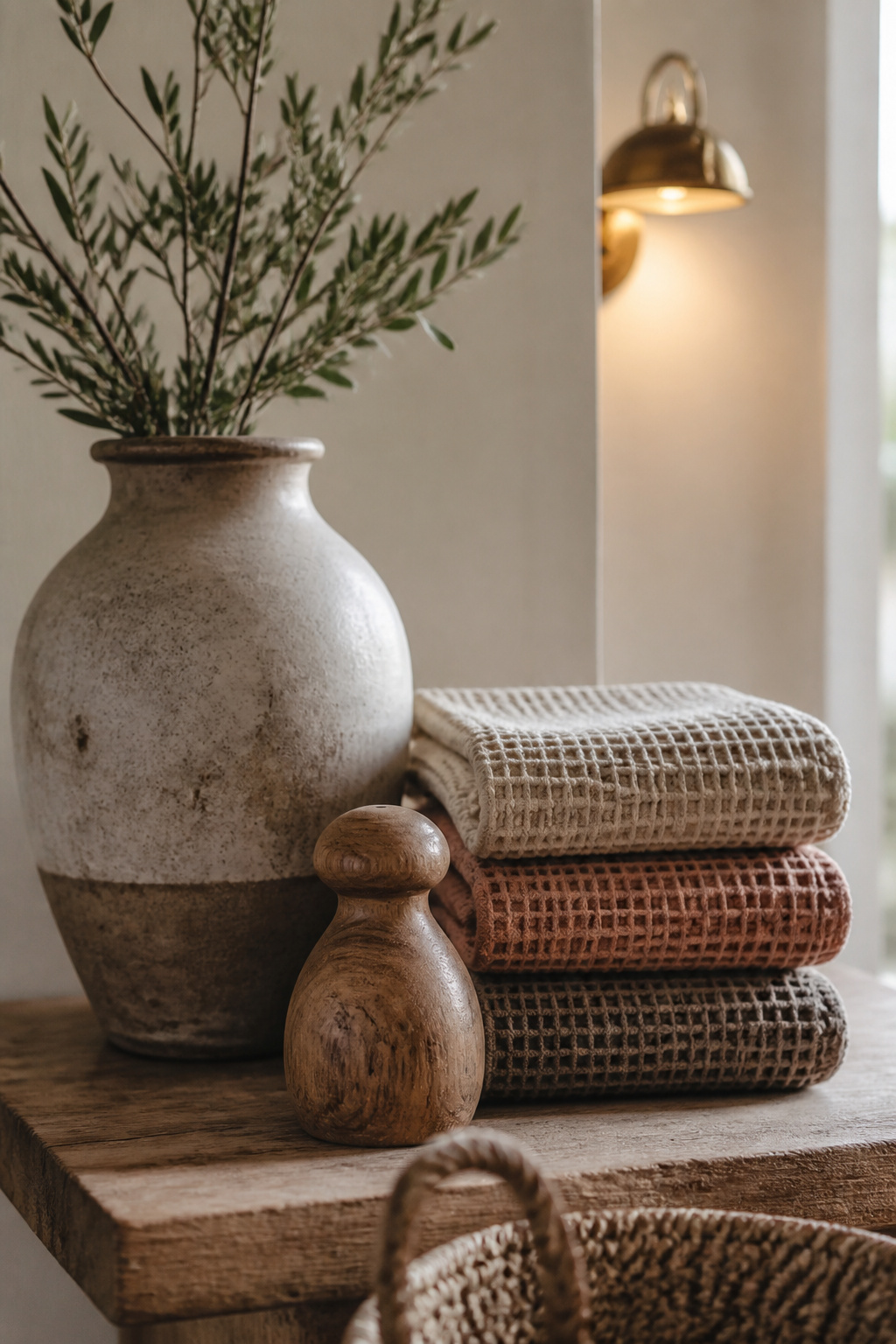
Place the tallest piece at the back, a medium piece to one side, and the smallest at the front on the opposite side, so an invisible triangle carries the eye around the group. On a laundry shelf, run the tiers at two-thirds of tabletop scale — a tall element near 7 to 10 inches, a medium at 4 to 6, a short at 1 to 3 — since a shelf has less clearance than a coffee table.
Pairing hard and soft textures
Correct heights still fall flat if every object shares one surface. The warmth comes from contrast: set something woven or wooden beside something smooth and reflective, like glass or glazed ceramic. Matte against glossy is what makes a grouping look intentional rather than accidental.
Using a tray to corral small things
A handful of small, busy items reads as clutter no matter how well the larger pieces sit, until you gather them onto a tray and the collection becomes one composed object. A common catchall size runs about 12 by 8 inches, sized to fit a standard 10-to-12-inch shelf without overhanging the front, and works best kept at eye level or below.
The Plant, the Framed Piece, and the One Personal Object
What separates a shelf that is merely tidy from one that is unmistakably yours? Three signature elements, each with a narrow correct scale.
Choosing a plant that survives the room
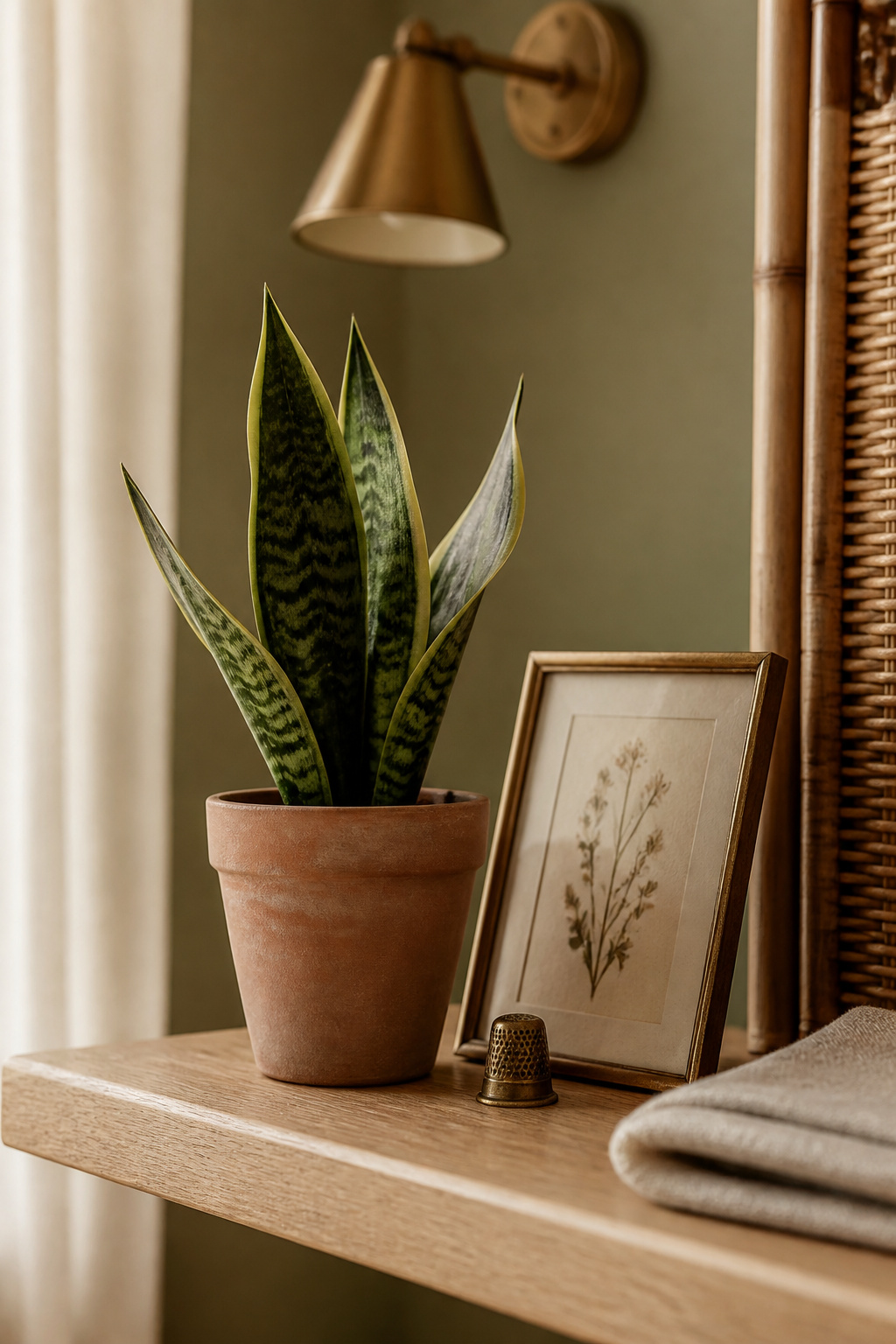
A snake plant and a pothos both rank among the strongest choices for a low-light room. The snake plant’s upright form and slow growth suit the tall corner of the triangle, holding its spot for years without outgrowing the vignette; a pothos suits a higher shelf, where it can trail. The full light and humidity math belongs to the guide on plants that thrive in a laundry room.
Anchoring the shelf with a small framed piece
For a shelf, 5×7 is the minimum useful frame size and 8×10 is substantial enough to anchor the arrangement while still sitting beside other objects. Lean it against the back and set one small object just in front, and you build a layered depth a flat-hung piece cannot. Which piece to lean there is its own craft — choosing the framed art.
The one object that makes it feel like your shelf
A shelf that feels collected rather than decorated favors things gathered over time — old beside new, meaningful beside functional — over a matched set bought in one trip. Choose it because it means something, not because it flatters the palette. A thimble that was your grandmother’s does more than a color-matched ceramic ever will.
Styling Shelves at Different Widths and Depths
A method built for a 12-inch shelf overcrowds an 8-inch one and underfills a 16-inch pantry run, so the triangle has to flex to the depth it is given.
| Shelf type | Typical depth | How to style it |
|---|---|---|
| Narrow | 8-10 in | One hero object plus one tray; a full triangle crowds the front |
| Standard | 10-12 in | Full tall-medium-short triangle plus one tray in a 24-36 in run |
| Deep pantry-style | 16-20 in | Two layers: styled vignette at the front, plain bulk storage behind |
Narrow shelves
In a tight laundry closet, 8 to 10 inches is the depth that still lets the door close. At that depth, drop the triangle to a single pair — one hero object and one tray — because a three-piece group plus a tray pushes objects past the front edge. Restraint here is the right answer to the width.
Standard-depth shelves
Most open laundry shelving sits at 10 to 12 inches: 10 holds a detergent canister without projecting into the room, 12 takes heavier baskets. A client once had me line a windowless hallway with 10-inch shelving as a reading corridor, and it taught me that depth is plenty for a composed run — books and light agreed there, and detergent and daylight agree on the same shelf.
Deep pantry-style shelves
Pantry-depth shelving runs 16 to 20 inches, and most guidance agrees 20 is already too deep to reach comfortably. So work it in two layers: keep the styled triangle at the front edge, within easy reach, and give the back few inches to taller, plainer storage that never needs styling.
Keeping the Vignette Working, Not Just Looking Good
Here is the line I hold from library work: shelve for retrieval, not for looks. A collection you cannot pull a book from is a wall treatment, and a laundry shelf you have to work around on folding day is the same failure in prettier jars.
Reassessing after real laundry use
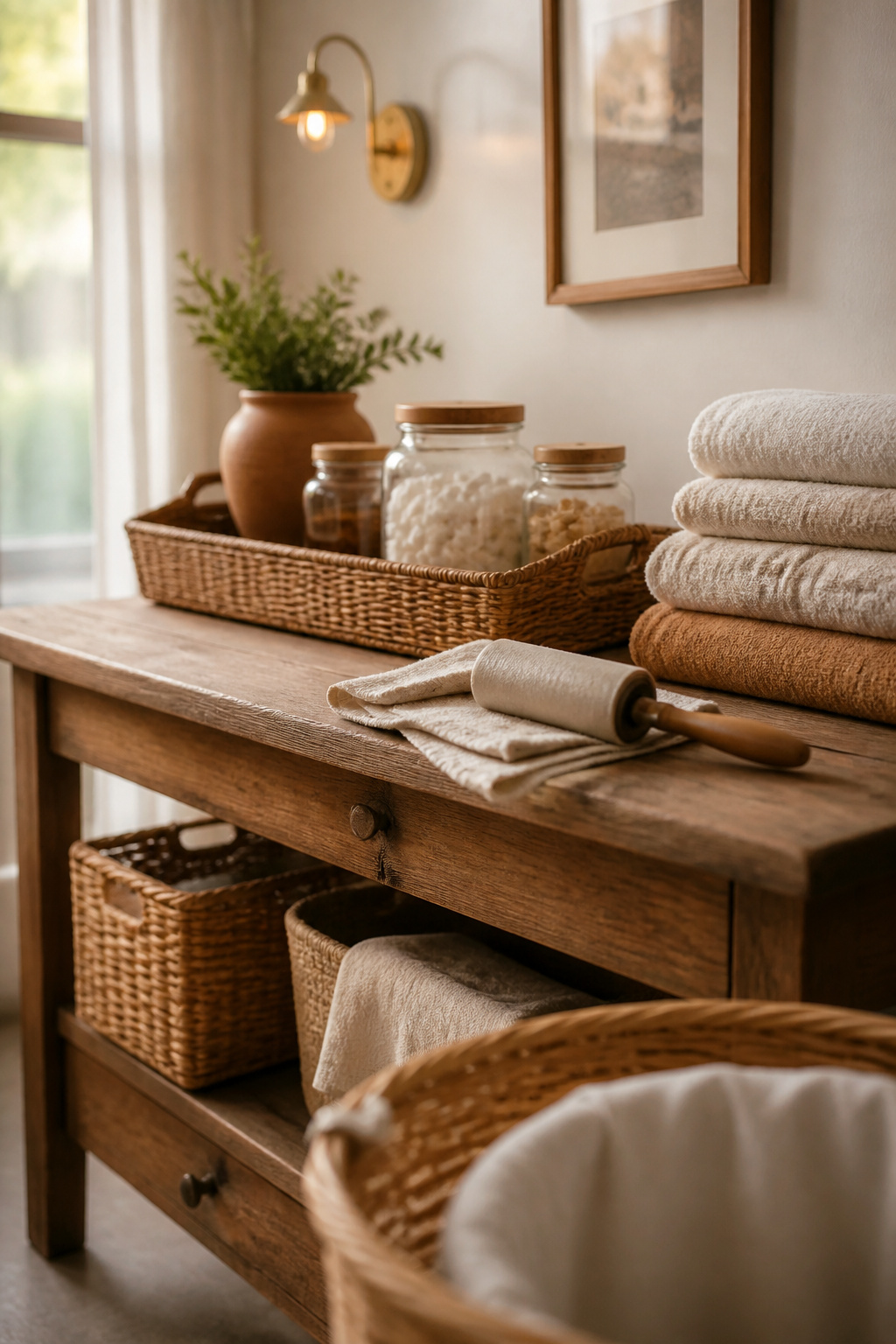
Open shelving needs about a two-minute quick dust weekly, plus a deeper damp-cloth pass monthly, though how fast dust builds depends on location — a shelf near the dryer’s exhaust or a drafty window collects it faster than one in a corner. Handled items also stay cleaner on their own, an argument for keeping the objects to things you actually touch.
When a styled shelf tips into precious or impractical
Overdoing open shelving is a named failure among designers — it leads to clutter, constant dusting and constant restyling. The honest signal is simple: when the arrangement starts getting in the way of doing laundry, it has tipped too far. A shelf you reach around to grab the detergent is decor that forgot its own room.
Where Laundry Room Shelf Decor Fits Your Whole Room
So where does one styled shelf sit in a whole decorated room? It is a technique, not a one-off project, pointing in two directions.
Carrying the arrangement logic to walls and surfaces elsewhere
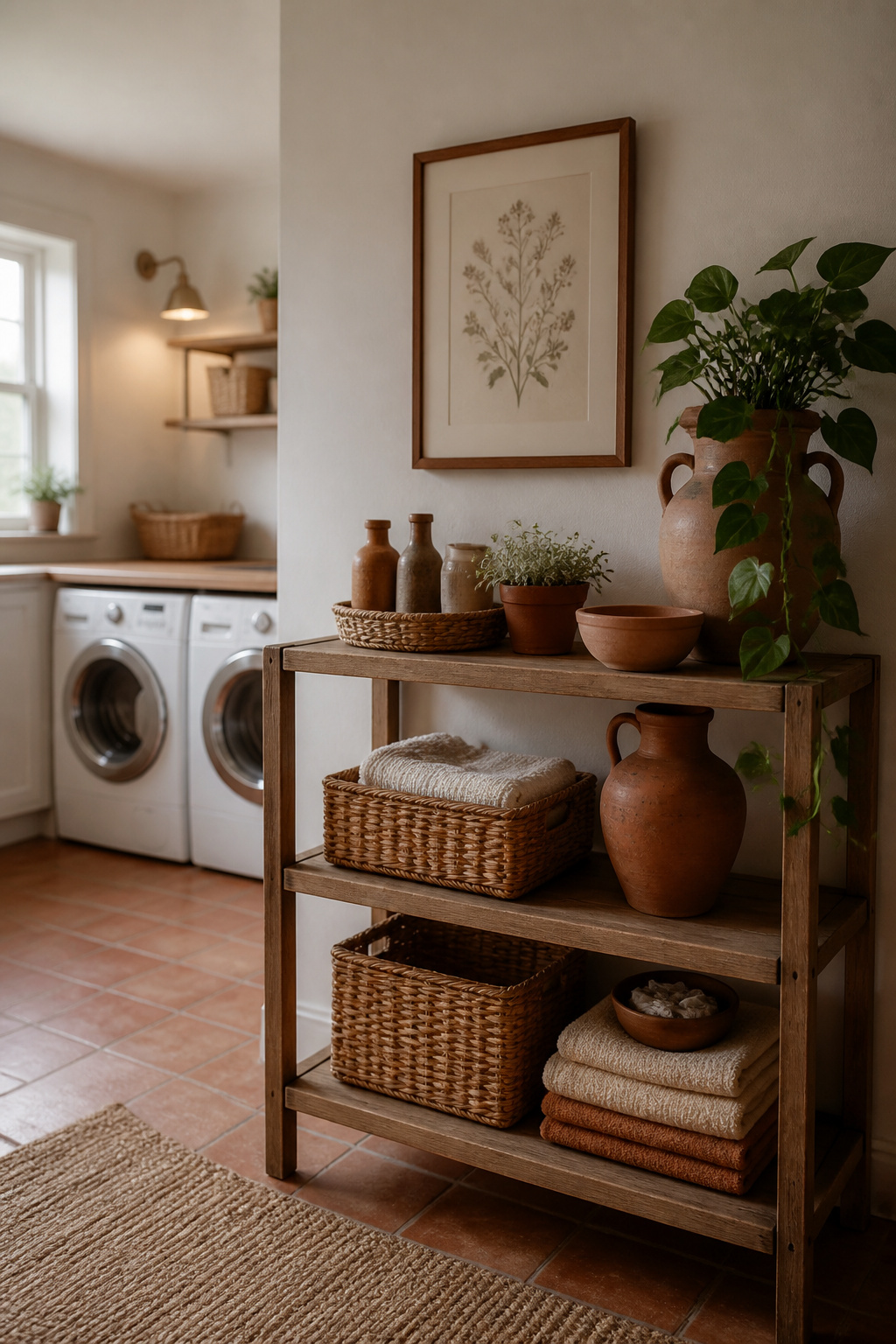
The scale hierarchy you just used — one dominant anchor, medium supporting pieces, small accents — is the same logic a gallery wall runs on, so the shelf’s triangle teaches the wall’s version for free. Tie them together: give the frame on the shelf and the piece hung above it a shared color or material thread.
Your next shelf to tackle
The standard built here transfers to any other open shelf in the house; the laundry room is simply where you proved it under harsher daily use than a bookcase faces. For how this shelf fits with the walls, greenery and wallcovering into one space, the broader laundry room art and decor guide is the map.
You arrived with shelves that read as scattered clutter and no rule to sort them by. You now have one: keep 40% empty, group in threes on a tall-medium-short triangle, and corral the small things on a tray. The cheapest first move is tonight’s: decant the detergent, pods and clothespins into matched glass, and build a single triangle around them.
FAQ
How many items should you display on a laundry room shelf?
Keep each zone of the shelf to three items, or another odd number like five, since odd groupings read as more balanced than even ones. Beyond the count, aim to keep roughly 60% of the shelf’s surface occupied and 40% empty — the negative space matters as much as the object count for avoiding clutter.
What size trays work best for organizing shelf items?
A common catchall tray runs about 12 by 8 inches, which fits inside a standard 10-to-12-inch-deep laundry shelf without overhanging the front edge. As a general proportion, a tray should cover roughly a quarter to a third of the surface it sits on — large enough to ground the small items it corrals, not so large it dominates the shelf.
Can open shelving in a laundry room stay dust-free?
Fully dust-free is not realistic, but a roughly two-minute weekly quick dust plus a monthly damp-cloth clean keeps buildup from becoming visible. How fast dust settles depends on location — a shelf near the dryer’s exhaust or a drafty window collects it faster than one tucked in a low-traffic corner — and items handled regularly stay cleaner than purely decorative ones.