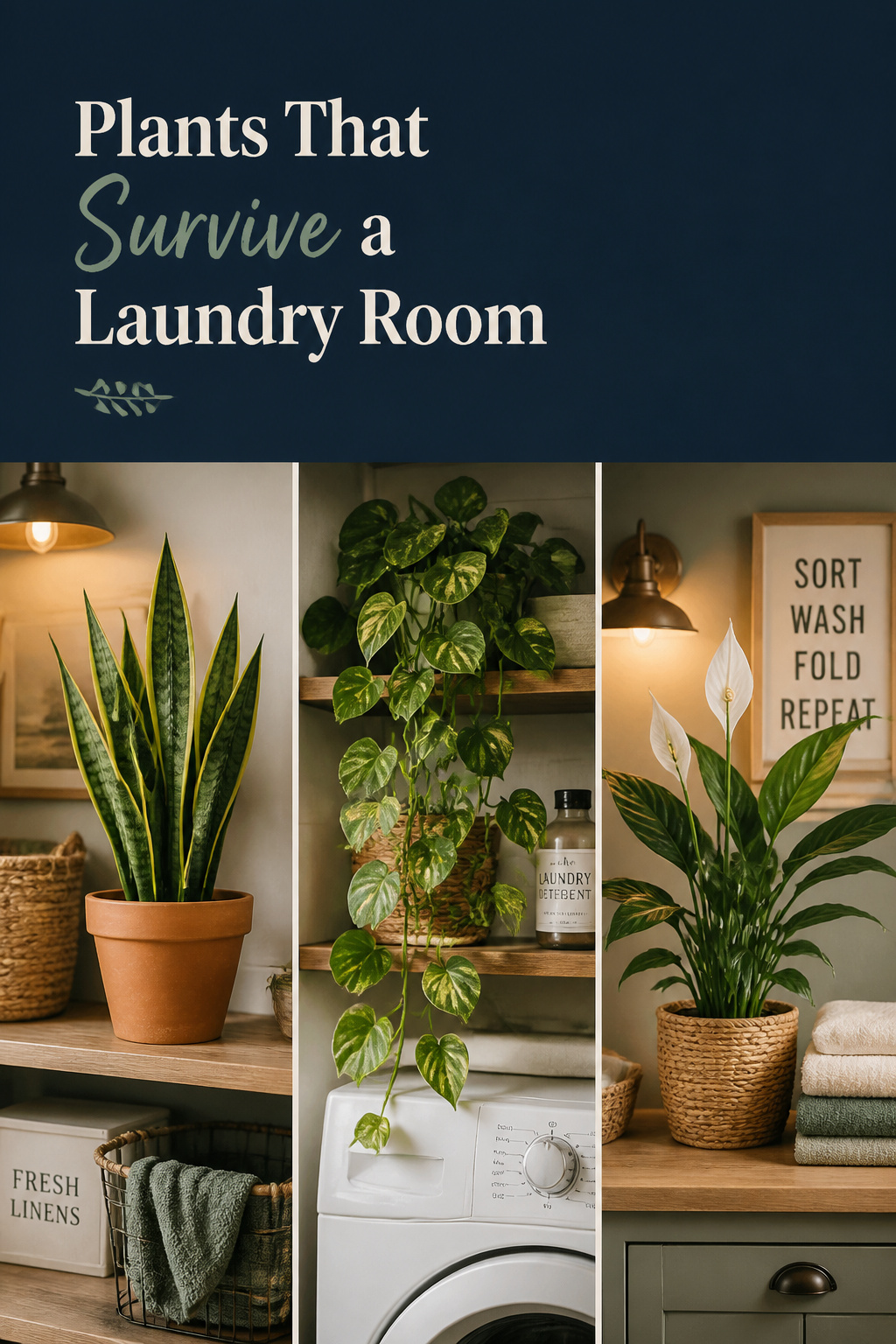

A laundry room asks nothing of you but function: it hums, heats, and moves water, and stays hard — tile, enamel, a machine’s flat grey lid. Most people assume its dim light and damp air would finish a plant within a week. The two conditions that seem to make the room hostile — low light and swinging humidity — are the exact conditions a short list of laundry room plants quietly prefer. The real question is not whether something can grow here, but what settles in the room, and in you, when one green thing finally does.
TL;DR
- Low-light plants hold their health in 50–250 foot-candles (roughly 500–2,500 lux), a threshold most laundry rooms clear; below 25 foot-candles even with the lights on, add a grow light on a timer.
- Snake plant, pothos, ZZ plant and peace lily tolerate low light on different watering rhythms — snake plant and ZZ plant go 2–8 weeks between drinks, pothos and peace lily sooner; Boston fern needs a steamy 80% humidity, and cast iron plant handles the darkest corner.
- Keep any plant out of the dryer’s direct airflow, wipe lint dust off the leaves — a visible film can cut light absorption by up to 30% — and let a humid room stretch watering longer, not shorter.
Why a Laundry Room Can Hold a Living Plant
Before you choose a plant, feel what the room actually offers — not what it lacks.
What low light really means in square feet
“Low light” sounds like a verdict. It’s really a measurable range: low-light plants hold their health in 50-250 foot-candles — roughly 500-2,500 lux — of indirect light, a threshold most laundry rooms clear. Below 50 foot-candles, growth slows; below 25, even with the lights on, you need a grow light rather than a hopeful guess.
How humidity actually helps some plants
The damp you’ve been told to fear is, for some plants, the whole appeal: a laundry closet run with the door shut can reach 96% relative humidity when a condenser dryer is working, the same moisture that troubles drywall but is generous to tropical foliage. A peace lily wants 50% or more, a Boston fern 80%, and a snake plant sits at the other end, content at 30-50% with no extra help.
The sound and softness a single plant adds
Dense foliage absorbs and scatters mid- and high-frequency sound, taking the sharpest edge off a tiled room’s echo — though it won’t quiet a machine’s rumble. What it does more reliably is break the room’s visual hardness, one living thing among the enamel and cabinetry. A corner done sincerely, with a single plant that belongs there, will always settle a room more than a shelf crowded for show.
The Plants That Actually Survive Low Light and Humidity Swings
Each survives the room through a different strategy — drought-hardy rhizomes, waxy leaves, or a love of damp air.
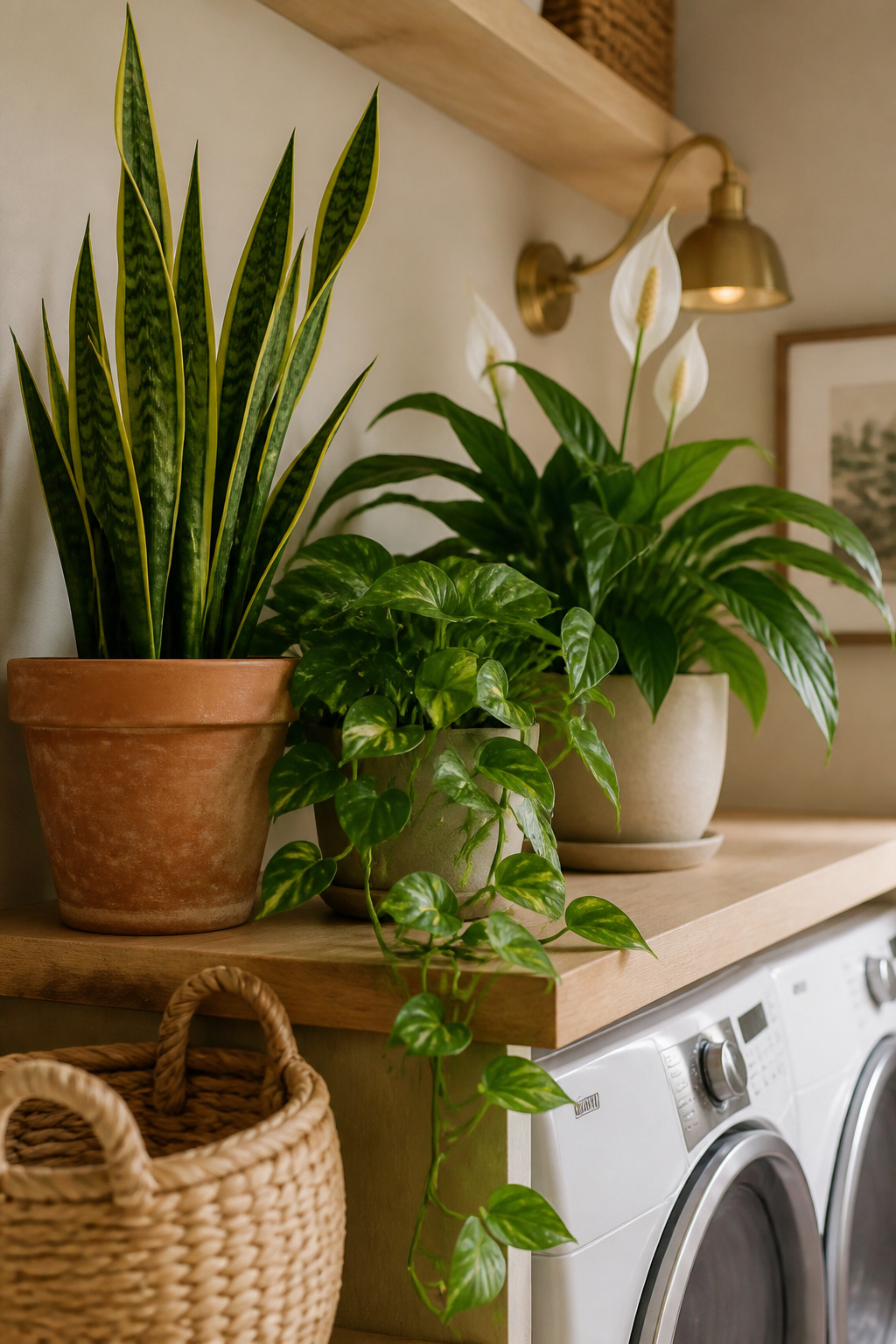
| Plant | Light tolerance | Humidity | Watering rhythm |
|---|---|---|---|
| Snake plant | Low to bright indirect | 30–50%, no extra needed | Every 2–8 weeks, soil fully dry |
| Pothos | Tolerates low, slower growth | Average household | When top inch is dry |
| ZZ plant | Very low, even fluorescent-only | Undemanding | Every 2–3 weeks; ~monthly in winter |
| Peace lily | Low; brighter to bloom | Wants 50%+ | Every 7–12 days in low light |
| Boston fern | Low to moderate | Needs 80%+ | Consistent moisture |
| Cast iron plant | Genuinely low-light adapted | Low need | Drought-tolerant |
Snake plant
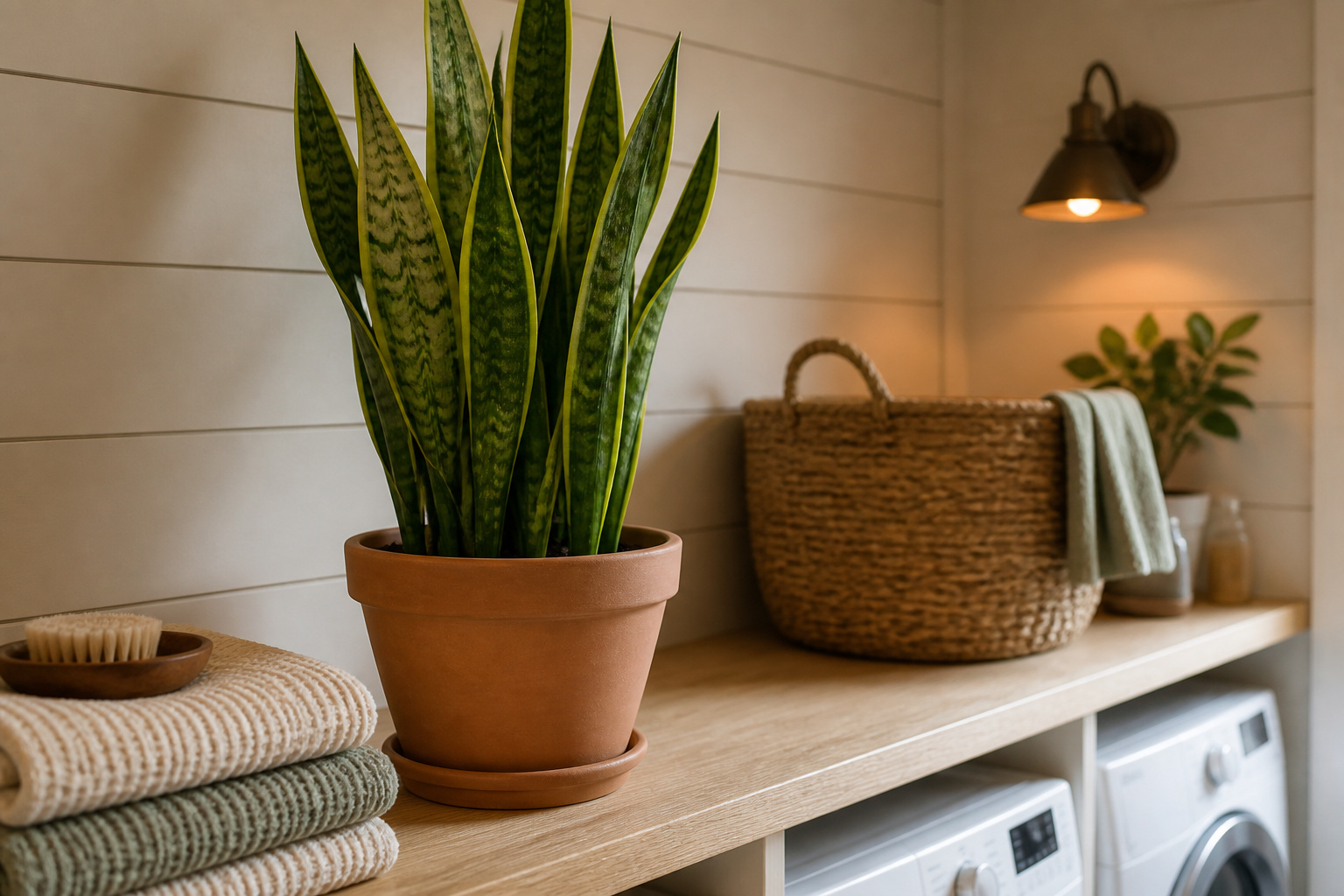
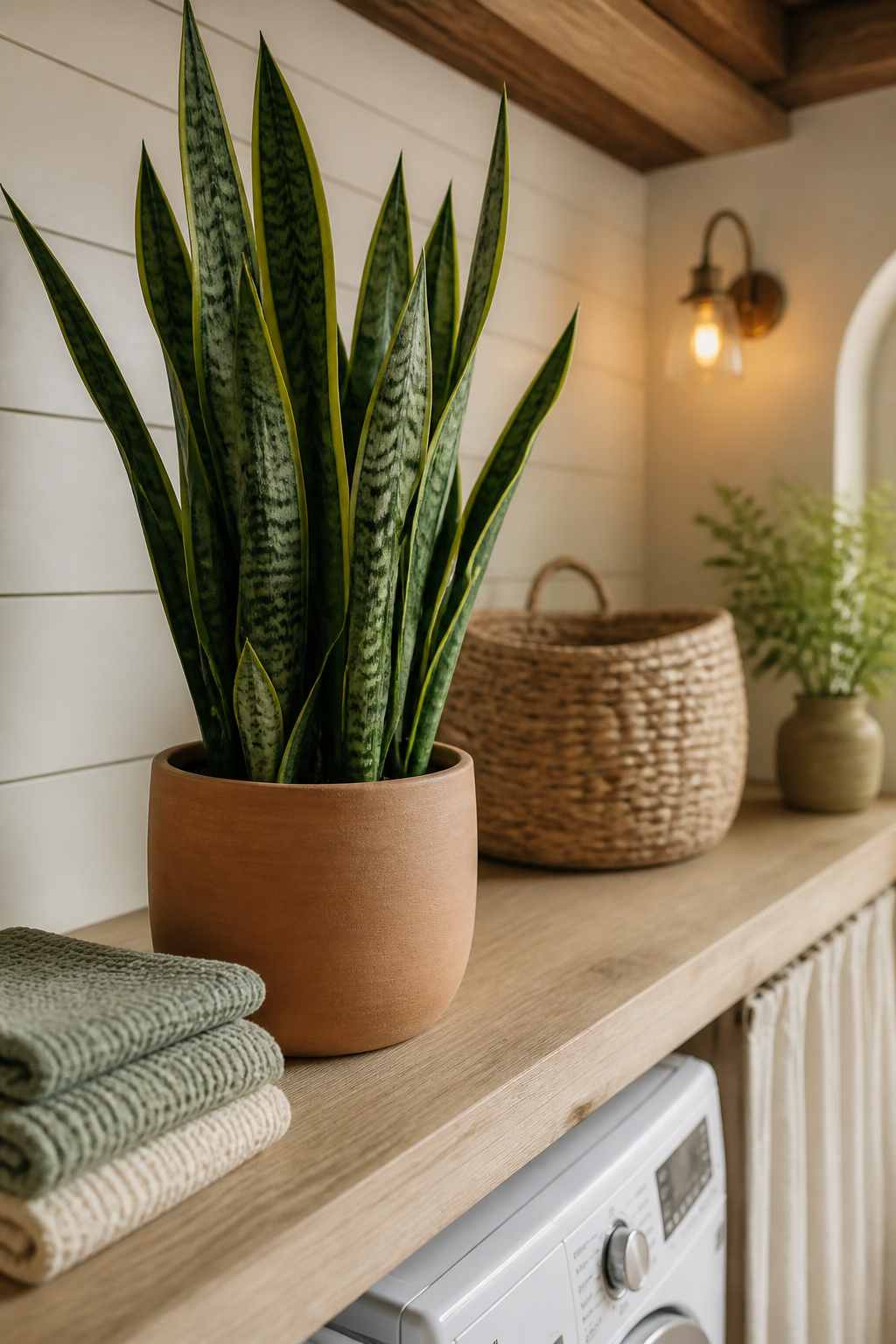
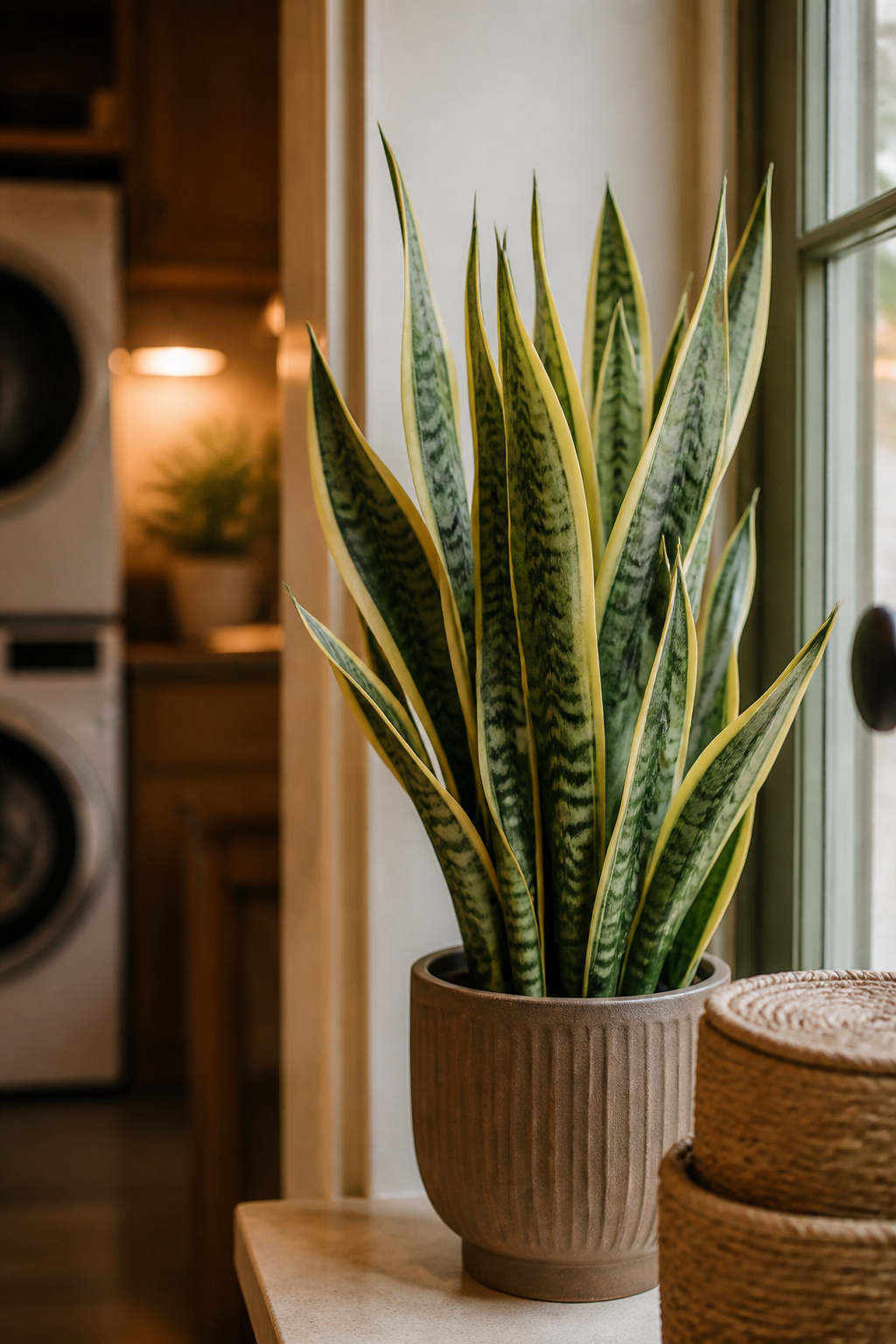
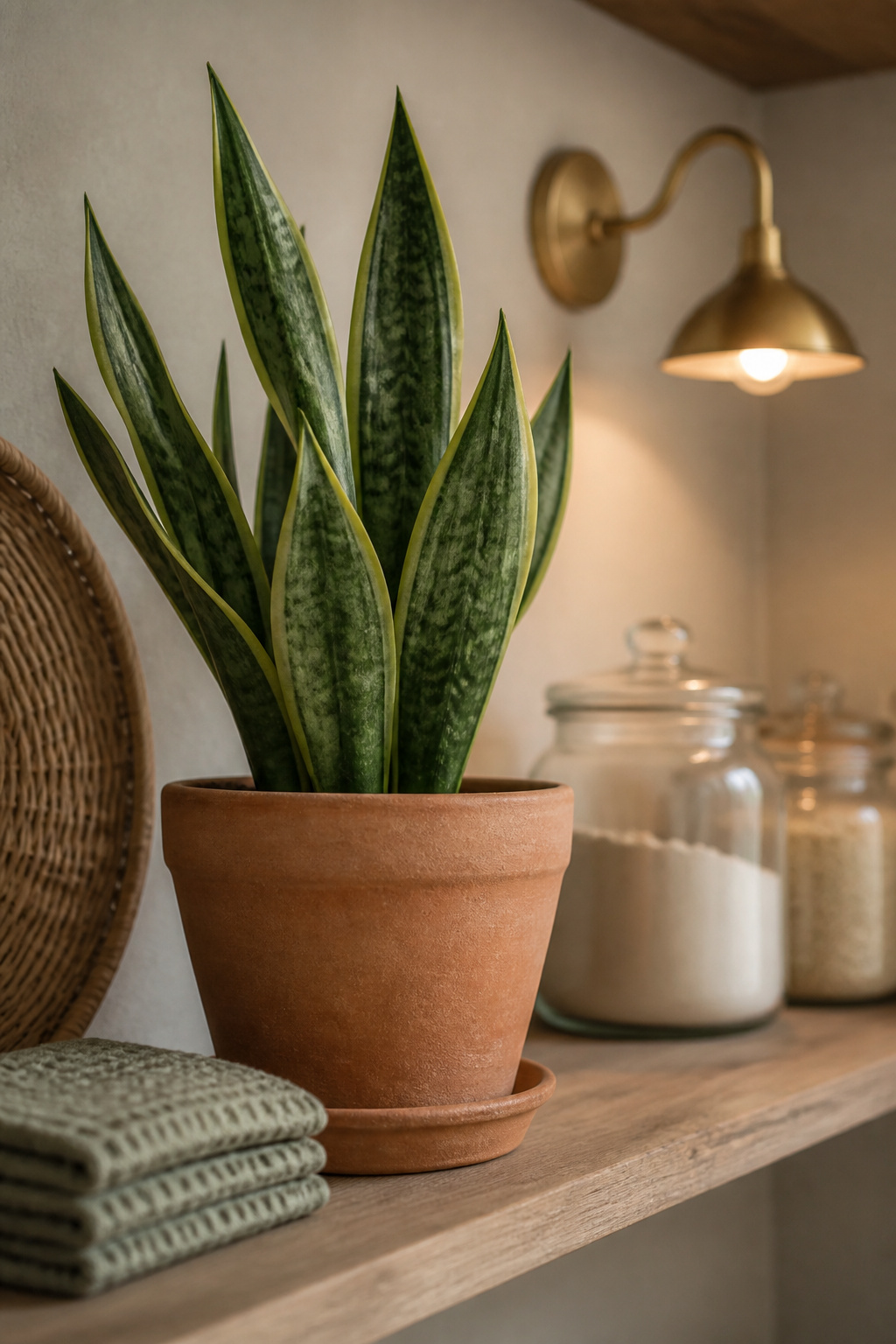
The calm first choice: low to bright indirect light, 30-50% humidity, water only every 2-8 weeks once the soil is fully dry. The single way most people kill it is kindness — water on a schedule and the roots rot. Let the soil forget the last drink, and it outlasts your doubts.
Pothos
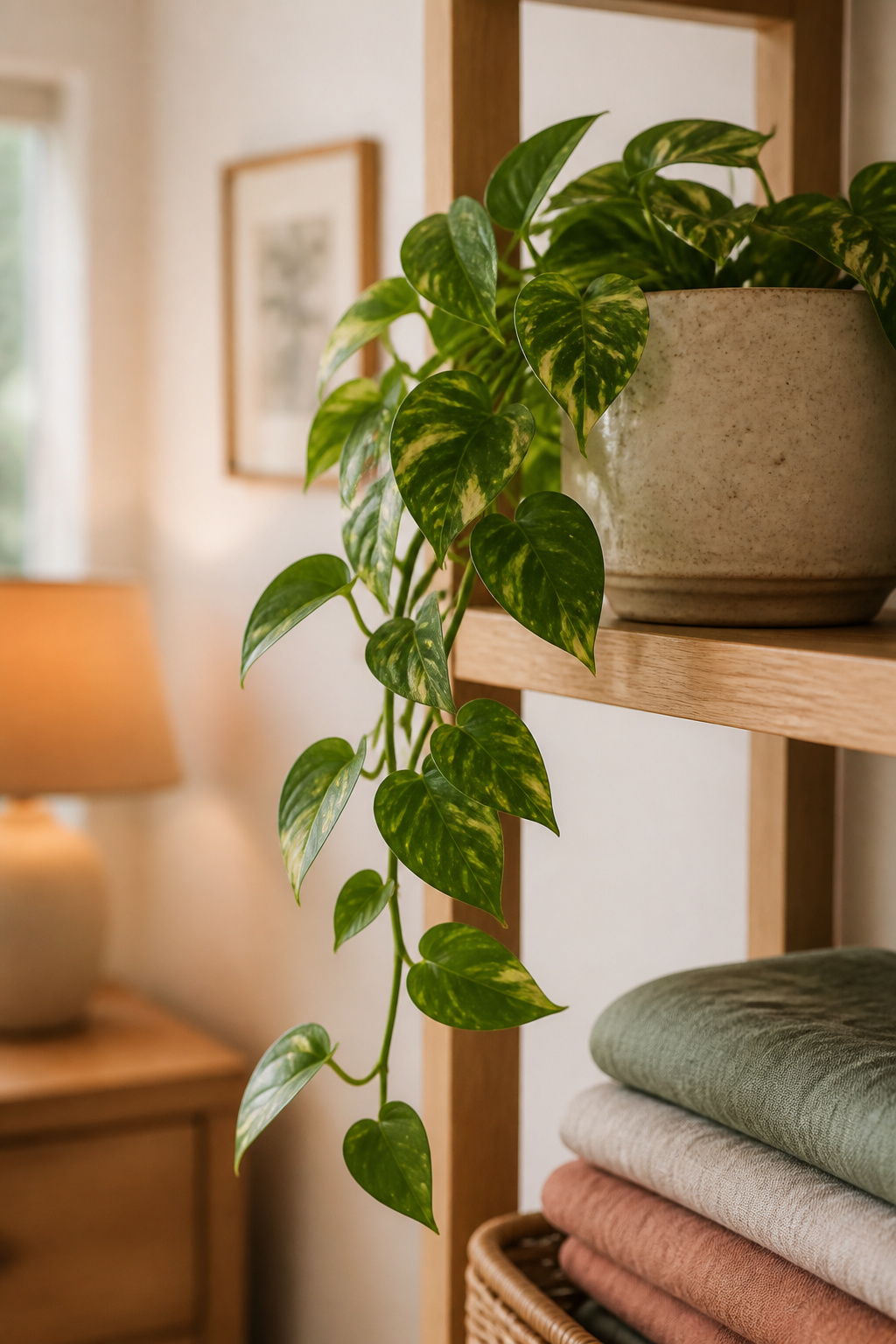
The one that spills: fastest in bright indirect light, but tolerates a dim room well — the trade is pace, not survival. Water when the top inch dries. Its long stems climb or cascade on aerial roots, the natural plant for a shelf edge or a hanging pot above the machines, where vines fall clear.
ZZ plant
Your quiet workhorse for a genuinely dark room: it tolerates low light better than almost anything, even fluorescent-only spaces, though it may go months without new growth while staying healthy. It stores water in potato-like rhizomes, so overwatering — not neglect — kills it: water only when fully dry, every 2-3 weeks in the growing season, monthly in winter.
Peace lily and Boston fern
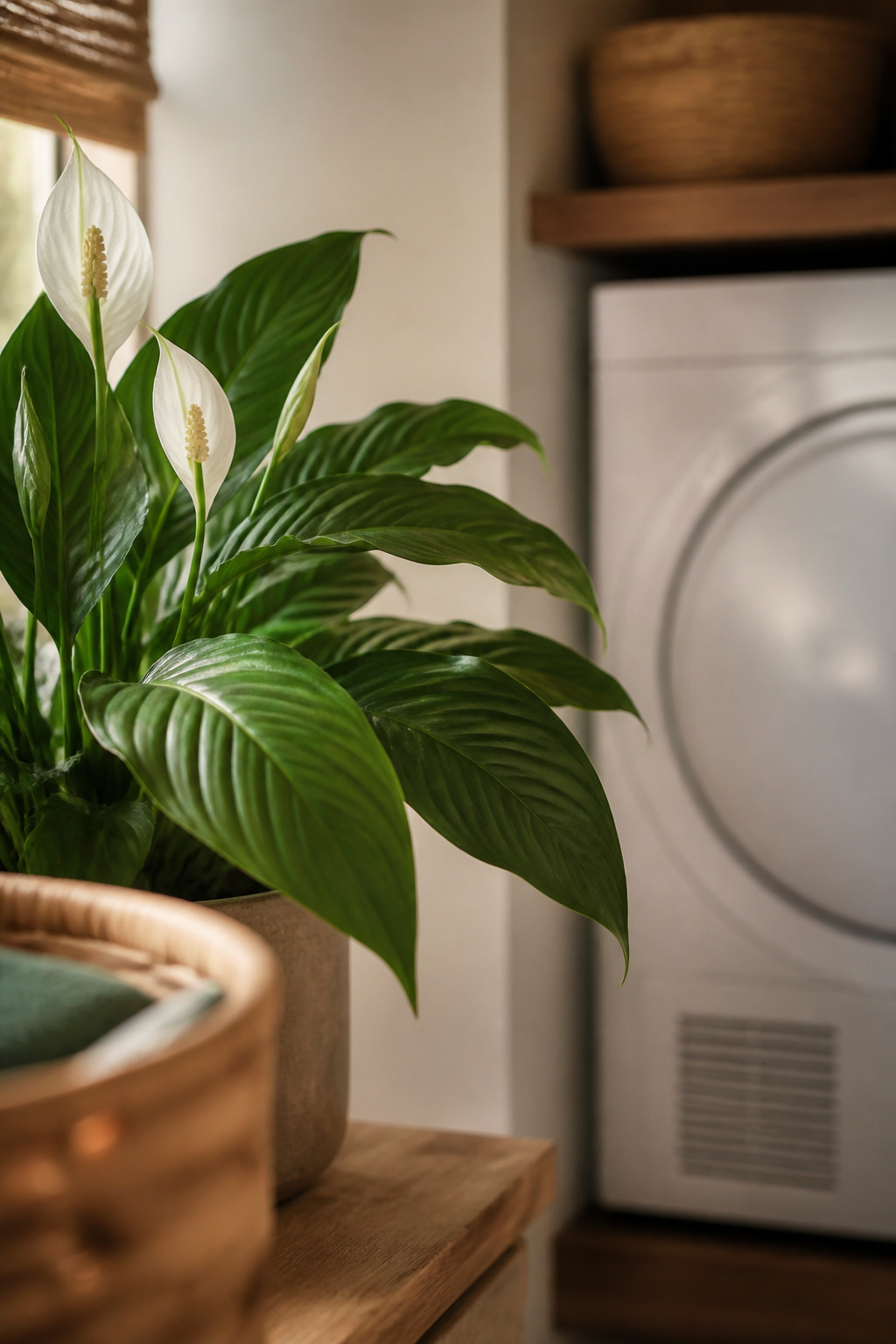
The peace lily droops and dulls when thirsty, then recovers within hours of a drink; it blooms in brighter light, coasts in low. The Boston fern is the diva, needing sustained 80% humidity or its fronds crisp brown. For a near-windowless space, reach instead for the cast iron plant — genuinely adapted to low light, the plant that dominated Victorian parlours by tolerating gas fumes, dust and drought.
Placing Plants for the Light You Actually Have
I keep a small habit from years of finishing rooms: I stand in the doorway and notice where my eye lands first. In a laundry room it usually lands somewhere you didn’t intend — a cord, a scuff, the corner of the machine. That spot, or the calm patch beside it, is where a plant belongs.
Reading your room’s real light honestly
Guessing at light is how good plants die in bad spots. Below 50 foot-candles, growth crawls; below 25, ambient light won’t carry a plant. That’s not a dead end — a full-spectrum LED grow light of 15-40 watts, 12-18 inches above the plant on a 12-16-hour timer, turns a dark corner workable. Leave it off overnight: plants need eight or more hours of darkness to complete their metabolism.
Trailing vs. upright placement
Match the plant’s form to the space beneath it. Trailing plants — pothos, or a heartleaf philodendron, which wants 40-60% humidity to look lush — belong on a shelf edge or hanging point where vines fall into open air. Upright growers like snake plant and ZZ plant suit a floor corner or a shelf with nothing hanging below; crammed above a closed cabinet, a trailing plant just looks cramped.
Shelf, windowsill, or floor
Stagger shelf heights so vines fall without tangling, and group plants in odd numbers — threes or fives settle the eye more easily than even rows. Keep every plant clear of the dryer vent and any heating duct: concentrated warm airflow, not average room temperature, scorches leaves here.
Keeping Laundry Room Plants Alive Through Heat, Lint, and Neglect
Choosing the plant is half the work; the rest is three small hazards this room keeps that no other room does.
A watering rhythm around a humid room
A humid room holds soil moisture far longer than a dry one, so plants here need watering less often — the opposite of most people’s instinct. Check the soil with a finger; a fixed schedule is how roots rot in this room. Snake plant and ZZ plant want soil bone-dry between drinks, so let the room’s damp air stretch those intervals.
Dealing with dryer heat and lint dust
Dryer heat shows up as brown tips and curling edges even when the soil is perfectly watered. Lint is the other hazard: airborne fibres settle on leaves, and a visible film of dust can cut light absorption by up to 30%, so wiping leaves is a functional habit here. Lint from cotton and wool isn’t inherently harmful; synthetic lint can carry microplastics, so keep it out of the pot.
Signs of stress specific to laundry conditions
Two very different problems start the same way — a wilting, unhappy plant — so learn to read them apart:
- Heat stress: persistent wilting plus dry, brown spots, usually on the side facing the dryer. Move the plant; don’t water it more.
- Root rot: yellowing lower leaves, a musty smell from the soil, mushy dark roots. Ease off the water.
- Humidity shortfall: on a Boston fern, crisping brown frond tips mean the air is too dry, not the soil. Mist it or set a pebble tray.
One Plant Is Enough to Change the Room
You don’t need a jungle. You need one plant that’s undeniably alive and unmistakably placed.
Styling with minimal, sincere greenery
Most homes settle at two to five houseplants total, and a laundry room needs far fewer. One plant chosen with care feels more considered than three grabbed in a hurry — restraint is the styling decision, not its absence. Choose the plant that suits the light, give it the calm spot your eye found, and let it be the only living thing in the room.
Pairing a plant with a styled shelf vignette
A single plant rarely stands alone on a shelf; it becomes one note in a small arrangement — grouped in threes or fives, an upright plant paired with a trailing one, heights varied. For the full method — the jars, the framed piece, the rule of three — see styling greenery on open shelves.
Softening the room alongside textiles
Greenery is one softening layer; fabric is the other. Foliage and soft textiles together take more of the hard echo out of a tiled room than either does alone — the plant answers the room’s want of life, a rug or runner answers its want of warmth underfoot. When you’re ready to add the second layer, soften the room with rugs and textiles alongside the plant.
Bringing It Into Your Whole Laundry Room Plan
A plant is not the finish on a decorated room. It is one layer of it.
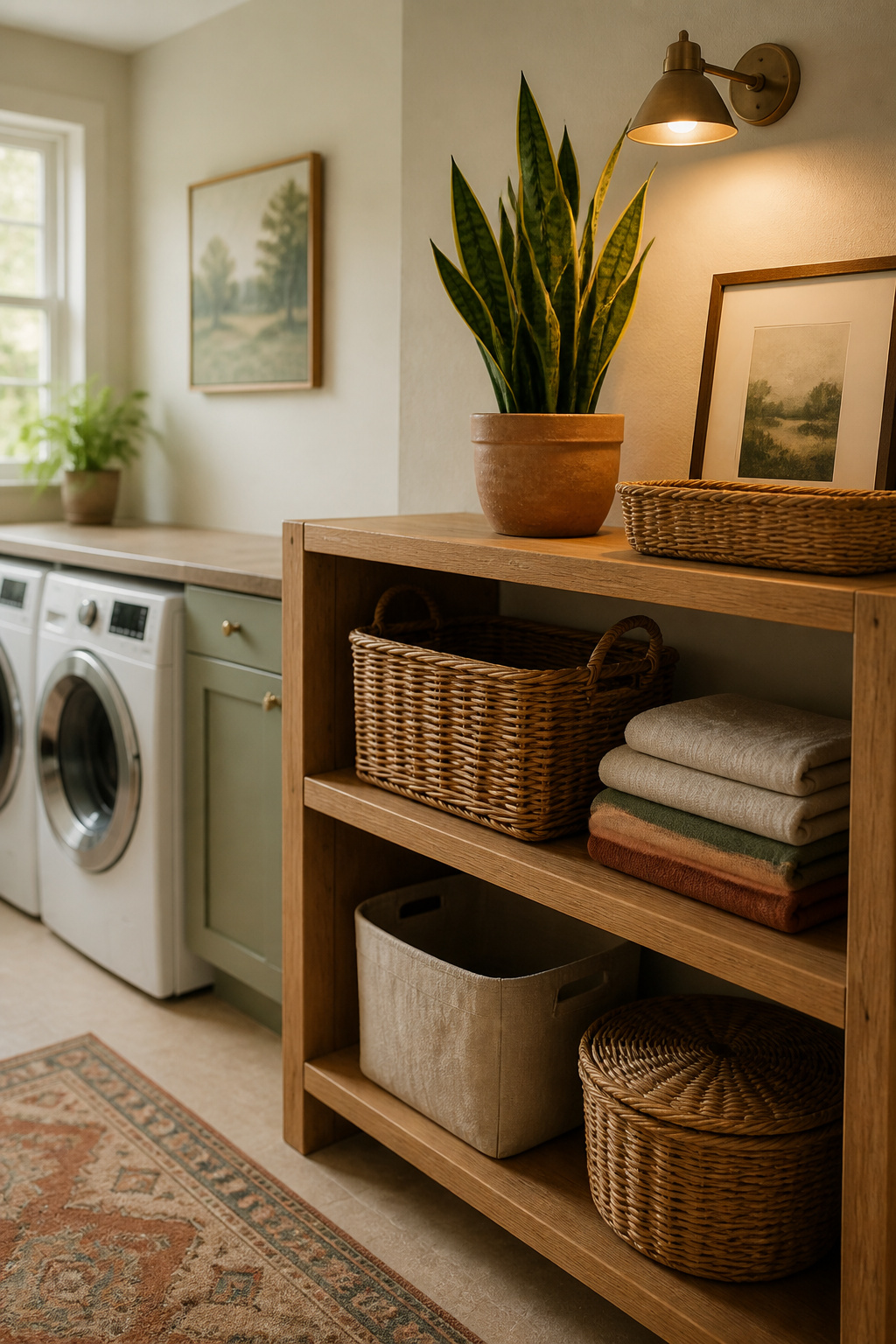
Where greenery fits among the other decorating layers
Think of the plant as the room’s one living, changing layer — it works beside framed art, a styled shelf and textiles rather than standing in for any of them. It asks one small, ongoing kindness: a quarter turn toward its light source every two to three weeks, so it grows evenly instead of leaning.
Starting with one plant this week
Match one species to the light your room honestly has — not to whatever looked good at the shop — and you’ve made the one decision that decides whether it lives past its first season. For how greenery, walls, shelves and textiles come together, the complete laundry room decorating guide holds the whole plan. The room changes the day one green thing arrives — bring one home this week.
FAQ
Can plants survive in a laundry room with no windows?
Yes, with the right choice or a little light. The ZZ plant tolerates low light better than almost any houseplant and adapts to fluorescent-only rooms, while the cast iron plant is genuinely adapted to low light, not merely tolerant of it. If the room reads below about 25 foot-candles, add a grow light on a timer.
Do laundry room plants need grow lights?
Only if the room stays below roughly 25-50 foot-candles. Above that, low-light species like snake plant, ZZ plant, pothos and peace lily manage on ambient light alone. If needed, a 15-40-watt full-spectrum LED, 12-18 inches above the plant on a 12-16-hour timer, is enough.
Is dryer lint dust harmful to houseplants?
Lint from natural fibres like cotton and wool is not inherently harmful, but synthetic lint from polyester or nylon can carry microplastics and should stay out of the soil. The bigger concern is lint settling on leaves: a visible dust layer can cut light absorption by up to 30%, so wipe leaves periodically.