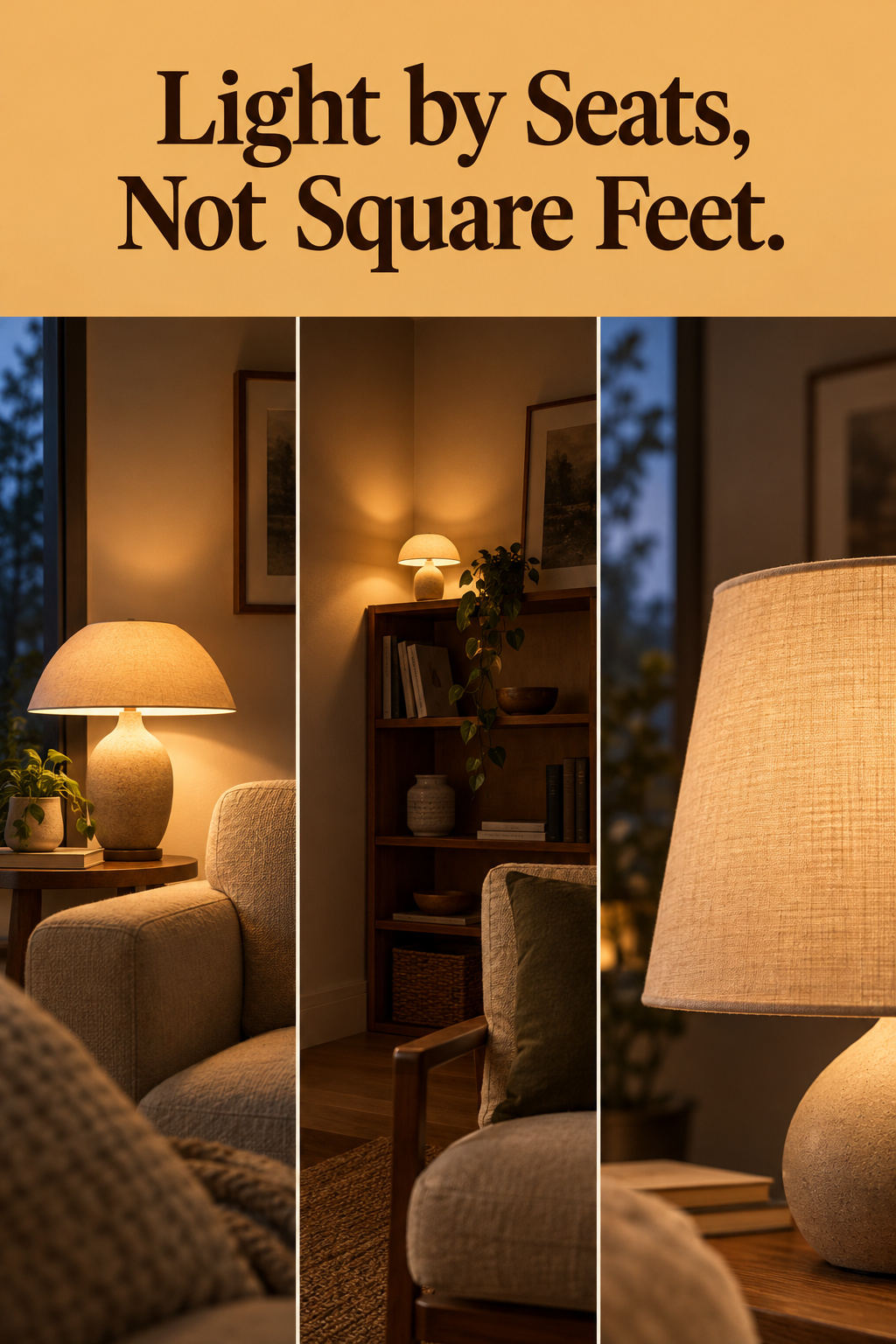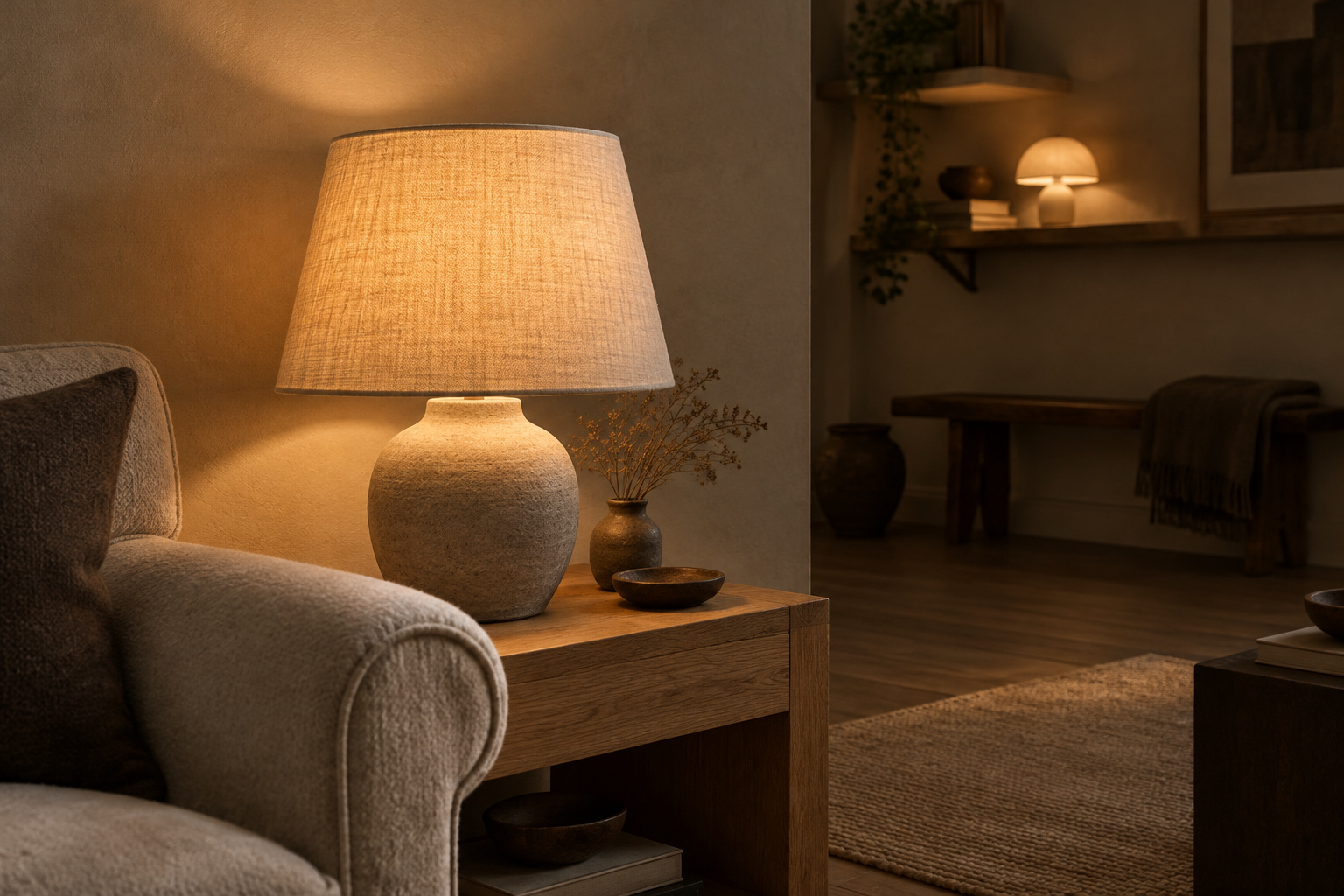
Nobody publishes a lamp count per seat, and the living room lamp ideas that exist start from floor area, so you can own three lamps and a ceiling fixture and still find the sofa end too dim to see a face.
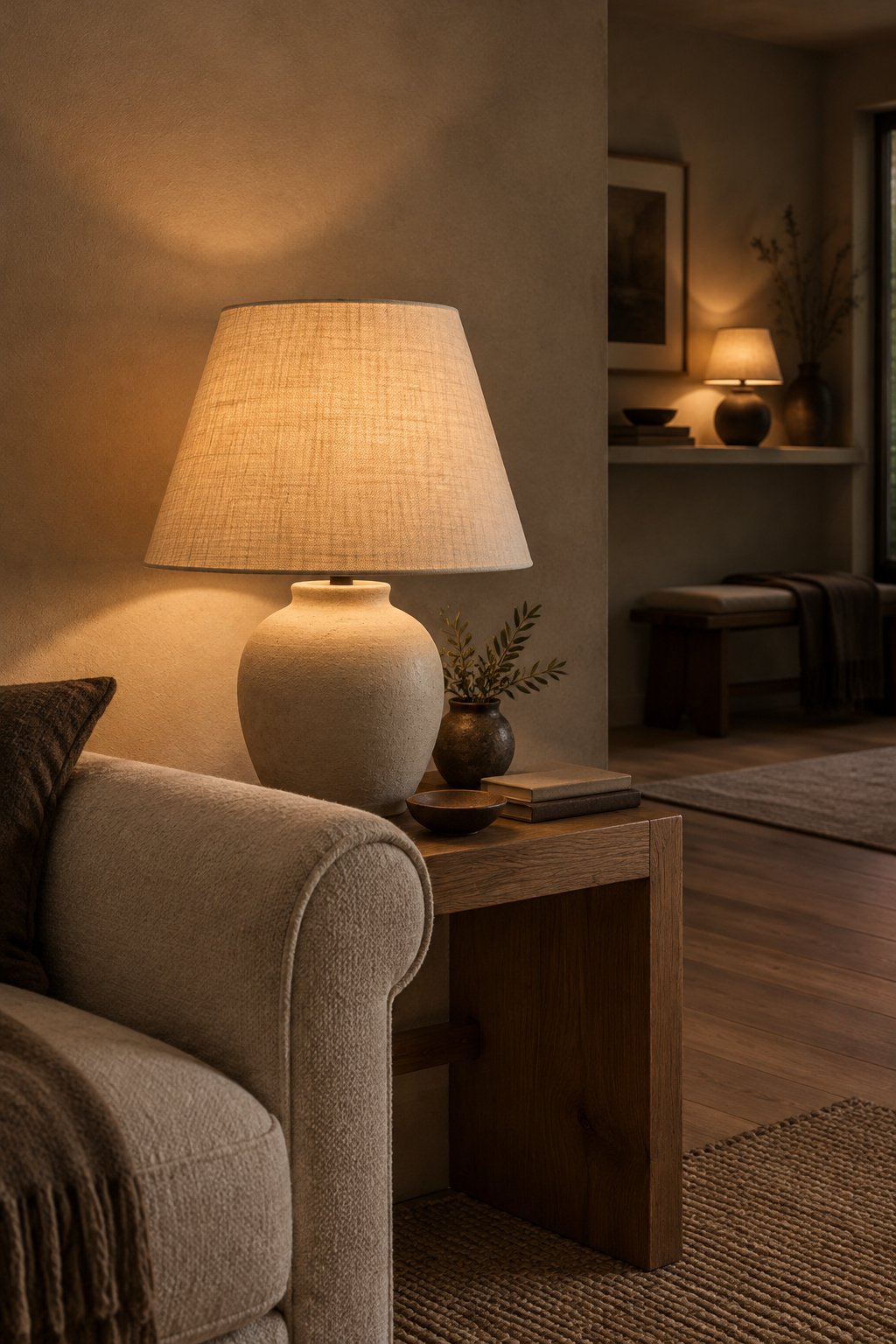
In Denmark the darkest weeks of mid-December give about seven hours of weak daylight, and the sun sets around half past three. The evening room is where people live for months, and the light Danes want there is warm, dim and partial: warm tones across a space without lighting all of it. The places people sit are bright; the rest falls away.
I count lamps the same way: one pool of light at each seat used after dark, its shade measured to that person’s eye line, and one low light in the far corner.
TL;DR
- Count lamps by seats: one at each place someone sits after dark, plus one low light in the far corner. Two used sofa ends and an armchair means four lamps.
- Measure from the seat. Eyes sit 27.5-33.9 in above it, so 45.5-51.9 in on an 18 in cushion; set the shade’s lower rim at or just below your own taped eye line.
- A natural or beige linen shade warms a neutral wall, white linen stays close to neutral, and a dark shade throws light only up and down.
Count Your Living Room Lamps by Seats, Not Square Feet
Light is the first material of any room; in a winter country you learn that or live badly. My first winter in Minnesota taught it to me plainly: the corner I had chosen as the best in the house turned out to be the darkest from November on.
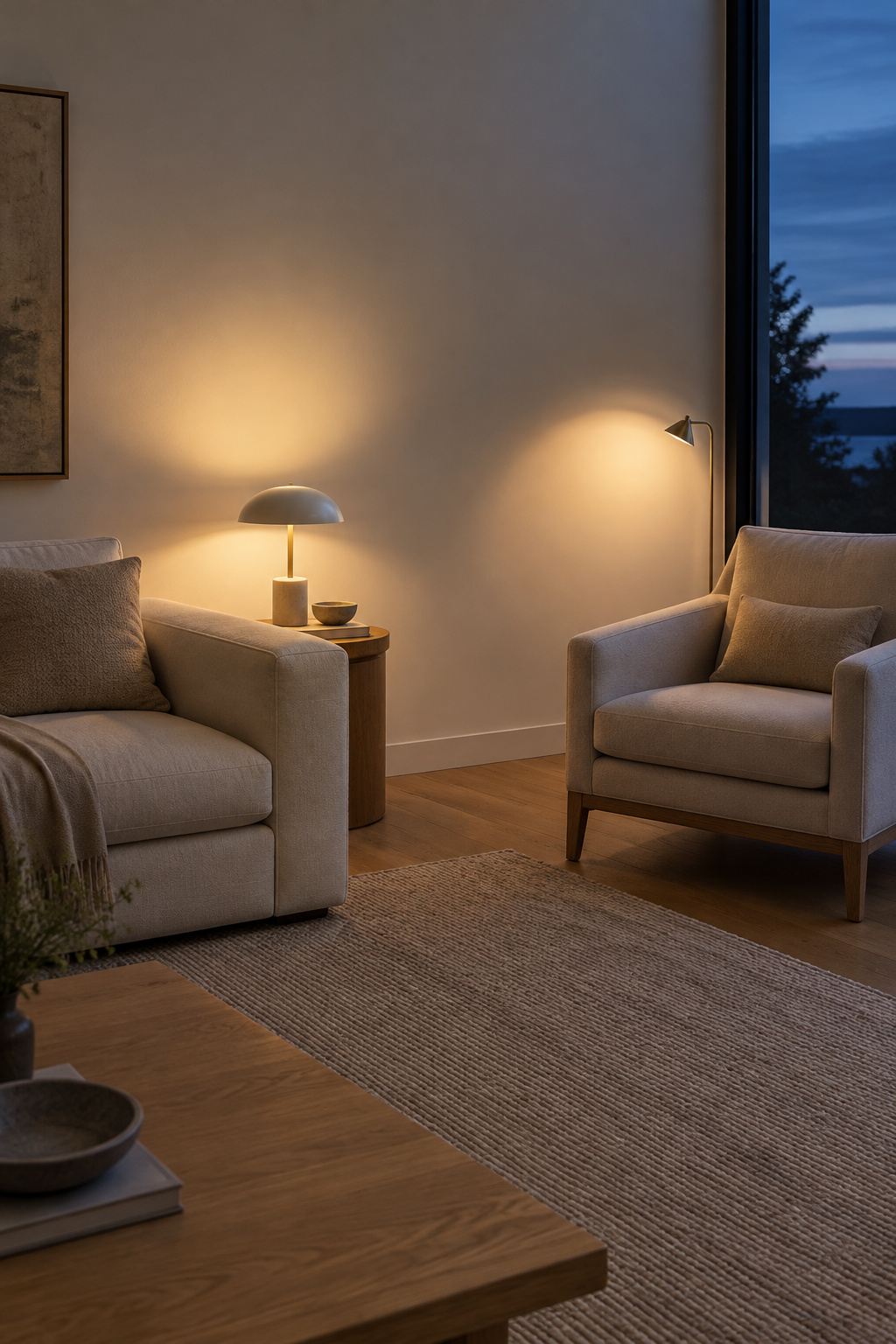
A formula by room size can say a room has enough light in total and still leave every seat in shadow. Lamps belong where the faces are. So count the seats, in the evening.
- Sit in every place someone actually sits after dark: each used end of the sofa, the armchair, the bench by the window if anyone reads there.
- At each one, ask two questions. Can you read a page in your lap? Can you see the face of the person across from you?
- Every seat that fails gets one pool of light of its own.
- Add one low light in the corner farthest from the seats.
For a room with a three-seat sofa where two people sit at the ends, and one armchair, the count comes to four: two lamps at the sofa, one at the chair and one in the corner. An armchair that only ever holds a coat needs nothing.
Totals per room for a layered scheme are covered in the moody living room lighting guide. The seat count fixes the part most rooms get wrong.
Measure Every Lamp From the Seat
Shops measure lamps from the floor. People sit on cushions. Julian Page, head of design at BHS, calls the golden rule short: when you are seated, the bottom of the shade should sit around eye level so the bulb is hidden.
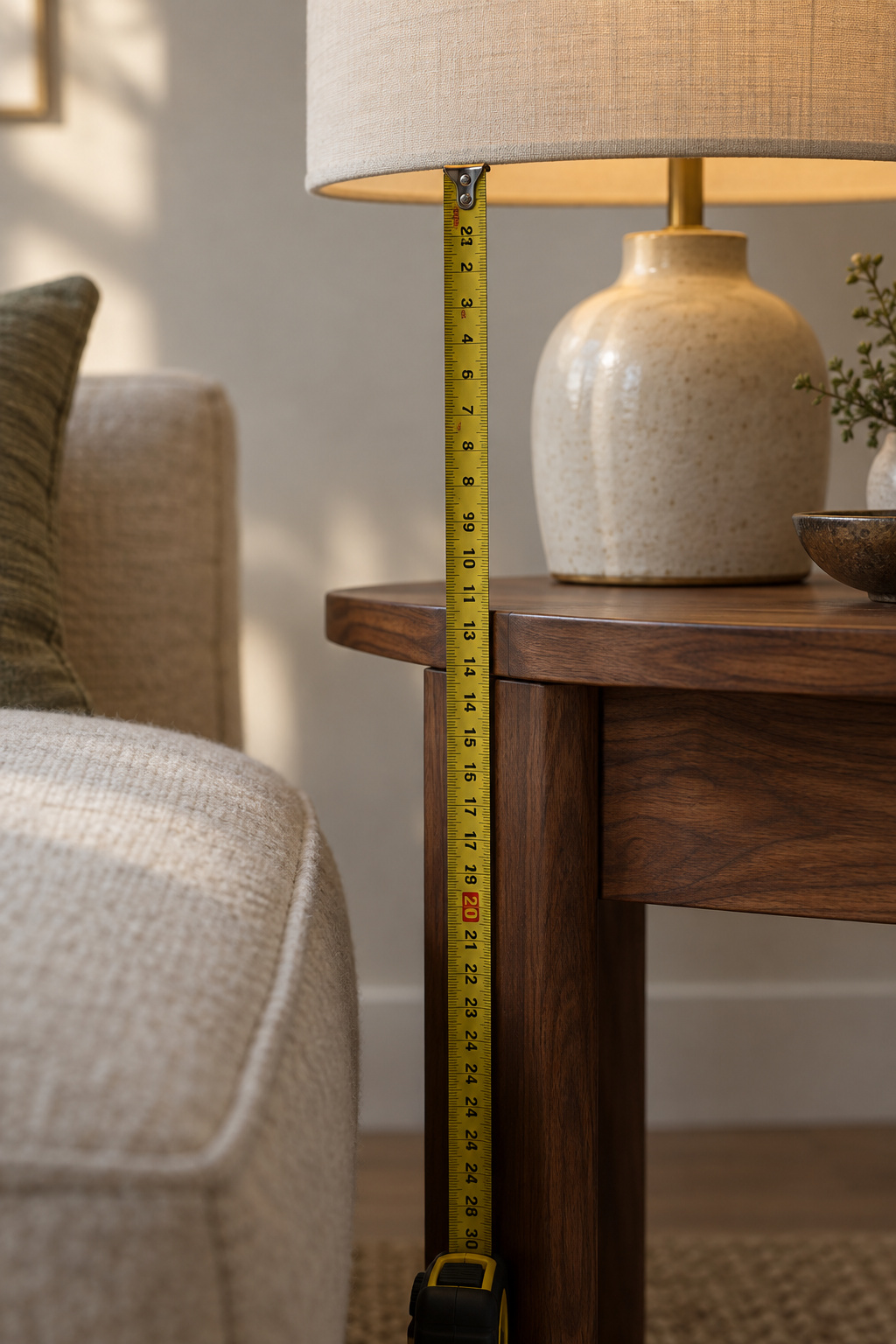
The inches are less settled. A popular figure puts seated eye level beside a sofa at roughly 38-44 in. Measured people sit higher: eye height above the seat runs 27.5-33.9 in across most US adults in a 2012 US Army survey. On an 18 in seat, that is 18 + 27.5 = 45.5 in up to 18 + 33.9 = 51.9 in. Soft cushions and a slouch pull the real figure down.
| What you measure | Typical figure | What it means for the lamp |
|---|---|---|
| Sofa seat, floor to cushion top | 17-19 in | Your starting point |
| Sofa arm | About 24 in (22-28 in on maker sheets) | Side table within about 2 in of it |
| Sitting eye height above the seat | 27.5-33.9 in | Add it to your seat height |
| Upright eyes on an 18 in seat | 45.5-51.9 in | Shade bottom at or just below |
| Popular shop figure | Roughly 38-44 in | Lower than the survey range |
The row I trust is the one you make yourself. Sit as you sit in the evening, have someone hold a tape beside you, and mark your eye line. That is the height of the shade’s lower rim.
Table Lamps Beside a Sofa
Subtract the table height from your mark, and what is left is tabletop to shade rim. A shade is usually about a third of the lamp’s height, and it should not hang past the table edge. If you can see the bulb from the cushion, change that one number before you change the lamp.
Floor Lamps Behind a Chair
A floor lamp flips the direction. Its shade bottom sits at or just above seated eye level, so the bulb stays out of your sightline as you look ahead. Stand it slightly behind or beside the chair, so the light comes over your shoulder and the room gains depth instead of glare.
Put One Low Light in the Far Corner
A room with every seat lit can still feel small if its corners stay dark. Left in shadow, the room appears to contract; a completely dark corner more or less vanishes.
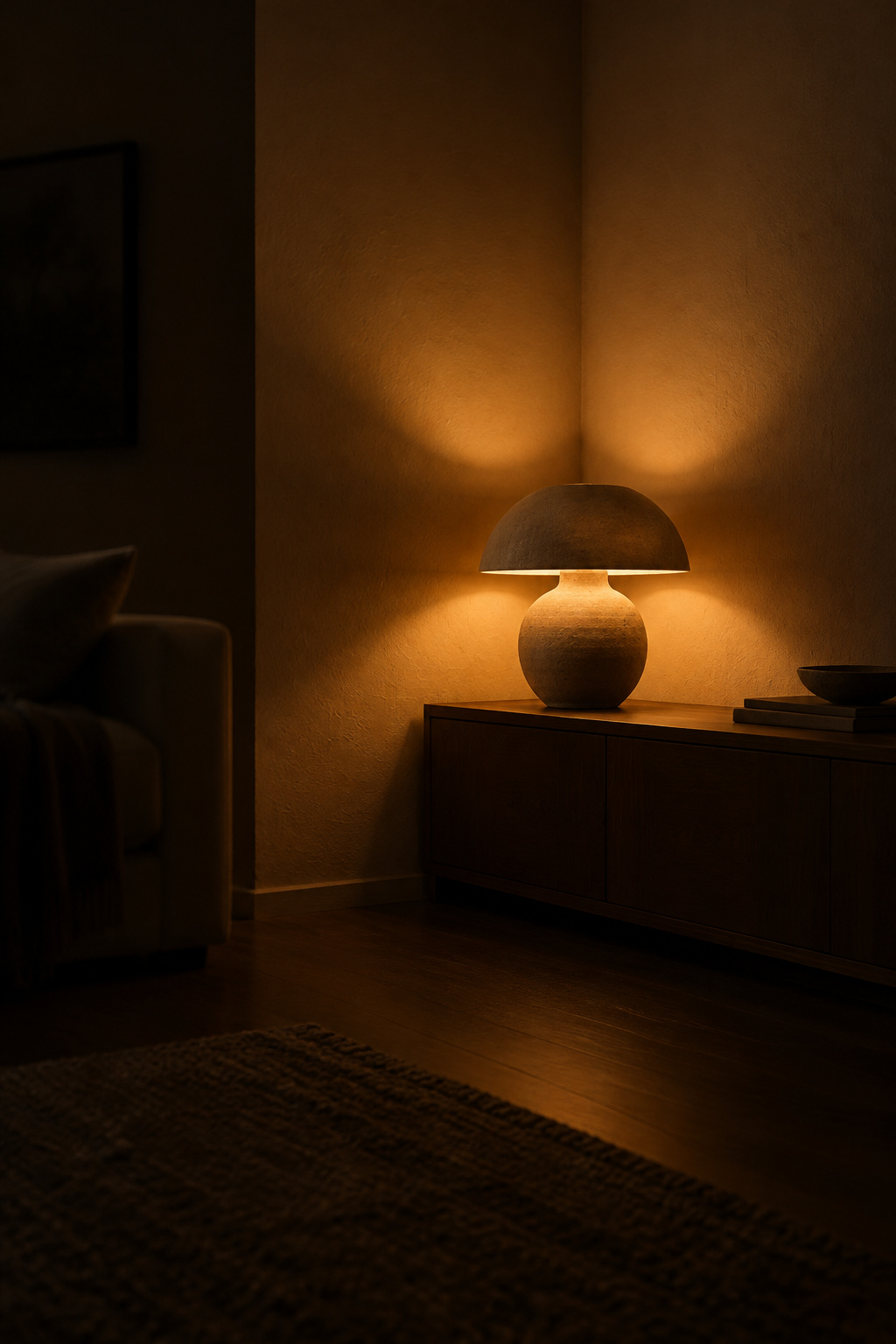
The fix is one small lamp placed in the dark, not aimed at it. A small table lamp on a shelf end, a low console or a side table in the far corner puts the light source inside the shadow, and the glow spills onto the floor. It does not need to be bright.
Nobody publishes a height for this lamp. Keep it lower than the lamps at the seats, so the room steps down in light from where people sit to where nobody does.
This is the lamp people leave out, because in October the corner looks fine. Place lamps for the darkest month of your year. I ski to the end of the road and back most winter mornings, and the evenings are the long part.
What the Shade Does to a Neutral Wall After Dark
After dark a neutral wall takes the color of whatever pool of light lands on it, and the shade decides that.
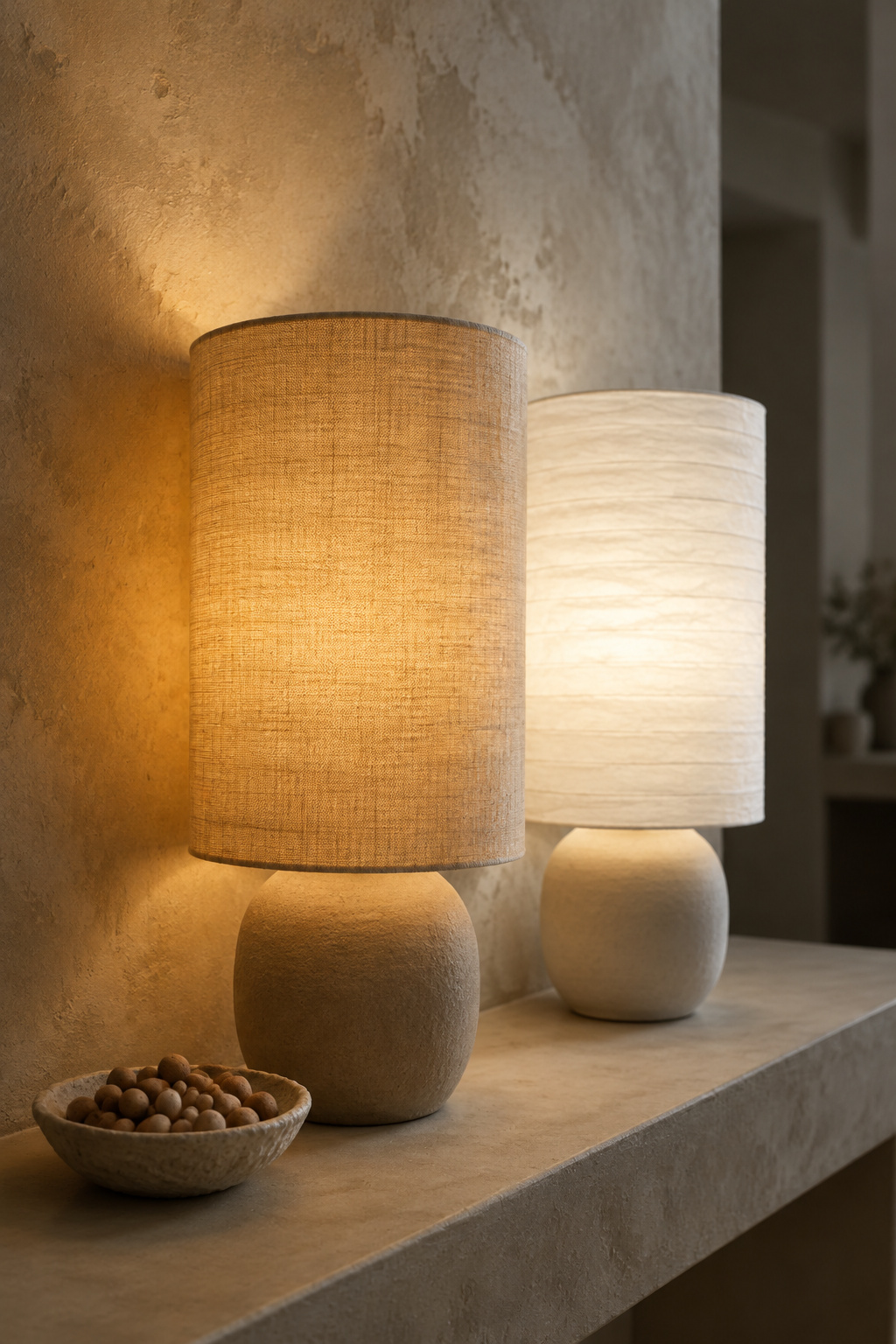
White linen gives close to neutral light. A natural or beige linen warms it. A colored shade tints the whole circle of light. A dark or opaque shade behaves like a metal one: light leaves only from the top and bottom, and the wall between stays dark. That suits a lamp near the television and fails one that has to light a seat.
Look inside the shade too. The lining matters more than the outside color. A white or gold lining sends more light out; a black one keeps it in. A warm white wall under warm lamp light reinforces itself, and bulb color and dimmers are covered in the moody living room lighting guide.
Light that skims a textured surface from the side exaggerates its shadows; light that washes it evenly flattens it. That side light brings out a limewashed wall under lamp light.
Living Room Lamp Ideas That Fit the Count
Once you have the count, ask what each seat needs, and the lamps follow.
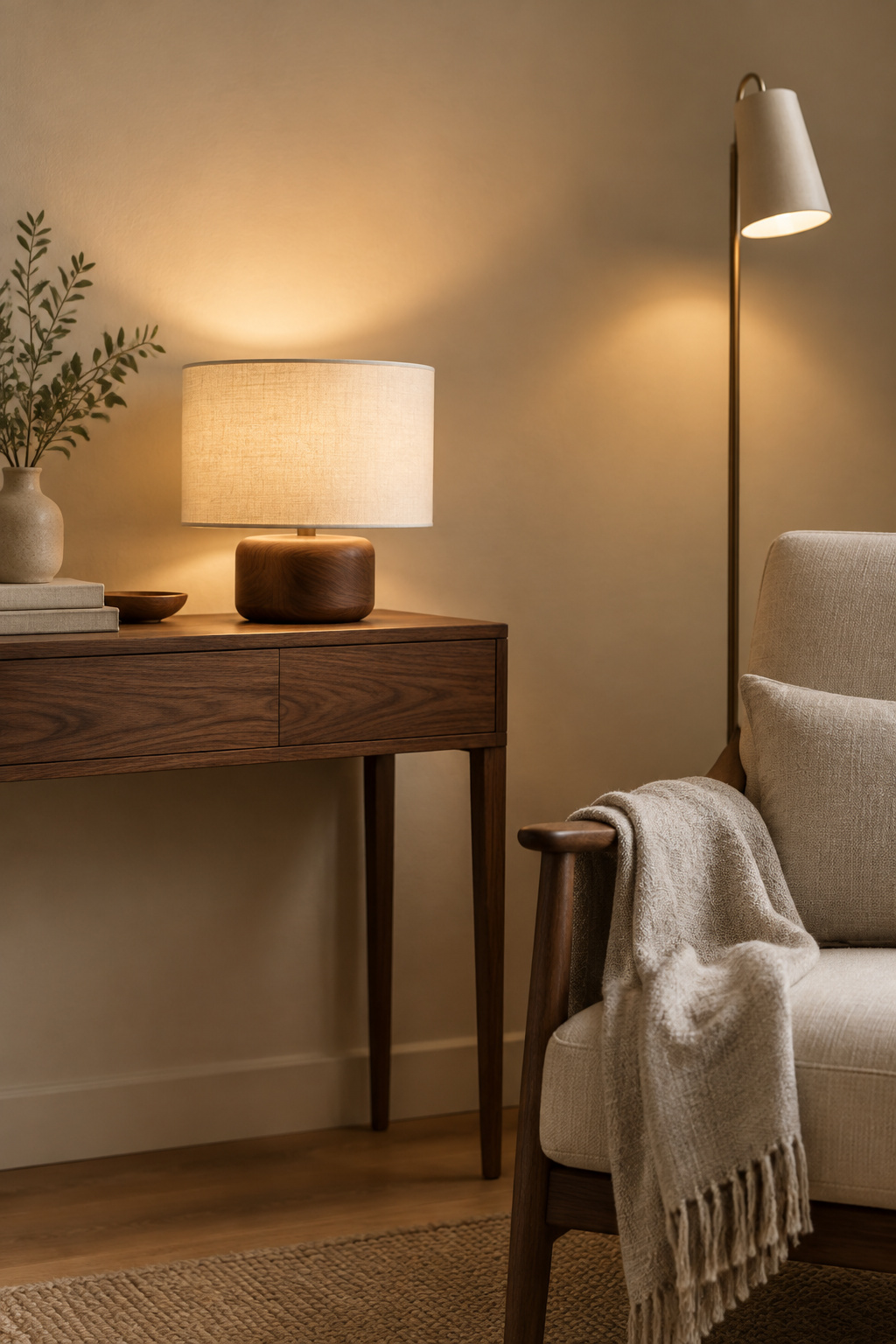
- A table lamp at each used sofa end. If two lamps flank the sofa, make them the same height and keep the shade shapes related; a drum beside an empire shade clashes.
- A floor lamp behind the armchair. In a tight room, an arc lamp spanning 50-75 in can reach over a sofa where a table will not fit.
- A small low lamp on a shelf or console in the far corner. Where there is no outlet nearby, a cordless lamp sits on a bookcase top or a shelf end without a cord to hide.
Mix the heights; avoid all tall or all small. Designer Lucy Harrison says not to turn your living room into a lamp store. Four lamps for four jobs is enough. Enough is a good word.
A lamp on an oak console lights the oak before anything else, worth remembering when you are mixing the wood tones your lamps light.
Plugs, Switches and the Last Check Before You Call It Done
Outlets often decide more than design does. US electrical code lets a living room have a wall-switched receptacle instead of a ceiling light, so a room without a ceiling fixture probably has one switched outlet. Put a seat lamp on it, so the room comes on at the door. A plug-in smart plug groups the rest so they come on together.
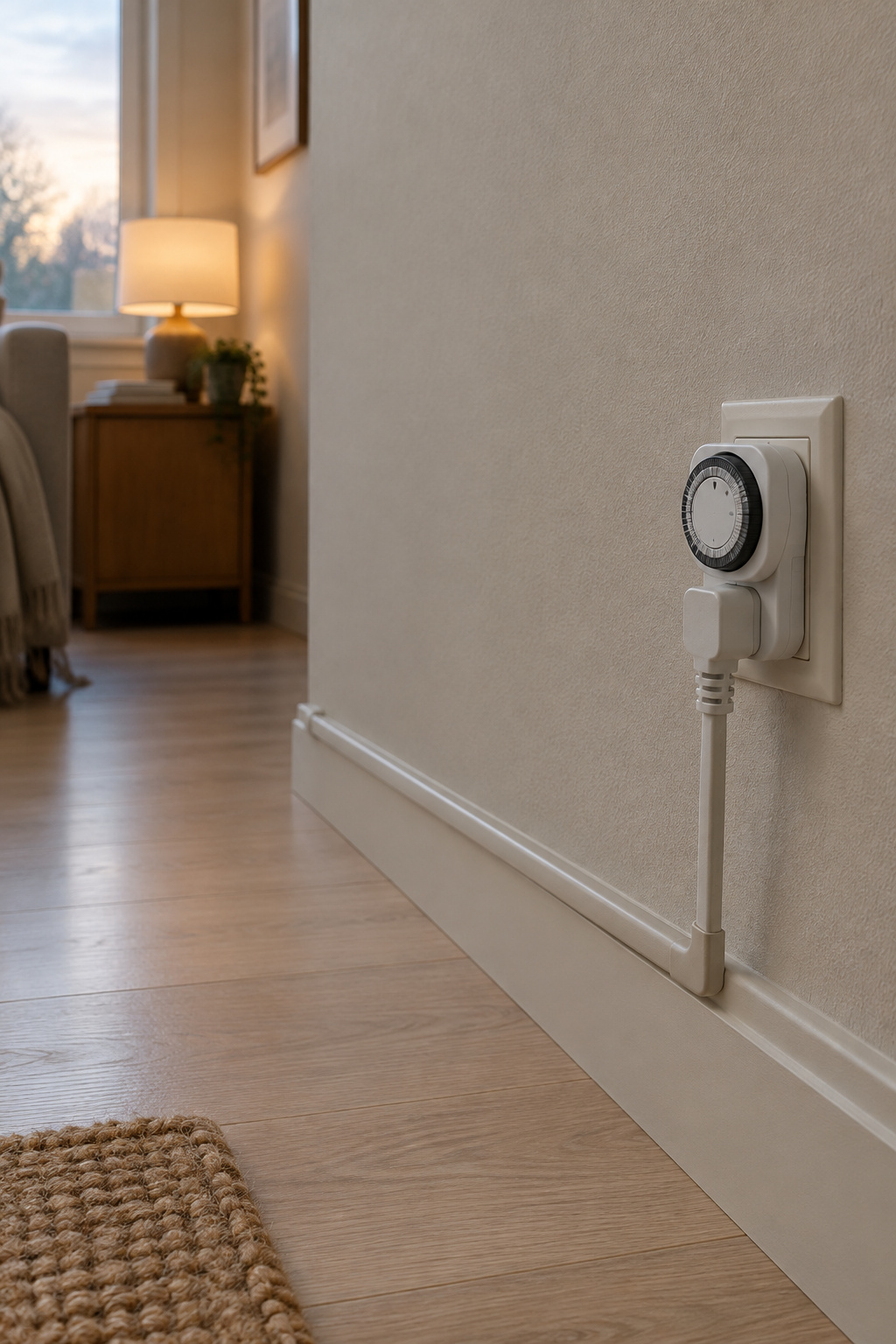
Do not run cords under a rug. The Consumer Product Safety Commission warns, in a 1990 news release, that a rug stops the cord releasing heat; the advice still stands. Along a wall, a paintable adhesive cord cover hides it.
The last check happens at dusk: with every lamp on, sit in each seat you counted. Find the weakest and fix only that. If a seat stays dim with its own lamp lit, look at the shade, the wall, the rug and the curtains before you buy another lamp. For the wider question of why some neutral living rooms feel cold, start with the walls and the sofa.
Every lamp in the room now has a job and a number: one for each seat that failed, one low in the far corner, each shade rim at the height your tape found. On an 18 in cushion that is 45.5 to 51.9 in for an upright adult, less if you slouch. The tape on your own sofa settles which.
FAQ
Do living room lamps have to match?
No. Lamps look better with a link in color, material or style than as exact copies. Match the two that flank a sofa, or two that share one console, or the light looks unbalanced. Otherwise, different lamps work well together if they are the same height and their shade shapes belong to the same family.
How tall should a lamp on a console table behind the sofa be?
Work it from the seat. A console sits at the sofa back or an inch or two below it, and backs run 30-36 in. On a 30 in console, a shade rim at 45.5-51.9 in sits 15.5-21.9 in above it. With the shade a third of the lamp, that is a lamp of roughly 23-33 in. Check it from the cushion.
How do you run lamp cords across a rental living room without drilling?
Use a paintable adhesive cord cover along the wall or baseboard, and test it on a hidden patch of paint first. Never tuck the cord under a rug, because the cord cannot shed heat there. Where no outlet is close, a cordless lamp avoids the cord, and an existing wall-switched outlet may already control a lamp.