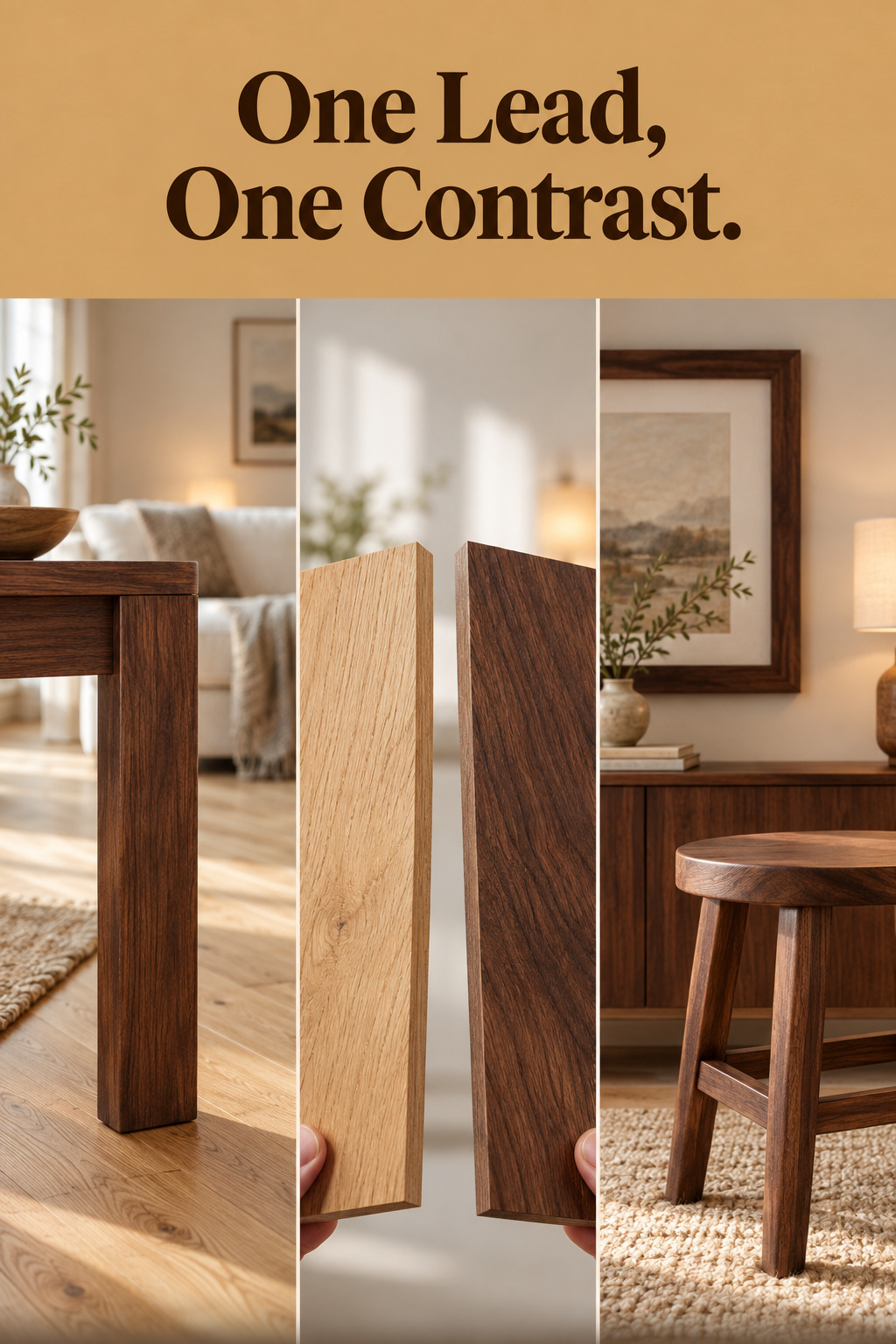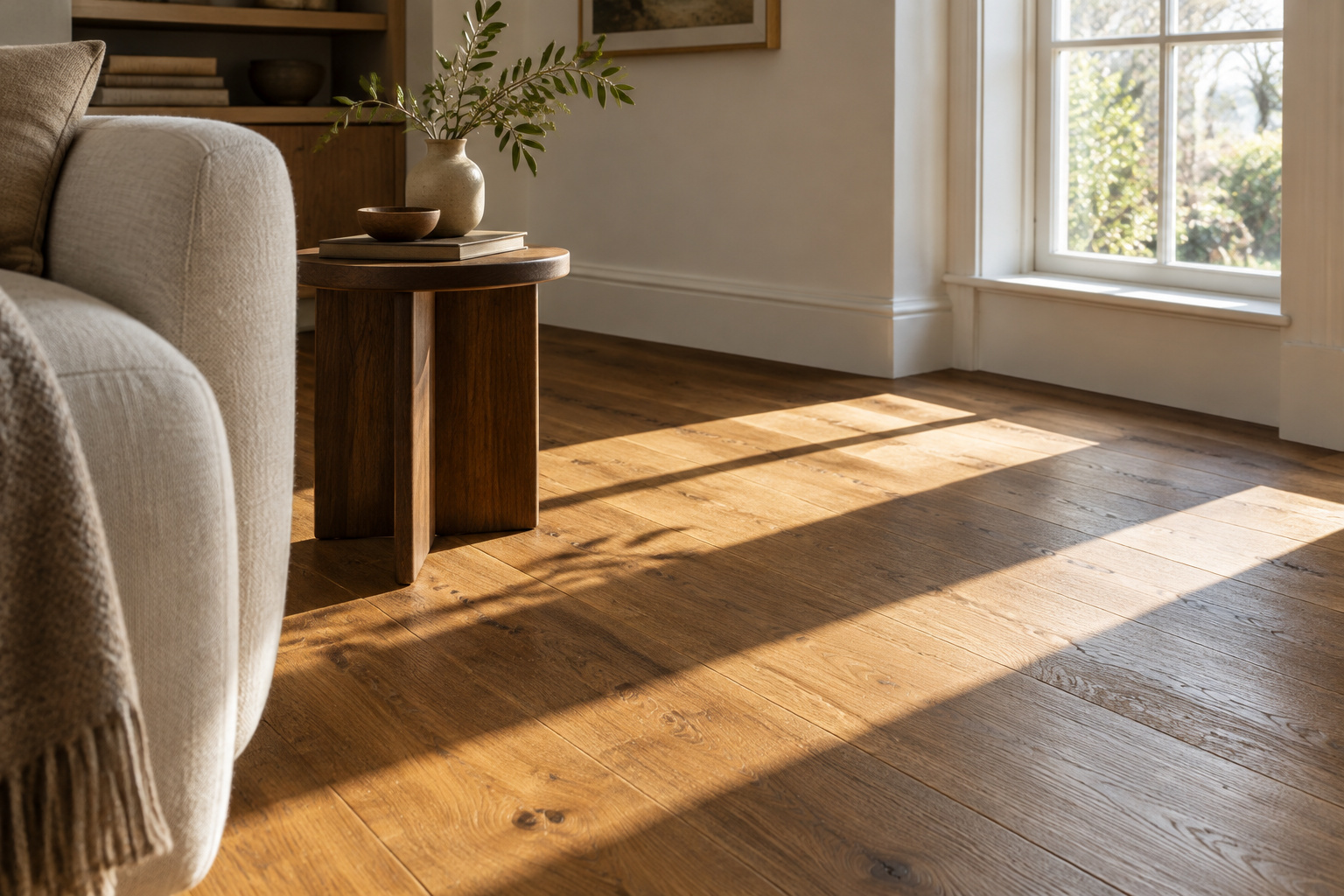

Does the oak floor belong with the walnut console, and does the pine shelf by the window belong with either of them? Mixing wood tones in a living room that is otherwise beige, greige and white can stall on exactly that question. Most guides say match the undertones and keep to three woods. You have three woods. They still look slightly off together, and nothing tells you which one to change.
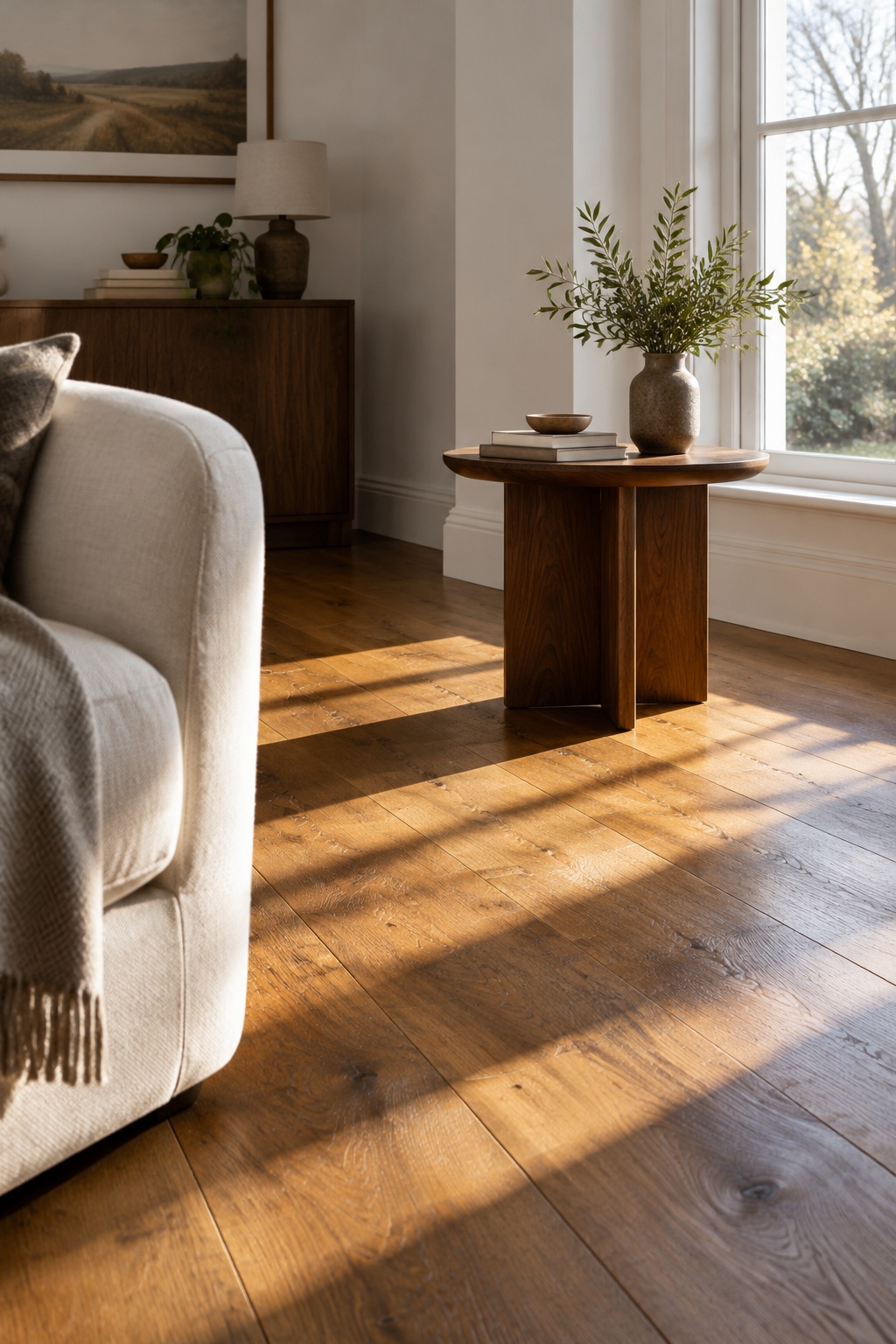
People have answered cold rooms with wood for a long time. Parquet de Versailles became the standard floor for the formal rooms of 17th-century French chateaux. Before that, grand houses had floors of stone or plank. One account says wood replaced the marble in the King’s bedroom because the marble was too cold. True or not, a beige living room is cold for the same reason, and wood still answers it.
Read the undertone, let one wood lead, add one clear contrast, and repeat every tone at least once. When it still fails, change one piece.
TL;DR
- Read each wood’s undertone (red, yellow or olive, grey) before its depth. Woods in the same undertone family mix light and dark freely; woods that lean different ways are where clashes happen.
- Let the floor lead, because it is the largest wood surface in the room. Furniture should share its undertone and differ clearly in depth, light against dark, never one shade off.
- Repeat every wood tone at least once with a frame, a tray, a shelf or a lamp base. If the mix still looks wrong, change the one piece whose undertone leans the other way.
Why Wood Is the Warmth a Neutral Living Room Is Missing
A room of beige, greige and white has no warm material of its own. White walls are not neutral in north light. They go grey and cold. I used to recommend all-white kitchens to everyone, until one January under a north window showed me how cold they look.
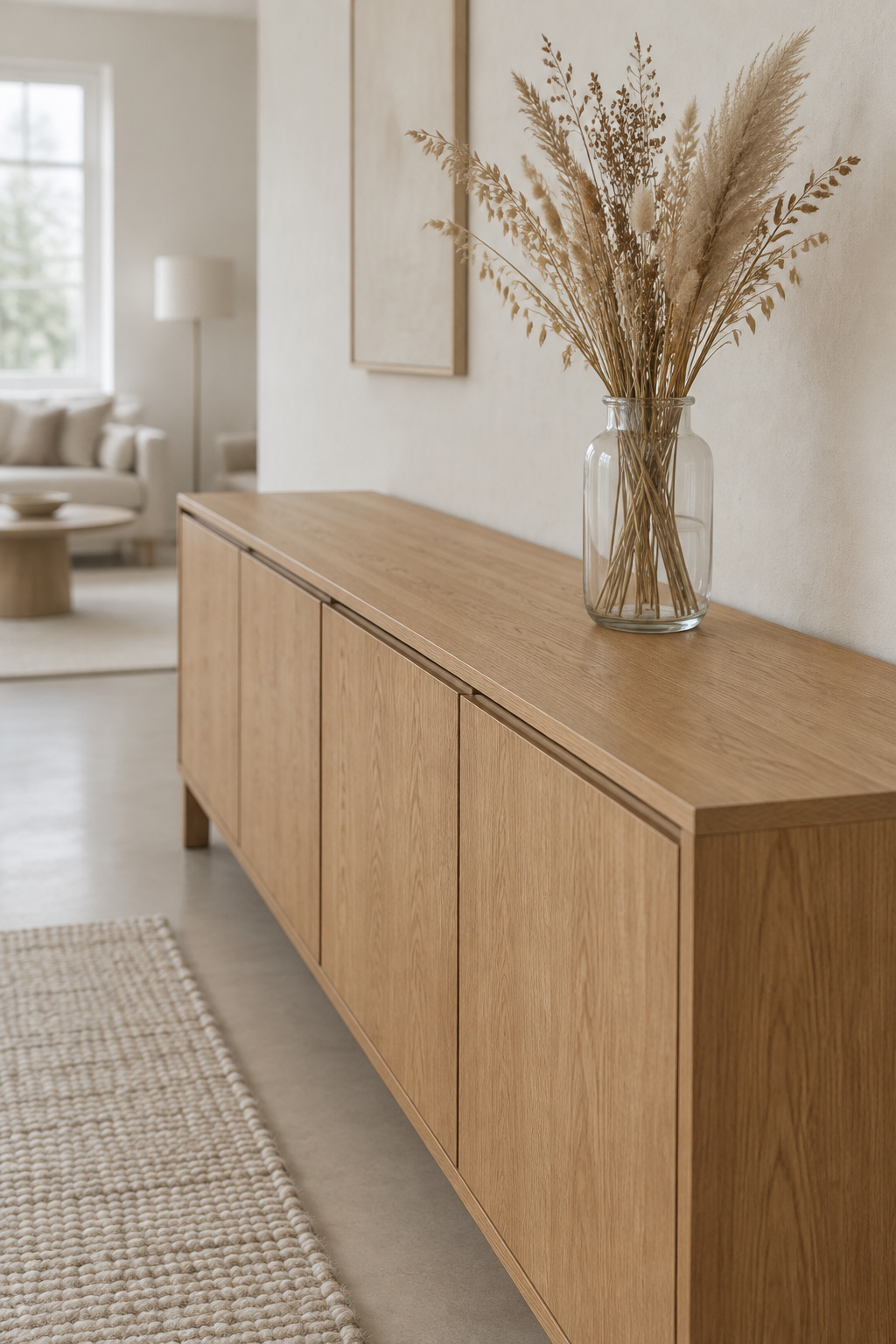
So the warmth has to come from somewhere else, and wood is a reliable source. A designer quoted in Homes & Gardens describes her clean-lined rooms as “anchored by wood, given warmth by its texture and tone.”
My own kitchen still has its original birch cabinets. I have only ever rehung the doors.
Before you buy anything, count the wood you already own: the floor, the shelving, picture frames, a coffee table, the sofa legs. Mark the largest. That one is your lead. Wood is one part of warming up a neutral living room; the sofa, the walls and the soft things around them do the rest.
Read the Undertone Before You Read the Shade
Two separate dials decide whether woods get along. Depth is how light or dark a wood is. Undertone is the direction it leans: red or pink, yellow or olive, grey. Most people shop by depth, and most clashes happen on undertone. The designer Christine Vroom, quoted in Sunset, says it plainly: “Woods can lean warm, cool, yellow, or red, and that is where clashes usually happen.”
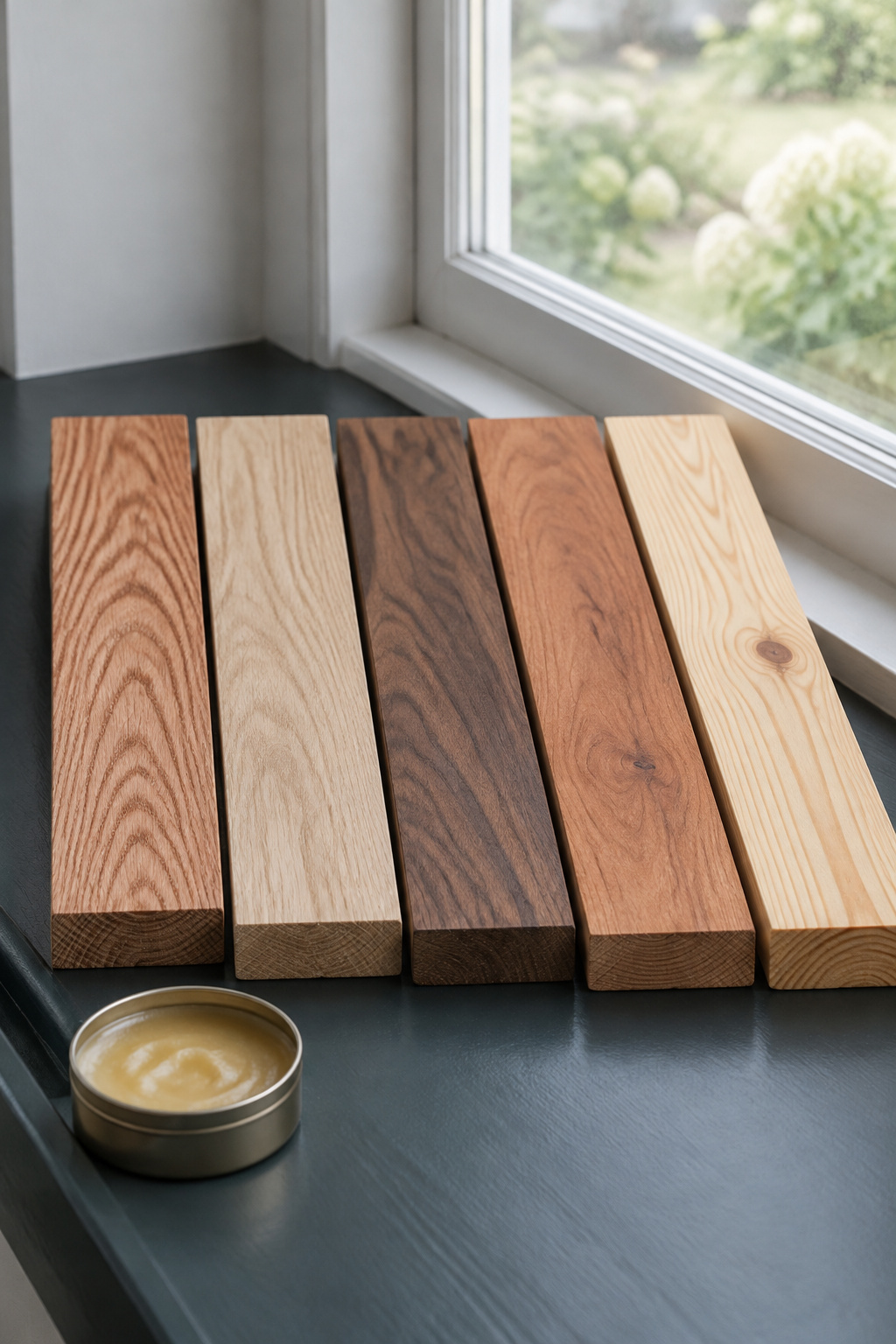
The table follows The Wood Database’s description of each species. Read every row as typical: stain and finish can shift the undertone.
| Wood | Typical undertone | Typical depth |
|---|---|---|
| Red oak | Reddish cast | Light to medium brown |
| White oak | Olive cast | Light to medium brown |
| Black walnut | Varies by board: grey, purple or reddish | Pale brown to dark chocolate |
| Black cherry | Pinkish when cut, reddish with age | Darkens to medium reddish brown in light |
| Eastern white pine | Slight reddish tinge | Light brown, darkening with age |
White oak and walnut are the rows to distrust. Flooring sellers call white oak anything from neutral-to-warm to ashy and cool, and sell walnut as both warm and chocolate-cool.
So use the daylight test. Put the pieces side by side near a window, or hold a drawer against the floor, and ask which way each one leans. Look again in the evening under lamps. If two woods lean the same way, you can mix light and dark freely. If they lean different ways, no difference in depth will reconcile them. Try it in February, on a grey day.
Mixing Wood Tones in a Living Room Starts With the Floor
The floor is the largest continuous wood surface in a home, so it sets the key. Christine Vroom likes “one wood tone to lead, with others playing a supporting role,” and in a living room that lead is almost always underfoot.
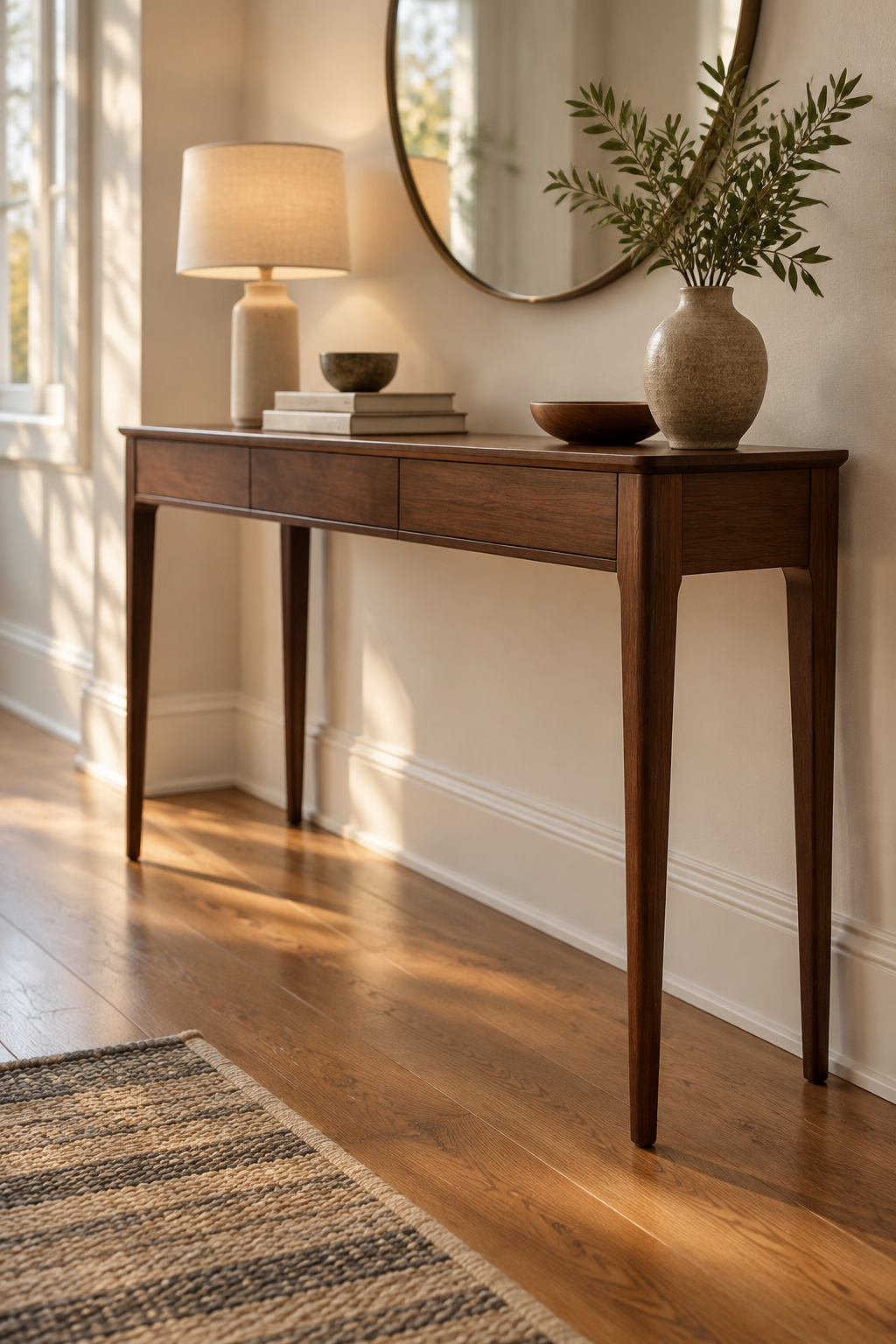
So match the furniture’s undertone to the floor and change the depth, not the undertone. A light white oak floor takes a darker walnut console well, provided both lean the same way. Two dark woods do the opposite. A designer quoted in Veranda warns that “dark wood furniture on a dark wood floor will get lost.” If your floor is dark, the contrast has to come from a lighter wood.
Where a piece will not quite settle against the floor, put a rug between them. The fabric breaks the contact of wood on wood, so the eye stops comparing the two.
When the Floor Isn’t Wood
Tile, carpet or plain vinyl hands the lead to the largest wooden piece in the room: the sideboard, the shelving, even the sofa’s legs if that is all there is. Wood-look vinyl plank and laminate count as wood here. Judge their temperature as you would a real board. Oak, maple and hickory looks often run yellow, gold or grey; cherry and walnut looks run deeper red or brown.
How far your woods run from light to dark is part of the room’s wider range, and how wood fits a tonal neutral scheme takes that further.
Add One Clear Contrast, Not Three Near-Matches
Designers keep naming the same failure: the near-match. Ashley Clark of Skout Interior Design told Sunset: “When wood tones are too similar but not quite right, that’s when things feel off. Mix woods that are clearly different.” A small gap in depth looks like you tried to match and missed; a wide one looks deliberate.
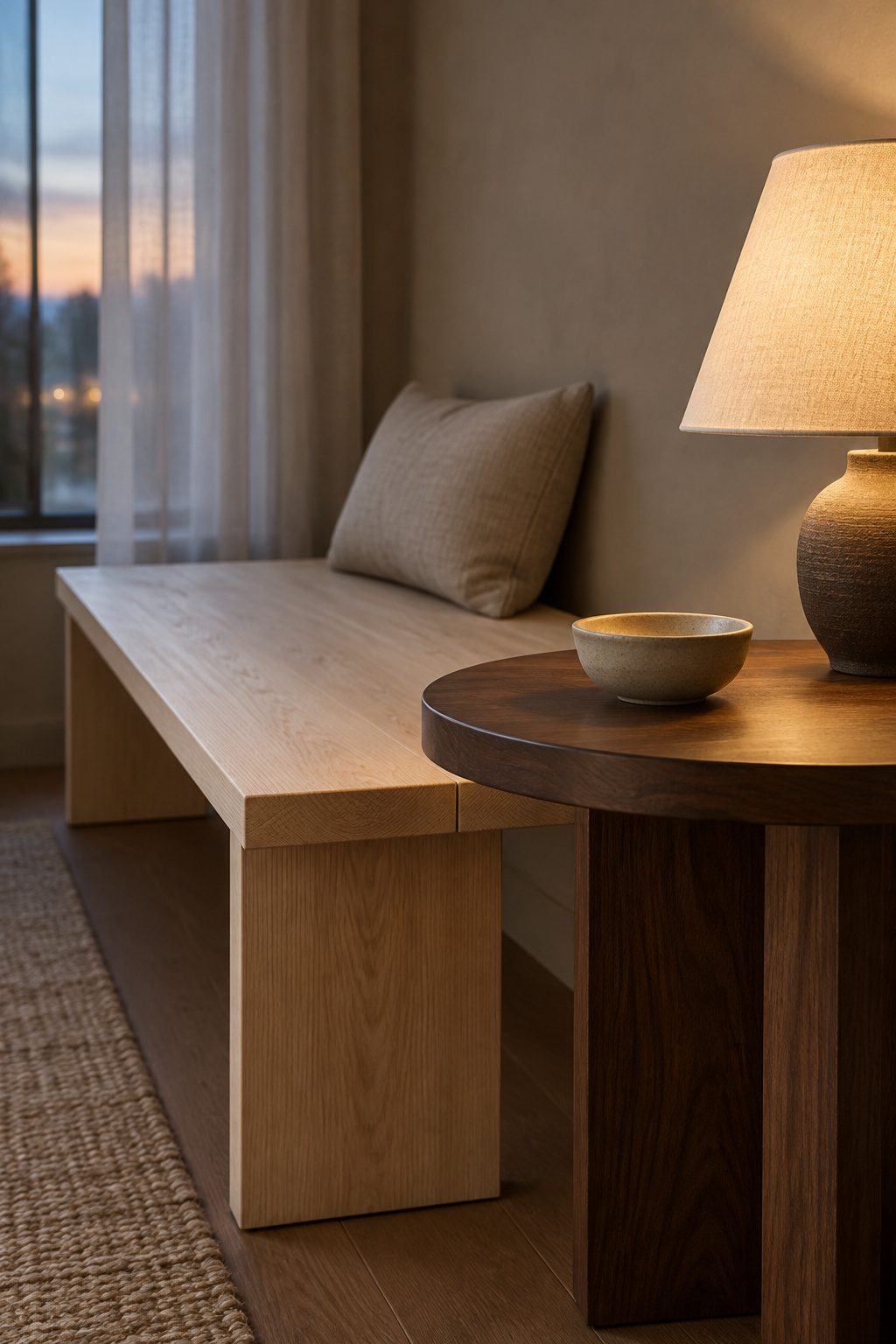
So choose the contrast by the floor. A light floor takes a clearly darker wood; a dark floor takes a clearly lighter one. White oak and walnut work together because they are so different. White oak and weathered oak fall flat because they almost agree. In a room with little other color, the lead wood is already doing the warming, so I let the contrast piece run bolder in depth than I would first choose.
The Rule of Three, Weighed Against Your Room
You have probably met the rule of three: no more than three wood tones in a room, usually a base, a contrast and an accent. It is widely repeated designer shorthand, not a standard. Houzz has printed it as the safe maximum, and the four designers Sunset asked all landed on two to three. Some say two.
The rule caps how many woods you use and stops there. It never says which wood leads, or how far apart in depth the woods should sit. In a living room where the floor already supplies the warmth, two woods are often enough: the floor and one clear contrast. A third is an accent, and an accent that appears once looks lost.
Repeat Each Tone at Least Once So the Mix Reads Chosen
A walnut stool alone in a room of oak looks like something left behind after a move. Give it a walnut frame on the far wall and it looks planned. Clark’s advice is the clearest version: “If you introduce a wood tone once, echo it somewhere else, so it feels purposeful rather than random.”
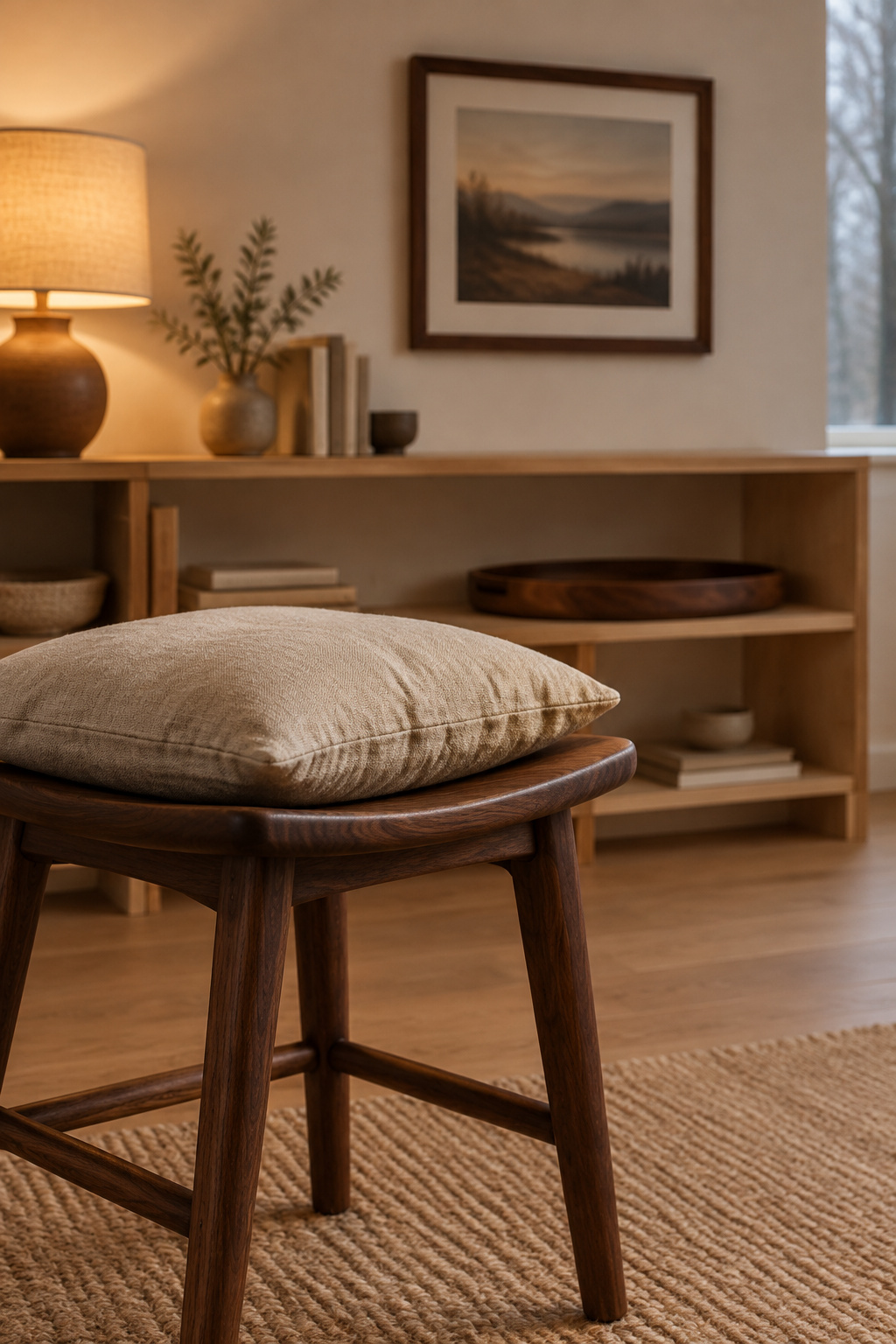
The repeats don’t have to be furniture. These are the rules I keep:
- Repeat each tone at least once. A frame, a tray or bowl, a shelf, a small table or a lamp base all count, and none of them asks you to buy another sideboard.
- Spread the repeats across the room and up its height, so one corner doesn’t collect all the walnut.
- Keep the repeat’s sheen close to the original’s, so the two look like one tone rather than two attempts.
Then look at the room after dark. Wood color shifts a great deal between morning sun and evening lamplight. I find it warmest under low, shaded light, so plan lamps that make wood glow after dark alongside the wood itself.
When the Mix Still Fails, Change One Piece
Sometimes the room still looks accidental. Don’t start replacing furniture. Diagnose in this order:
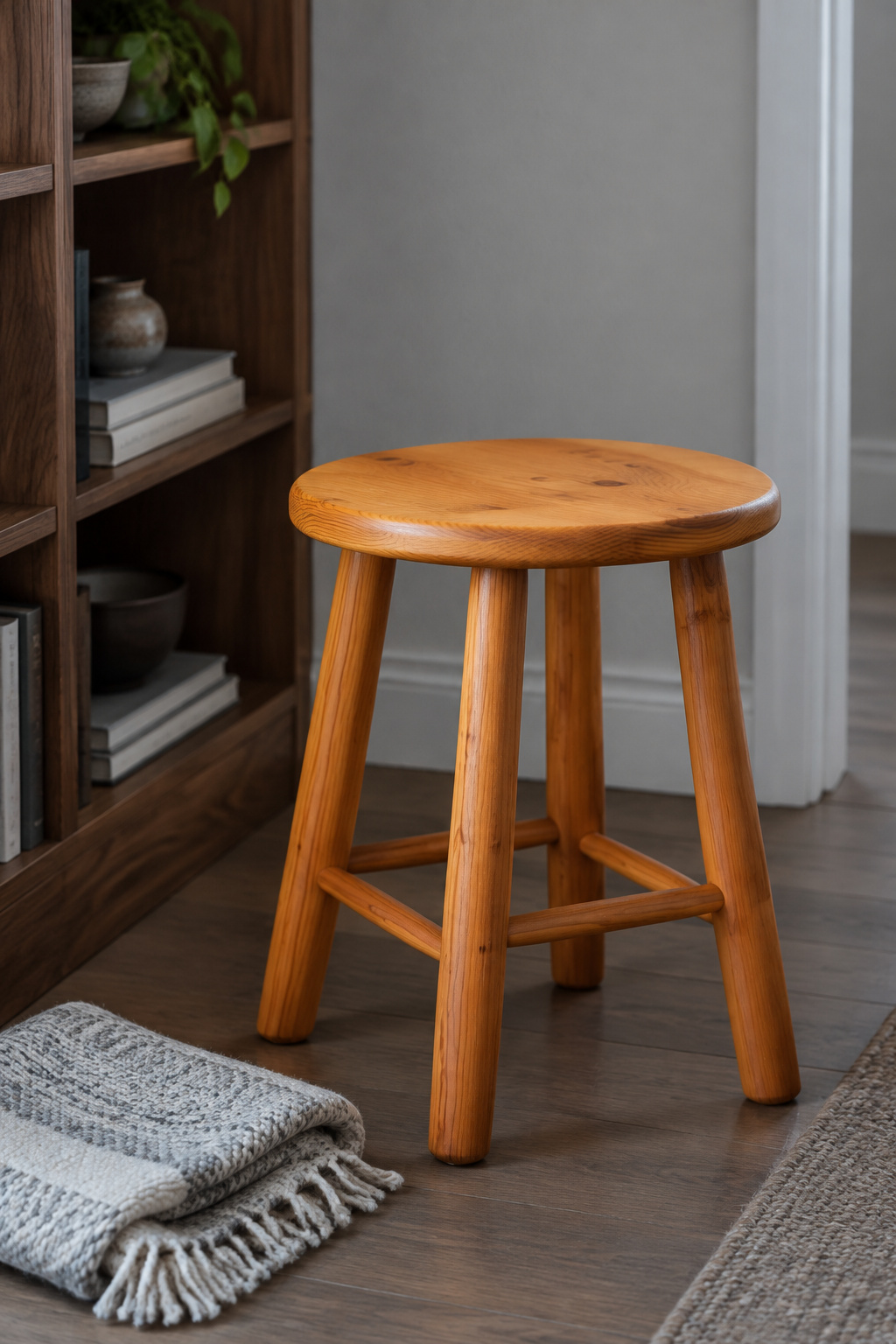
- Hold each piece against the floor in daylight and find the one whose undertone leans a different way.
- Look for a near-match pair, two woods only a shade apart.
- Look for a tone that appears only once.
Fix the first problem you find, with one move. A piece in the wrong undertone gets swapped, or moved to another room. A near-match gets a rug between it and the floor, or gives way to something clearly lighter or darker. A lone tone gets a companion. Restaining a piece lighter will not work either: gel stain and toners can deepen a wood or even it out, but they cannot lighten it. There is no going rate for any of these fixes. A swap costs whatever the replacement costs, and a frame or a tray is the reversible version, which matters if you rent.
So one wood leads, usually the floor, and you read undertone before depth. Pick one clear contrast instead of a near-match, and repeat every tone. When it fails, change the piece that breaks the undertone. And don’t buy a wood because it is the color of this year. A room should be plannable for ten years, and a walnut bought for a trend is furniture for a photograph.
The wall behind all this wood is a separate decision. Choosing a greige against a floor you can’t change has its own logic, and I would settle the wood first.
FAQ
How do you mix wood tones when you rent and can’t change the floor?
Treat the rental floor as your lead and match furniture to its undertone, changing only the depth. Rental floors are often a medium, warm engineered wood or a greige vinyl plank, so decide which way yours leans first. A natural-fiber rug on a felt or breathable pad buffers the furniture; avoid rubber or PVC backing against the finish.
Can painted or black furniture sit alongside natural wood in a living room?
Yes. Black wood or black metal adds a neutral note that steadies a room of mixed woods, and painted pieces sit outside the undertone question altogether. Treat black as one more tone and repeat it so it looks intended. One caution: black makes orange-toned pine look more orange, so keep those two apart.
Does the finish (matte, satin or gloss) matter when mixing woods?
It matters, and designers split on it. Most advise keeping sheens close, mostly matte to satin, with gloss only as a small accent. A designer quoted in Veranda argues the opposite: a polished piece of furniture can be beautiful, so mix sheens. I keep them close, because a soft room should show grain, not reflections.