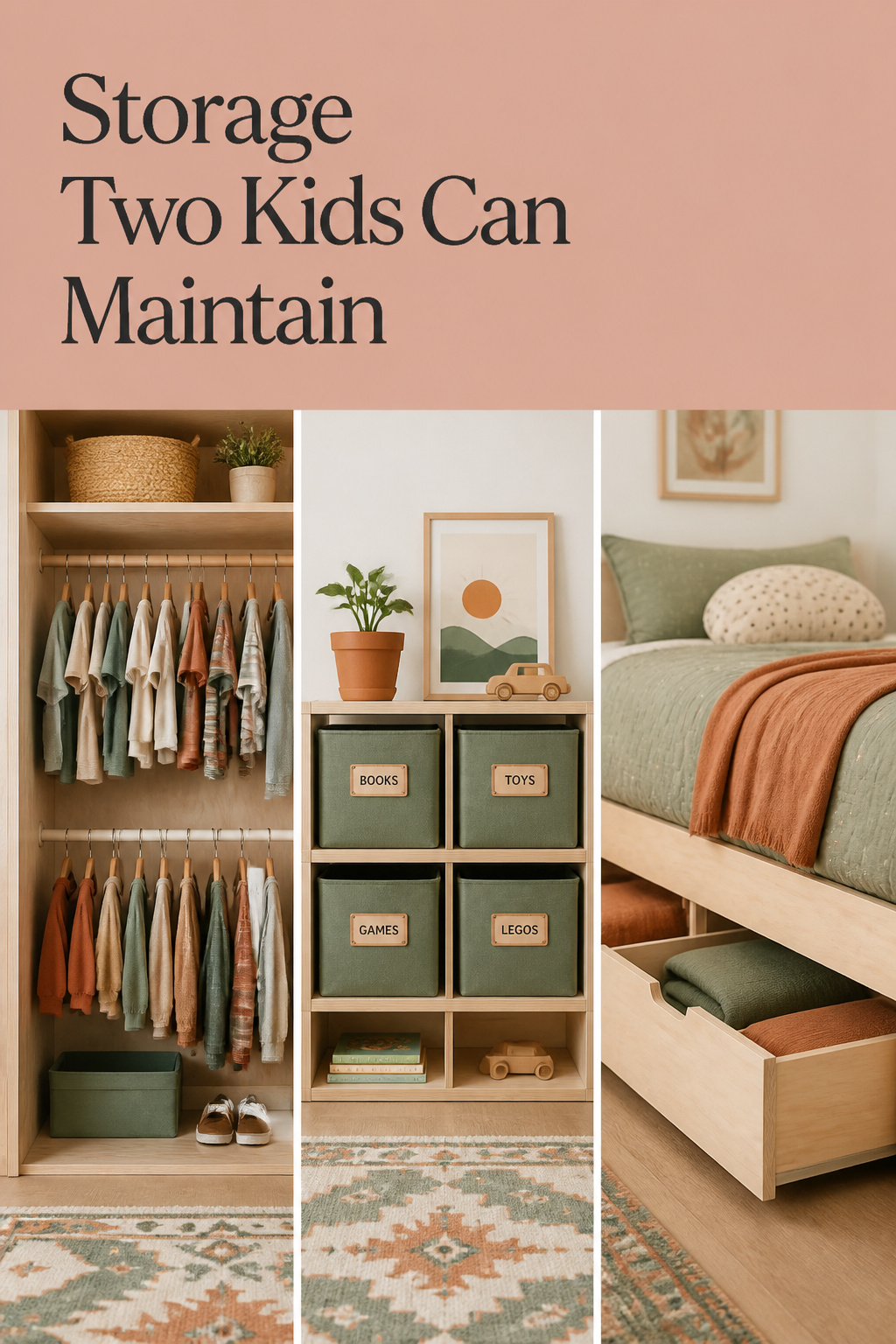
Most sibling room storage ideas are sold on a photograph and bought on hope. The finding that reframed it for me is duller: occupational-therapy milestones place the ability to tidy belongings, and to grasp the idea of keeping things organised, at four to five years old. Not earlier. So when a four-year-old cannot maintain a system built for a six-year-old, the system is what failed.
TL;DR
- One test decides everything: can the child who owns the item put it back unaided? A system needing a parent standing over it has failed.
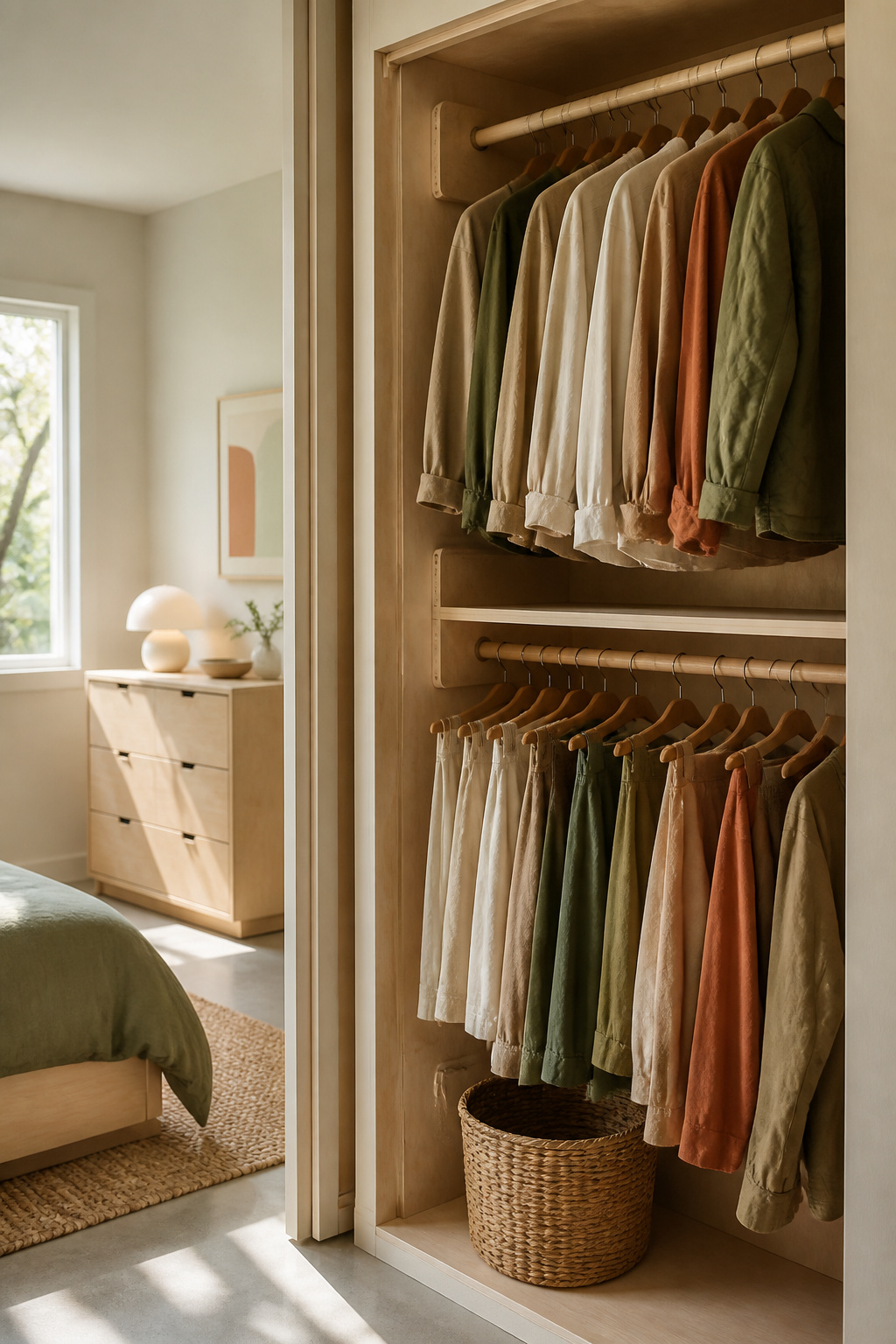
- Split the closet by height, not width — a single rod at 66 inches, a double-hang at 81.75 and 40.5, a child’s rod at 30.
- Anchor anything tall. Consumer Reports found one kit held 347 lb in a wood stud and failed at 58 lb in drywall.
The One Test Every Storage System Has to Pass
Storage that requires discipline is failed design. The system must be easier than the mess, or the mess wins.
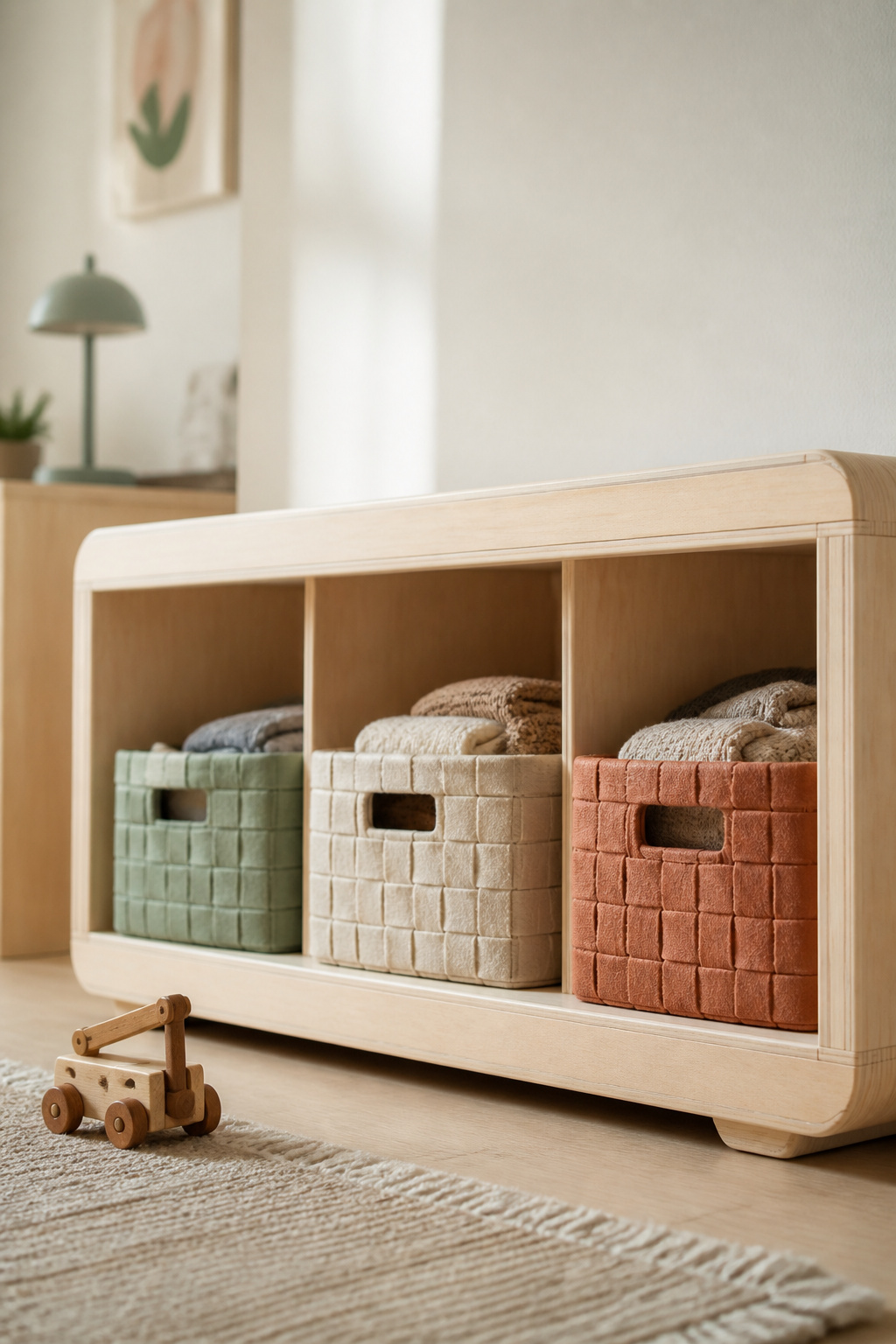
What “requires discipline” actually looks like at bedtime
It looks like a lid, or a drawer needing a firm two-handed pull, opened by a four-year-old whose average grip strength is around 4.3 to 5.8 kg. By ten that figure is roughly 13.2 to 15.3 kg — the same child, three times the hand. One caveat travels with every number here: the grip and stature figures come from general pediatric population data, not studies of children using furniture, so reading them onto a drawer is extrapolation.
It also looks like a label. Labelled bins are the internet’s standard answer, and I have no study against them because none exists for them either — no controlled research shows labelling improves put-away compliance. Use picture cues; they cost little. Just don’t ask a label to do a reachable shelf’s job, a sequence that sits inside planning a bedroom two children share.
Why the test matters more than the container
My grandparents’ summer cottage in the Stockholm archipelago had unpainted pine walls, oil lamps and one open shelf of crockery. Nothing had a lid. Every plate sat in view from the doorway, at a child’s shoulder height, and putting one back was the same motion as taking it down. That remains my reference for “enough” — less a Nordic principle than a building with nowhere to hide anything.
Nationwide Children’s puts the alternative plainly: if your child can see it, she’ll try to get it. Store a child’s belongings above their reach and you have not created tidiness. You have created a climbing route.
Splitting One Closet Two Ways
Two children, one closet, and the instinct is a line down the middle. Halve it by width and each gets a tall column neither can use.
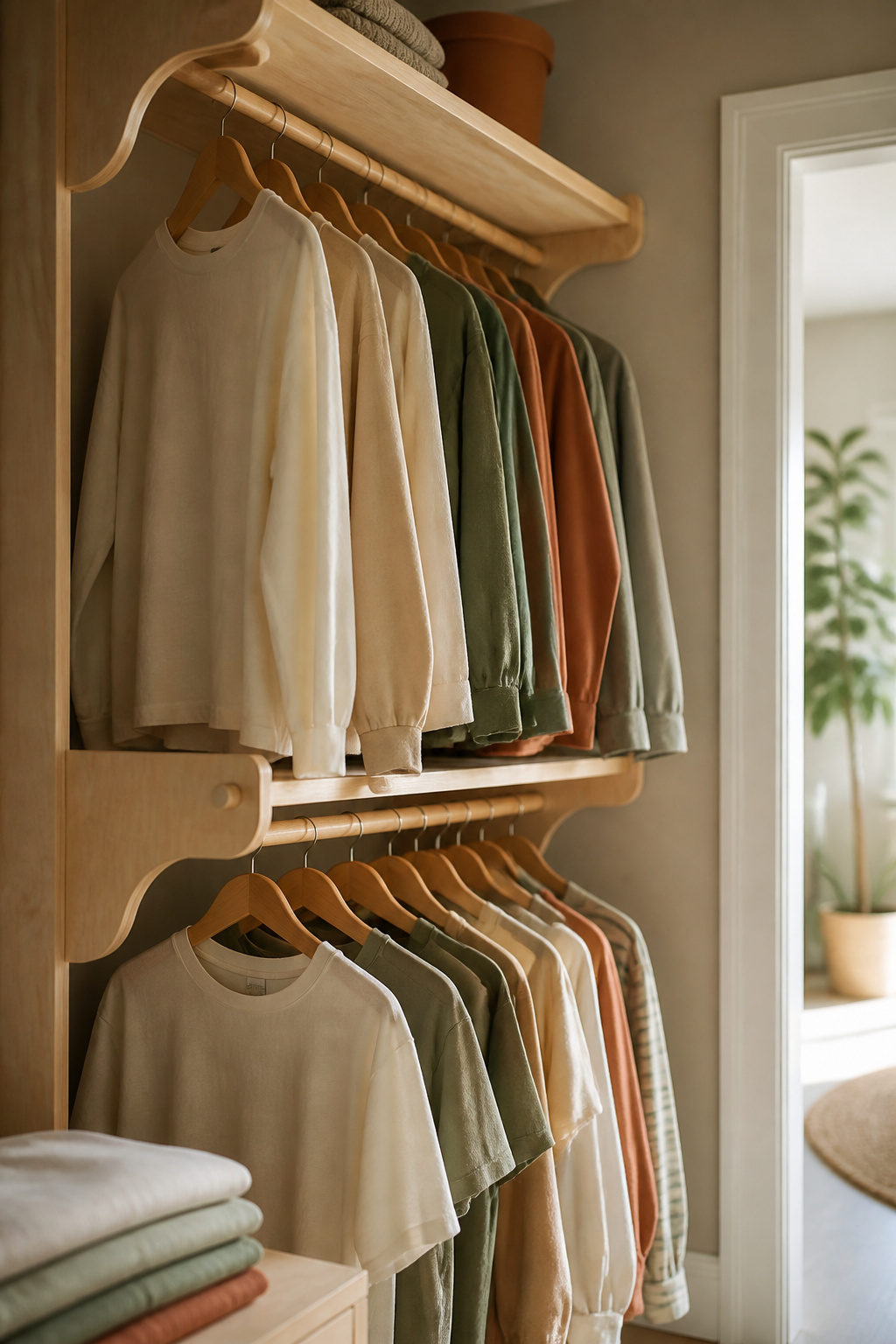
Two hanging heights, not one
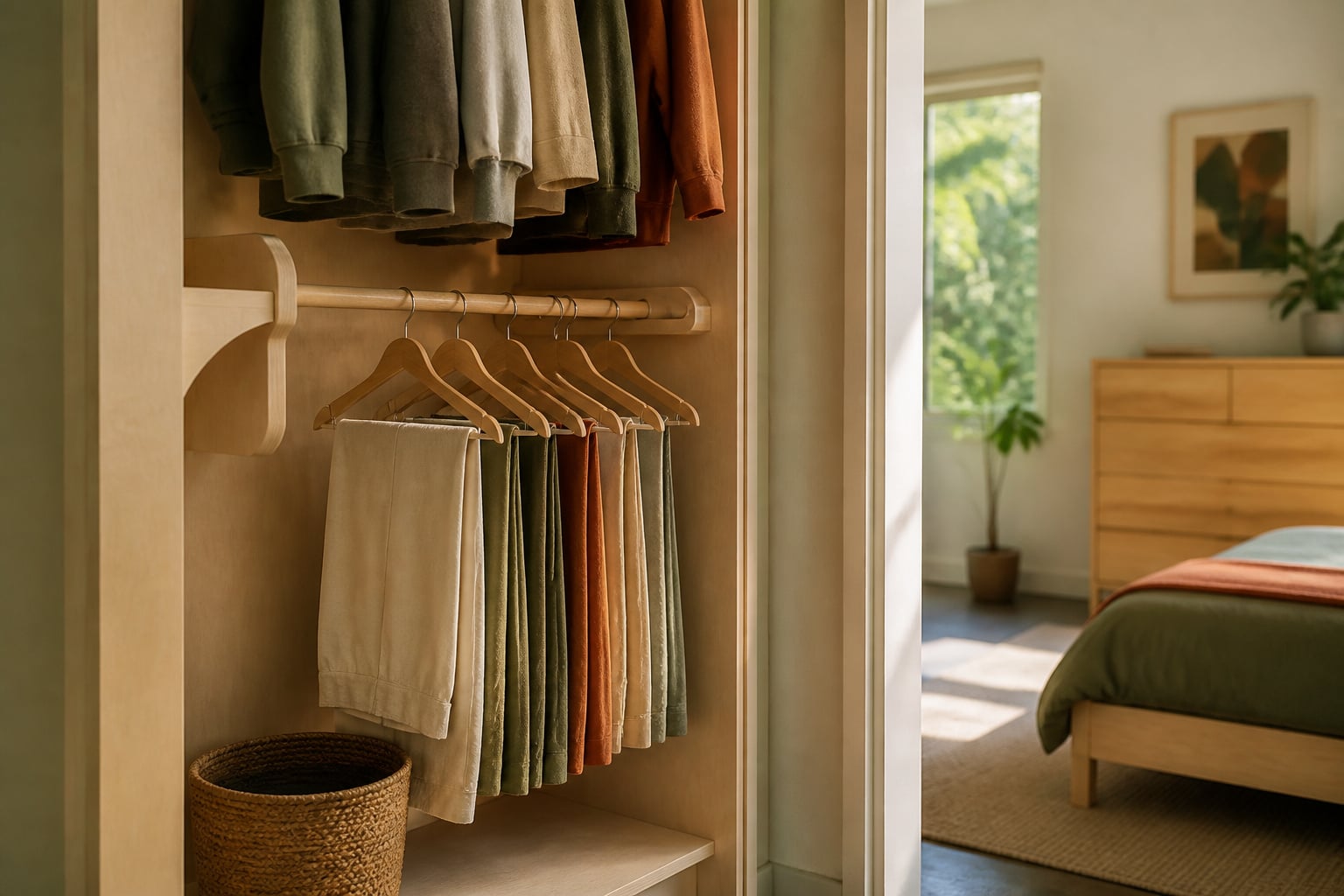
Split it horizontally. A single rod is conventionally mounted 66 inches above the floor. A double-hang system replaces it with an upper rod at 81.75 inches and a lower at 40.5, giving each zone roughly 40 inches of clearance. A child’s zone drops that lower rod to 30 inches — low enough to hang a coat unaided.
These are trade conventions, not code, and retailers vary by an inch or two. So measure your actual child; a rod hung to a rule of thumb rather than a shoulder defeats the exercise.
Dividing shelf space fairly
Standard reach-in depth is 24 inches, sized around a 17-to-19-inch adult hanger plus what a winter coat adds.
Split those inches in half and you have been scrupulously equal — while handing the younger child a zone above their reach line, a chore for you dressed as fairness for them.
Sibling Room Storage Ideas: Per-Child Bins or Shared Category Bins
The costliest mistake is one shared bin for toys both children feel proprietary about. Ownership is not a category, and no bin settles an argument.
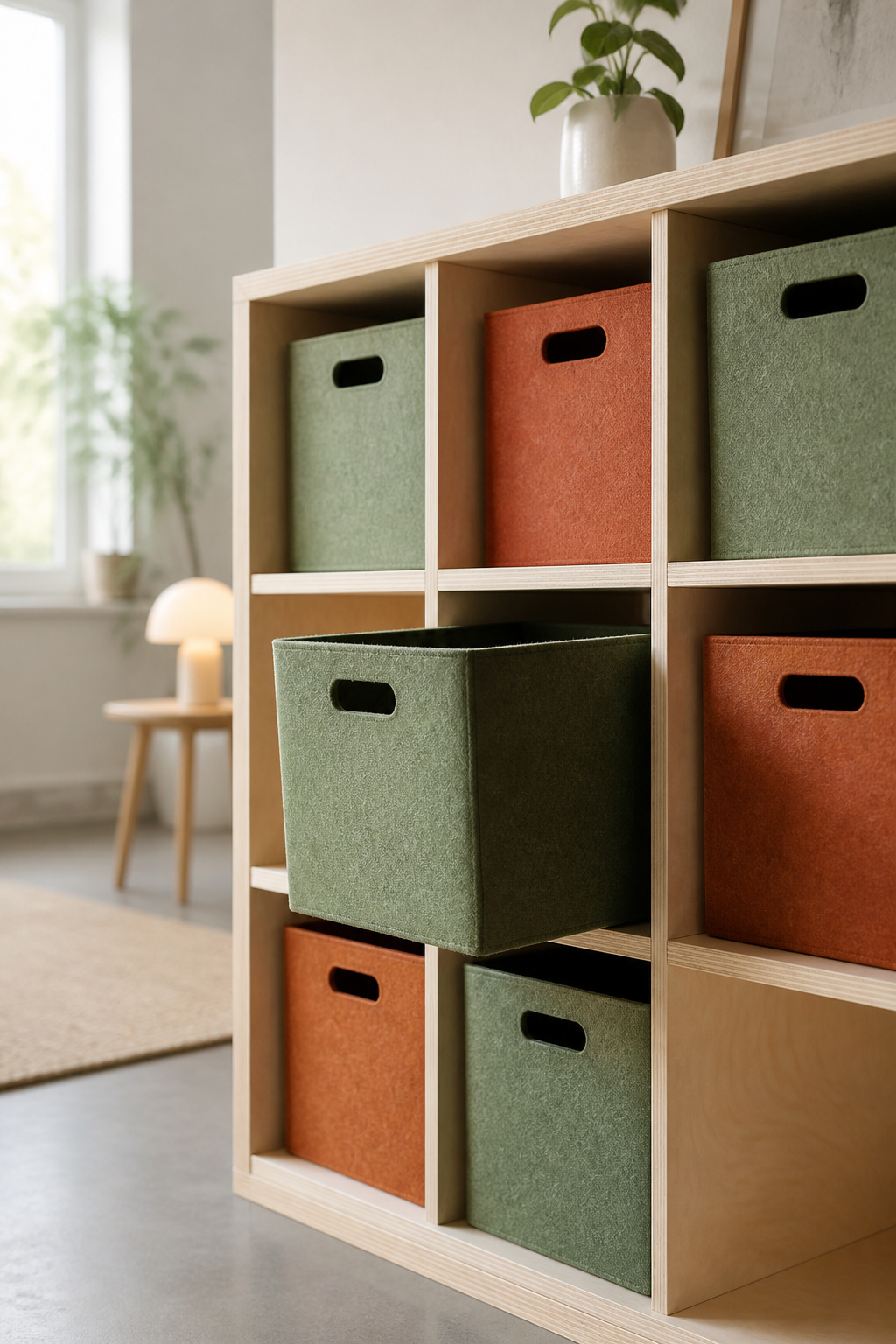
Which one a young child actually maintains
A per-child bin only reduces decisions if the child can identify it without reading. Colour, or a fixed position on the shelf, works years before words do. A shared category bin removes the “whose is this” question entirely — good for what both children use, useless for anything one considers theirs.
Read the table as reasoned judgment, not evidence: no study compares the two on tidying compliance.
| Measure | Per-child bins | Shared category bins |
|---|---|---|
| Decision load for a young child | Low, once they know their bin by colour or position | Lowest — no ownership decision |
| Cost for equal capacity | Roughly double: two part-full bins, not one | Lower — fewer bins per volume |
| Best fit | What a child considers personally theirs | Blocks, books and art supplies |
| Failure mode | Wrong child’s item lands in the wrong bin | Nobody owns it, so nobody maintains it |
For a pair under six I commit to category bins for communal things and two personal bins each. More than that and the sorting decision returns.
Cost and durability differences
The 13-inch cube is the module nearly everything is built around. An IKEA KALLAX opening measures roughly 13 by 13 inches and 15 3/8 deep; the DRÖNA box is 13 by 15 by 13, the extra depth letting small hands grip it. ClosetMaid’s bin is 13 by 13 by 13 and sells singly, since two children’s counts rarely divide evenly.
Under-Bed Drawers and the Clearance They Actually Need
Is there storage under the beds? That was settled before any of this: the frame sets the ceiling.
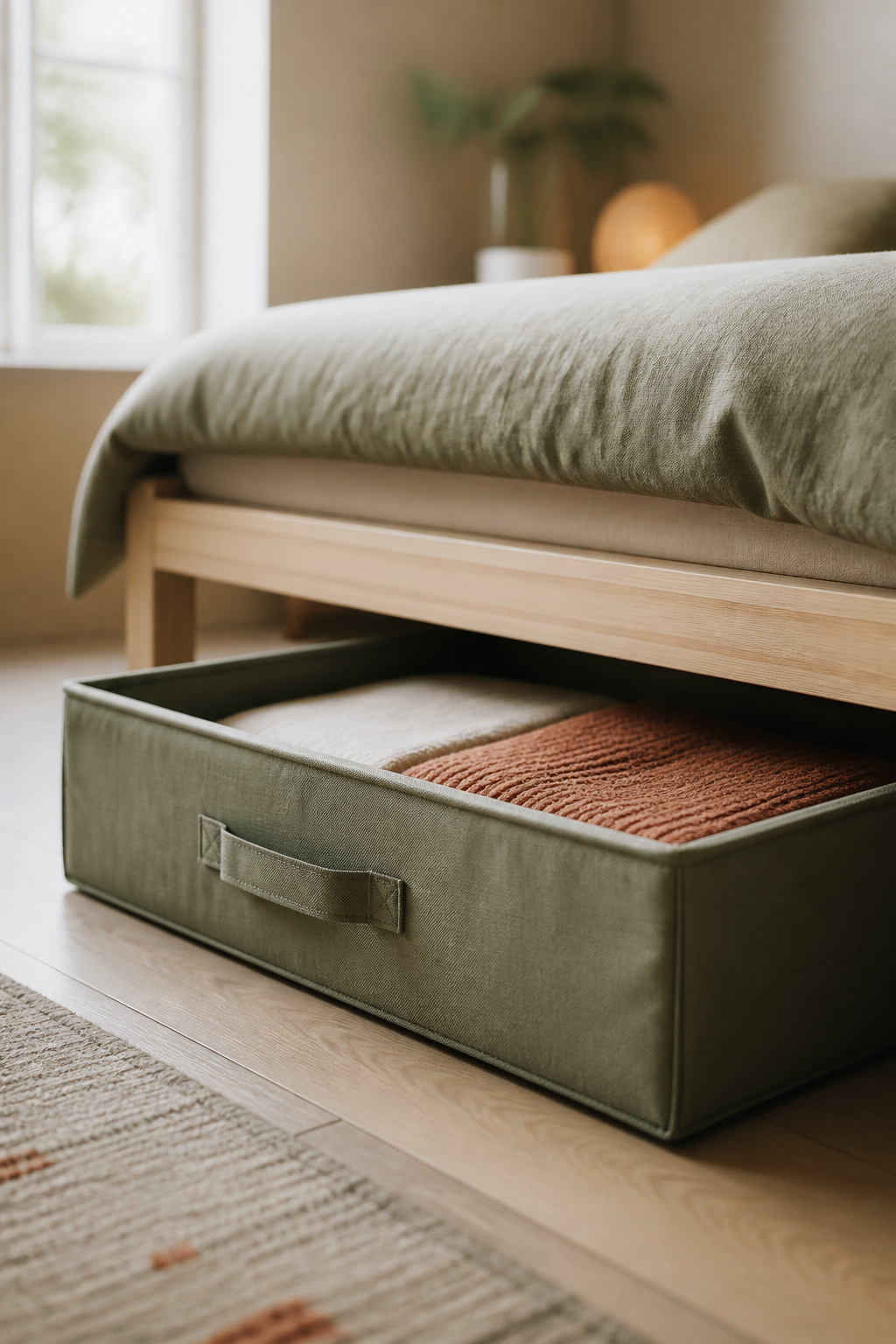
Drawer depth versus bed frame height
A platform bed typically leaves as little as 6 inches of floor-to-frame clearance; a box-spring setup usually 12 or more. That gap decides the band you can buy: low-profile trays of 5 to 6.75 inches, or taller options near 10 inches.
Measure floor to the lowest point of the frame, then subtract an inch. That inch stops a full bin scraping the slats until a child stops bothering.
What kind of bed allows under-bed storage at all
A low platform frame rules out all but the shallowest trays; a raised frame buys capacity without adding furniture. So the beds come first: start with the bed layouts these clearances assume, then let frame height decide.
The Vertical Zone Each Age Can Actually Reach
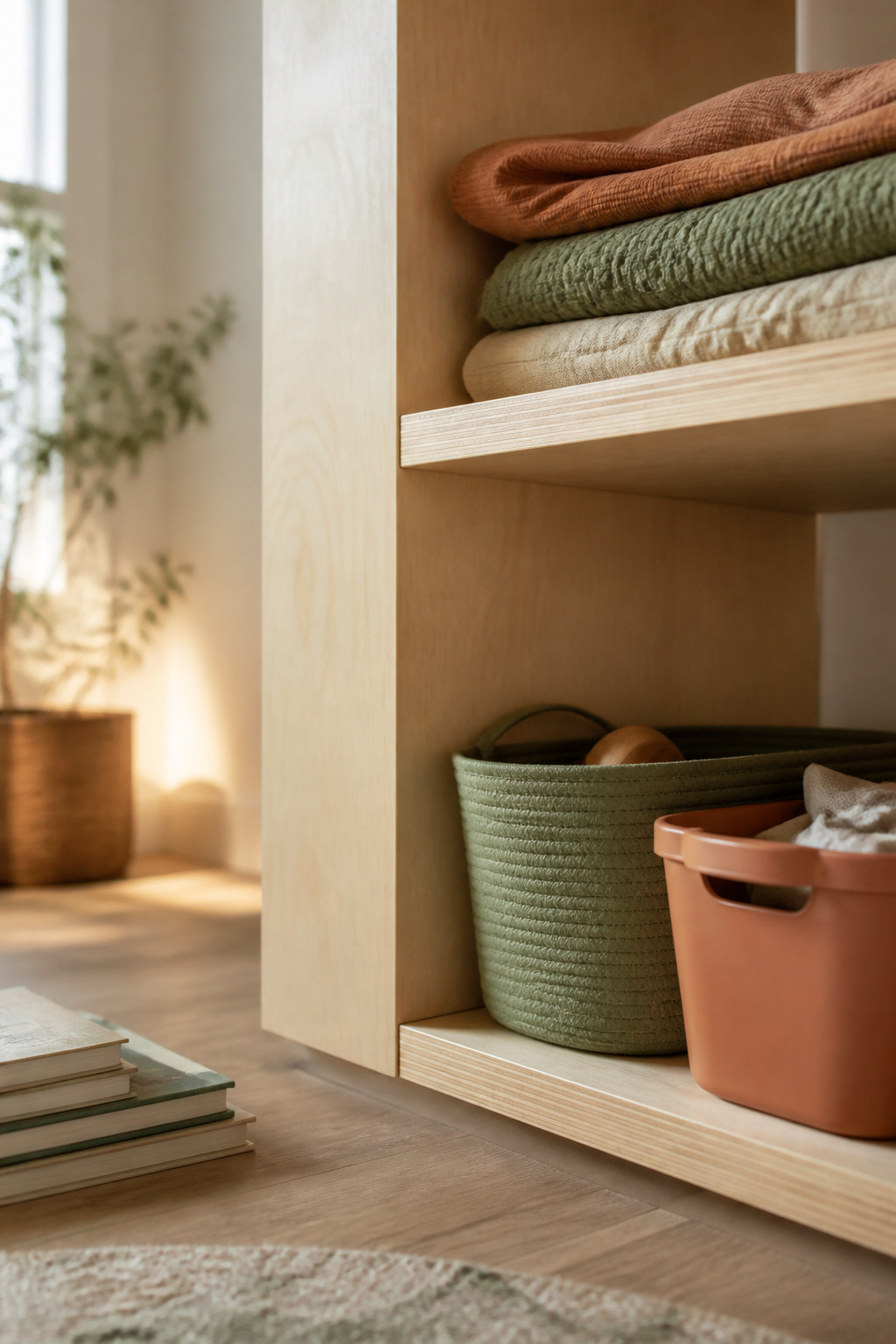
Average stature climbs about a foot between a toddler and a tween: roughly 34 inches at two years, 40 at four, 45.5 at six, 50.5 at eight, 54.5 at ten and 59 at twelve. A shared room holds two children at different points on that list.
Toddler reach versus school-age reach
Those averages become shelf bands:
- Under two: contents at 12 to 16 inches, per Montessori guidance — in the sightline, no lifting.
- Two to five: a 24-inch maximum for a toddler’s own shelf.
- Elementary age: 32 to 40 inches for anything used daily.
Set both children’s bands from a measured height, never a birthday. Give the younger child the lowest band outright and move the older one up; a compromise height fails two children instead of one.
What belongs above the reach line
Above roughly 48 to 60 inches, storage stops being theirs and becomes yours: seasonal clothing, spare bedding, breakables. Keep nothing up there a child wants on a Tuesday, and anchor it regardless.
When Storage Becomes the Room’s Divider
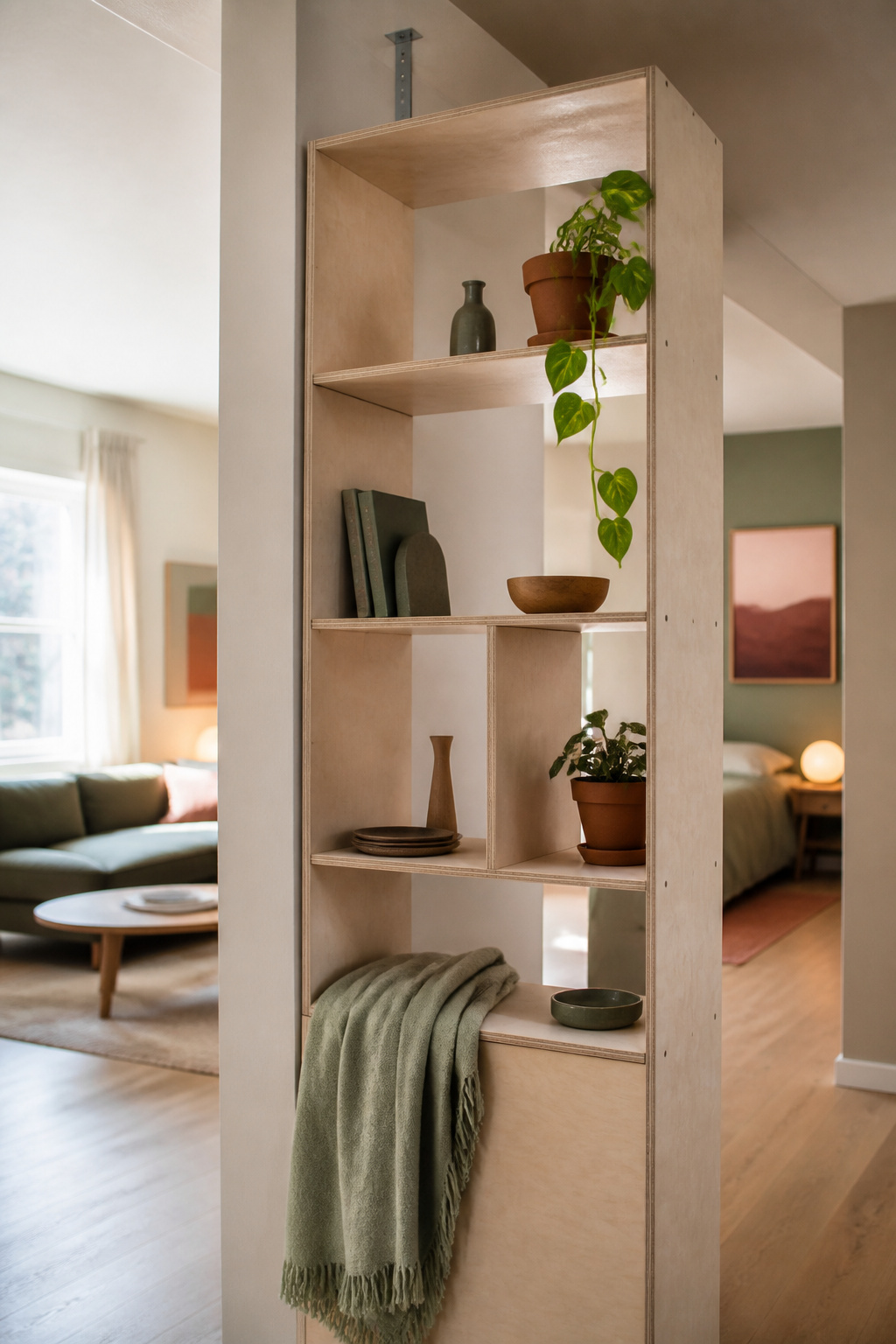
Turn a shelving unit sideways and it becomes a boundary — and the piece most likely to come down on somebody.
Back-to-back shelving as a boundary
The STURDY Act (Public Law 117-328) directed the CPSC to set a mandatory stability standard for clothing storage units. That rule, 16 CFR Part 1261, took effect on 1 September 2023, covering units at least 27 inches tall and 30 pounds empty, with dynamic-force and 60-lb open-drawer testing. ASTM F3096 separately requires an anti-tip device on units 27 inches or taller, or 30 pounds and up.
Open bookcases sit outside that scope, a gap Tess Carver takes up in her guide to using shelving as a room divider. Anchor one anyway, and anchor it into framing: Consumer Reports found the same kit held up to 347 lb in a solid wood stud, and failed at just 58 lb in hollow drywall. Six times the strength, for the cost of finding the stud.
What this trades off against pure storage capacity
A divider is not free storage. A 15 3/8-inch-deep unit takes that depth from the floor plan on both sides, and each child reaches only the cubes facing them — sixteen openings become eight per side. Make that trade deliberately: you buy a boundary and pay in floor area.
Three moves compress everything above: split by height, not width; give shared things a category and owned things a fixed spot of their own; set the reach line to a measured child, not an average one. None of that needs a house rule taped to the door, because the one test already built it in — could the child who owns the item put it back without help? A system that already passes doesn’t need discipline to survive it. It just needs to keep working the way that one open shelf in an unheated cottage always did.
FAQ
Does labeling bins actually help young kids put things away?
No controlled study was found showing that labelling improves put-away compliance; the claim rests on parenting and teaching experience, not research. Organisational ability itself appears reliably only around four to five. Picture cues stay a low-cost bet for pre-readers — sound practice, not proven intervention.
How much storage does a shared kids room actually need?
No published benchmark exists, so treat this as a worked estimate. Count what each child owns by category, then size against real modules: a wide cube unit gives roughly sixteen 13-by-13-inch openings, plus a 24-inch-deep closet split into two hanging zones.
What age can children start organizing their own storage?
Occupational-therapy milestones put tidying and organisational understanding at around four to five. Montessori shelf heights — 12 to 16 inches under two, rising to 24 after — give physical access years earlier. Grip strength roughly doubles between four and eight, so size hardware to the younger child.