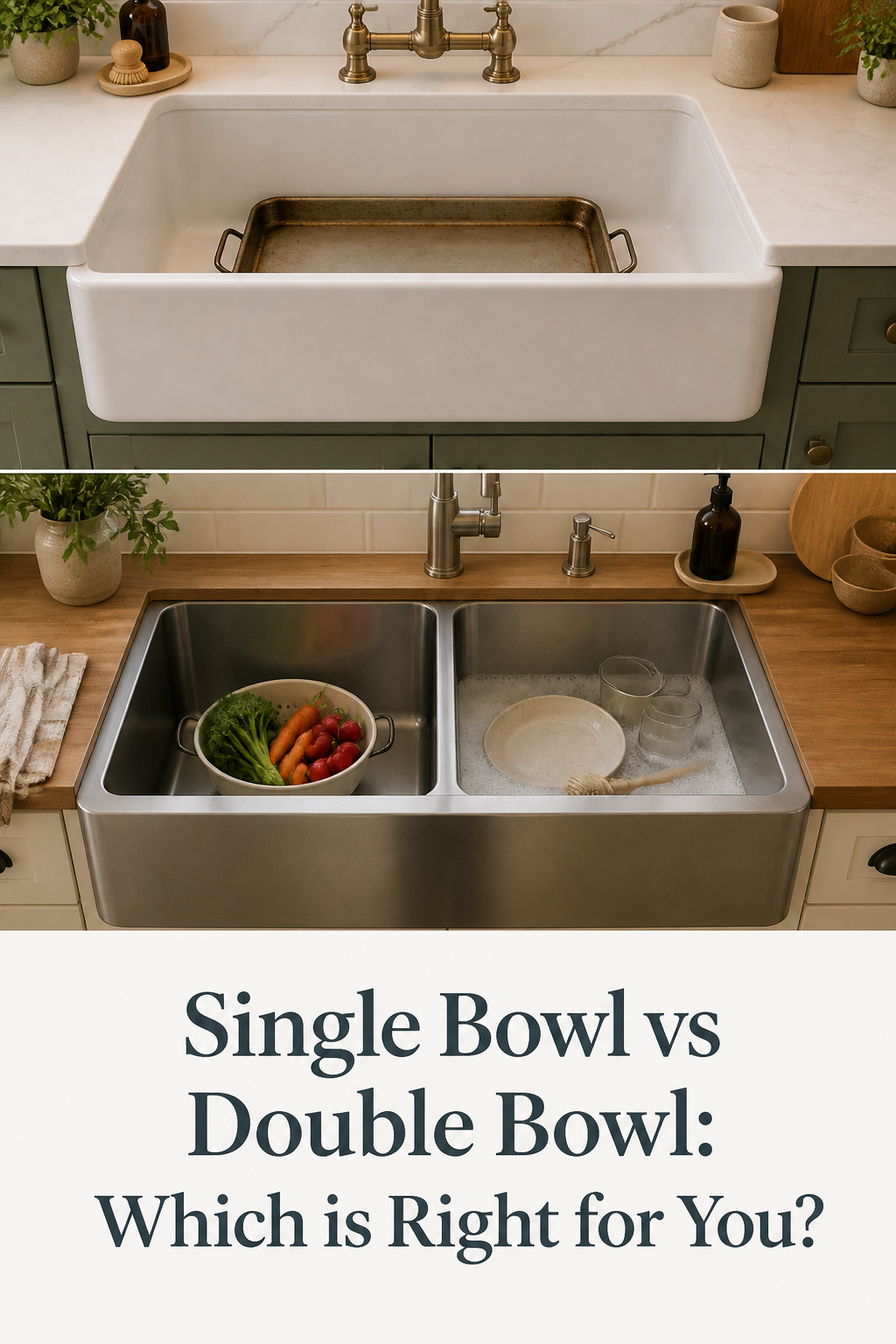
Most people choose a double bowl because their parents had one. The two-basin sink was the kitchen standard for decades, so it still reads as the more versatile option. But the workflow that justified it — one basin of soapy wash water, one of clean rinse water — was designed before the dishwasher sat under every counter. Take that workflow away, and the single vs double bowl sink question has a different answer than habit suggests. Ask first what you want the sink to do every day, not which shape looks more capable.
TL;DR
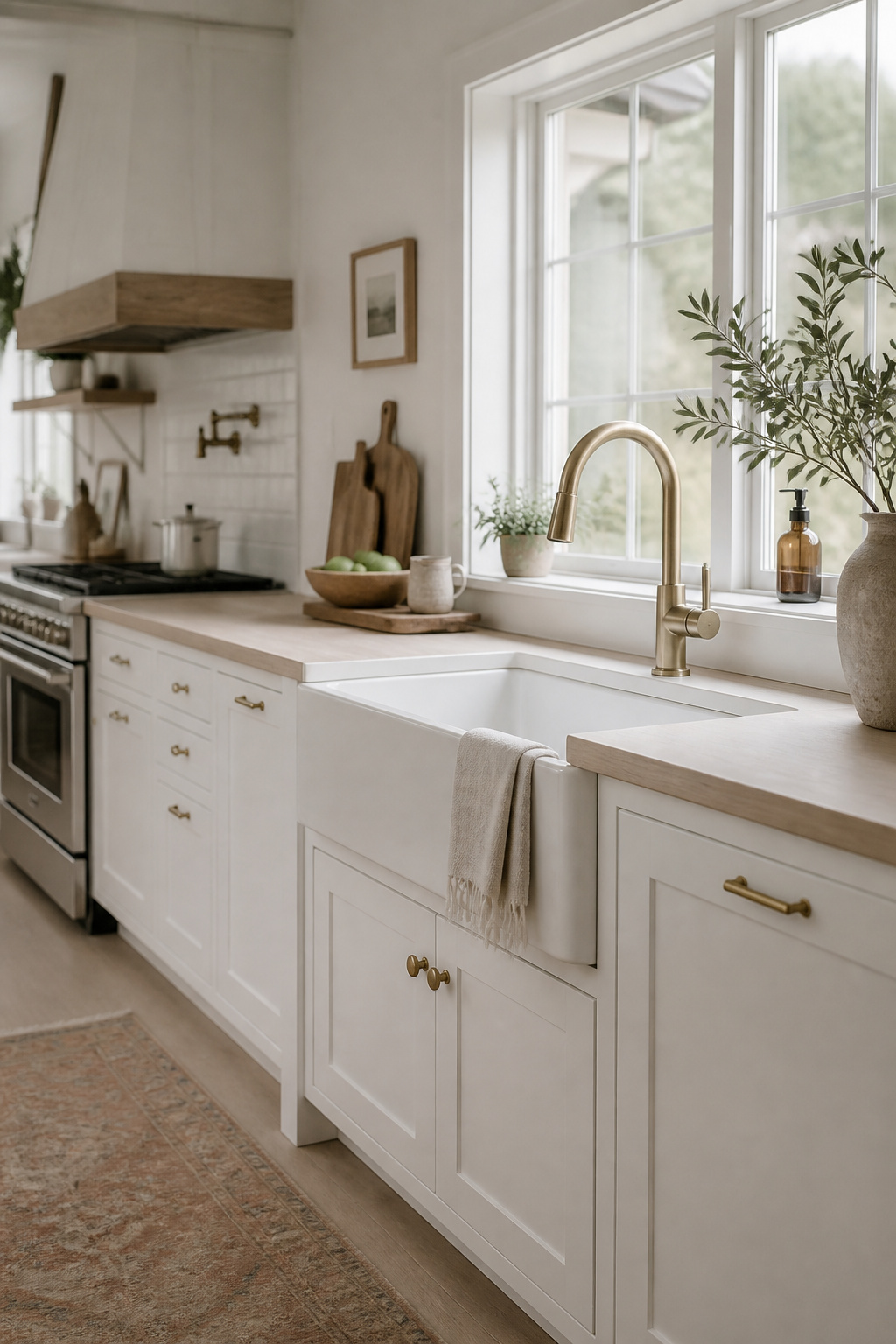
- For most kitchens with a dishwasher, choose a single bowl: a 33-inch basin gives roughly 30 inches of uninterrupted width, so a half-sheet pan or stockpot lies flat — neither side of a 33-inch double bowl can manage that.
- A double bowl earns its place without a dishwasher, or when you genuinely soak on one side and rinse on the other at the same time; plan a 36–42 inch base cabinet for it, versus 30–36 inches for a single.
- Decide configuration first, then size the cabinet around it. A 33-inch run fits a generous single bowl but leaves a divided sink with two basins too narrow to be useful.
The Assumption Worth Questioning Before You Buy
The reflex says two bowls give you more options. In practice, the second bowl is usually the smaller one, and a small second bowl does very little.
Why most buyers default to double without thinking it through
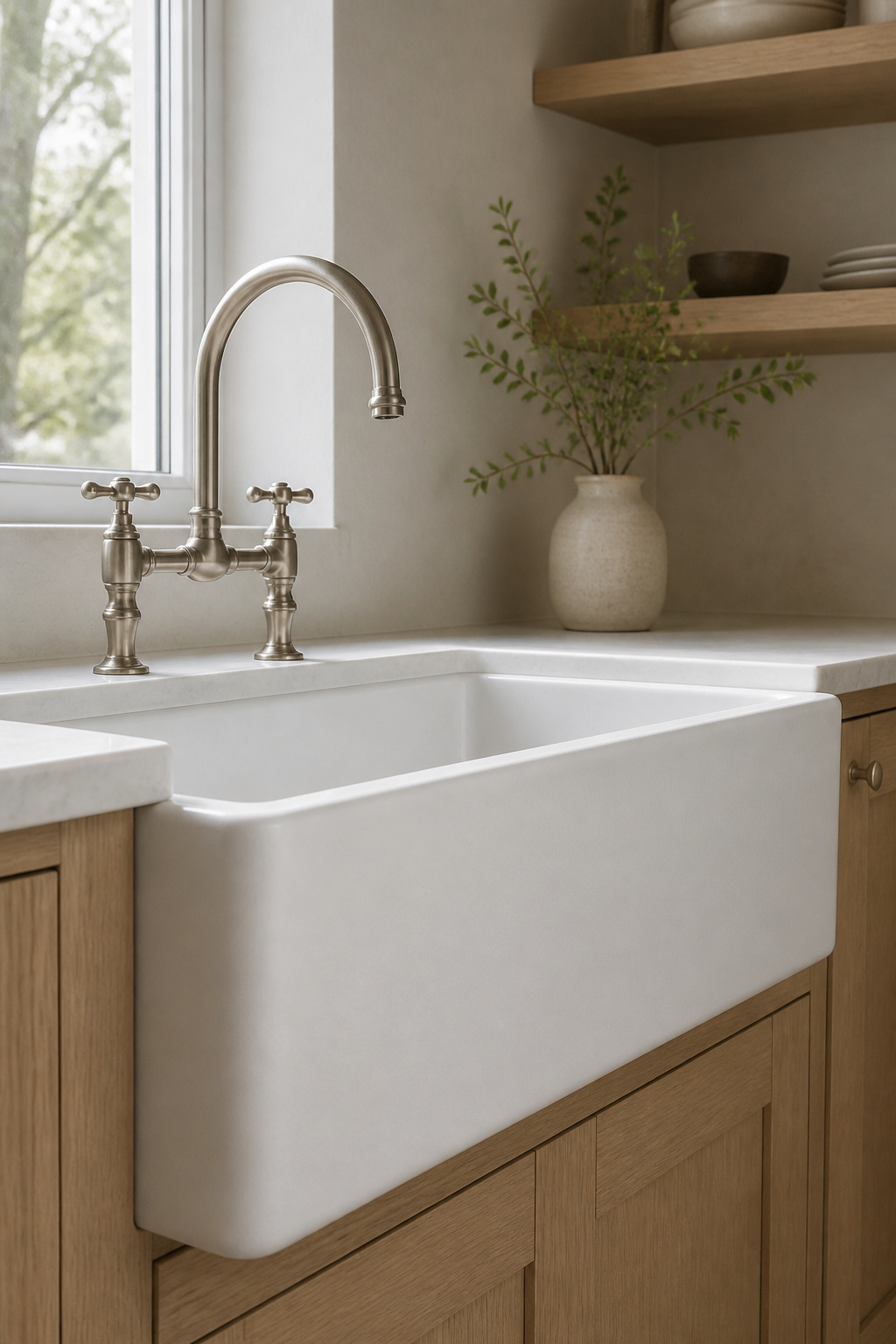
The double bowl solved a real problem: without a dishwasher, one compartment held the wash water, the other the rinse. That is a sound workflow — and one most households no longer run, because the machine does the everyday plates. The format outlived its reason, and the market has moved with it: single-bowl sinks held an 86% share in 2024, up 22% over the prior five years. Oakland architect Jerome Buttrick of Buttrick Projects puts it plainly: “We see the trend moving away from the double-bowl sink. Our clients prefer one large bowl; in fact, we’re not installing any double-bowl sinks at all.”
What single-bowl owners consistently say three years in
The recurring report from long-term single-bowl owners is about pans, not principles. Cookie sheets, crockpot inserts, large pots, and baking dishes drop into the basin to wash or soak with no rearranging. One owner, after more than ten years, said simply that they had never missed a double sink.
The honest complaint exists too. When the basin fills with soaking dishes, the garbage disposal at the single drain becomes hard to reach — a minor nuisance for cooks who run it mid-prep.
The one use case that genuinely needs a divided basin
Food safety is the clearest case for the divide. A USDA study found 34% of kitchen sinks were contaminated after meal prep involving raw protein; a basin dedicated to raw meat, separate from where you rinse produce, removes that path. Households that hand-wash fragile items also benefit from the original wash-then-rinse split, as does a kitchen with two cooks at the sink at once. If one of those describes your week, the double-bowl section below is worth reading honestly. For where this sits in the wider decision, see the complete guide to farmhouse sinks.
Single Bowl Sink: One Basin, Zero Compromise on the Things That Matter
A single bowl is one wide, deep, uninterrupted space. That sounds modest. It is the whole argument.
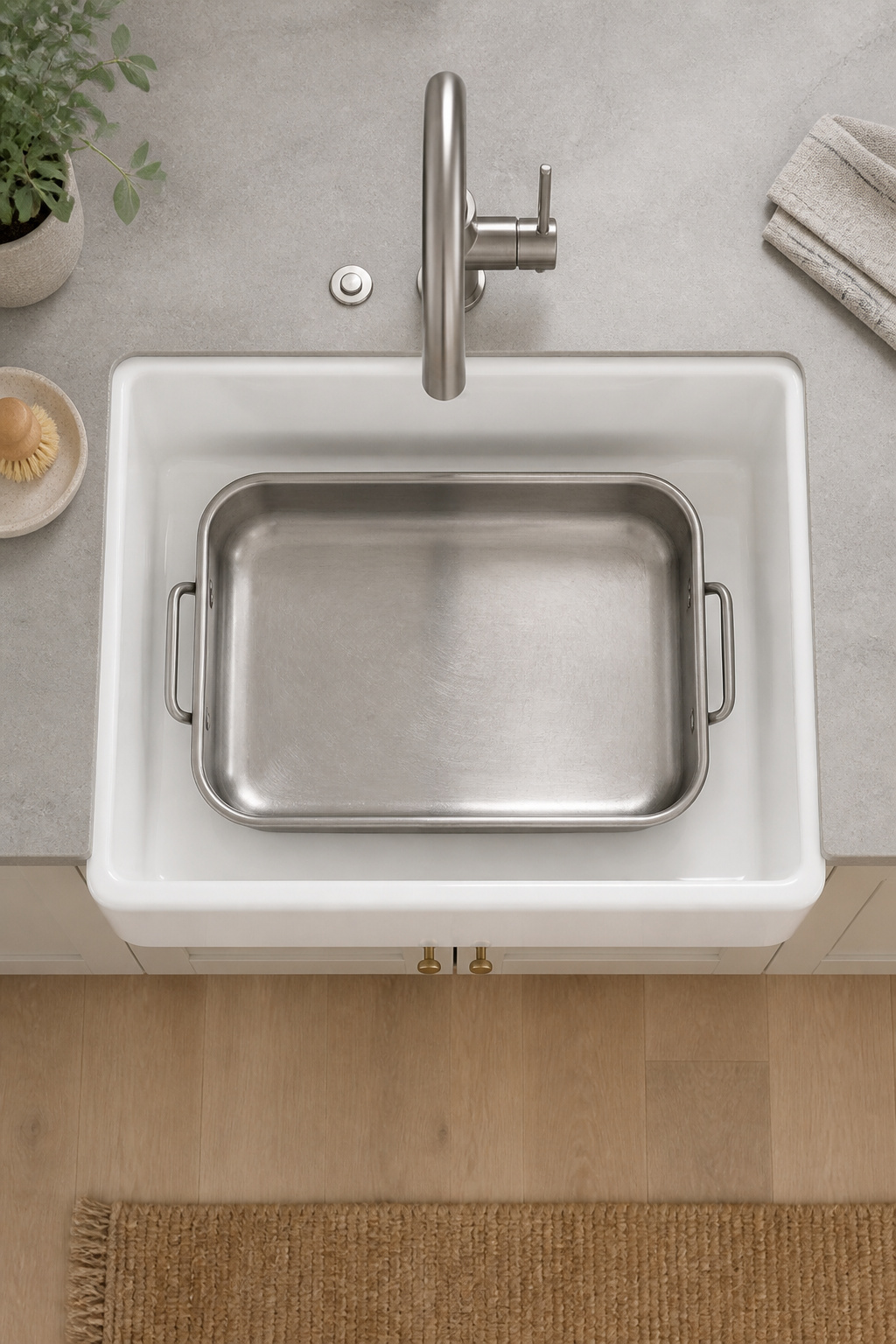
What you gain: the large-pan and sheet-pan reality
The defining advantage is width with nothing in the way. A standard US half-sheet pan, 18 by 13 inches, lies flat inside a 33-inch basin with roughly 30 inches of interior width. It cannot lie flat in either side of a 33-inch 50/50 double bowl, where each basin runs only about 14 to 15 inches across. Depth follows: single bowls 33 inches and wider commonly run 8 to 10 inches deep, enough to submerge a 12-quart stockpot. As Jerome Buttrick puts it, “it’s easy to clean that large roasting pan, wok, or lobster pot — no divider to bump into.” The quieter gain is cleaning — one smooth basin, no divider crevice to trap food.
Cabinet width range and what fits where
A single-bowl farmhouse sink suits base cabinets 30 to 36 inches wide; the common pairing is a 33-inch sink in a 36-inch cabinet. As an industry rule of thumb — not a formal standard — you want the cabinet at least three inches wider than the sink’s exterior, leaving room for the apron-front mount and support.
One number trips people up: a 33-inch sink does not belong in a 33-inch cabinet. Nominal cabinet size is exterior width; the usable interior opening is typically two to three inches smaller. Check the spec sheet against the actual opening, and let the bowl you’ve chosen match it to your cabinet size before you order.
| Single bowl | Typical sink width | Minimum base cabinet |
|---|---|---|
| Compact | 30 in | 33 in |
| Standard | 33 in | 36 in |
| Generous | 36 in | 39 in |
Daily washing workflow in a single bowl
With a dishwasher handling the routine load, the single bowl does the work the machine can’t: cast iron, knives, fine glassware, and oversized cookware. Those tasks want width, not division. The one real limit is that you cannot soak and rinse in separate zones at once — but most dishwasher households work in sequence anyway. When you do need two zones, a plastic insert basin dropped into the bowl recreates them, then goes back under the sink.
Who this configuration actually suits
This sink suits cooks who use large cookware often and households with a dishwasher. It is the only practical choice for a 30 to 36 inch cabinet run, where two bowls would leave each one too narrow to use. The only poor fit is a household that hand-washes everything.
Double Bowl Sink: When the Divider Actually Earns Its Place
The double bowl is not a worse sink. It is a different tool, and for a specific kitchen it is the better one. The test is whether you genuinely use both basins at once.
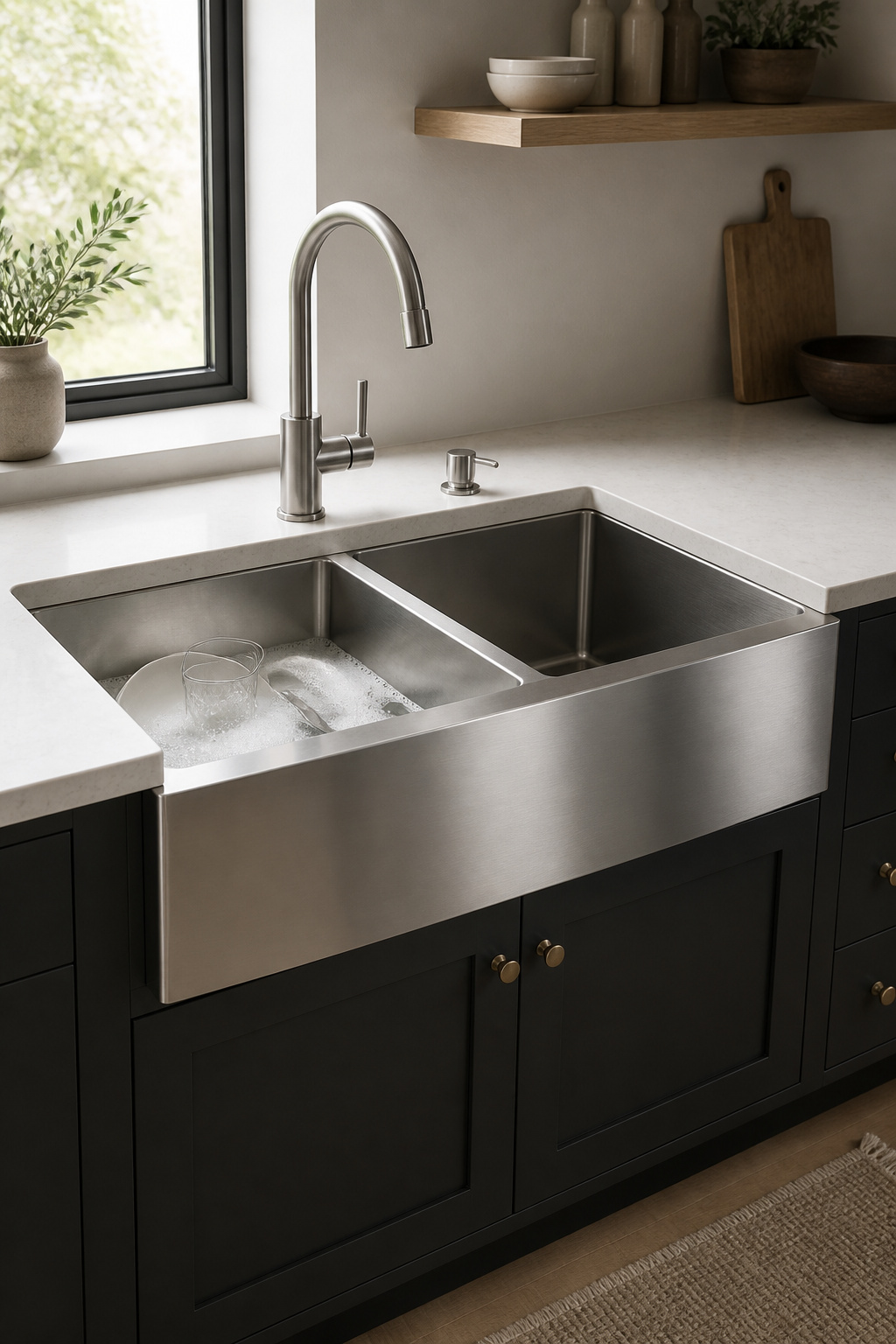
The genuine use cases: soaking on one side, active washing on the other
The divide earns its keep when two wet tasks run in parallel. Soak greasy pots in one basin while you rinse fresh produce in the other, without dirty water touching clean food. Dedicate one side to thawing raw meat and the other to vegetables, and the USDA contamination path closes. The disposal usually sits in the smaller bowl of a 60/40 split, so it stays reachable while the large bowl is occupied.
Cabinet width requirements and counter real-estate implications
A double bowl asks for more cabinet: 36 to 42 inches wide. A 33-inch double typically needs a 36-inch minimum cabinet; a 36-inch double needs roughly 39. The interior numbers explain why. A 33-inch 50/50 sink gives two basins about 14¾ inches wide each; a 33-inch 60/40 shifts that to roughly 16 inches on the large side and 13 on the small. Wider units also eat more of the run, trimming under-sink storage.
| Double bowl | Split | Interior per basin (33 in sink) | Minimum base cabinet |
|---|---|---|---|
| Equal | 50/50 | ~14¾ in each | 36 in |
| Unequal | 60/40 | ~16 in / ~13 in | 36 in |
| Larger unit | 50/50 or 60/40 | proportionally wider | 39–42 in |
The large-pan problem and when it matters
Here is the honest drawback. A standard high-divide double bowl will not let a full sheet pan or roasting pan lie flat — the divider bisects the basin and neither side is wide enough. Two designs soften this. A low-divide sink drops the center divider below the rim so you can tip a large pan across it at an angle; Ruvati sets its low divider four inches below the rim, and some models like the Kohler Whitehaven Smart Divide sit the barrier low enough for items to cross at an angle without publishing an exact height. A 60/40 split gives the larger side about 16 inches — enough for most baking sheets, not for a full roasting pan.
Appliance specialist Reece Williams of Cherin’s Appliance is direct about the cost: “It’s just annoying to have a second bowl that’s not very big. It makes it hard to wash bulky items like roasting pans.” His benchmark for a double worth having: a main bowl at least 21 inches wide and a second at least 15.
Who this configuration genuinely suits
A double bowl suits a household without a dishwasher that still runs the wash-then-rinse routine, a kitchen where raw protein and produce are prepped side by side, and a sink two people work at once. It also suits cooks whose largest items top out around 13 inches. It does not suit a cabinet under 36 inches, where the divide leaves both bowls too narrow to be functional.
Single vs Double Bowl Sink: The Head-to-Head Comparison
Laid side by side, the two configurations stop being a matter of taste. Each attribute has a clear winner for a clear reason.
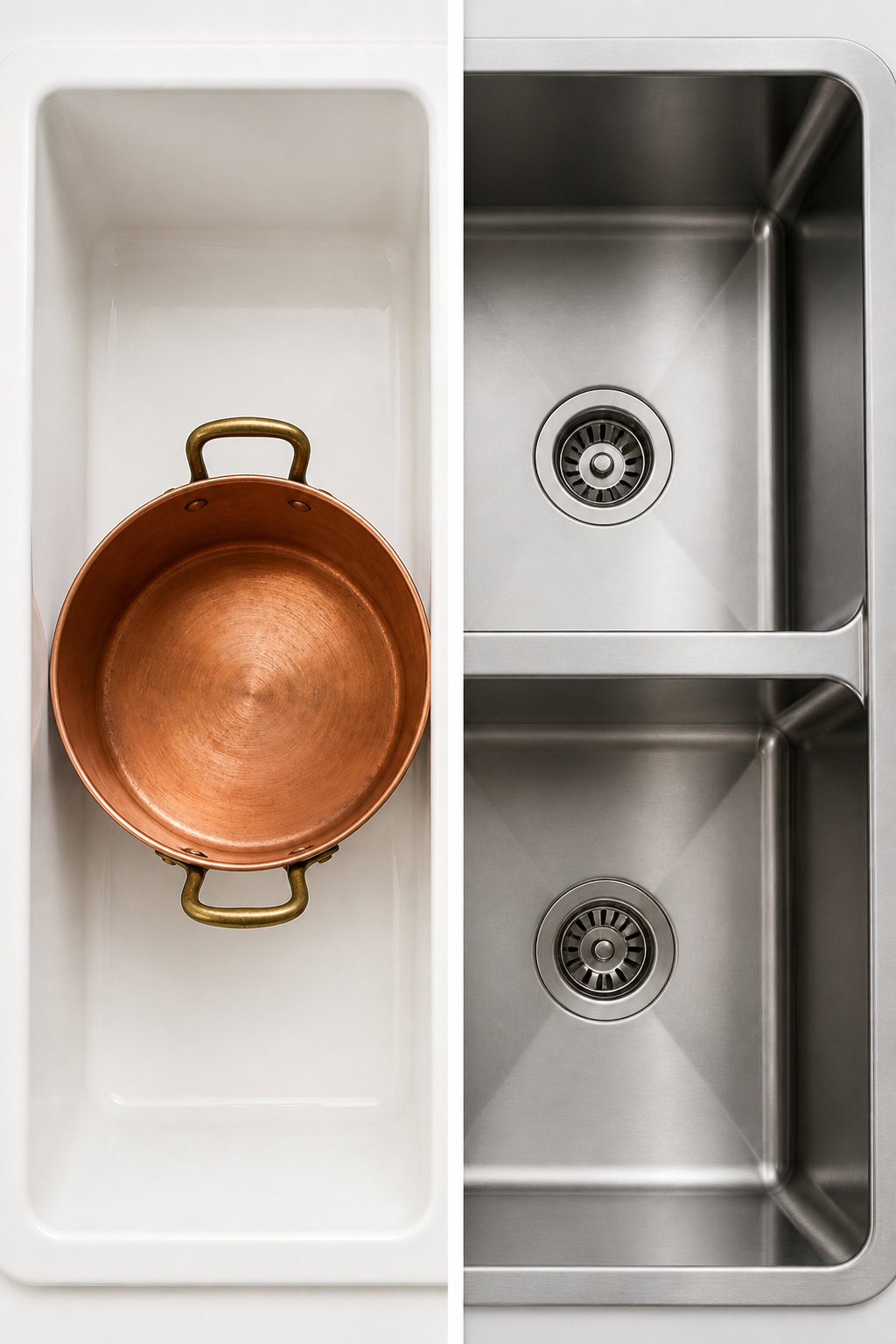
How the comparison table reads
Read the table by the row that matters to you, not by counting wins. The two attributes that usually decide it sit at the top: interior width and the cabinet each configuration demands. Everything below follows from those.
| Attribute | Single bowl | Double bowl |
|---|---|---|
| Interior width | 28–31 in (uninterrupted) | 13–16 in per basin |
| Minimum cabinet | 30–36 in | 36–42 in |
| Large-pan fit | Half-sheet pan lies flat | No (low-divide/60/40 partial only) |
| Washing workflow | Sequential | Parallel, two zones |
| Soaking capacity | One basin at a time | Soak and rinse at once |
| Cleaning ease | One smooth basin | Divider crevice to clean |
The committed recommendation: which configuration for which kitchen
I will commit rather than shrug. For most kitchens with a dishwasher, choose the single bowl: the machine takes the plates, the sink takes the pans and hand-wash items, and those want width. For a kitchen without a dishwasher, or one doing frequent raw-protein prep alongside produce, choose the double — the divide is genuinely used. And if your cabinet run is 33 inches or less, the single bowl is the only choice that gives a useful basin.
The only time the answer genuinely is ‘it depends’
One case resists a clean verdict: two cooks at the sink at once, one washing while the other preps. There the parallel access of a double bowl genuinely helps. But even then the better answer is often two single bowls in different places — a 36-inch main sink plus a small prep or bar sink on the run. As Buttrick notes, “A separate bar sink is great when you have two people who are active participants in the kitchen.” Two single bowls beat one divided sink for both large pans and parallel work.
From Bowl Configuration to the Rest of the Decision
Bowl configuration settled, two decisions follow: the cabinet you need and the install you face.
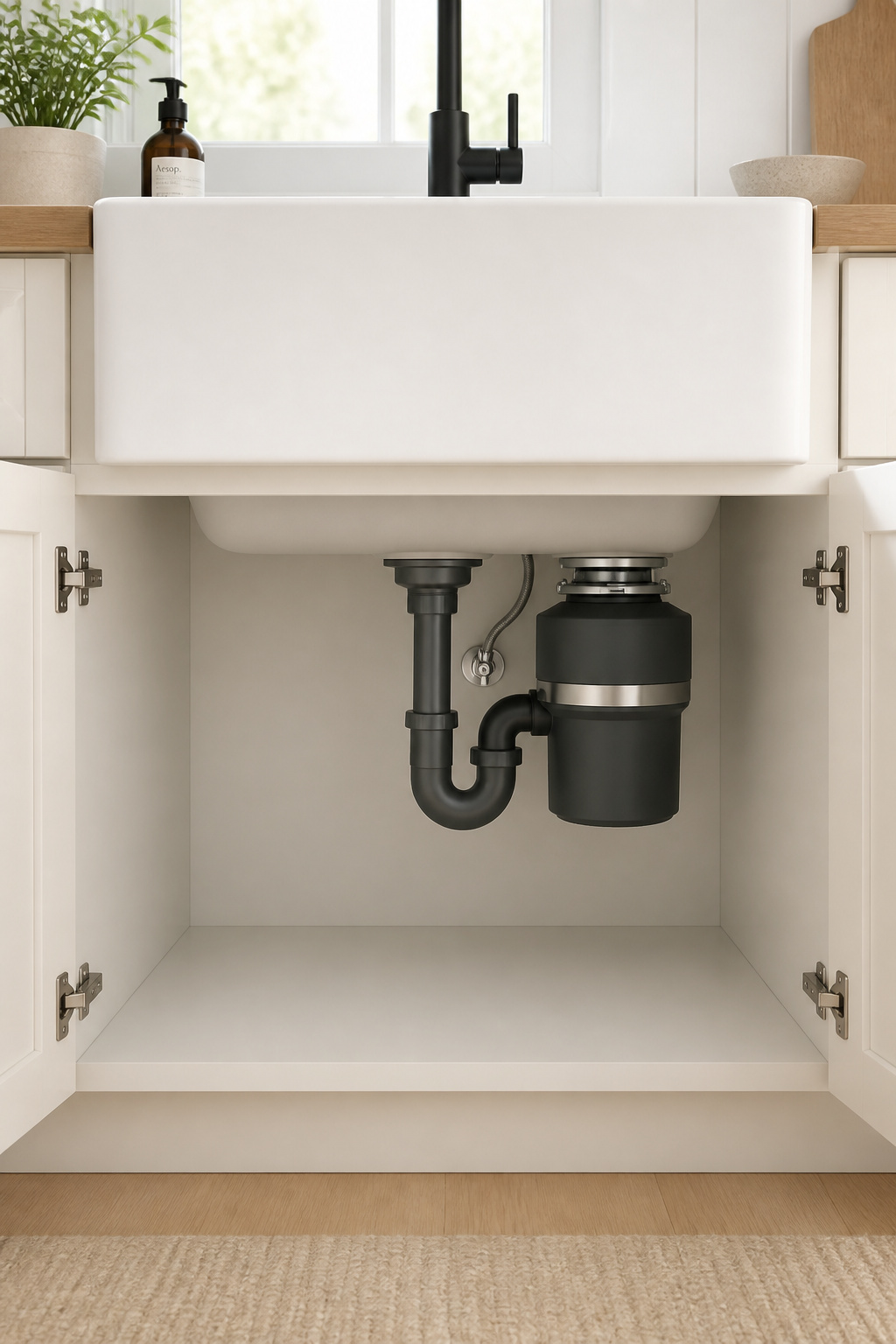
How your bowl choice determines your cabinet size requirement
The bowl choice comes first; the cabinet follows. Committing to a double before you measure the run ends in basins too narrow to use or a cabinet you have to rebuild. Plan a 30 to 36 inch cabinet for a single, 36 to 42 for a double, and keep that three-inch margin beyond the sink’s exterior for mounting and support. The full sizing picture is where you match it to your cabinet size.
Configuration and install: what changes between single and double
The configuration also changes what happens under the counter. A single bowl means one drain, one P-trap, and one optional disposal connection, leaving more usable storage. A double means two drains, two traps or a double-tee fitting, and the disposal usually in the smaller bowl — more plumbing, less storage, one more connection that can leak. That complexity feeds straight into the labor when you start installing your sink.
The next question after you’ve chosen
Decide single or double by how you actually wash, measure the cabinet run to confirm it, then choose material and plan the install last. Reverse that order and you inherit the costliest correction in the project. Choose the configuration that fits your week, size the cabinet around it, and the rest falls into line.
FAQ
Is a single bowl sink better for a farmhouse kitchen?
For most farmhouse kitchens with a dishwasher, yes. A single bowl gives unobstructed width for the roasting pans, stockpots, and sheet pans that farmhouse cooking leans on, and fits a 30–36 inch base cabinet. As architect Jerome Buttrick puts it, his firm is “not installing any double-bowl sinks at all.” The exception is a household that hand-washes everything or needs raw-protein separation.
What size cabinet do I need for a double bowl farmhouse sink?
A double-bowl farmhouse sink needs a base cabinet 36 to 42 inches wide, with the cabinet at least three inches wider than the sink’s exterior for the apron-front mount and support — a trade convention, not a published standard. A 33-inch 60/40 in a 36-inch cabinet is common. Always verify the interior opening, not the nominal size, against the spec sheet.
Can you use a single bowl farmhouse sink for food prep and washing at the same time?
Not in two separate zones at once — that is the single bowl’s one genuine trade-off. The basin is one uninterrupted space, so soaking and rinsing happen in sequence unless you drop in a plastic insert basin to create a temporary divide. For raw-protein safety, sequence carefully: wash and sanitize between produce and meat rather than relying on physical separation.