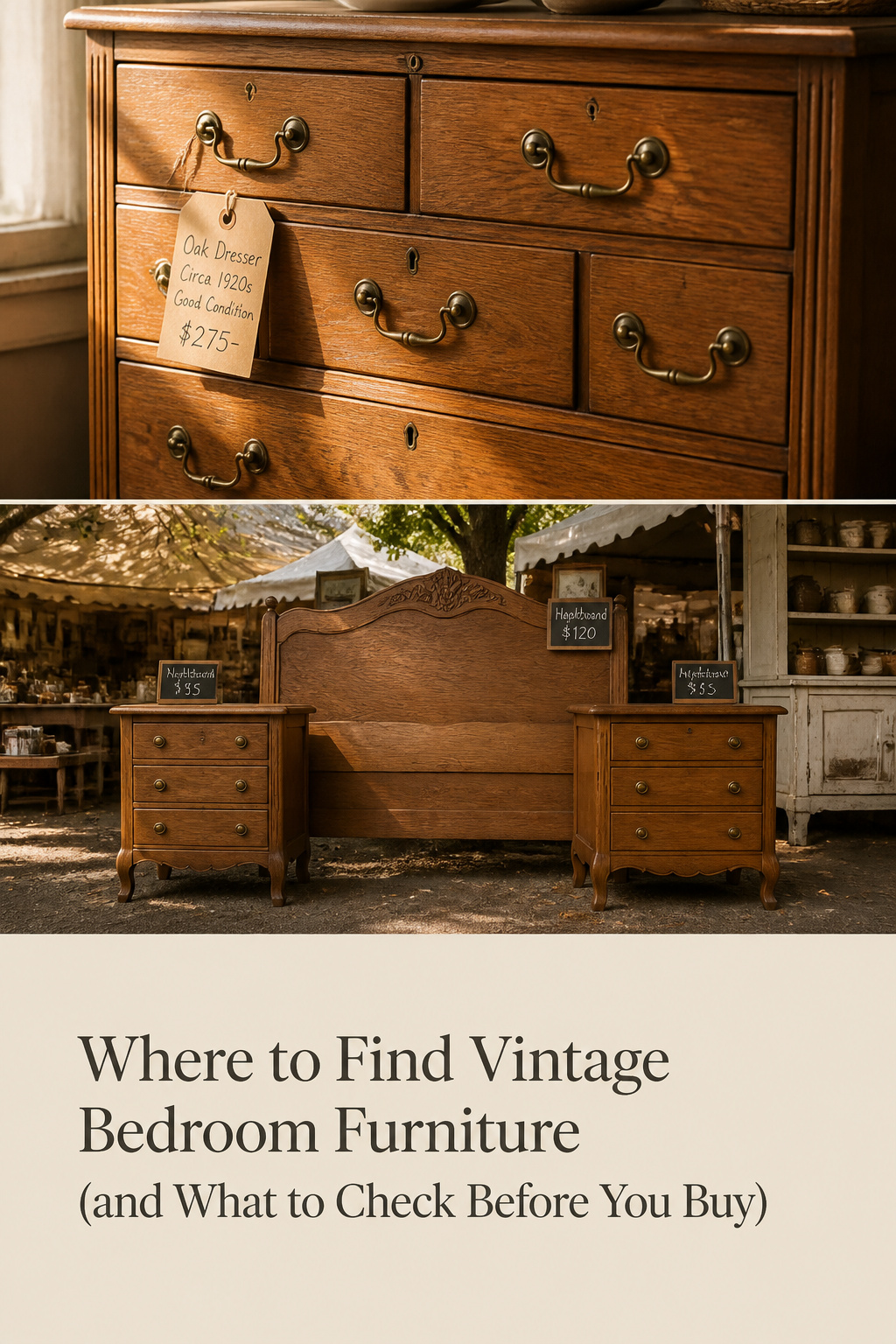
Most people buy a reproduction dresser at full retail because they think thrifting vintage furniture takes expert knowledge or luck they can’t manufacture. Both beliefs are wrong, and both are expensive. The solid-walnut piece you’d pay $1,500 for new is at an estate sale across town for a fraction of that — you just need to know where to look, when to show up, and three checks you can do in five minutes.
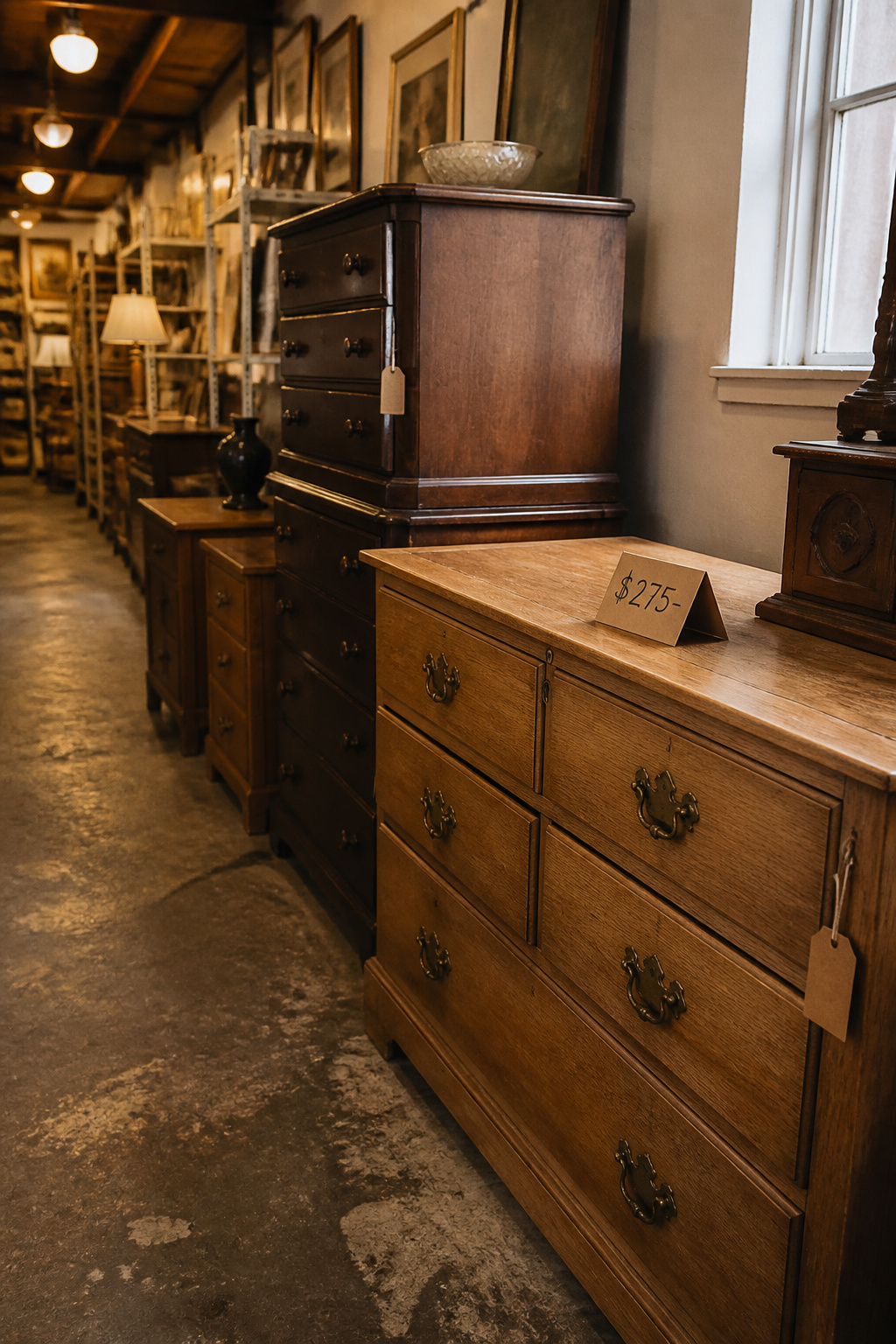
TL;DR
- Estate sales are the highest-yield source: furniture enters at 10–30% of retail, drops 25% on day two and 50% on the final day, and bulky pieces are the easiest to negotiate down.
- Each channel has its own market — local sources price at liquidation value, while curated sites like Chairish run 3–5x Facebook Marketplace for the same piece.
- Skip the expertise. Three checks settle it: structural (sits flat, drawers run), surface (finish vs. wood damage), and honest cost (repairs plus price vs. an equivalent sound piece).
The people who come home with a great dresser at a fair price have a process. Here it is, channel by channel.
The Myths That Keep People From Thrifting Vintage Furniture
Three myths do most of the damage: that professional pickers strip everything good before you walk in, that you need antiques expertise to avoid getting burned, and that online platforms made local sourcing pointless. All three are false.
Myth 1: the pros get everything good before you arrive — what the data actually says about timing
Estate companies price and stage everything before the doors open — nothing is pre-picked, and resellers stand in the same queue you do. The buyer who waits often wins: day two brings 25% off, day three 50%, and big pieces are the ones companies most want gone. As Room for Tuesday’s guide puts it, smart shoppers scout on day one, then “come back early on the discount day and pick those up for less.”
Myth 2: you need expert knowledge to buy safely — the three checks anyone can do
You don’t need to date a joint or name a wood. Three checks handle it — structurally sound, what’s wrong with the surface, and whether the fix-it cost still makes the price make sense. One fact does the heavy lifting: mint versus damaged pieces show a 5–10x value gap, chips or cracks cut value 40–70%, disclosed repairs 30–60%. That alone lets you tell a deal from a trap.
Myth 3: online marketplaces have replaced local sourcing — why each channel still has its own market
Each channel prices on its own logic. Local sources sell at liquidation value — 10–30% of retail — while curated platforms sell at market value: a vintage Henredon dresser that goes for $500 on Facebook regularly fetches $1,500–$3,000 on Chairish. None replaced the others. For how these pieces fit a room, the complete guide to vintage bedroom style covers styling; this is about the hunt.
Estate Sales: The Highest-Yield Source and How to Work Them
Estate sales liquidate complete households — matched sets, pieces still in context, priced to clear rather than appreciate. If you only learn one channel, learn this one.
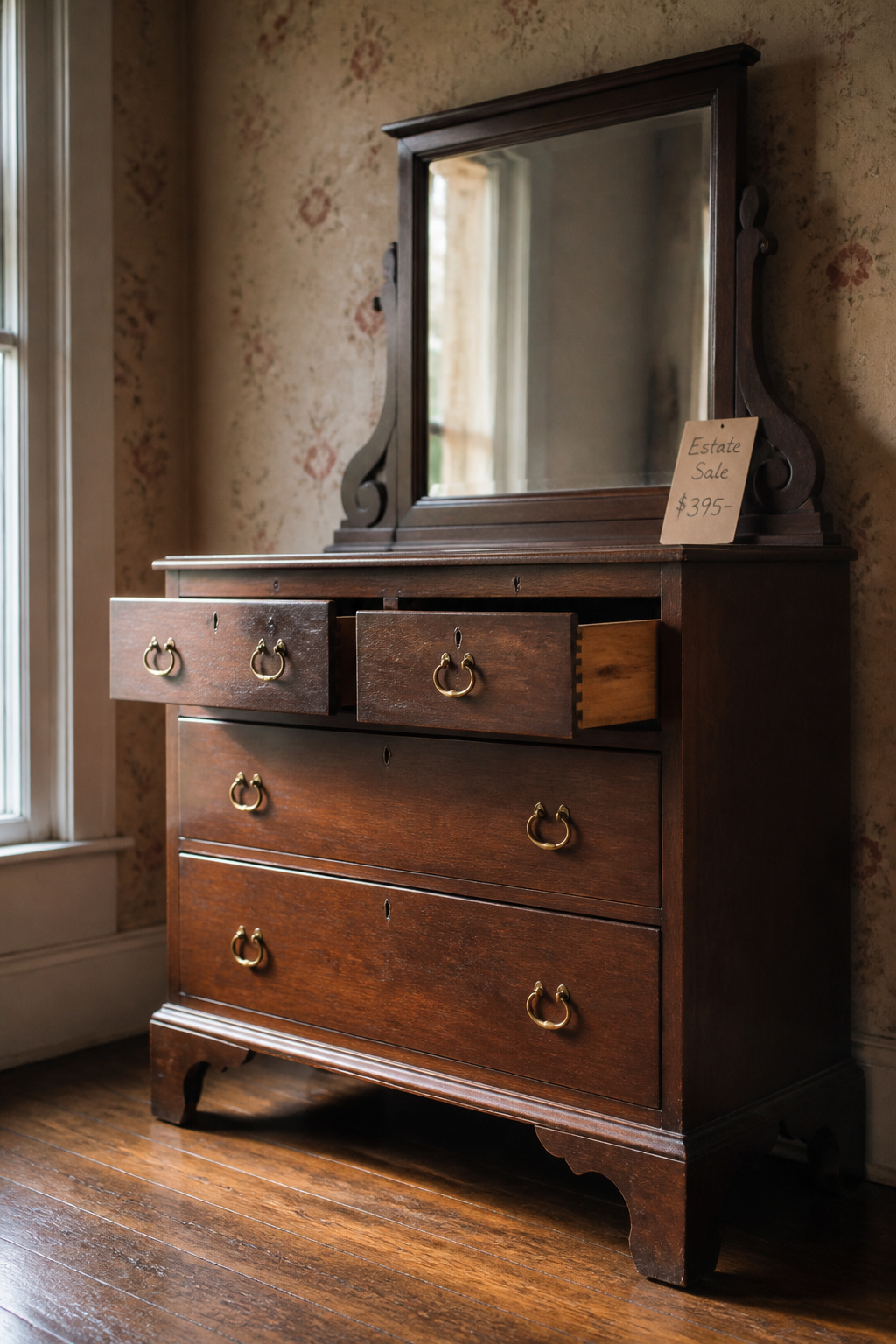
How estate sales are priced — and why day-two or day-three is often better than day-one
Estate companies price at liquidation value — estatesales.org says items “should never be priced equal to retail… or even what they can be purchased for at an antique shop.” Furniture enters at 10–30% of retail: as Apartment Therapy puts it, “Friday is full price, Saturday is 25% off, and Sunday is 50% off.” Day two is the sweet spot for large pieces — fewer resellers compete for dressers, and the company wants bulky items out the door. Here’s how the channels compare:
| Source | Best for | Timing tip | Price vs. thrift |
|---|---|---|---|
| Estate sale | Matched sets, big pieces | Day two for the 25%-off sweet spot | Comparable / slightly higher |
| Flea market | Nightstands, one-off finds | First hour, or last hour for discounts | Moderate |
| Antique mall | When you need time to measure | Any time; no pressure | Highest |
| Thrift store | Cheapest floor, lowest hit rate | Monday–Tuesday at opening | Baseline (lowest) |
| Online (local) | Filtering by location | Anytime; add moving cost | Comparable; curated sites 3–5x |
Check EstateSales.net by ZIP code — the discount schedule is often posted, and good listings include room photos.
What to bring, who to talk to, and how to negotiate without offending
The tape measure beats any phone app — carry the dimensions of every doorway and stairwell between the sale and the bedroom. A 38-inch dresser won’t clear a 32-inch door without pulling the drawers first; physics does not care how much you love it. Talk to company staff, not bystanders; on day two they can deal, and most won’t on day one. Bundling a dresser plus two nightstands beats haggling over one piece. Bring cash.
The bedroom pieces most often found at estate sales (and their condition risks)
Expect four- to eight-drawer dressers, matched nightstand pairs, armoires, iron and brass beds, and 1940s–1960s sets that are common here and rare elsewhere. The number-one risk is smell — smoke, mildew, or pet odor penetrates wood fibers, so open every drawer and smell the interior. Also check for woodworm: the beetle leaves round 1–2mm holes. Fresh pale-edged holes with fine powdery frass mean an active infestation — walk away. Darkened holes with no fresh dust are dormant and fine.
Flea Markets and Antique Malls: Volume Sourcing With Selection Pressure
The stock here is dealer-curated — prices run higher than estate sales, but selection is steadier.
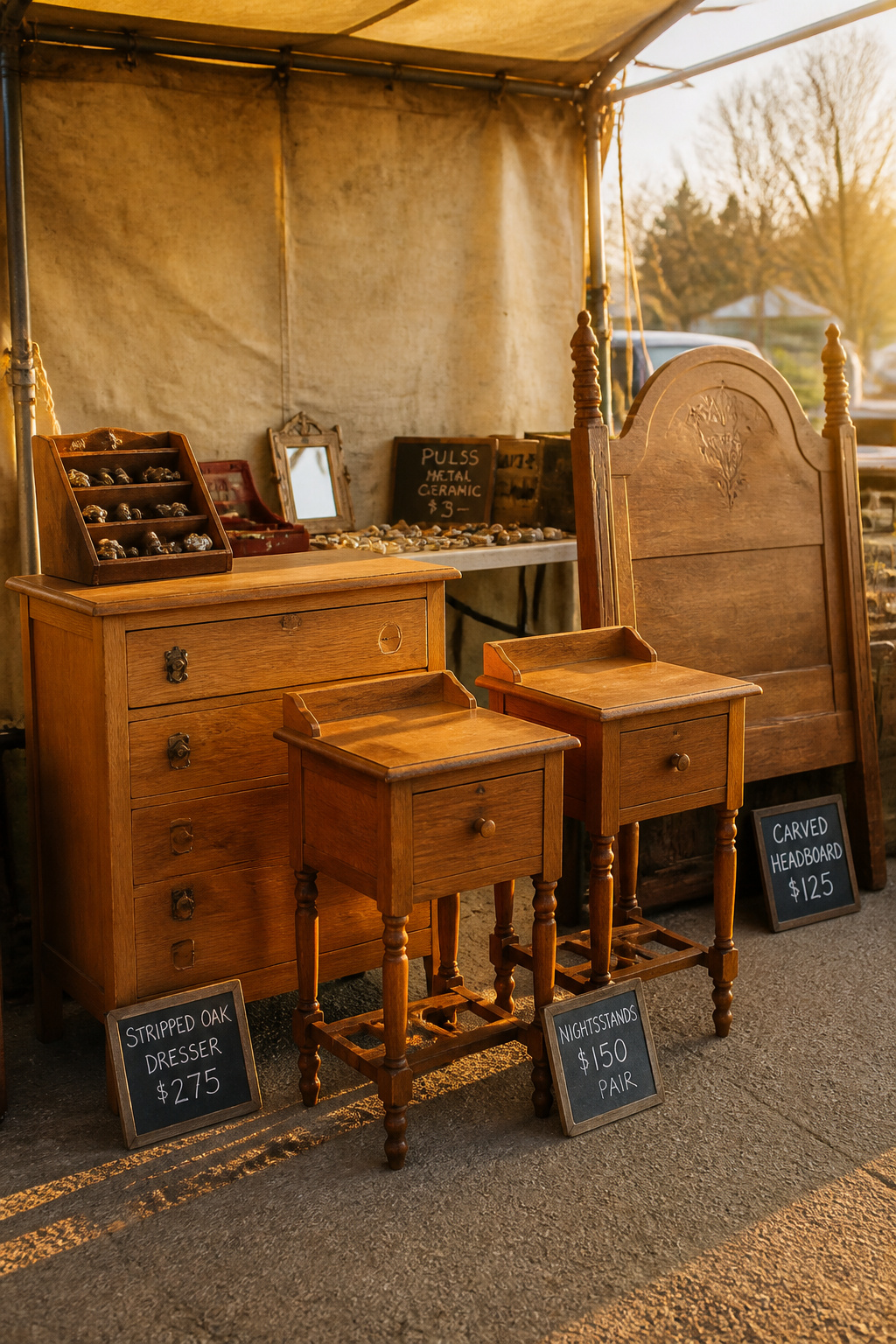
Indoor antique malls vs outdoor flea markets — different products, different tactics
Antique malls lease permanent indoor booths — climate control, normal hours, no pressure — but you pay margin on top of booth rent, and negotiation is slow because staff must phone the absent owner. Outdoor flea markets put the dealer right there, so haggling is immediate, but prices swing wildly: the same dresser can be $45 at one booth and $350 three rows over. Arrive in the first hour for selection; the last hour before close is the discount window.
How dealers price and when prices are negotiable (and when they aren’t)
At outdoor markets, cash is the strongest signal — showing it physically while you offer moves things in a way a card won’t. Open at 70–80% of the tag; lowballing at 20–30% kills it. At antique malls, expect 10–20% at most. Use condition as your factual lever: “this joint needs gluing and the veneer needs patching, which puts me at $X and an afternoon” beats “can you do better?”
The category trap: why flea markets oversupply some pieces and undersupply others
In my experience these markets follow a pattern. Decorative items — frames, small mirrors, lamp bases — are oversupplied because they’re easy to haul, which inflates their prices. Large dressers and headboards tend to be scarce; dealers dislike transporting them, so when a good one appears it sells fast. Nightstands are the sweet spot — small enough to move easily, priced reasonably, in consistent demand. As stylist Emily Henderson notes, no “threat to walk away is believable unless you would actually walk away” — set your ceiling before you start.
Thrift Stores and Charity Shops: High Volume, Low Signal
Thrift stores have the lowest price floor and the lowest hit rate. What makes them reliable isn’t expertise — it’s frequency and familiarity.
How to identify which thrift stores turn over quality furniture (and how often)
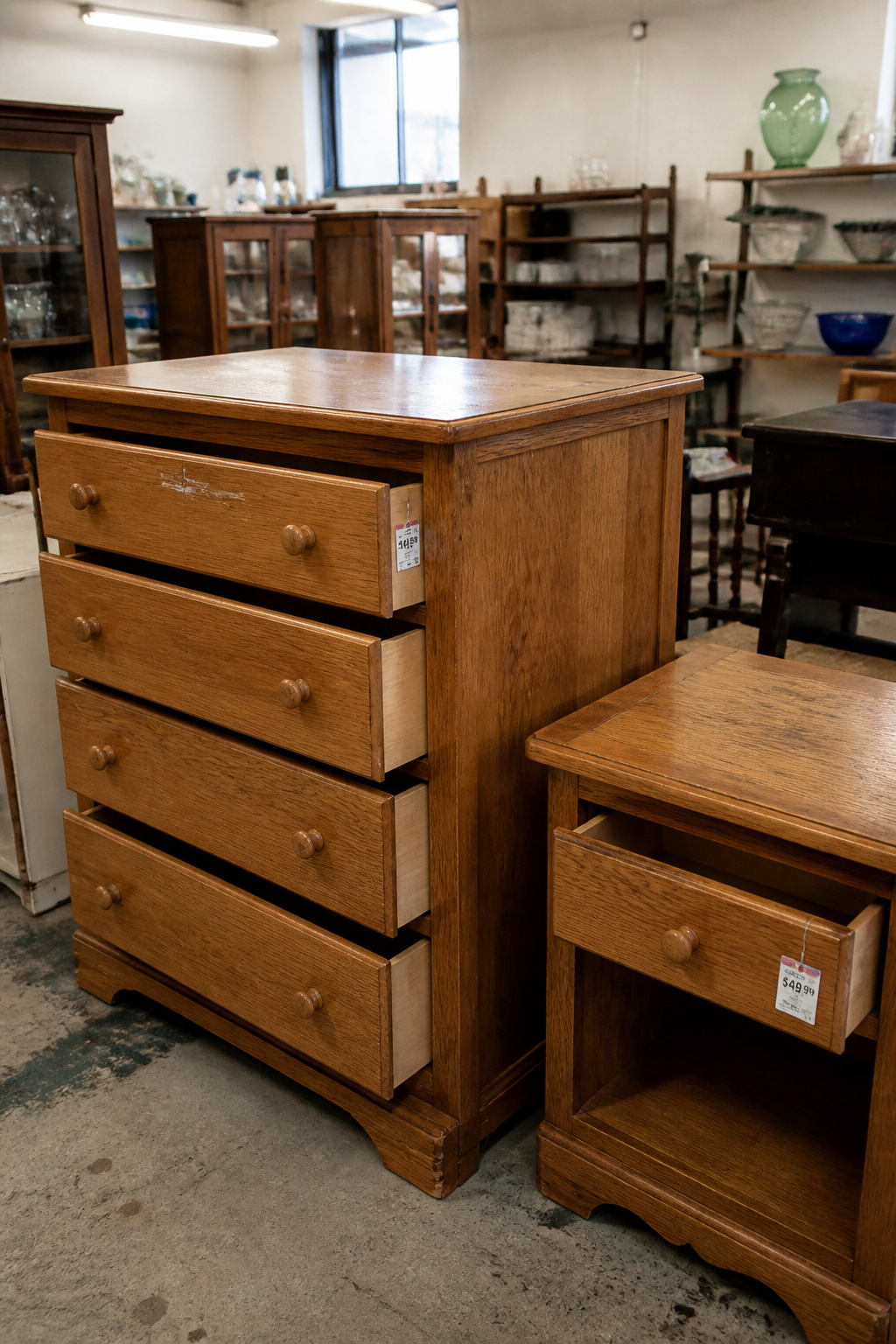
Not every store gets the same donations. Those near older housing stock receive more solid-wood furniture — estate cleanouts and downsizing go local. Visit two or three near older residential streets before committing to a regular route. The single best move is getting friendly with staff: tell them what you’re after, and many will set things aside or call. Following stores on social media gives early visibility on arrivals.
The timing advantage: when new stock lands and why regulars know it
Monday and Tuesday mornings are the highest-yield window — communities donate over the weekend, stores floor it Monday, so arrive at opening. Ask: “When do you put new furniture out?” gets a direct answer. On price, Goodwill ranges a dresser with mirror at $25–$60, and stores price by size and weight, not period — a 1940s mahogany six-drawer may cost the same as an ’80s laminate one.
What to walk past and what is always worth a second look
Walk past particleboard with laminate wrap, upholstered pieces of unknown provenance, and anything whose smell has penetrated the drawers. Worth stopping for:
- Solid wood dressers — heavy for their size, dovetail joints in the drawer boxes. Lift a corner; if it barely moves, it’s solid.
- Nightstands with turned legs and clean drawer action.
- Stripped or scratched pieces with good bones — they price at painted-over rates and refinish well.
- Solid brass hardware — a dresser with original brass pulls might be $40, while the pulls retail at $8–$15 each.
Case pieces are the highest-value category — as Camille Styles puts it, “wooden dressers are so much better quality than ones you can buy now and they aren’t off-gassing VOCs for months at a time.”
Online Marketplaces: How to Buy Bedroom Furniture You Can’t Touch First
Online splits into two markets: local peer-to-peer (Facebook Marketplace, Craigslist, OfferUp) at near-thrift prices, and curated platforms (Chairish, Etsy) at 3–5x that. For a budget, local is the channel. The skill is evaluating a piece you can’t smell or run the drawers on.
What photos to ask for (and the questions that reveal condition better than images)
Before you commit, request:
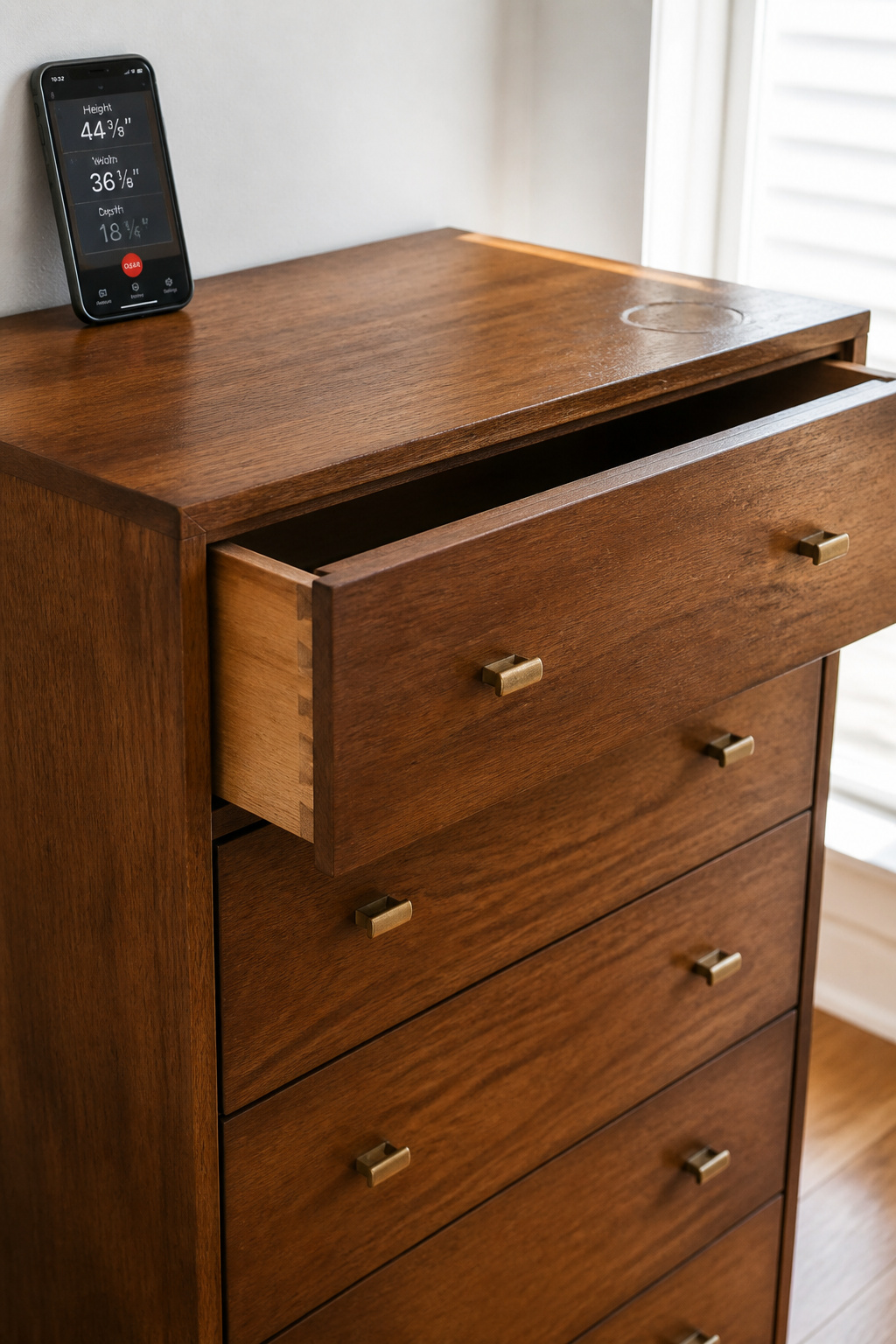
- Natural daylight photos — artificial light hides color damage and veneer separation.
- The underside or back — water damage and structural repairs show here first.
- Open drawers showing the interior and dovetail corners.
- All four corners of the top — veneer chips, water rings.
- Inside the lowest drawer — moisture or pest evidence.
Then ask what photos can’t show: “Smoke-free and pet-free home?” “Wobbly legs or sticking drawers?” Sellers rarely know their piece’s era — search by material (“walnut dresser,” “chest of drawers”), not style.
Pricing reality: when online is genuinely cheaper and when it’s padded
Local marketplaces price common pieces at 20–40% of retail, comparable to thrift, with the bonus of filtering by location. Curated platforms run 3–5x that; the premium is photography and reach, not furniture value. Before you offer, run the piece through eBay and Chairish completed sales — as A House in the Hills puts it, “a broad search on eBay, Chairish, and Etsy can help you get a ballpark.” Anything above that average is padded.
Logistics: getting a heavy dresser home without a van
Measure the dresser against the doorways at both ends and your cargo space — a standard six-drawer runs 36–52 inches wide, and a 52-inch piece won’t fit in most sedans without pulling the drawers first (which also cuts weight 30–40%). No truck? Movers like Lugg run a pickup base of $54 and a van $90, with a single-item local move around $75–$150 all in. Factor that into the price. Painter’s tape (never duct tape on finished surfaces) keeps drawers shut in transit.
The Spot Evaluation: Three Checks Before You Hand Over Any Money
I spent eight years running crews for a remodeling contractor, and one habit separated the pros from everyone else: pros measure, beginners guess. The flip side of that habit is learning to read a piece by its bones, not its face. My first workbench was two sheets of plywood, dented and ugly the day I finished it — and it’s still load-bearing in my garage years later, while prettier furniture has come and gone. Ugly-strong beats pretty-weak, and these three checks, done in order, tell you which one you’re holding. Structural failure overrides everything, so it goes first.
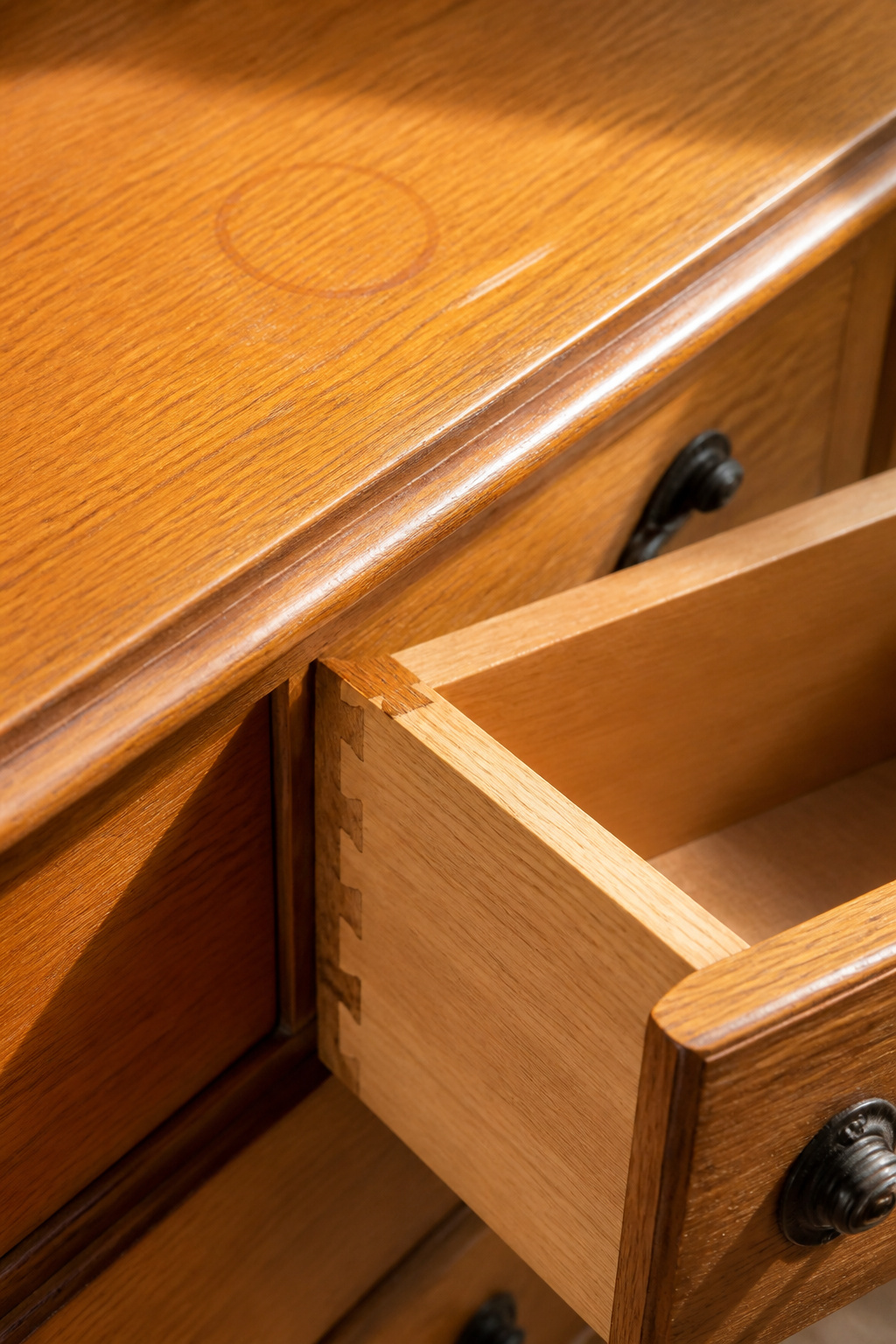
- Structural — does it sit flat, do the drawers run. Push gently on the top corners; a sound piece won’t rack or wobble. If it does, a loose back panel is usually the cause — cheap to fix. Pull every drawer out: box sits flat, corners dovetailed (not stapled), slides back without catching. A hollow sound when you tap the frame means particleboard or pest damage.
- Surface — what’s wrong vs. what looks worse than it is. Run a finger along a scratch; if it’s only in the finish, it disappears under oil or wax. Press any bubbled veneer: flexes and springs back means a two-hour re-glue; hard underneath means a swollen substrate. As This Old House notes, ridges that “produce a hollow sound” when tapped are repairable; ridges that “feel solid” mean the substrate has swollen.
- The honest call — how much to fix, does the price still make sense. Price every repair: re-glue a joint, $0; missing hardware, $8–$15 a pull; refinish the top, $20–$40; veneer patch, $30–$60; full strip and repaint, $40–$80. Add that to the asking price and compare to a sound equivalent locally. An $80-of-damage piece at $120 should come down to $50–$70.
Buying furniture without the repair math is the same trap every crew I worked with fell into at least once — you fall for the piece, skip the number, drag it home, and it sits unfixed for a year. Run the math before you negotiate.
You have the whole playbook: which channel suits what you’re after, when to show up, how to negotiate, and a five-minute field check that replaces antiques expertise. Pick one estate sale near older housing stock this weekend, bring a tape measure and cash. It helps to know which vintage furniture to look for so you recognize the good pieces on sight. A solid frame with a tired finish isn’t a problem — it’s the start of how to refinish a thrifted piece.
FAQ
What time should you arrive at an estate sale to get the best furniture?
If you want selection, arrive in the first hour of day one before anything is picked over. If you want price, go early on day two for 25% off or day three for 50% off. Large bedroom furniture benefits most from day-two timing — fewer resellers compete for it and the company wants bulky pieces gone.
How do you haggle at a flea market without being rude?
Start at 70–80% of the tagged price, high enough to be taken seriously. Bundling two or three pieces from one dealer opens a stronger position than haggling on one item alone. Use condition as your lever — name a specific repair needed. Cash speeds agreement, and if a polite no is firm, accept it and move on.
What should you check before buying a used dresser or chest of drawers?
Three checks in order. Structural: push the top corners for wobble, pull every drawer to confirm dovetails and a flat box, tap the frame for hollow spots. Surface: scratch-test the finish to see if damage is in the finish or the wood. Smell: open every drawer — penetrated smoke and pet odors rarely fully leave the wood.