
My mother calls my sunroom “the empty room.” She says it kindly. Then she offers to lend me a chair for it. I have been turning down that chair for years.
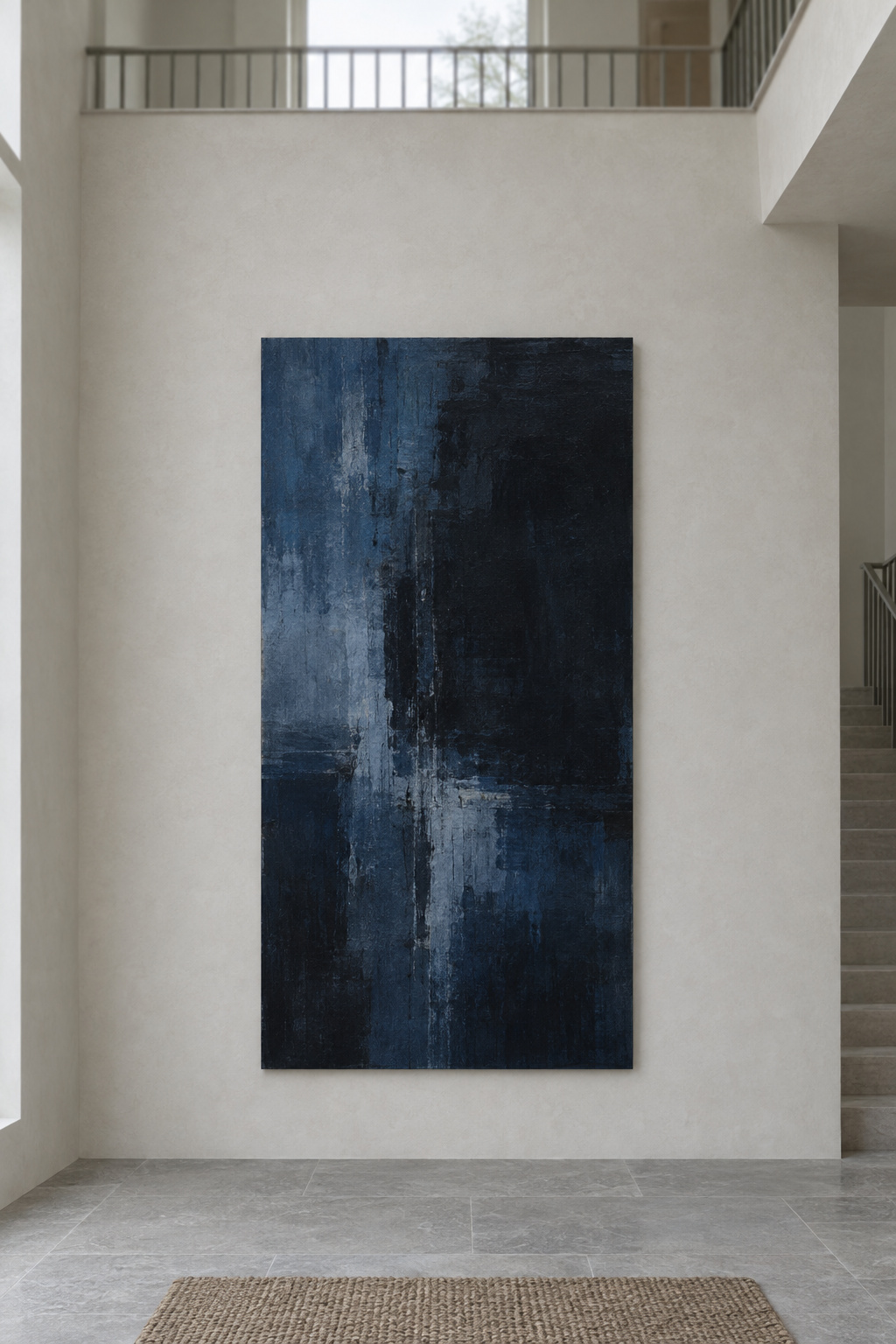
I think of her whenever someone walks me into a double-height entry and points up at the big blank wall. Two story foyer wall decor makes people anxious in the opposite way from my mother: the height seems to ask for something in every foot of it. It doesn’t. Hang one piece sized for the moment you step through the front door, check it from the upstairs landing, and keep the wall around it simple, with no small frames drifting above it.
TL;DR
- Size one piece for the view from the front door and check it from the landing: a 36 x 48 in print costs $36 to $288 unframed, and a woven hanging 48 in wide or more runs $87 to $1,899.
- Center it for someone standing at the door, 57 to 60 in from the floor, then look again from the landing; one retailer suggests 65 to 70 in where the ceiling is over 14 ft.
- Hang it on a metal French cleat screwed into studs (rated 100 to 300 lb by length) or a picture rail rated per meter, and lift it with a second person.
Two story foyer wall decor starts with the two places people stop
Watch a household come home and you will see them stop twice. Once on the doormat, keys still in hand. And once at the top of the stairs, glancing down over the rail on the way to bed. Everything in between is walking, and nobody studies a wall while walking.
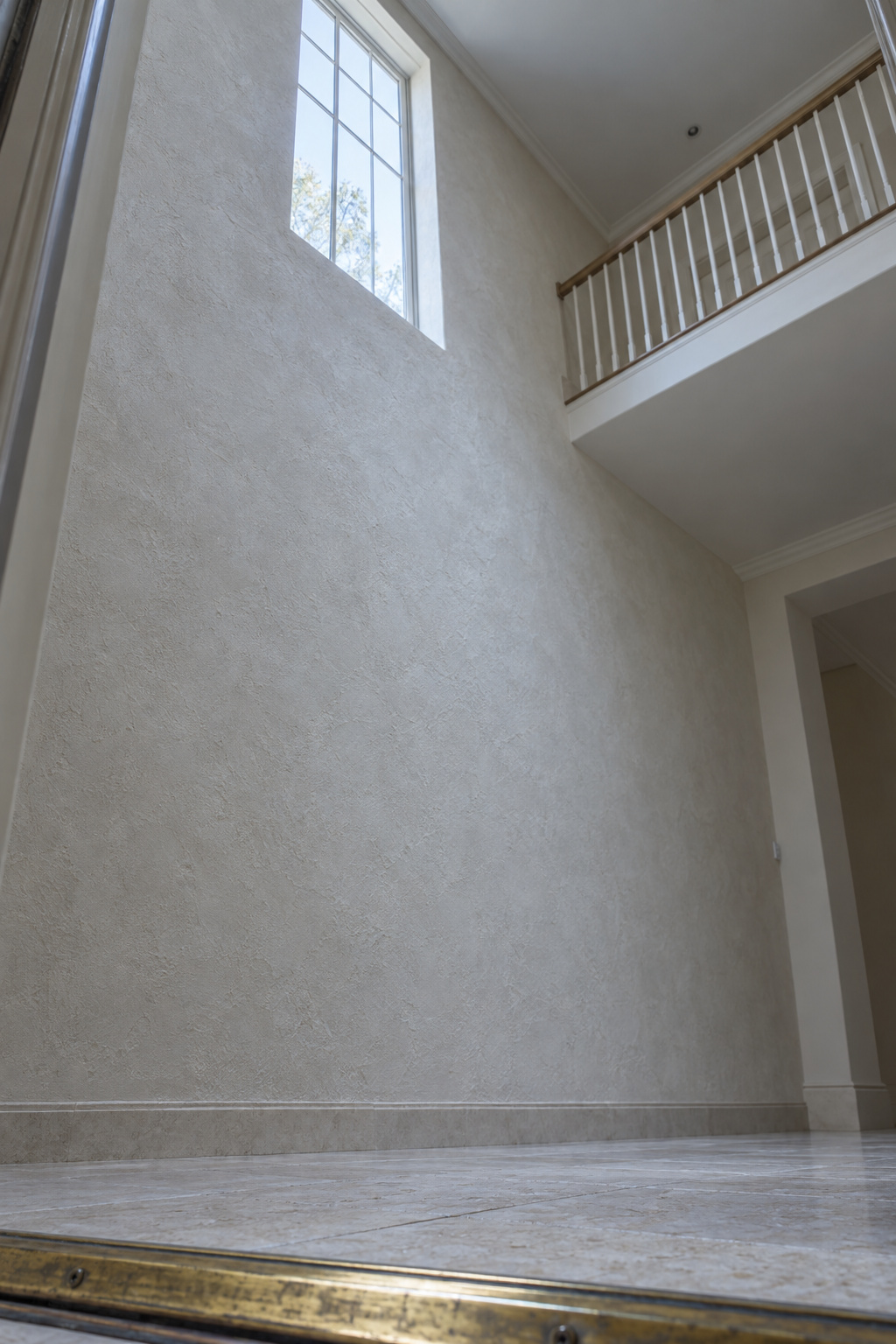
I take my shoes off at a client’s door before anyone asks, and where there is to put them tells me a lot about that first stop. Then I ask to sit alone in the room for five minutes before anyone tells me what is wrong with it. In a tall foyer those minutes usually show the same thing. From the middle of the room the wall is fine. From the door it feels like a blank page, and from the landing whatever is up there looks lost.
So plan the wall from those two places, not from its middle. One art retailer’s guide makes a related point: a double-height entry is seen from the ground floor and from the landing, and one placement has to serve both.
The furniture, the light and the trim each have their own decisions, and decorating the rest of a two-story foyer shows how they fit together. Here it is only the flat wall.
One oversized piece, a gallery grid or a hanging: what survives the height?
Name the feeling first. From the door, you want your eyes to land somewhere and stay.
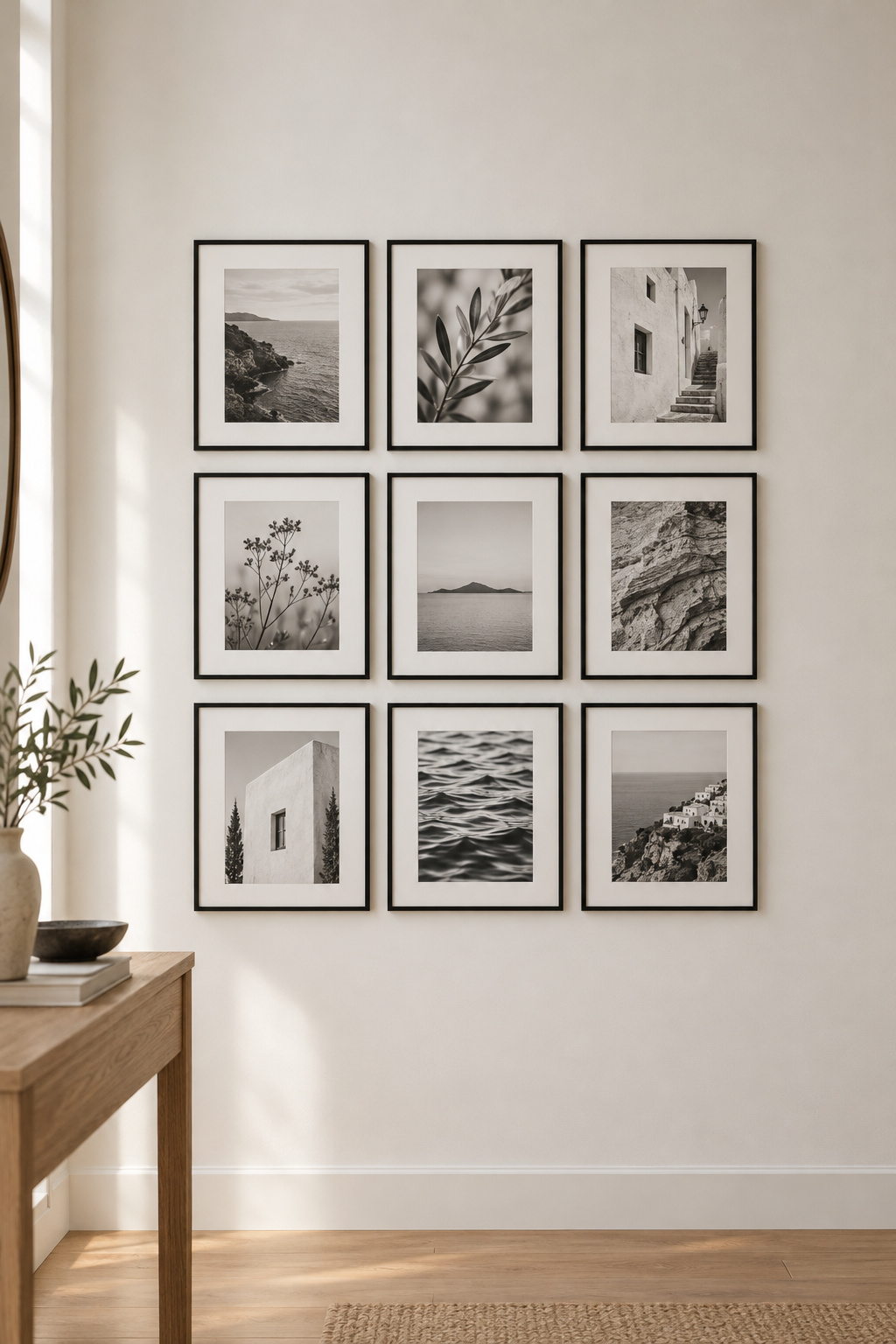
I once worked with a client who could not stop checking her phone in her own reading nook. The nook faced the charging station. We moved the charger to another room, and the corner changed more from that than from anything she had bought for it. One object can pull attention out of a whole corner. On a tall wall, a scatter of small frames does the same pulling, frame after frame, while one large piece holds you.
Emily Henderson’s line is that the last thing you want is art that looks “itty bitty” on a big wall, and that slightly too big beats too small. For proportion, guides range from about 50 to 75 percent of the open wall width; the tall wall decor ideas article on vaulted living rooms works through that sizing in full. On a double-height wall, a vertical piece, or two stacked verticals, holds the volume better than one wide canvas.
Here is how the usual options compare from the two stops.
| Option | From the door | From the landing | Approximate cost |
|---|---|---|---|
| One large print, 36 x 48 in | Holds the eye | One clear shape | $36 to $85, print only |
| One large canvas, 36 x 48 in | Holds the eye | One clear shape | About $288, unframed |
| Gallery grid of small frames | Busy unless grouped tightly | Scattered dots | Depends on frames |
| Woven or textile hanging | Soft, holds the eye if wide enough | Texture still visible | $87 to $1,899 |
A large mirror is the other single-piece option worth weighing, though sizing one is its own subject.
If you love a gallery wall, treat the whole group as one shape. And I see the matched-frame advice differently. Matching sets look calm in photos and fussy in life; a loose color family, frames in related woods or metals, lets the wall settle.
Where the center of the art sits for the door and the landing
The door view
Notice where your shoulders go when you walk in. If your chin has to lift to find the art, it is probably too high. Museums center art 57 in from the floor, and for standing rooms with ceilings of 10 ft or more the usual advice is about 60 in. My bike bag holds a tape measure, a notebook and clean socks for other people’s floors; bring the tape. Measure from the finished floor to the center of the piece, not its top edge.
The landing view
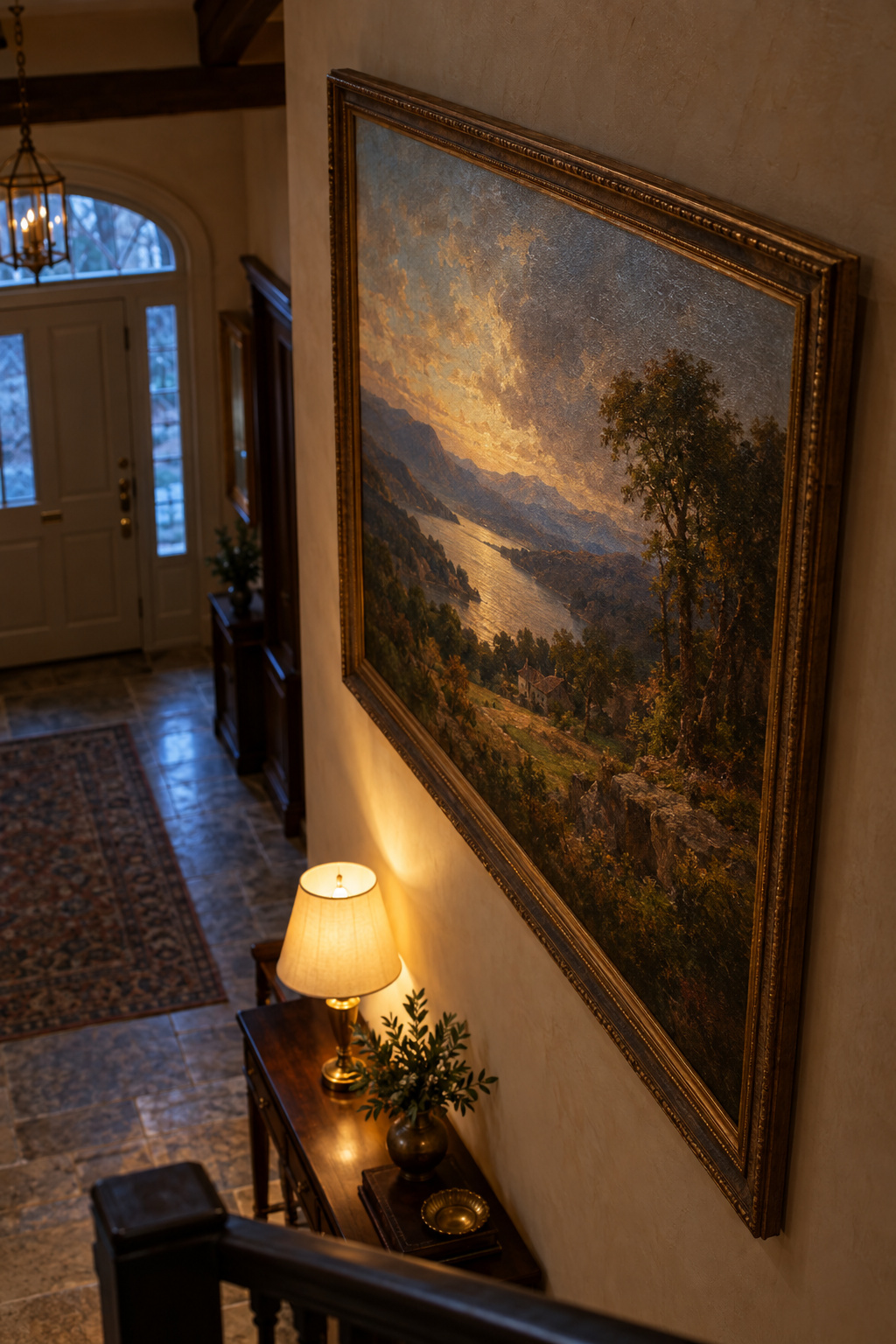
Then walk upstairs and look back down. This is where the advice splits. One art retailer’s guide says the museum rule often fails in double-height spaces and suggests a center of 65 to 70 in where the ceiling is over 14 ft, one center serving both views. Nobody publishes how a center should shift for someone looking down from above, so treat the landing as your check rather than your rule. Does the piece still look like the main thing on the wall, or does it shrink into the paint? When it shrinks, I would reach for a bigger piece before a higher one.
Art climbing the stair diagonal is a different job, covered in the staircase wall ideas article. If the wall still feels shapeless from above, the answer may be trim that gives a tall wall its proportions, which gives the piece a band to sit in.
Big on a small budget: textiles, large prints and a tall plant at the base
What can leave? Before spending anything, take down the small frames already scattered up there. The wall usually quiets on its own, and the money goes to one big thing.
Three affordable ways to get real scale:
- A large-format print. A matte print at that size runs $36 at a flat-rate online printer and about $85 as a giclee elsewhere. Order a proof and tape it up first.
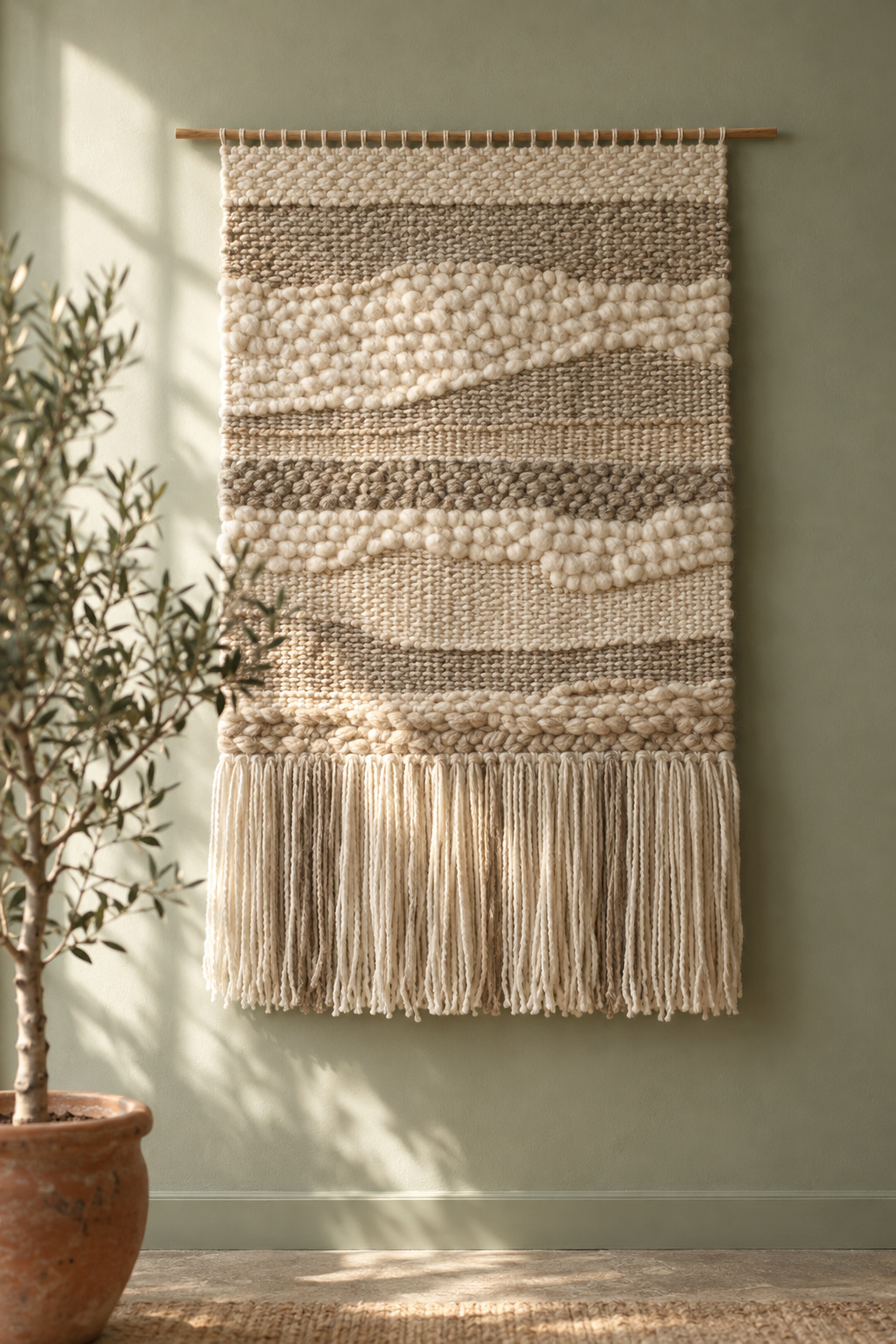
- A textile hanging. Magnolia’s oversized tapestry, hung on two pine rods, is $198; handmade macrame runs from $87 for a 48 in piece to $1,899 made to order. On a wall 9 ft or taller, go at least 36 in wide and 48 in long, or it looks fragile.
- A faux tree at the base. An 8 to 10 ft faux fiddle leaf fig or olive runs about $215 to $430 and gives the bottom of the wall weight.
If I had to pick one, it would be the textile. A hard entry needs something soft for the eyes to rest on, and a rod-hung piece needs only a couple of hanging points. List prices move, so check before you budget.
Hanging heavy work at height: cleats, picture rail systems and a second person
A calm wall starts with a calm install, with nobody shouting directions from below.
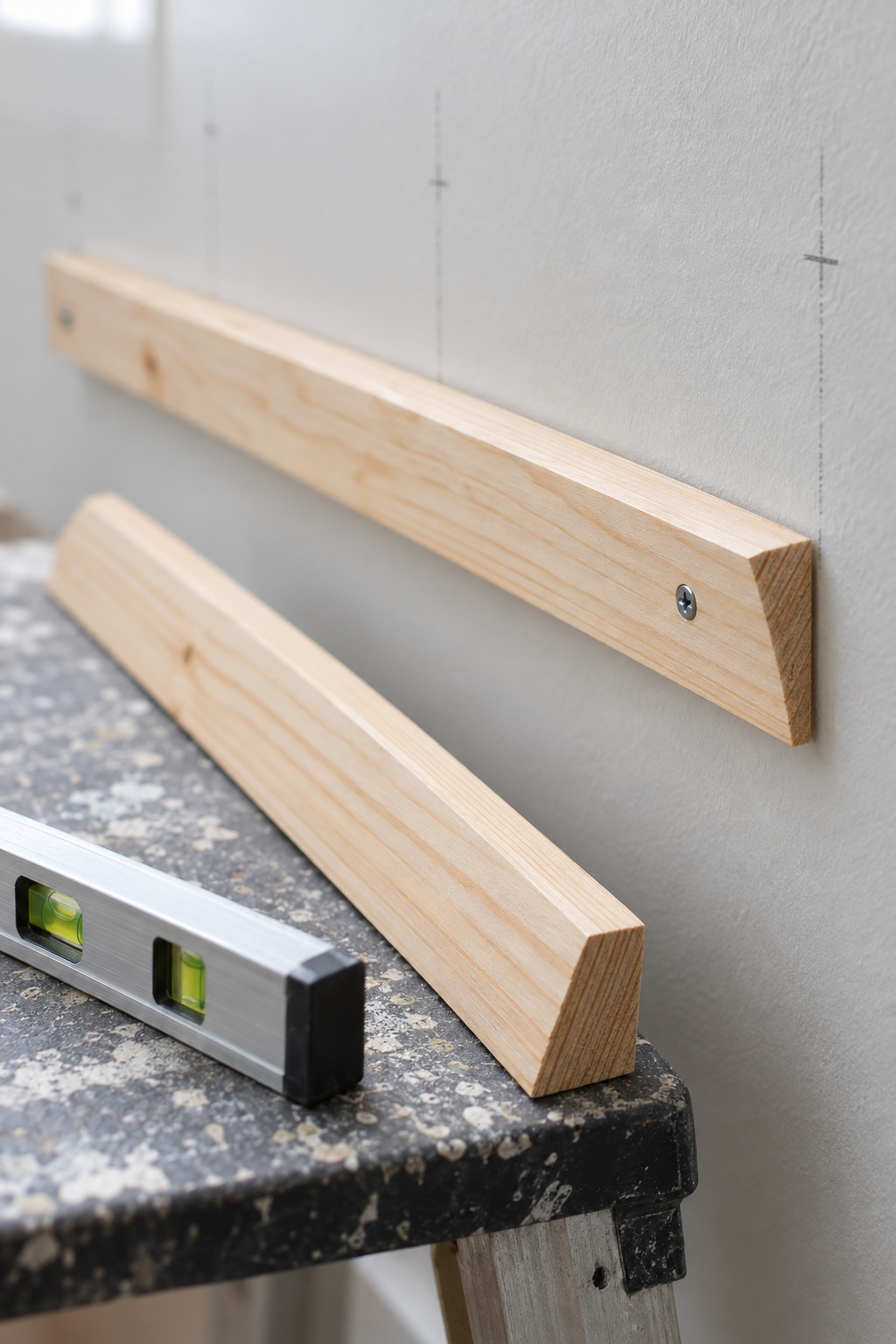
A picture rail spreads weight along its length. The STAS Cliprail Max is rated 25 kg per meter of rail (about 55 lb) and the Cliprail Pro 45 kg (about 99 lb); hooks carry their own smaller limits. Hangman’s metal French cleats are rated 100 lb at 9 in, 200 lb at 18 in and 300 lb at 30 in, punched every inch so you can hit a stud. A homemade wood cleat, a bevel ripped from plywood, has no published rating at all.
On anything this size I would rather see a cleat than a wire, because it goes on level once and stays there.
- Find the studs; they sit 16 or 24 in apart on center.
- Screw the wall half of the cleat into the studs, lip up, and check it level before the last screw.
- Fix the other half to the back of the piece, lip down, with fasteners rated about four times its weight.
- Lift with a second person. Never alone.
- Check it by eye from the doormat, then again from the landing.
How you reach that height is its own plan, ladder or scaffold. Settle it before you buy, and make sure the piece fits through the front door and up the stairs.
What to leave empty, and how the finished wall feels from the door
From the doormat, a finished wall lets you settle. Your eyes go to one thing, rest there, and come back to the keys in your hand. From the landing, the same piece holds its own against the height instead of floating in it.
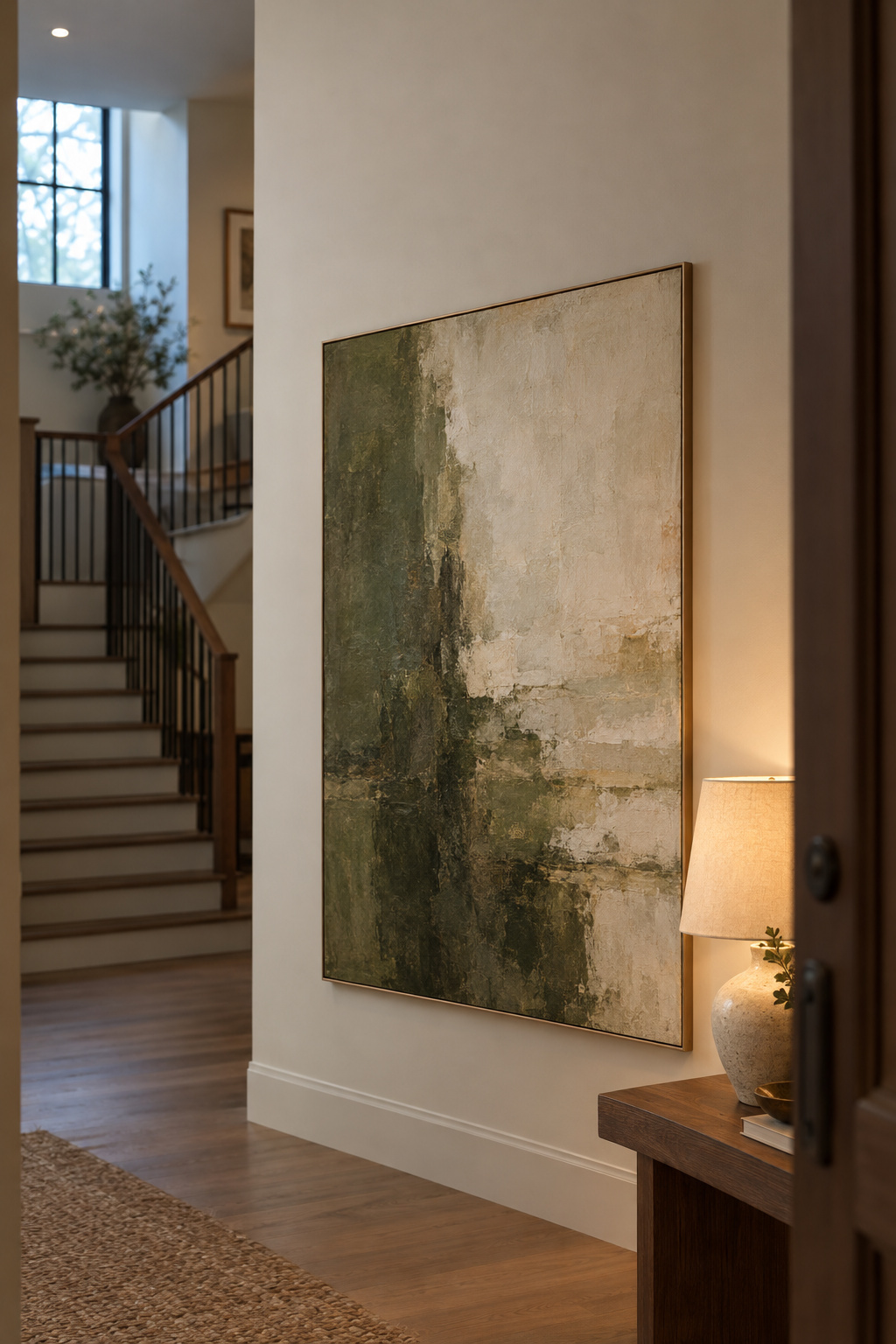
Let it be a little empty. Not bare: one piece scaled to the wall, and above it plain paint, with no small frames drifting toward the ceiling. Carla Aston sees it differently and would carry art up the wall, and some argue that empty upper height looks unfinished. I understand the worry. My answer is that one piece big enough to hold the door view already involves the height; the scattered extras are what make a wall feel undecided.
The ledge up high is the other thing you see from the landing, and decorating a high foyer ledge takes it on with the same restraint.
I still turn down my mother’s chair, and I would ask you to turn down the small frames the same way. Pick your one piece, tape a sheet of paper at the center height you are considering, and look at it from the door and then the landing.
FAQ
Should the art on a two story foyer wall match the art on the stairs?
It does not need to match, and no rule says it must. Tie the two together loosely with a shared frame finish or a color that shows up in both, so the stair art and the big foyer piece feel related without looking like a set. A staggered line up the stair diagonal is a separate project with its own spacing.
Can I decorate a tall foyer wall in a rental without drilling?
Partly, with lighter pieces. A rod-hung textile needs only a couple of hanging points, and an unframed engineer print on light paper can hang from wood poster rails. Adhesive strips have held a 30 x 40 in canvas over a bench, but the maker’s weight limit decides what they can carry. Anything heavy still belongs on studs.
Do I need art on every wall of a two story foyer?
No. One well-sized piece on the wall you face from the front door is enough, and the others can stay calm. Keep the rest of the decor minimal so the eye stays on that piece, and let a high ledge or a band of trim handle the height above it.