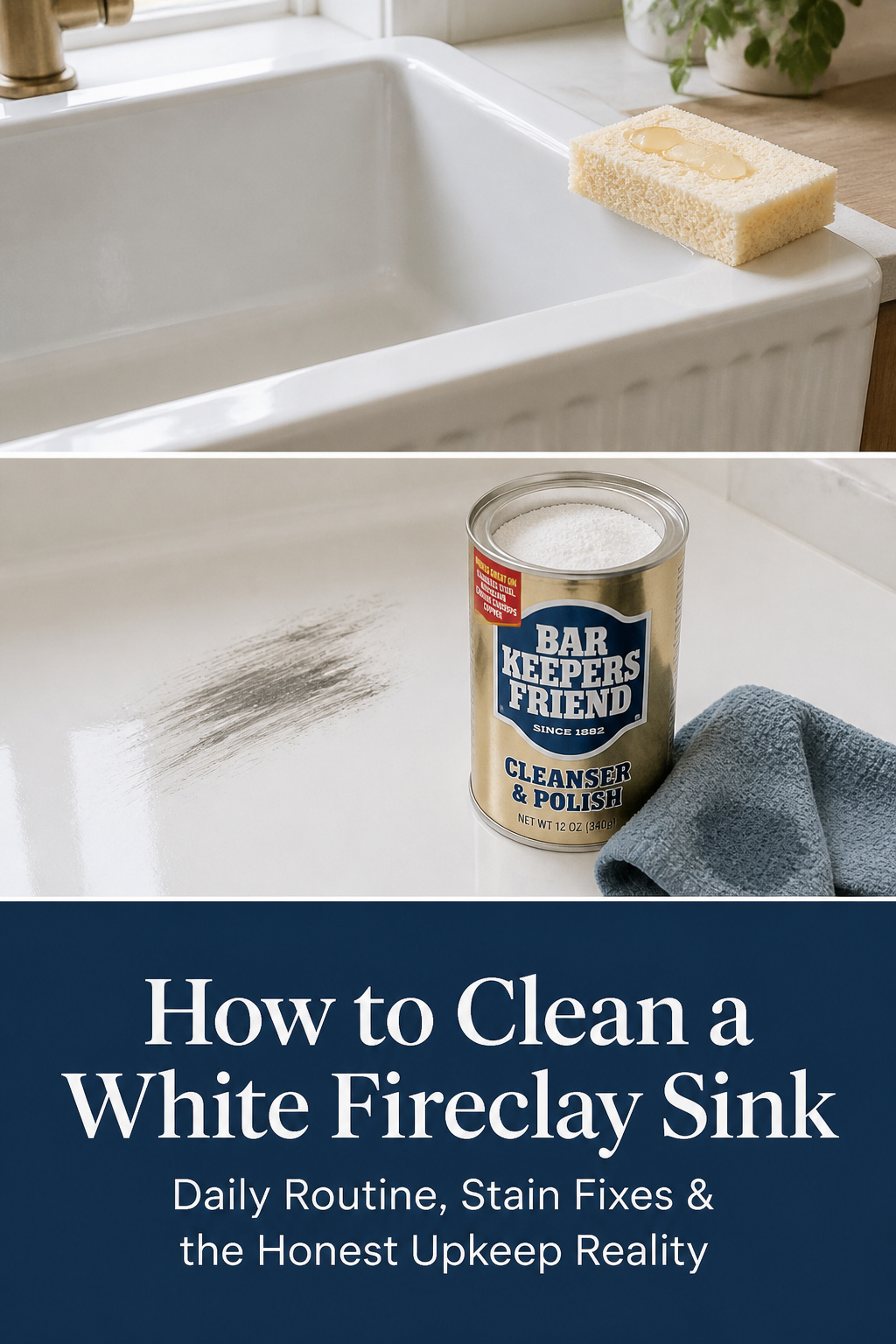
You picked the bright white sink, it went in, and three weeks later there are grey streaks across the bottom and a sinking feeling you’ve wrecked it. Good news that changes the whole job: those streaks almost certainly aren’t scratches. Learning how to clean a fireclay sink starts with one fact — most “stains” are metal residue sitting on top of the glaze. They wipe off. Here’s the routine that keeps the white white.
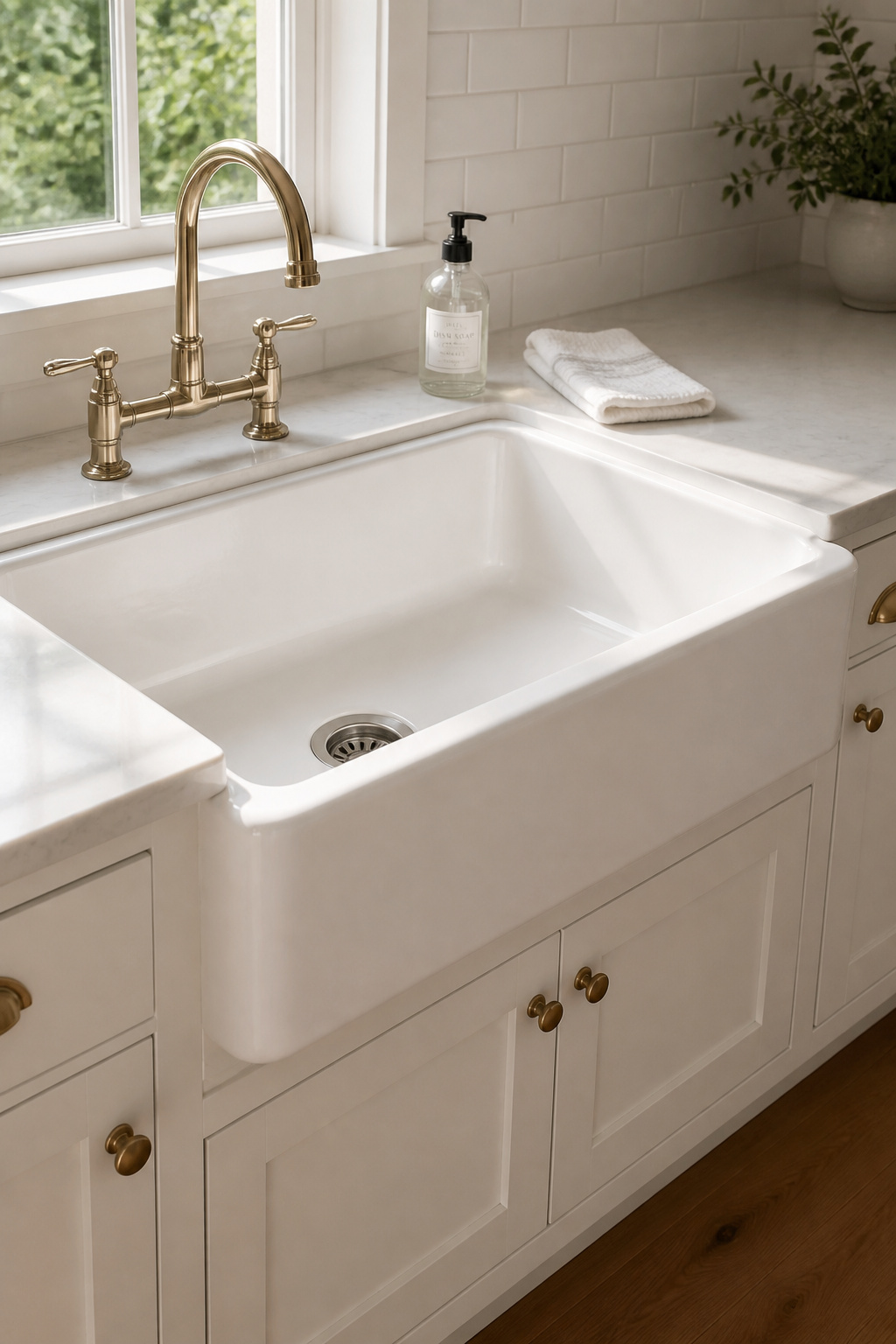
TL;DR
- Daily care is mild dish soap, a soft cloth, and a 30-second dry-off — typically under two minutes, and the drying step is what stops water spots before they form.
- For marks, work least-aggressive first: dish soap, then baking soda paste, then a Bar Keepers Friend paste on a soft cloth (never dry powder or abrasive pads), then an oxygen-bleach soak only if those fail.
- Skip chlorine bleach as a routine cleaner; if you use it at all, keep it to 1:10 diluted, never leave it sitting on the surface, and rinse straight away.
Why That Stain Appeared and What It Actually Is
Most marks fall into three buckets, and only one is a real stain.
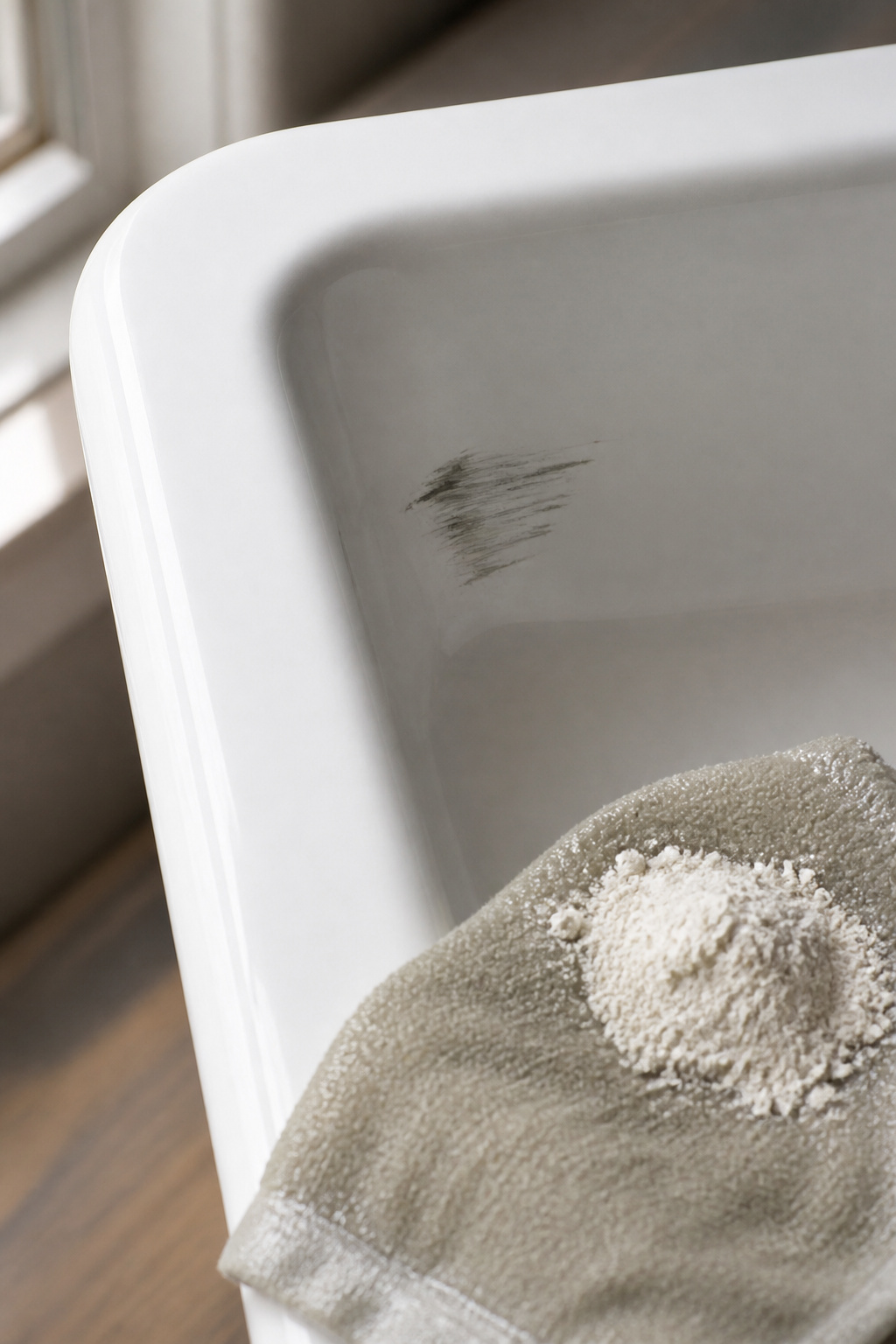
Metal marks vs mineral deposits vs true stains: the difference matters
Grey or dark streaks are almost always metal deposits — bits transferred from a cast iron pan, aluminium pot, or steel cutlery that slid across the glaze. White or chalky spots are mineral deposits from hard water, concentrating at the drain edge and faucet base. True organic stains — coffee, wine, tomato — are possible but rare. Ruvati confirms that what looks like a scratch is “almost always residue… and not a true scratch.”
What grey streaks in a white sink really are (and why they’re easy to fix)
Turner Hastings names “slight grey metal marks” as the single most common complaint owners report. Because the mark sits on the glaze rather than etched into it, a mild abrasive lifts it with no risk of permanent damage — usually 60 seconds of circular motion.
The fireclay glaze and why it behaves differently from enamel
Fireclay fires at 1,600–2,100°F in vitrification, where clay, quartz, and glaze fuse into one non-porous, glass-like body — the glaze isn’t a coat on top, it’s part of the material. Cast iron enamel is a separate porcelain layer over an iron core, which is why a cast iron chip exposes dark metal and a fireclay chip exposes white ceramic. For the full material picture, why fireclay behaves this way covers composition in depth.
The Daily Routine That Prevents Most Problems
What to do at the end of each day (under two minutes)
Routine cleaning needs nothing special: mild dish soap, warm water, a soft cloth. Wipe, rinse, dry. The step people skip is the dry-off — NOZLOO puts a number on it: 30 seconds of drying after each use “prevents this entirely,” meaning the mineral spots you’d otherwise scrub out.
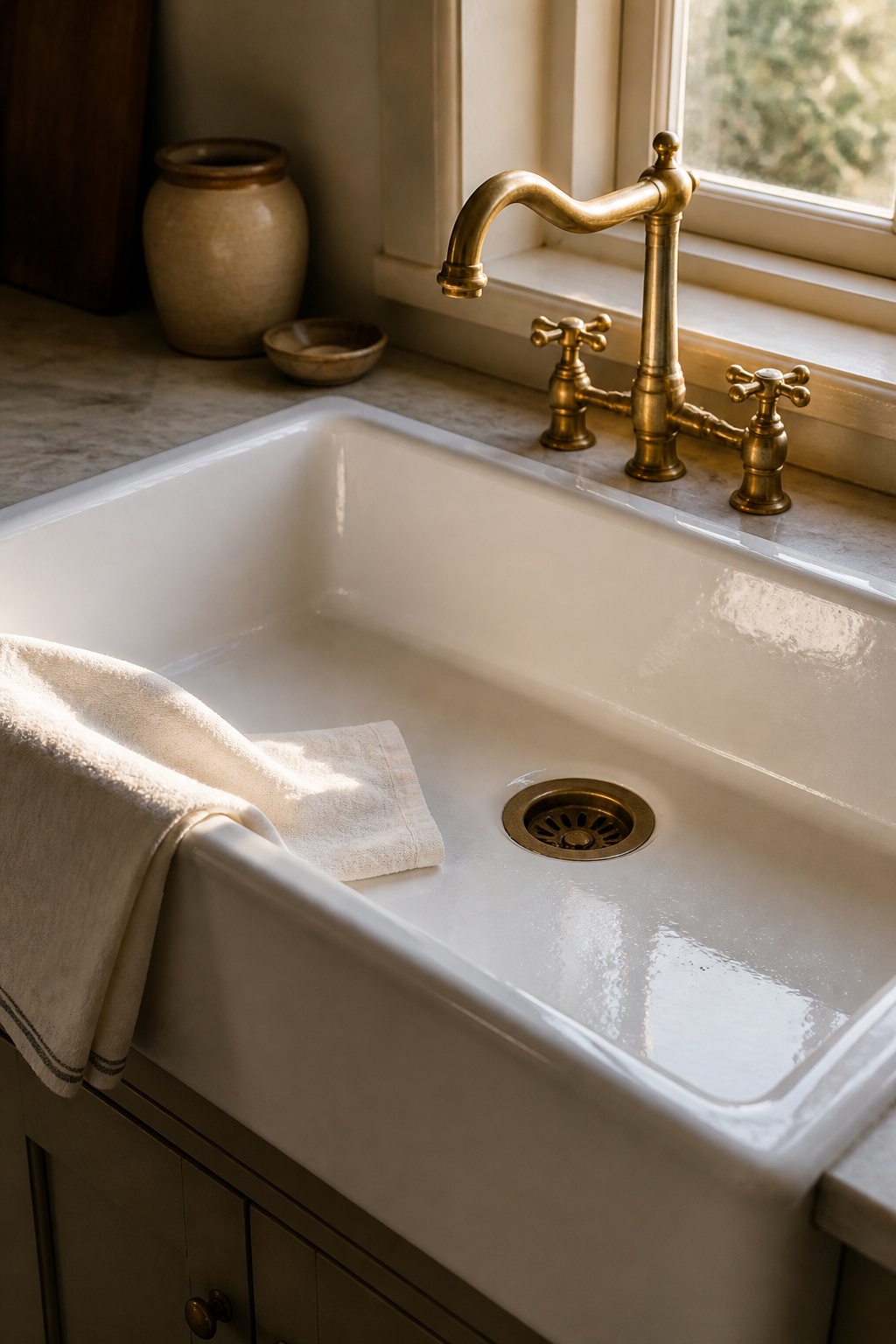
The three things that stain a white sink fastest — and where they hide
- Coffee and tea — tannins leave a brown tint if they dry; residue pools in corners and around the drain.
- Red wine and tomato — these mark if left for hours, though dried residue lifts with baking soda paste.
- Metal cookware — cast iron, dark aluminium, and steel colanders leave grey deposits, by far the most common complaint.
What never to leave sitting in a fireclay sink overnight
Acidic residue — tomato, citrus, vinegar marinades — risks slow etching over repeated exposure, per Ruvati. Coffee grounds and tea bags let tannins build up. A wet cast iron skillet deposits metal marks and can transfer rust. Magnus Home Products notes many detergents contain chlorides that can damage the glaze when left to dry. The fix: rinse, don’t let it sit.
Removing Metal Marks and Light Stains: The Safe Product Sequence
When a mark survives the daily wipe, don’t jump to the strongest thing under the sink. Work up the ladder.
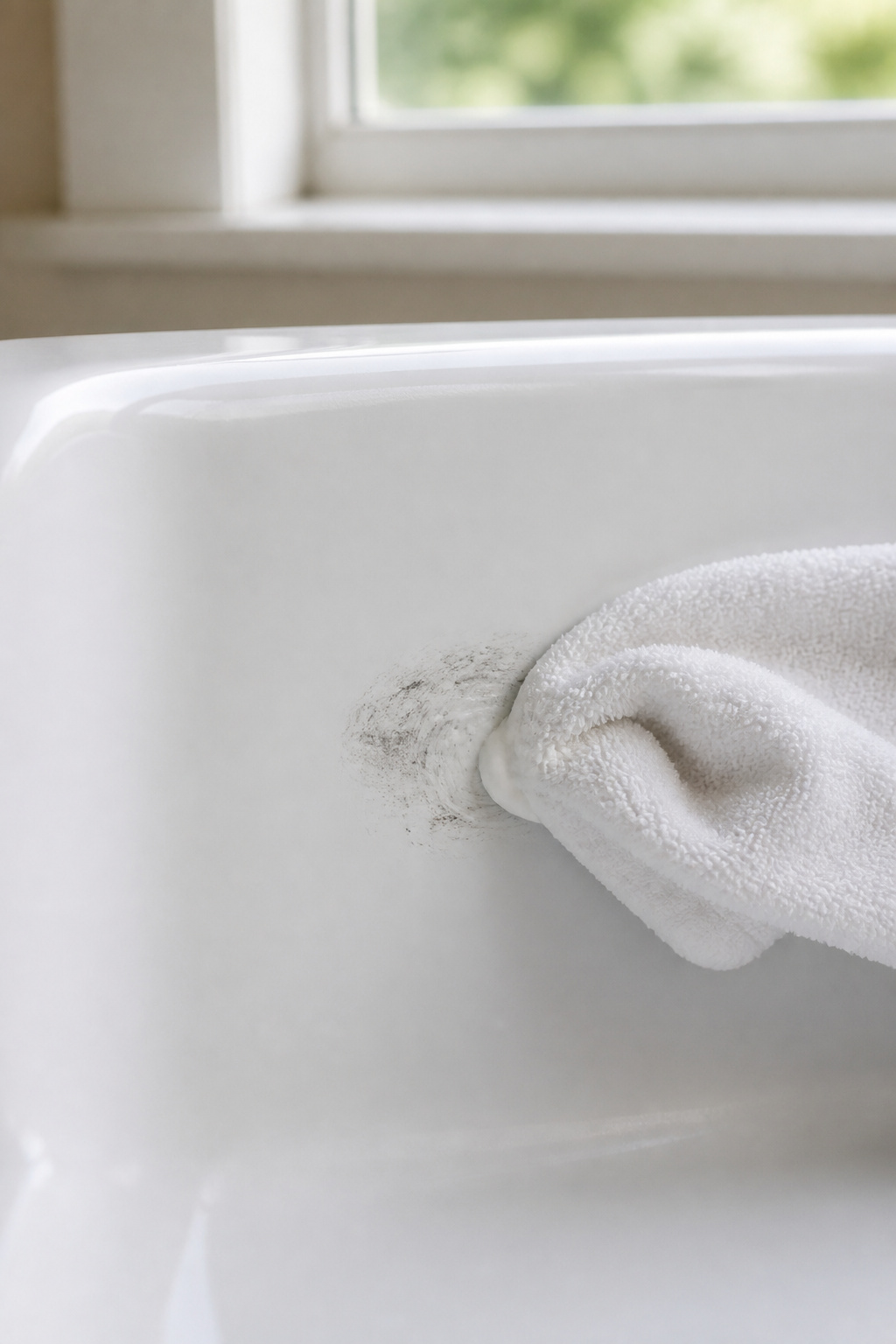
Bar Keepers Friend and how to use it without scratching the glaze
For grey metal marks, Bar Keepers Friend is the near-universal pick — Turner Hastings recommends it by name. Its oxalic acid dissolves metal deposits chemically rather than grinding them off. Make a paste with the powder and a little water, apply to a damp soft cloth (not straight onto the sink), and rub in small circles for one to two minutes, then rinse. Never use steel wool or an abrasive pad.
Cream of tartar and hydrogen peroxide for organic stains
Diluted hydrogen peroxide on a cloth left 15–30 minutes oxidises coffee and wine pigment without touching the glaze. Baking soda paste handles most light marks: apply, leave 10–15 minutes, scrub gently, rinse. A cream of tartar and peroxide paste is sometimes cited for brown or yellow staining — treat it as a suggestion rather than a proven method (single-sourced from a cleaning blog) and test a small spot first.
What to try in order: the sequence before you reach for the bleach
- Daily marks — mild dish soap, soft cloth.
- Grey metal marks — BKF powder paste, soft cloth, small circles, 1–2 minutes, rinse.
- Organic stains — baking soda paste for 10–15 minutes, or hydrogen peroxide for 15–30 minutes, scrub, rinse.
- Stubborn residue that survived 1–3 — diluted oxygen-bleach soak, covered next.
The common mistake is jumping to bleach for a coffee ring that baking soda handles at step 3.
Removing Stubborn Stains: When the Light Stuff Hasn’t Worked
Oxygen bleach vs chlorine bleach: which is safe on fireclay and which isn’t
Reach for oxygen bleach, not chlorine. Oxygen bleach (OxiClean and similar sodium percarbonate products) lifts organic stains through oxidation and leaves no residue to attack the glaze. Chlorine is the risk: Dakota Sinks confirms not to use it or harsh drain cleaners on fireclay, as they can corrode the glaze. NOZLOO allows a narrow exception — “occasional diluted bleach (1:10 ratio) may be acceptable on some fireclay sinks, but never pour undiluted bleach into the sink and don’t leave bleach sitting on the surface.” If you use it at all: 1:10 maximum, never left to sit, rinsed off immediately.
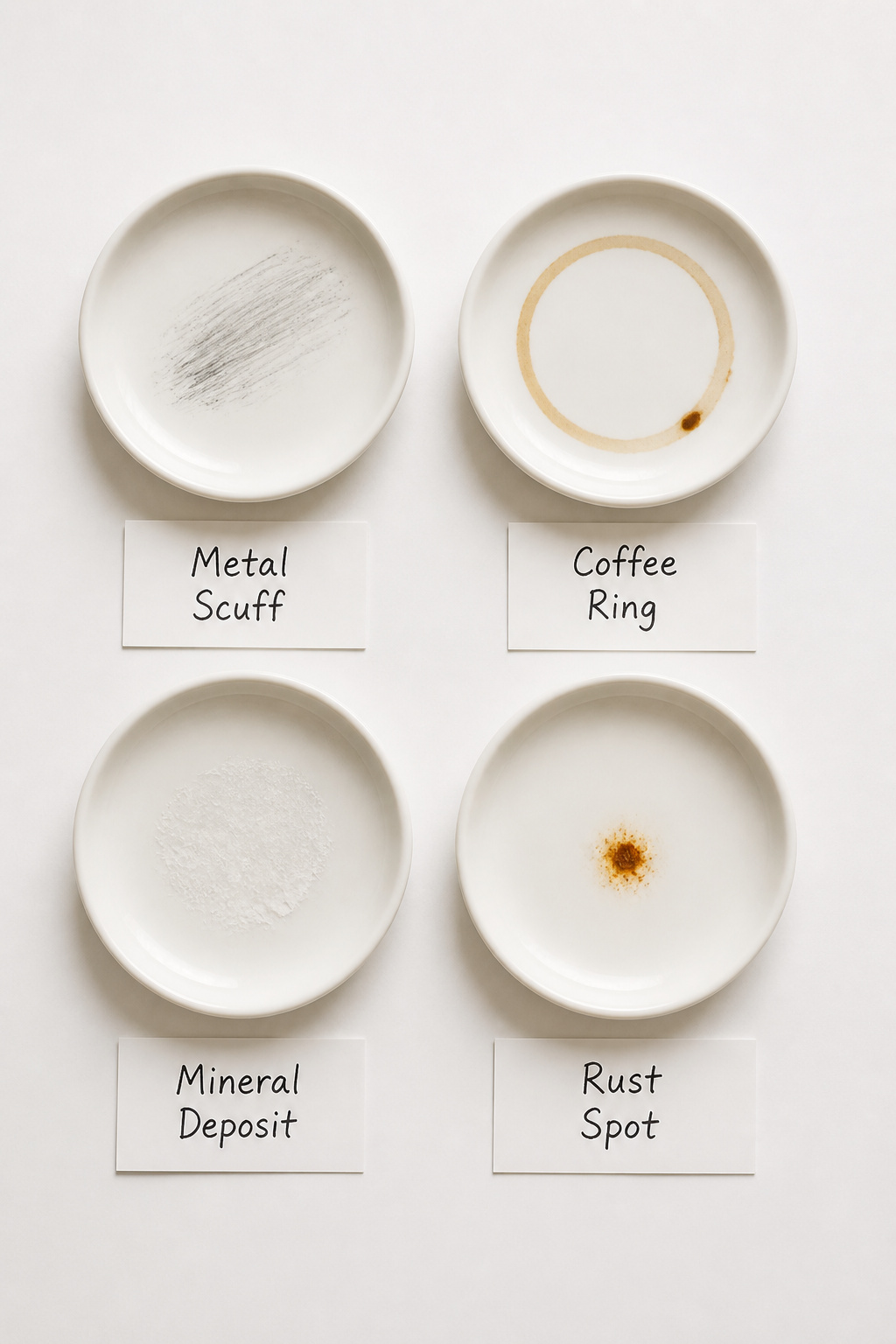
The overnight soak method and what to use
For deeply set marks, contact time beats scrubbing. Lay paper towels over the stained area and saturate them — a 50/50 white vinegar and water mix for mineral stains, or diluted hydrogen peroxide for organic ones — then leave overnight and scrub gently in the morning. Dwell times for oxygen bleach on fireclay aren’t well published by makers — most guidance covers porcelain generally — so treat any timing as approximate, not a factory spec.
What ‘permanent’ actually means for a fireclay glaze
Because the glaze is non-porous, the surface doesn’t absorb pigment — true permanent staining is genuinely uncommon. If a mark survives the full ladder, it’s almost certainly a chip or a crazing crack, and a repair kit is the answer. Sinkology calls fireclay “virtually stain proof” and says staining bad enough to look permanent signals either a care failure or physical damage.
| Mark type | Treatment | Time | Safety note |
|---|---|---|---|
| Grey metal | BKF paste, soft cloth | 1–2 min | Paste only; no dry powder, no abrasive pad |
| Organic (coffee/wine) | Baking soda or hydrogen peroxide | 10–30 min | Gentle scrub, rinse fully |
| Mineral/chalky | White vinegar, paper towel | Overnight | Rinse thoroughly after |
| Rust | BKF paste | ~5 min | Targets iron oxide directly |
| Stubborn organic | Oxygen bleach soak (not chlorine) | 30 min–overnight | Times approximate; never use chlorine neat |
Protecting the Glaze: What Chips It and How to Avoid It
No cleaner fixes a chip — only prevention does. Chips come from impact, not heat or normal use.
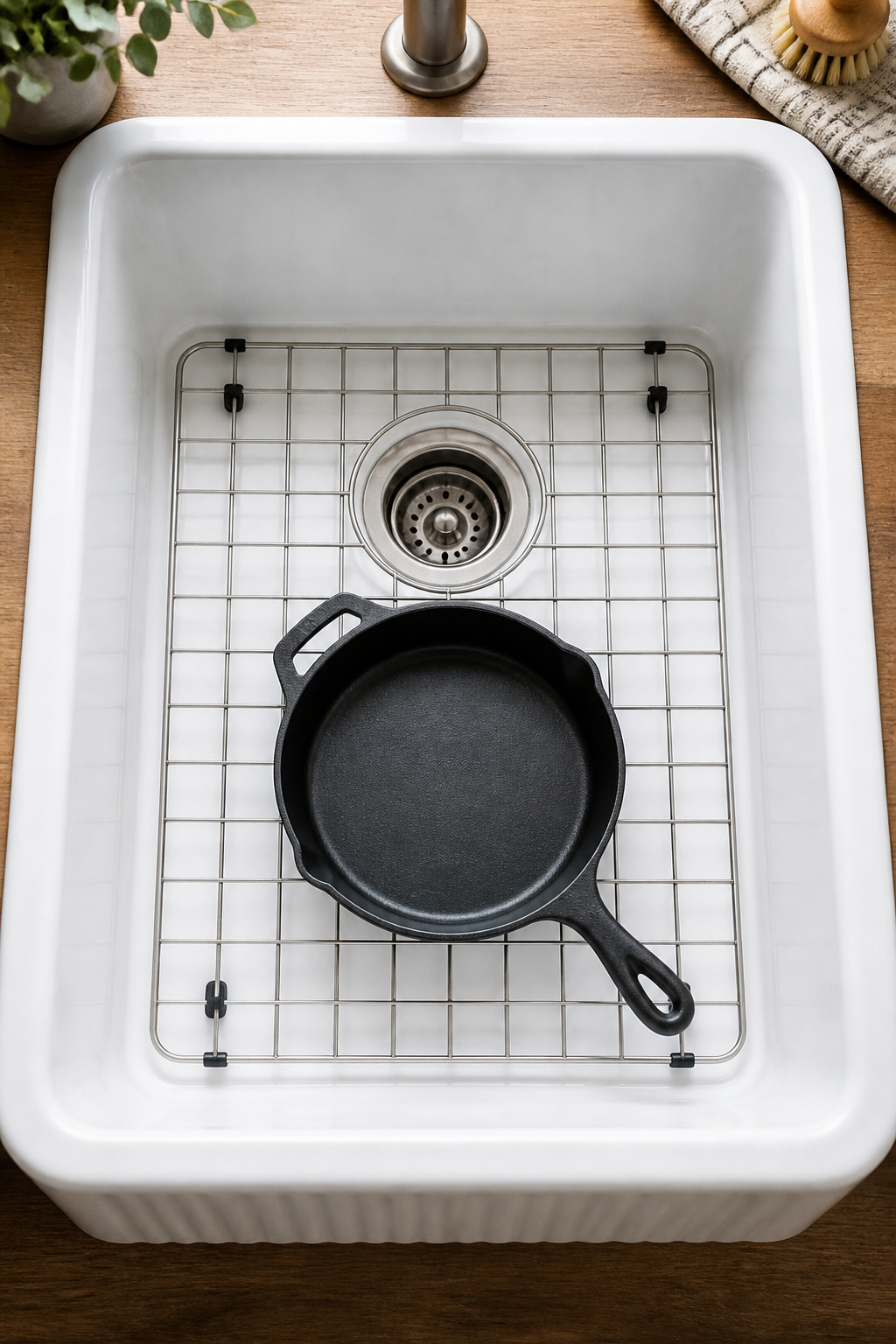
The objects and habits that chip fireclay (and their substitutes)
Five things cause most chips:
- Cast iron skillets and Dutch ovens — the highest-risk item, especially dropped at an angle. Set them on a grid, not the bare basin.
- Heavy ceramic and stoneware — same impact risk; lower them in rather than sliding them across.
- Heavy mugs onto the rim — rims and corners are the most vulnerable points; keep hard knocks off the edges.
- Boiling water into a cold basin — run warm water first before any sudden hot pour.
- Sliding heavy pots across the floor — lift and place; dragging stresses the glaze at scratch points.
Using a sink grid: worth it or overkill?
Worth it if you cook with cast iron. A stainless steel grid puts a buffer between heavy cookware and the ceramic floor; NOZLOO calls it “the single most effective accessory for protecting the finish.” Go stainless over silicone — Turner Hastings confirms stainless “grids offer superior drainage, durability and a more refined visual finish” compared to mats, which trap debris underneath — and buy one fitted to your model. If a white glaze sounds like too much work, the stainless steel option hides these marks in its brushed texture.
What to do if you have a chip already
A chip isn’t the end of the sink. Colour-matched kits exist for exactly this — Rohl’s Porc-A-Fix for its Shaws sinks, Whitehaus’s WHSRKIT for its farm sinks. Clean and dry the chip, lightly sand the edges, apply the first coat, wait about 45 minutes, apply a second coat, then allow 24 hours to cure. It stops the chip growing; unsealed chips collect grime and can develop micro-cracks. Cosmetic damage only — a structural crack needs a professional.
The Honest Maintenance Load: What Owning a White Fireclay Sink Actually Costs You
Time per week if you keep up with the routine
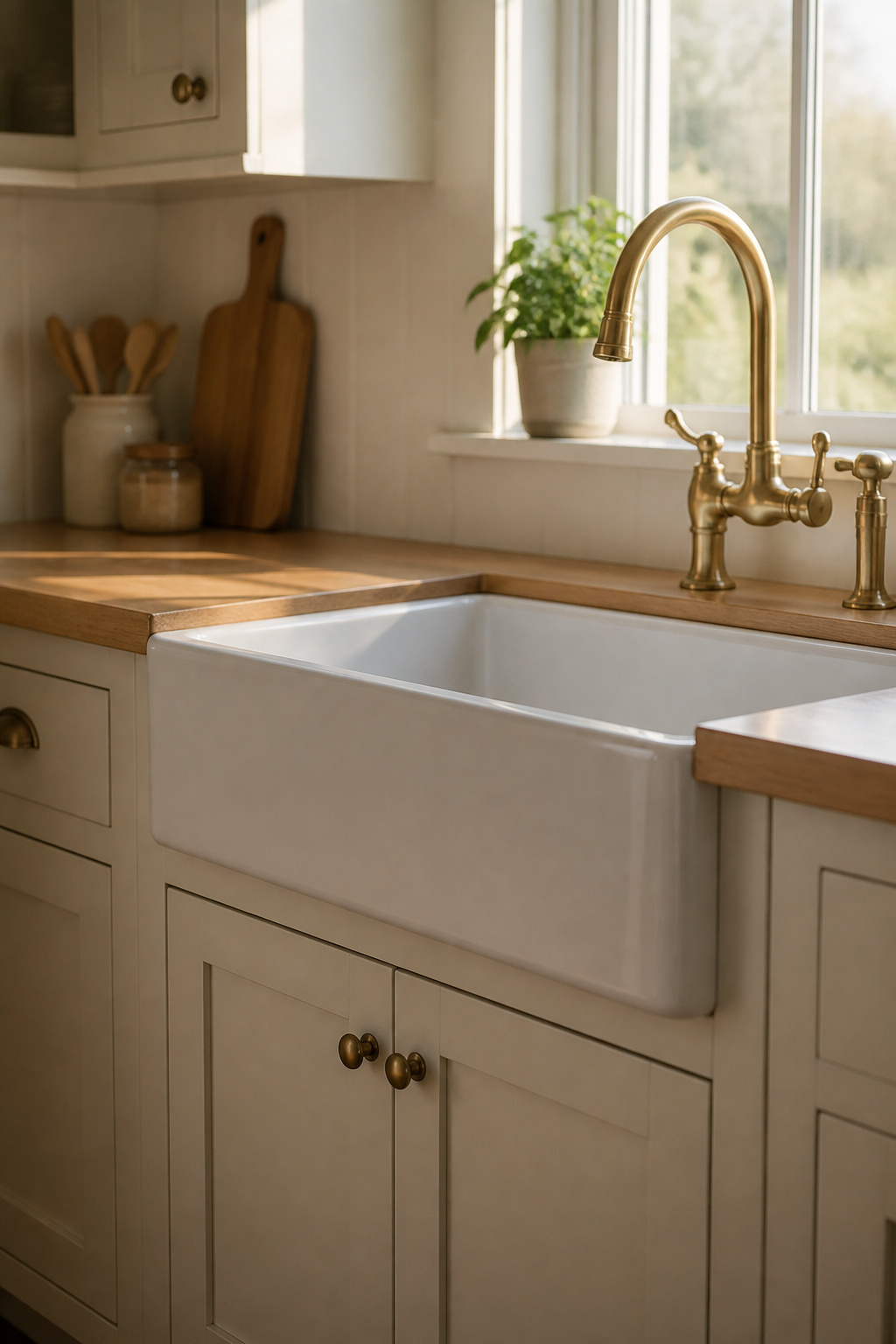
The daily wipe-and-dry is typically under two minutes — roughly 10–14 minutes a week — plus a weekly baking-soda pass of about five minutes. These are owner-reported figures, so read them as typical rather than guaranteed.
Time per month for a deeper clean
Monthly: Bar Keepers Friend on any built-up metal marks, plus an optional carnauba wax coat — around 10–15 minutes total. Hard-water kitchens need a monthly vinegar soak for mineral deposits; soft-water kitchens might only need it quarterly.
Whether that trade-off is worth it — and for whom it isn’t
The honest case for fireclay: the glaze never needs sealing, it doesn’t rust like chipped cast iron, and the white stays white. The honest case against: a bright basin shows every water spot and metal mark immediately — stainless hides the same neglect in its brushed texture. NOZLOO doesn’t dodge it — “if you want the absolute lowest-maintenance sink possible, stainless steel wins there.” A dishwasher-first kitchen generates far fewer marks. If the drying habit sounds like too much, read the full picture in everything to know about farmhouse sinks before you commit. If you’ll do the two minutes, the white stays white.
FAQ
Can I use bleach on a fireclay sink?
Avoid chlorine bleach as a routine cleaner — repeated or concentrated use can degrade the glaze. If you need to escalate past baking soda, use oxygen bleach (OxiClean or similar), which lifts organic stains safely without the chemical risk. If you use chlorine bleach at all, limit it to a 1:10 dilution, never leave it sitting, and rinse thoroughly straight away.
How do I get grey marks off my white farmhouse sink?
Grey marks are almost always metal deposits — from cast iron pans, aluminium pots, or steel cutlery — sitting on the glaze, not scratched into it. Make a paste from Bar Keepers Friend powder and a little water, apply to a damp soft cloth (not the sink directly), work in small circles for one to two minutes, then rinse. A stainless steel grid prevents them recurring.
Does Bar Keepers Friend scratch fireclay?
Not in paste form on a soft cloth — its oxalic acid dissolves metal deposits chemically without abrading the glaze. The risk comes from applying dry powder directly and scrubbing with an abrasive pad; avoid both. Manufacturers including Turner Hastings recommend it for fireclay — save it for tough marks, not daily use.