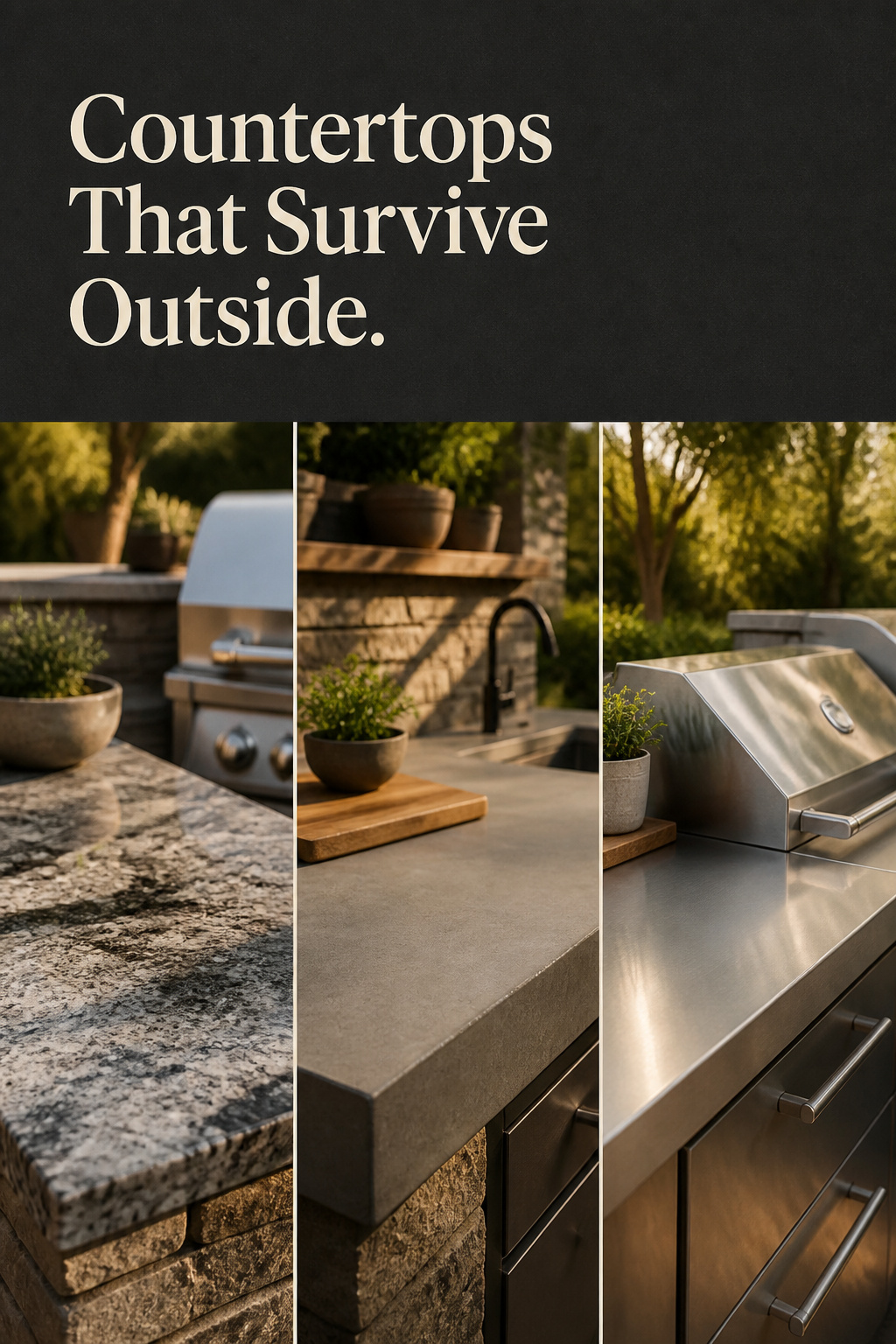
Here is the surprise that trips up almost every outdoor kitchen I get called to fix: the counter materials people trust most indoors are the two that fail fastest outside. When it comes to outdoor kitchen countertops, quartz and marble are showroom royalty that quietly quit under open sky. Quartz yellows in the sun, marble etches in the rain, and neither reverses. The materials that actually last are the ones nobody photographs for the catalog cover — porcelain, granite, concrete, soapstone and stainless. Before you pick a slab because it looked beautiful in a showroom, understand that outside is a different test entirely.
TL;DR
- Trust these outside: porcelain ($60-$140/sqft), granite ($50-$100+), concrete ($50-$100), soapstone ($35-$100) and stainless ($70-$100). Avoid quartz and marble — both fail from UV and moisture.
- Sealing separates them: porcelain, stainless and soapstone never need it; granite reseals every 1-2 years; concrete needs an annual coat.
- Match the material to your worst season — porcelain or light granite for intense sun, reinforced concrete or granite for freeze-thaw winters.
The Outdoor Kitchen Countertops Test: Why Quartz Fails It
Quartz earned its indoor reputation honestly. Engineered quartz is 90-97% ground natural quartz bound with 3-10% resins and pigments, and that resin is what makes it non-porous, scratch-resistant and sealing-free. Homeowners love it inside for those reasons, so they assume it transfers. It even carries the premium price of a serious surface: $55-$155 per square foot.
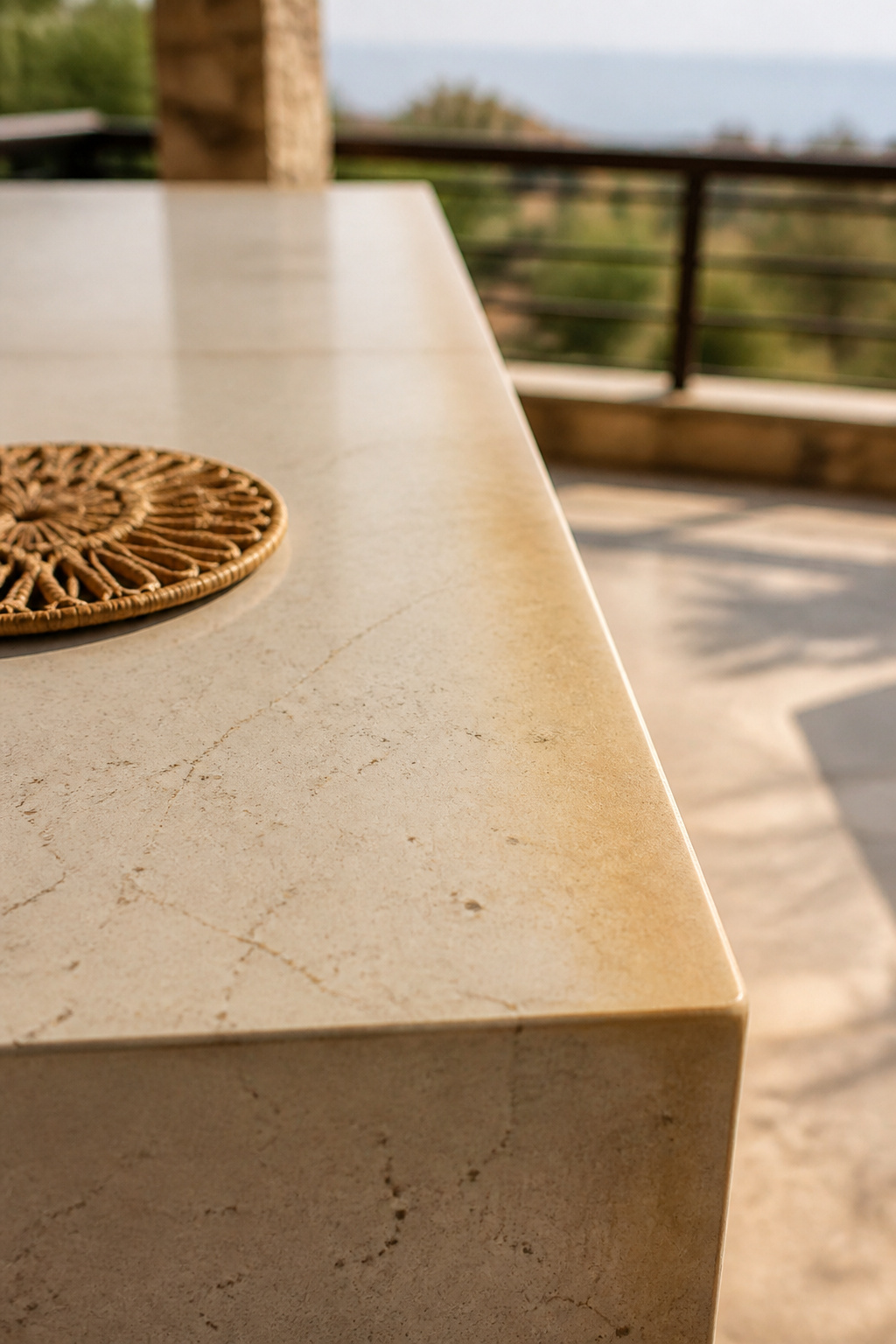
Then the sun gets to it. UV light breaks the molecular bonds in that resin binder, and the surface yellows and fades. Continuous outdoor sun does this far faster than intermittent light through an indoor window — often within a season or two. The damage is irreversible; UV-blocking measures only slow it. That is why most quartz manufacturers void their warranties for outdoor installation. Read that clause before you fall for a slab.
Durability inside and outside are different tests. Indoors, a counter fights knives, heat and red wine. Outdoors, it fights UV, freeze-thaw and standing moisture. Mineral-based natural stone like granite survives because it does not lean on a polymer that photodegrades. Engineered resin surfaces do, and that single difference reorders the ranking.
Porcelain: The Toughest All-Around Choice
If you want the lowest-maintenance counter that will still look right in ten years, start here. Porcelain slab is made by sintering — a high-temperature process that fuses the particles at a molecular level. The result is fully UV-stable, so unlike quartz it will not discolor or fade in the sun. It is also non-porous and never needs sealing, and it shrugs off heat, stains and scratching. For an unshaded kitchen that bakes all afternoon, nothing matches it.
That performance costs money: $60-$120 per square foot installed, with outdoor-rated fabrication pushing it to roughly $70-$140.
It likely has one real weakness. The same density that makes porcelain scratch- and stain-proof can make it brittle under a point impact — drop a cast-iron skillet on a thin slab edge and it may chip, and a chip is harder to repair invisibly than in natural stone. No supplier has quantified how often this happens outdoors, so treat it as a plausible risk rather than a stat: porcelain slabs run thinner than granite, so spec bracing under any overhang.
Granite: The Proven Traditional Pick
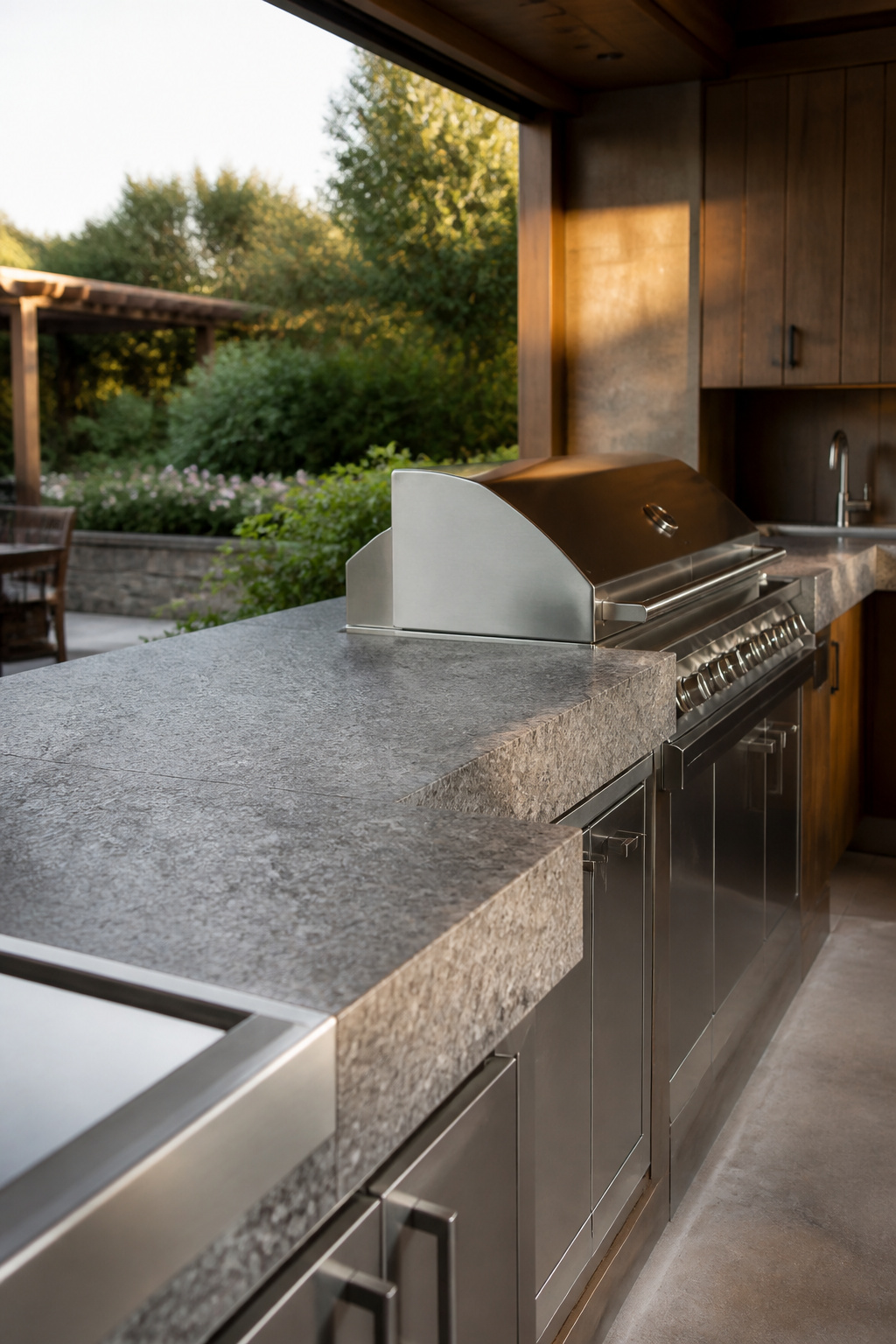
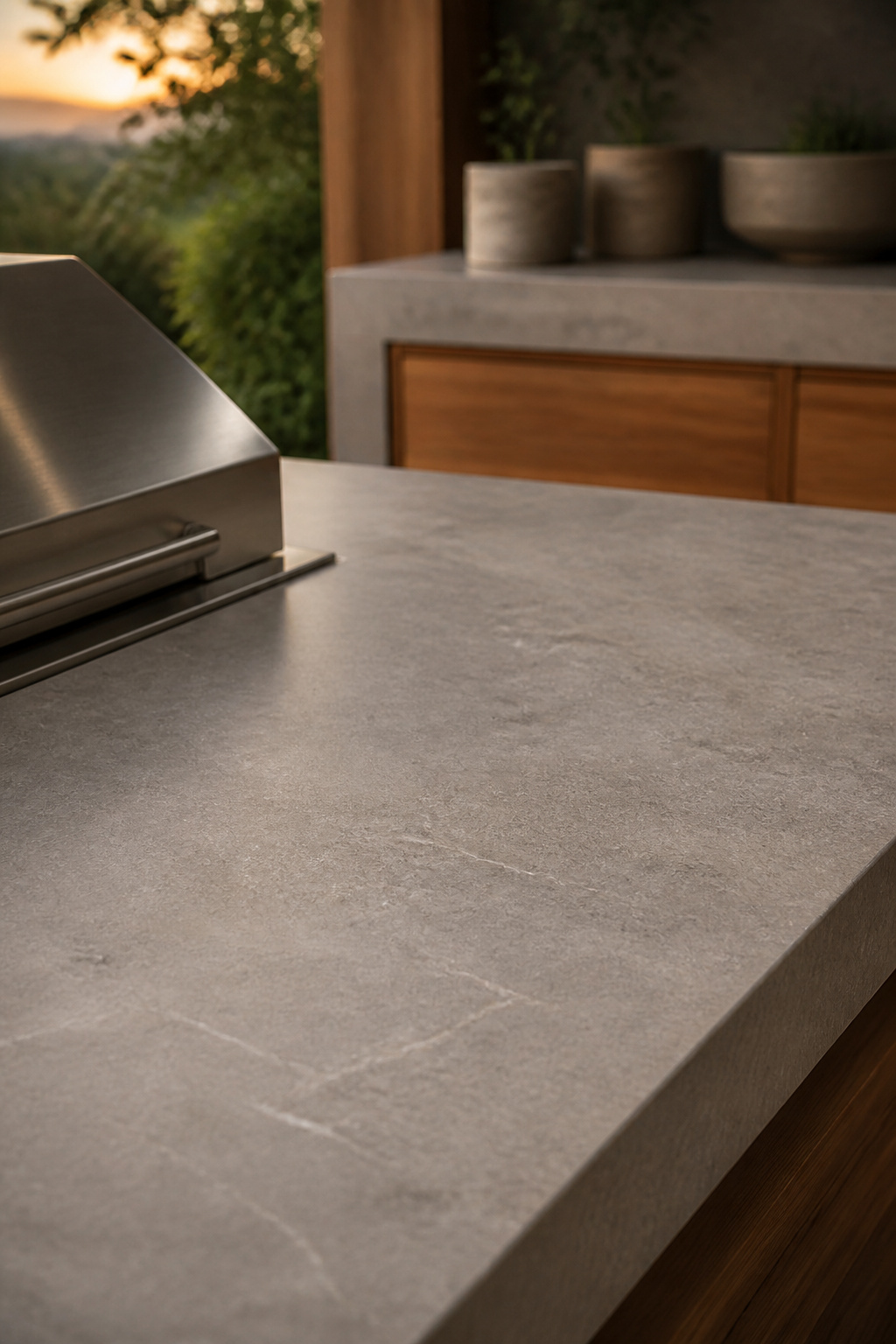
Granite is the counter I still recommend most often — the longest outdoor track record of any stone. It is one of the hardest natural stones going, so it resists scratches, dings and daily wear in a kitchen used four nights a week. Landscape architect Steve Chepurny of Beechwood Landscape Architecture puts it plainly: granite “stands up well to the elements, doesn’t absorb stains or odors as easily as other stones, and shouldn’t fade in the sun.” His one tip — choose a slab without heavy veining.
Granite asks one thing every year or two: reseal it, since skipping it lets oil, wine and grease soak in and stain permanently. Do not trust a calendar, though — some granites need it every few months, others last a decade. Run a water-bead test every 6-12 months and reseal when the beads stop forming. Sealing material runs $1.16-$2.24 per square foot; a pro reseal is $2-$5. Ask for a leathered finish over polished, too — the matte surface kills midday glare and hides smudges.
On cost, granite lands mid-field at $50-$100+ per square foot, generally under porcelain. One caveat: darker granites absorb heat and get uncomfortably hot to the touch in direct sun, where porcelain stays cool regardless of color.
Concrete: The Custom, Budget-Flexible Option
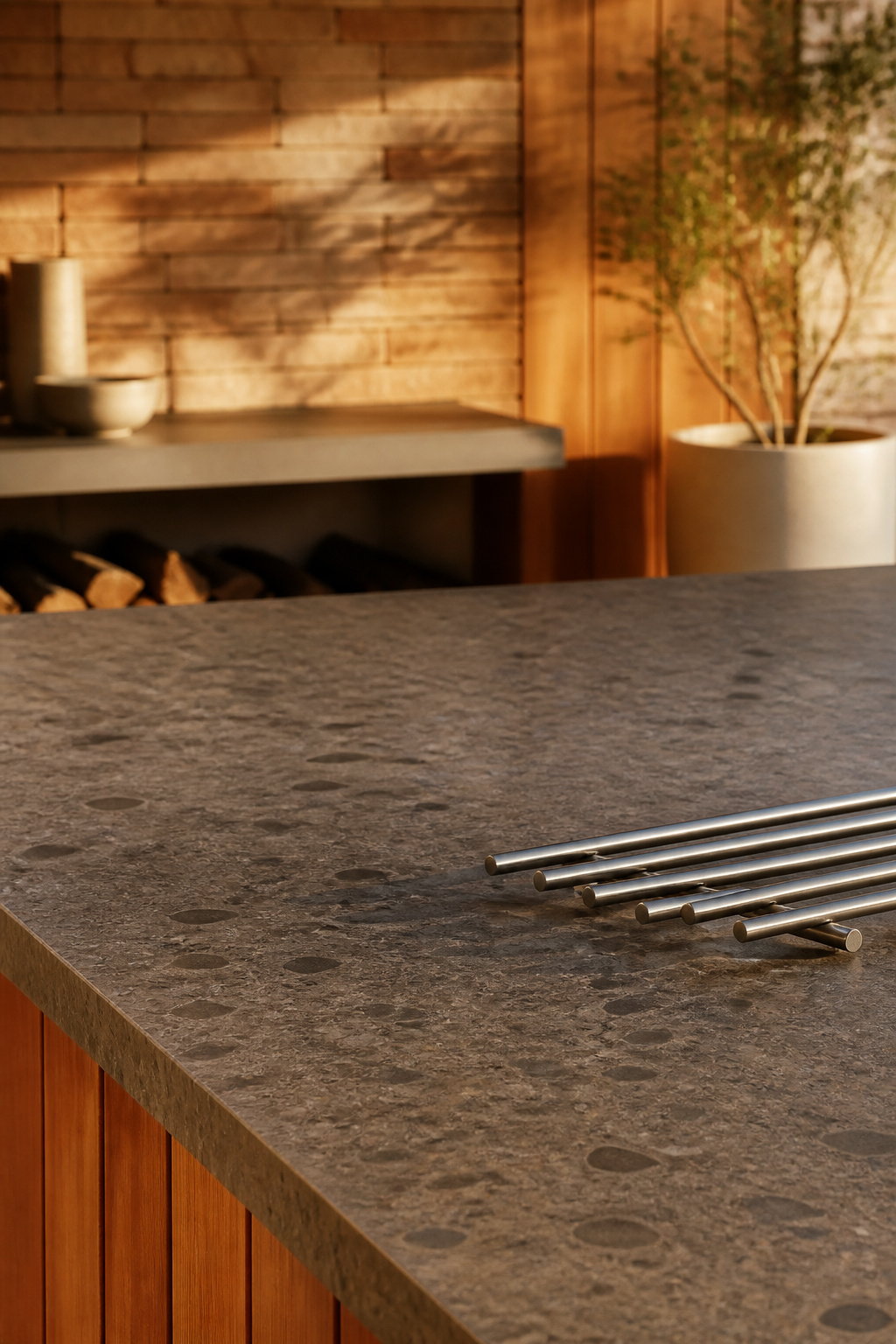
Concrete performs as well outside as in, and it is the one I point budget builds toward. Precast slabs run $75-$135 per square foot; poured-in-place runs $65-$100, and outdoor-kitchen sources price it as low as $50-$75. Its real edge over stone is structural: concrete can be reinforced with rebar or fiber during the pour, which a cut stone slab cannot — that is also why it takes custom shapes, like an integrated drainboard poured straight into the counter. For phased and DIY builds, that flexibility is worth a lot, which is why it shows up so often when you are weighing cheaper counter options on a budget.
Expect two things every spring: an annual reseal (roughly $30-$60 in materials), and hairline cracks — character in concrete, not failure. A good fabricator minimizes them with reinforcement and expansion joints on long runs.
Two outdoor specifics matter: UV-stable integral pigment and a UV-resistant sealer, since standard interior dyes fade under constant sun, and non-corrosive reinforcement — composite rebar or microfibers — since ordinary steel rebar rusts, expands and spalls the slab from the inside, the single most common way an outdoor concrete counter fails. Concrete also stays cooler underhand than granite in July sun.
Soapstone and Stainless: The Specialist Choices
These two are not all-purpose counters. Each solves one problem well and leaves the rest to the mainstream three.
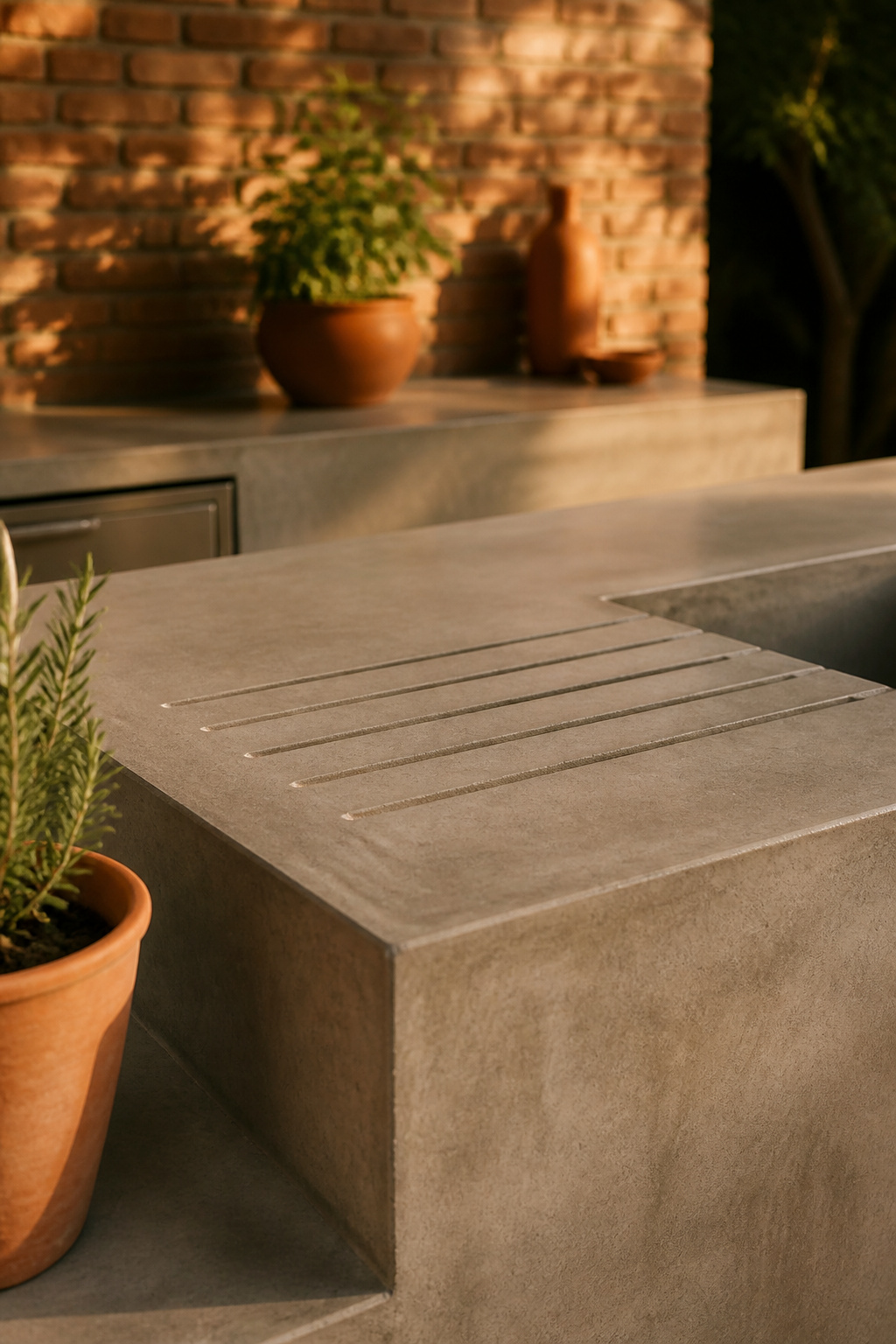
Soapstone is the closest thing to a maintenance-free stone outside. It is naturally non-porous and does not degrade from heat, UV, chemicals or moisture, so it never needs sealing — only occasional mineral oil to even out the patina, which darkens naturally over 7-9 months of use. Better still, you can set a pan straight off the grill onto it with no trivet. It runs $35-$100 per square foot. The trade-offs: a limited gray-green palette and a soft surface that scratches. Choose it if zero sealing matters more than a pristine face.
Stainless is a prep surface, not a whole counter. It is nonporous, the most hygienic option going, and the commercial-kitchen standard, at $70-$100 per square foot. But in direct, unshaded sun it gets searing hot, so suppliers say to pick something else if the kitchen isn’t covered. Spec 304-grade to resist rust in humid or coastal air, and choose a brushed finish to hide the fine scratches daily prep leaves. Stainless suits a shaded prep zone, where its hygiene beats its one weakness.
Quartz and Marble: Why They Don’t Belong Outside
Now the two the hook promised. Quartz fails at the resin: UV breaks the polymer bonds that hold its ground-stone particles together, and the yellowing that follows is progressive and irreversible — the reason those warranties exclude outdoor use. A few manufacturers now make outdoor-rated quartz lines, but a standard indoor slab should never be substituted outside.
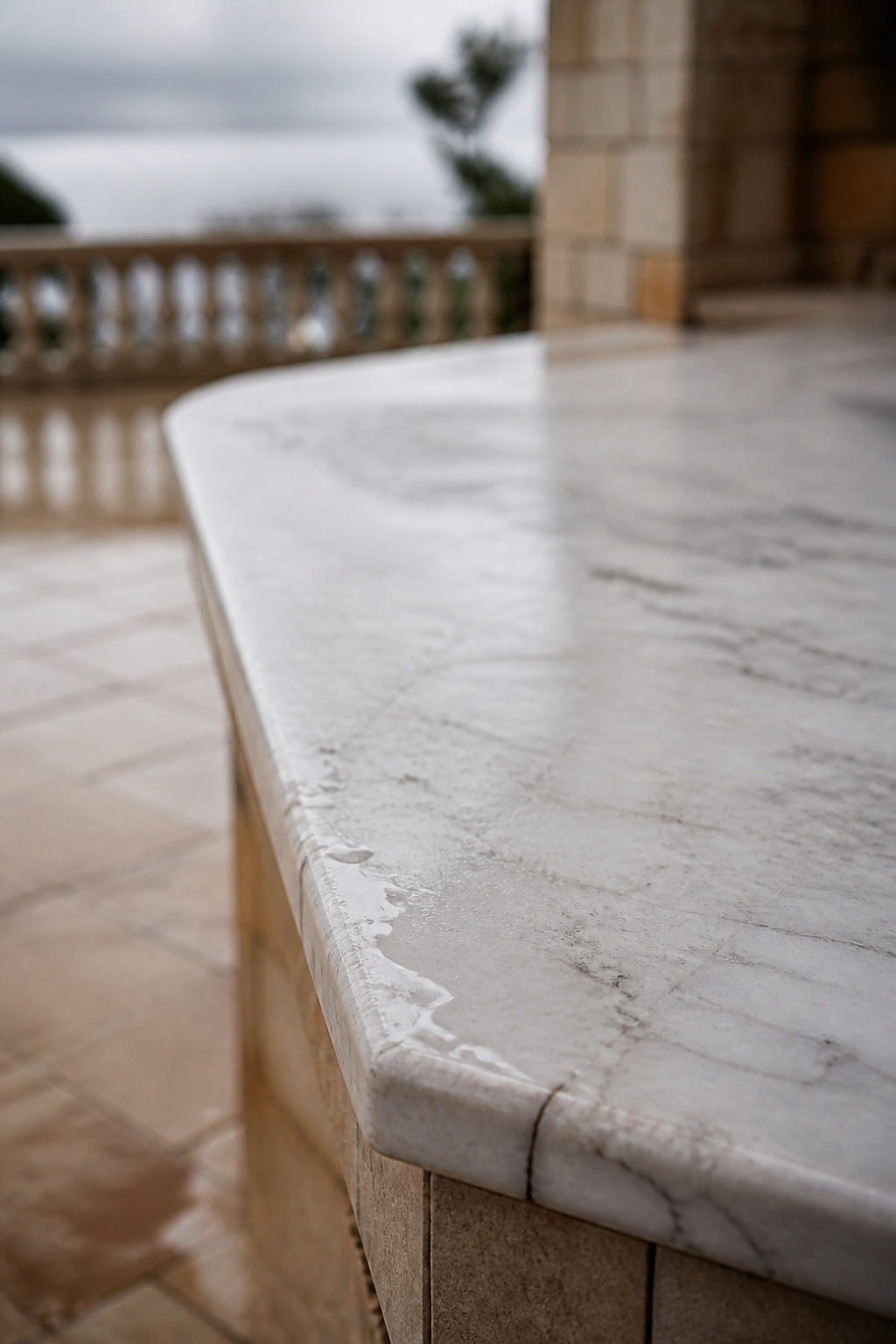
Marble fails differently, and worse. It is more porous than granite and softer than granite, quartzite or soapstone, so it stains, chips and scratches readily outdoors. Then chemistry compounds it: rain and bird droppings are mildly acidic, and marble’s calcium carbonate reacts with acid to leave permanent dull etch marks that only professional polishing removes. Add freeze-thaw and it gets structural — porosity soaks up moisture that freezes, expands and cracks the stone over successive winters. Sealing every six months slows the staining but does nothing to stop the etching.
What about a covered spot? A weather-sealed structure cuts marble’s rain exposure and quartz’s UV dose, but a covered porch still carries ambient humidity and wind-driven rain, so the underlying vulnerability remains. Most fabricators reserve both materials for fully enclosed, climate-controlled rooms, not open-air or pergola kitchens. Under a simple roof, the answer is still no.
Choosing the Right Material for Your Climate and Budget
Here is the whole field on the three numbers that decide it — cost, sealing and heat behavior — plus how each handles a hard winter.
| Material | Cost/sqft (installed) | Sealing | Heat | UV / freeze-thaw |
|---|---|---|---|---|
| Porcelain | $60-$140 | Never | Takes hot cookware; stays cool in sun | UV-stable; withstands freeze-thaw |
| Granite | $50-$100+ | Every 1-2 yrs | Good, but dark colors get hot in sun | No UV fade; withstands freeze-thaw |
| Concrete | $50-$100 (precast to $135) | Annual | Cooler underhand than granite | UV-stable if pigmented right; freeze-thaw fine when reinforced |
| Soapstone | $35-$100 | Never (oil for patina) | Heat-immune; no trivet needed | Non-porous, chemically inert; UV-stable |
| Stainless | $70-$100 | Never | Searing hot in unshaded sun | 304-grade resists corrosion; needs cover |
Match the table to your worst season, not your best photo. In near-constant sun like the Southwest, UV resistance decides it: porcelain or light granite beats stainless or dark stone that turns griddle-hot. In freeze-thaw country, granite, reinforced concrete and porcelain ride out the winters, while ceramic tile and unsealed porous stone crack first. In humid or coastal air, stay non-porous — porcelain, soapstone or 304-grade stainless dodge the mold and corrosion that catch lesser materials. A restrained palette of concrete, pale stone and steel also defines a modern material palette, so the durable pick and the good-looking one often converge.
Before you commit, ask the fabricator three questions: is this slab warrantied for exterior use? For concrete, is the reinforcement composite or standard steel? And can I get this stone leathered or honed rather than polished? The answers separate a counter that lasts from one that quits in two years. For the wider build around it, start with planning an outdoor kitchen before the counter goes in.
I learned that maintenance honesty on a cedar deck I built with my uncle at sixteen. We have re-oiled it every spring since, and it has outlasted three neighbors’ decks that were never touched. A counter works the same way. The right material is not the prettiest slab in the showroom; it is the one whose upkeep you will actually do, year after year. Pick for that and the space stays a place you cook in, not one you apologize for.
FAQ
Do outdoor countertops need to be sealed every year?
It depends on the material. Porcelain, stainless steel and soapstone never need sealing at all. Granite typically reseals every 1-2 years, though a water-bead test every 6-12 months is the real trigger, and concrete needs an annual coat. Marble would need it every six months and still isn’t recommended outdoors.
Can you use butcher block for an outdoor kitchen counter?
Yes, with the right wood. Dense species like white oak, chestnut, elm or maple withstand weather changes when properly sealed and finished. Outdoor butcher block countertops needs more frequent resealing than indoor and suits covered or lightly exposed areas rather than a full-sun prep zone. Well maintained, it lasts around 20 years, comparable to granite.
What is the cheapest weatherproof countertop material?
Tile is cheapest, starting as low as $3-$10 per square foot for basic ceramic. However, ceramic tile is the most vulnerable common material to freeze-thaw cracking, and its grout stains easily. Porcelain tile costs more but resists chipping and cracking far better, making it the more genuinely weatherproof budget choice; granite tile is the most durable tile format.