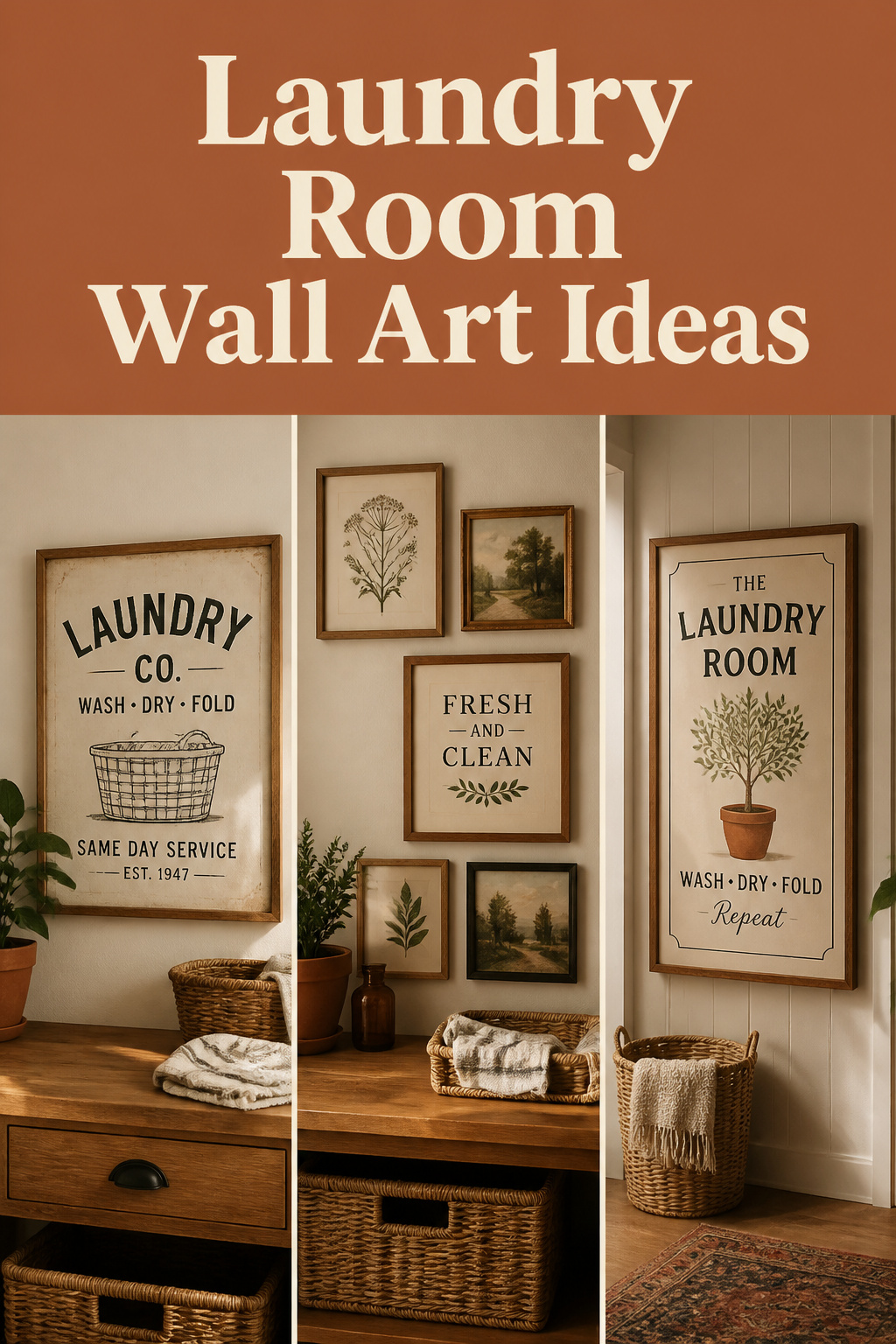
A single laundry sign, hung a little too high and off-center above the machines, is where most laundry room wall art begins and ends. I understand the instinct: the room is small, humid, and rarely the one you decorate first, so one print feels like plenty. But a wall treated as an afterthought looks like one, and the fix is not more art — it is a plan. Choosing what to hang, framing it against steam, and arranging it to look composed rather than lopsided is the same discipline I spent years practicing on walls full of books.
TL;DR
- Reproduction tin signs, clean typographic prints, and cheeky one-liners are the three go-to laundry room signs; hold the mix to two styles tied by one shared accent color.
- On a humid wall, choose acrylic glazing or a glazing-free metal or canvas print over glass, and hang pieces beside the machines rather than in the steam directly above them.
- Trace paper templates and tape them up for a day first; keep a gallery cluster to three to five frames, two to four inches apart, bottom edge six to ten inches above the counter.
What Actually Works as Laundry Room Wall Art
The laundry-wall space narrows to two families — vintage signage and typographic prints — plus one decision about scale.
Vintage laundromat signage
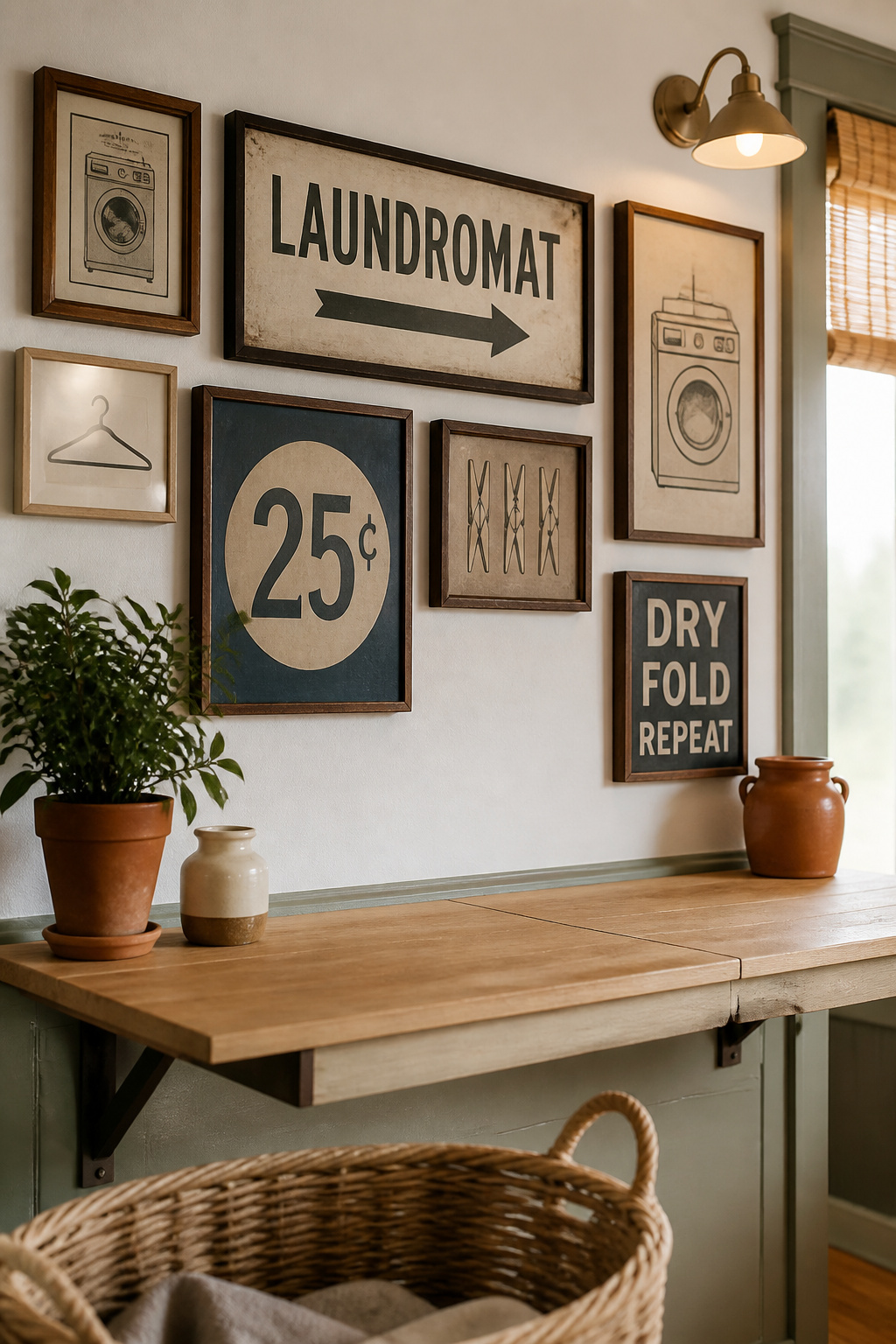
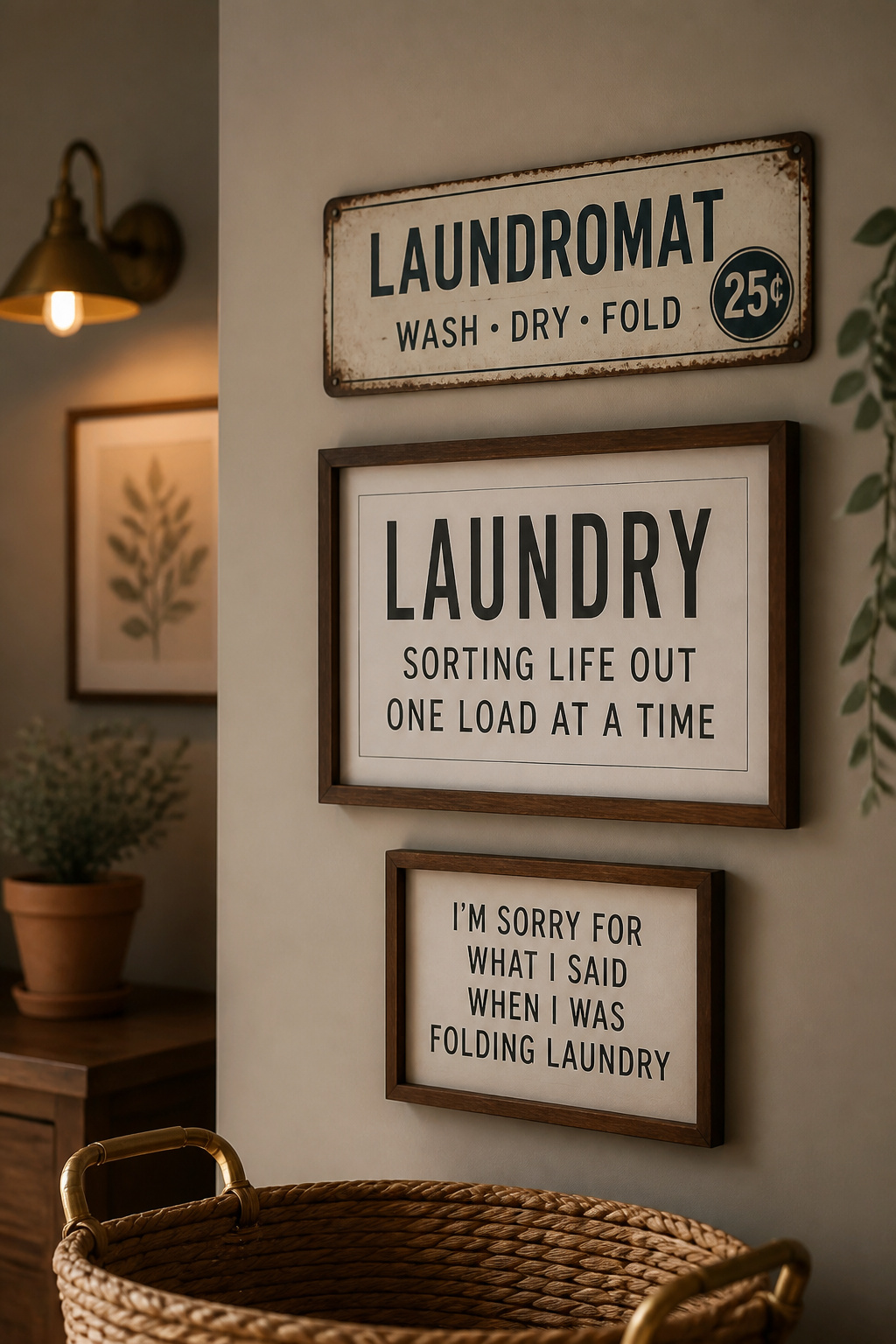
Reproduction laundromat signs pull their imagery from 1940s and 1950s wash houses — washing machines, clothespins, detergent boxes — set in period type with phrases like “Wash & Dry.” Better still, they are usually tin or steel rather than paper, so there is no substrate or glazing to warp in the damp. Hang two or three sizes to read like a mini laundromat, then echo the sign’s accent color in a rug or the bins.
Typographic and cheeky prints
The directive “Wash, Dry, Fold, Repeat” is the most common typographic print, with a cheeky lane beside it: “Check Your Pockets” and “Fold or Run.” Pick a line that still makes you smile on load two hundred, and favor a print sized for a standard 16×20 or 24×36 frame, not an odd dimension.
Single statement piece vs. a small cluster
Answer one question before buying: one piece or a group? In a compact room a single larger piece usually beats a gallery wall, giving the eye one destination instead of several small frames’ stop-start rhythm. A cluster works too, but only when planned, not accumulated — more on making that call later.
Framing and Materials That Survive Steam and Humidity
In the special-collections library where I worked before I ever styled a room, humidity was the quiet adversary — we held the space at a steady thirty to fifty percent and kept fragile paper off radiators and sunny sills. You cannot run a conservation vault in a laundry closet, but the instinct scales down.
Glass vs. acrylic glazing
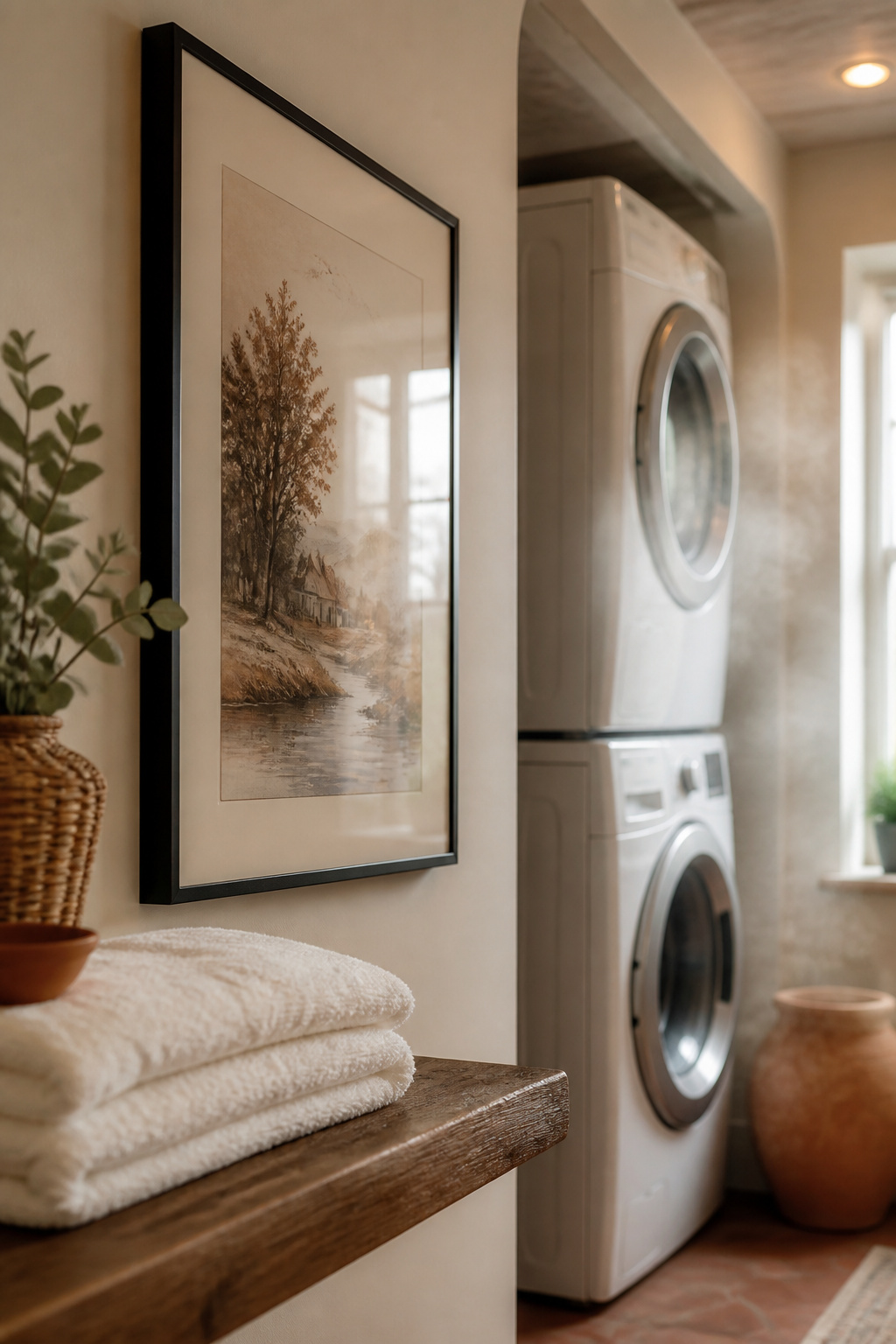
Glass and acrylic fail in opposite directions. Glass is a true vapor barrier and won’t bow, but it vents no moisture and grows heavier and more fragile with size; acrylic warps toward the wetter side, yet it breathes enough to stop condensation building inside, and won’t shatter if knocked down. Mark Rogers of Frame Destination is direct: use acrylic, not glass — or skip glazing with a coated canvas or metal print instead.
| Material | Behavior in humidity | Best for |
|---|---|---|
| Glass | Vapor barrier, won’t bow, but traps moisture inside; heavier and more fragile with size | A drier spot, away from the machines |
| Acrylic | Lets some moisture pass so condensation won’t build; can bow toward the damper side; won’t shatter | The humid main wall most pieces live on |
| Metal or coated canvas | No glazing to fog or warp; metal won’t rust, coated canvas resists mold | Above or beside the machines, clear of the dryer’s exhaust path |
Sealed or moisture-resistant frames
Wood frames want humidity between thirty and fifty percent, and a laundry room can blow past it — an enclosed closet running an unvented condenser dryer with the door shut can hit ninety-six percent, which is why IMC 504.5 requires a 100-square-inch makeup-air opening there. That is swamp air for raw wood. Metal frames ride out the swings better; seal any wood frame and back it with a strip of craft paper.
Placement away from direct steam and splash
Run the exhaust fan when the machines start, keep the door open when the room is idle, and keep the art off the wall right above the dryer’s exhaust and clear of a utility sink’s splash. A few feet of lateral distance buys more lifespan than any glazing choice.
Free and DIY Printables Worth Framing
You can fill this wall for the price of a couple of frames and a sheet of paper.
Where to find quality free laundry prints
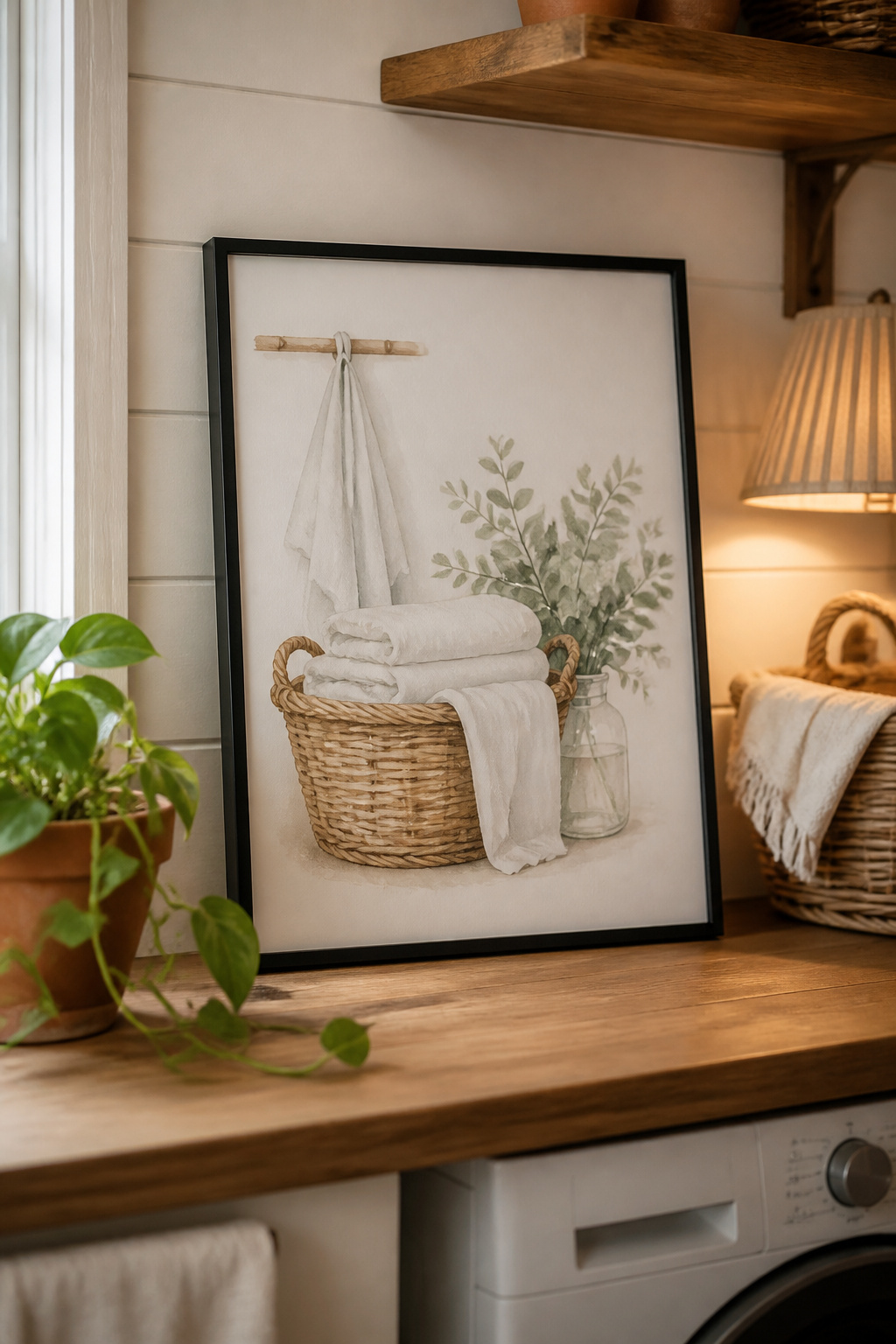
The best free laundry printables come from a handful of well-run decor blogs, though pages come and go, so search by the phrase rather than a saved link. Expect three genres: “Wash, Dry, Fold, Repeat” in ten colorways, mixed vintage-patent-and-typographic sets, and soft watercolor farmhouse prints in 5×7 and 8×10 — enough to fill a wall for nothing.
Sizing and paper-to-frame math
The two frame sizes you meet everywhere are 8×10 and 11×14; an 8×10 print pairs cleanly with an 11×14 frame and a mat border of one and a half to two inches. Printables scale predictably — one built at 24×36 shrinks to 20×30, 16×24, or 12×18 — so match frame to file ratio rather than cropping to fit.
Framing on a real budget
Dollar-store frames run under two dollars each — one project built four Dollar Tree frames for about three dollars total. For anything larger than a home printer can output, Staples’ engineering-print counter is notably cheap. Print watercolor designs on matte stock, not glossy, which reads cheap.
Planning and Hanging a Small Gallery Wall That Doesn’t Look Thrown Together
Almost every lopsided gallery wall traces to one mistake: hanging frames from a mental picture, then patching nail holes when it turns out wrong. The fix costs nothing and takes about twenty minutes.
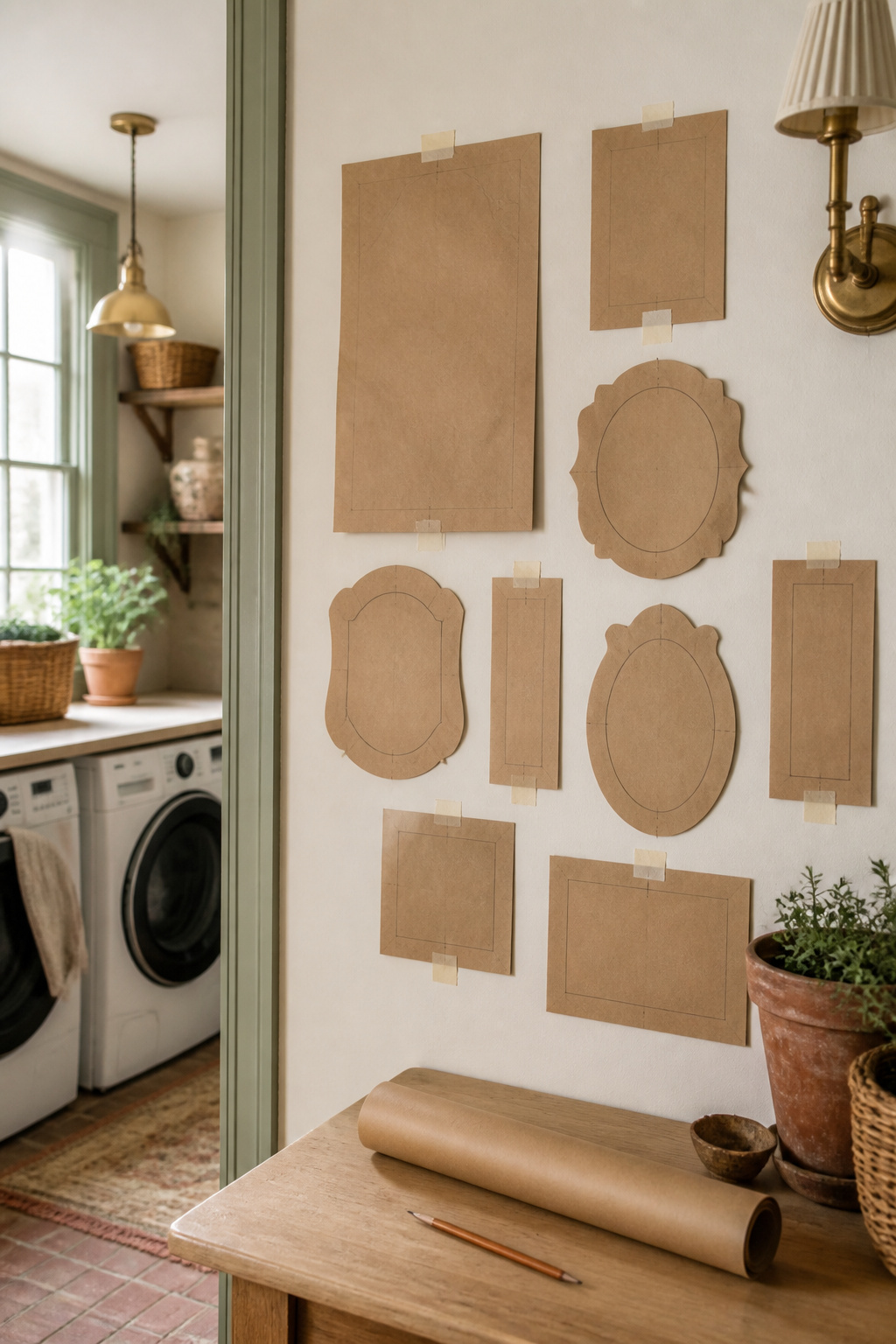
Laying out the arrangement before a single nail
The paper-template method is how every careful installer de-risks a wall before touching a hammer:
- Trace each frame face-down onto kraft paper, cut out the shape, and mark where the hanger sits on each template.
- Tape the templates up with painter’s tape and rearrange until it works — what looks right up close often reads off from across the room.
- Pencil-mark the top corner of each, peel the paper away, and drive the hanger through the mark.
Skip this and you pay in drywall repairs; run it and the holes land right the first time.
The rule for mixing frame sizes
A gallery wall holds together on a scale hierarchy: one dominant anchor at full size, medium pieces at fifty to seventy-five percent, small accents at twenty-five to forty. Space frames two to three inches apart for a grid, two to four for a looser salon layout, and cap the mix at three frame finishes.
Renter-safe hanging hardware
If you can’t drill, adhesive strips carry the wall. Command Picture Hanging Strips are rated by pair — Small one pound, Medium three, Large four, XL five — and in a warm, humid room or on flat matte paint, real-world hold can drop twenty-five to fifty percent below the rating, so size up a tier. Wait seven days after painting to apply them, and twenty-eight to cure before a clean removal.
One Statement Piece vs. a Full Gallery Wall
So which is it — one piece or several? The wall decides, and the deciding factor is how much real width you have to work with.
When a single anchor piece wins
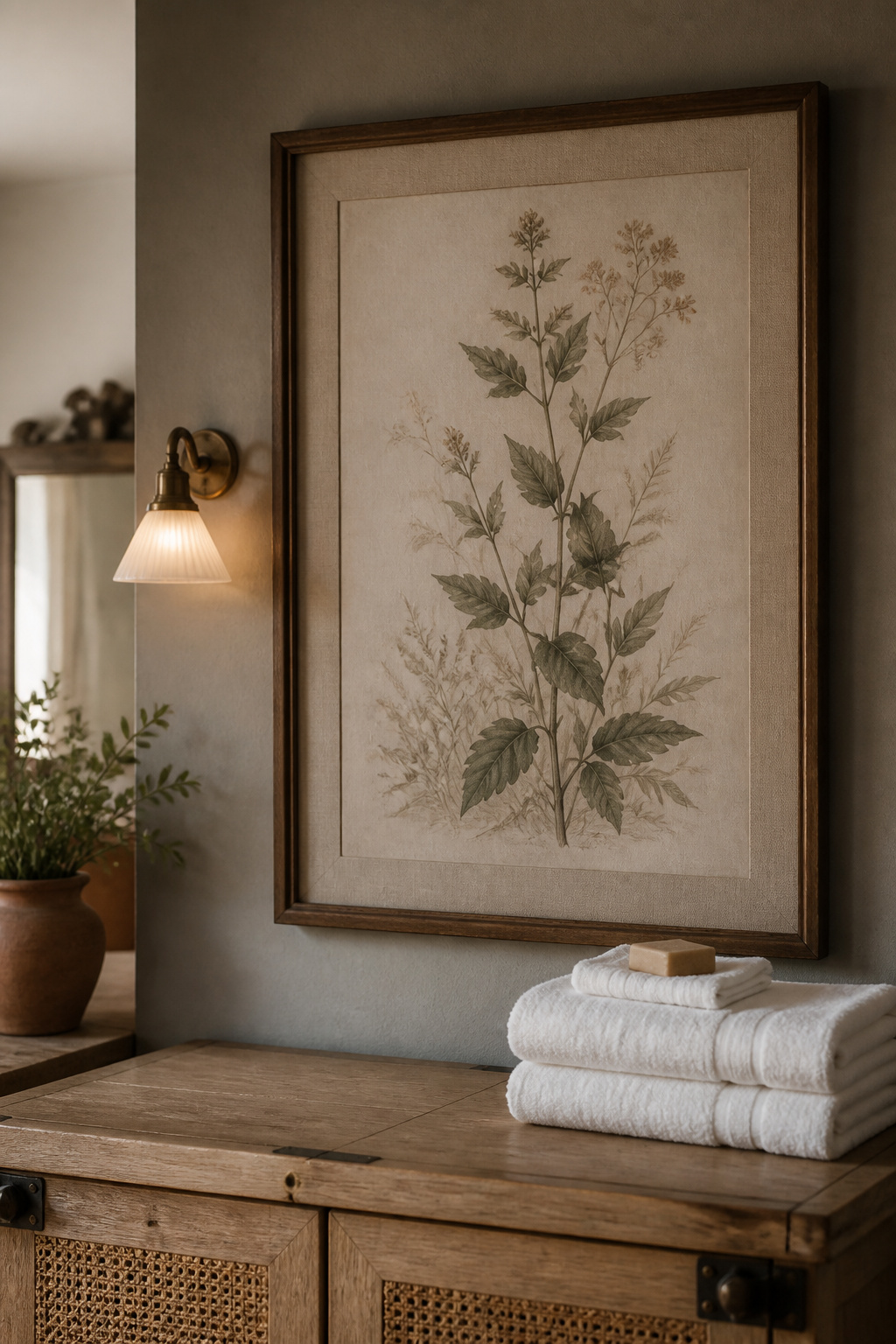
A single piece asks nothing of you once it’s hung — no arrangement, no spacing math, no living with taped paper for a day. On a deadline or a tight budget, that simplicity often wins outright.
When the wall calls for a cluster
A cluster earns its place when the wall gives it room: a full-width, eighty-four to ninety inch sofa takes five to nine frames, and a narrower laundry wall scales that down to roughly three to five, spanning sixty to seventy-five percent of the surface it anchors.
Matching the choice to room size
A small room needs more restraint than a large one: one wall, one palette, generous white space between pieces. Either way, sit the bottom edge six to ten inches above the folding counter — below six crowds it, above ten cuts the art loose from it.
Carrying Your Wall Art Into the Rest of the Room
The wall is only half the room’s composition. A framed piece that ignores the shelf beneath it, or the style around it, sits as an isolated project.
Echoing a piece on your styled shelves
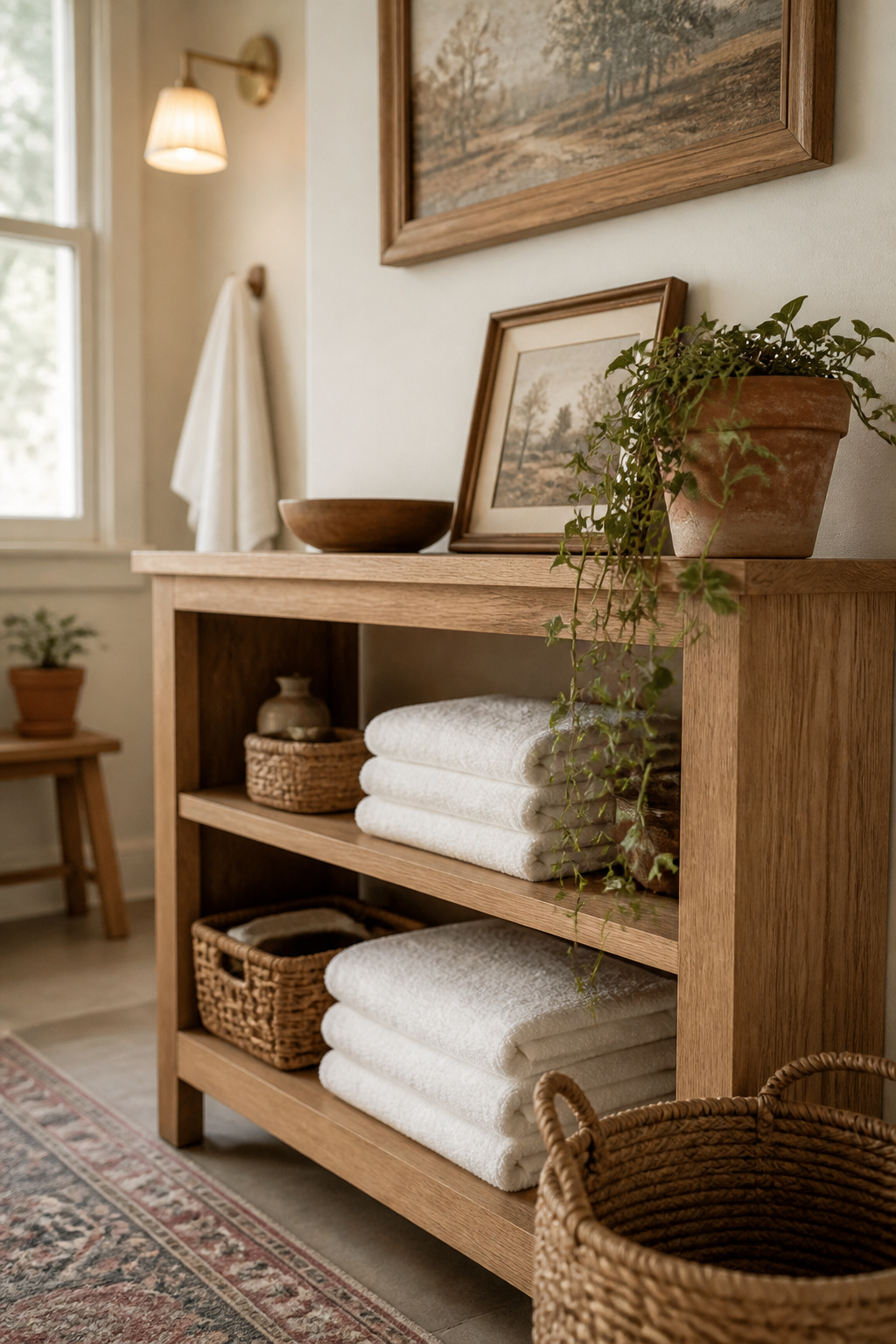
The simplest way to tie the wall to the room is to repeat one of its notes below — a color from a frame, or a small companion print on the shelf beneath — so the two surfaces read as one composition. From there, it is worth learning to work art into your shelf styling, so the vignette below answers the art above.
When a sign sets a farmhouse tone
A sign sets a register as much as it fills space: vintage-inspired and typographic signage is one of the clearest markers of the farmhouse laundry look, alongside warm wood tones and woven baskets.
Where this fits your whole laundry room plan
Wall art is one layer of a system that also runs through surfaces, greenery, and wallcovering — one piece of the broader laundry room art and decor guide, which covers how the wall, the shelves, and the rest of the room add up.
You started with a single mismatched sign and no way past it. You now have the parts that replace it: a style that suits the room, framing chosen for humidity rather than luck, and a paper-template method for hanging a gallery wall — or one well-scaled anchor — that survives steam and looks planned. The first move: tonight, trace your frames onto kraft paper and tape the shapes up, then give the layout a day before a single nail goes in.
FAQ
Can you hang framed art above a washer and dryer?
Yes, you can, but anchor into wall studs or use hardware rated for the piece’s weight, and expect some vibration on the spin cycle. Anti-vibration pads under the machines and a secure, stud-mounted bracket reduce movement that can jar a frame loose. Favor acrylic, a metal print, or canvas over glass in that exact spot.
What’s the best way to hang art without drilling in a rental laundry room?
Command Picture Hanging Strips are rated by pair size — Small at one pound up to XL at five pounds — and remove cleanly after a 28-day cure with no nail holes to patch. A warm, humid laundry room cuts real-world adhesive hold 25-50% below the rating, so size the strips up one tier before trusting them.
How high should you hang laundry room wall art?
The general standard centers a piece, or a gallery arrangement’s visual center, at fifty-seven inches from the floor — average adult eye level. Above a folding counter or shelf, that standard gives way: sit the bottom edge six to ten inches above the surface, so the art stays connected to the counter below it.