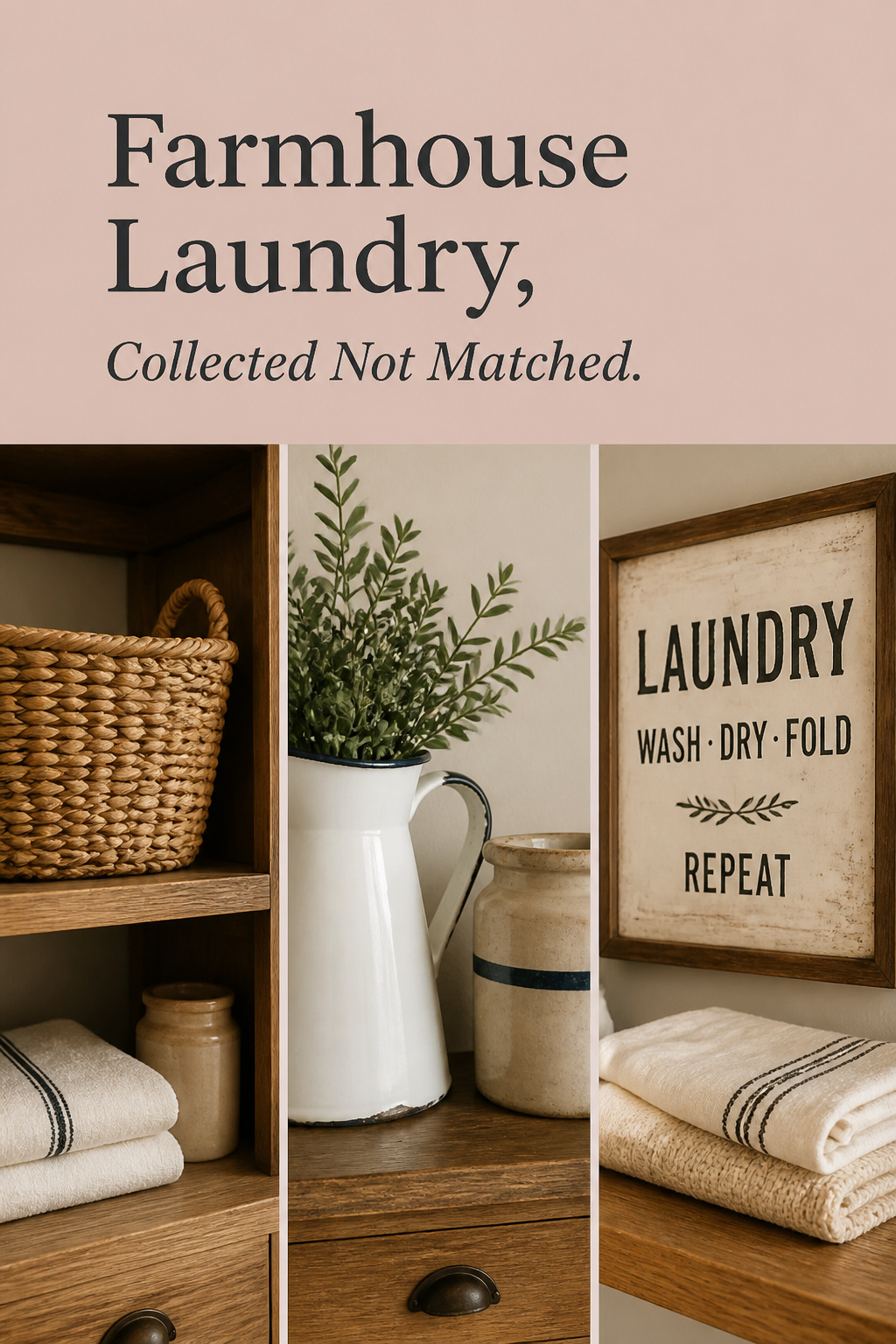
Type “farmhouse laundry room decor” into any search bar and the same room comes back: shiplap, a wood sign that says WASH & DRY, a matched basket set, sold together like a kit. The myth is that you buy that look in one cart — which is what makes it read staged, not collected. Real farmhouse is layered warm wood, woven baskets, and one honest vintage piece, added over a few paychecks. Here’s how to build it in order, and which three things to buy first.
TL;DR
- Skip the matched shiplap-and-sign kit: a real farmhouse laundry makeover runs around $400, built piece by piece, not bought as one SKU.
- Start with the base — a sealed white-oak or reclaimed shelf mounted at least 18 inches above the machines, plus a basket or two — then add a vintage anchor, then signage last.
- Use seagrass or wire baskets, never jute or sisal (they mold in the damp), and let one thrifted enamelware or stoneware piece ground the room instead of three new “vintage-style” ones.
The Farmhouse Laundry Room Decor Myth: You Don’t Need a Matched Kit
The whole style is sold backwards: bundled because a bundle is easy to sell, not because it looks right on the wall.
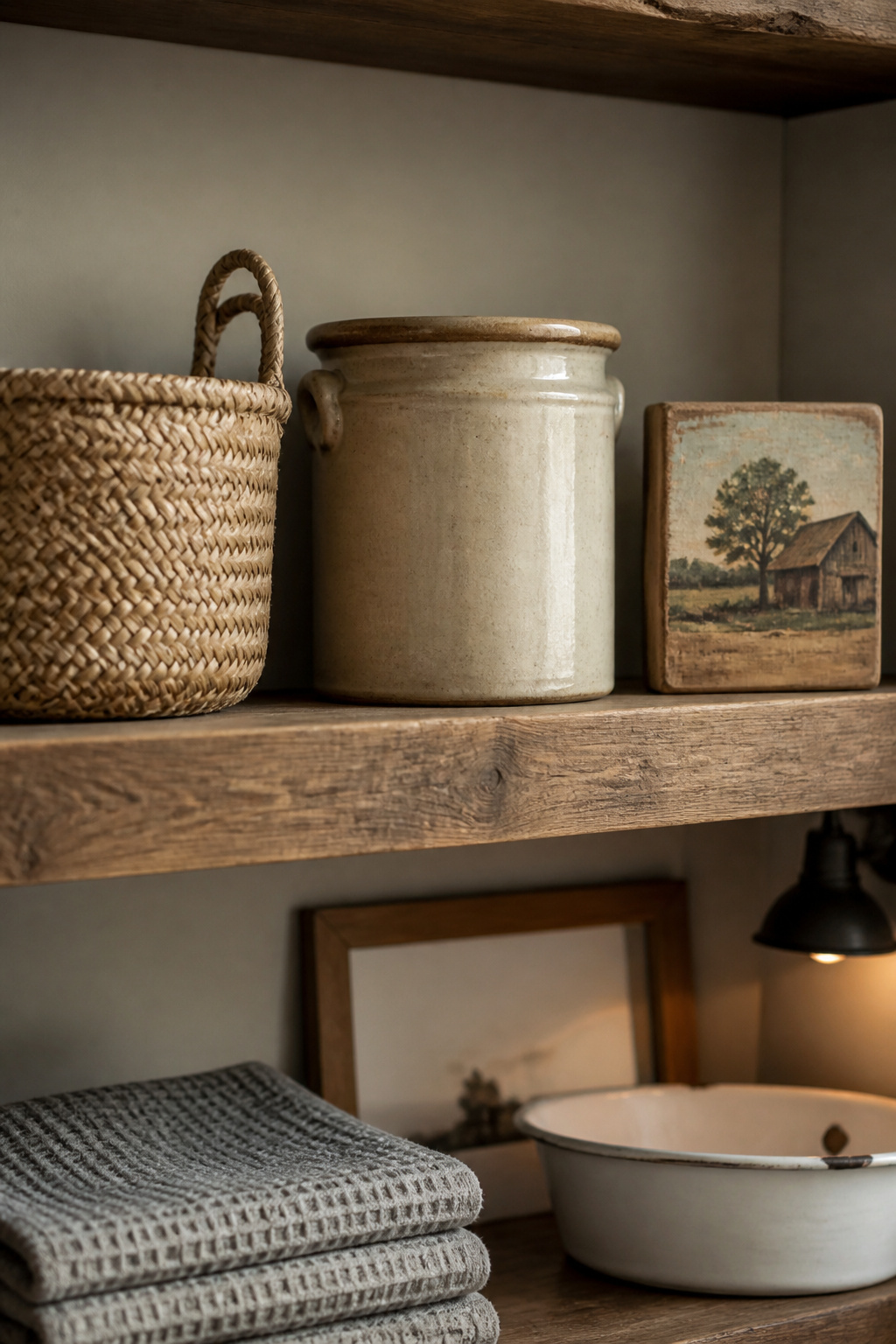
What a shiplap-and-sign bundle actually buys you
The retail version of farmhouse is a coordinated collection — shiplap wallpaper, a sign, a basket set, from one product line. That’s merchandising, not design. “Farmhouse laundry room” is one of the strongest style searches — Houzz alone carries 75-plus curated photo sets. A bundle buys same-day coherence, the kind a showroom has, not a home.
What “collected over time” really means
Collected means pieces from different places, different years. “Perfection can feel sterile,” says interior designer Ryan Saghian — he builds for a certain rawness, spaces that evolve with pieces collected over time. And it doesn’t have to be valuable: a crock with charm beats an expensive object with none.
Why buying it all at once reads fake
A room done all-new or all-vintage feels off — inauthentic, or precious like an antique store you’re scared to touch. A single cart can’t fake it: everything shares one source, one finish batch, one moment in time. My first real build was a workbench at twenty-two: two sheets of plywood, dead square only in the plans. It’s still in my garage, dented and load-bearing. Ugly-strong beat pretty-weak. A room works the same way — the history has to actually happen, not get simulated.
The Wood Tones That Read Farmhouse, Not Builder-Grade
Wood is the single biggest tell, and it’s where most people go wrong before they hang a thing.
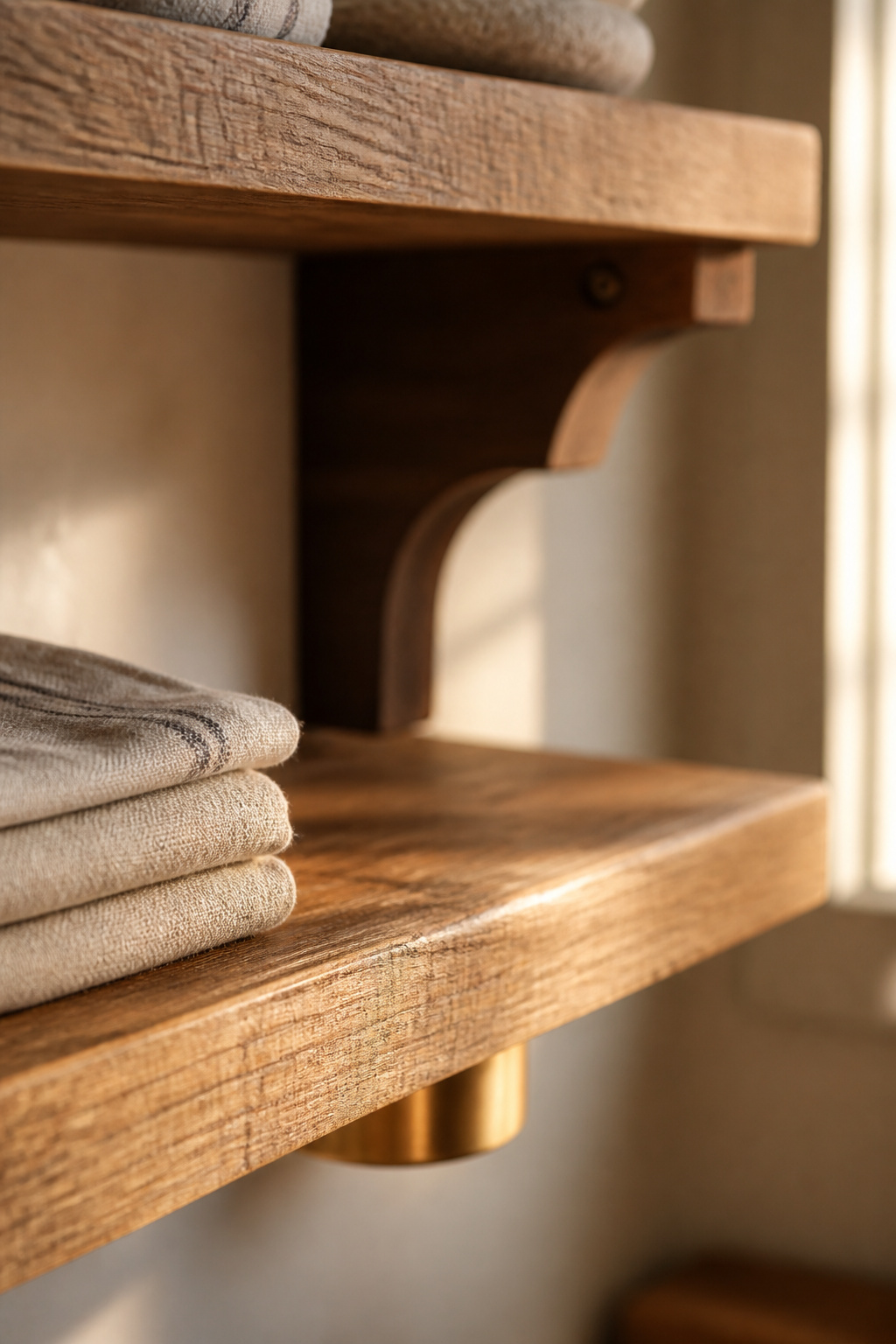
Warm oak and reclaimed wood vs. orange-toned pine
Reclaimed barn wood carries variation new lumber can’t fake. Pine is the trap: unsealed, it drinks moisture and warps within months, so sand it and seal it with matte polyurethane. The standout is white oak. It resists laundry-room damp because microscopic cellular plugs called tyloses block water — the same thing that lets whiskey barrels hold liquid. Sealed, it outlasts maple, birch and pine:
| Wood | Moisture rating | Verdict for a laundry shelf |
|---|---|---|
| White / European oak | Durable to very durable (EN 350 Class 2–3) | Best pick; tannins resist damp |
| Reclaimed barn wood | Weathered already; varies | Great look; check it’s sound |
| Birch | Non-durable (EN 350 Class 5) | Opens at the joints in damp |
| Pine | Poor unsealed | Only with a matte poly seal |
Open shelving material choices
Working depth is 10 to 12 inches — 8 to 10 in a tight closet so the door closes. Mount the shelf at least 18 inches above the machine so the lid clears, 20 to 24 for a front-loader. Rate your brackets: a loaded shelf hits 40 to 60 pounds, so 25-pound floating-shelf brackets won’t cut it. Use heavy steel brackets into studs, rated 150 pounds minimum.
Mixing wood tones without matching them
One uniform stain is the kit look. My rule: keep undertones in the same warm family — honey, amber, warm grey — even when species differ. Matching undertone reads intentional; matching exact stain reads like it shipped in one box. A plywood-strip shiplap wall at $2 to $4 a square foot adds a second wood texture without matching the shelf.
Woven and Wire Baskets for Storage That Doubles as Decor
Baskets do two jobs — hide the ugly stuff and carry the texture. But a laundry room is damp, so material matters as much as the weave.
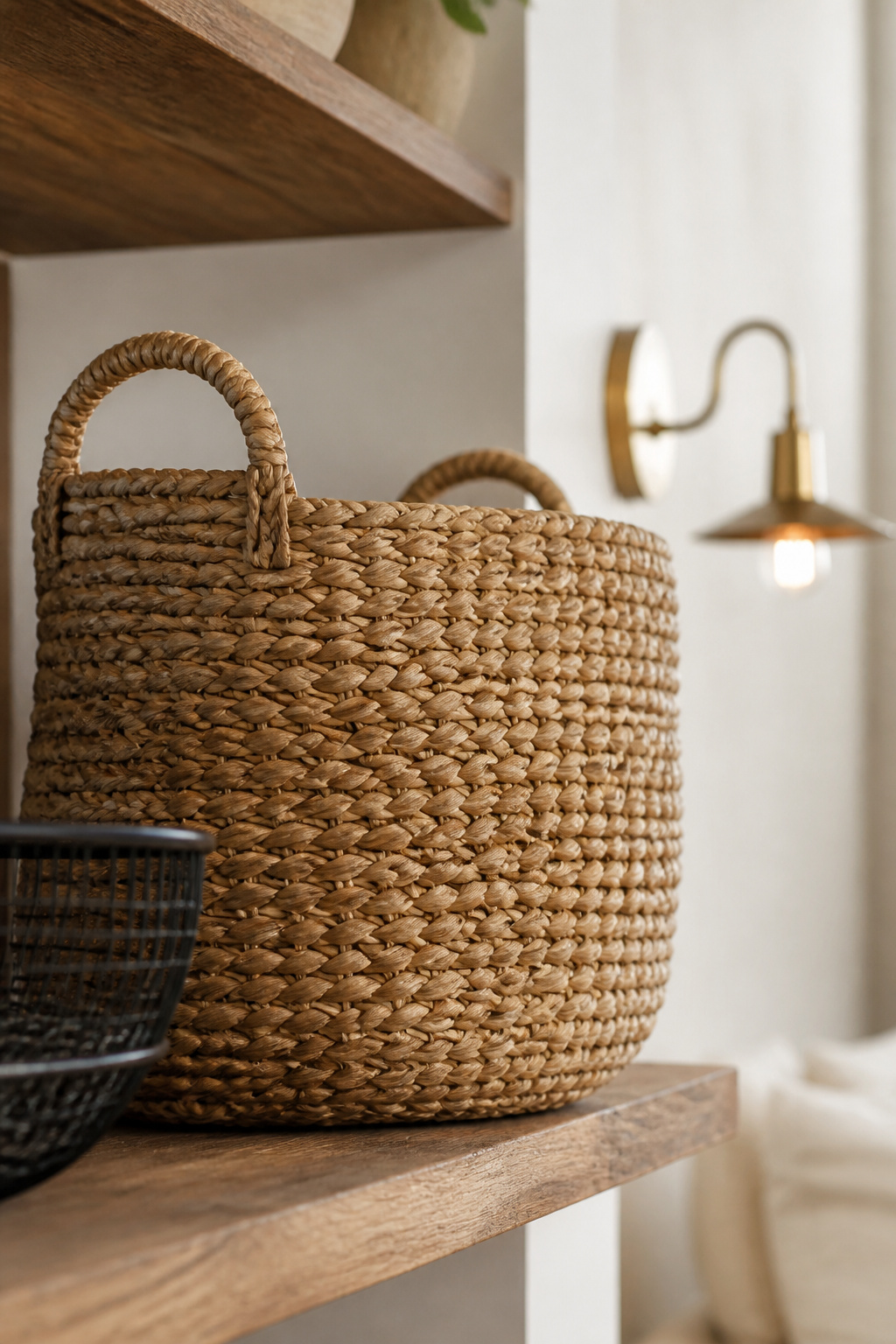
Rattan and seagrass vs. wire baskets
Seagrass is the one natural fiber rated for a humid room; its tight weave resists moisture and still breathes. Jute and sisal will mold — skip them. Wire trades soft texture for airflow and a wipe-clean surface that shrugs off mold. The split most farmhouse rooms land on: wire closest to the machines, woven seagrass or rattan on the dry shelf tier.
Sizing baskets to machines and shelves
Size to the shelf, not the eye. An overhanging basket is a bump hazard and a clutter signal, so keep it inside that 10-to-12-inch depth. Mid-size woven baskets run $25 to $55 — directional, not a promise. For loose laundry, a tall seagrass-and-rattan hamper with a washable liner handles it.
Where cheap baskets look cheap
Faux-rattan is the giveaway. Real seagrass shows natural color shifts and irregular fiber width; resin fakes have a uniform, plasticky sheen. Cheap wire flexes under load and shows weld blobs at the corners — pick it up loaded; if it bows in your hand, it’ll bow on the shelf.
Enamelware, Stoneware, and the Vintage Object That Grounds the Room
Here’s the piece the kit can’t sell you: one genuinely old thing. It does more for the room than a shelf of new “vintage-style” props.
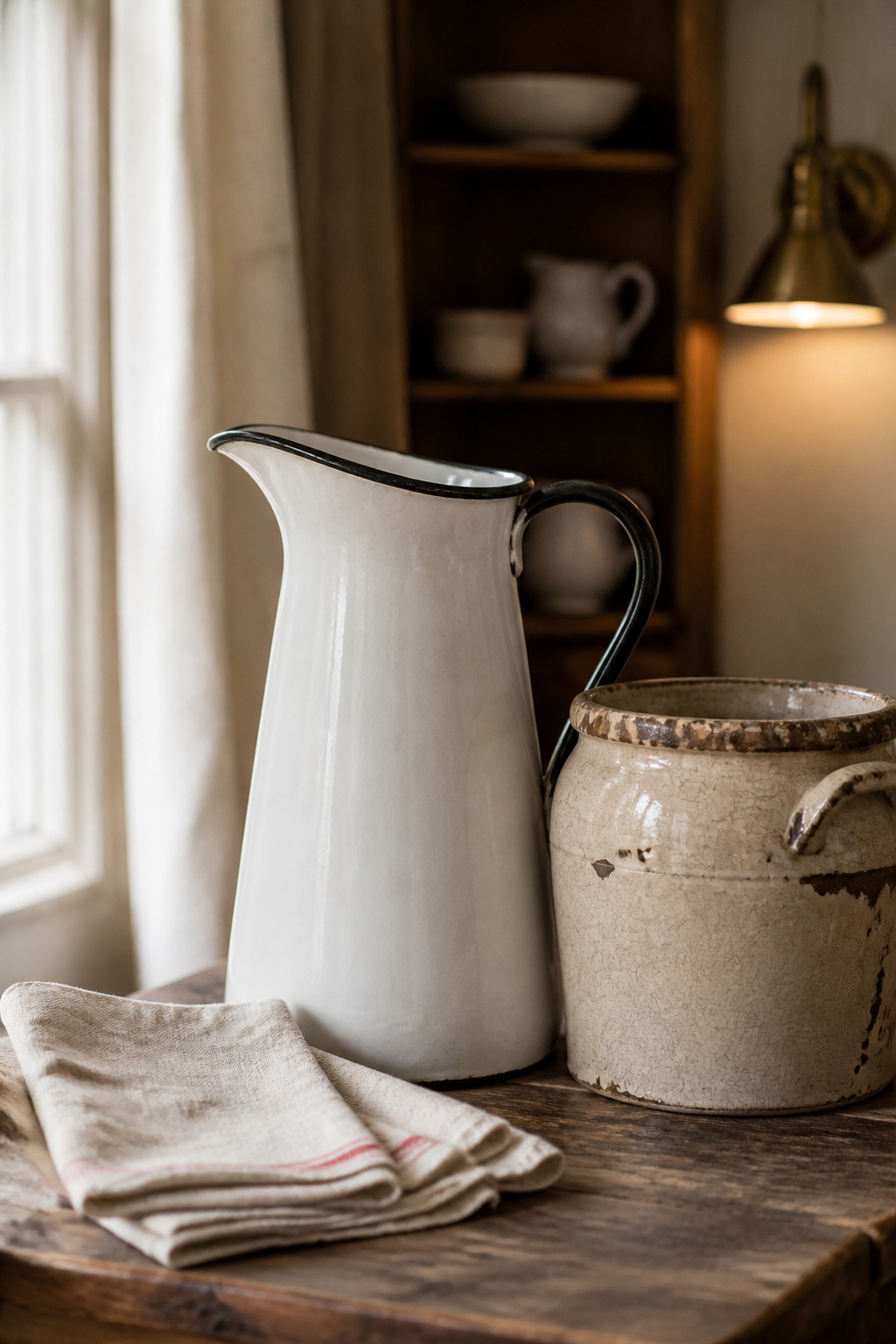
Where to actually find these pieces (thrift and salvage)
Flea markets, thrift shops, estate sales and yard sales carry real stoneware crocks — thrift shops price them cheapest. Learn the tells: a salt glaze with blue decoration, and faint maker’s marks under a raking flashlight. Redwing is the most collectible brand — one red wing stamp. Minor chips and glaze crazing add patina — a big structural crack is the dealbreaker, especially if it’ll hold water.
One good vintage piece vs. several mediocre ones
Every room benefits from at least one collected piece — designers call it a secret weapon for a layered feel. Buying new, the classic farmhouse enamelware is distressed white with a black rim — bread boxes, canisters, caddies — but I’d take a chipped thrifted crock over a fresh reproduction. The wear is the point, and you can’t buy wear new.
Function first — every object should still work
The strongest vintage piece does a job: a crock holds clothespins, a pitcher holds a scoop. An empty display object just looks like staging. Start from function, then have fun with form. Clean a find before it goes up — soapy water and a soft brush, baking-soda paste for stubborn residue, then dry it fully or it turns musty on the shelf.
Signage and Textiles That Finish the Farmhouse Look
Signage and soft goods are the last layer, and they’re where a farmhouse room quietly tips into a different style.
Vintage-style vs. literal typographic signs
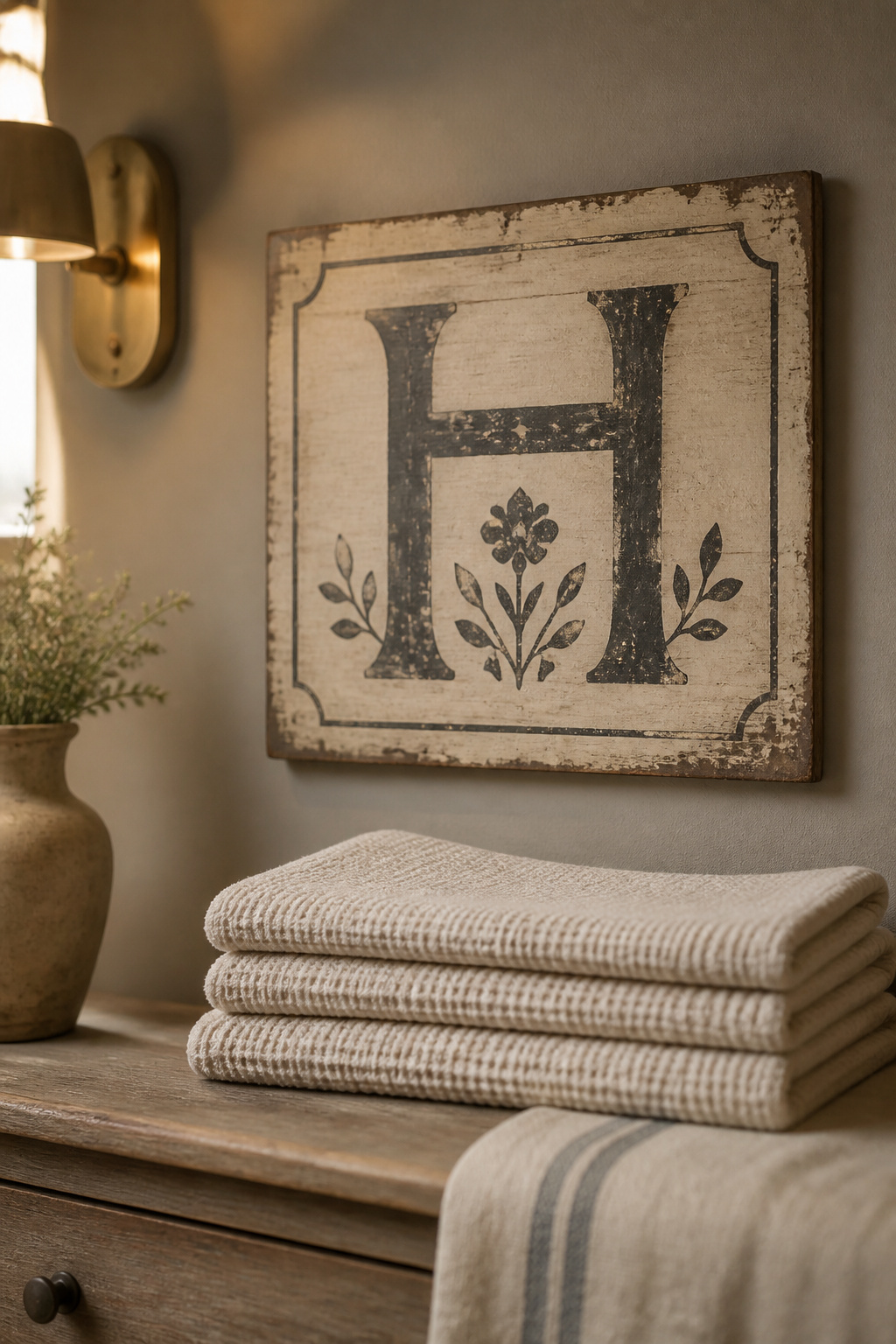
A sign carries more weight looking like it hung somewhere real. Material sets the tone: wood reads warm and rustic, tin skews mid-century diner, enamel-style leans polished. Literal wording — “Wash. Dry. Fold.” — keeps the room grounded; a cheeky slogan pulls it toward novelty. A sign is wall work, so pair this with the deeper guide to laundry room signs and wall art once you’ve settled the style.
Layering neutral textures
Texture keeps farmhouse warm without going busy. Stack waffle-weave towels, add woven baskets, put down a laundry-safe runner — not actual jute — for softness without a competing pattern. The palette holds it together: warm whites and greige, natural wood and rattan, sage and muted terracotta, matte-black or aged-brass hardware. Tone-on-tone — several close warm neutrals, not one flat white — keeps it from feeling sterile.
Farmhouse vs. modern-farmhouse vs. rustic, compared
These three get used interchangeably. Rustic is the broad category — raw, weathered materials in darker tones. Farmhouse is the refined, lighter subset — shiplap, barn doors, vintage accessories, white palette. Modern farmhouse adds cleaner lines and polished finishes. Drifting dark and heavy means you’ve wandered into rustic — pull back toward white, warm wood and one collected object.
Building the Look Piece by Piece on a Real Budget
One documented farmhouse laundry makeover cost $402.38 — paint, shelving and styling included. That’s nowhere near a retail farmhouse collection. The trick is the order you buy in.
The three pieces to buy first
Buy in this sequence and the room builds itself:
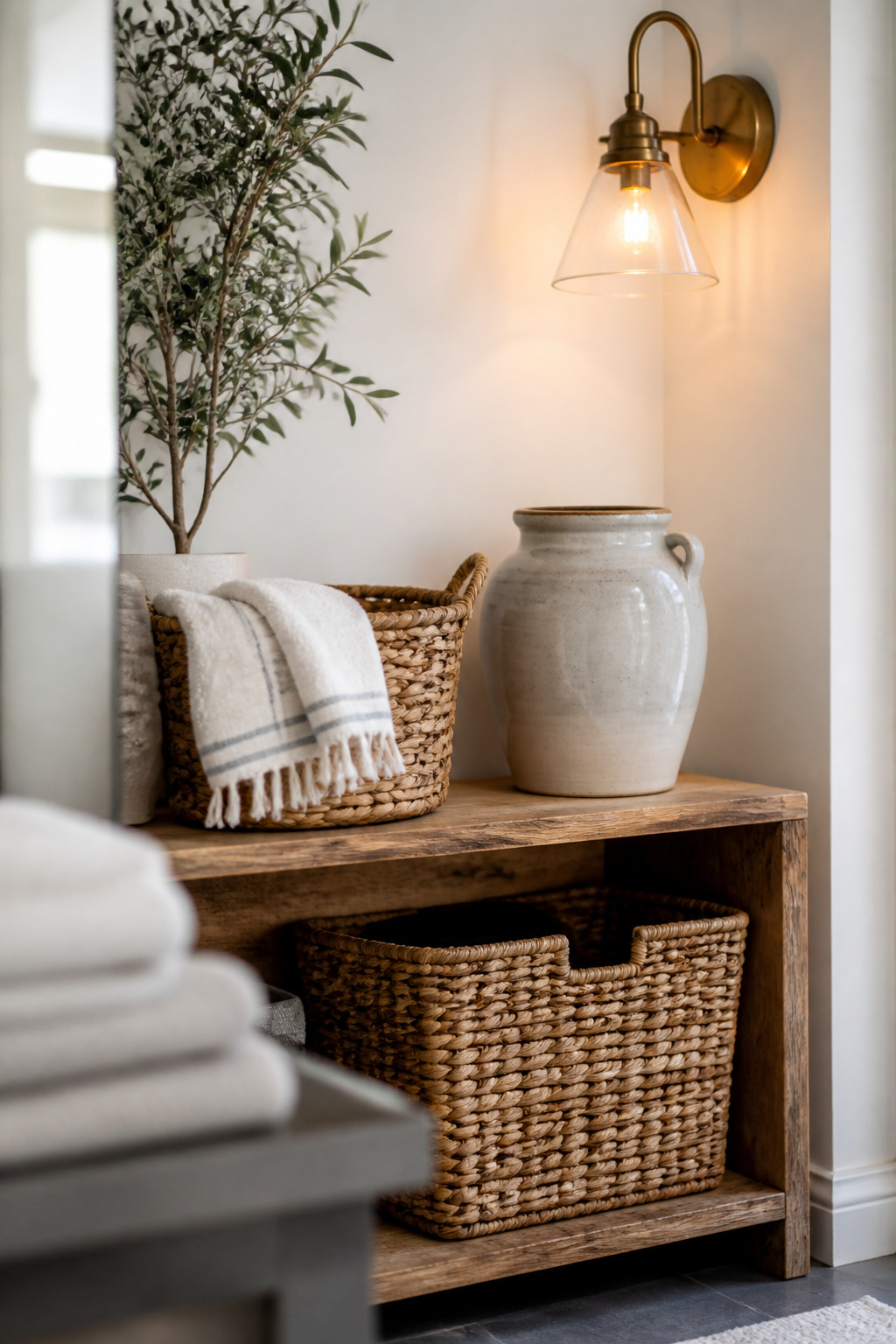
- The functional base — one shelf and a basket or two — does the daily work, so it comes first; everything decorative layers on top.
- One vintage or vintage-style piece — a crock, a pitcher, a salvage find — chosen because it can hold something, not just sit there.
- Signage, last — the most decorative element, so buying it last keeps the room from looking finished-and-generic before the collected pieces define it.
What to thrift vs. buy new
Thrift the vessels, baskets and signage — off-season clearance at Home Goods, TJ Maxx and Hobby Lobby keeps you well under retail. Buy new only where safety or function needs a guarantee thrifting can’t give: brackets rated for real load, sealed wood that resists moisture. A used shelf you repaint or reseal beats a full-price finished one.
Sequencing the look over a few paychecks
The $400 makeover happens across weeks, not one Saturday cart. The shiplap wall is a good early-to-mid move once the shelf is settled. Dollar-spot and clearance filler in the $3-to-$10 range comes last, once the shelf, the vintage piece and the wood tone are locked in.
Where the Farmhouse Look Comes Together
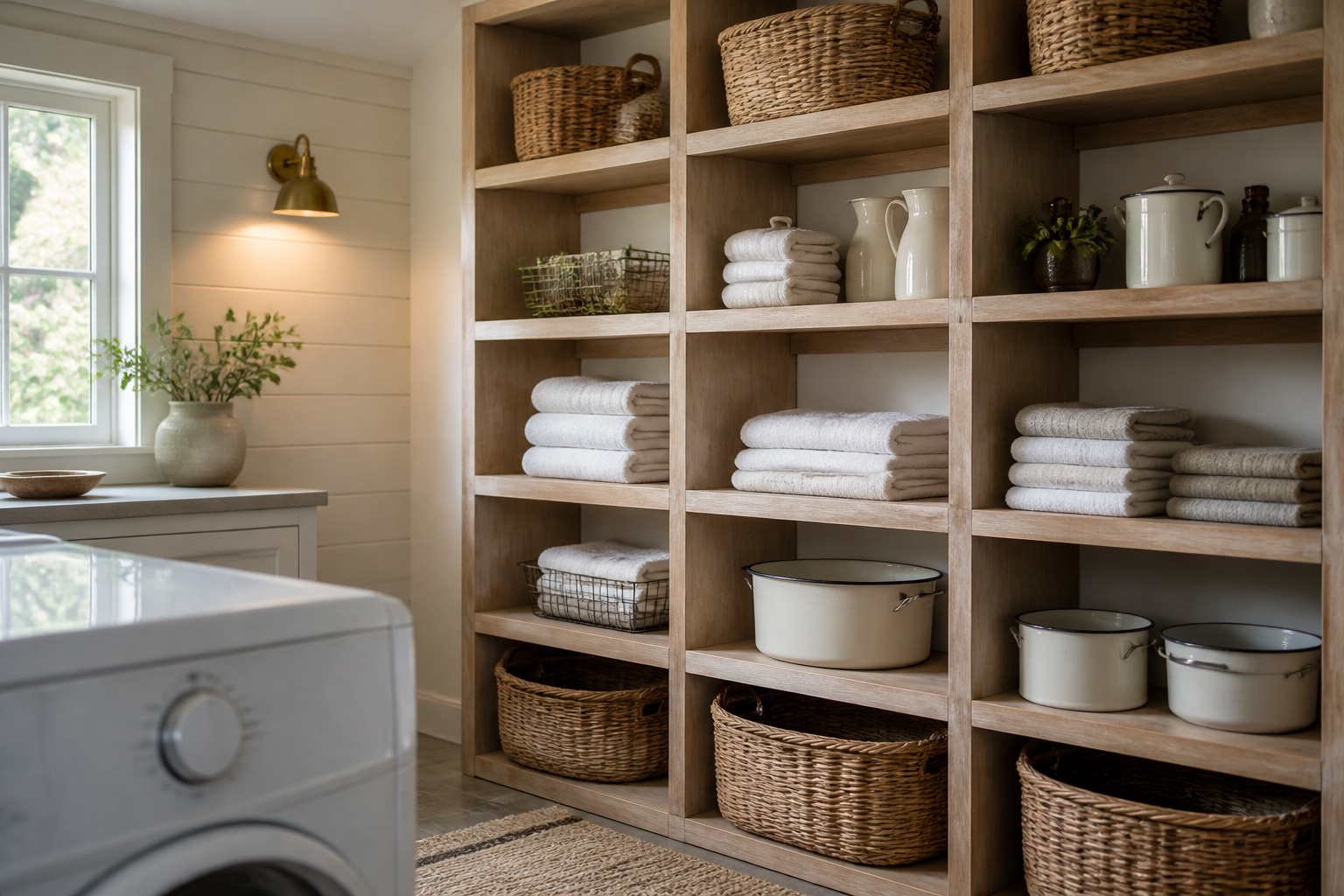
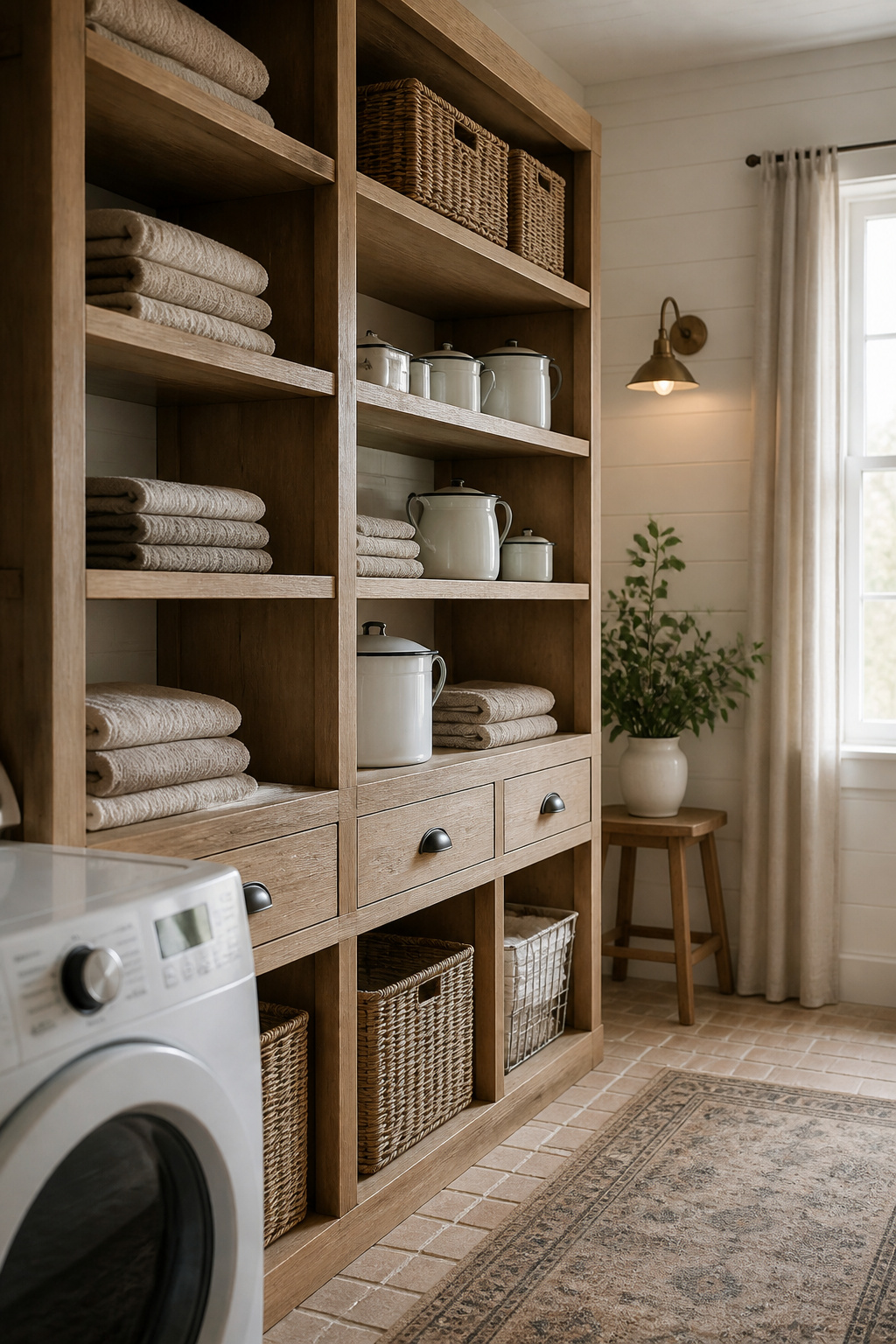
Every decision here lands in one place: the shelf. Get the wood, the baskets and the vintage anchor right, and the shelf is where they finally work together.
The shelf vignette as the style’s proving ground
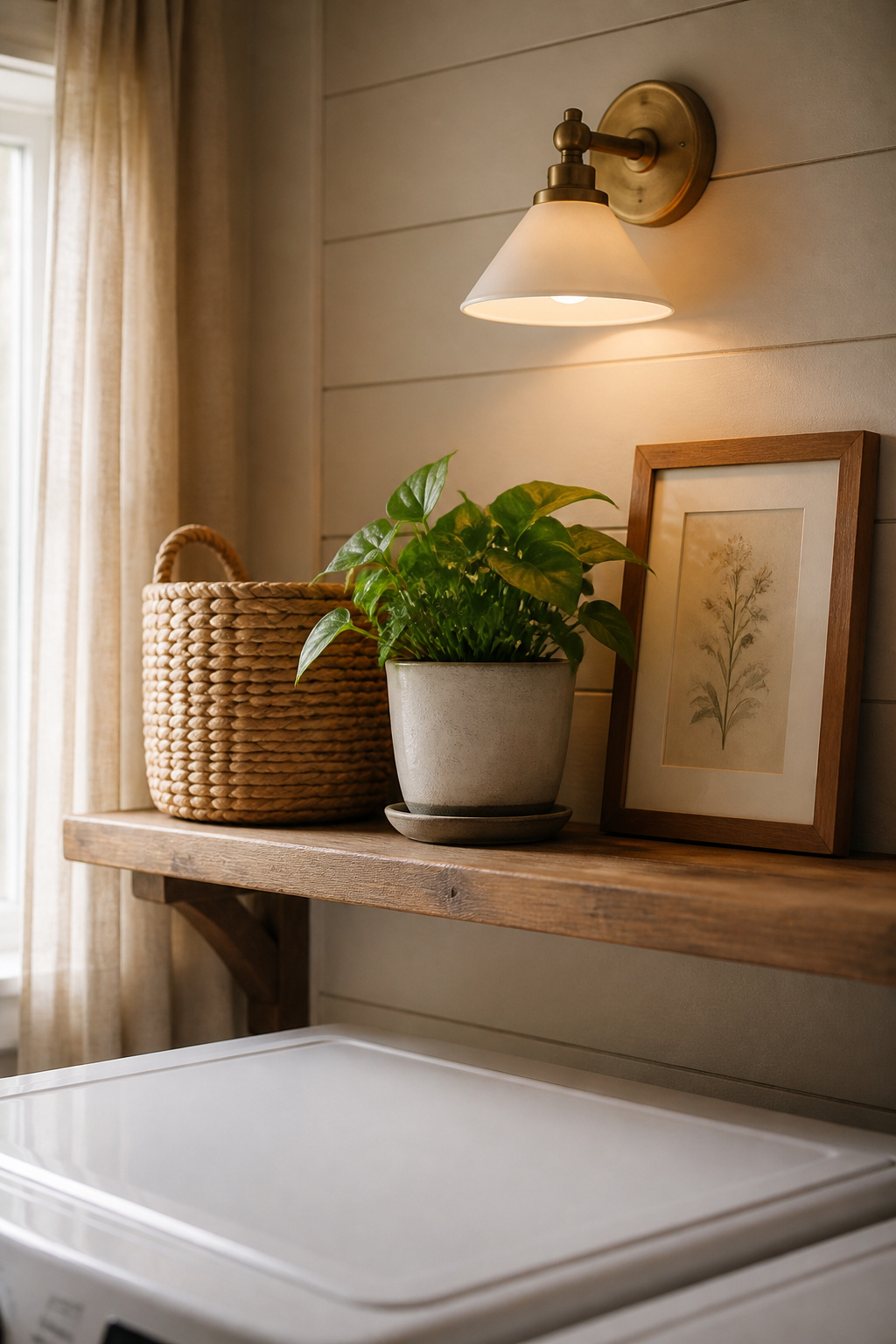
A functional shelf becomes the room’s focal point — woven baskets, a character piece, maybe a small rack. The fullest version treats the laundry room like a living room: a rug, fresh flowers, even a chair. Getting the pieces right is only half the job — how they sit together is its own craft, worth learning to style the open shelves deliberately.
Your whole-room decorating plan
Everything here is the material list: wood tone, baskets, vintage anchor, signage. Arranging them — spacing, height, the rule of three — is a separate skill, and this farmhouse logic runs room-wide. It’s one lens inside the bigger job of styling a laundry room from top to bottom. So here’s your first move: skip the bundle, buy one sealed shelf and one basket this month, and thrift a single crock next. That’s the farmhouse laundry room, started in the right order — collected, not matched.
FAQ
What makes a laundry room look farmhouse instead of just rustic?
Farmhouse is a lighter, refined subset of rustic. Rustic runs dark and moody — cream, gray or mossy walls with black and brown accents — while farmhouse leans white, warm neutral and tone-on-tone light wood, layered with shiplap, vintage accessories and woven baskets. Modern farmhouse just adds cleaner, more polished lines on top.
Is farmhouse laundry room decor expensive?
No. Real makeovers commonly land around $400 — one documented project totaled $402.38 for paint, shelving and styling. The savings come from buying secondhand instead of new: thrift stores, flea markets and off-season clearance. Plywood-strip shiplap at $2 to $4 a square foot is the single biggest low-cost wall change in the style.
Can you do a farmhouse laundry room in a rental?
Yes. Peel-and-stick wallpaper delivers the shiplap look without drilling and peels off cleanly at move-out. Command hooks and freestanding wood or wire shelving replace built-ins entirely. Because the look is built from baskets, textiles and collected objects rather than fixed fixtures, most of it packs up and moves with you at lease end.