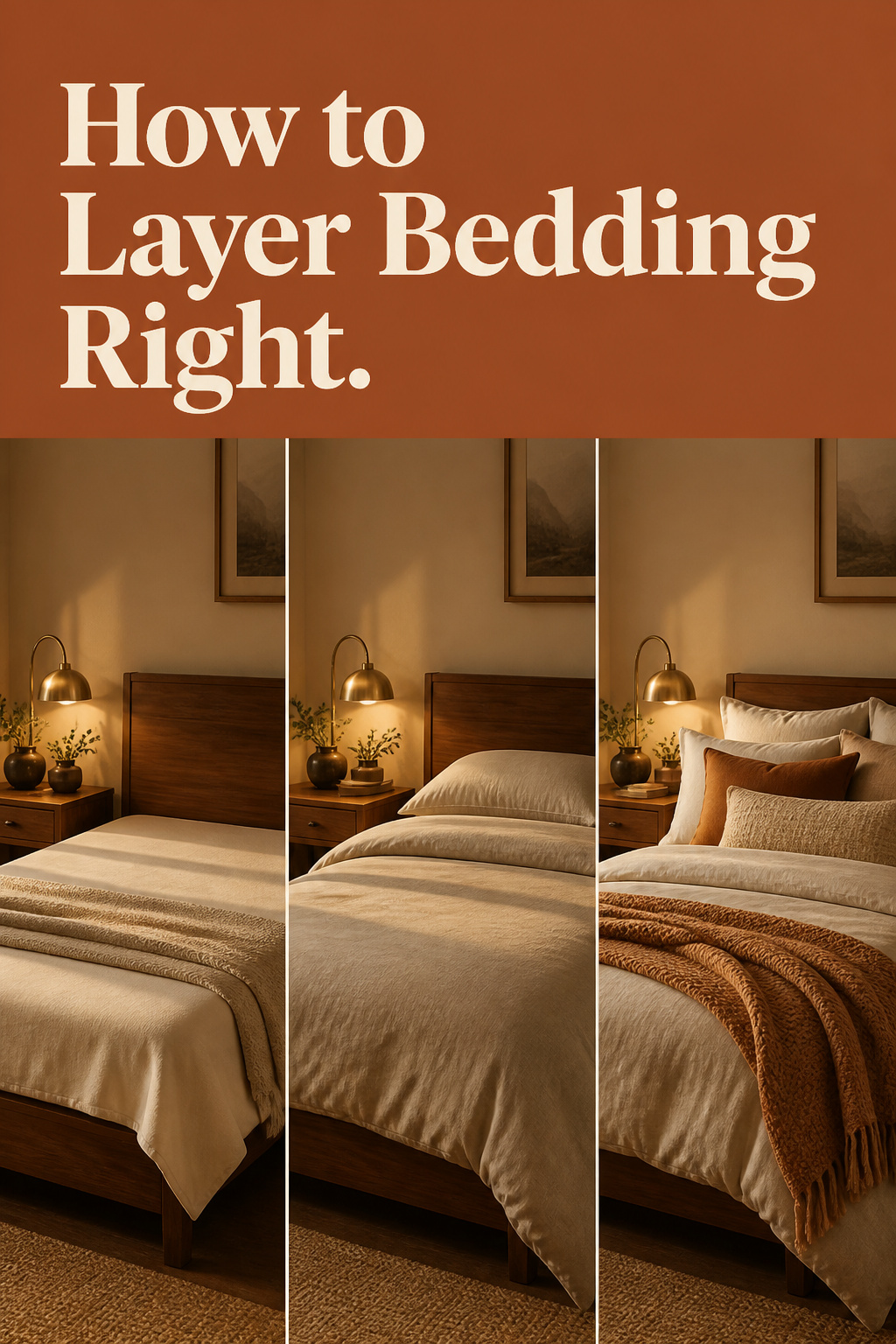

The best bed I ever slept in had three layers on it. It sat in my grandparents’ summer cottage on the Stockholm archipelago — unpainted pine, oil lamps, one shelf of crockery — made up with a linen sheet, a single wool blanket, and a light cover folded on top. No pile. On a cold night off the water, it beat any overstuffed hotel bed since.
That cottage taught me what most people get wrong about how to layer bedding: warmth is not a matter of quantity. Piling on more blankets makes a bed heavier and hotter, not more inviting, and you wake at 3am shoving half of it onto the floor. The fix is order and weight, not volume. Get those two right, and a few layers will out-warm a mountain of them.
TL;DR
- Build from the mattress up in a fixed order: fitted sheet, flat sheet, a light blanket or coverlet, then the duvet on top as the main insulator — that sequence traps warm air where a random pile cannot.
- Match weight to your room, not the calendar: a 1–4.5 tog duvet for a warm room (68°F or above), 4.5–8 tog for spring and autumn, 10–15 tog for a cold one.
- If a bed feels heavy and hot, subtract before you add: pull the least useful layer — often a spare throw or a redundant top sheet — rather than buying another blanket.
How to Layer Bedding in the Right Order
Order is the whole game: the same five pieces can warm you or cook you depending on which one sits where.
Sheet, blanket, duvet, coverlet
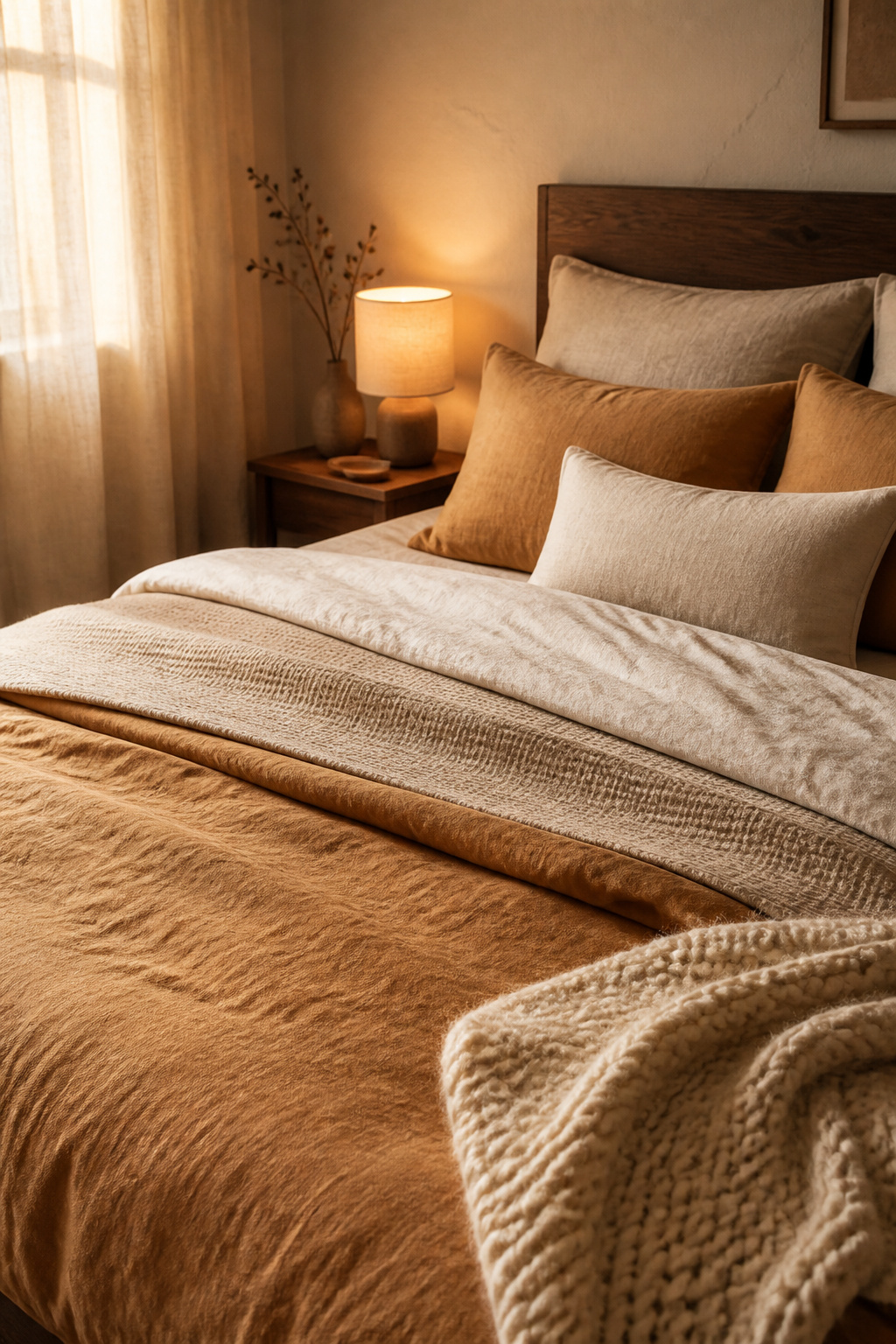
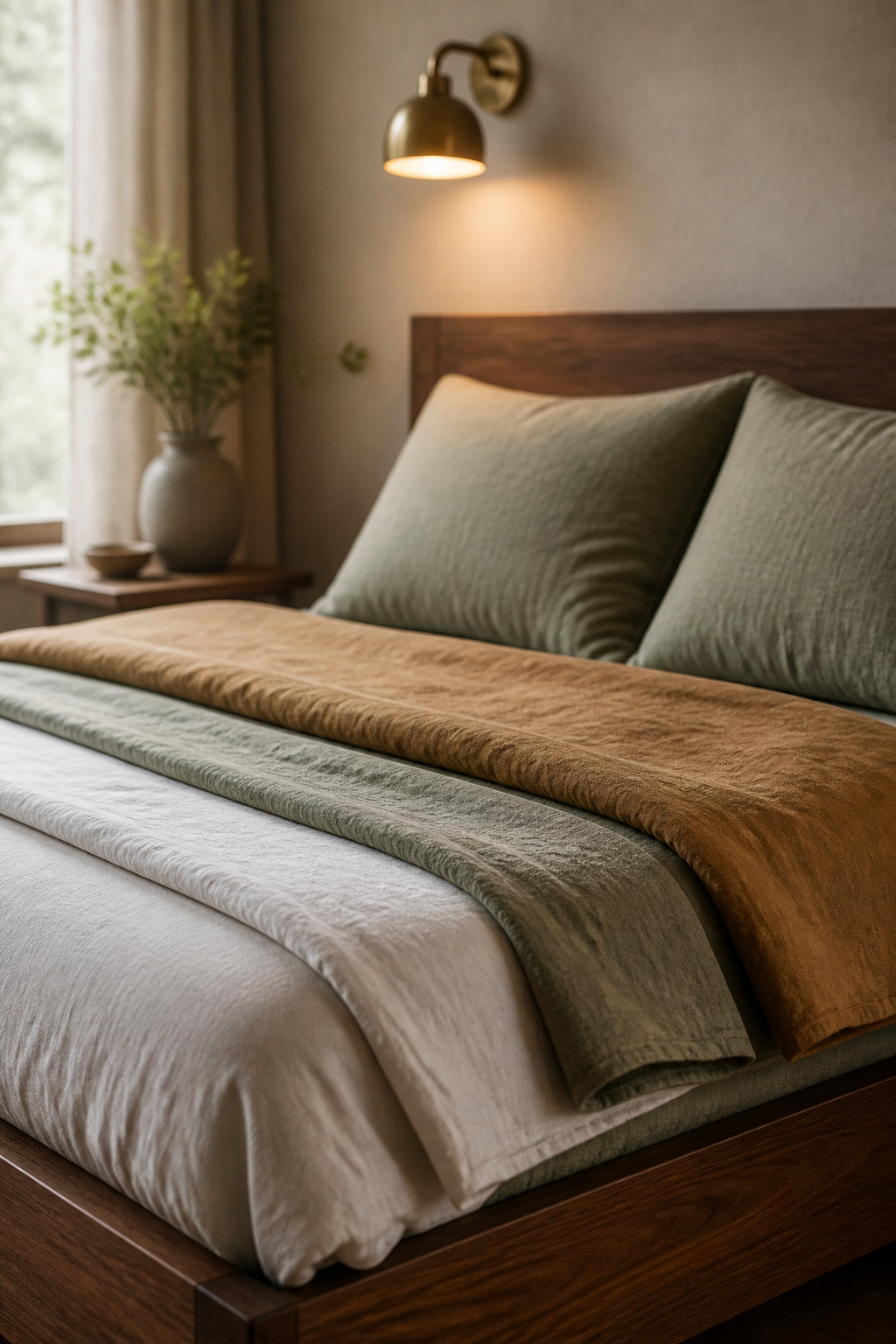
There are two honest schools of thought here, and it helps to know which one you are following. The functional order builds warmth: fitted sheet, flat sheet, a lightweight blanket or coverlet, then the duvet on top as the main insulator. The decorative order — the hotel look — lays the coverlet flat as the base and folds the duvet in thirds at the foot. Both are legitimate, but this is a guide about warmth, so I commit to the functional order. A blanket held against the sheet traps a layer of still air before the duvet’s loft goes on, and that trapped air does most of the work. As Ruben Gutierrez of Errez Design puts it, your sheets are the foundation; skimp there and the whole thing falls apart.
Where throws and pillows fit
Count your pillows in odd numbers. Two or three Euro pillows go against the headboard first, then your sleeping pillows, then one or two decorative ones — three across a twin, no more than six on a larger bed. The throw goes on last, folded across the foot: an accent, not a warmth layer, so choose it for texture.
Why order changes how warm the bed feels
Here is the part that surprises people: a duvet keeps you only as warm as the air trapped in its loft. Fold it in thirds at the foot, or stuff it under a coverlet, and you compress that loft — the same duvet now warms you less. Laid flat on top, it delivers its full rating. That is why the functional order wins on a cold night: nothing above the duvet crushes the air out.
Picking the Right Fabric and Weight for Each Layer
Order gets the air where you want it; weave and weight decide how much of it stays warm.

Sheets: weave and weight
Forget the single magic thread count. The workable range runs from 200 to 800, and yarn quality matters more than the raw number. Weave tells you more. Percale is a plain weave — crisp, cool and matte — at its best around 180–200. Sateen runs silkier and slightly warmer at roughly 250–600. Linen sits far lower, near 80–140, because thread count is a poor signal for its thick fiber; judge linen by feel instead. Push past 600–800 and comfort stalls while the tighter weave trades away breathability.
Blanket vs. duvet fill weight
Duvet warmth is standardised on the tog scale, and matching it to your room does more for comfort than any single fabric choice.
| Season | Duvet tog | Suits a room around |
|---|---|---|
| Summer | 1–4.5 tog | 68°F or warmer |
| Spring & autumn | 4.5–8 tog | A moderate, in-between room |
| Winter | 10–15 tog | A properly cold or draughty room |
Wool duvets are sold by weight rather than tog: roughly 200gsm sits near 4–6 tog and 350gsm near 8–10, and wool adapts to your body heat instead of holding one fixed warmth. If you share a bed and disagree about weight, the Scandinavian Sleep Method gives each sleeper a single-size duvet, so neither of you compromises.
Coverlet and throw fabrics
A woven or waffle-textured coverlet earns its keep by working year-round, unlike a seasonal down duvet. It is also where you build depth: linen against cotton against wool adds more richness than piling on pattern. A chunky wool knit throw is the natural anchor — insulating loft and texture without the bulk of a second duvet.
How Many Layers Is Too Many
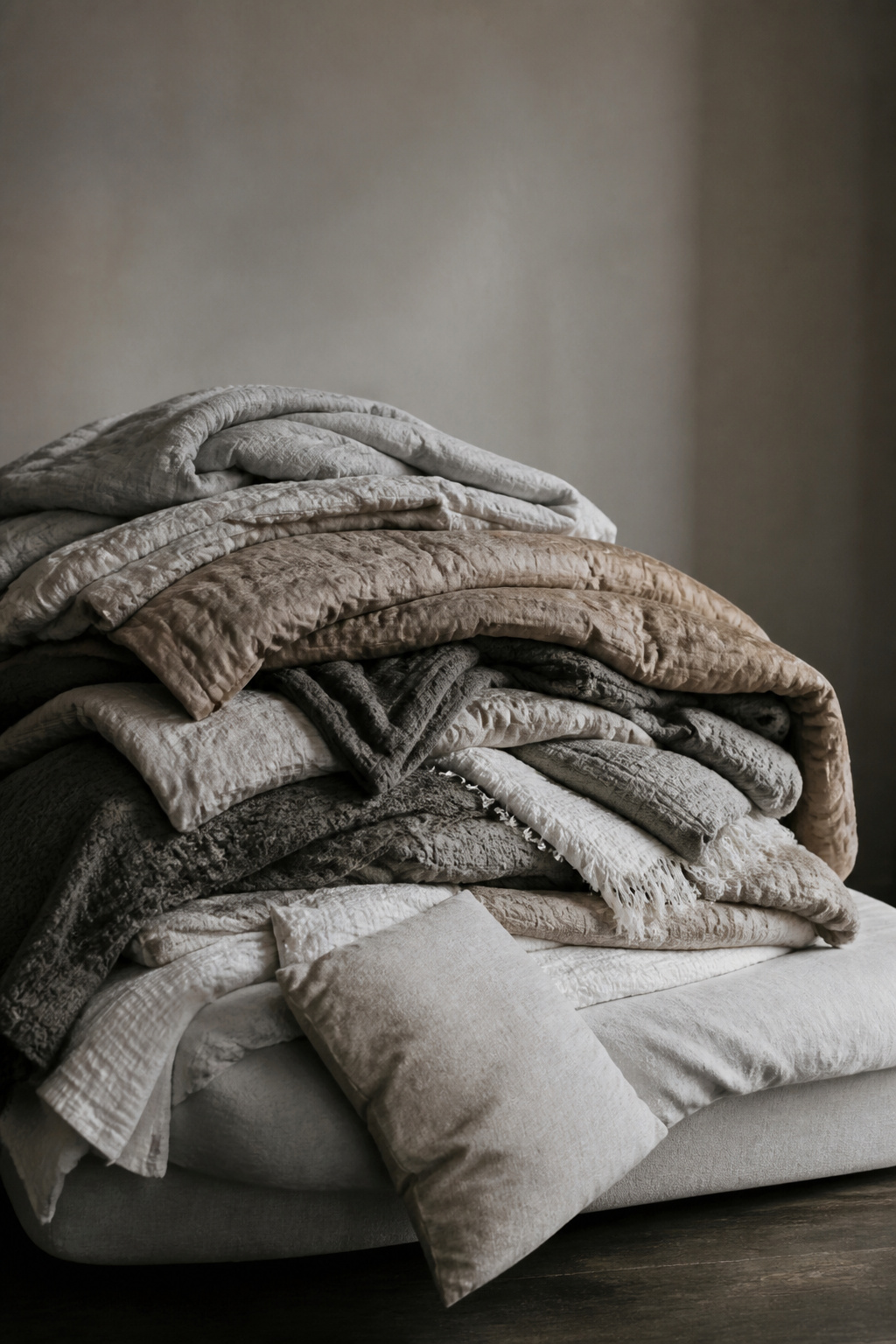
At some point another blanket stops helping and starts working against you. No tidy number marks that line, but your body gives it away.
Signs a bed is overloaded
Your body usually flags the problem before you consciously notice it:
- You stick a leg out from under the covers in the night — the body’s manual override for a bed running hotter than it can shed.
- You wake around 3am and peel a layer onto the floor, night after night.
- The bed looks full but never quite feels cozy, so you keep adding to it.
None of that is bad luck. Your body starts a natural temperature drop about two hours before sleep, and a heat-trapping bed fights that cooling. Poor airflow makes it worse — even opening the bedroom door is linked to better ventilation and longer sleep.
The weight ceiling for a good night’s sleep
There is no published ceiling for how heavy a made bed should be, and I would distrust anyone who quotes one. The closest benchmark comes from a different product: weighted blankets are sized to about 10% of the sleeper’s body weight, within a 5–12% range — a rough feel for how heavy is heavy, not a rule for a sheet-and-duvet stack. The honest fix for an overloaded bed is subtraction. Pull the least useful layer first, usually a redundant top sheet or a spare throw, before you reach for anything new.
Simplifying a bed that’s become a pile
If two people fight over one heavy shared duvet, split it: two lighter singles beat stacking a comforter on top. The same restraint applies to the finish — capping pillows at three on a twin and six on a larger bed keeps the accent layer from becoming a second pile.
Seasonal Swaps: Adjusting the Stack Through the Year
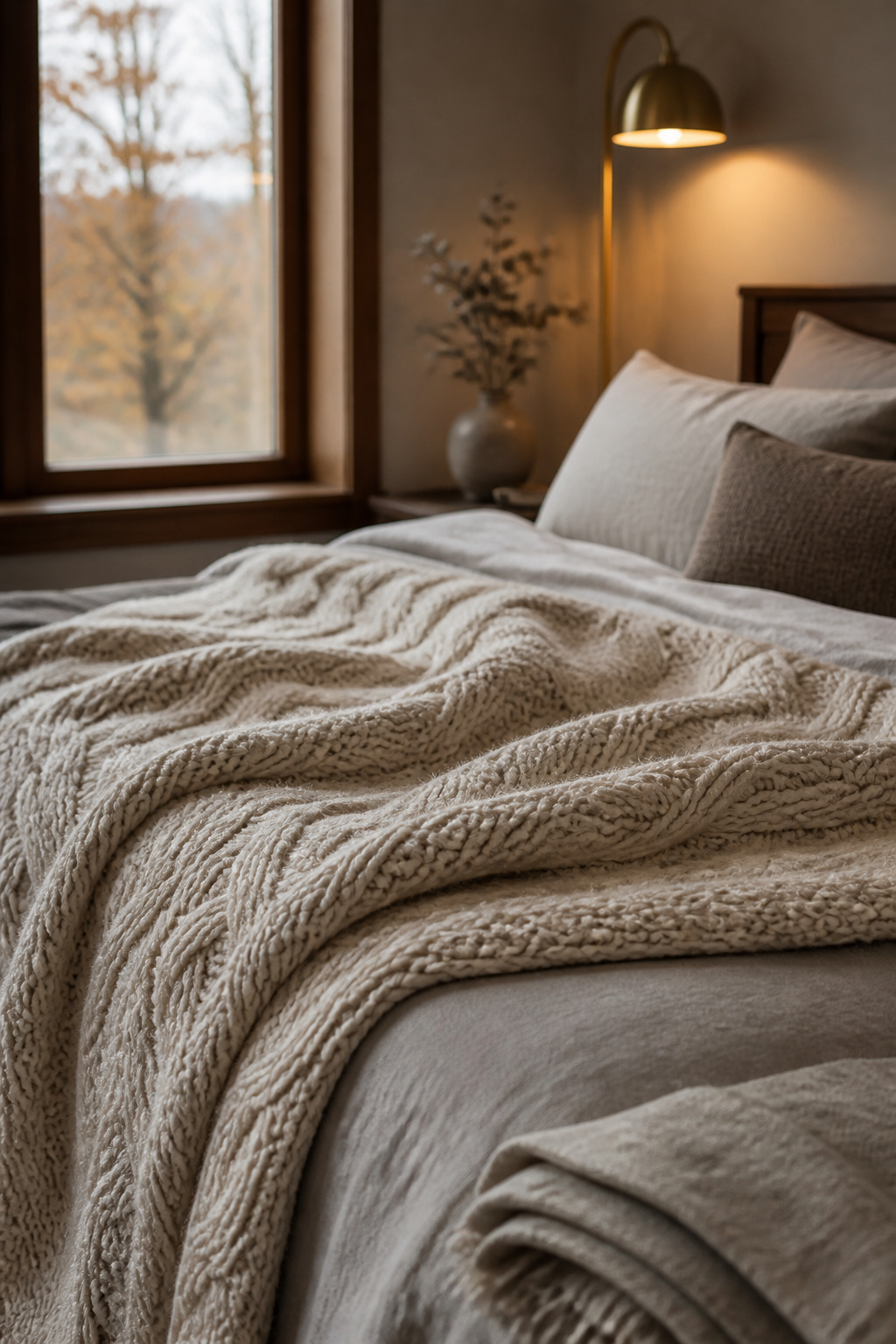
You do not need a separate bedding wardrobe for every season. Keep the same base method and swap one or two layers as the year turns.
Summer: fewer, lighter layers
In summer, drop to cotton or linen sheets and a featherweight 1–4.5 tog duvet, with a light throw at the foot instead of a full blanket. Let the palette lighten too — whites, creams, pale blues and greens read cooler through the warm months.
Winter: adding weight without adding bulk
Winter is where the order pays off: the goal is warmth without a crushing pile. Switch to flannel or fleece sheets and a duvet in the 10–15 tog band, then add a chunky knit blanket across the foot. A wool duvet is worth considering: it warms through the fiber’s thermoregulating property rather than sheer loft, avoiding the heavy, compressed stack that pure bulk creates. Warming the bedroom a couple of hours before bed lets the bedding stay lighter while you still feel warm at lights-out.
Shoulder-season swaps
Spring and autumn need less thought than either extreme. Move to the mid-range 4.5–8 tog duvet that sits between your summer and winter weights, and you rarely need to buy a third one. Sateen sheets also suit these months, keeping cotton’s breathability with a slightly warmer hand than crisp percale.
Color and Texture: Making the Layers Look Considered

A warm bed still has to look intentional. The restraint that keeps a stack comfortable also keeps it looking considered.
Coordinating tones with the wall palette
A useful frame is the 60-30-10 rule: the wall and large furniture carry about 60% of the room’s colour, accents such as bedding and rugs take 30%, and art the last 10%. Interior designer Jen Dallas argues for tonal variation over matching — bedding a shade lighter or darker than the wall, never the exact same colour, which flattens a room. A deliberate contrast works just as well, often with more depth than a perfect match. If you are choosing the wall first, our guide to warm bedroom paint colors covers how undertone changes everything.
Mixing textures without visual noise
Start small. Pair two components first — pillowcases with the flat sheet — before you add more. Then pull one accent colour out of the dominant pattern and repeat it in a solid piece to tie the mix together. After that, let material do the work: linen, cotton and wool side by side build depth through feel, which is harder to overdo than pattern.
Keeping a budget bed looking layered, not thrown-together
You do not need an expensive set to look layered. One deliberate splurge — even a cheap pair of satin pillowcases — against honest budget basics looks intentional rather than mismatched. Buy inserts from clearance and washable covers separately, and you can refresh the accent layer by season for little. Better bedding is usually the highest-impact upgrade in a room, which is why it anchors most advice on keeping a bedroom cozy on a budget.
Bringing It Together on Your Bed
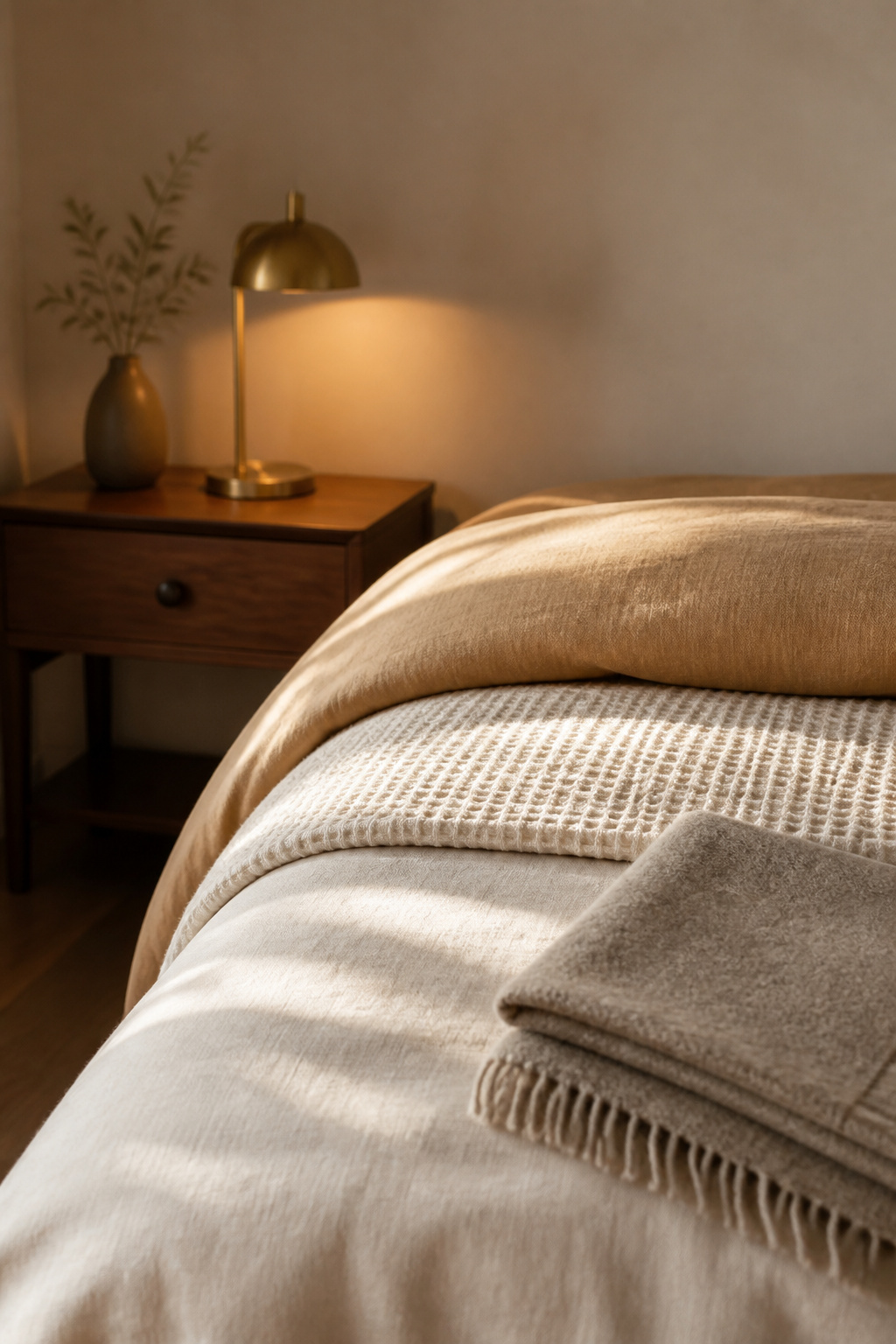
You do not have to buy everything at once. Start with a working base and build.
A simple three-layer starting point
The minimum functional stack is three layers: a fitted and flat sheet, one mid-weight blanket or coverlet, and one duvet matched to your room. That alone sleeps warmer than most crowded beds, because every piece has a job and nothing fights the duvet’s loft. Get this right before any styling layer.
Building up from there
Once the base works, add depth in order:
- Lay the base: fitted sheet, flat sheet, one mid-weight blanket or coverlet, and a duvet matched to your room’s temperature.
- Add one texture layer — a waffle coverlet or a wool throw folded across the foot.
- Build the pillows back to front: two or three Euro pillows against the headboard, then your sleeping pillows, then one or two decorative ones.
The one change to make tonight
If you do only one thing, swap a single wrong-weight layer — most often a too-heavy duvet in a warm room — for one that matches the temperature you actually sleep in. That one change does more than a whole new set. It is also the first move in the larger project of cozy bedroom ideas, because the bed is where the warmth of a room begins.
FAQ
How often should you wash layered bedding?
Wash sheets weekly, or every other week at the least, since they touch your skin every night. Duvets, comforters and blankets need it far less often — roughly every six months — because they do not sit against you the way sheets do. Wash more frequently in hot months, during illness, or if pets sleep on the bed.
Do you need a top sheet if you’re layering a duvet and blanket?
No, a top sheet is personal preference rather than a hygiene or performance requirement. The case for keeping one: it protects the duvet cover from nightly wear and washes far more easily than a bulky insert. The case against: it can bunch or come untucked overnight, which some sleepers find fussier than the warmth it adds.
What thread count makes the coziest sheets?
There is no single magic number; 200 to 800 is the workable range, and yarn quality matters more than the count. Percale sheets feel crisp and cool around 180–200, while sateen runs silkier and slightly warmer at roughly 250–600. Push past 600–800 and comfort usually stalls while breathability drops.