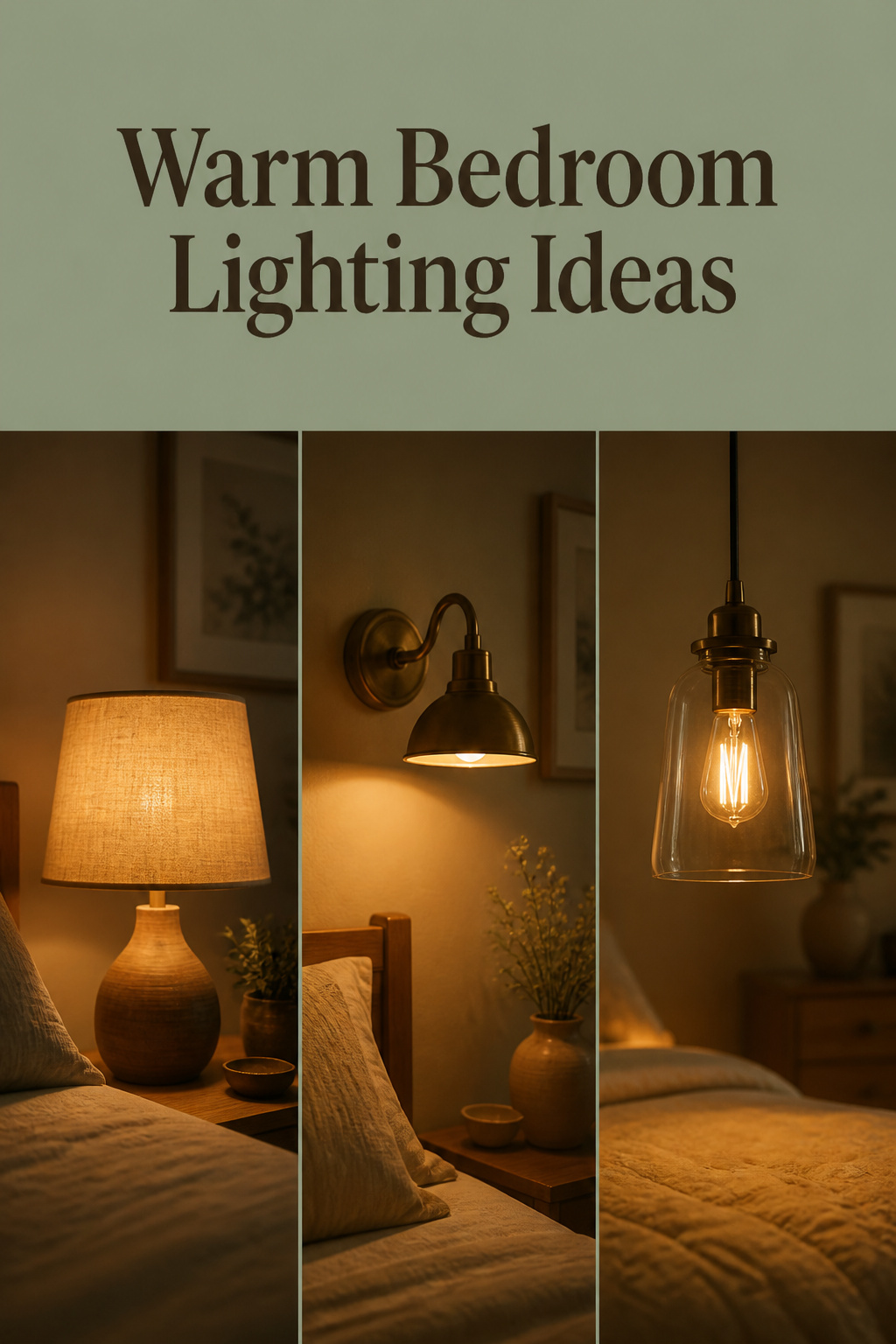
Picture the room at nine in the evening. A low lamp throws a pool of amber across the bed. The wool throw catches it, the wall behind glows rather than glares, and the corners stay soft and dim. Nothing hums, nothing is bright. The room feels like it is holding its breath for you. That is what warm bedroom lighting ideas deliver — and almost none of it comes from the light most bedrooms are built with: one bulb, dead centre in the ceiling. Flip that switch and the room goes flat. This is a plan to replace it, one layer at a time.
TL;DR
- Layer at least three warm sources instead of one overhead: a bedside lamp, a wall sconce, and a low accent glow.
- Choose 2700K bulbs for standard bedroom warmth and drop to dimmed 2200K for near-candlelight; keep bedside reading light around 450 lumens.
- Mount bedside sconces 35 to 43 inches from the floor, 12 to 18 inches above the mattress, and add a plug-in dimmer if rewiring is not an option.
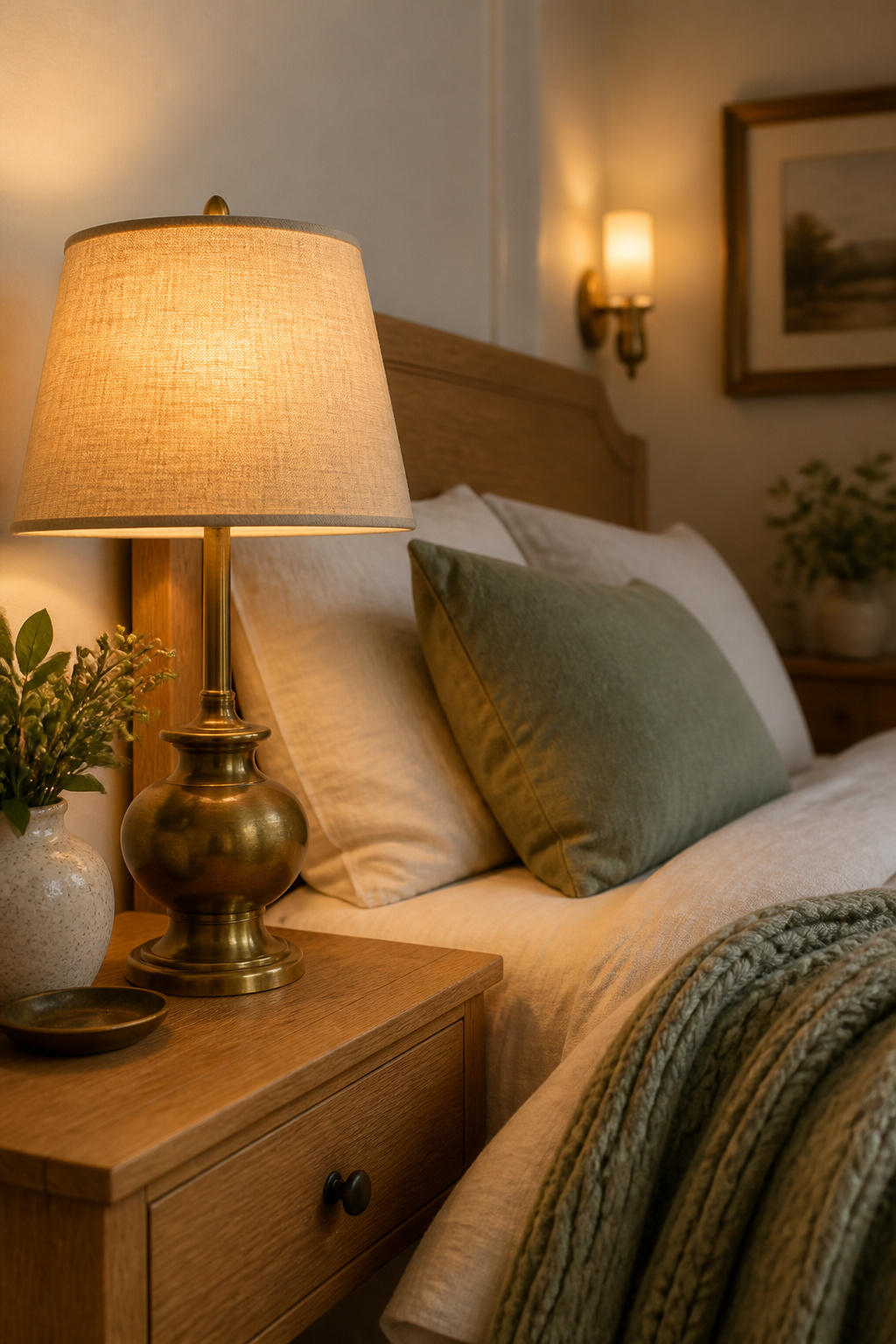
Why One Overhead Light Kills Coziness
One bulb, centred in the ceiling, is the factory setting of almost every bedroom — and the reason so many feel cold after dark.
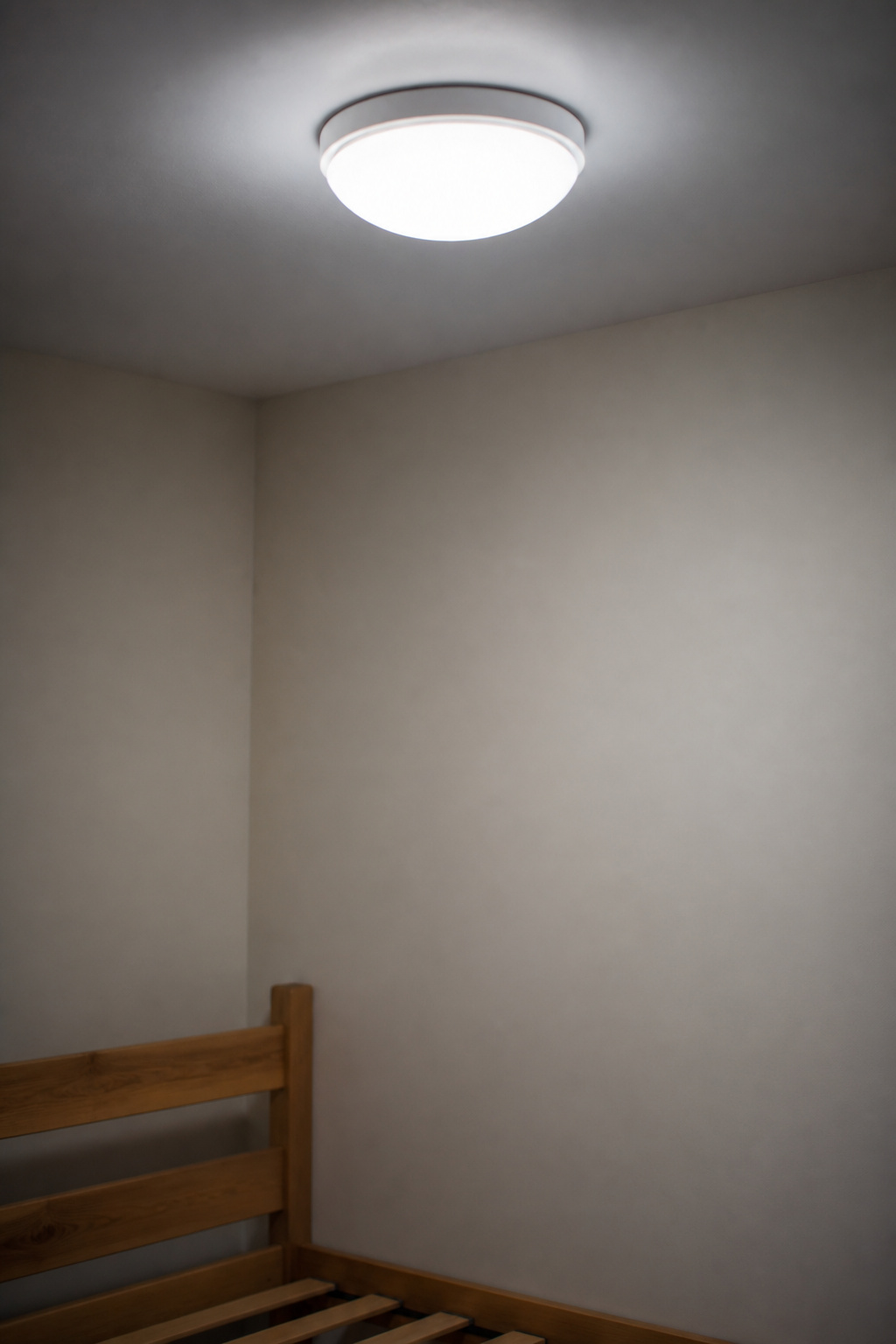
What flat, even light does to a room
Helen Pett of Arteriors puts it plainly: a single light source flattens the room, and harsh overhead light feels stark, especially in the evening. Flat light erases shadow, and shadow is what lets wood grain, linen and brass look warm rather than utilitarian.
The habit of only ever using the ceiling fixture
This is not a taste failure — it’s a supply problem. Most bedrooms are wired with exactly one fixture — the only light there is to switch on. A lamp, a sconce, a low glow in the corner — each is something you add on purpose. Designer Jamie Young sets the baseline at three light sources per room, minimum.
The layered-light alternative
Here is the Nordic logic in one line: light is the first material of any room, and in winter countries you learn that or you live badly. Interior designer Laura Hammett describes the method well — dimmable sconces set the ambient mood, and lamps add a second layer of warmth until the room feels enveloping. Three modest sources beat one bright one, every time. What follows is those layers, in order.
Bedside Lamps That Set the Mood
Sit up against your pillows and open a book. That is the light your bedside lamp is really for, and the layer you will reach for most.
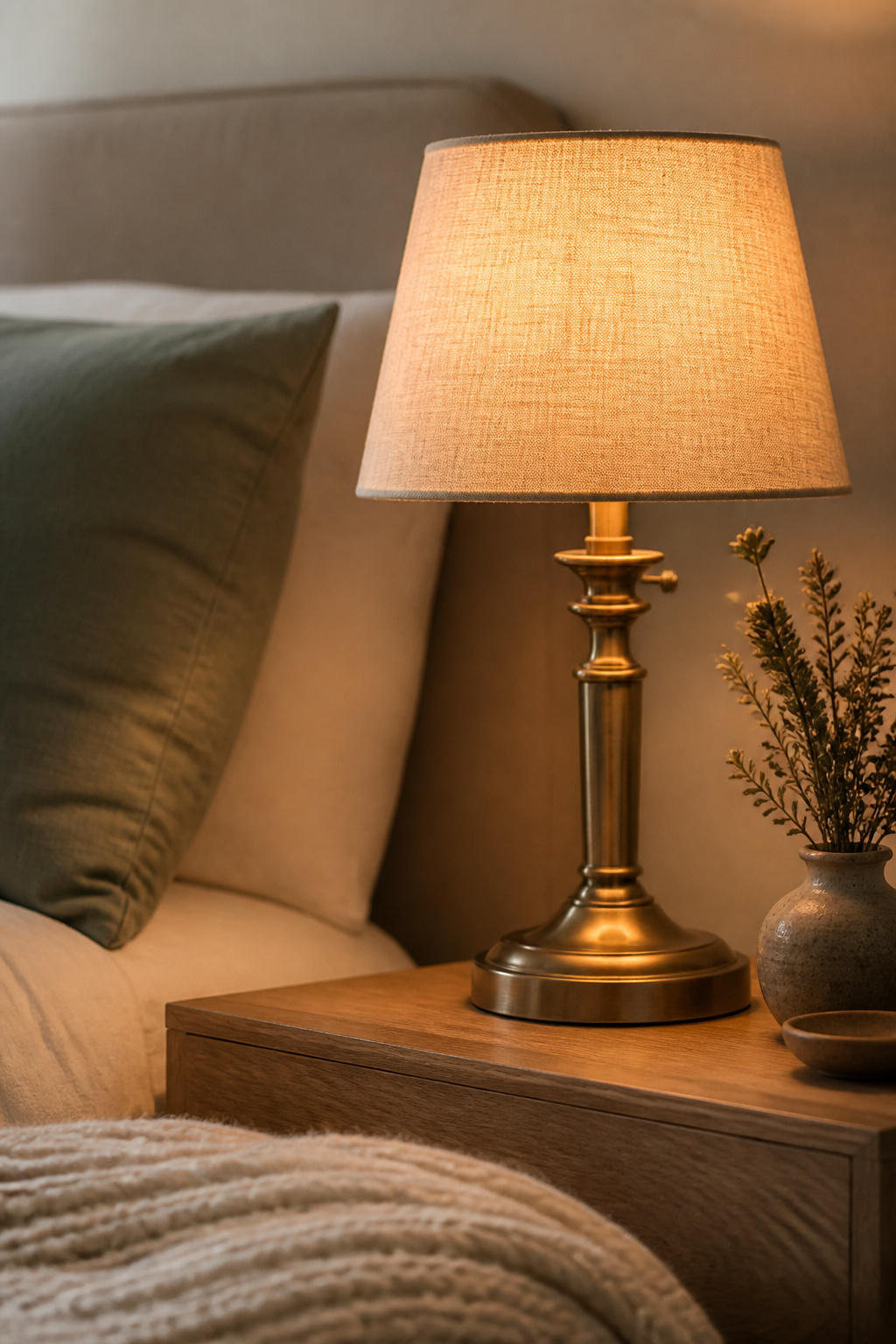
Shade material and how it colors the light
A shade does as much for the warmth of the light as the bulb behind it. A warm-toned fabric — cream, amber, tan — filters the cool blue out of an LED and drops a candle-like glow onto the bed. A white shade throws the most light and suits reading; a dark shade holds a tighter, moodier pool. For a bedroom built on warmth, I would choose a cream linen shade over a stark white one.
Height and placement relative to the pillow
Size the lamp to your eyes, not to the nightstand. The bottom of the shade should sit at, or just below, your eye level when you are propped against your usual pillows. In practice that means a lamp 24 to 30 inches tall on a nightstand near mattress height — too tall and the bulb glares, too short and it lights the table, not the page.
Matching lamps to how you actually read in bed
For comfortable reading in bed, aim for 300 to 600 lumens — and if you want one number, use 450, a 40-watt-equivalent LED. That is bright enough to read by and dim enough not to fight sleep onset. Push past 600 lumens and it works against the room’s purpose.
Sconces and Wall Light for Depth
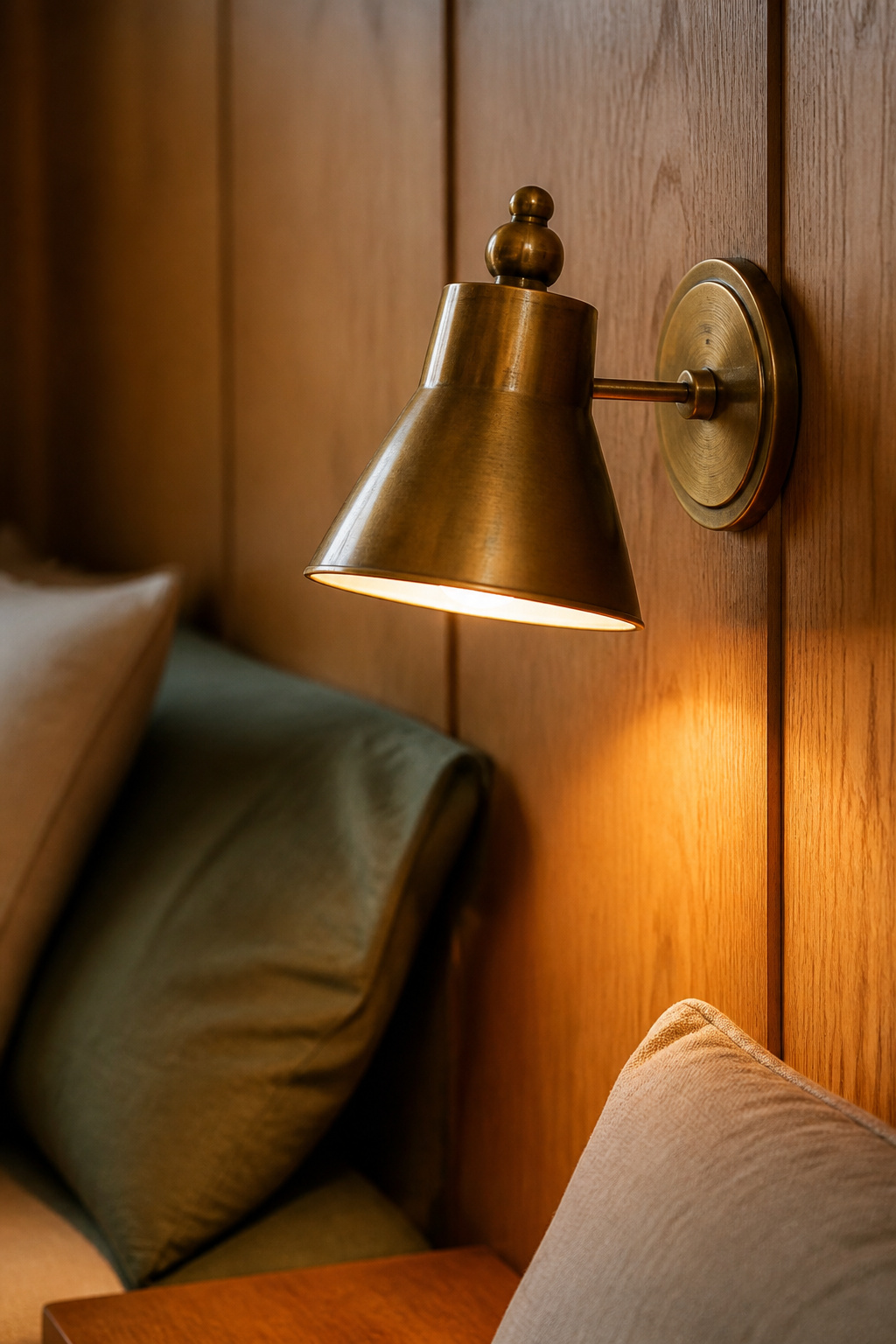
Why add a wall sconce when a lamp already lights the bed? Because a lamp sits on a flat surface — a sconce doesn’t.
Where a sconce does what a lamp can’t
Mounted on the wall, a sconce throws light up and sideways, and that spill builds shadow and depth a tabletop lamp can’t reach. There is a practical gain, too: designer Heather Mastrangeli recommends a switch at each bedside, so each sleeper controls their own light. One shared overhead switch forces a nightly compromise; two independent sconces end it.
Hardwired vs. plug-in options
You don’t need an electrician for one. Battery sconces mount with adhesive or a couple of nails and run on rechargeable bulbs — figure roughly a week of evening use, at around 200 lumens, before they need charging. Run several, though, and recharging becomes a weekly chore. If you’d rather not, a plug-in sconce is the alternative — cord and all. A hardwired fixture is tidiest — if you’re already opening the wall.
Positioning for shadow and depth, not flatness
Here is the number most people get wrong: mount a bedside sconce 35 to 43 inches off the floor, roughly 12 to 18 inches above the mattress. That is seated-reader height. The standing eye level used in hallways — 60 to 66 inches — leaves the light hovering awkwardly over anyone sitting up in bed. Set it 6 to 12 inches outside the nightstand, so the light falls past your shoulder onto the page.
Dimmers and Bulb Temperature, Explained
Two numbers decide whether your bedroom light feels warm: the Kelvin rating, and whether you can dim it.
Kelvin in one plain sentence
Kelvin measures the colour of a bulb’s light, not its brightness — that is lumens. Lower Kelvin numbers look warmer and more amber; higher numbers look cooler and more blue-white. Here is where the common ratings land:
| Kelvin | Looks like | Best for |
|---|---|---|
| ~1800K | A candle flame | The warmest reference point |
| 2200K | Dimmed, honey-gold | Near-candlelight accent glow |
| 2700K | Soft incandescent | The bedroom standard |
| 3000K | A crisper white | Kitchens, bathrooms, offices |
| 5000–6500K | Bright daylight | Not the bedroom |
If you buy one bulb for the room, make it 2700K.
Why 2700K beats 3000K in a bedroom
2700K is the professional standard because its warm, golden tone minimises blue-light exposure, supports melatonin, and shortens the time it takes to fall asleep compared with cooler 3000K-and-up bulbs. 3000K carries more blue and belongs in rooms with real visual tasks. For the coziest possible glow, drop to 2200K extra-warm bulbs and dim them — the closest an LED gets to true candlelight, which sits near 1800K.
Adding a dimmer without rewiring
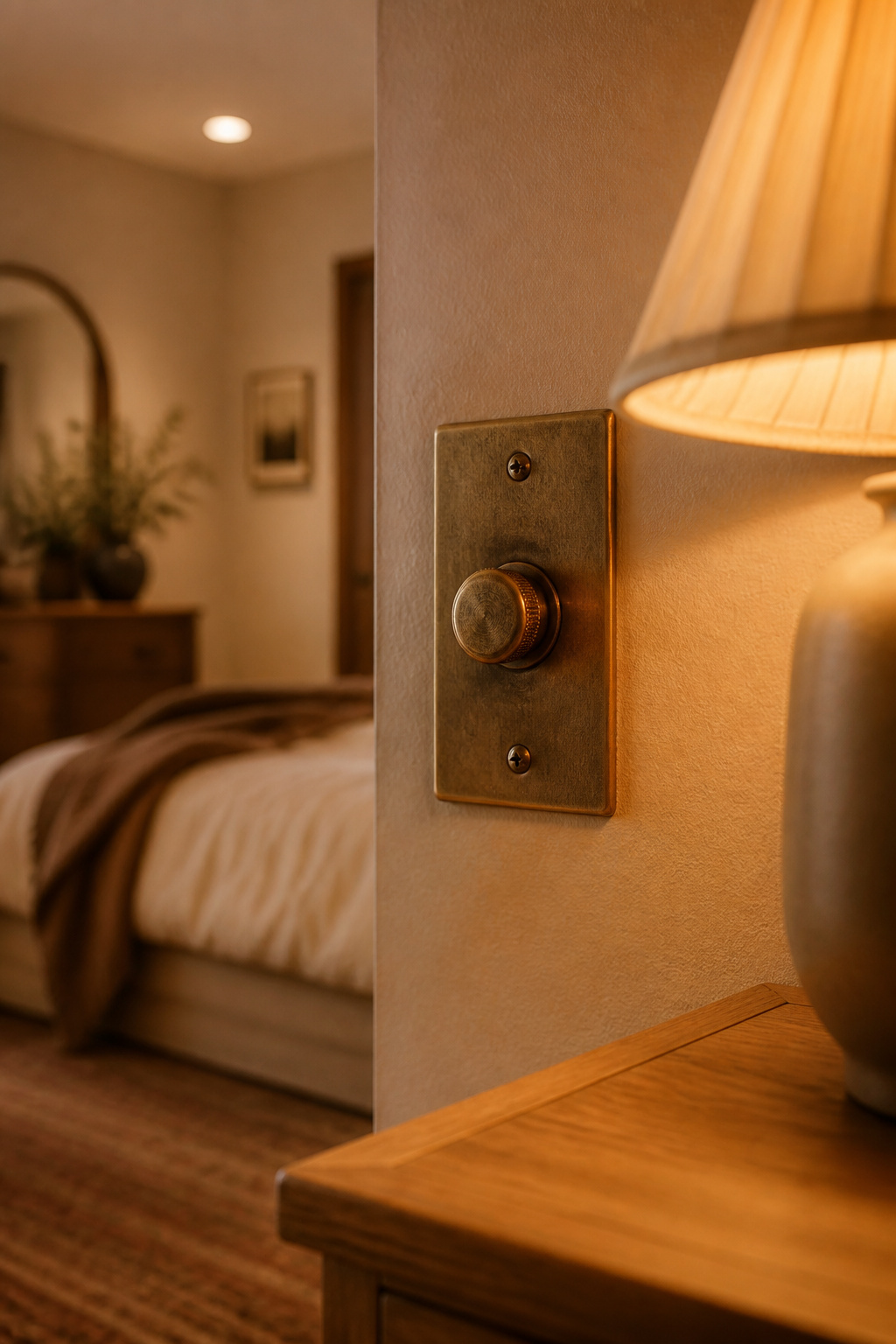
A dimmer lets the light change through the evening instead of holding one fixed level, so the room can soften at dusk rather than snap between bright and off. LEDs need a trailing-edge dimmer; the older leading-edge type causes flicker and buzz on low-wattage LED loads. Renters have an easy out: a plug-in lamp dimmer, like Lutron’s Caseta, sits between outlet and lamp cord, no wiring needed.
Accent Glow: Candles, String Lights and Small Touches
This is the layer most people reach for first and place worst: a string of lights tacked up too bright, candles scattered across every surface.
Where a small accent light belongs
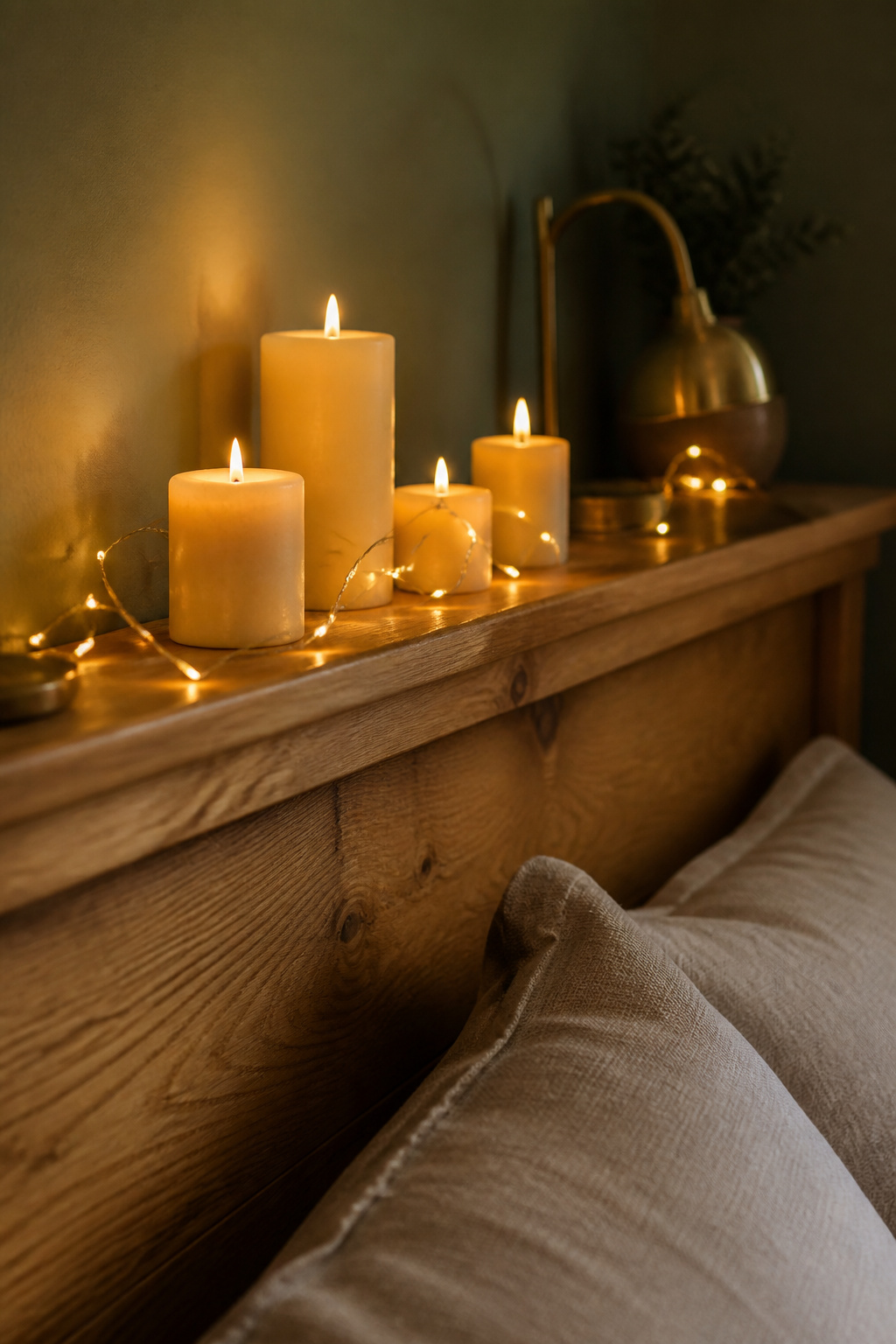
Accent light is a finishing layer, not a functional one. Its job is to catch one detail without competing with the lamp and the sconce. Designer Vy Truong makes the case for hidden LED strips behind a headboard, in place of brighter fixtures — and a warm, concealed strip there supports melatonin better than any exposed bright bar.
Battery and plug-in options for renters
Warm-white LED strips and string lights are the renter’s easiest win — no wiring, no wall damage if hung from existing hooks or furniture. Two things matter here. Strips labelled at the same Kelvin can vary by about 200K between makers, so “warm” sometimes arrives cooler than promised. A dense strip — 60-plus LEDs per metre — behind an aluminium diffusion channel gives one clean line of light instead of visible dots.
Keeping accents from looking cluttered
Two rules keep this layer honest. First, conceal the source — behind the headboard, under a shelf lip, behind a piece of furniture — so you see the glow, not the fixture. Second, keep the accent dimmer than the lamp and sconce — once it’s the brightest thing in the room, it stops being an accent. Group your candles on one surface, too — scattered across three, they just read like clutter.
Warm Bedroom Lighting Ideas for Evening and Morning
By dusk you have three or four switches instead of one — the order you touch them in is most of the trick.
A simple evening lighting sequence
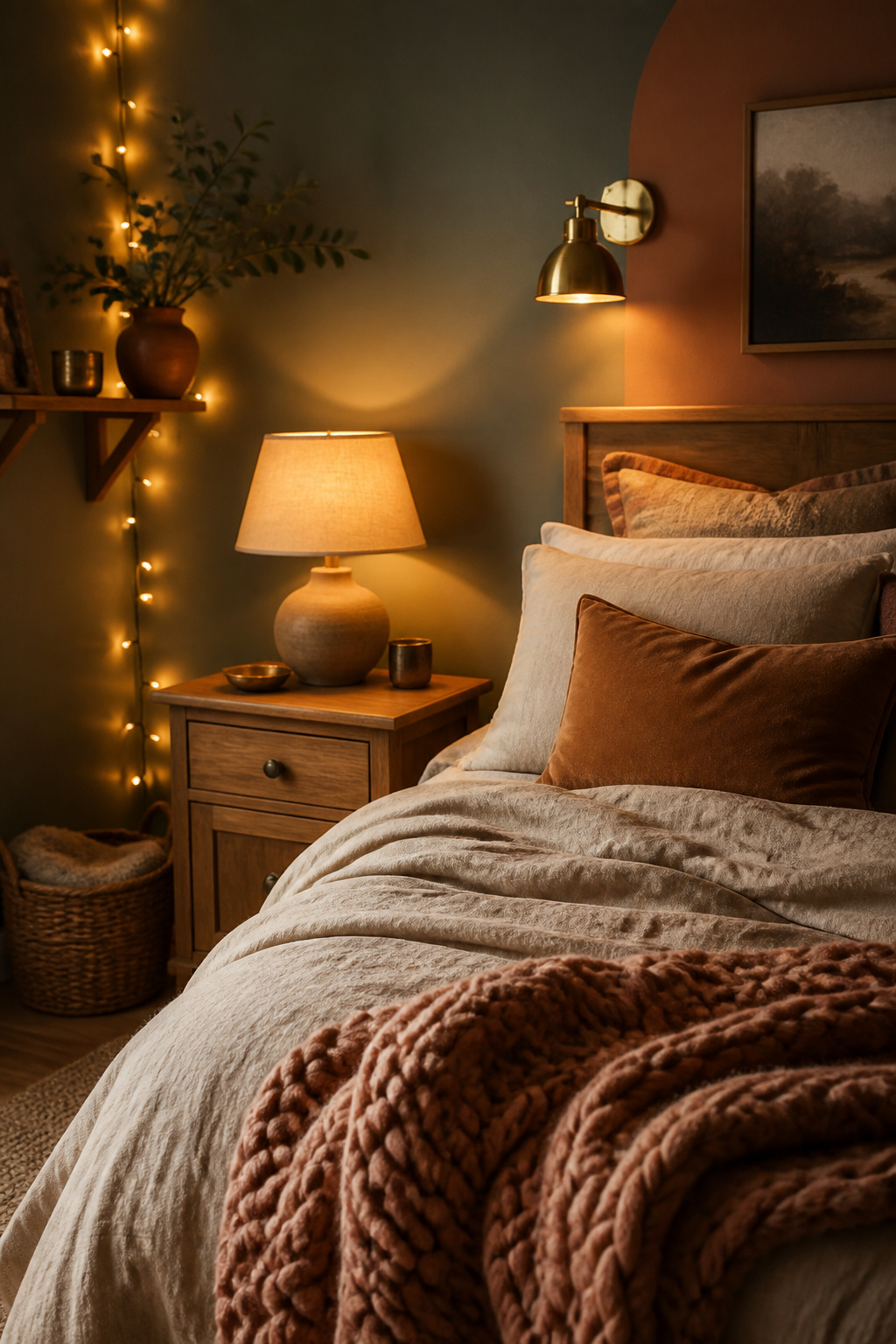
Helen Pett’s guidance: a sequence, not a single flick — ambient first, then warmth on top.
- Turn the overhead off at dusk.
- Bring up the bedside lamp and sconce for moving around and reading.
- Add candles or string lights last, as you wind down.
Spread the total light across those sources — roughly 10 to 20 lumens per square foot, 1,000 to 3,000 total in a typical bedroom — rather than one fixture. That warm, dimmable light is also the foundation of calming bedroom ideas.
Waking up without the overhead
Mornings are the harder half. This far north, months pass with no daylight to wake to, and I’ve fallen into testing a bedroom in that same blackness, camera in hand — if the light works at the worst hour of a February morning, it works at every other. A sunrise alarm clock raises light gradually over 20 to 90 minutes to imitate dawn. The evidence is real but partial: a controlled trial found a 90-minute dawn simulation eased seasonal low mood, but for plain morning grogginess results are mixed — treat it as a plausible help, not a cure.
Where warm light matters most for rest
The last hour before sleep pays off. Keep the room under about 10 lux in the three hours before bed and near-dark once you’re down; even small amounts of light there suppress melatonin. End the evening on a dimmed accent or a candle, never a lamp at full brightness. It’s also why a reading corner deserves its own pool of warm task light — a bedroom reading nook lives or dies by the lamp beside the chair.
Go back to that room at nine in the evening: the amber pool, the soft wall, the dim corners. None of it came from the ceiling — it came from three or four warm sources you placed on purpose. Start with one 2700K bedside lamp tonight, leave the overhead off, and feel the room settle. Every layer after that deepens what the first lamp begins, and the whole picture sits inside our complete guide to a cozy bedroom.
FAQ
What color temperature bulb is best for a bedroom?
A 2700K soft-white LED is the best colour temperature for a bedroom. Its warm, golden tone minimises blue light and supports melatonin, so it helps sleep rather than fighting it. 3000K is acceptable in a pinch, but skip anything 3500K or cooler; 5000K-plus daylight bulbs feel harsh and energising.
Can you use LED strip lights in a cozy bedroom?
Yes, as long as you keep them warm, dim, and hidden. Warm-white strips concealed behind a headboard cast a soft glow that supports melatonin better than an exposed bright bar. Choose a dense strip, 60-plus LEDs per metre, with a diffusion channel for one clean line instead of visible dots.
How many lumens do you actually need in a bedroom?
For general bedroom lighting, aim for roughly 10 to 20 lumens per square foot — about 1,000 to 3,000 lumens in a typical room. Split that across a lamp, a sconce, and an accent rather than one overhead. For bedside reading, 300 to 600 lumens, around 450, is the sweet spot.