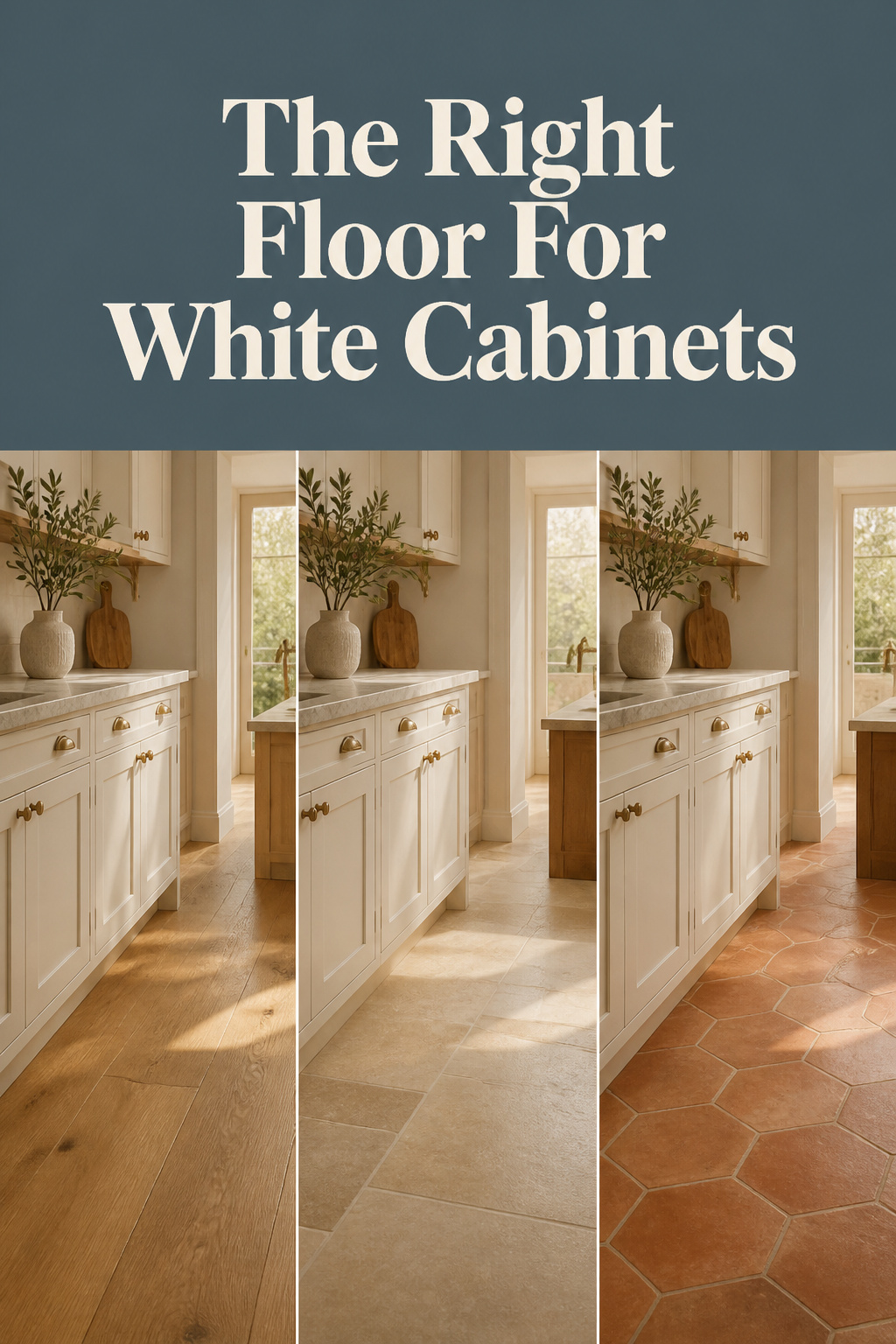
Ask what flooring for white kitchen cabinets works and the answer comes back as everything. That is how a person ends up in a showroom holding forty samples with no way to eliminate thirty-nine. A standard does the eliminating, and it is not colour. Undertone first, contrast second, both read from the cabinet outward.
TL;DR
- White cabinetry runs from cream and ivory to hints of grey and blue. Hold a door against printer paper: the hue that appears decides the floor’s undertone family.
- The commonest mismatch is a warm white cabinet over a cool grey plank, a floor Aris Lazdans of Karndean now calls a trend rather than a considered choice.
- Mid-tone is the default, forgiving undertone error both ways. Break from it for a genuinely cool cabinet, or a small north-facing kitchen.
The Cabinet Is the Fixed Variable
The cabinets are already there. The floor is the part still open, so the method runs one way.
Why “White Goes With Everything” Isn’t True
White cabinetry covers a real range, from cream and ivory to cooler tones hinting at grey or blue. The floor answers that undertone, not the category. Dustin Gerken sets the trap in both directions: a printer-paper white looks too sterile over a yellowish limestone floor.
One default deserves retiring. Cool grey engineered wood carried the last decade, and Aris Lazdans now calls it a trend rather than a considered choice, not a decision built to last. A kitchen should be plannable for ten years; grey no longer clears that bar. For the materials themselves — tile, wood, stone, clay — Tess Carver’s guide to choosing a kitchen floor is the place to start; this page only answers what goes with the cabinets already chosen.
Reading Your Cabinet’s Undertone First
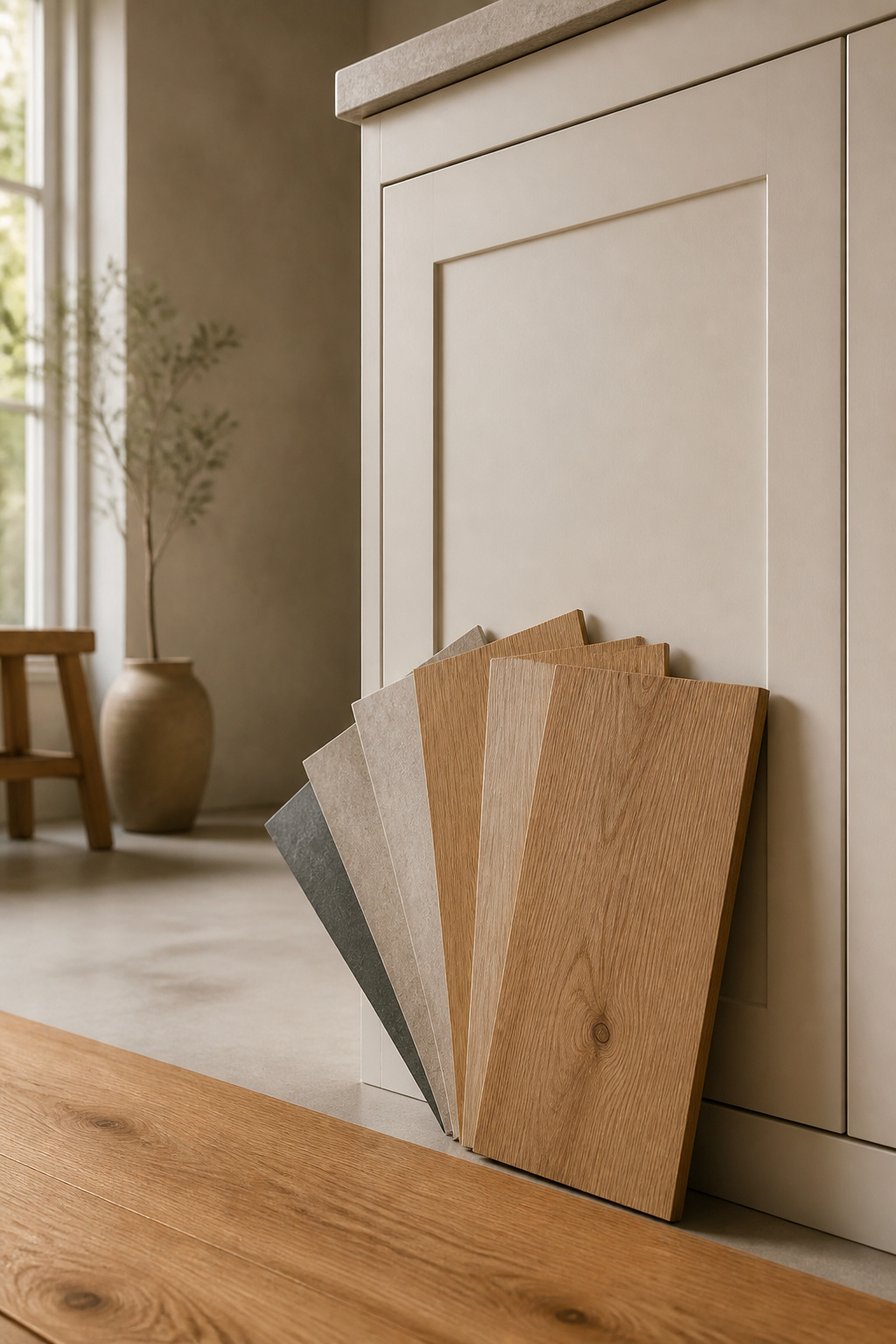
Undertone is a comparison, not an instinct. Hold the door against white printer paper and the lean appears: peach, grey, yellow or blue. Names mislead — Benjamin Moore White Dove, LRV 83.16, and Sherwin-Williams Alabaster both carry creamy yellow undertones despite names that promise nothing of the kind. Those figures exist because paint gets measured; floors are not, so everything below stays qualitative. Repeat the test in the room, as Gerken does — showroom light lies.
Every February I photograph the rooms I am working in at 7am, before anything generous happens outside. The camera flattens the scene, and the flattery goes with it. A cabinet holding its undertone in that flat, early light holds it once the room has generous daylight to hide behind.
Undertone: The Single Most Common Mismatch
Three families cover almost every white cabinet, each with a tell you can see in a minute.
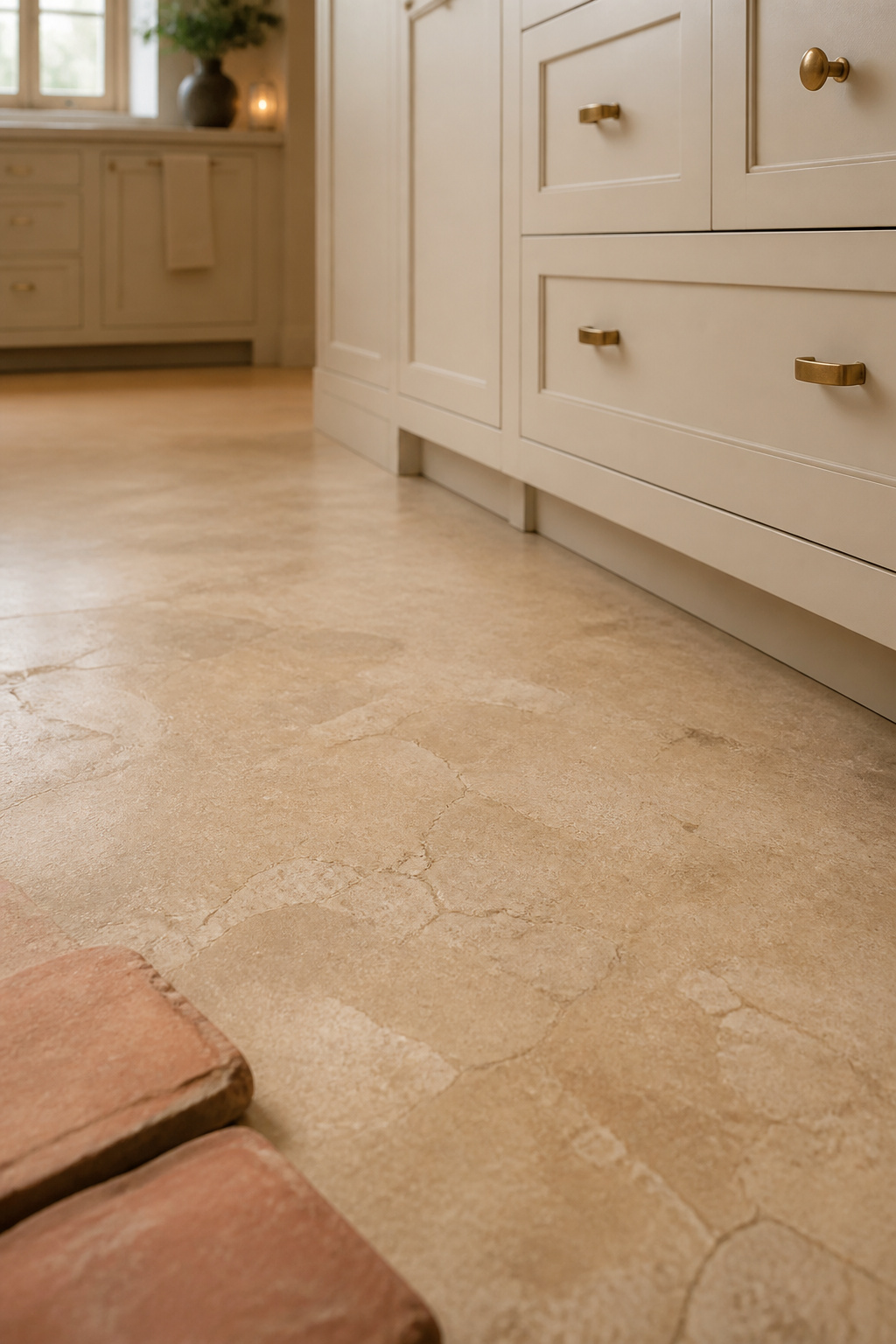
Warm White Cabinets
Against a true white card, a warm white shows visibly cream, ivory or antique.
- Mid-toned wood floors, matched for warmth rather than just lightness.
- Warm-undertone stone and tile: honed dijon limestone, honey clay.
- Not the cool grey plank. This is the one pairing I would undo in any kitchen I walked into.
Contrast amplifies an undertone. It never neutralises one.
Cool White Cabinets
Against the same card, a cool white shows faintly blue, grey or green, no cream.
- A cleaner, cooler-toned stone rather than a warm honey floor.
- Gerken’s reverse warning: a grey marble with a cooler cast quickly makes an ivory white look dated and yellow.
Here, and only here, cooler is the considered choice.
Greige and In-Between Cabinets
Greige sits between the camps, and is hardest to place.
- Ignore the name: Benjamin Moore Edgecomb Gray and Sherwin-Williams Accessible Beige are both warm greiges.
- Check the lean under daylight, then under evening light. A marginal greige moves.
- North-facing rooms want warm undertones, and reflectance targets five to ten points higher.
Whichever channel dominates against the card wins.
Contrast: Should the Floor Ground the Room or Disappear?
Two camps of designers give opposite instructions here, and I trust both of them enough not to pick a winner for you.
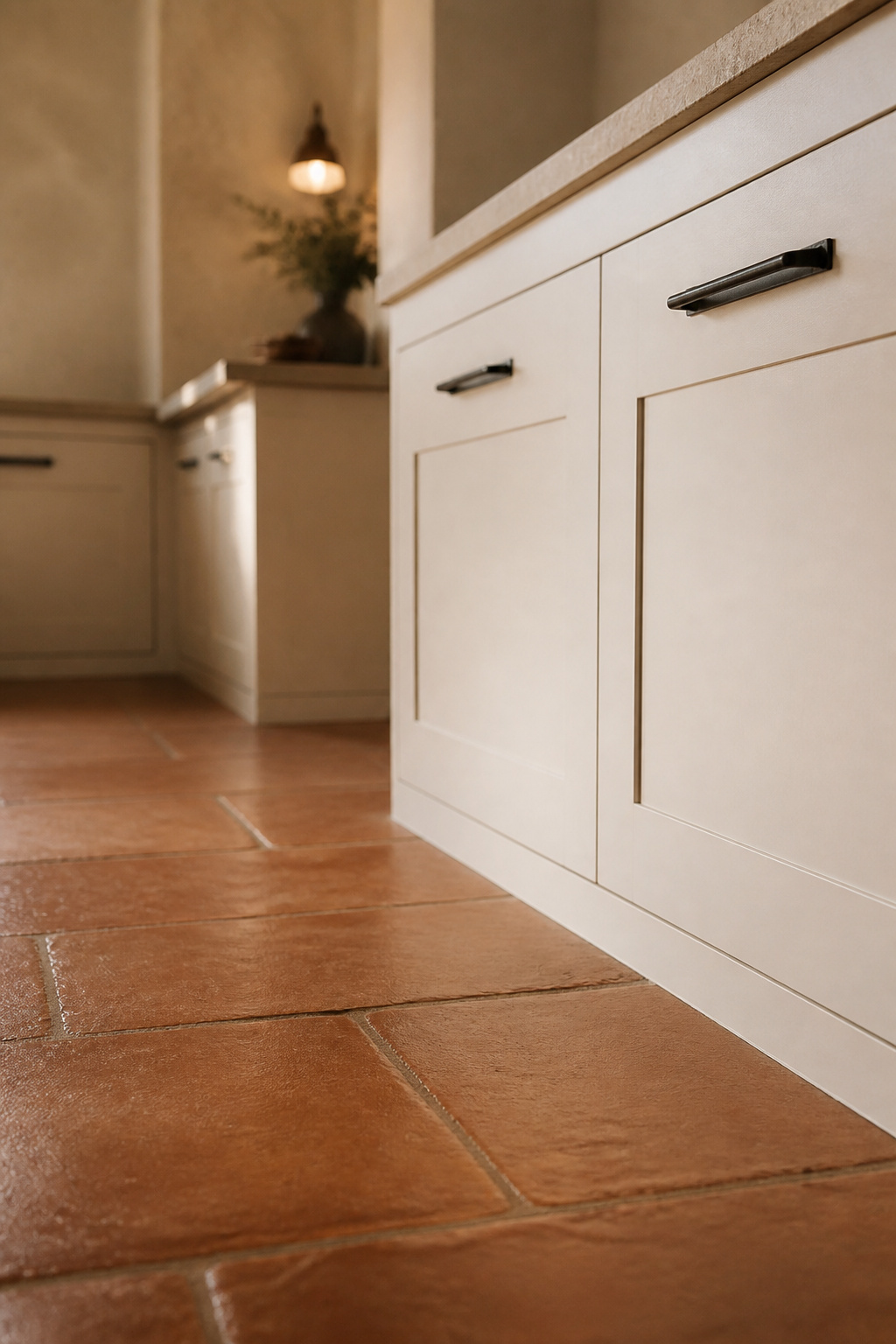
High-Contrast Grounding
Chris Dance pairs darker cabinets with a lighter floor, to break up the space and stop a kitchen feeling enclosed. Reversed for a white kitchen, a deeper floor keeps an all-white run from floating: grounding contrast that makes the cabinets stand out. Here the deep end is terracotta, never black.
Low-Contrast Disappearing Floors
Shalini Misra names the goal plainly on the other side: if you want the cabinets to take centre stage, go lighter underfoot. I would add the condition she leaves unstated — this works best where the room has the daylight to spare, since a pale floor with nothing bouncing off it just goes flat. Light means pale honey oak here, not white.
The Case for Mid-Tone
A third position sits between the two, and it is the one I return to most often: a floor darker than mid-tone can make a large kitchen feel intimate, but only where the room already has size and daylight to spend. Take that same choice into a north-facing kitchen and it reads smaller and colder instead of larger — the room, not the cabinet colour, decides which effect you get. Nothing in the physics requires a darker floor at all; a white cabinet does not need contrast to look finished.
The disagreement stays, because each camp describes rooms rather than rules. Two questions tell you which is yours. Has this kitchen the size and daylight to carry a deep floor, or would one only make it colder? And should the cabinetry lead, or the floor? In my own work I default to the floor receding more often than not — but I would not tell a reader with a bright, generous kitchen that grounding it is a mistake.
The Mid-Tone Floor: A Default Recommendation
Why Mid-Tone Forgives Both Directions
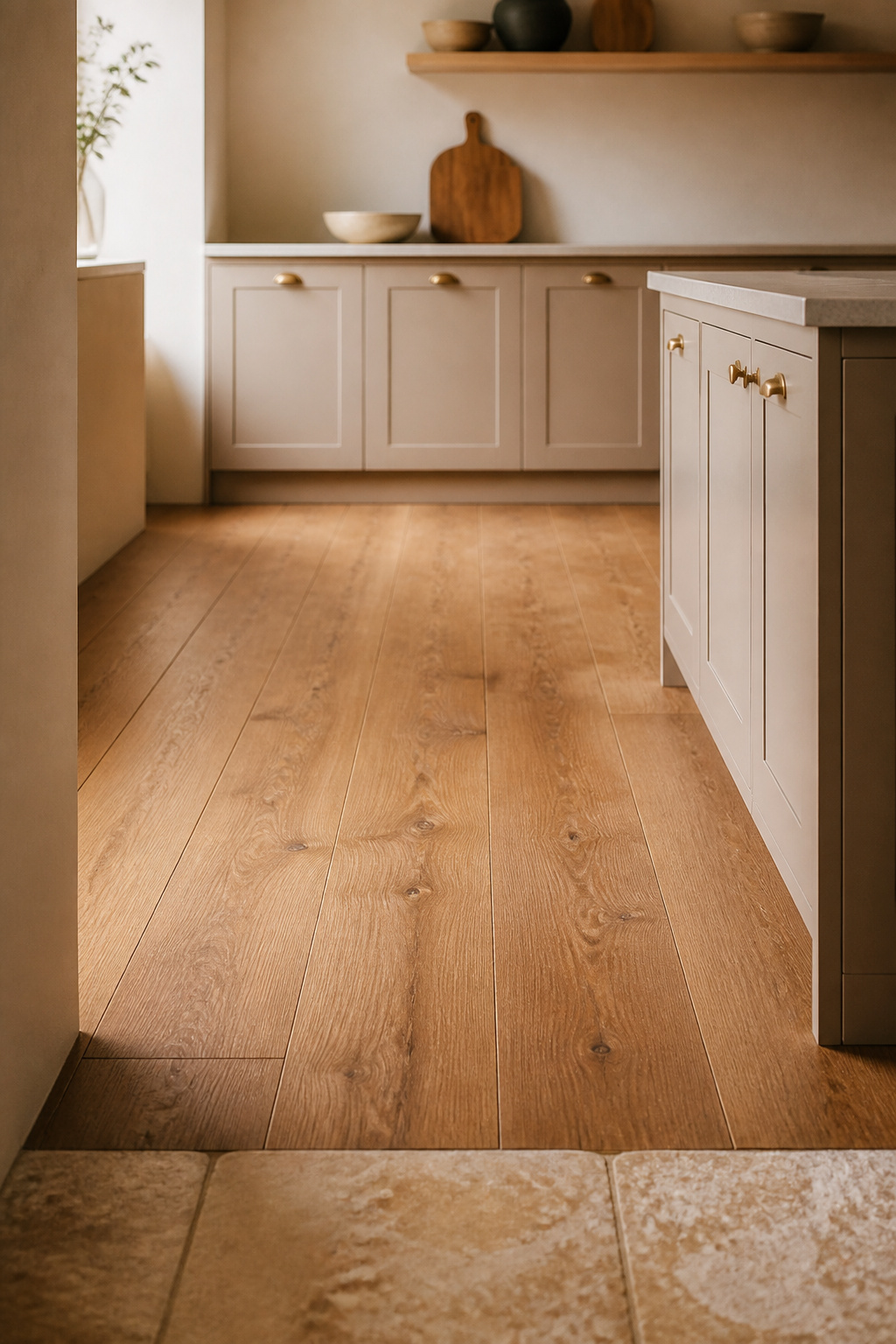
A mid-tone floor sits in the middle of the spectrum, taking both ends’ advantages without the extreme drawbacks. That middle position is the whole undertone argument: mid-tone stays acceptable against a slightly warm white and a slightly cool one, where an extreme floor magnifies whatever clash exists. Two to three shades either side of the cabinet is the working range; past that, the forgiveness runs out and the mismatch you were avoiding shows up anyway.
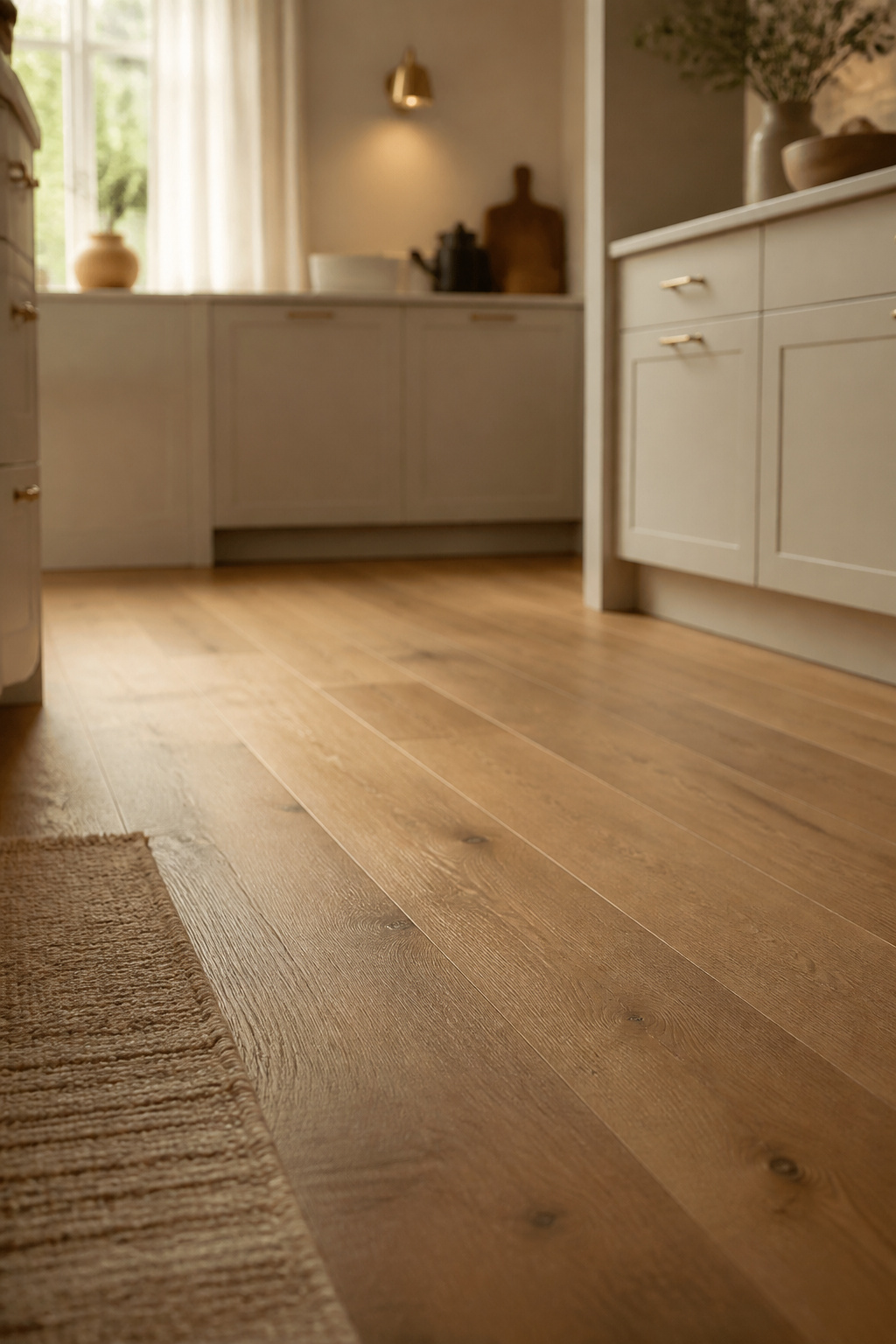
When to Break From It
Three situations override it. A genuinely cool, blue-grey cabinet is the clearest, because a warm mid-tone oak recreates the clash mid-tone was meant to avoid. A small, dim, north-facing kitchen is the second — there, the extra bounced light off a pale floor outranks the colour default. The third is wanting the grounded room instead of the safe one — in a warm palette, clay. Rachel Blackwood covers the warmest floor you can put under white cabinets.
Extending the Logic to Oak Cabinets
What changes when the cabinets are oak? The input, not the method.
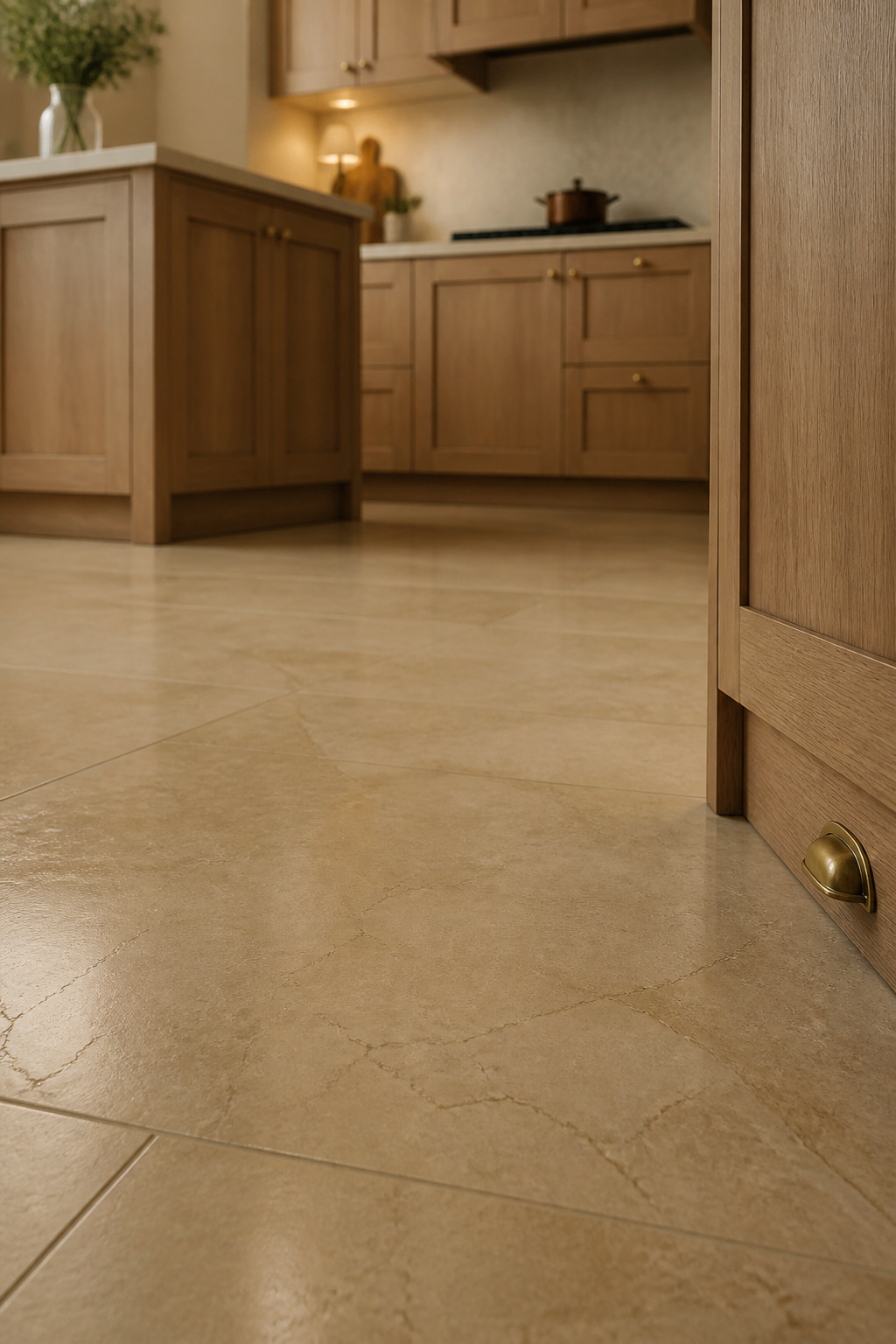
Light Rift Oak Cabinets
Modern white oak carries a golden, warm hue by nature, with undertones from pale brown to richer chocolate. So “white oak cabinets” is no more a single undertone than “white cabinets” is — the same test against a white card applies. It suits airy, light-filled rooms, and the floor that keeps that airiness is cream, light tones, or white oak flooring itself, following the same warm-pairs-warm logic as any warm white cabinet.
Honey and Mid-Tone Oak Cabinets
The orange in 1990s honey oak is neither imaginary nor mysterious. It comes from red oak’s natural pink-red tone showing through the strong yellow undertone of the polyurethane finishes that generation used — red plus yellow gives orange, plain colour theory rather than a design mystery.
The same rule that governs every pairing in this article governs this one: contrast amplifies an undertone rather than correcting it. A cool grey floor with a blue undertone makes that orange read more orange by contrast, exactly as it would over a warm white cabinet. Warm greige works the other way, absorbing the clash rather than sharpening it. A reddish floor tone is the boldest answer — red sits more quietly against orange-leaning wood than blue or black ever will, and it is the pairing I reach for first when the cabinets are staying and only the floor is changing.
One rule holds regardless of which route you take: do not match the cabinet exactly. A floor lighter or darker than the wood reads as updated; a floor matched to it reads as unfinished, like the kitchen stalled in 1994. And there is a ceiling worth naming: staining an orange-cast cabinet lighter will not give it a true white-oak character, only a paler version of the same orange problem. Rachel Blackwood’s choosing a wood tone for the kitchen takes tone from the room’s side, if the floor itself is what you are deciding.
Dark-Stained Oak Cabinets
One route out of orange oak is to go dark instead of light — a true medium brown, walnut or ebony stain resets the cabinet entirely. A dark-stained cabinet then behaves like the cool white case earlier in this article: it wants deliberate contrast, since a mid-tone floor against dark stain turns muddy rather than forgiving. The other route is paint, which resets the cabinet back to the white-cabinet logic this whole article starts from.
Choosing Your Pairing: Flooring for White Kitchen Cabinets
The method again, in order.
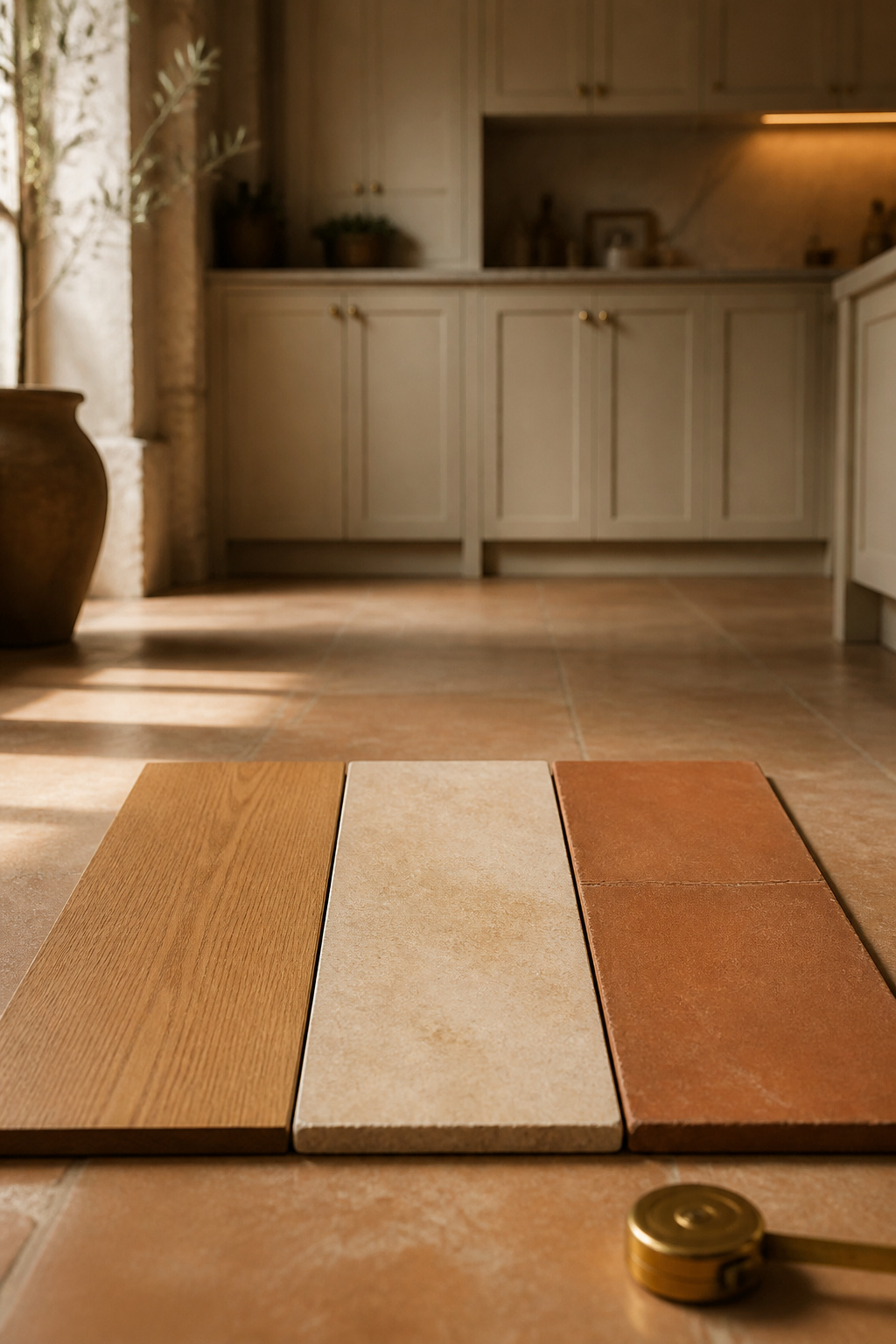
For Warm White Cabinets
- Cream, ivory or antique against a true white card: warm.
- Mid-toned wood, or a warm stone such as dijon limestone. Never cool grey.
- Stay mid-tone unless the room is small and dim, or grounding is the goal.
For Cool White Cabinets
- Faintly blue, grey or green against the card: cool.
- A cleaner, cooler-toned stone, not a warm honey floor.
- Confirm the read in the kitchen’s own daylight first.
For Oak Cabinets
- Light or rift white oak: cream, light tones, or white oak flooring.
- Honey oak: warm greige, reddish, or a deliberate two-to-three shade contrast. Not cool grey.
- Dark-stained oak: contrast on purpose, or paint for a reset.
Undertone first, contrast second, and the cabinet decides both. That is why “white goes with everything” fails a reader: it skips the only step that eliminates anything. Bring the sample home, lay it beside the cabinet run, and look at it early on a grey morning. A pairing surviving that light holds all year.
FAQ
What color grout goes best with white kitchen cabinets?
White grout gives the most seamless result: the lighter the grout, the more tonal a floor appears, which visually enlarges the room. Soft grey is the practical alternative, since pure white grout yellows and shows dirt over time. For the warm pairing recommended here, beige or tan keeps the palette consistent.
Should a kitchen floor be lighter or darker than the cabinets?
There is no universal rule. A darker floor is not necessary — the safer guidance is staying within two to three shades of the cabinet, in either direction. Designers split by goal: Shalini Misra favours a lighter floor so cabinets lead; Chris Dance leans on contrast so an all-white kitchen doesn’t feel enclosed.
Can an open-concept kitchen use one floor tone with different cabinet colors in each zone?
Yes, and a mid-tone floor is the safest way to do it. Because mid-tone commits to neither the warm nor the cool extreme, it stays acceptable against several cabinet colours at once. A very light or dark floor grounds one zone, then clashes with the next.