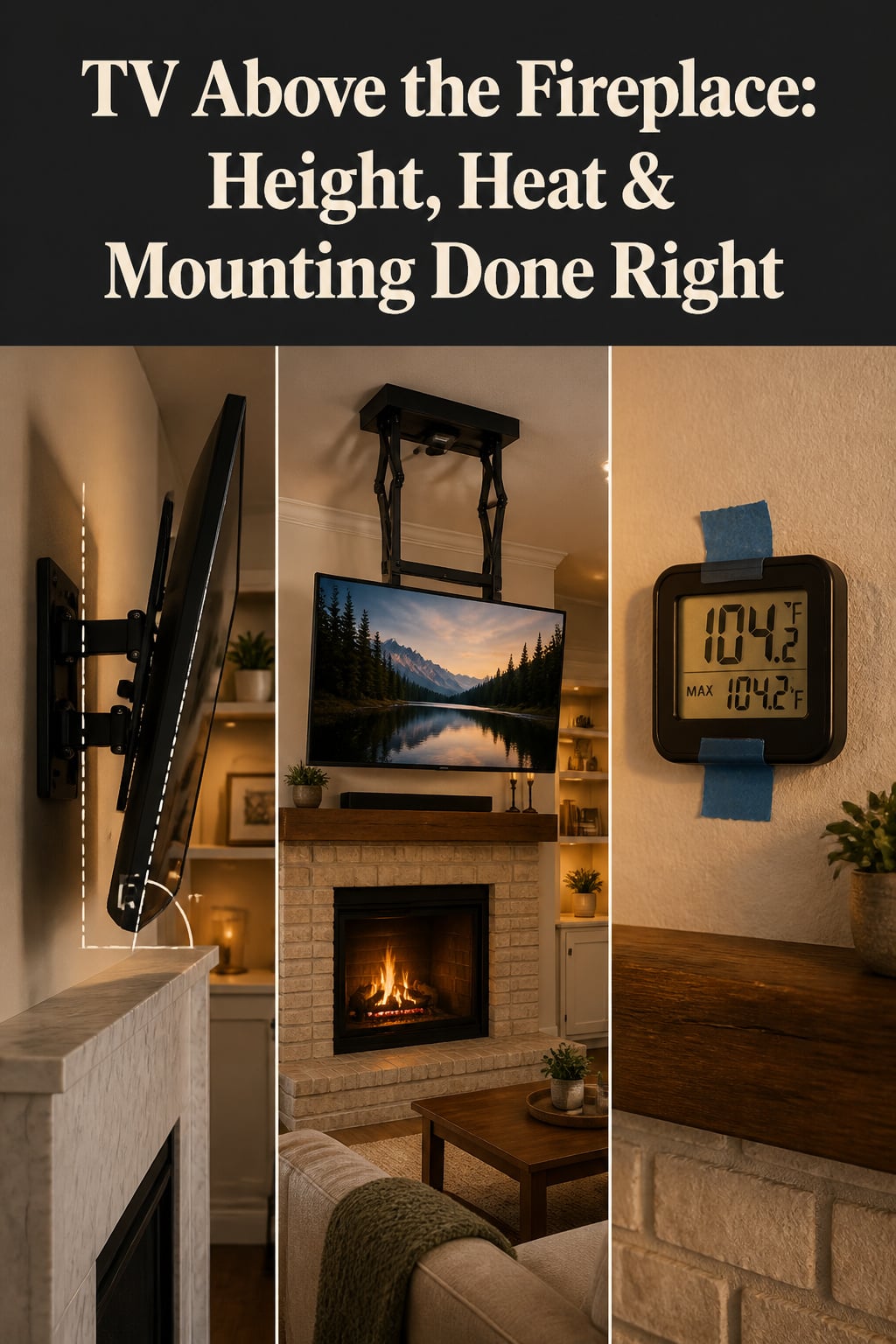
You sink into the sofa, find something to watch, and twenty minutes in your neck has started to ache. That is the above-fireplace TV experience for most people, and it is why half the internet tells you never to do it. The advice isn’t wrong so much as lazy: it bundles two separate problems — how high the screen sits and how hot the wall gets — into one blanket “don’t.” Pull them apart and most of the best TV above fireplace ideas come down to solving each on its own terms.
TL;DR
- Aim the screen center at 42–48 inches from the floor; standard mantels push it to roughly 66–80+ inches, so a tilting mount (10–15°) or a pull-down mount (27–29 in of travel) is almost always required.
- Run the heat test before drilling: tape a thermometer at the planned screen center, run the fireplace two hours, and walk away if it passes 100°F — most TVs are rated to 104°F max.
- A pull-down mount (MantelMount MM340–MM815, roughly $299.95–$999.95 at retail) is the only hardware that fully solves the height problem; skip the whole idea when the mantel sits above 50–52 inches and the ceiling can’t stow the TV.
The Conventional Wisdom Is Half Right — and Which Half Matters
“Never put a TV above a fireplace” has hardened into a rule repeated by Bob Vila and a hundred imitators. The concern is real — heat and electronics don’t mix, and a high screen wrecks your neck. But the rule fails because it treats one wall as one problem.
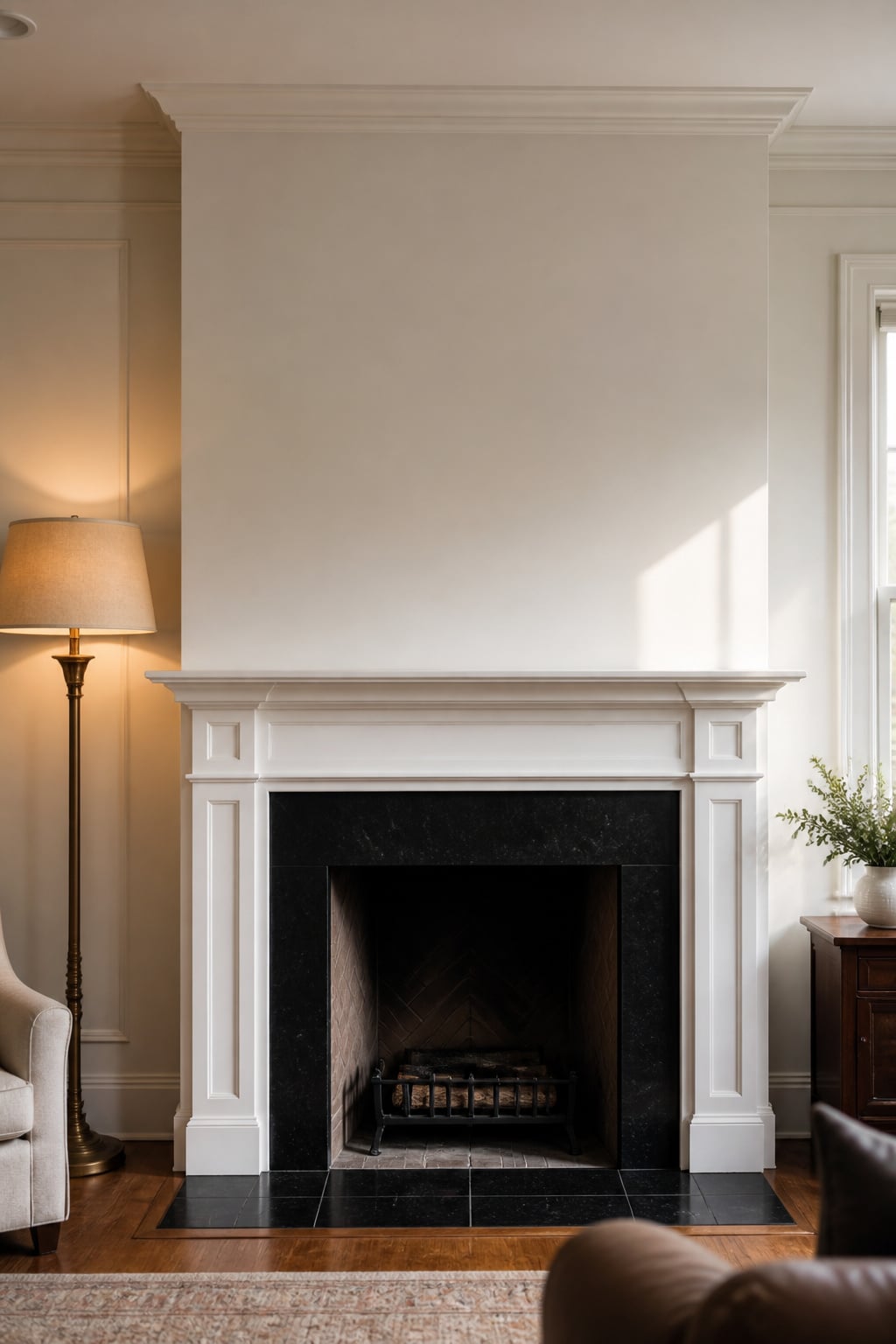
The myth: ‘never put a TV above a fireplace’
Home builders routinely rough in electrical and cable outlets above the mantel specifically for a TV — a recognised design outcome, not a fringe mistake. The debate is loud across Bob Vila, HGTV, and the AV forums because the honest answer is “it depends,” and nobody wants that headline.
Height and heat are two separate problems with separate solutions
Height is a sightline-and-ergonomics question. Heat is a hardware-longevity question. Fix the first with geometry; fix the second with a thermometer.
What this article covers — and what it doesn’t
Height math, heat assessment, mounts, cable routing, and when to walk away. What goes on the mantel — styling, surround, décor — is a different article.
The Neck-Strain Problem: Height Math and When the Numbers Work
The professional standard puts the screen center at 42–48 inches from the floor — roughly eye level on a sofa. The trouble above a fireplace is that the mantel decides the height, and it almost never agrees with that number.
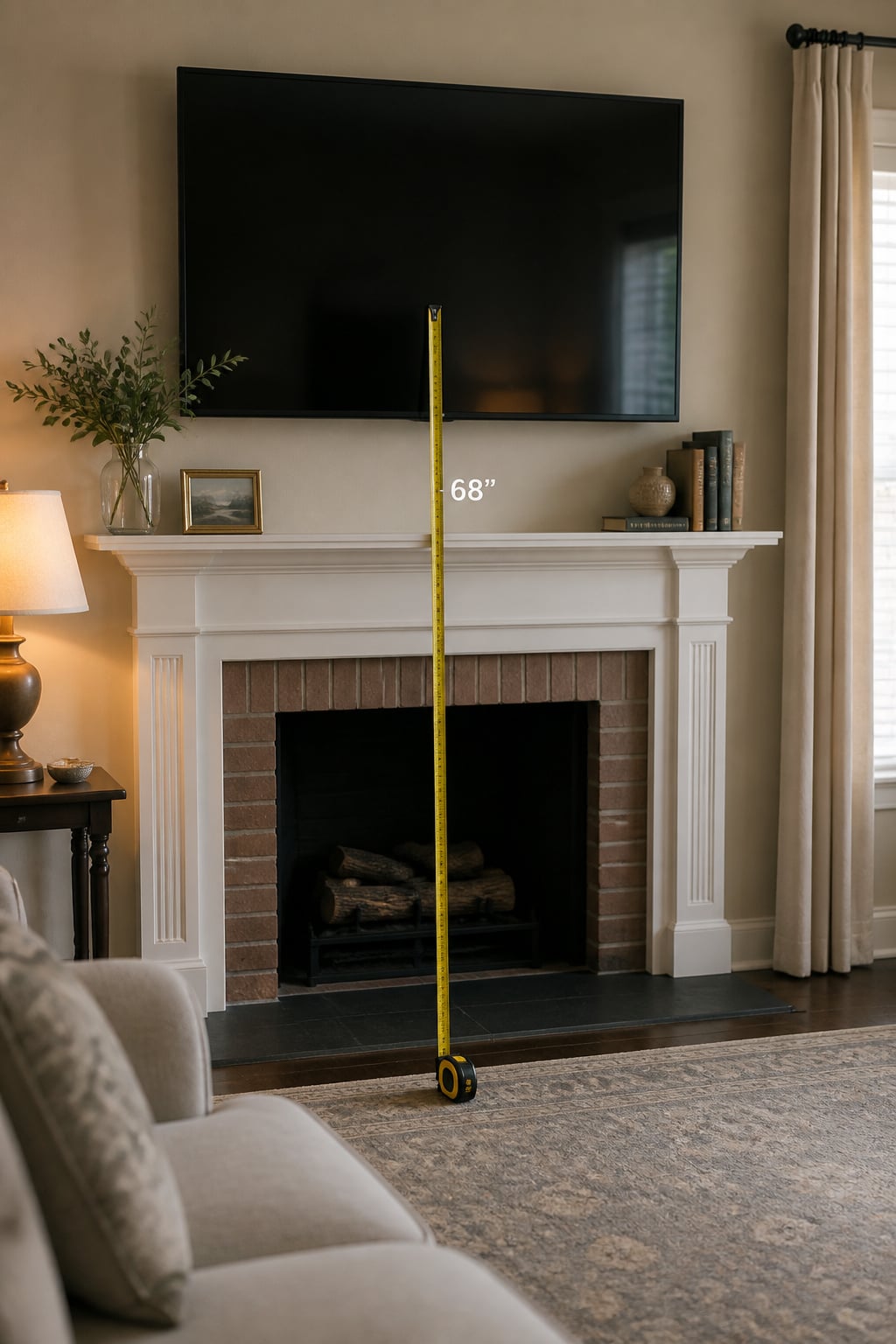
Ideal screen-center height: 42–48 inches when seated
Sit where you actually watch — slouched, the way you actually slouch — and measure floor-to-eye. For most sofas that lands around 40–42 inches: your screen-center target. The ceiling on comfort is 15 degrees upward viewing angle. At 10 feet, that translates to only about 10 inches of screen-center height above your eye level before strain sets in.
The mantel gap and where the screen center lands
Most guides say to leave a 4–12 inch gap between the mantel top and the screen bottom (4–6 inches looks anchored; 6–12 adds breathing room). But the gap isn’t the ergonomic number. What matters is where the center ends up. Standard mantels sit 52–58 inches off the floor. Mount a 55-inch TV above one with the minimum 4-inch gap and the screen center lands between 70 and 80+ inches — well over target. MantelMount’s assessment: 99% of mantels put the TV higher than the ergonomic standard.
The table assumes a 55-inch TV, 4-inch minimum gap, and 10-foot viewing distance — estimates to guide mount selection, not precise engineering figures.
| Mantel height | Screen center (55″ TV, 4 in gap) | Neck angle from sofa | Verdict |
|---|---|---|---|
| 48 in (low) | ~66 in | ~12–14° up | Borderline; tilt mount may suffice |
| 52–54 in (standard) | ~70–72 in | ~16–18° up | Too high; tilt or pull-down required |
| 56–58 in (tall) | ~74–76 in | ~18–20° up | Pull-down only |
| 60+ in (very tall) | ~78+ in | ~20°+ up | Reconsider — geometry can’t be rescued |
When the mantel is too high and the math can’t be saved
Read the bottom row as a stop sign. Once the center clears 60 inches, a tilting mount angled 10–15 degrees down is the minimum, and a pull-down is the complete fix. If the center would sit more than 15 degrees above your sightline even at full tilt, no hardware saves it — you’re choosing a different wall.
The Heat Problem: What Fireplaces Actually Do to Electronics
Heat is the quieter risk. Most TVs specify a maximum operating ambient temperature of 104°F (40°C). Whether you’re near that depends almost entirely on what kind of fire you’re sitting under.
Gas, wood, and electric — the heat profiles aren’t the same
| Fireplace type | Heat output | Shimmer risk | Mounting verdict |
|---|---|---|---|
| Wood-burning (open) | Highest — radiant + chimney draft, plus particulates | High | Riskiest; test rigorously or avoid |
| Gas (vented/ventless) | 20,000–35,000 BTU/hr | Moderate–high | Test required; deep mantel helps |
| Electric | ~5,000 BTU/hr max | Low | Safest, but still run the test on heating models |
A gas fireplace throws 20,000 to 35,000 BTUs an hour — enough to heat a 1,400-square-foot house through a New England winter — and much of that rides straight up the wall. Wood-burning fireplaces are worse: radiant heat plus chimney draft, and smoke particulates that settle onto electronics over time. Electric units top out around 5,000 BTUs, roughly a sixth of a gas unit. A deep mantel shelf (10–12 inches) deflects rising heat into the room; a shallow 3–4 inch ledge does almost nothing.
Measuring the heat before you drill
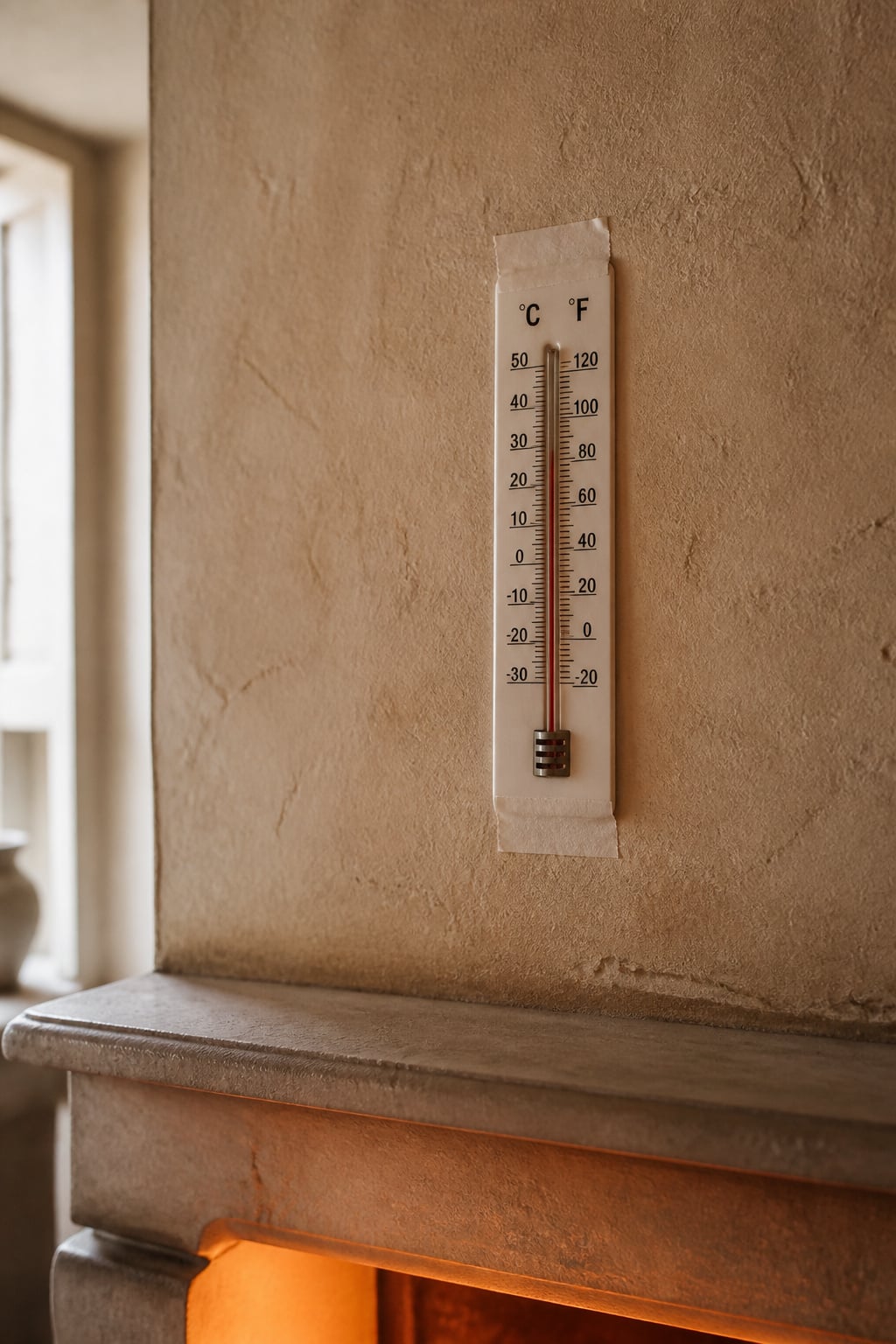
Don’t guess — measure. Tape a thermometer at the planned screen center, run the fireplace two full hours (the wall needs time to reach equilibrium), then read it. Under 100°F, you’re clear. Over, and you need a heat shield or a different wall. Adhesive shields run roughly $30–$80 and metal mantel hoods roughly $50–$150 — treat either as a rescue for a marginally failing setup, not a licence to mount over a furnace. The MantelMount MM540 and MM700 add heat-sensing handles that turn red at 110°F, an ongoing stow reminder.
Thermal shimmer: the distortion nobody warns you about
Even when the wall stays cool, rising hot air passes in front of the screen and makes the picture ripple — the same wobble you see over a hot road. It’s worst in dark scenes and fine detail, and it’s why people blame their TV settings for months before tracing it to the fire below. Shimmer isn’t heat damage; it’s an optical nuisance at safe temperatures. LCD panels are especially vulnerable — the liquid crystal layer degrades under sustained heat. A pull-down mount parks the screen forward and out of the convective plume.
Mounts That Solve the Above-Fireplace Problem
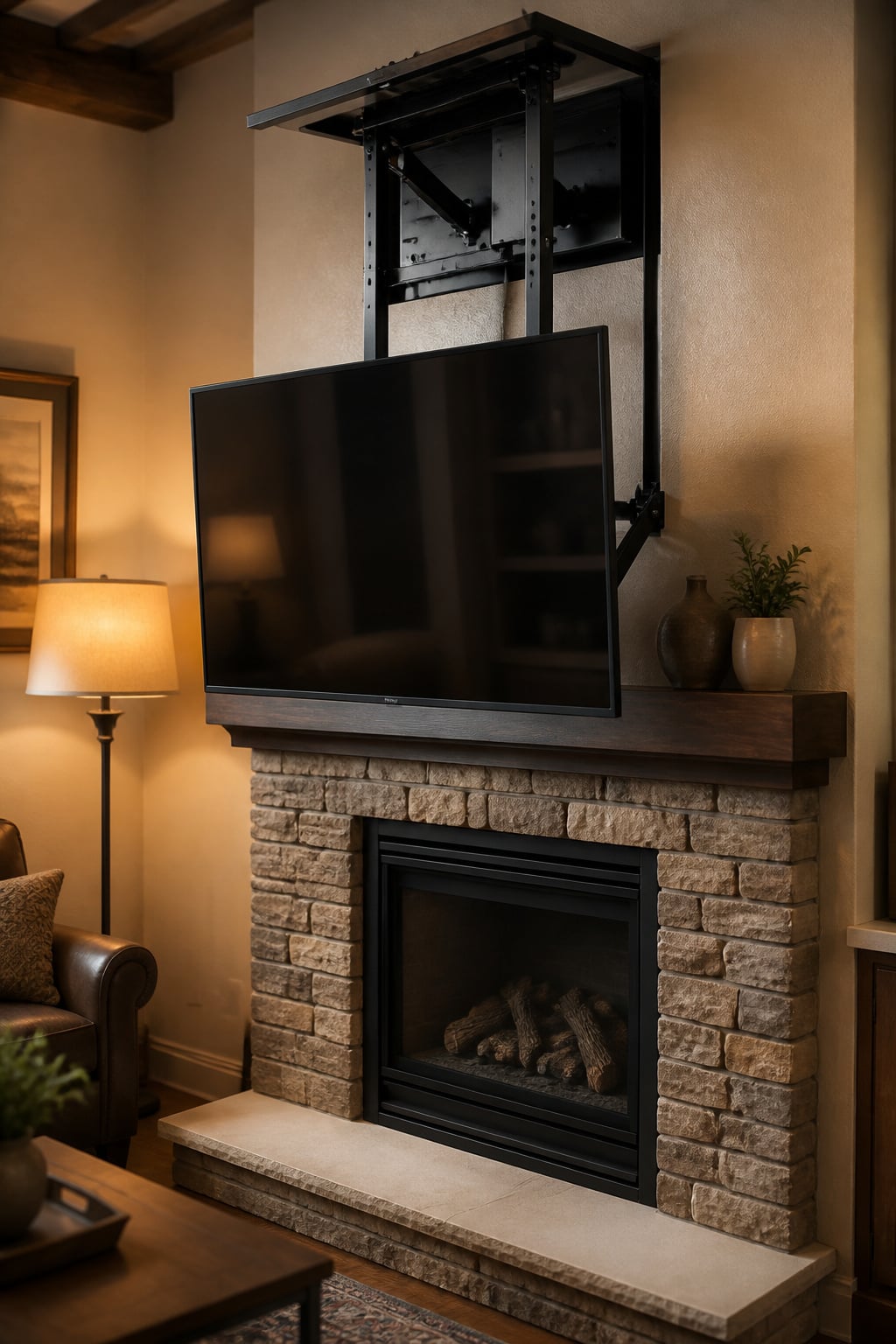
Three mount types address the placement — they are not interchangeable. Match the mount to how far over target your screen center lands.
| Mount type | Tilt / travel | Approx. retail cost | Best for |
|---|---|---|---|
| Tilting mount | 5–15° down, no drop | $30–$150 | Low mantels (~48 in) where center is already close |
| Pull-down mount | 27–29 in vertical drop + tilt/swivel | $220–$625 | Standard-to-tall mantels; the complete fix |
| Motorized pull-down | 27 in drop, remote, presets | ~$999.95 | One-button drop; multi-viewer households |
Tilting mounts: angle correction only
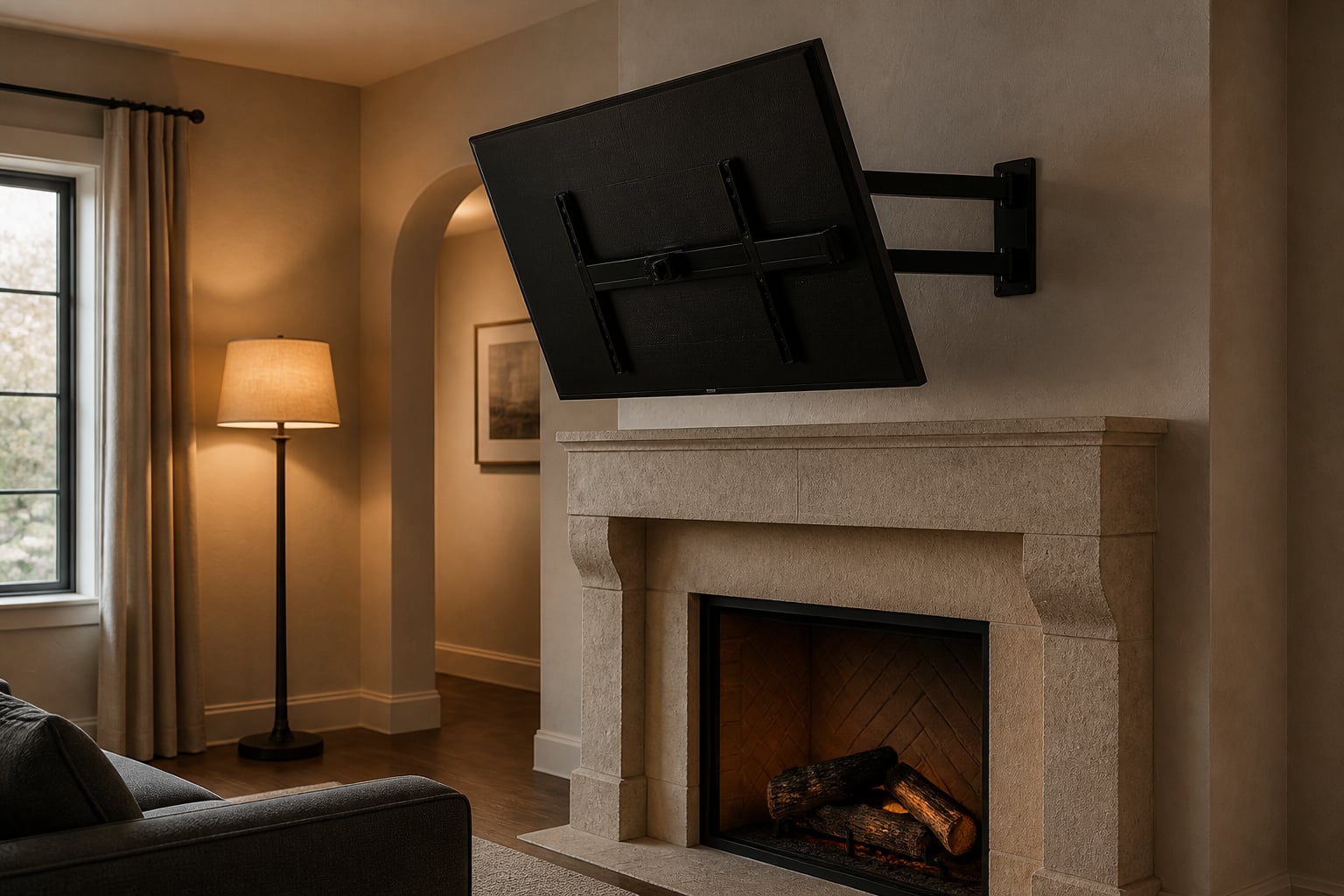
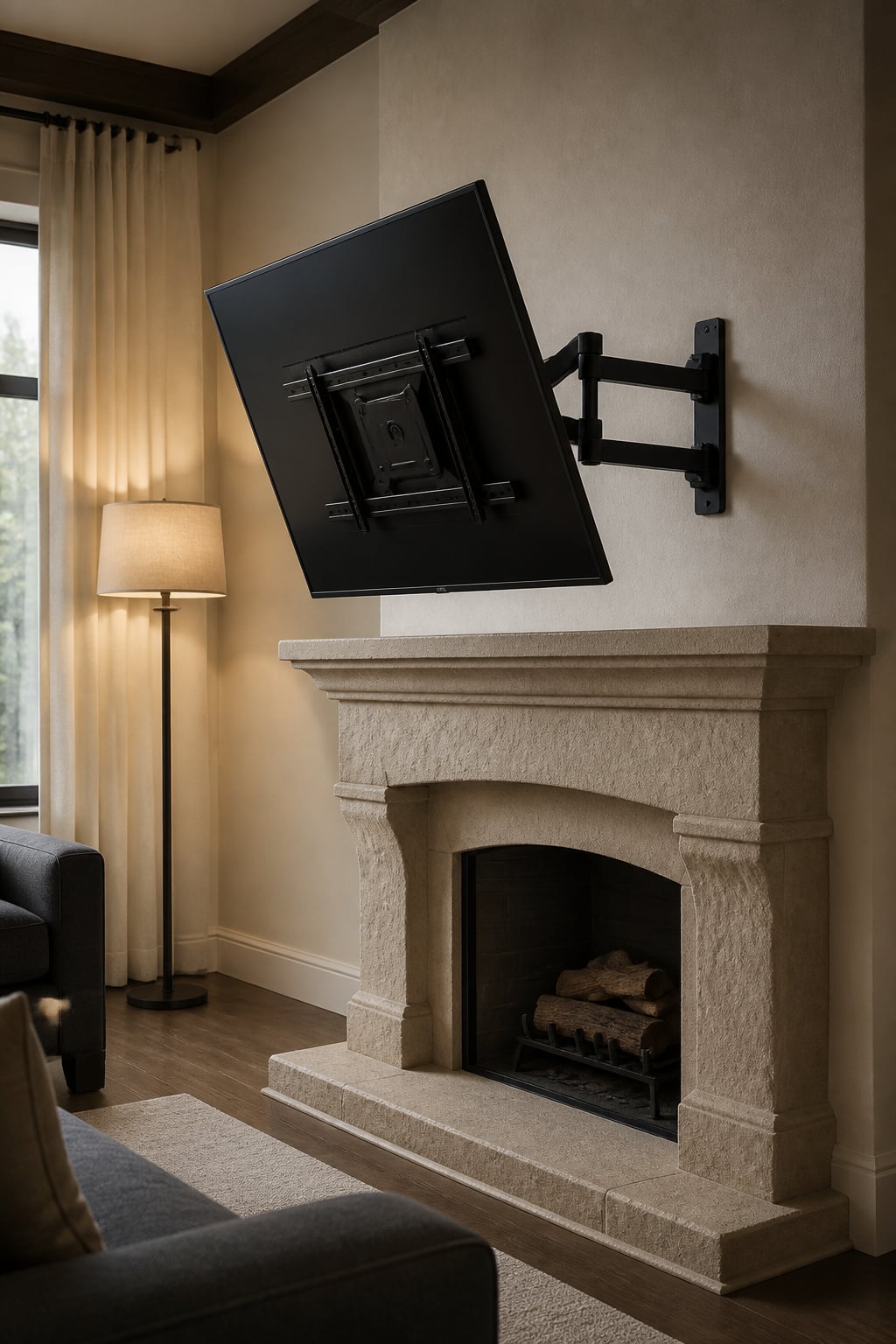
A budget tilting mount angles the screen 5–15 degrees downward for $30–$150. It redirects the picture toward you — but it does not lower the TV. If your center is already more than 10 inches over target, a 15-degree tilt still leaves you craning. Tilt mounts earn their keep on low mantels around 48 inches; above that, angle correction alone is not enough.
Pull-down mounts: watch low, park high
This is the one that actually works. A pull-down mount uses gas-piston counterbalance to drop the whole TV to eye level — typically 27–29 inches of travel — then glides it back above the mantel when you’re done. Two fingers move it. MantelMount owns the category: MM340 Standard ($299.95, 27 in of drop with swivel); MM540 ($469.95, adds heat-sensing handles and soundbar mount); MM700 ($624.95, up to 90-inch screens and 115 lbs); MM815 motorized ($999.95, remote and presets). Mount-It’s MI-384 ($219.99) is the budget entry. The diminishing-returns call: the MM540’s heat sensor is worth it over a hot fireplace; motorized buys convenience, not picture quality.
Weight ratings and VESA — check before you buy
VESA is the bolt-hole spacing on the TV’s back, in millimeters — the mount must match it (number’s in your TV manual). Above-fireplace pull-downs multiply leverage when extended, so buy a mount rated well past the TV’s actual weight; a modern OLED can weigh far less than a smaller older LCD. Masonry requires a hammer drill and concrete anchors; drywall requires stud anchoring.
Running Cables Over a Fireplace: The Hardest Wire Route in the House
No TV location fights you on cables like this one — masonry and electrical code gang up on two separate requirements: power and signal in separate paths, and a masonry surround that usually rules out in-wall routing entirely.
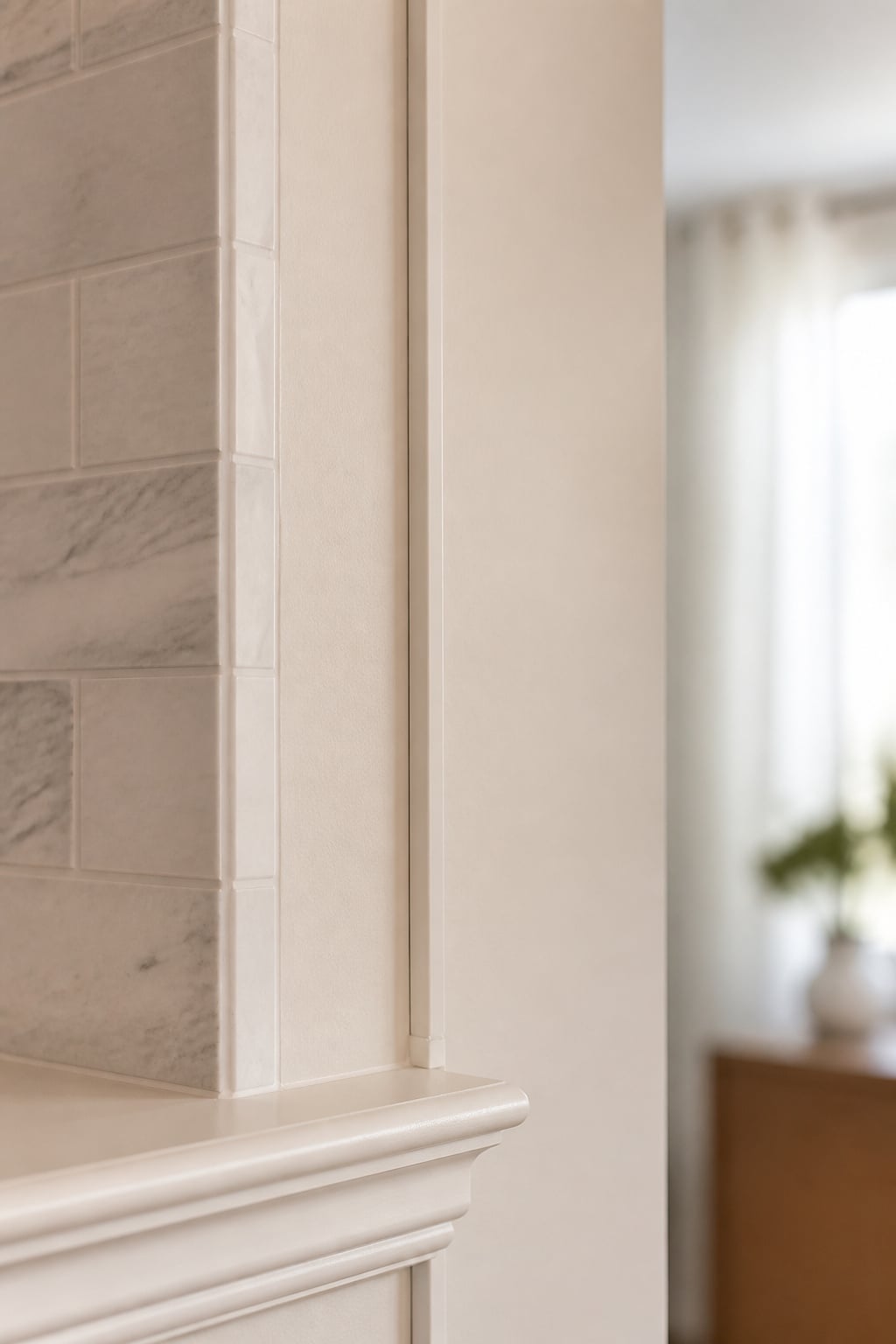
- Check the surround material. Drywall above the mantel? In-wall routing is possible. Brick, stone, or tile? Electrical code won’t let standard NM cable run through masonry, and coring it is a licensed-electrician job.
- Keep power and signal apart. AC power and HDMI/coax can’t share a chase. Separate pathways; if they cross, cross at 90 degrees. Set both boxes 12–15 inches above the mantel top.
- On masonry, go surface or wireless. A paintable surface raceway painted to match the wall, or a 4K wireless HDMI transmitter when the gear lives in a cabinet across the room.
- For a clean in-wall finish, call a pro. A two-gang recessed box delivers power and signal flush behind the TV, but new outlet work needs an electrician and usually a permit.
That’s the fireplace-specific version. The full menu — raceways, in-wall kits, renter-safe options — lives in the guide on hiding the wires. Worth borrowing from that guide: pair the mount with a dark accent-wall backdrop and a stray raceway nearly vanishes.
When to Skip It: The Cases Where Above-Fireplace Mounting Fails the Brief
Three situations turn this placement into a long-term regret:
- The mantel sits above 50–52 inches. A pull-down can help, but only if there’s enough wall space above the mantel to the ceiling to stow the TV (TV height plus roughly 12 inches of clearance). Short ceilings kill that option.
- The sofa can’t move closer. Viewing distance amplifies the angle — a high screen looks worse from 12 feet than from 8. Reclined seating tilts your gaze up and forgives some of this; an upright sofa or kids on the floor won’t.
- The fireplace isn’t the focal wall. If a bigger wall faces the sofa, mount the TV there at the right height and let the fireplace be the fireplace.
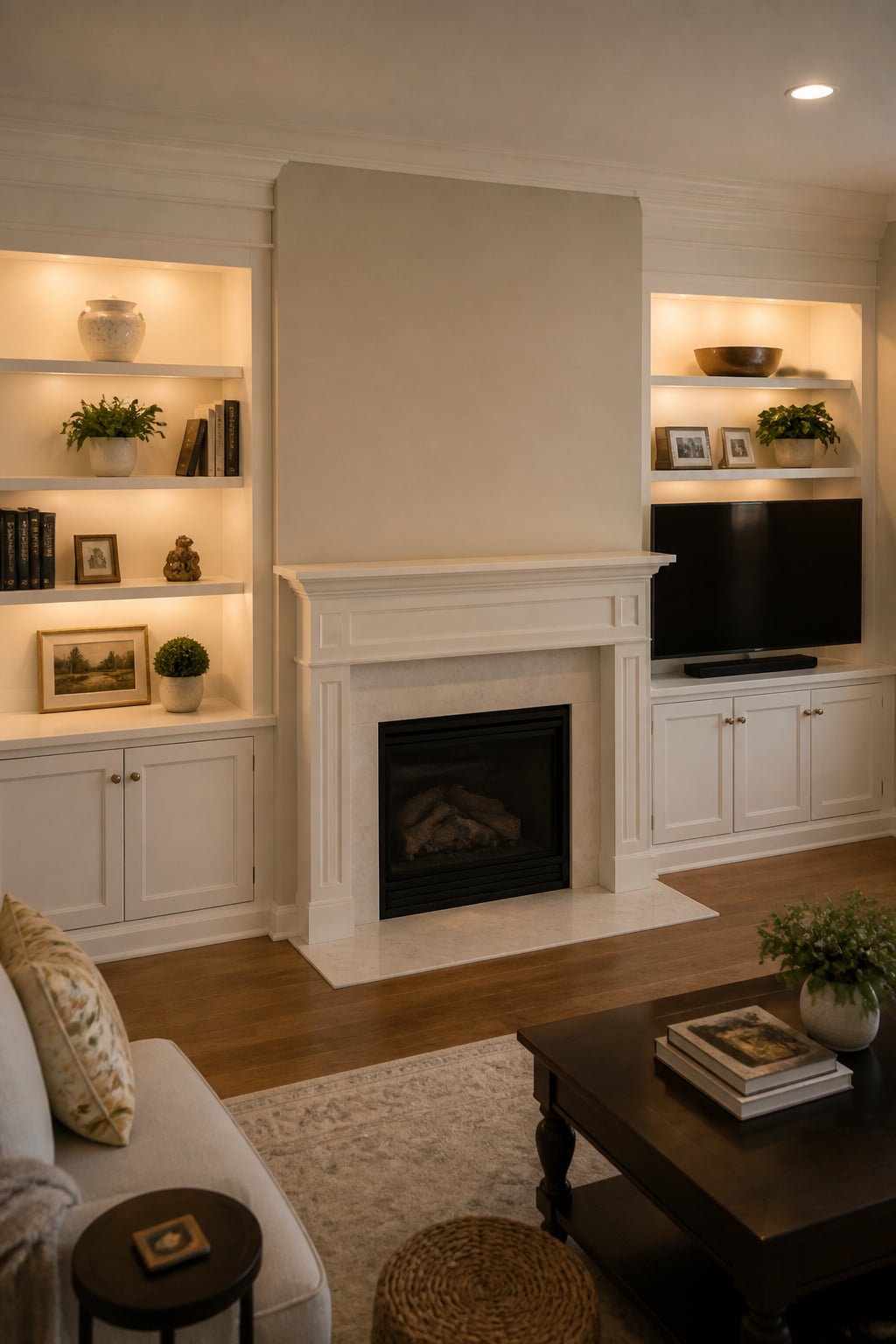
When the geometry won’t bend, the better answer is beside the fire: a TV flanking the fireplace inside a built-in, screen at eye level, keeps both functional and lets the hearth stay the architectural feature. If you’re still weighing options, see all TV wall ideas before you drill.
FAQ
How high above the fireplace should a TV be mounted?
The screen center should sit 42–48 inches from the finished floor. Standard mantels push a 55-inch TV’s center well above that target. A tilting mount (10–15° down) or a pull-down mount (27–29 inches of travel) is required to reach a comfortable viewing angle on most fireplaces.
Is it safe to mount a TV above a gas fireplace?
Only if the wall stays below 100°F at the planned screen center after two hours of normal use. Tape a thermometer there and check before drilling. Gas units produce 20,000–35,000 BTUs an hour, and most TVs are rated to just 104°F. A deep mantel shelf (10–12 inches) helps.
What mount is best for a TV above a fireplace?
A pull-down mount (MantelMount MM340–MM815, $299.95–$999.95) is the most complete solution: parks the TV above the mantel and lowers it to 42–48 inch eye-level for watching. A tilting mount ($30–$150) suits low mantels only. Confirm your TV’s VESA pattern and weight before buying any mount.