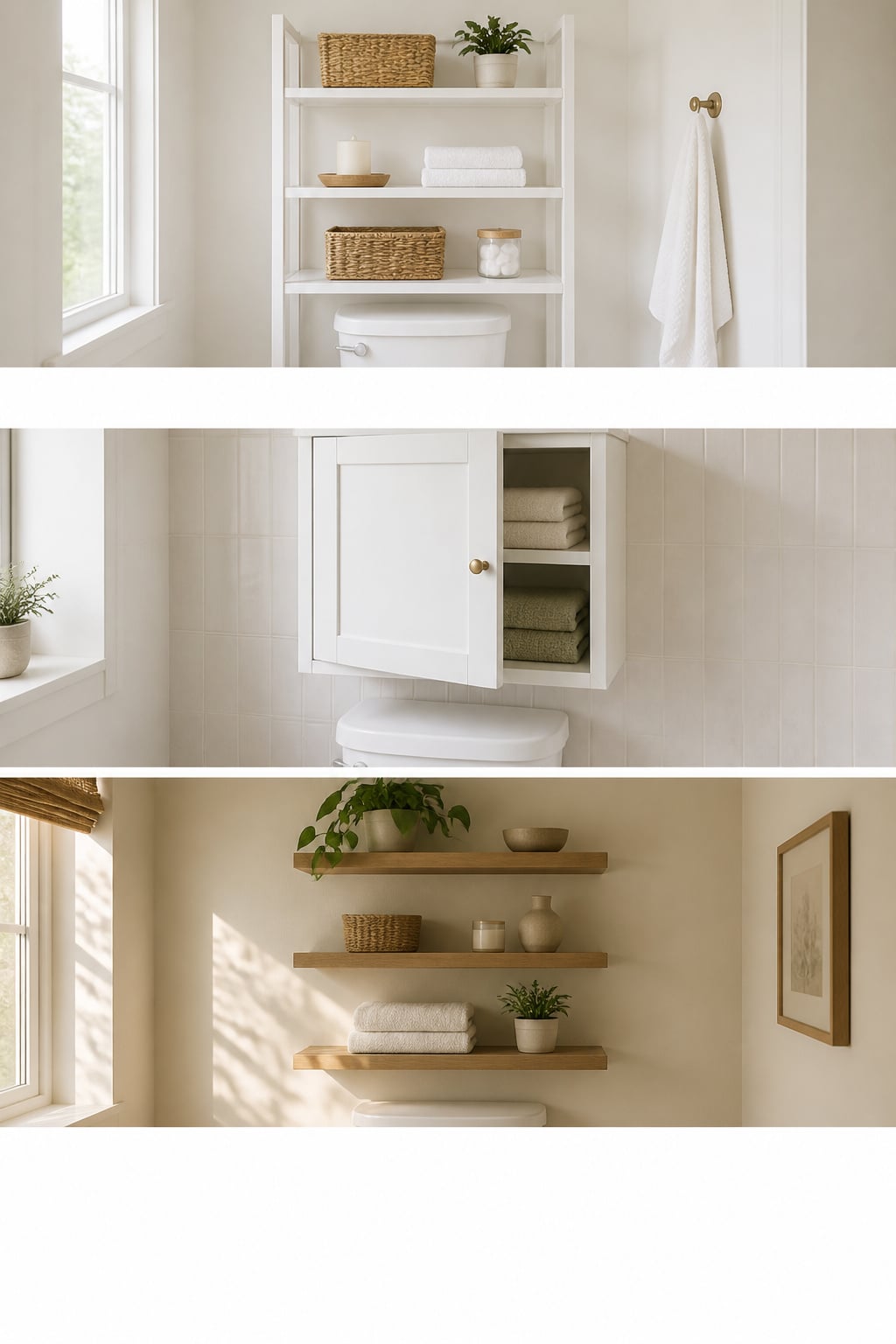
I lost a whole Saturday to a freestanding etagere once. The bottom shelf sat so close to the tank lid I couldn’t lift it to fix a running flapper — back to the store, second unit. The good over the toilet storage ideas all start with the step I skipped: measuring before buying. Three numbers, and almost any option works.
TL;DR
- Leave at least 24 inches of clearance between the tank lid and the bottom of any shelf or cabinet, so you can still lift the lid for repairs.
- Renters and beginners want a freestanding etagere ($30–$80, no drilling); owners get a cleaner look from floating shelves or a wall-hung cabinet on stud screws or toggle bolts.
- Real bathroom loads run 10–20 lbs per shelf, but check the manufacturer’s per-shelf rating and swap flimsy expansion anchors for toggles before you load anything.
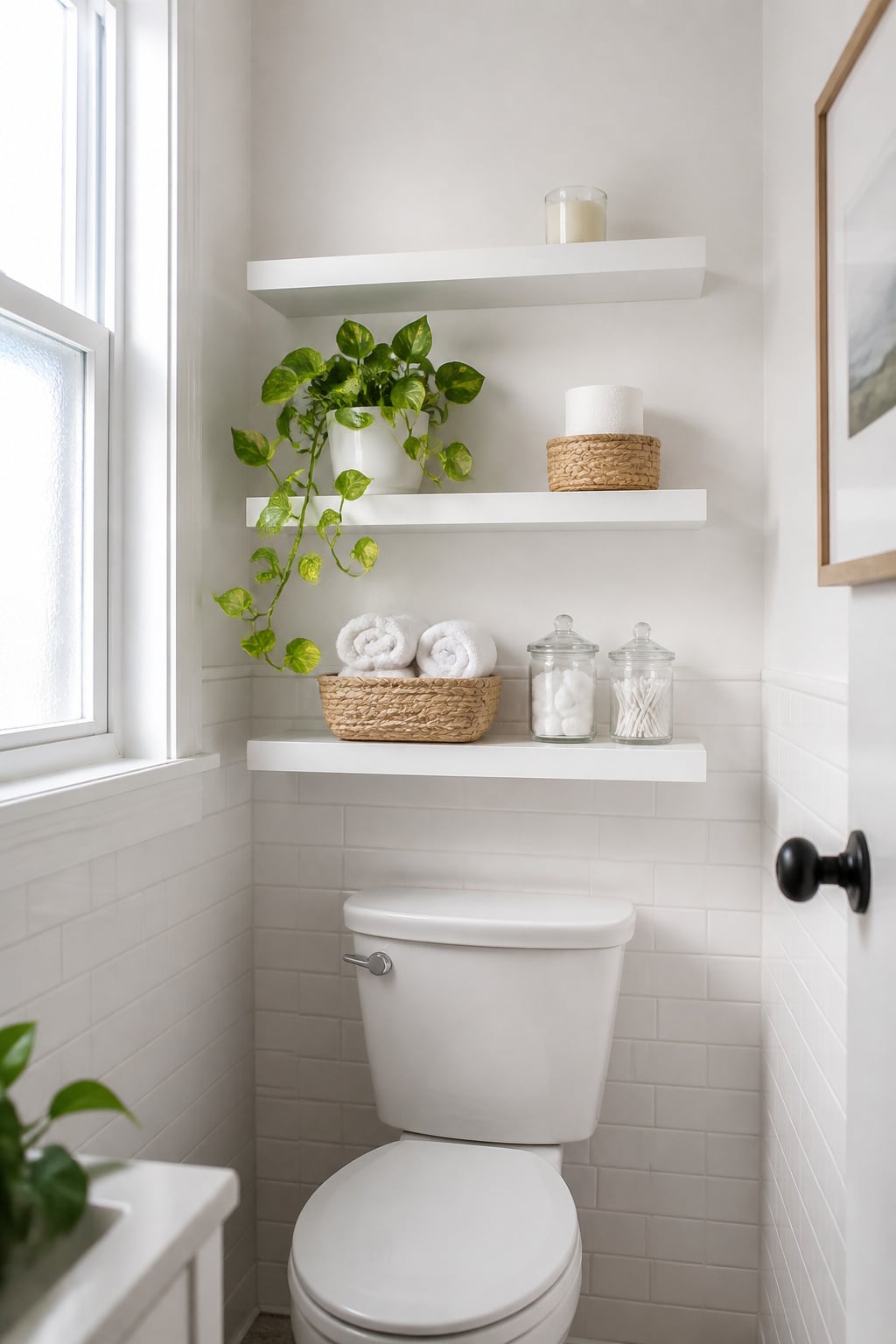
Over-the-Toilet Storage: What the Space Above Your Toilet Can Actually Hold
Three measurements and your wall type decide what fits. Most people skip this step — it’s why units get returned and shelves pull out of tile.
The Standard Clearance Numbers: Height, Depth, and Width
The widely recommended minimum clearance is 24 inches between the tank lid and the bottom of any shelf or cabinet — enough to lift the lid for repairs. For shallow units that don’t overhang the tank, 18 inches works.
A standard toilet runs 27–32 inches from floor to tank top, so a unit’s base should sit 51–56 inches off the floor. Tanks run 17–20 inches at the widest, the bowl up to 21 — measure whichever is wider. For shelves, 8 inches deep is the pro standard.
| Measurement | Standard value | Why it matters |
|---|---|---|
| Clearance above tank lid | 24 in (18 in min, shallow units) | Lets you lift the lid for repairs |
| Tank top height from floor | 27–32 in | Sets where your unit’s base goes |
| Tank/bowl width | 17–21 in | The span a straddling unit must clear |
| Shelf depth | 6–8 in (8 in pro standard) | Holds bottles without crowding the seat |
| Shelf-to-shelf spacing | 10–12 in | Keeps each shelf usable and in reach |
Weight Limits and Wall Types
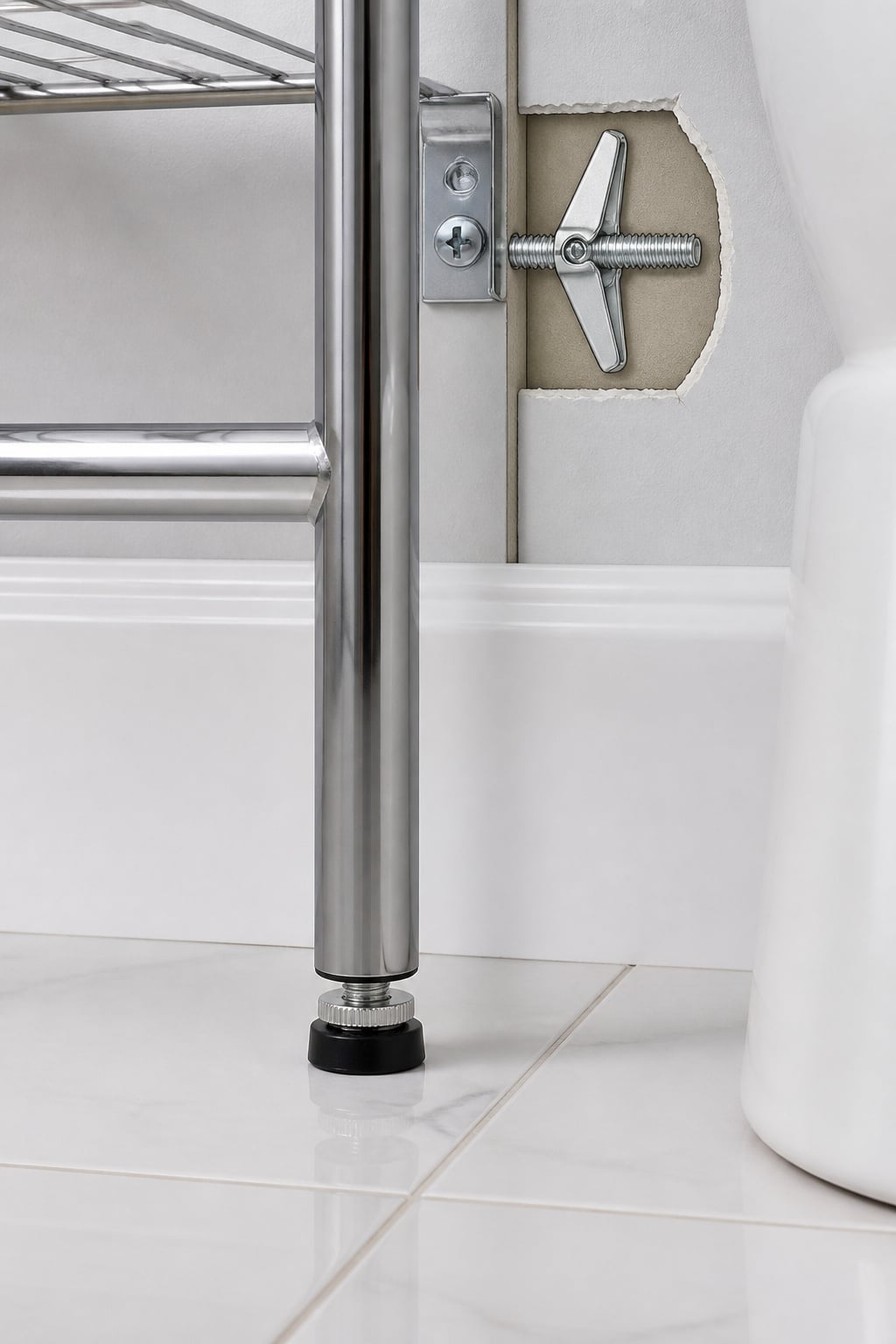
Into a stud, a 2- to 3-inch wood screw holds well over 50 lbs per fastener. No stud? A 3/8-inch toggle bolt holds about 50 lbs in half-inch drywall; toggle-style anchors hold 75–100 lbs. The plastic expansion anchors bundled with most flat-pack units hold only 5–25 lbs — adequate for a picture frame, not a loaded shelf. Swap them for toggles. Tile: use a carbide or diamond-grit bit, drill through to the stud or backing, and stop the second the bracket is snug.
What Belongs Up There
Spare rolls, hand towels, small bottles, a plant or candle. Put heaviest items on lower shelves. One thing most guides skip: flushing throws a fine aerosol spray, so keep paper-wrapped and moisture-sensitive items on enclosed shelves, not open ones above the bowl.
Freestanding Etageres and Ladder Shelves: No Drill, No Commitment
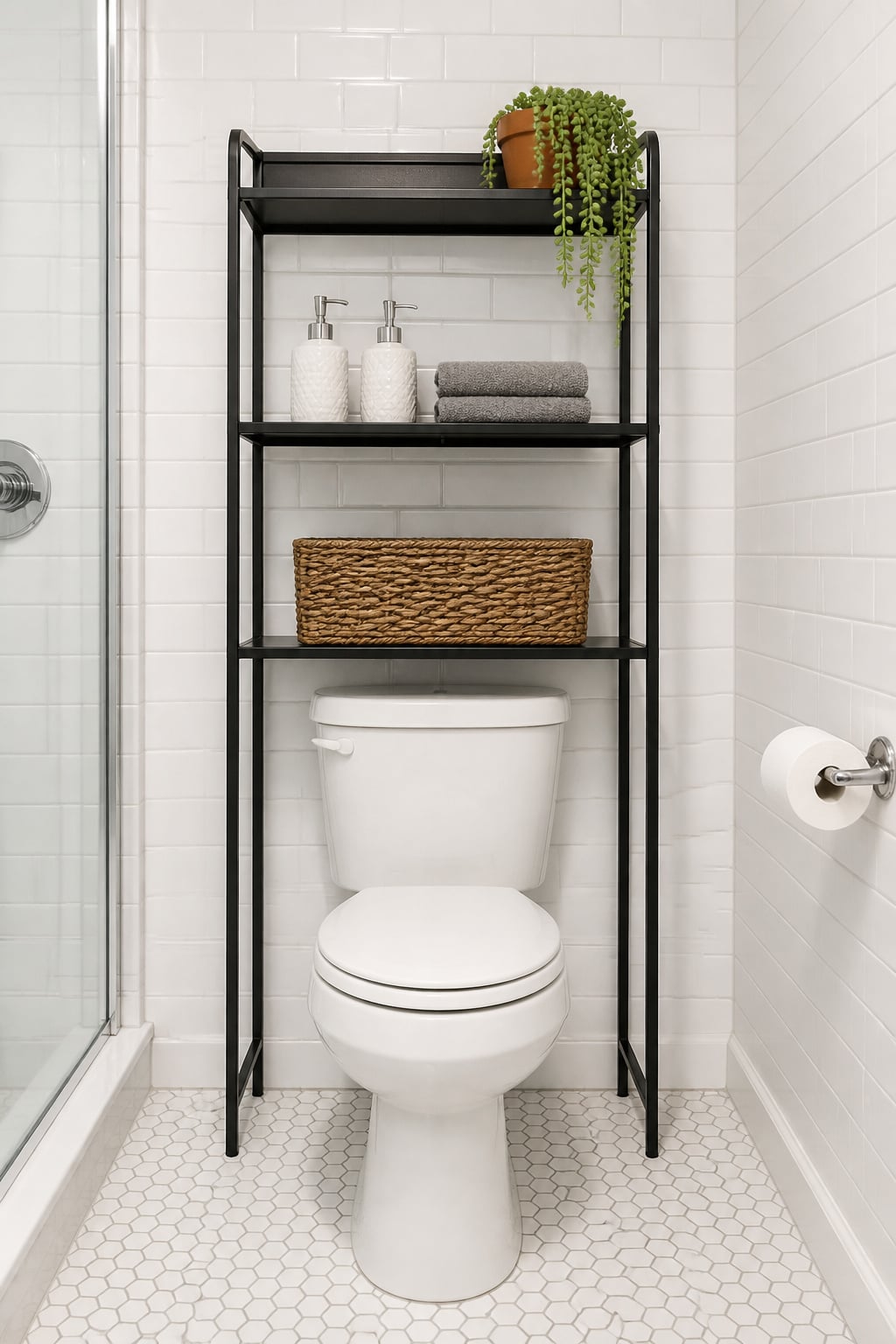
The etagere is the entry-level pick: no drilling, renter-safe, $30 to $150. The catch is stability — cheap tube stock and bad feet mean a wobble within months. Leg spread, feet, and frame thickness separate a good one from a return.
How a Good Etagere Straddles the Tank
The inner leg spread must exceed your widest toilet measurement. Standard tanks run 17–20 inches; most etageres offer 21–24 inches of inner clearance to cover that. The lowest shelf sits 36–40 inches off the floor, which clears a standard tank automatically. Check the feet: non-slip rubber tips or adjustable leveling feet — never bare metal, which scratches tile and lets the unit migrate.
Width and Leg-Spread for Different Tanks
Narrow space-saving tanks run 16–18 inches; standard tanks 18–20. Measure both tank and bowl width, then use the larger as your minimum inner clearance. Many towers are 14–15 inches deep and overhang the tank, so confirm the lowest crossbar clears the lid by at least 2 inches.
Build Quality So It Doesn’t Wobble in Six Months
Four things to check before buying:
- Tube stock: one-inch thick-walled steel or powder-coated alloy is the floor; thin 3/4-inch tube bends under load.
- Shelf material: tempered glass (5mm minimum) cleans easily; bamboo is naturally water-resistant; MDF must be moisture-rated board.
- Inner leg spread: confirmed against your measured tank width, not the unit’s outer width.
- Anti-tip feature: a wall-contact stabilizer bar kills most sway without drilling.
As Michelle Miley notes in Hunker’s install guide, freestanding racks “often sit uncomfortably close to the top of the toilet tank” — no lid access when something breaks. That’s the trade-off. For mounted options, floating shelf ideas; for the full picture, small bathroom storage.
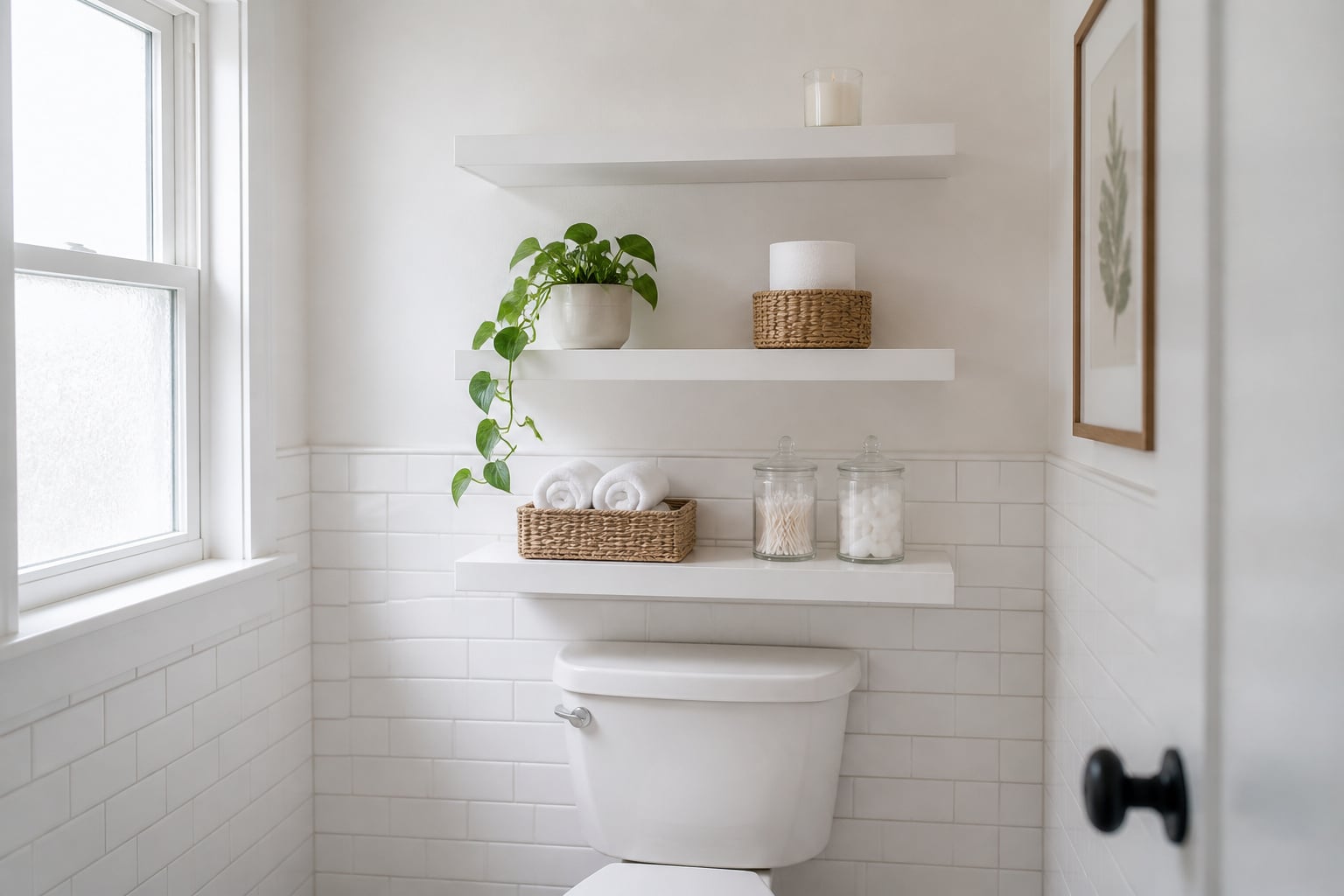
Wall-Mounted Floating Shelves: More Flexible, More Permanent
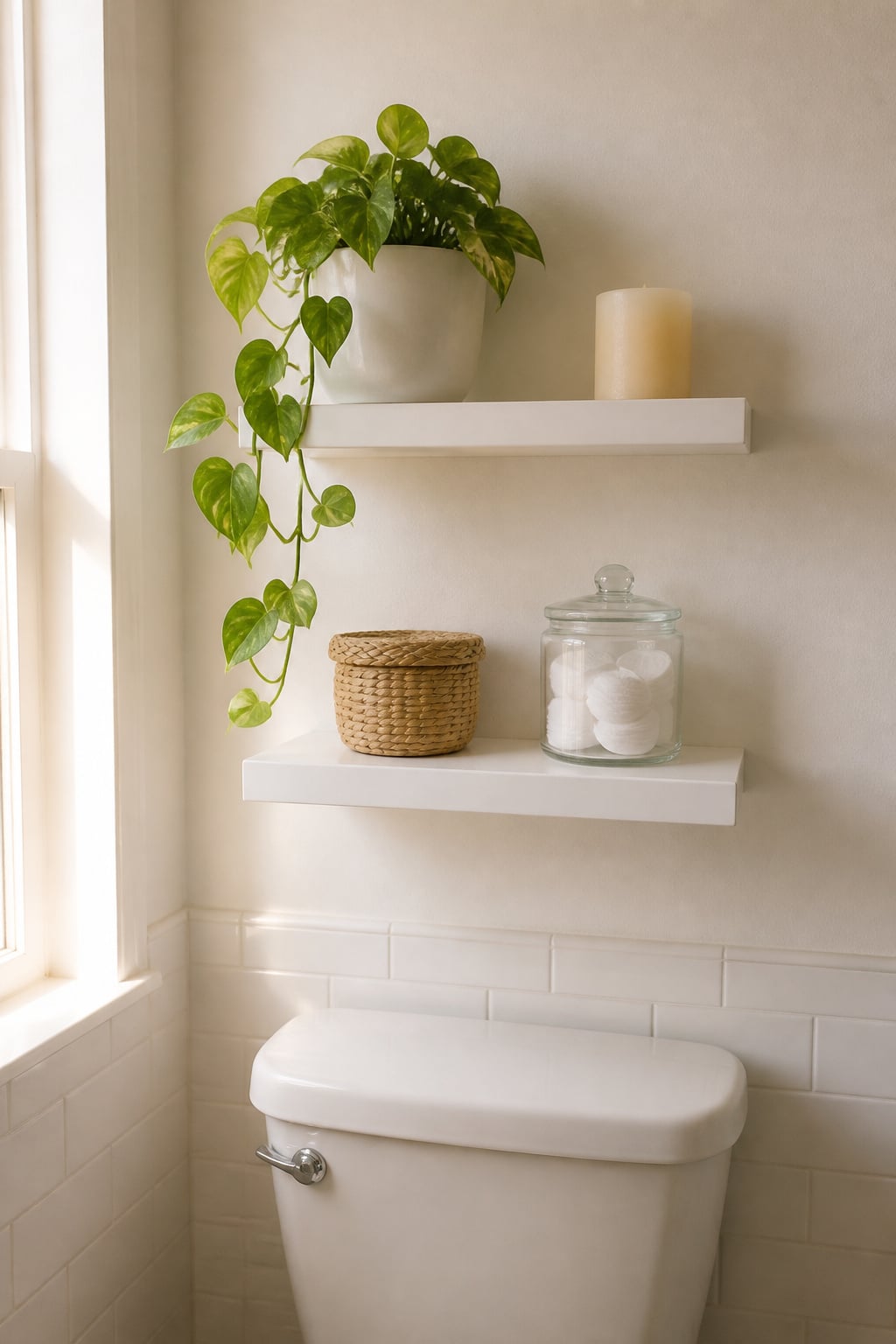
Individual shelves beat any packaged unit for flexibility — you pick the width, height, and number. The cost is install skill and the right hardware.
Stud vs Anchor: Knowing Your Wall
Studs sit 16 inches on-center, but the wall behind a toilet is often only 12–15 inches wide — you may find one stud there, or none. Plan to mix: a 2.5–3-inch wood screw on stud, a toggle bolt everywhere else. Properly set toggles spread load across 3–4 inches of drywall and almost never pull through at bathroom loads.
Shelf Depth and Bracket Choice
Eight-inch-deep shelves are the target: deep enough for bottles and folded towels, shallow enough to stay out of your sightline. Brackets should be 75–80% of shelf depth — a 6-inch bracket for an 8-inch shelf. Keep width close to the toilet (17–20 inches); up to 4 inches wider each side is fine if the wall allows.
Spacing Shelves You Can Actually Reach
Mount the lowest shelf 24 inches above the tank lid. Space shelves 12 inches apart (two shelves) or 10 inches (three shelves). Keep the top shelf below 72–74 inches — within reach without a stool. Install sequence:
- Find the stud and mark it.
- Mark your shelf height with a level.
- Drill pilot holes for screws or anchors.
- Mount the bracket and re-check level before it’s tight.
- Attach the shelf, then load it gradually to test the hold.
Over-the-Toilet Cabinets: Closed Storage for a Cleaner Look
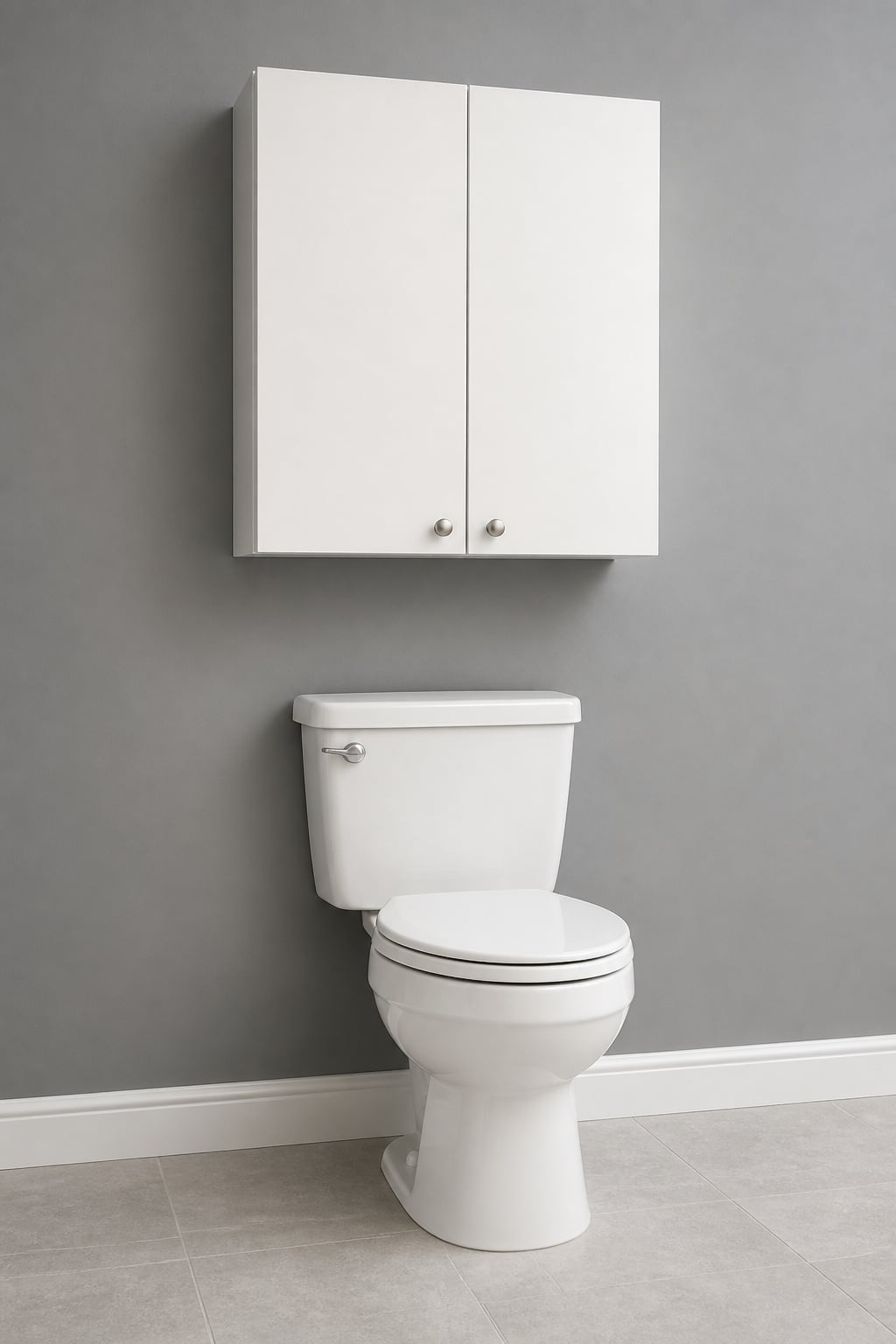
When clutter can’t be on display, a closed cabinet wins. Two types dominate: shallow wall-hung cabinets and freestanding towers with open straddling shelves below and a closed section above. Depth is the controlling number either way.
Cabinet Depth Limits: Why Shallow Isn’t a Compromise
Wall-mounted cabinets above a toilet run 7–9 inches deep — necessity, not style. A tank projects 6–8 inches from the wall; anything deeper overhangs and blocks the lid. Nine inches still swallows folded towels, bottles, and spare rolls. A typical unit measures 22.8″W x 7.9″D x 24.5″H, rated 25 lbs per shelf and 75 lbs total.
Freestanding Towers vs Wall-Hung Cabinets
Wall-hung cabinets are more stable and cleaner: mounted to the wall, installed with hand tools. Freestanding towers (around 31″W x 67″H x 14–15″D) hold more without drilling, but tip if top-loaded — center the straddle section over the toilet and use a stabilizer bar if the model offers one.
| Cabinet type | Depth | Install | Best for |
|---|---|---|---|
| Wall-hung cabinet | 7–9 in | Screws to wall, hand tools, 1–2 hrs | Cleanest look, tight rooms |
| Freestanding tower | 14–15 in | No drilling, 45–60 min assembly | Maximum volume, family baths |
Door Style: Hinged vs Mirrored
Hinged doors hide clutter but need swing room — allow 9-plus inches in the open-door arc. Mirrored doors conceal and add reflective depth, worth it in any bathroom without a separate vanity mirror.
What Goes Wrong and How to Fix It
Three failures cover almost everything: the wobbly unit, the anchor that pulls out, and the overloaded top shelf.
The wobbly etagere is usually loose tube joints — retighten every connection point before you blame the tile. Still rocks? Grout-line ridges under flat feet are the culprit. Adjustable screw-in rubber leveling feet fix it: turn one clockwise to raise that corner. No threaded feet? Stick-on rubber pads ($4–$8) solve the scratching, though they won’t level anything.
Anchor pull-out traces back to bundled expansion anchors carrying a load they were never rated for. Replace them with toggles. If one’s torn a hole, patch it, cure a full day, then re-drill at least 2 inches to the side — never re-anchor into the gap. As Journeyman HQ puts it, toggle bolts “only fail if they are unscrewed.” Know when to quit: hollow plaster where you expected solid wall means switch to freestanding or call a contractor.
Overloading is quiet. Etagere shelves rate 6–44 lbs each; budget models run 10–15. The top shelf is the worst offender — height multiplies the tipping force. Keep it to a plant or a light basket, and read the per-shelf rating rather than the total: 66 lbs across four shelves is 16.5 lbs each.
Choosing the Right Option for Your Bathroom
Four questions settle it: rent or own, drywall or tile, how much storage, what toilet type.
A Quick Decision Path
Renters: a freestanding etagere — no drilling, no damage, flat-packs for moving. Owners with drywall: floating shelves or a wall-hung cabinet on a stud-plus-toggle combo. Owners with tile: same options, but add 30–60 minutes and an $8–$20 diamond bit. Need real volume? A freestanding tower gives the most storage per dollar.
What Each Option Actually Costs
| Option | Cost | Install time | Skill level |
|---|---|---|---|
| Freestanding etagere (steel) | $30–$80 | ~30 min assembly | First build |
| Bamboo/wood tower | $80–$150 | 45–60 min assembly | First build |
| Floating shelves (2-set + hardware) | $30–$75 | ~2 hrs | Some builds |
| Wall-hung cabinet | $70–$250 | 1–2 hrs, two people | Some builds |
| DIY built-in alcove shelf | $80–$200 | 4–8 hrs | Confident builder |
Corner Toilets and Alcoves
A corner toilet sits at 45 degrees to the walls, so a standard straddling etagere won’t fit — look for a dedicated corner unit. An alcove toilet is the opposite case: the side walls give full-depth attachment points, and a plywood box with shelf pins makes a clean built-in. Measure max height first if there’s a window above. Once the toilet wall is sorted, your empty corners are the next dead space worth claiming — corner shelf ideas covers that zone.
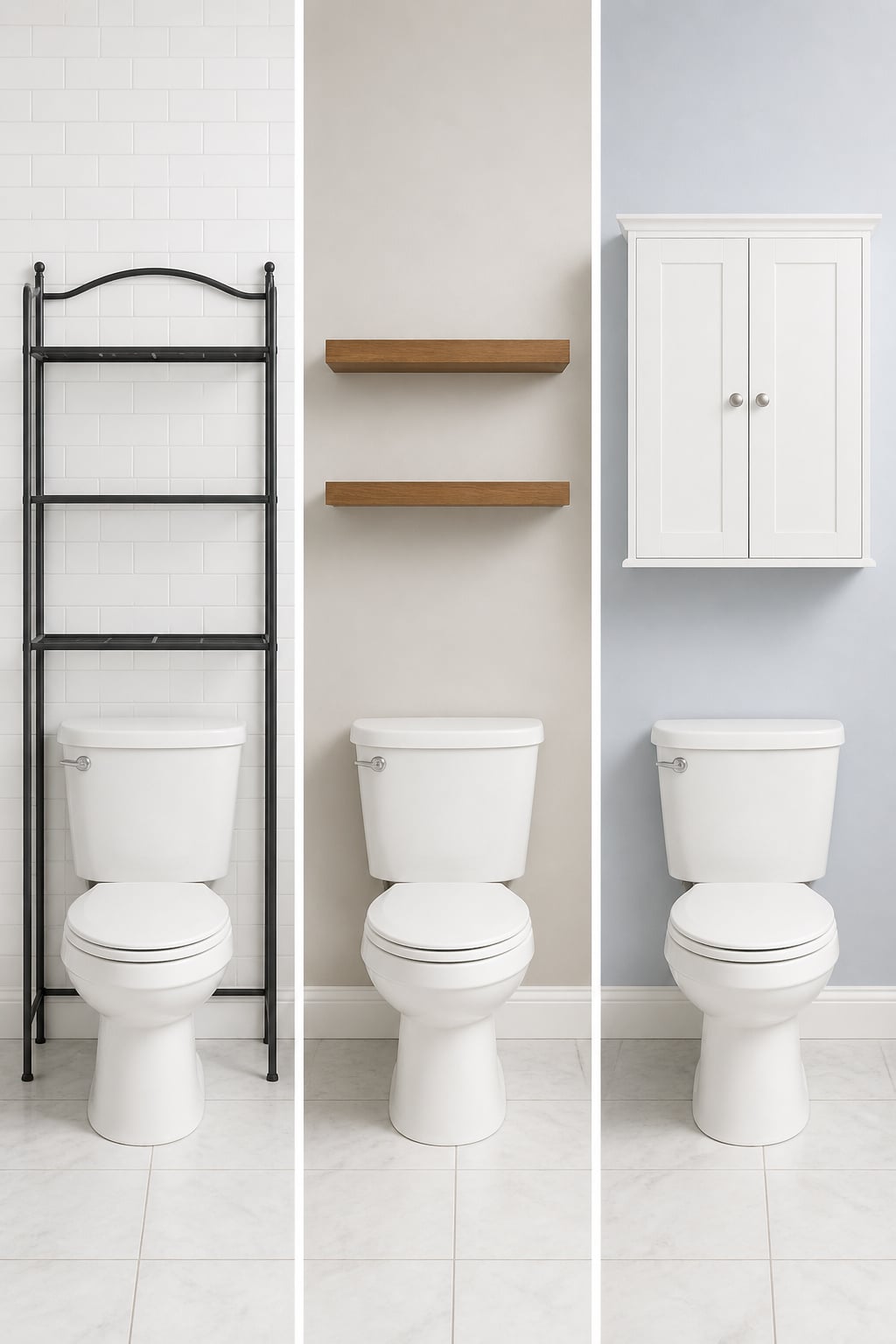
The fix for my lost Saturday was a tape measure, not a better unit. Before you buy: measure tank top height from the floor, the tank’s widest point, and the open wall above it. Write those three numbers on your phone — whatever you shop for next, they’ll tell you in two seconds whether it fits.
FAQ
How much weight can an over-the-toilet shelf hold?
It depends on the mount. A shelf screwed into a stud safely holds 50-plus lbs, and a toggle bolt in half-inch drywall holds about 50 lbs per bolt. Freestanding etagere shelves are usually rated 6–44 lbs each, so check the manufacturer spec. Real bathroom loads rarely exceed 10–20 lbs per shelf.
What is the standard height for an over-the-toilet shelf above the tank?
The widely recommended minimum clearance is 24 inches between the tank lid and the bottom of the shelf, which allows lid removal and comfortable use. Since tanks top out at 27–32 inches from the floor, the shelf bottom should sit roughly 51–56 inches up. Space stacked shelves 10–12 inches apart.
Can you put an etagere over a low-profile toilet?
Yes, and you usually get more clearance, not less. Low-profile tanks sit about 24–26 inches off the floor, while most etageres put their lowest shelf at 36–40 inches, clearing the tank by 10–16 inches. The one thing to check is a top-mounted flush button, so confirm no crossbar sits directly over it.