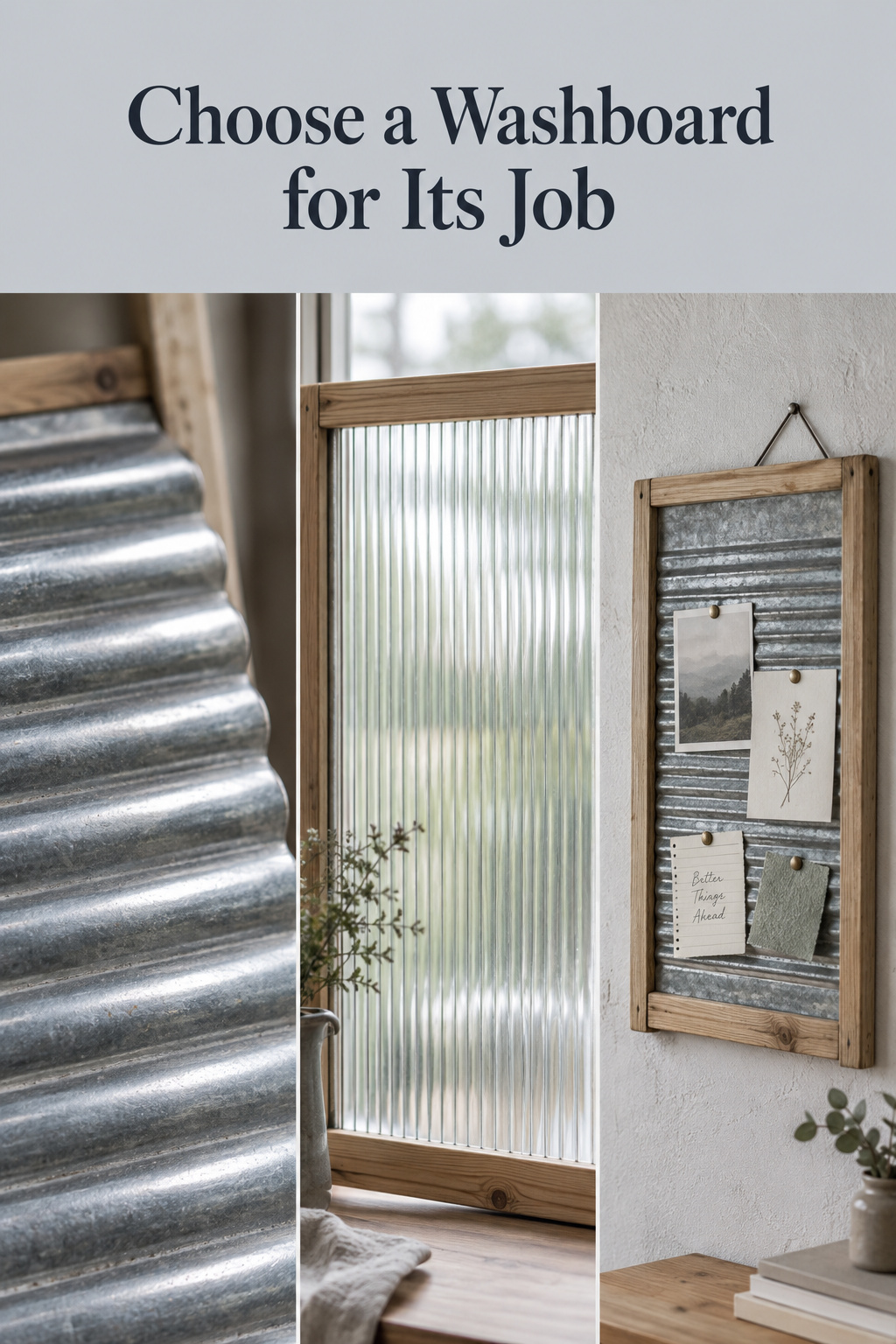
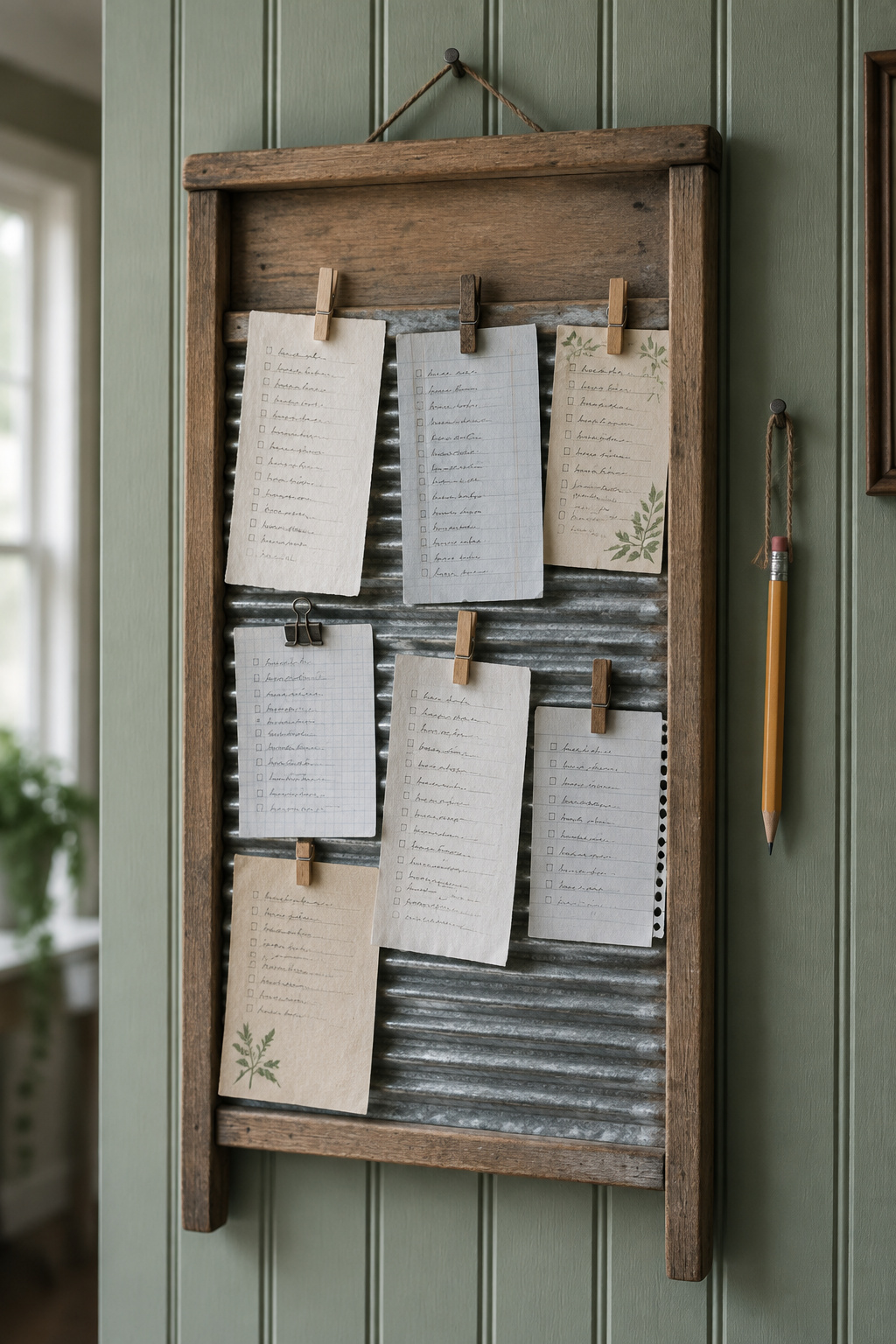
A family-size washboard hangs beside a back door, about two feet tall and a foot wide. Its pine frame has gone dark where hands held it, the ink on the top board has faded, and a week of lists is tucked behind the soap shelf. It is doing a job, and the job is why it looks right.
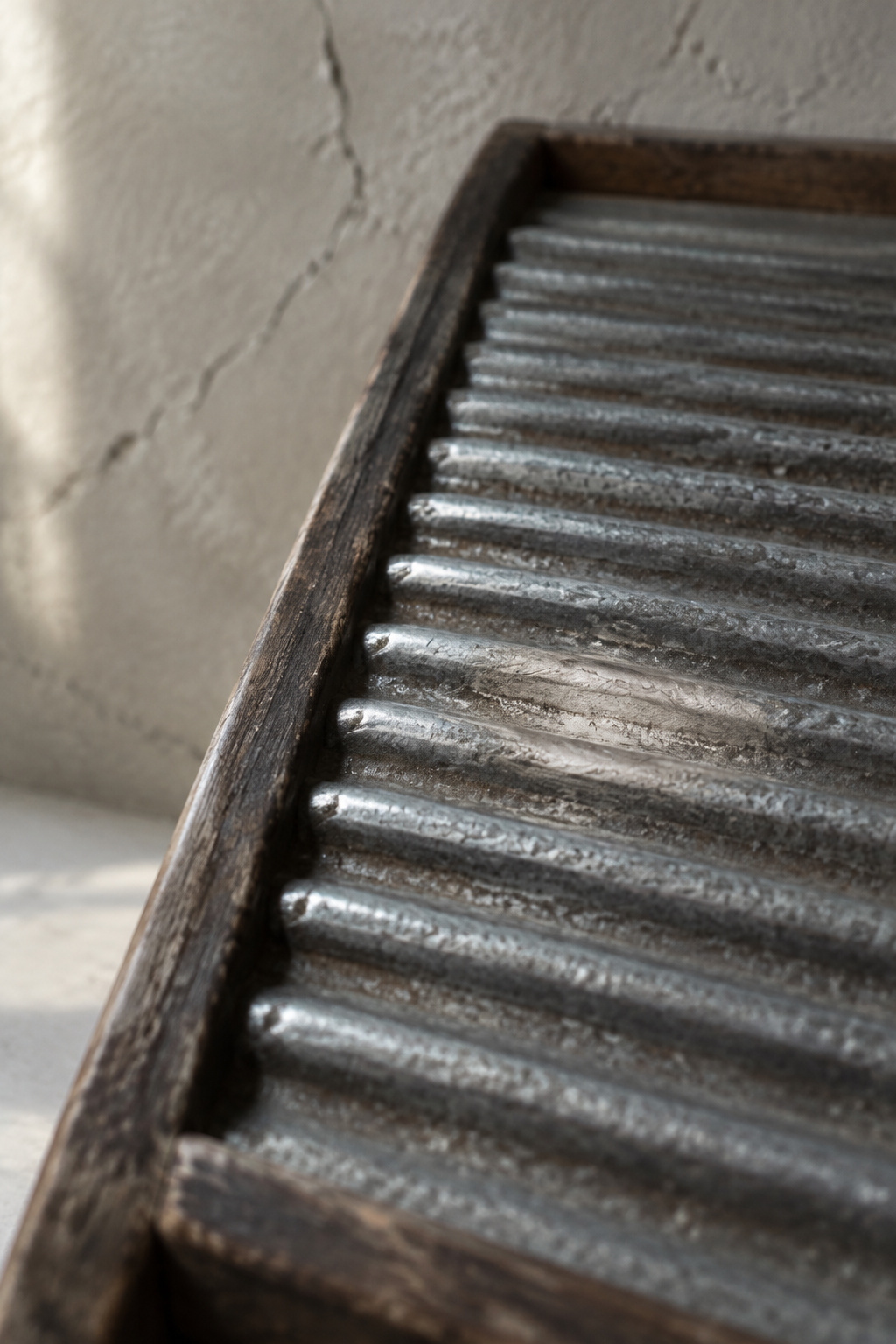
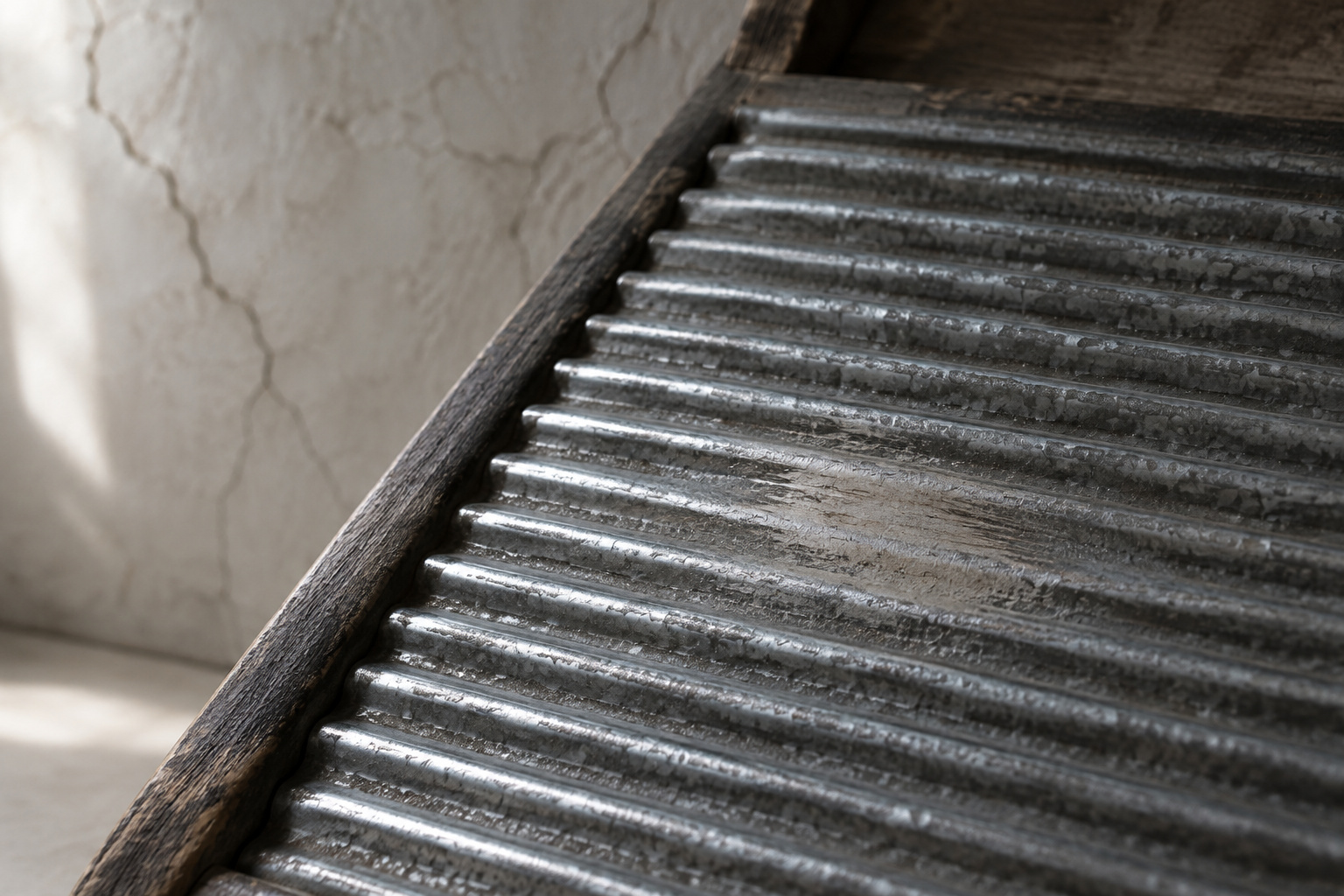
Antique washboard decor often starts the other way round. A board gets bought because it is old, or because the listing said glass, and only then does someone look for a wall. Decide the job first, and the job tells you which rubbing surface to buy, what condition is worth paying for and whether the wall needs more than a nail. That glass board, for one, weighs around four and a half pounds.
TL;DR
- Pick the job before the board: a note board or display piece forgives almost any surface and most faults, a working scrub surface needs sound ridges, and a new board from the last factory in the United States costs $11.99 to $39.49.
- Glass boards were patented by 1897, and The Henry Ford holds a National glass board from about 1918, so the story that wartime metal shortages invented them is wrong in its strong form.
- Only glass is heavy: a family-size glass board weighs about 4.5 to just over 5 lb, against about 2 lb for galvanized and about 1.15 lb for brass, so give glass hardware rated to twice its weight.
Antique Washboard Decor Starts With the Job the Board Will Do
A board on a wall now does one of four jobs: display piece, note or pin board, working scrub surface for hand-washing, or shelf back. Each asks something different of it.
I have a plaster ceiling medallion that I pulled out of a dumpster outside a gut renovation. It hangs on my workshop wall because I have never found the right ceiling for it. Rescue first, decide later works for a medallion that cost nothing, and I drive an old pickup that usually has a salvaged door or two in the back, so I know the habit. A washboard bought without a wall in mind is the same gamble with money on it.
You can also skip old altogether. Columbus Washboard Company in Logan, Ohio, the only washboard factory left in the United States, sells about 80,000 boards in a typical year, and its factory manager estimates a fifth go to decoration. For scrubbing socks in the sink, a new galvanized board is the better tool. Most “farmhouse” style is a modern invention dressed up as tradition, and a washboard bought as a farmhouse prop stays a prop. Bought for a job, it is part of vintage laundry room decor that still works.
| Job | Surface that suits it | Condition worth paying for | Weight to plan for |
|---|---|---|---|
| Display | Any; glass or enamel for color and light | Dents and rust-through are fine | Glass about 4.5 to 5 lb; metal about 1 to 2 lb |
| Note or pin board | Metal or wood ridges that hold paper | Sound frame; surface faults are fine | Usually metal, about 1 to 2 lb |
| Working scrub surface | New galvanized, or sound old metal or glass | No rust-through, chips or cracks | About 2 lb for galvanized |
| Shelf back | Any, chosen by the shelf | Sound frame that carries a load | Board plus whatever sits on it |
Signs and how to compose a whole laundry wall are a different subject, and the laundry room wall art guide covers them.
Date a Washboard by Its Rubbing Surface and Maker Stamp
Turn the board over and look at both faces. The rubbing surface gives you a period, not a year, and it says as much about the job a board can do as about its age.
| Surface | Roughly when | The tell | What it suits |
|---|---|---|---|
| Wood | In use by the 1840s | Carved ridges; few survive because constant wetting wore them out | Display only |
| Zinc | From the mid-19th century | Grey metal ridges; a zinc patent model is dated 1879 | Display, note board |
| Galvanized steel | No firm start date; the most common modern surface | Coated steel ridges, still made new | Scrubbing, note board |
| Enamel (granite-ware) | 1880s and 1890s; National made enamel boards about 1918 | Baked blue or grey enamel | Display |
| Glass | Patented by 1897; National glass boards about 1918 | Ribbed glass panel, sometimes embossed with the maker’s name | Display, careful scrubbing |
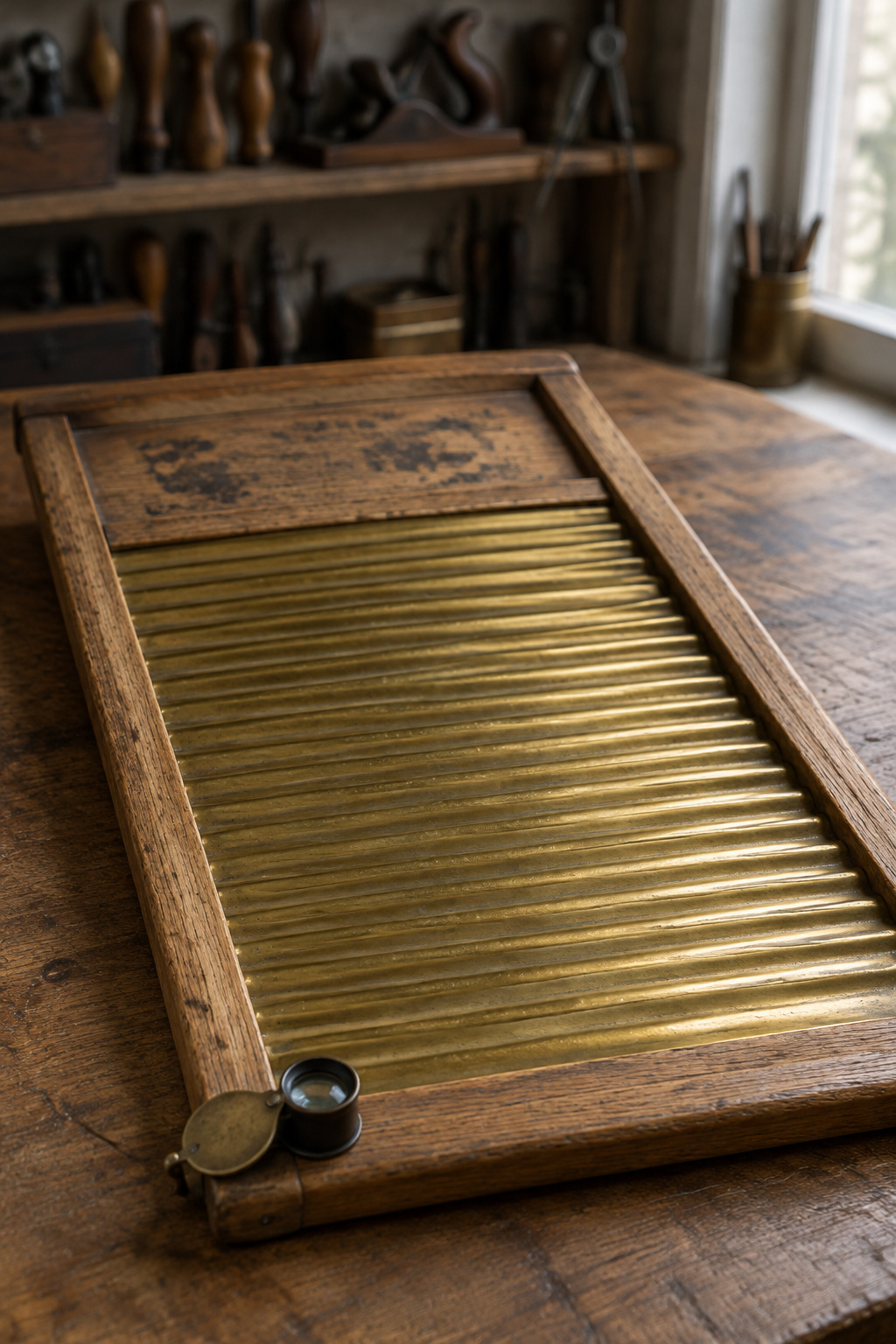
| Brass | By about 1933; Columbus brought out Maid-Rite Brass in the 1930s | Golden ridges | Display, note board |
Then turn to the stamp. National Washboard Co. stamped its boards with its factory cities, Chicago, Saginaw and Memphis. A patent number on a stamp is a floor, not a make date: the Made-in-Chicago Museum has a National board from the 1920s that still carries a 1918 patent number. National also trademarked its three-digit model numbers, so a model number on its own is weak evidence of date. Nothing documents what a missing stamp means, so read it as proof of neither age nor fakery.
Old isn’t the same as original, and wear shows which one you have. A soap bar sat on the shelf, so on a board that did laundry the printed logo is faded or gone. Heavy scratching can mean a musician played it rather than anyone washing on it. Sand-through paint “aging” on a new board is a costume; real wear sits where soap, cloth and hands went.
The Glass Washboard Wartime Story: What Holds Up and What Doesn’t
Dealers and auction listings repeat it: glass washboards exist because the Second World War took the metal. The most direct source is the maker that survived. Columbus’s own history says it could not get metal for its rubbing surfaces during the war and that “the metal shortage caused the glass washboard to be born.”
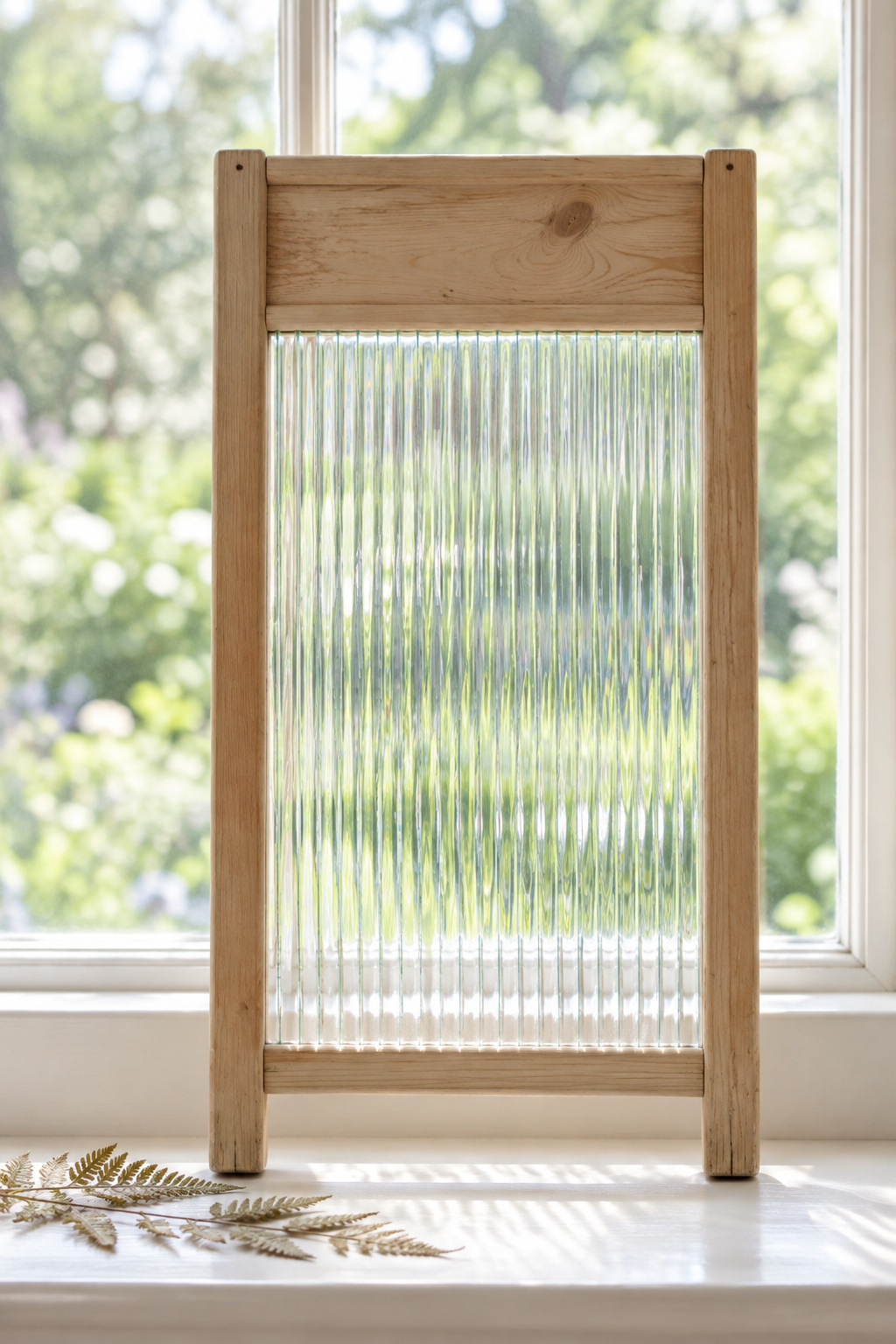
The objects say otherwise. A wood-and-glass board in an Oregon county museum carries a patent date of December 21, 1897. The Henry Ford holds a National glass board dated about 1918, with two patent numbers and NATIONAL embossed in the glass. Glass boards existed decades before the war.
What holds is the weaker version. Glass boards were in use during the war, and one museum board came from a family who washed a sailor’s uniform on it. The shortage may well have pushed more glass into production, but no wartime order, advertisement or catalog documents it.
So glass on its own neither makes a board more authentic nor dates it to the 1940s, though it does make the board heavier.
Pay for a Sound Rubbing Surface, Then Clean It Without Stripping Its History
A display board can carry dents, rust-through and a cracked frame corner, and none of it costs you anything on the wall. A working scrub surface cannot: rust-through snags cloth, and chipped glass is no surface to rub a shirt on. A board that hangs with weight, glass or a loaded shelf back, needs sound glass and a sound frame. One dealer grades the same way: a “good” glass board has no chips, cracks or breaks in the glass and a sturdy frame, while faded ink and old soap residue are accepted. The same dealer took $12.50 off a $49.99 board, a quarter of the price, for a warped leg.
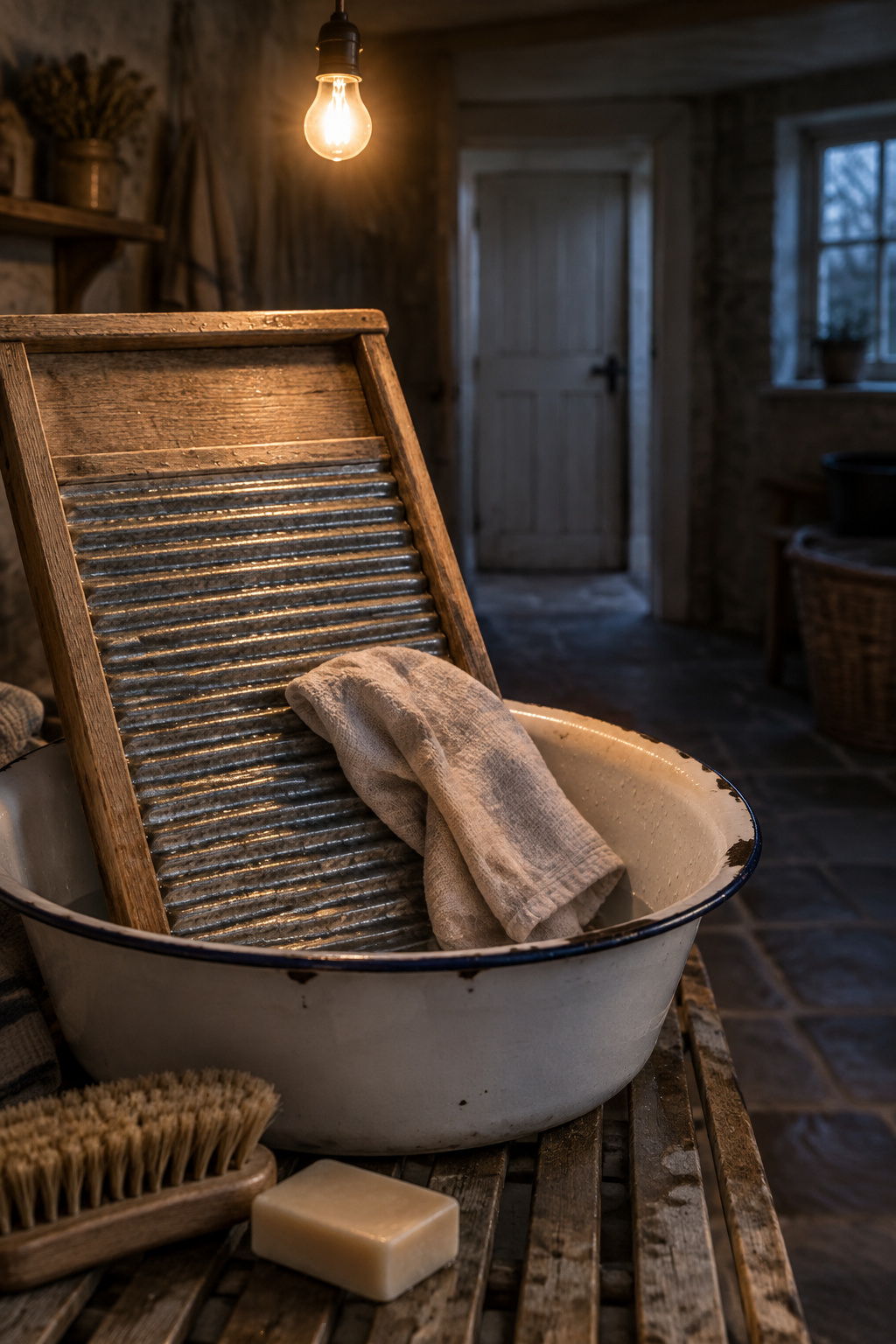
Washboard and tub worked as a pair, clothes scrubbed on the board beside a waiting tub, so if you want an old galvanized tub to go with it, how galvanized zinc corrodes in a damp room is covered there. For the board itself, clean only the dirt:
Dust it dry with a soft brush, ridges and shelf first, then wipe metal with a cloth dampened with plain water; a stable dull finish needs nothing more than dusting. If grime stays, use a little mild soap and a soft brush. Keep wire wool and scouring powder off glass and enamel, and paint stripper or strong alkali cleaner off zinc. Leave worn plating and bare patches where they are, and dry the board fully before it goes back up.
The Canadian Conservation Institute’s advice on lost plating is to leave it alone, because it records how the object was used. I learned that lesson slowly: early on I stripped every painted door to bare wood, until I understood that some were meant to be painted. A washboard scoured bright has lost the same record. If you want a coat, use microcrystalline wax rather than beeswax, which can be acidic, though a stable board left bare leaves whoever has it next nothing to undo.
Hang It by What It Actually Weighs
Let the Weight Pick the Hardware
Brass looks heavy and is not. A full-size brass-faced National board is listed at about 1.15 lb, lighter than a galvanized family-size board at about 2 lb. Glass is the heavy one: a family-size glass board runs from about 4.5 lb to just over 5 lb.
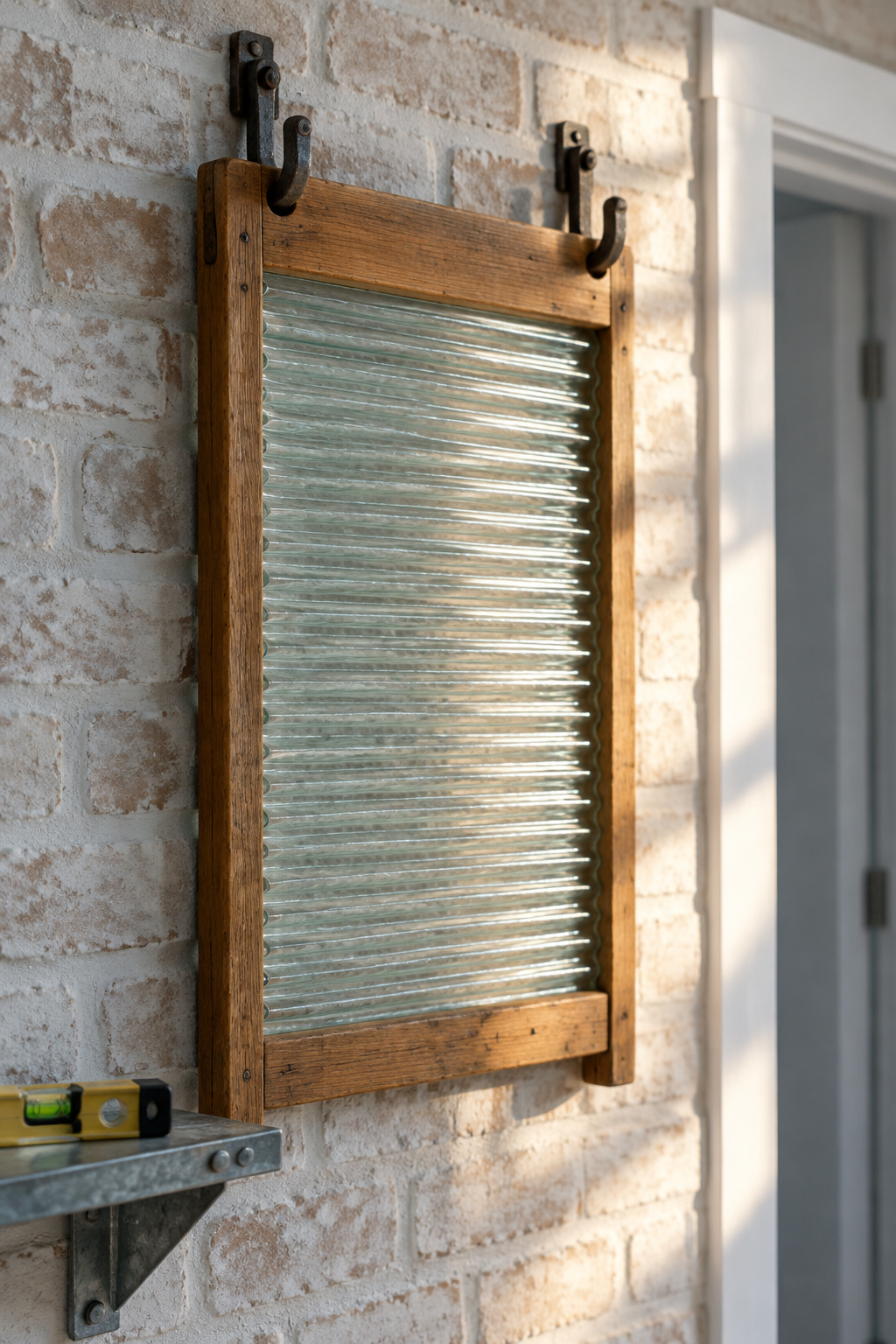
The rule I borrow from mirror hanging is that hardware should be rated to at least twice the weight it carries. A 4.5 lb glass board wants a rating of 9 lb or more. Plan on 6 lb for any family-size glass board you have not weighed, a safe figure rather than a measurement, which makes 12 lb. A metal board at 2 lb needs only a 4 lb rating, which is why most note boards hang from ordinary hardware. A glass board on a single nail is the habit to drop. For glass, fix into a stud or a wall anchor rated for the load; the method for finding and using them is in our guide to anchoring heavy pieces to the wall.
There is no standard height for a washboard. Set it by the job: eye level for a display piece, a comfortable reach for a note board, working height if you will scrub on it.
Hang It Step by Step
- Weigh the board on a bathroom or kitchen scale, or use 6 lb for family-size glass.
- Double the weight and buy hardware rated at least that high.
- Mark the top with a level and fix the hardware into a stud or a rated anchor.
- Lift the board with a hand under it, never by its corners or legs, since old zinc can be fragile, and hang it.
Measure it twice before you drill; plaster walls in old houses are stubborn about second chances.
The glass board by the back door, with its week of lists, earns its place because someone chose the job first, then the board, then hardware rated for twice its weight.
FAQ
How much is an antique washboard worth?
Single glass and enamel boards have sold at auction for about $5 to $40, while dealers ask about $50 for a good glass board and up to about $160 for a mint one. A new board from Columbus costs $11.99 to $39.49, which is the price to compare a working board against.
What did people use to wash clothes before washboards?
Before washboards, people beat clothes against rocks, an ancient method that is rougher on cloth than rubbing. Exactly when washboards began is unknown, though the earliest known patent dates from 1797. Wooden boards were in use by the 1840s, when army laundresses at Fort Scott boiled laundry and scrubbed it on washboards.
What are the parts of a washboard called?
A washboard has a rubbing panel of ridged metal, glass or wood, set in a frame of two sides, a top and a bottom rail. Above the panel sits a soap shelf, often with a draining groove. The printed board on the front is called the business side, and it usually carries the maker’s name.