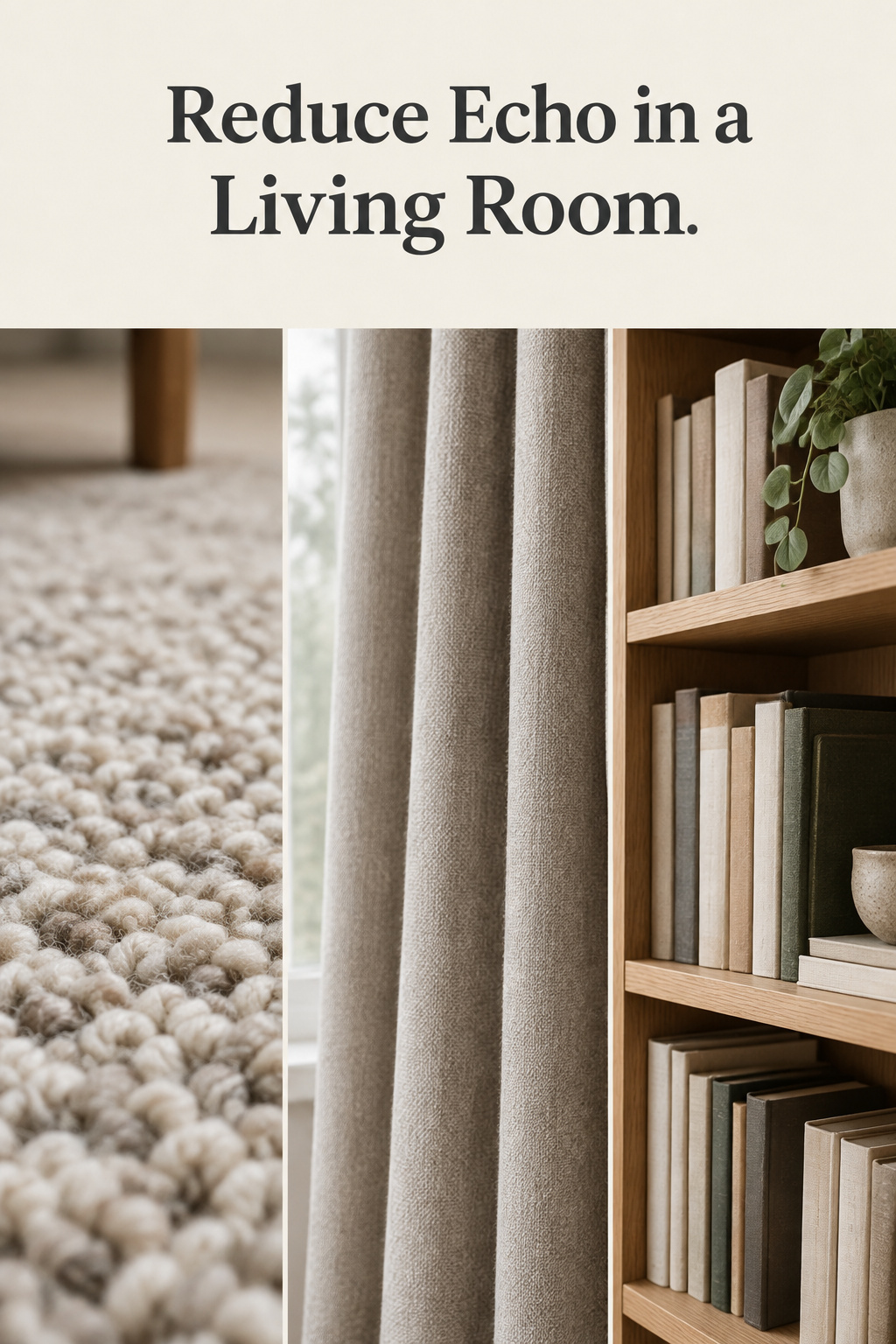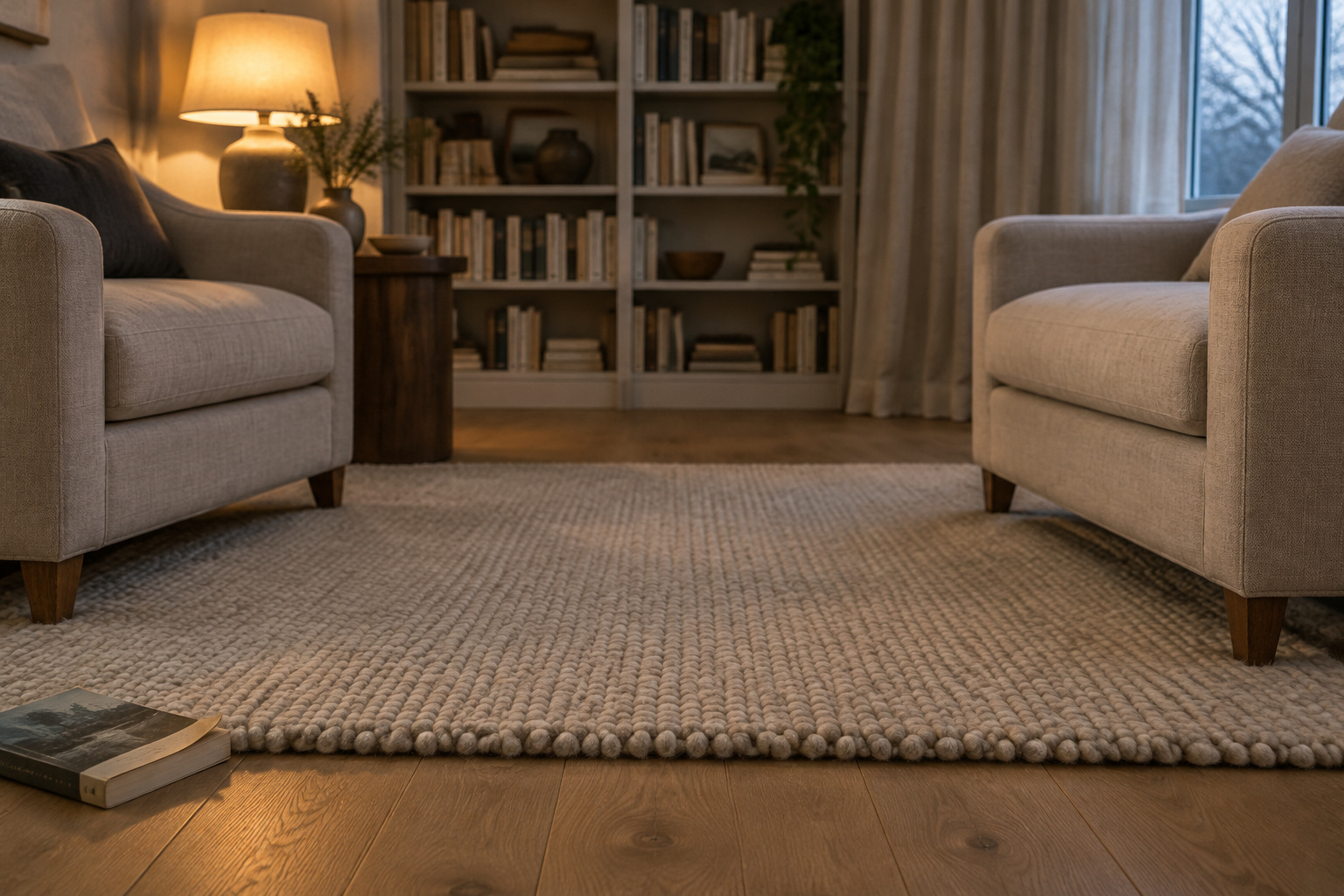
About 1.1 seconds. That is how long sound hung in the air of one empty 28-square-meter room that acoustics researchers measured between 500 and 1,000 Hz. Then they added a carpet, a table, sofas and a curtain, and it fell to about 0.4. If your calm, pale living room makes every voice bounce and you keep riding the TV remote to follow the dialogue, you can probably reduce echo in the living room with things you already meant to buy, before you price a single acoustic panel or a new speaker.
TL;DR
- Clap once in the middle of the room and at the sofa; a sharp ring that hangs for more than about half a second is a lot of reverberation, and the same clap after each change tells you what worked.
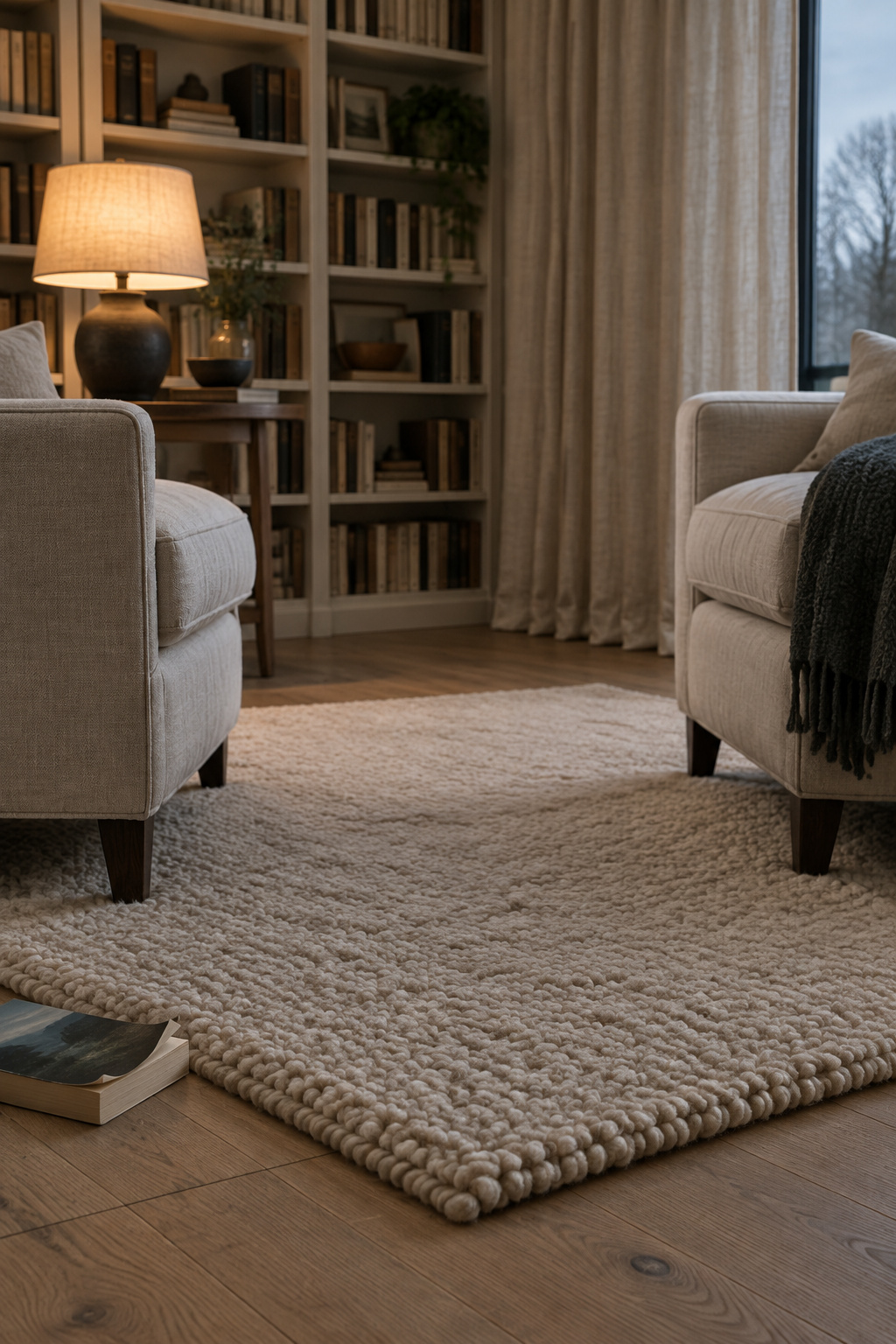
- Buy in this order: a dense wool rug on a felt pad (NRC 0.25 to 0.35, against 0.10 for a wood floor), then full lined curtains, then packed shelves; panels absorb more per square foot but come last.
- A spare neutral room that sounds cold tends to feel cold as well, and the soft surfaces that shorten the ring are the same ones that warm it up.
Hear Your Living Room First: The Clap Test and the Conversation Test
My family room, in a 1960s split-level in Columbus, Ohio, is my test lab, and my family is patient about it. When I started, it had hard floors and bare walls, and a single clap hung in the air.
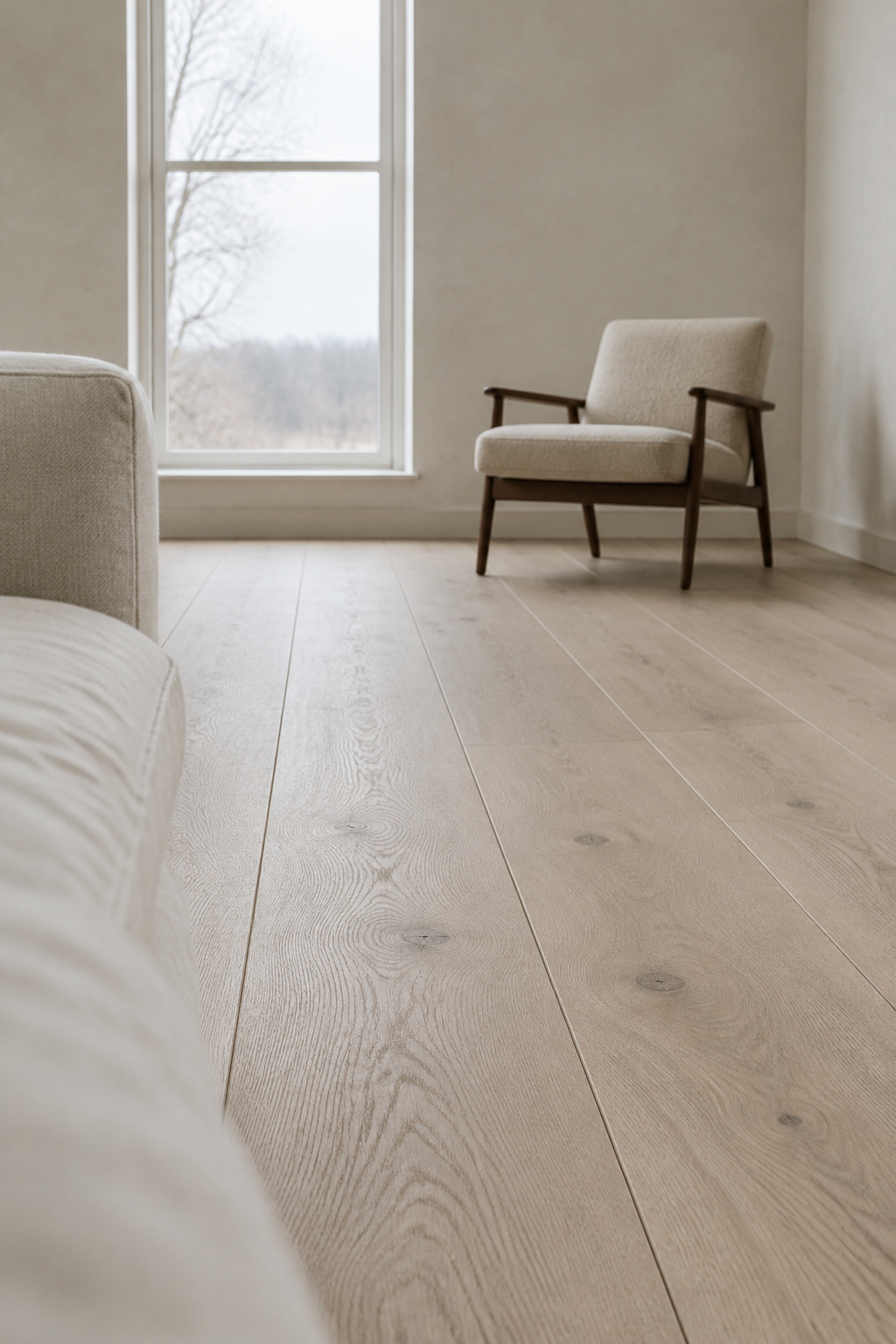
What you are hearing is mostly reverberation, not a true echo. Indoors the walls are too close for a separate echo, so you get many overlapping reflections that blur into a tail. Acousticians measure it as RT60, the time sound takes to fall by 60 decibels. Hard, smooth surfaces keep it going. Soft, porous ones cut it short. A spare room of bare boards, plaster and glass is built almost entirely from the first kind.
- Stand in the middle of the room and clap once, sharply. Listen to how long the sound trails.
- Walk to the sofa and the chairs and clap again; the liveliest spots are where people sit.
- Sit on the sofa and read a sentence aloud to someone in the far chair. Note where the words start to blur.
- Repeat the same clap, in the same spots, after every change you make.
As a loose guide, consumer acoustics pages put a comfortable living room somewhere around 0.4 to 0.6 seconds, and a clap that rings past about half a second means there is plenty to fix.
In my family room, a rug, a bookshelf and curtains did more than any speaker upgrade. That is the order I would give anyone: soft surfaces before new gear. Fix the talking first.
Start With the Rug: Density and Pad Beat Size
The first money goes on the floor, because it is the biggest hard surface in most living rooms and a wood floor absorbs almost nothing, around NRC 0.10.
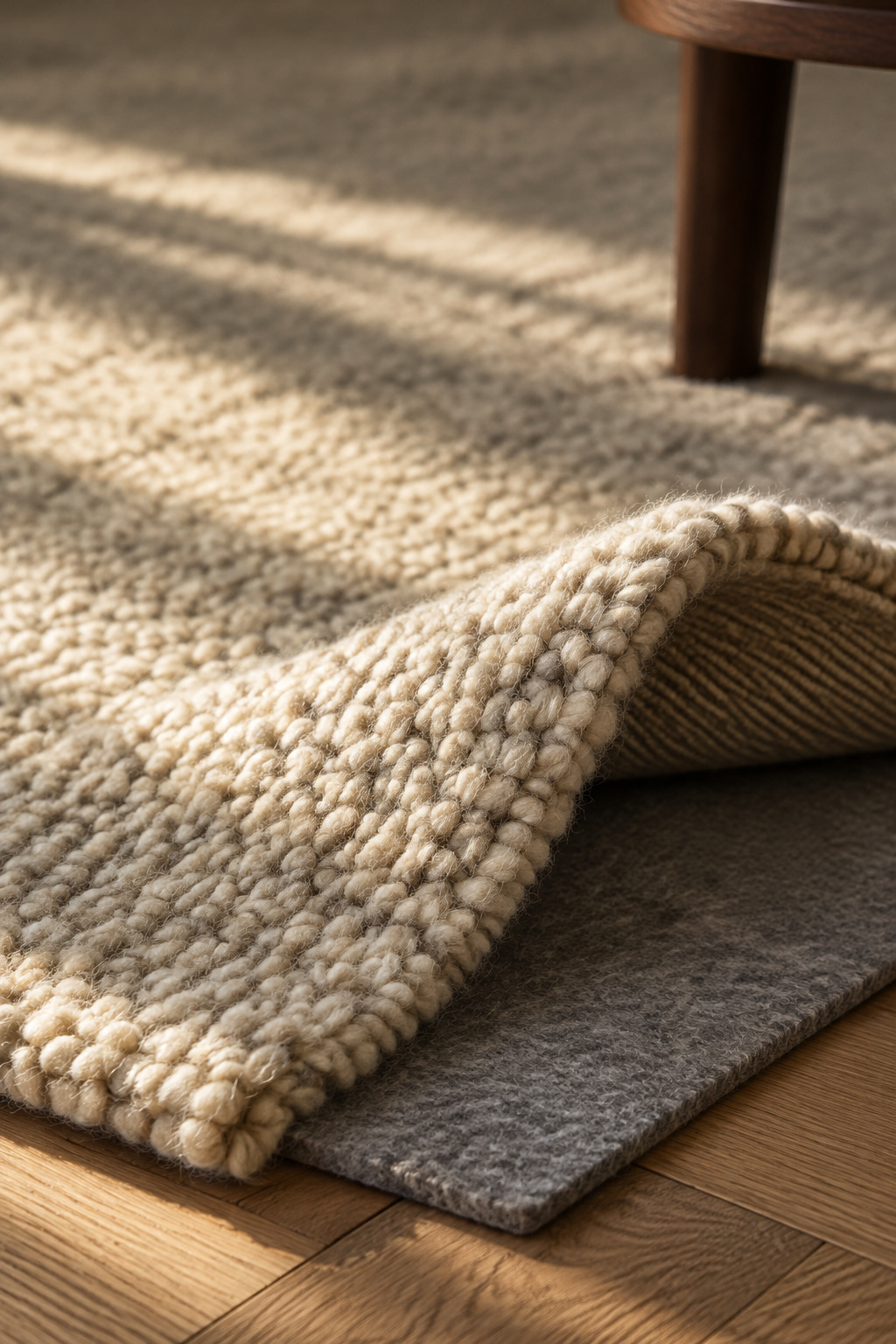
A rug quiets a room in proportion to how much fiber the sound has to push through. A dense, deep pile soaks up sound; a tight flat weave barely registers. Acoustics consultant Art Noxon goes further: tight Berber-style weaves are “not acoustic at all.” The backing matters too. A rug with an open back laid on a thick felt pad can behave like acoustic carpet, while a rug with a sealed, tightly woven back reflects sound, so a pad under it changes how it feels underfoot more than how the room sounds.
The numbers come from two kinds of test that measure different things, so they don’t agree.
| Floor surface | NRC | What was measured |
|---|---|---|
| Wood floor | about 0.10 | Bare boards, the baseline |
| Flat-weave wool rug (kilim, dhurrie) | 0.05 to 0.10 | Loose rug |
| Thick-pile wool rug, 0.5 in pile or more | 0.25 to 0.35 | Loose rug, hand-knotted or tufted |
| Cut-pile wool carpet, 0.5 in pile | 0.55 | Wall-to-wall on concrete, no cushion (Carpet and Rug Institute) |
| Loop-pile wool carpet, 0.375 in pile | 0.40 | Wall-to-wall on concrete, no cushion (Carpet and Rug Institute) |
For a loose rug in a living room, plan on the 0.25 to 0.35 row. The broadloom figures cover the whole test floor, which a rug does not, though they confirm that cut pile beats loop pile.
On hardwood, choose a felt-and-rubber pad with the felt against the floor; a rubber-only pad can bond to the finish. A thick wool rug is also the first thing in a pale, hard room your bare feet want to stand on.
Lined Curtains and Upholstered Seating Do the Quiet Work
Compare two curtains from the old Olson reference tables. A cotton drapery pulled flat against the wall absorbs 0.05, 0.11, 0.18 and 0.30 across the four speech bands, which averages 0.16 and reports as an NRC of 0.15. An 18-ounce velour hung 4 inches off the wall comes in at 0.33, 0.45, 0.52 and 0.50: 1.80 divided by 4 is 0.45. The velour takes out three times as much, and its gap and folds count for as much as its weight.
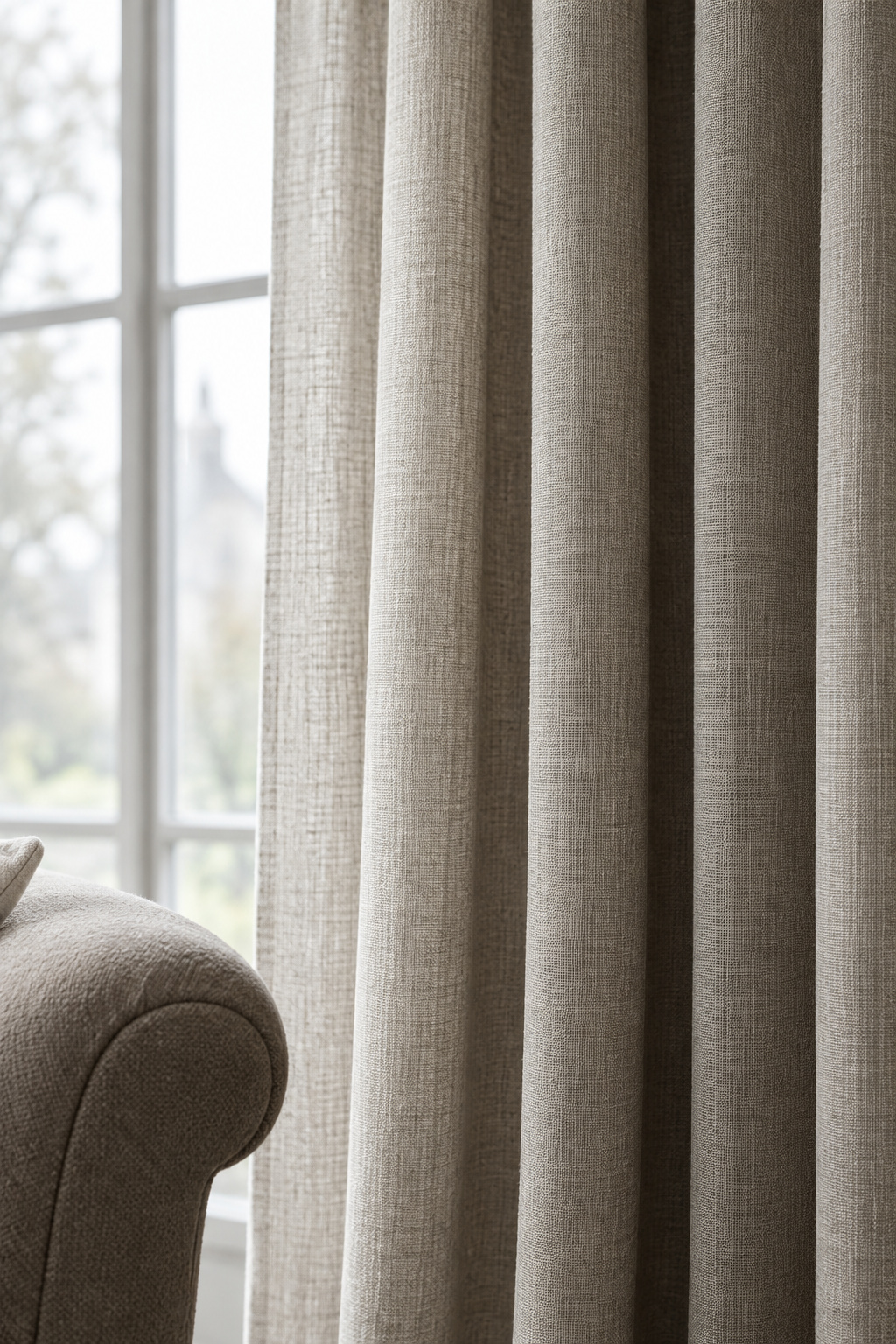
A lab study of curtain fullness in Materiales de Construcción found absorption climbing up to about double the window width in fabric, then flattening. It also rises with the air space behind the fabric. So the curtain that works is full, heavy and hanging clear of the glass, not a single flat panel stretched across the window.
Then look at what you already sit on. Upholstered seating is a real absorber; reference tables give fabric seats around 0.51 to 0.55, with leather lower. Those tables come from theater seating rather than household sofas, so take them as “absorbs well” rather than a sofa rating. A fabric sofa is doing quiet work every evening, one more reason to put care into choosing a sofa fabric that lasts.
Full Bookshelves and Soft Wall Pieces Break Up the Bounce
Bare plaster and gypsum board sit around NRC 0.05, and ordinary window glass around 0.15. That long, empty wall is a mirror for sound, and so is framed art under glass.

A packed bookcase changes the wall’s shape. Spines at different depths and stacks lying sideways send reflections off in many directions instead of straight back, and absorb some on the way. One reference table rates a filled bookshelf at about 0.35, though that is a rough figure, since good data on bookshelves is scarce. I would still fill the shelves before buying anything for that wall, because you were going to fill them anyway, and full wood shelves and furniture in a neutral room add warmth to the eye as well as the ear.
For the remaining bare stretch, a textile hanging or a quilt helps only if it stands off the wall; flat against plaster, fabric is a weak absorber.
- Fill the shelves unevenly. Varied depth scatters sound better than a flat wall of spines.
- Hang textiles with a gap behind them, on a batten or rod.
- Skip glass for acoustics. Framed prints reflect like the window does.
Reduce Echo in a Living Room by Buying in the Right Order
NRC, the noise reduction coefficient, is the average of a material’s absorption at 250, 500, 1,000 and 2,000 Hz, rounded to the nearest 0.05 and measured in a lab to ASTM C423. A 0.45 means the surface absorbs about 45 percent of the sound that hits it.
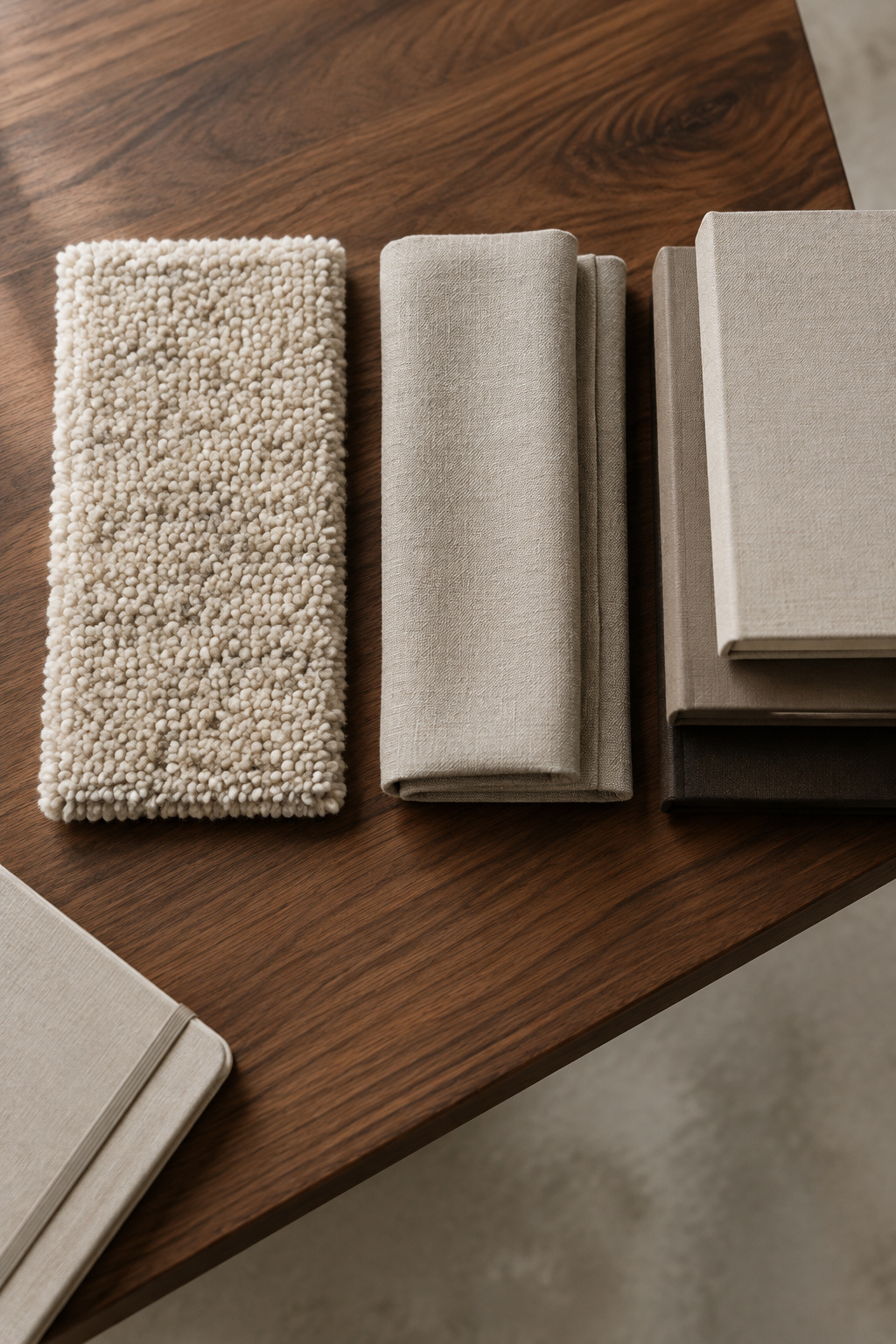
Here is the order I buy in.
| Fix | NRC | Typical cost | Buy order |
|---|---|---|---|
| Dense wool rug on a felt pad | 0.25 to 0.35 | Carpet-grade wool $7 to $15 per sq ft mid-range, plus felt pad $0.81 to $1.25 per sq ft | 1 |
| Full, lined curtains | 0.45 hung full and off the wall | $15.51 to $33.28 per panel | 2 |
| Upholstered seating | About 0.5 | Already in the room | 3 |
| Full bookshelves | About 0.35 | Books you own | 4 |
| Fabric-wrapped panels | 0.75 to 1.05 | Specialist product | Last |
Work the top two rows through. Carpet-grade wool with the pad under it runs $7.81 to $16.25 a square foot, for absorption of 0.25 to 0.35 on the biggest hard surface in the room. A pair of budget lined panels runs $31.02 to $66.56 and covers the second-biggest reflector, the window. Those curtain prices are for budget panels that were never tested for acoustics. The order comes from surface size: the floor first, then the window.
My standing advice, well beyond echo: buy the room treatments before the upgrade you’re eyeing.
When Panels Are Worth It, and the First Thing to Do
When Acoustic Panels Are Worth It
Panels absorb more per square foot than anything in the table. Fabric-wrapped fiberglass boards from the major core makers test at NRC 0.75 to 0.80 at 1 inch thick and 1.00 to 1.05 at 2 inches, against 0.25 to 0.35 for a good rug. They earn a place when you can’t add a rug or curtains, when the room doubles as a screening room, or when the clap still rings after the soft pieces are in. For the wood slat wall and the home-theater approach, see our TV wall ideas, and if your living room has a tall ceiling, our piece on making a vaulted ceiling cozy covers the extra height.
Your First Move
Clap once in the middle of the room and once at the sofa. Then put down the rug and its pad and clap again in the same spots. A shorter tail means it worked; move on to the curtains.
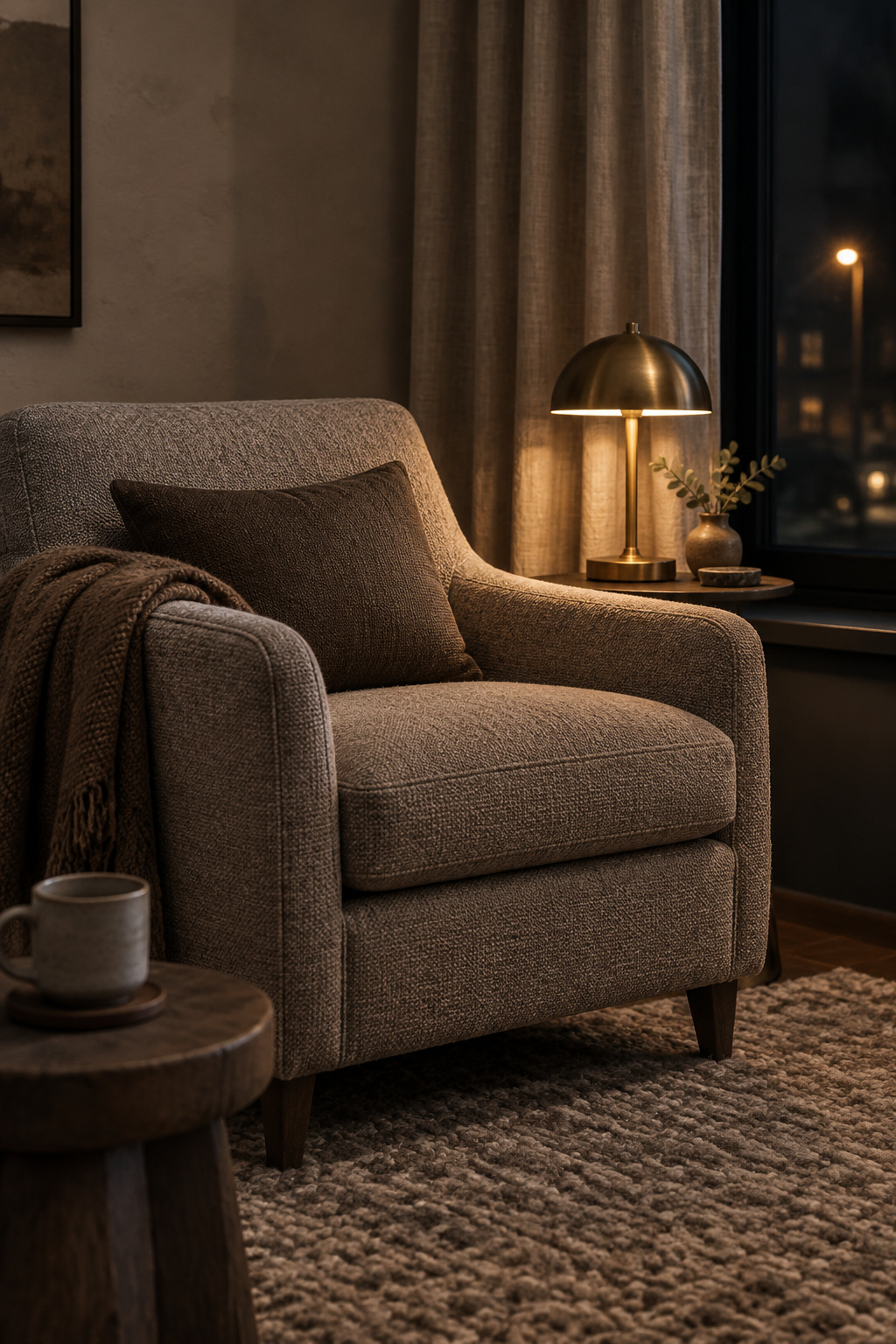
A spare neutral room sounds cold, and it feels cold, until it is soft. The rug, the curtains and the full shelves fix both at once, and they are the same pieces that carry the rest of a cozy neutral room.
FAQ
Why does my living room echo more than my bedroom?
Your living room is usually bigger and barer. Sound travels farther between reflections in a larger room, so it lingers longer, and a bedroom holds a bed, which is a large soft absorber. In one survey of furnished homes, living rooms measured 0.68 seconds of reverberation against 0.49 for bedrooms.
How do you cut echo in a rental without drilling into walls?
Start with a dense rug on a felt-and-rubber pad, felt side against the floor, which needs no fixings and protects hardwood. Hang full, lined curtains on the existing rod, about double the window width in fabric. Add a freestanding bookcase, fill it, and lean a textile piece rather than hanging it.
Does wall art or a gallery wall help with room echo?
Not much. Framed art behind glass is a hard surface, and glass absorbs very little sound, so it reflects like a window. A gallery wall breaks up flat reflections slightly, but it is no substitute for a rug and curtains. A textile hung flat absorbs little; give it an air gap behind.