What would your bathroom look like if nothing in it were there only to decorate? Most people who ask me about Japandi bathroom decor expect a shopping list — the bamboo tray, the stone soap dish, the matching amber bottles, perhaps a small Buddha head by the tub. I see it differently. The calm comes from the things you already use every day, made worth looking at, and from taking out almost everything that exists only to be looked at. Before anything goes in, I start with what can leave.
TL;DR
- Start by removing things: matching accessory sets, bamboo kitsch and religious images used as ornament go first, because none of them does a job in a bathroom.
- A few working pieces carry the room: a wooden bath stool (25–30 cm, or 9.8–11.8 in, is the traditional seat height), a slatted hinoki or teak mat that dries between baths, and one tray for the daily bottles.
- Wood lasts in a bathroom when it dries: stand the mat on edge after use, keep it out of standing water and direct sun, and sand light marks along the grain instead of reaching for bleach.
Japandi Bathroom Decor Starts With What Leaves the Room
A calm bathroom lets your eyes settle. Every object on a ledge asks for a little attention, and twenty objects ask for twenty pieces of it before you’ve turned on the tap.
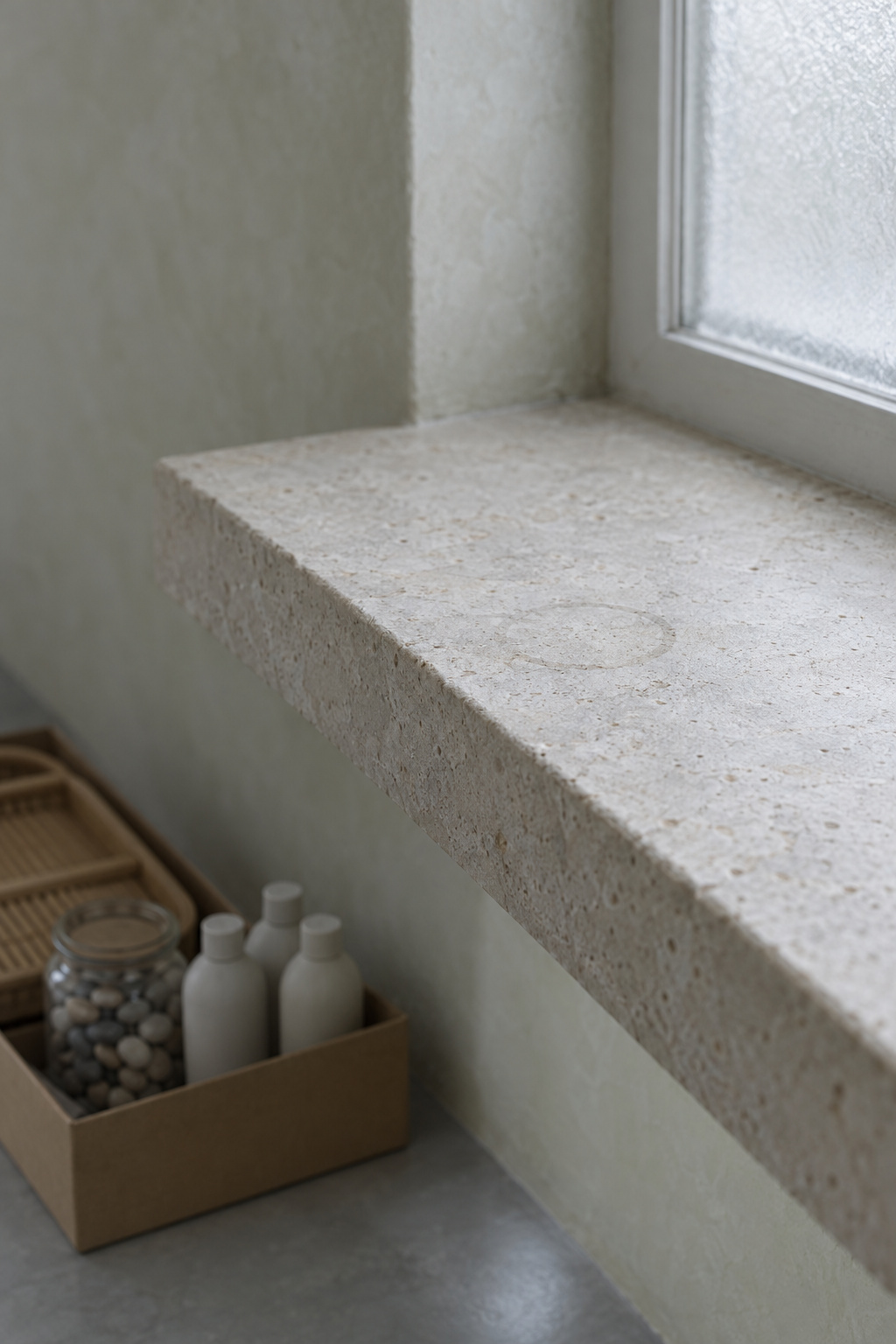
The test I use is one question, asked of each thing in turn: what does this do? A towel dries you. A stool holds you while you wash. A tray keeps the bottles in one place. If the only answer is “it looks Japandi”, it goes. The test is older than the style: Japanese tea masters chose their bowls as working tools first, and their tea rooms held very few objects.
What I take out first:
- Matching accessory sets, where the dispenser, tumbler and soap dish share one glaze
- Bamboo bought for the look: the tray, the sign, the faux-bamboo frame
- Buddha heads and stone lanterns placed as ornament
Buddha heads are sold as neutral decor, so here is why they go. Matthew Gindin, a former monk in the Thai Forest tradition, writes in Tricycle that in Thai practice Buddha images are placed highest in a room, never low, and are not used to decorate everyday objects. A Thai organization has pressured European manufacturers to take decorative Buddha images off toilets. Gindin also notes that not every Buddhist thinks this should be policed. My own reason is respect: an image someone else bows to shouldn’t sit beside my toilet. A room full of borrowed sacred objects feels borrowed, and that is hard to rest in.
The bigger decisions about stone, wood and where the water goes belong to a Japandi style bathroom as a whole; the decor is what sits on top of them.
Clear the ledge you see first when you walk in, and leave it bare for a week.
A Low Stool and a Wooden Mat: The Two Pieces That Live on the Wet Floor
The stool: height, wood and what it holds
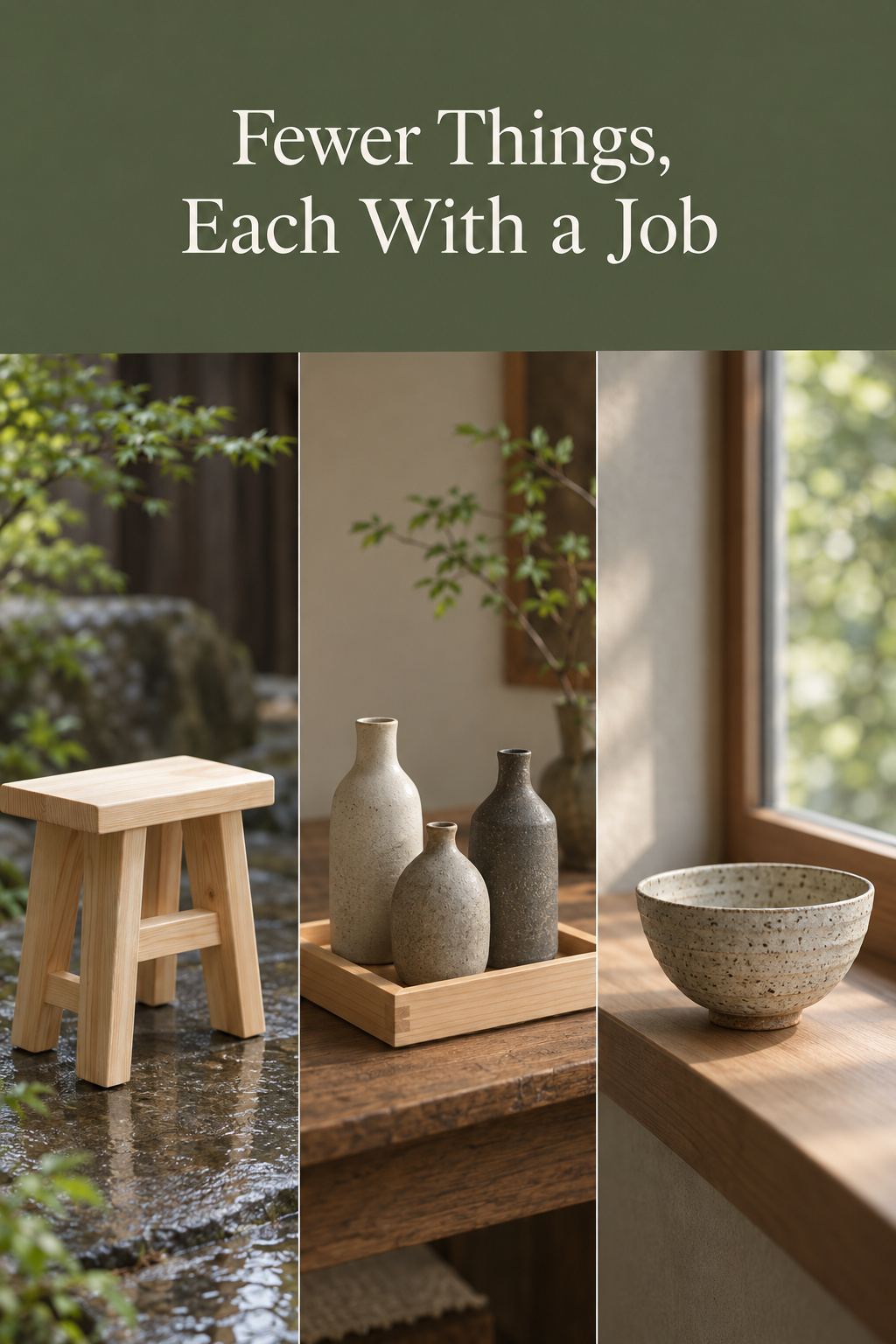
A small hinoki stool was traditionally what you sat on in a Japanese wash house while you washed, before you went into the bath. It still does that job, and holds the soap between baths.
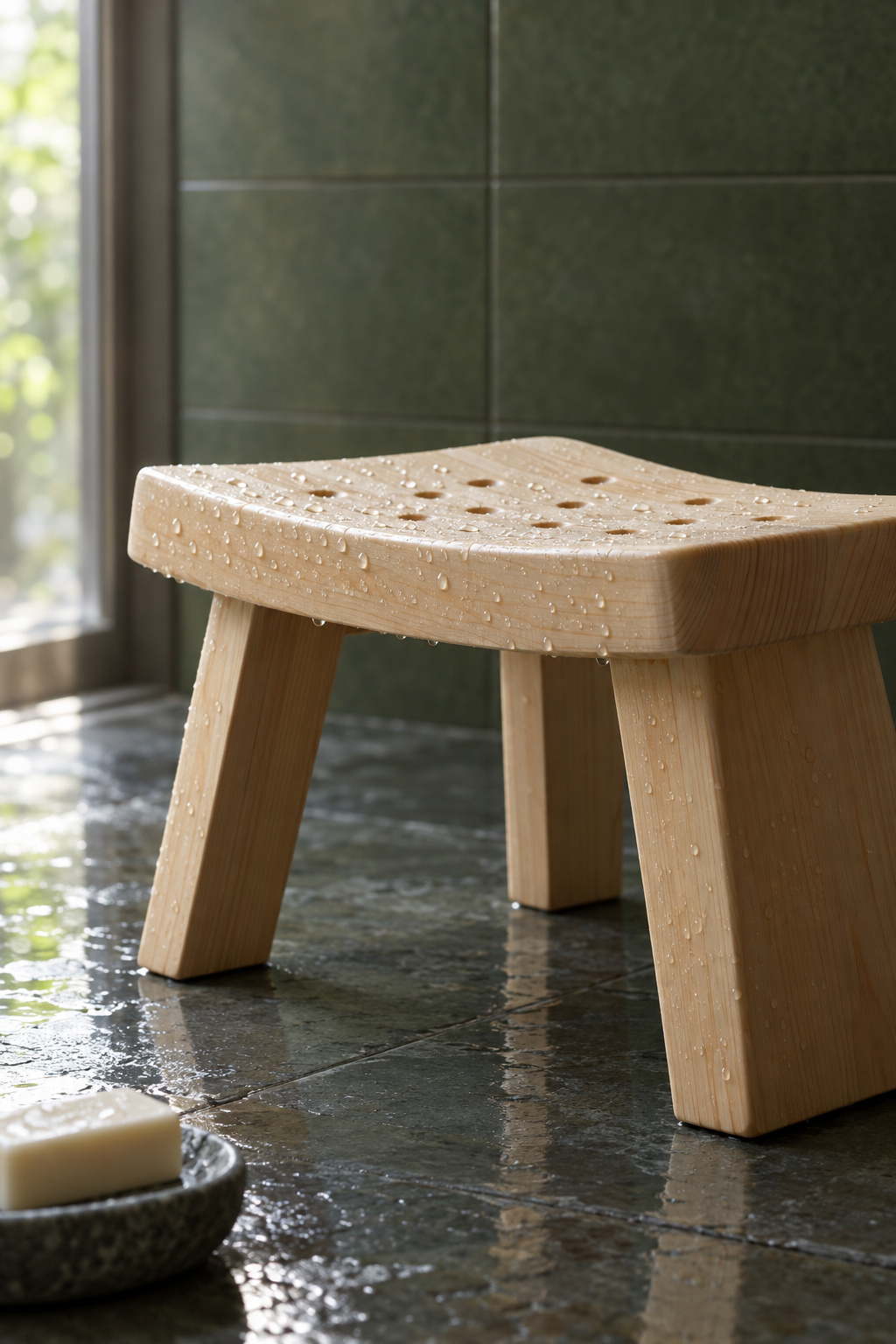
Check the height. The traditional seat is 25–30 cm (9.8–11.8 in), which suits most adults and children. Around 35 cm (13.8 in) and up is the taller option, for an easier stand. Hinoki stools on sale run from 21 cm (8.3 in) to 45 cm (17.7 in), so read the listing rather than assuming. Hand-made ones are asking roughly $129 to $148. Kohler’s hinoki stool, at $469.69, is a perch for beside the tub, not a wash stool.
Hinoki is warm under you and smells good wet. A Japanese buying guide that praises wooden stools for exactly that still warns they mold easily. Care matters more than the species.
The mat: hinoki or teak, and how it dries
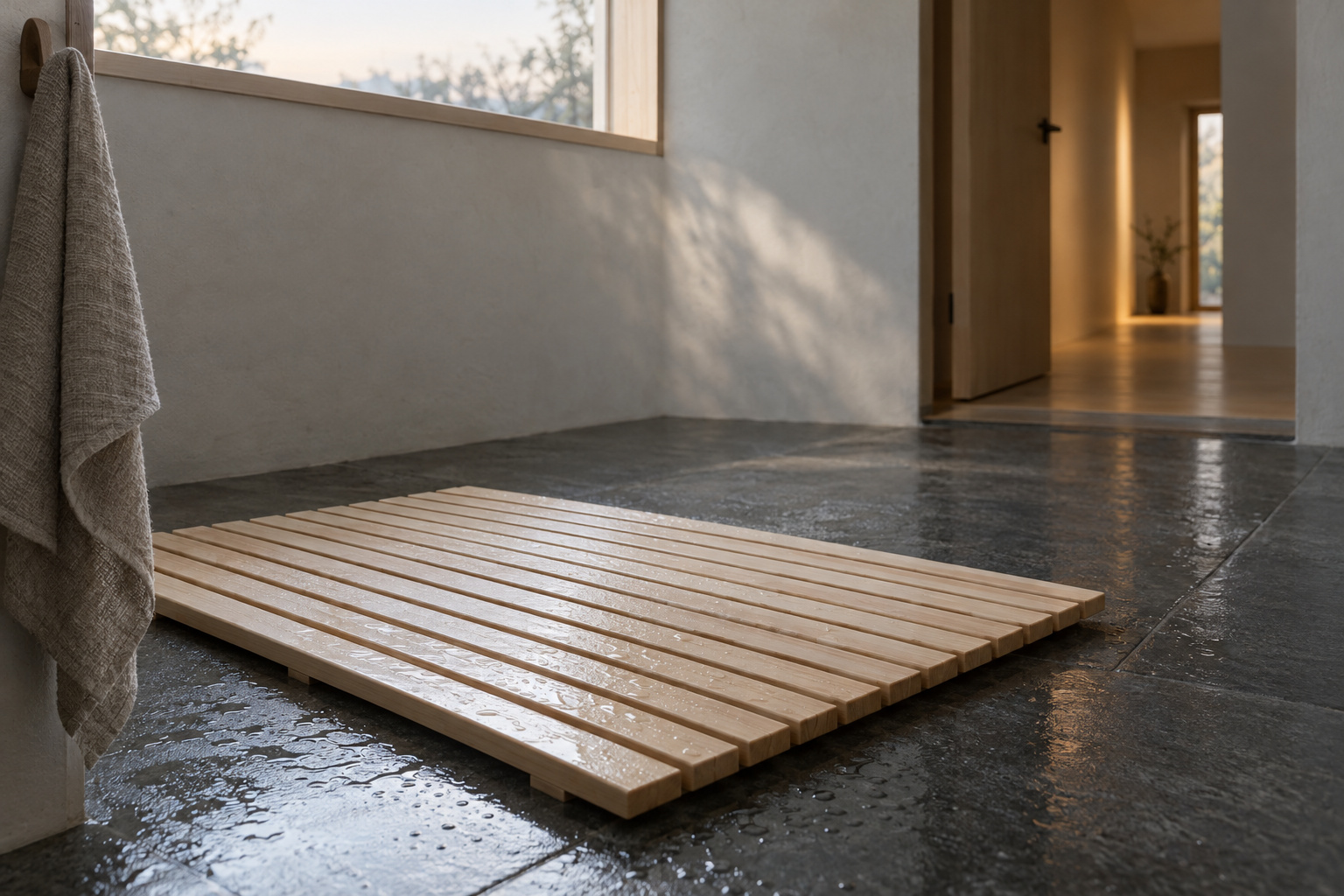
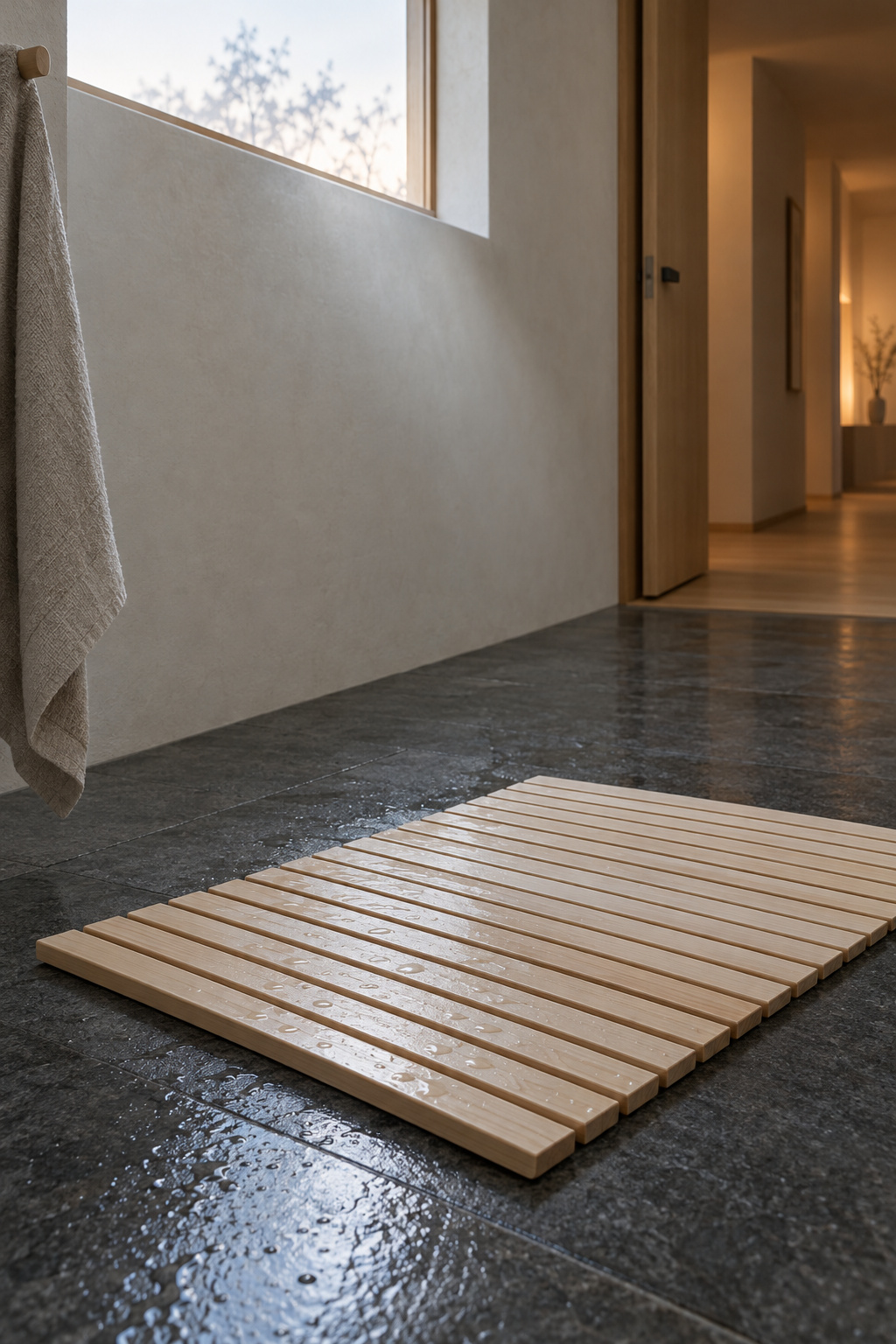
A wooden mat gives you dry footing where you step out, in place of a fabric rug that stays damp all day. Look for untreated hinoki or teak, gapped slats and feet that lift it off the floor. One hinoki mat with rubber stoppers underneath measures 600 x 360 x 28 mm (23.6 x 14.2 x 1.1 in), which is a fair picture of the type.
It works because it dries: wood rots only when it stays wet for long stretches. A mat that dries between baths won’t decay, and damp air on its own allows a little mold but not rot. The mat that fails is the one left lying in a puddle.
Grip on a wet floor comes down to the floor’s own slip rating, which the guide to small shared bathrooms covers.
One Tray for the Daily Bottles, and Towels Worth Leaving Out
My cat, Dal, claims any cushion I lay down within an hour. So now I put one cushion out for the cat on purpose, and the rest of the room stays clear.
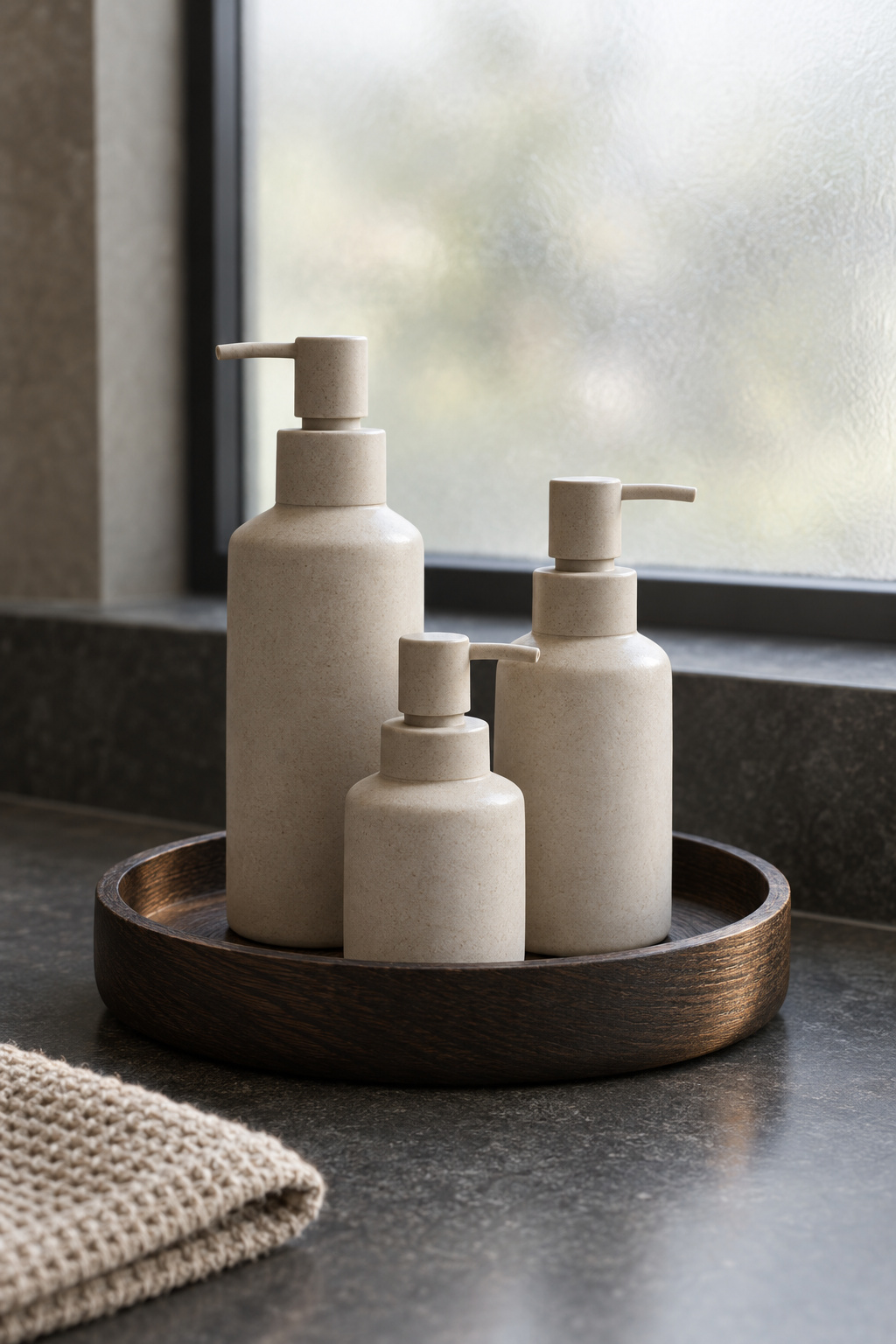
Bottles behave the same way. Give them nowhere to go and they spread across every ledge; give them one place on purpose and they stay there. One tray, in wood or stone, with an edge that keeps drips off the counter, holds what you reach for every morning and nothing you use once a month. If the labels are loud, decant into ceramic or glass. Everything else goes behind a door. The tray looks best on a vanity worth leaving bare, with nothing else around it.
Towels are allowed to stay out because they work. Linen and waffle weave both dry quickly, which matters when a towel should be fully dry between uses and washed at least once a week. Hang them open, where air reaches both sides.
One Handmade Piece, and a Branch Only If You Will Water It
I used to insist that a meditation space be completely bare, until clients told me a bare room felt like a waiting room. Now I keep one meaningful object in a room, and a bathroom gets the same allowance.
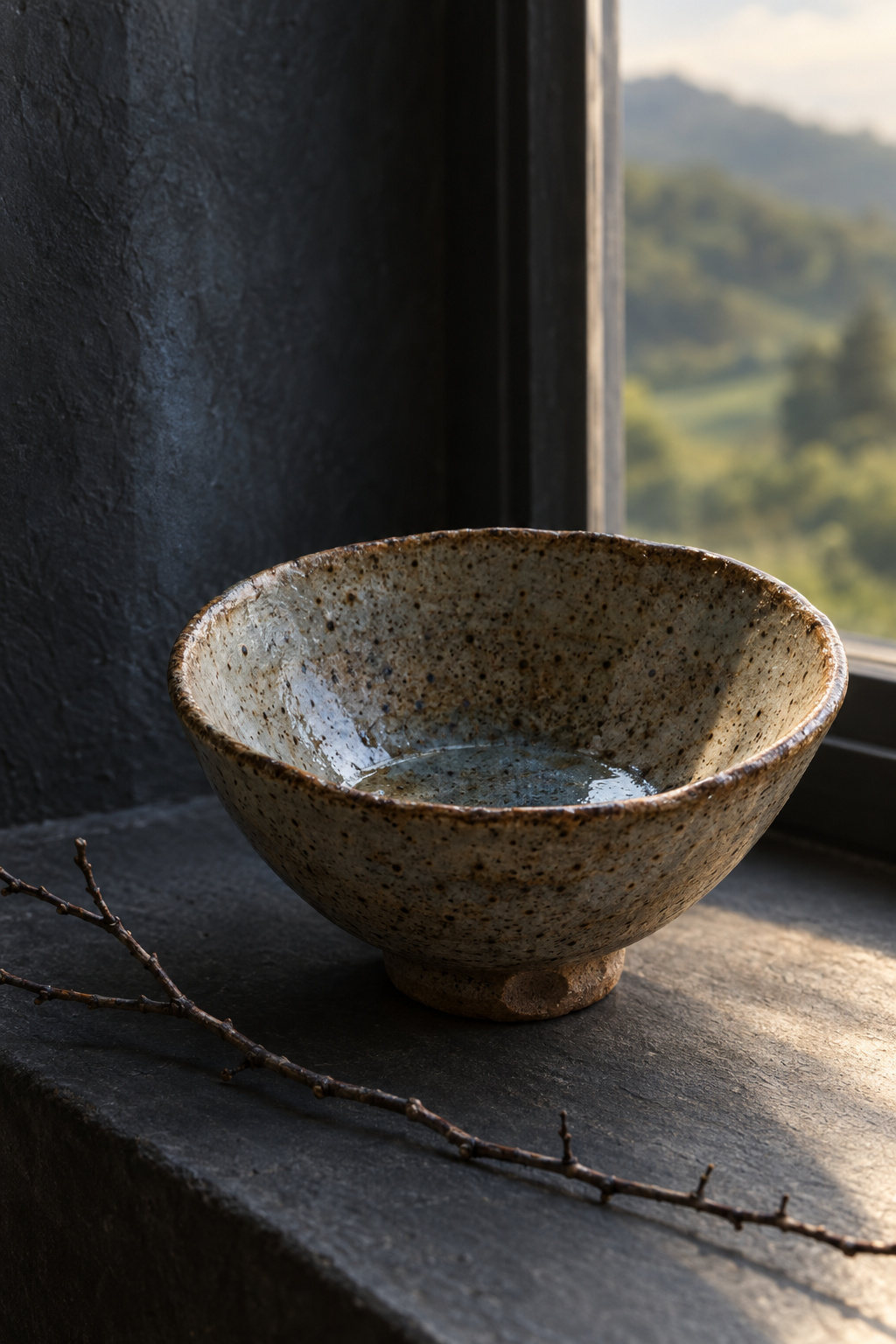
This is where wabi-sabi comes in. Wabi is usually translated as tranquil simplicity. Sabi is patina, the beauty that comes with age and the wear of daily use. Japanese tea ceramics show it through uneven edges, small cracks and glazes that vary.
Choose one handmade piece, ideally one that also works: a stoneware cup for rinsing, a small dish for a ring, a bowl for the soap. Pick it up before you buy it. Feel the weight, run a thumb along the rim, and notice where your shoulders go when you hold it. A shop selling a “wabi-sabi set” of six identical rough-glazed pieces has missed the idea; irregularity that comes in sixes isn’t irregular.
If you want something green, keep one branch or plant you will actually water, because a dead plant is worse than none.
Scent, Sound and Care: Keeping Wood Objects From Going Gray
I keep a cast-iron kettle on the stove mostly for the sound it makes, so I tend to hear a room before I see it, and a room of tile and glass is loud. A wooden mat and linen towels soften it a little. Hinoki gives off a fresh, woody scent when hot water hits it, and sanding brings it back, so I wouldn’t add another scent on top.
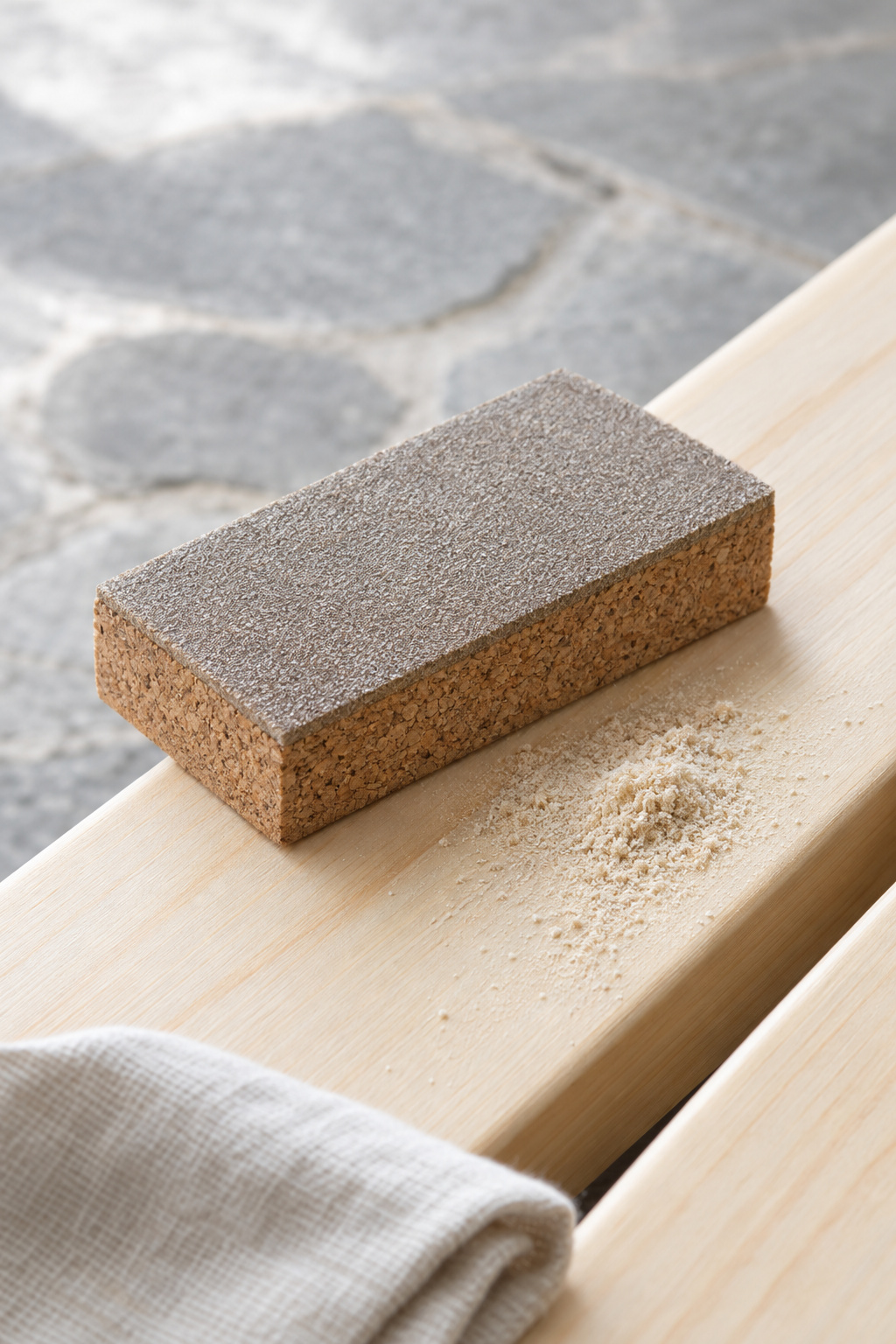
The care is all drying. Rinse and wipe the stool after use, stand the mat on edge so air reaches both sides, and dry both in the shade, away from sun and heaters that warp and crack wood. Sand light marks along the grain with fine paper; skip bleach and stiff brushes. Gray or dark patches on a mat that stays damp are a drying problem to fix, not a patina to admire.
Makers disagree about oil. ARB Teak doesn’t recommend oils, coatings or any finishing products on its teak mats. MIJ tells you only to sand its untreated hinoki mat, while selling a hinoki care oil separately. Follow the maker of the piece you own.
In a bathroom the whole household uses, the mat rarely gets its chance to dry, which is part of what keeping it calm in a shared bathroom has to plan around.
The Short List, in Buying Order
Buy in the order you touch things: stool and mat first, because you use them daily, and the handmade piece last, because it’s the easiest to buy too soon.
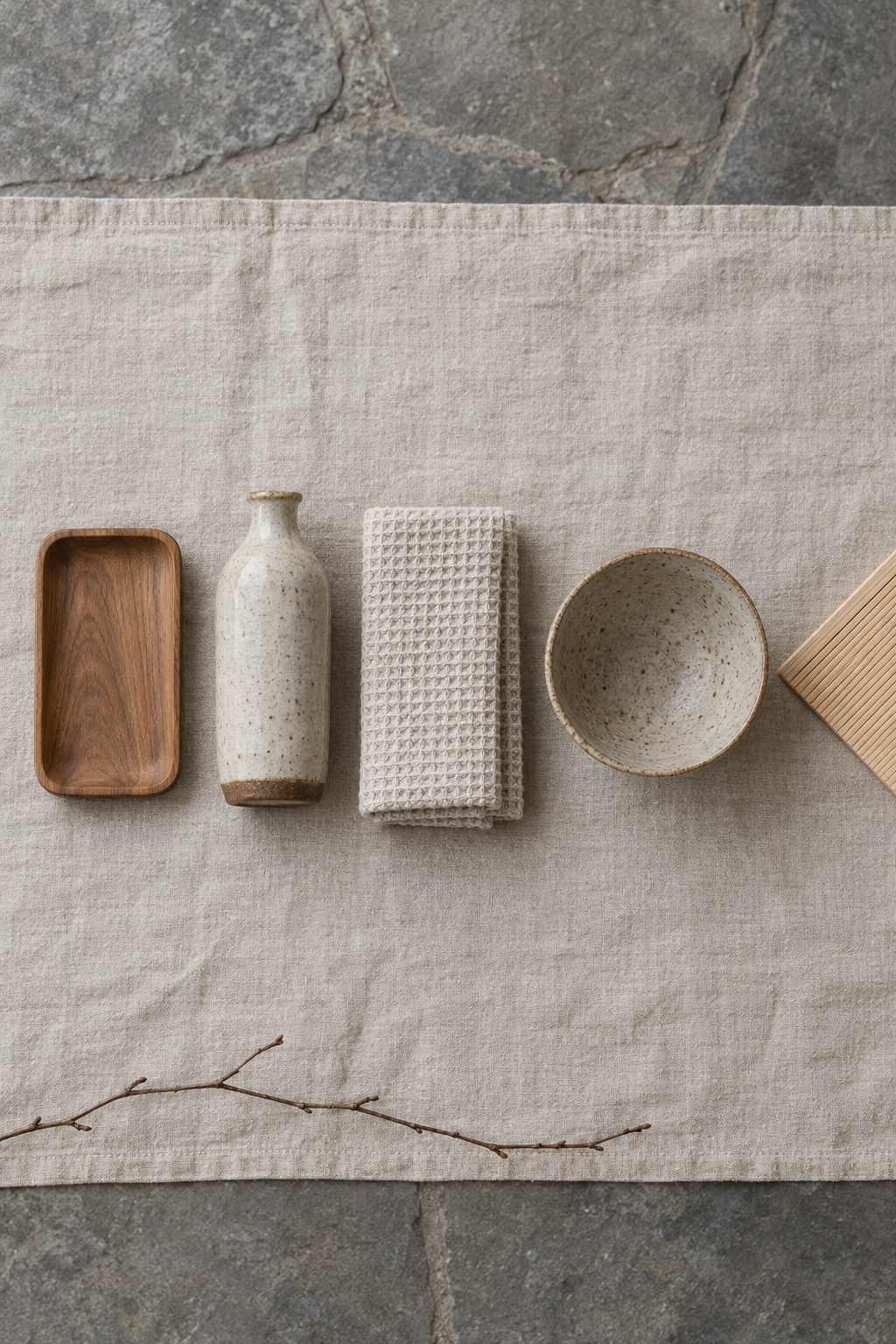
| Object | Its job | Made of | What to check |
|---|---|---|---|
| Bath stool | Holds you while you wash | Hinoki or another bath wood | Seat height (25–30 cm traditional); you can stand up from it easily |
| Wooden mat | Dry footing where you step out | Untreated hinoki or teak | Slat gaps, feet that lift it, can stand on edge to dry |
| Tray | One place for the daily bottles | Wood or stone | An edge that keeps drips off the counter |
| Towels | Dry you, then dry themselves | Linen or waffle weave | Hung open; fully dry between uses |
| One handmade piece | Be looked at, and ideally used | Hand-thrown stoneware | Weight and rim in your hand |
Picture the ledge with only the tray on it, the stool tucked by the bath, the mat on edge to dry: most bathrooms are a few removals from that. The bottles that didn’t make the tray still need a home behind a door, and choosing the cabinets and baskets for them is where the small-bathroom storage guide takes over.
FAQ
Can you keep decor you already own and still make a bathroom Japandi?
Yes, as long as each piece has a job or a real reason to be there. Japanese interiors have long mixed useful objects like teapots and ceramic cups into uncluttered rooms. Keep what you use daily and what you’d choose again. Let matching sets go, and move any religious figures you own to a place where they’re treated with respect.
What is the difference between wabi-sabi and Japandi in a bathroom?
Wabi-sabi is an older Japanese way of seeing: tranquil simplicity, and the beauty that comes with age and daily wear. Japandi is a newer blend of Scandinavian and Japanese design. In a bathroom, wabi-sabi is the one handmade piece and the wood that ages. Japandi is the whole calm, working room around them.
Can you use a bath stool if you have a bad knee or limited mobility?
Often, if the height is right. A seat should let your feet rest flat with hips and knees close to a right angle; too low, and standing up strains knees and hips. The traditional stool is 25–30 cm, with taller ones from 35 cm. An occupational therapist can check whether a stool suits you.