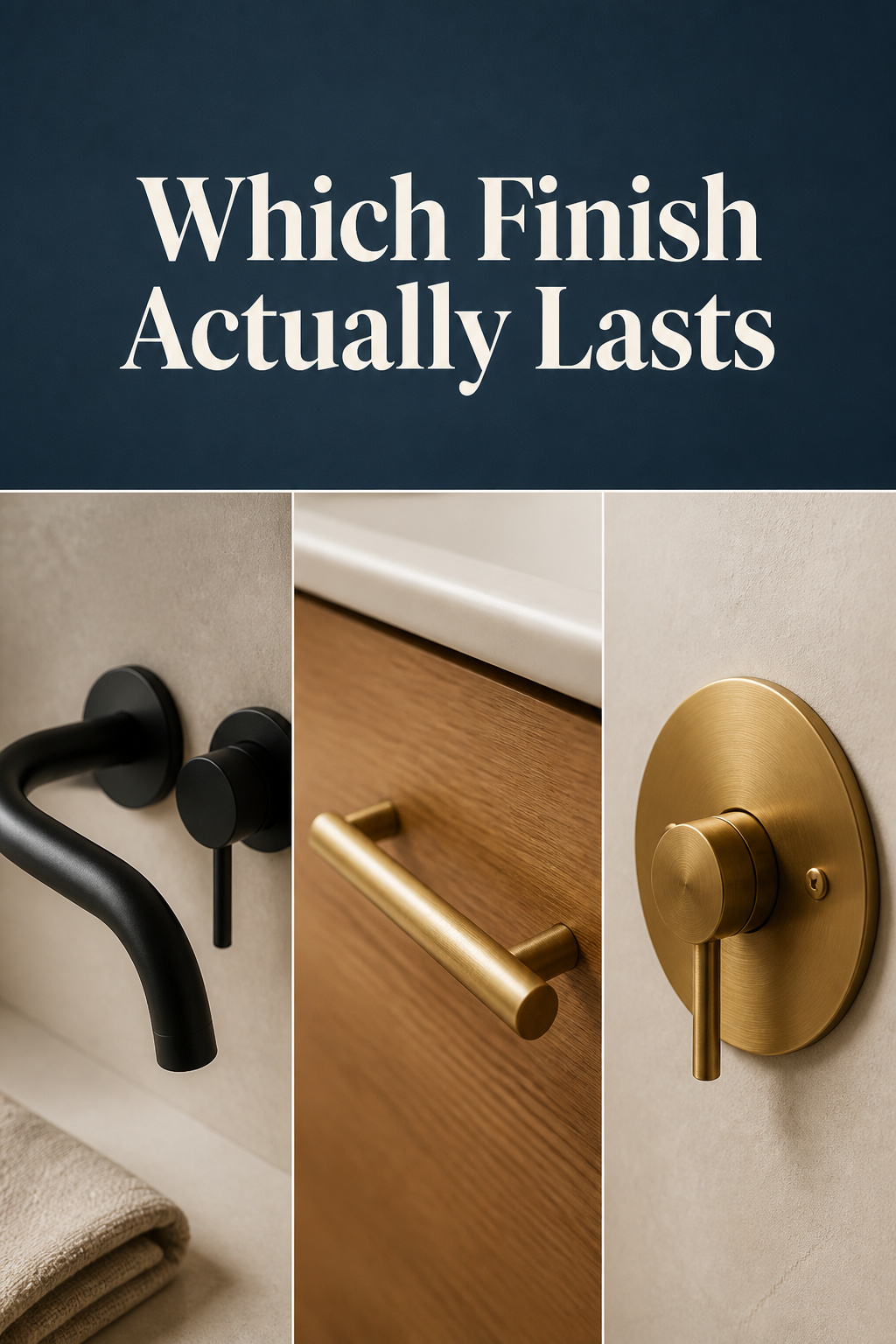
You have already stopped choosing on colour alone. The rooms you keep returning to are the ones where every piece of metal agrees with every other, and still agrees five years on. That second half is the harder part to get right with bathroom fixture finishes. The expensive mistake is assuming price or trend status predicts durability, when bonding is what predicts it.
TL;DR
- PVD bonds metal atom by atom in a vacuum and runs about four times harder than chrome; powder coat is a baked polymer colour layer that can be redone; plating over zinc alloy fails first.
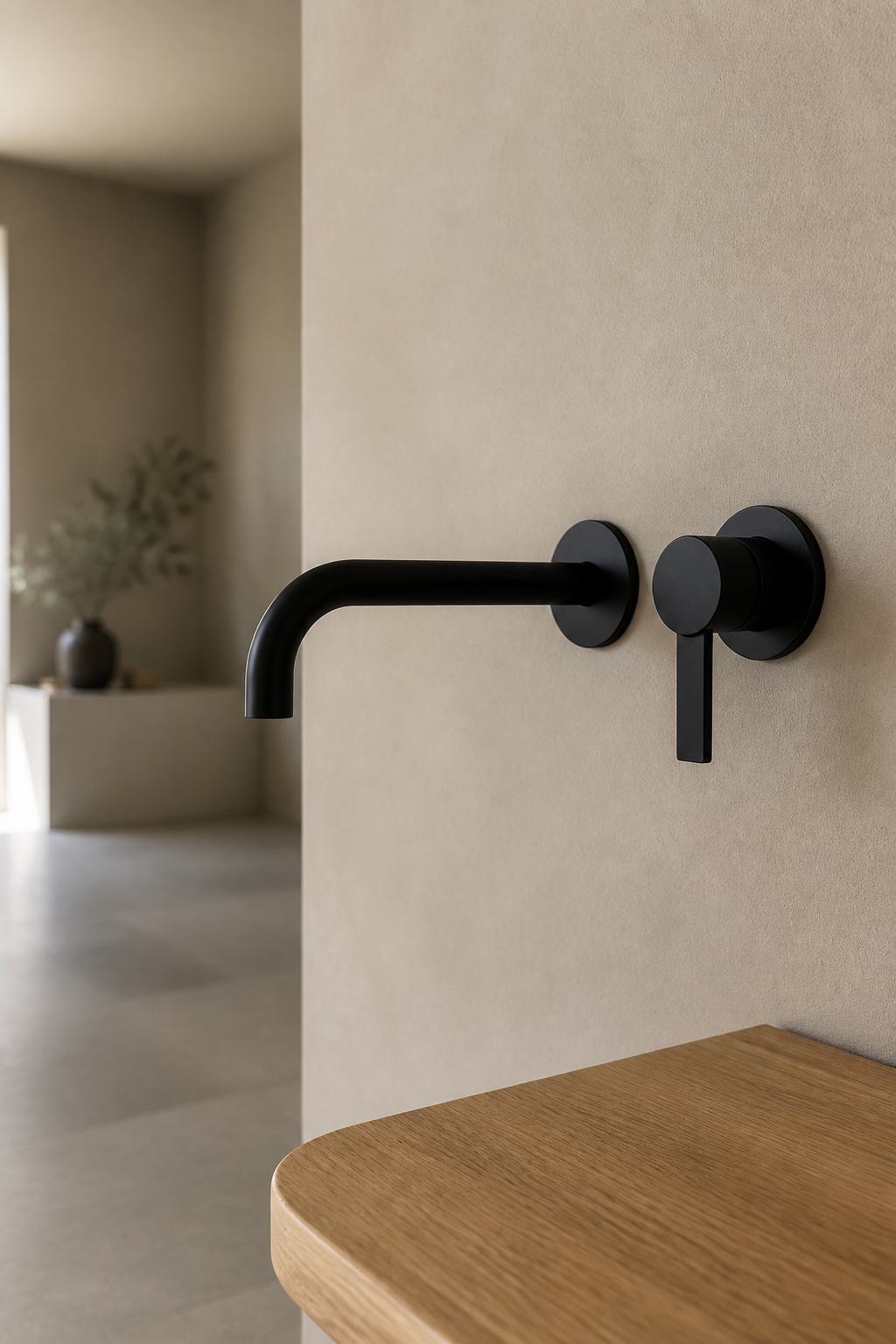
- Matte finishes camouflage mineral spots and fingerprints best (chrome shows marks most, then stainless, then brushed nickel, matte black least), though hiding marks is not the same as preventing them.
- Bleach, ammonia, vinegar and any abrasive damage matte black and PVD alike; mild soap, warm water and a soft microfibre cloth is the whole routine.
How bathroom fixture finishes differ: PVD, powder coat, living finishes and plating
Four processes account for nearly everything on the market. Each works in its own way, so ranking them as four grades of one thing misses how differently they wear.
PVD (physical vapor deposition)
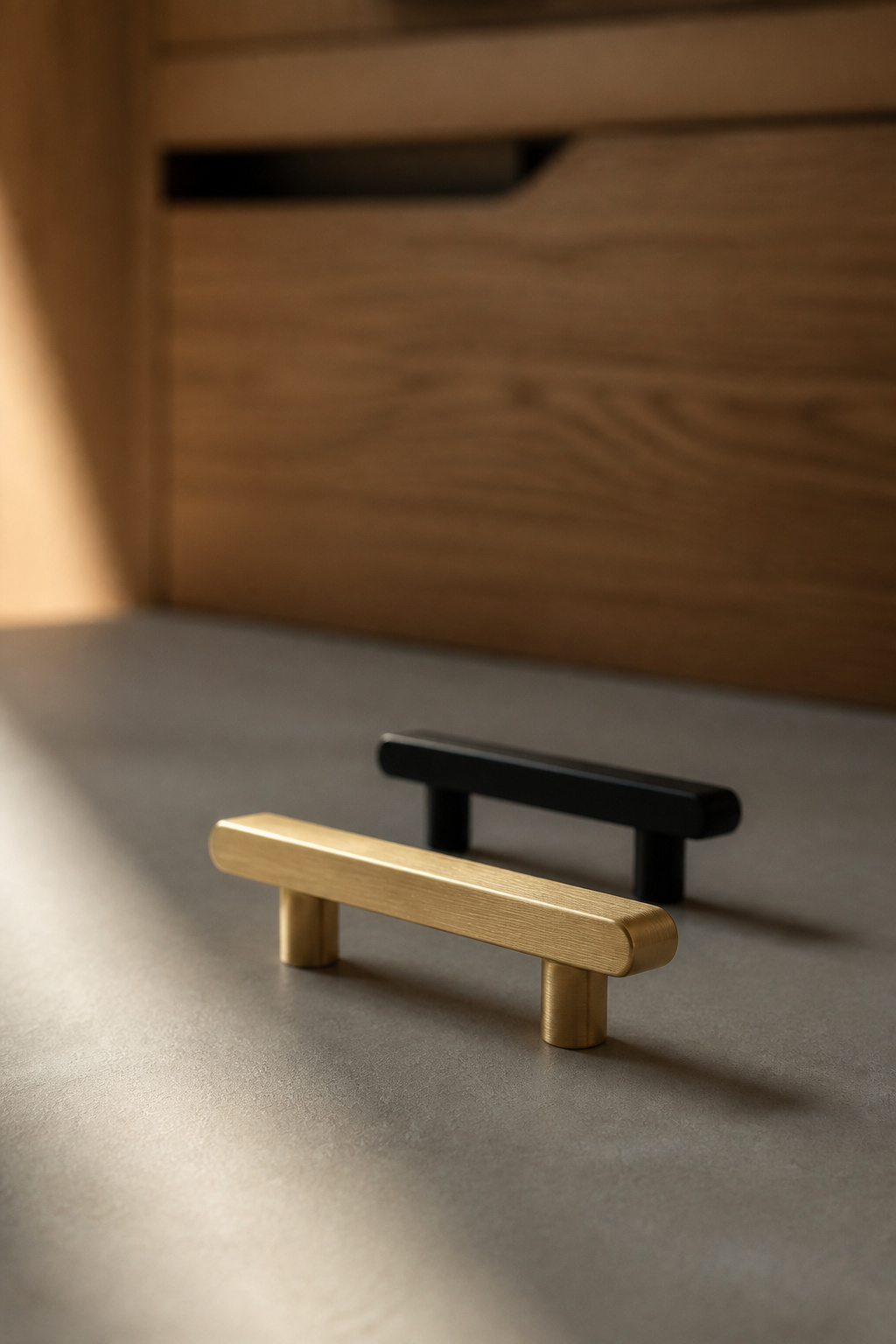
PVD vaporises metal in a high-vacuum chamber and deposits it atom by atom, so the coating forms a molecular bond with the surface instead of sitting on top as a separate layer. It measures around four times harder than chrome, can extend hardware life up to tenfold, and reproduces the metal it imitates where other finishes only approximate the colour.
How long that lasts depends on who you ask. California Faucets guarantees its PVD for life against tarnishing. The coatings industry is more careful: lifespan runs from roughly a decade to several decades depending on thickness, bond quality and heat exposure, and no independent figure exists for a bathroom faucet. A lifetime warranty tells you how confident one manufacturer is in its line; it tells you nothing about the process itself.
PVD also cannot be stripped and reapplied, so damage, while rare, is permanent. That makes it the least reversible decision in the room.
Powder coat
Powder coat is a dry polymer resin applied by electrostatic charge and baked on. Because it is a colour layer and not a metal one, it always looks like coloured material, which is no flaw if matte black is what you wanted. It is cheaper per piece, and unlike PVD it can be stripped and redone if damaged. Indoors, that is the advantage that counts, because a mistake here can be fixed.
Living finishes and plating
A living finish is unprotected on purpose. Unlacquered brass carries no lacquer, so it oxidises and darkens through handling. Because change is the intent, manufacturers exclude living finishes from their standard tarnish warranties. The path is predictable: months four to twelve go two-tone, handled areas warming to honey while untouched areas stay bright; across years one to three that honey spreads evenly into golden-brown. Unlacquered bronze and pewter patina too, but nobody publishes a comparable timeline for them.
Plating sits at the other end. Chrome or nickel over a zinc alloy (Zamak) is the most failure-prone of the four: in harsh conditions such as coastal salt air it can pit and crumble within weeks, while lacquered brass fails within months once the lacquer breaks down. Solid brass, bronze and pewter stay cleanable far longer. A two-second check helps here: hold a magnet to a brass-looking pull. If it grabs, that is plated steel, which wears nothing like solid brass.
Which finishes show water spots and fingerprints in daily use
Let a splash dry and what stays behind is the calcium and magnesium the water carried. Every finish collects the same deposit; what differs is whether you see it. A polished surface reflects cleanly, so a spot interrupts the reflection sharply; a matte one scatters light, and the same spot lands with far less contrast.
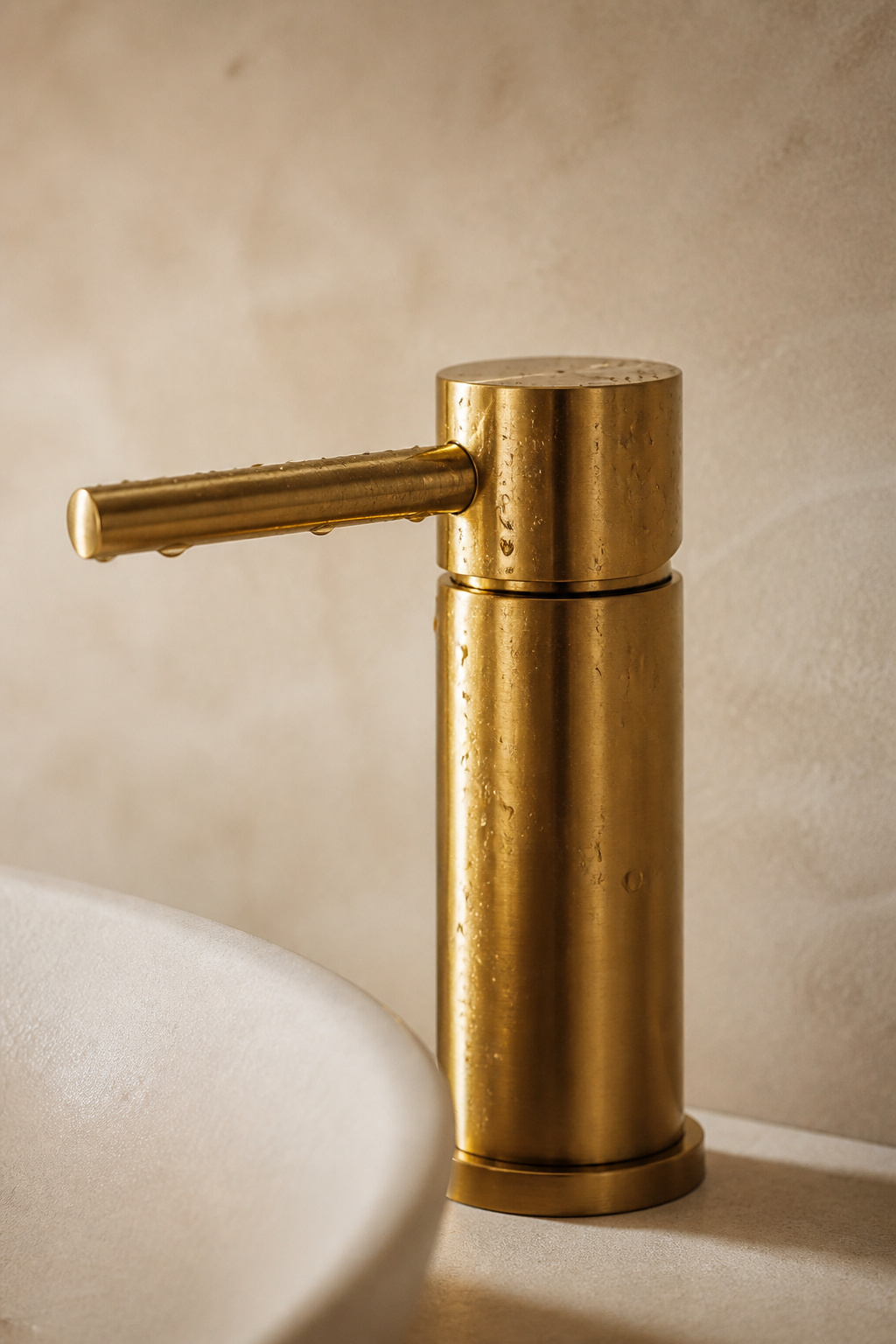
The order of visibility runs chrome very high, stainless medium-high, brushed nickel medium, matte black lowest. That ranking is the strongest practical case for matte black in a hard-water house, although matte still hides spots without preventing them. Choose polished chrome with hard water and you have signed up for a daily job.
What cleaners destroy these finishes
I was nineteen when I ruined an oak chest. The shellac was dulled but sound, and I reached for the most aggressive stripper on the shelf because it promised to work fastest. It did, and then kept going, pulling colour out of the oak in pale streaks no later care brought back. The wood itself was fine, but the surface was gone.
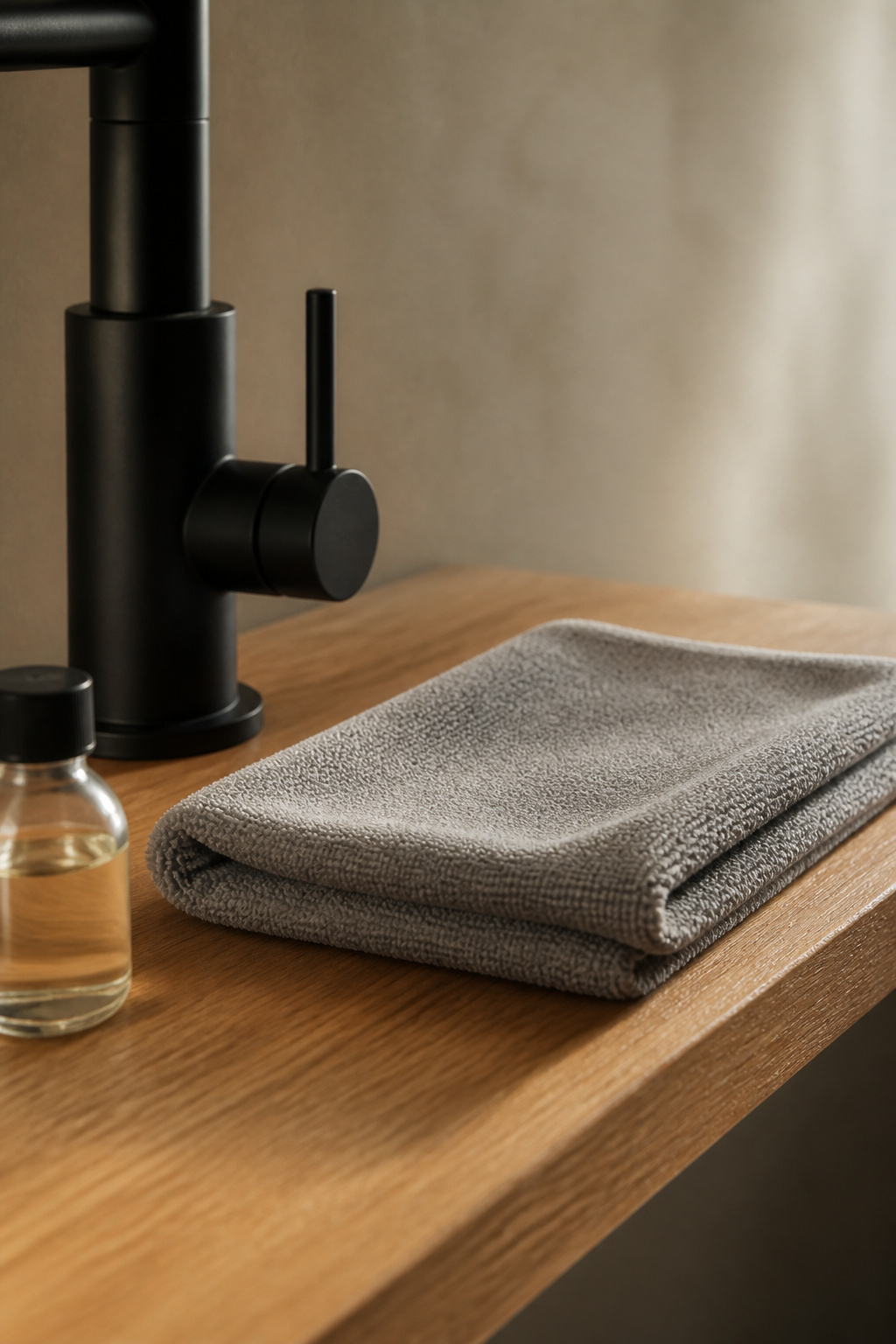
Bathroom metal punishes the same reflex, and the culprits are already under the sink. Almost every cleaner kept in a bathroom or kitchen harms a matte black finish: abrasives and abrasive waxes, acids including vinegar and lemon juice, solvents, bleach, general chemical sprays. PVD brassware carries the same list, and though the coating is hard, a scouring pad or steel wool will still scratch it. That vinegar-based descaler, the standard answer to limescale, is a direct cause of finish failure on PVD.
The routine is mild soap, warm water and a soft microfibre cloth, then dry it off, and do it often. What scratches a coating is letting deposits build for weeks, then scrubbing hard enough to shift them.
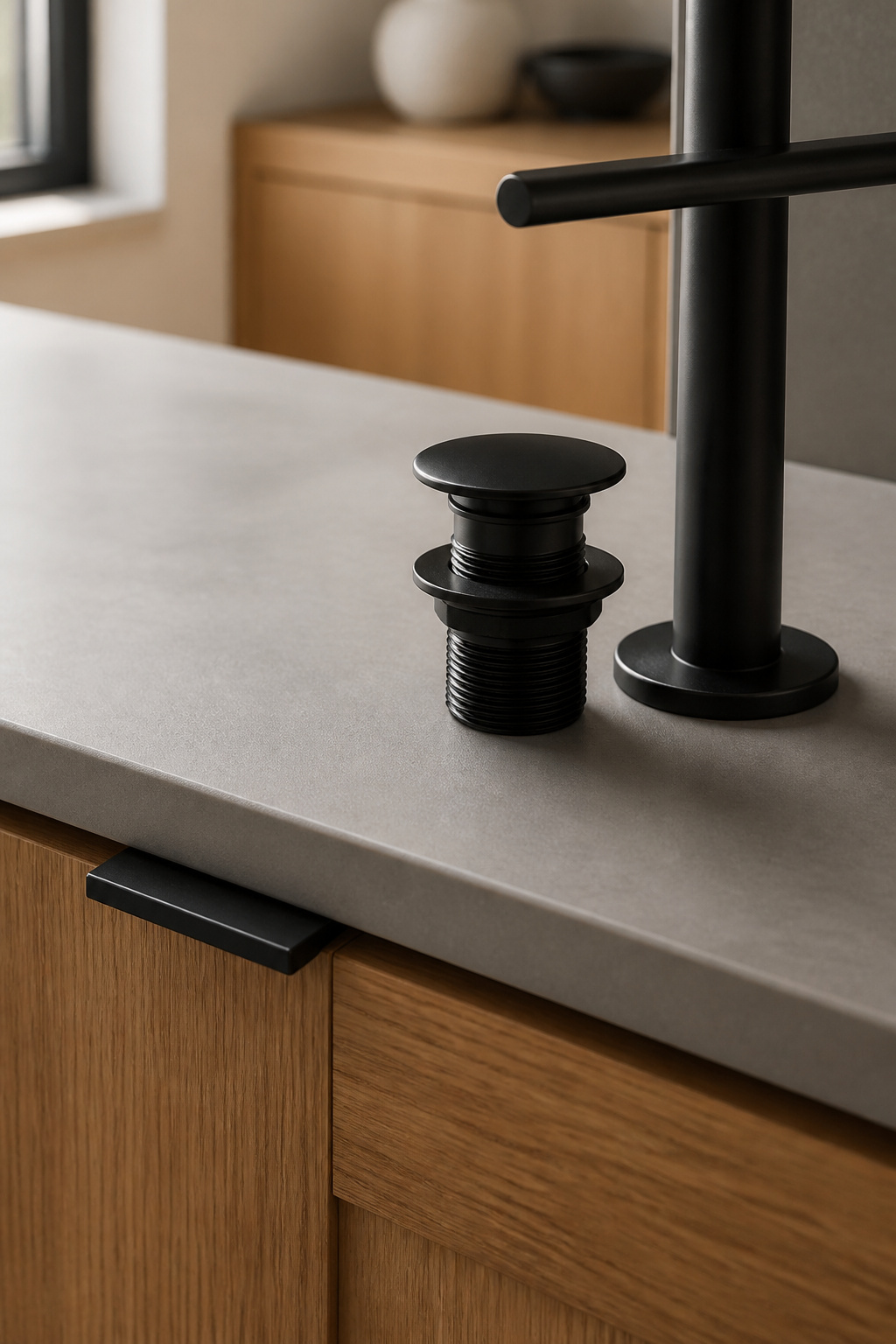
Coordinating faucet, shower valve, waste and hardware
The rule depends on whether a piece is seen together with others as a system or seen on its own.
| Group | What’s in it | Coordination rule |
|---|---|---|
| Water-touching fixtures | Faucet, shower trim and head, tub spout, levers, waste, overflow | One finish family, ideally one collection |
| Cabinet and door hardware | Pulls, knobs, hinges | May carry a second finish, repeated at least three times |
| Accessories | Towel bars, rings, hooks, mirror frame | Follow the finish they sit nearest; distribute, don’t cluster |
Two errors do most of the damage. The first is buying the faucet from one line and the valve trim from another, assuming matte black means the same shade and sheen in both, which it rarely does. The second is treating the waste as plumbing rather than visible metal and letting it default to whatever shipped in the box.
When mixing two finishes reads deliberate instead of accidental
Two things separate a curated pair from a room that simply ran out of the first finish: repetition and real contrast.
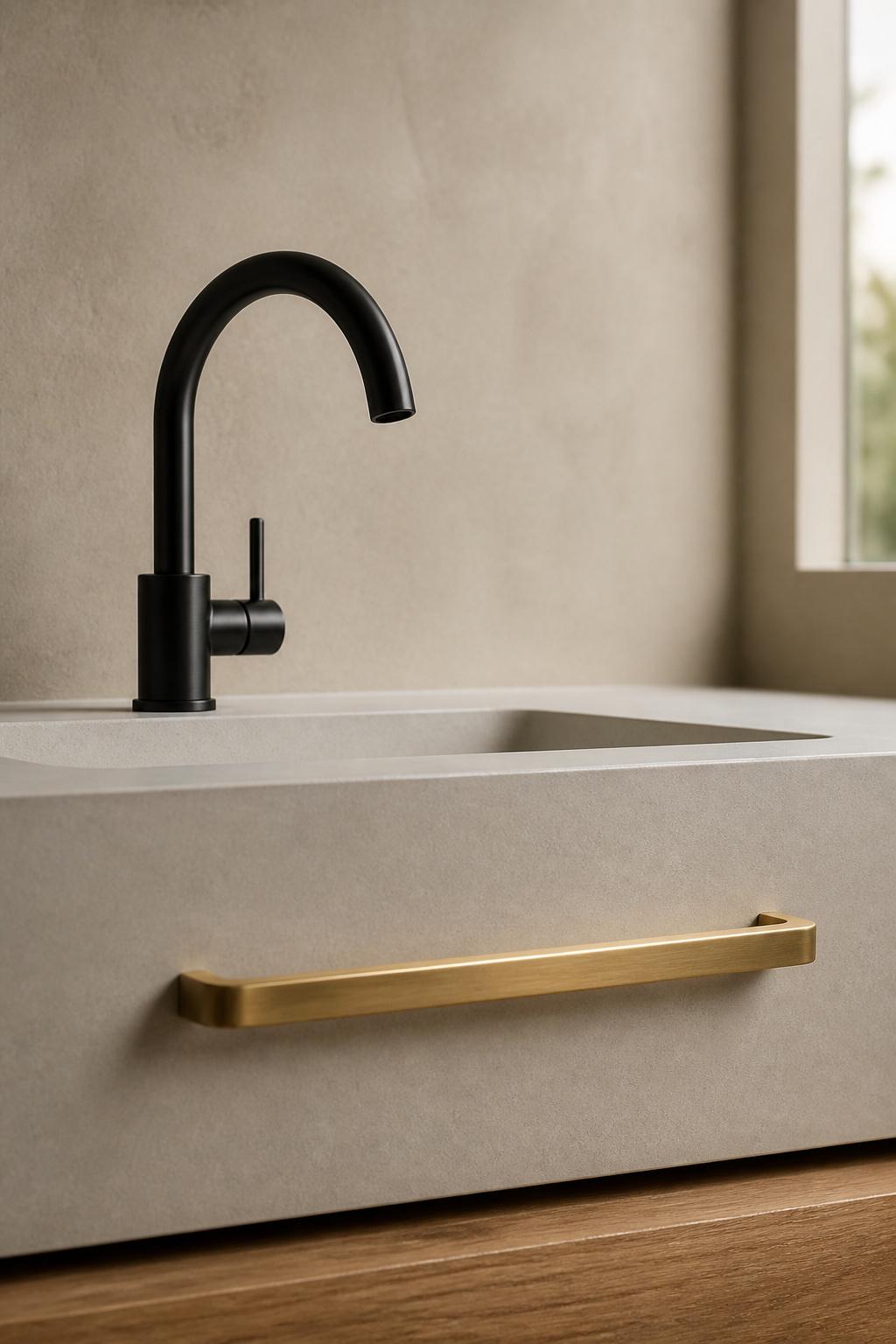
Pick one dominant metal and one accent, then repeat the accent in at least three places so it cannot pass as a stray piece. Two metals is a comfortable ceiling, and the usual split gives the dominant finish about seventy per cent, the secondary twenty and the accent ten, spread around the room instead of banked on one side.
Contrast is where it goes wrong. Warm brushed brass against matte black works because the two differ genuinely in temperature and sheen. Brushed nickel against pewter does not, because close cousins look like an attempted match that missed.
The flush plate on the wall
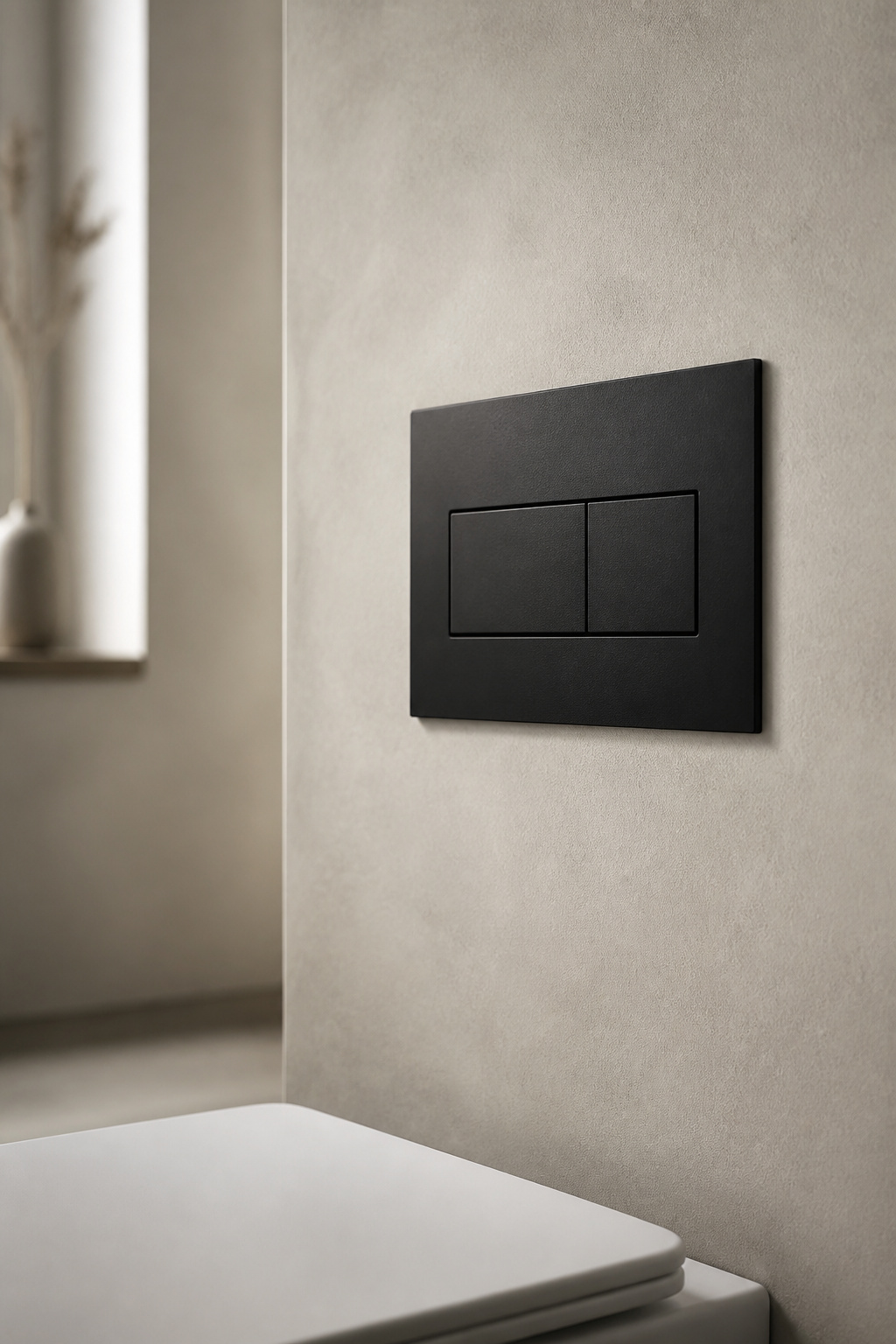
On a wall-hung toilet the carrier and cistern are buried and the pan is porcelain, which leaves one piece of visible metal in the whole fixture: the plate you press. It is also the easiest to leave to the plumber. Plates are sold in the same matte black and brushed brass finishes as faucets, so the match is available, but it has to be specified alongside the tap instead of accepted as supplied. The flush plate on the wall is one of several decisions that fixture brings with it.
The cheapest way to modernize
Swap the chrome out and the room changes before anything structural does. It is the highest-impact move that leaves every drain line where it is. What each swap costs, and which are false economy, belongs to the cheapest way to modernize; my concern is only which of them still looks right in five years. Done partially it fails: a new tap above an old chrome waste. If the room is still on paper, planning a modern bathroom from the start puts finishes where they belong, near the end.
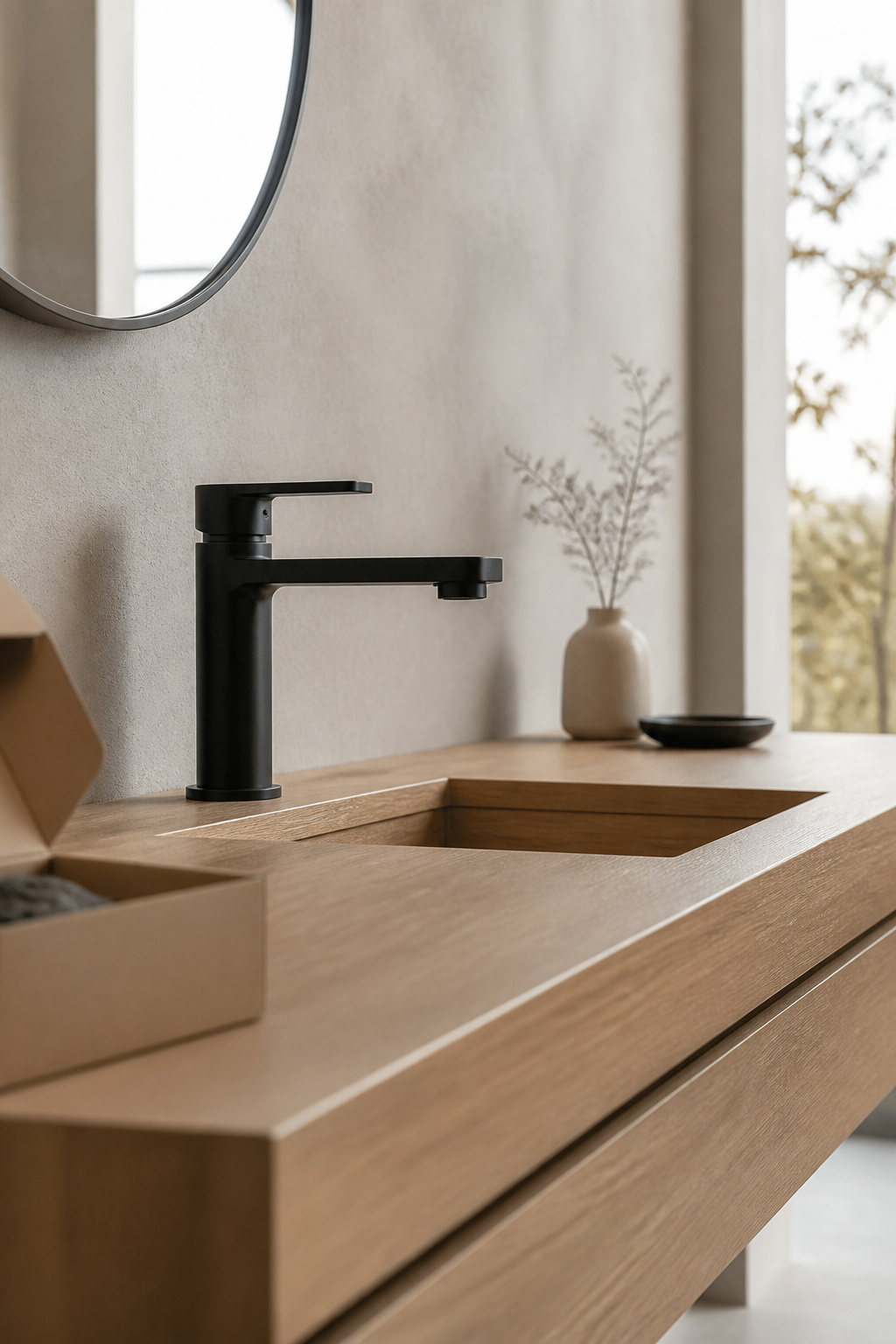
The eye you have already trained is the right instrument; it just needs to judge bonding now, ahead of price or trend. Put every water-touching piece (faucet, valve, waste) in one finish family, and keep mild soap, warm water and a soft cloth under the sink instead of whatever’s already there. With those two things right, the metal holds up its end of the room regardless of which process you paid for.
FAQ
Does matte black bathroom hardware show fingerprints more than chrome?
No, it shows them less. A matte surface scatters light rather than reflecting it, lowering the contrast between a mark and the metal around it. By visibility, chrome ranks highest, stainless and brushed nickel sit in the middle, matte black lowest. It still needs a regular wipe-down; it simply hides a missed day better.
Can you mix chrome and brushed brass finishes in the same bathroom?
Yes, on two conditions. One finish has to be clearly dominant, and the second has to appear in at least three places so it registers as a chosen accent rather than a leftover piece. The pairing also needs genuine contrast, because two near-identical metals look like a failed match.
How long does a PVD finish typically last on a bathroom faucet?
There is no single industry figure. Coatings-industry estimates run from roughly ten years to several decades, with thickness, bond quality and heat exposure deciding where a piece lands. Some manufacturers back PVD against tarnishing for life because the bond resists corrosion far better than plating. That is a warranty, though, and not a measurement.