
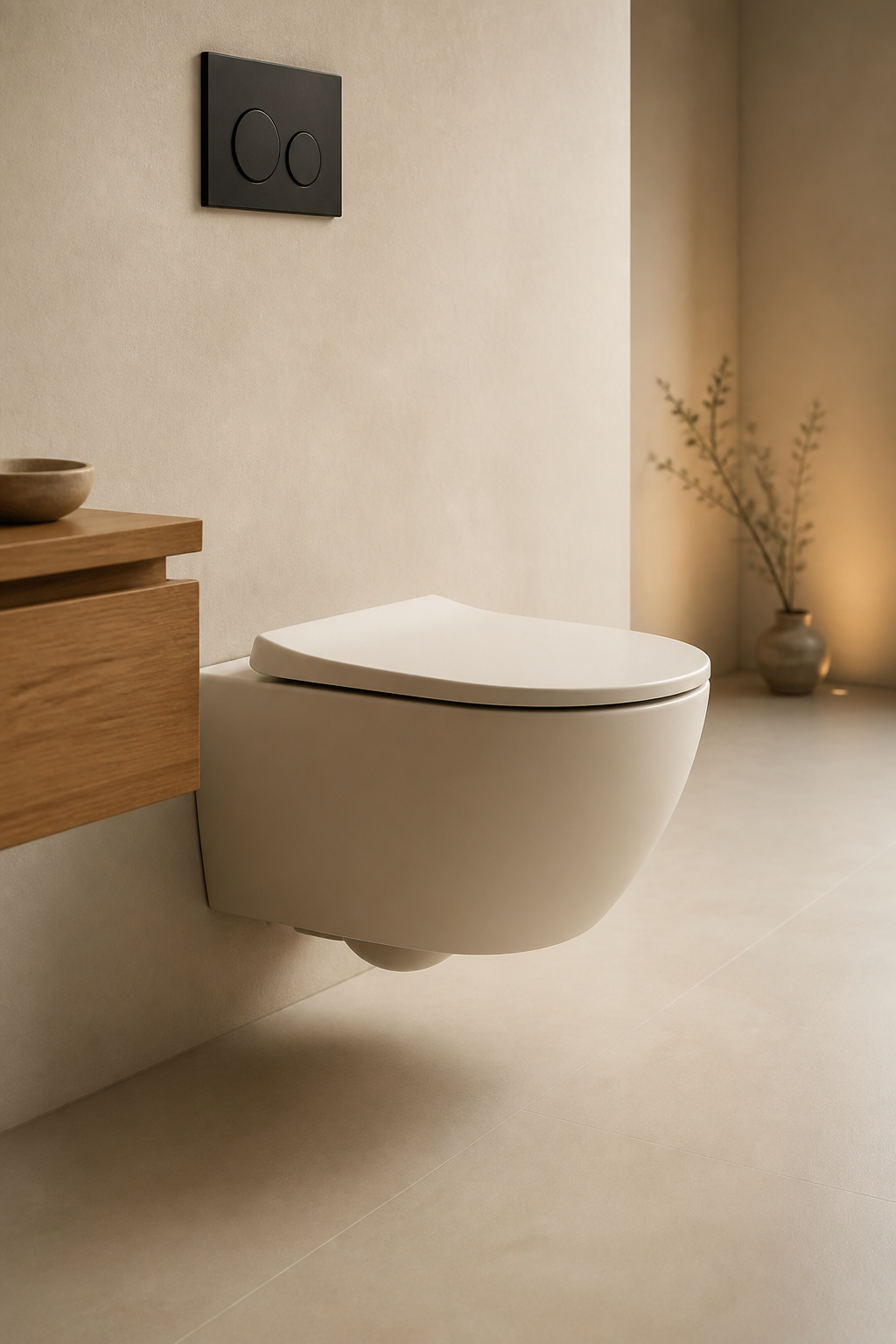
On a wall hung toilet, the biggest line on the bill is usually carpentry, not the toilet. The pan hangs on a welded steel carrier buried in the wall, and building that carrier a wall to live in is where the money goes. Most wall hung toilet ideas online are photographs of the finished thing: floating pan, clean floor, flush plate level with the tile. None of them show the frame, the bill, or what happens when something behind the tile fails, so that’s what this covers.
TL;DR
- The carrier and concealed cistern need roughly six inches of finished wall depth, so a standard 2×4 wall (3.5 inches of stud depth) usually isn’t enough. Most installs mean a rebuilt 2×6 wall or a furred-out false wall.
- Installed cost varies by source: Bathify puts a full wall-hung install at $1,500–$4,000+ against $750–$1,300 floor-mounted; Fixr puts a simpler job at $800–$2,500 against $350–$500. Framing labour drives the gap more than the pan does.
- You get back six to twelve inches of floor depth and a floor you can mop straight under. Routine repairs go through the flush plate for $30–$80 in parts; a failed carrier anchor means opening the wall.
What wall hung toilet ideas never show: inside the wall
Strip the tile off and you’re looking at a steel skeleton. All of it has to be right before the wall closes.
The carrier frame
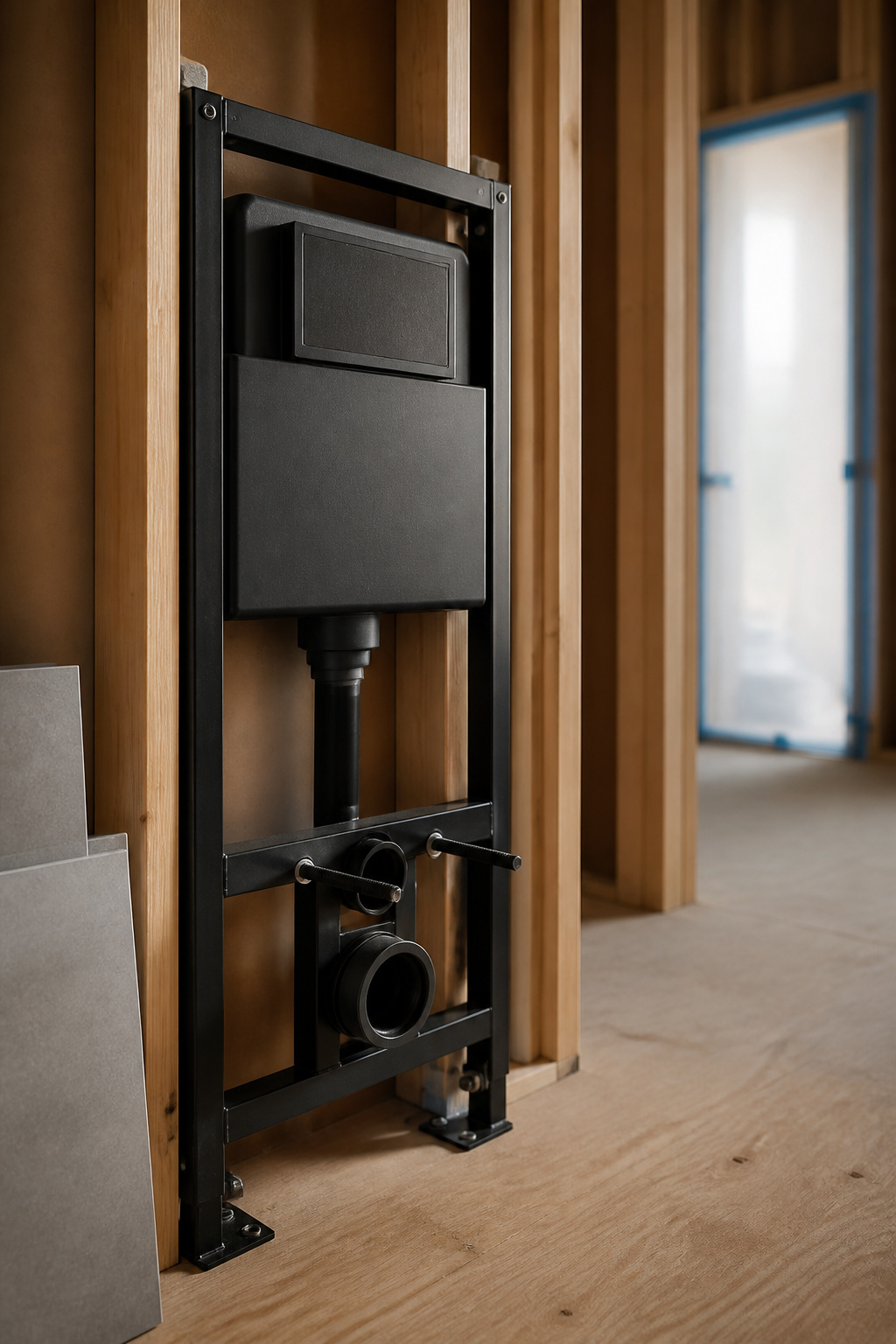
The carrier is a welded-steel frame that bolts to the wall studs and down to the floor plate. It holds the tank, the flush valve, and two threaded rods the bowl hangs from. So the load of fixture plus person runs into the framing, not the drywall or tile. ASME A112.19.2 / CSA B45.1, the North American consensus standard for vitreous china fixtures, sets a 500 lb minimum static load for wall-mounted fixtures. That figure is a requirement of the carrier standard, not a marketing figure. Reinforced steel-bracket carriers in a 2×6 cavity certify between 500 and 880 lb; commercial carriers reach 1,000 lb.
The concealed cistern
The cistern is a slim plastic tank in the cavity above the bowl. Its depth, not its height, decides whether your existing wall can take one. Upkeep is inspection-level work: check the inlet valve for debris, confirm the float travels its full stroke, replace seals and gaskets as they harden. Geberit, one of the major cistern makers, guarantees spare-parts availability for those mechanical components for 50 years. The fifty years is a parts-supply promise, not a stated service life for the cistern.
The access panel
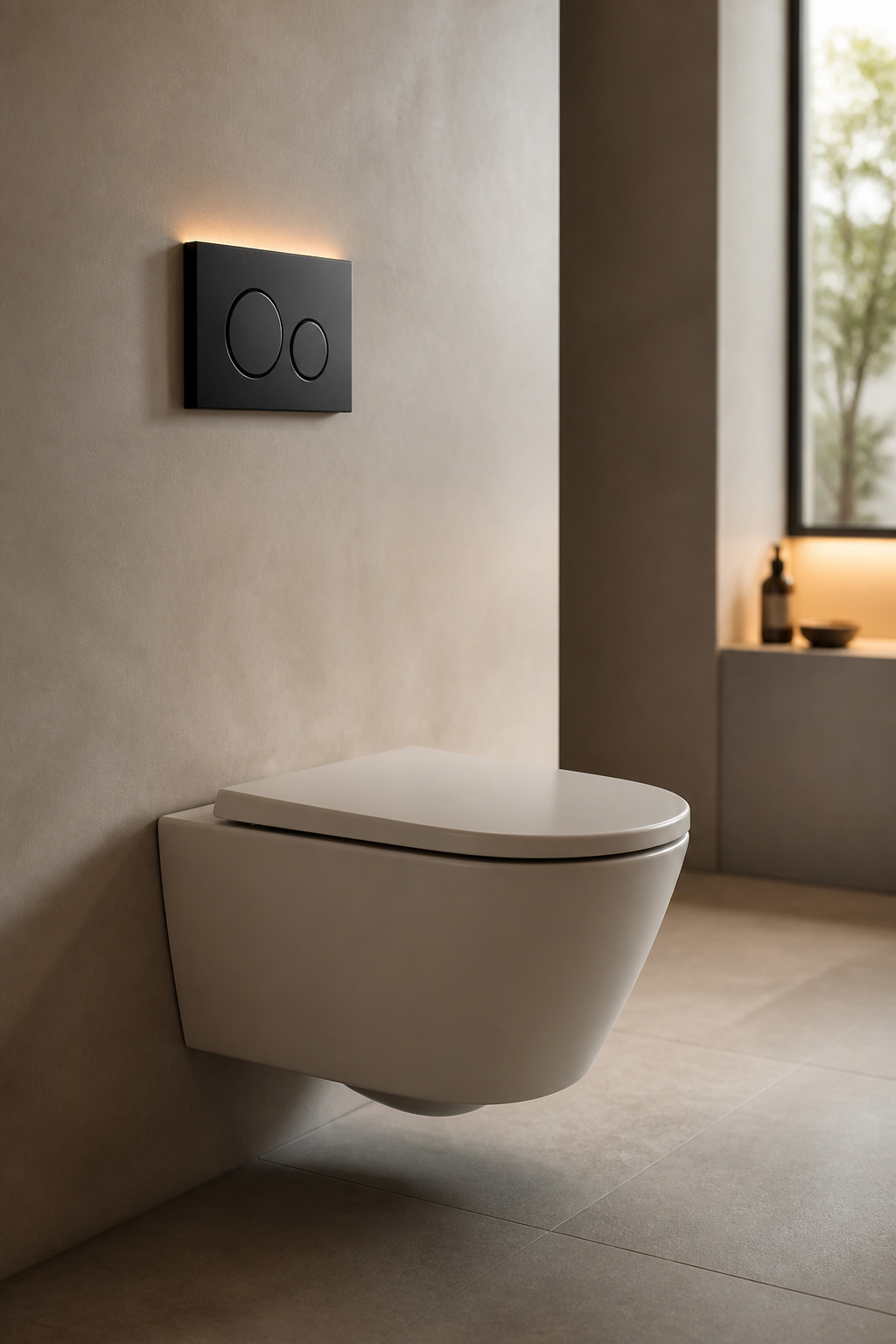
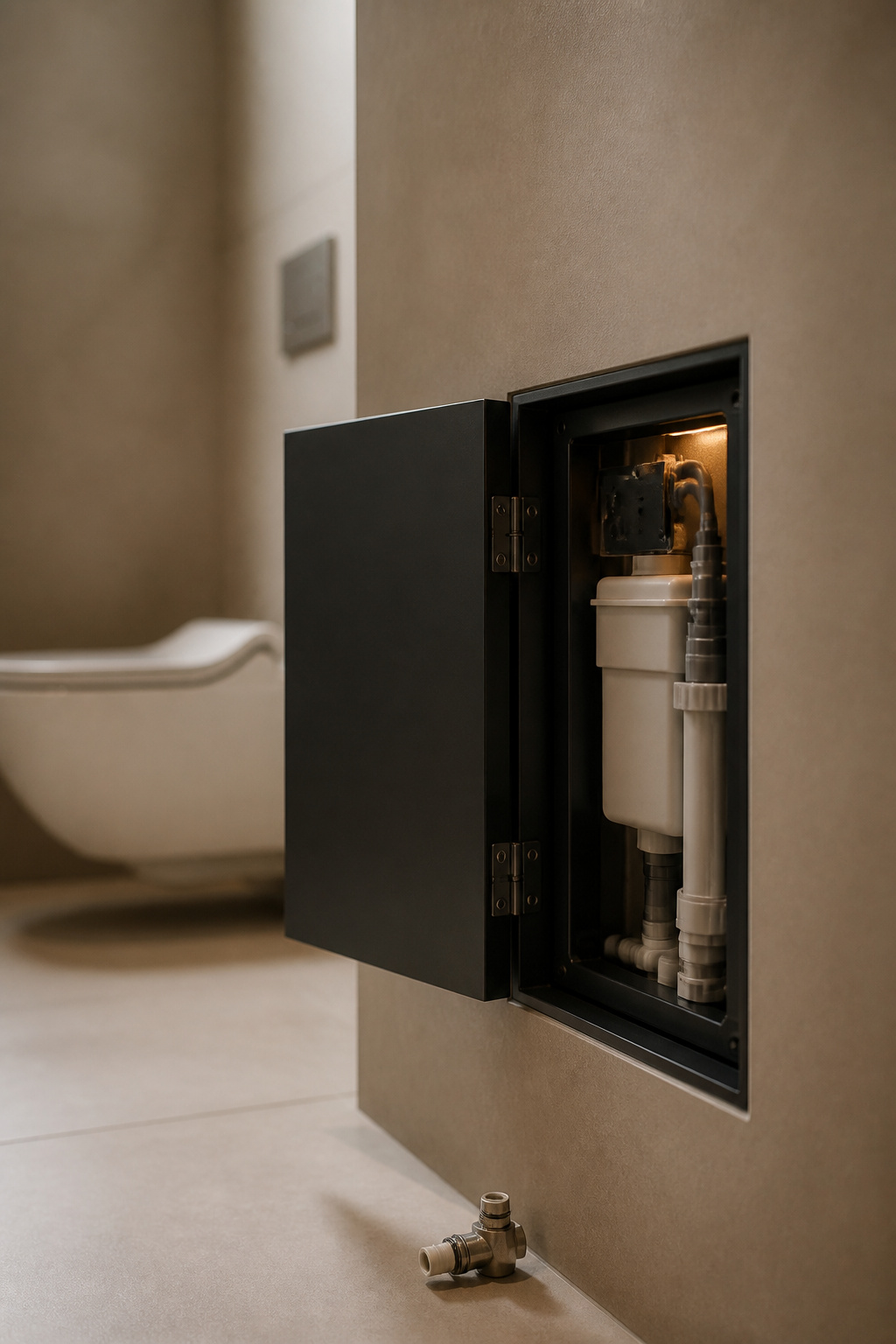
Besides being the button, the flush plate is the designed way back into the wall. On a well-specified system every wearing part (fill valve, flush valve, seals) comes out through that opening without a tile being touched. Treat the plate as purely cosmetic and you’ve given up your only planned route in.
What the wall has to become to take it
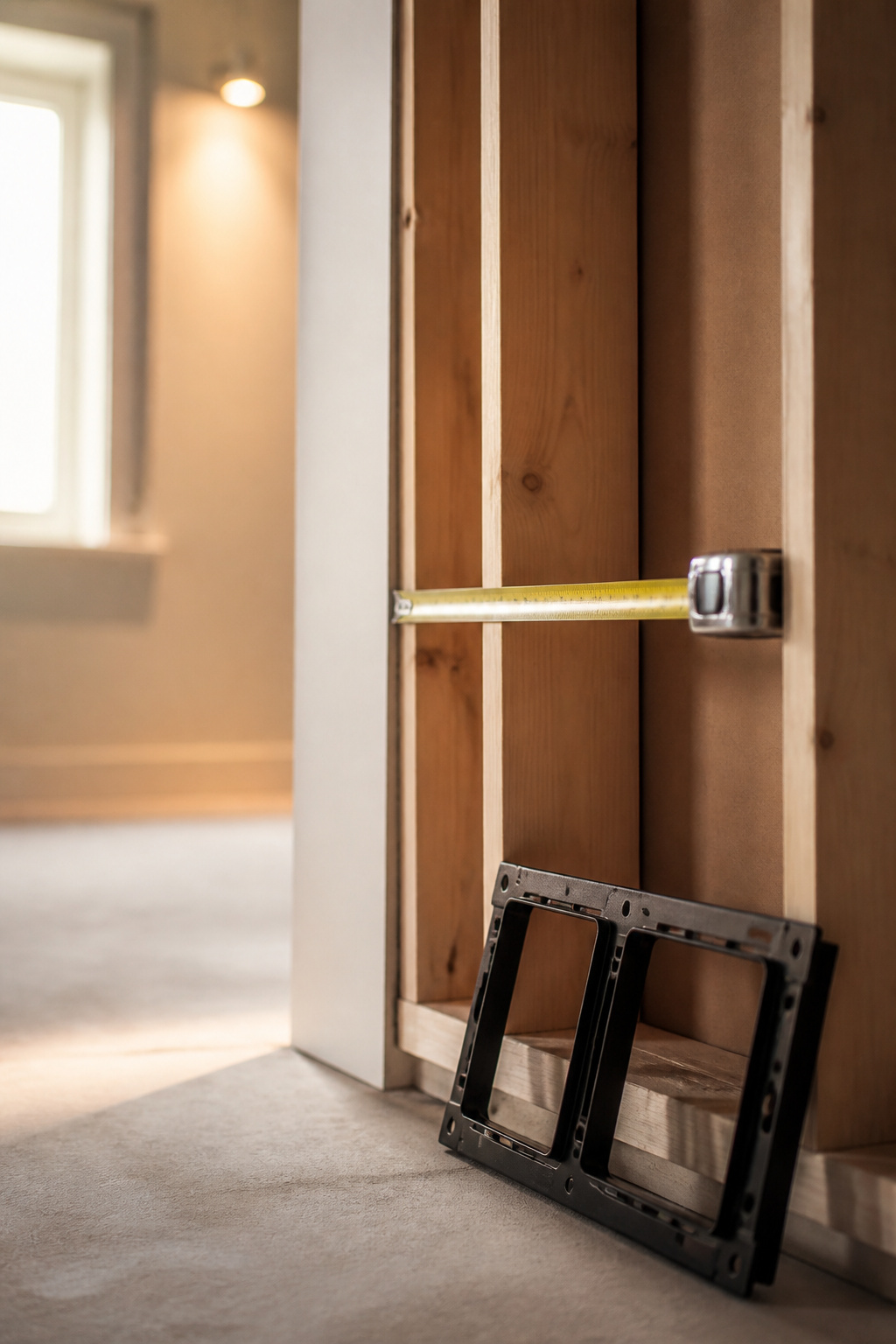
On the remodeling crews I ran in Tennessee, nobody ordered a carrier until someone had hooked a tape inside the open wall and read the number out loud. It sounds fussy, but pros measure and beginners guess, and a guessed depth gets discovered the day the frame arrives and doesn’t fit.
Minimum wall depth
Count the carrier, the cistern body and the finished surface and you need roughly six inches of finished wall depth. That six inches is the wall, not the floor space you gain later. A standard 2×4 wall gives 3.5 inches of stud depth. That usually isn’t enough, and tank depth is the dimension that kills most retrofits.
Framing it needs if it isn’t there already
So in most retrofits the wall gets rebuilt rather than simply opened and reclosed. Two routes work:
- A rebuilt 2×6 wall with 5.5 inches of stud depth, the cleaner answer if you’re stripping the room back anyway.
- A furred-out false wall in front of the existing one, buying the cavity without touching the wall behind it.
The carrier then needs two anchor points done properly: solid floor anchoring into the subfloor for vertical load, and stud reinforcement or blocking sized to the manufacturer’s load spec. It’s the same logic as a wall-hung vanity: the finish surface never carries any of it. Rough-in tolerances are tight, too: the carrier fixes bowl height, outlet location and flush-pipe alignment, and anything outside its adjustment range means a re-pipe before the wall closes. Finish over the cavity in cement board, never thin drywall.
The real cost gap against a floor-mounted toilet
The sources don’t agree, so each one’s range is listed separately instead of averaged.
| Source | Wall-hung, installed | Floor-mounted, installed |
|---|---|---|
| Bathify (full job, incl. wall and tile work) | $1,500–$4,000+ | $750–$1,300 |
| Fixr (existing wall already deep enough) | $800–$2,500 | $350–$500 |
| Oakwood Remodel (full job) | $1,800–$4,500+ | no baseline given |
Bathify’s $1,500–$4,000 covers the wall-hung toilet job specifically (fixture, carrier, plumber and wall work). That’s worth pinning down, since the same bracket gets quoted for unrelated bathroom work.
The components underneath are consistent. Carrier frame and tank run $350–$900; the bowl is another $350–$1,200+. Plumber labour for the carrier rough-in runs $500–$1,500 by market, against roughly $180–$350 for a floor-mounted swap. Framing and wall reconstruction then adds about $400–$1,200 when the wall isn’t deep enough, and it’s that line, more than the ceramic, that opens the gap.
So one question decides where you land: is this wall being opened and rebuilt anyway? If yes, you’re paying a fixture premium and some framing time on a wall already in pieces. If no, you’re paying to demolish and rebuild a functioning wall so a toilet can float. This is a plumber’s job with a carpenter attached, and I’d budget an extra day beyond whatever the quote says.
The cleaning and space payoff
Run a mop under one and you’ll understand the appeal in about four seconds. No base to work around, no bolt caps, no caulk line going grey at the fixture’s foot. The floor just runs on underneath. Geberit North America makes the same point: the floor opens up completely.
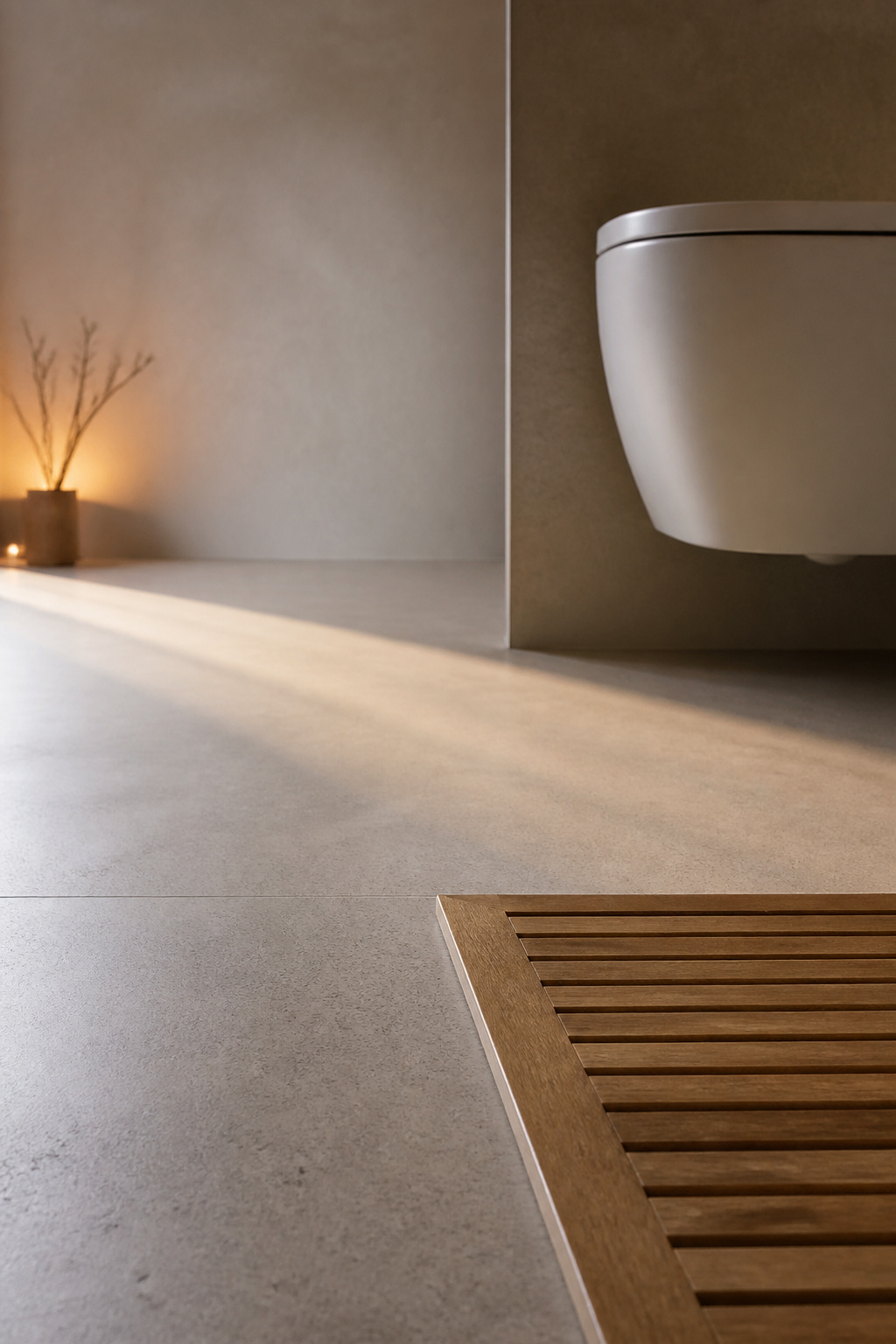
The space gain is real too, though the figures vary. Geberit says nine to twelve inches; Bathify says six to nine. Take six to twelve inches of reclaimed floor depth as the honest bracket, since it depends on the tank you’re replacing. One payoff rarely mentioned: rim height follows the carrier, so it isn’t locked to the 15-inch standard or the 17–19-inch fixtures a floor-mounted model ships at, because the wall sets it.
When something fails behind the tile
The fear is reasonable and mostly misplaced. Routine repairs are small: a fill valve or flush valve swap runs about $30–$80 in parts and roughly half an hour of labour through the access plate, no tile disturbed. That covers most of what goes wrong.
The expensive scenario is different in kind. A cracked cistern or a failed carrier anchor means opening the wall, and with large-format tile that runs $1,500–$3,500+, since tile can’t be lifted and reset the way drywall can. Fixing a badly anchored carrier means rebuilding the wall around it.
What separates those outcomes is mostly whether the carrier was anchored correctly on the day it went in, more than maintenance or luck. That decision gets made before the wall closes, and it isn’t cheap to revisit. So this is the one line item where hiring on price is a bad trade.
The matching wall-hung vanity
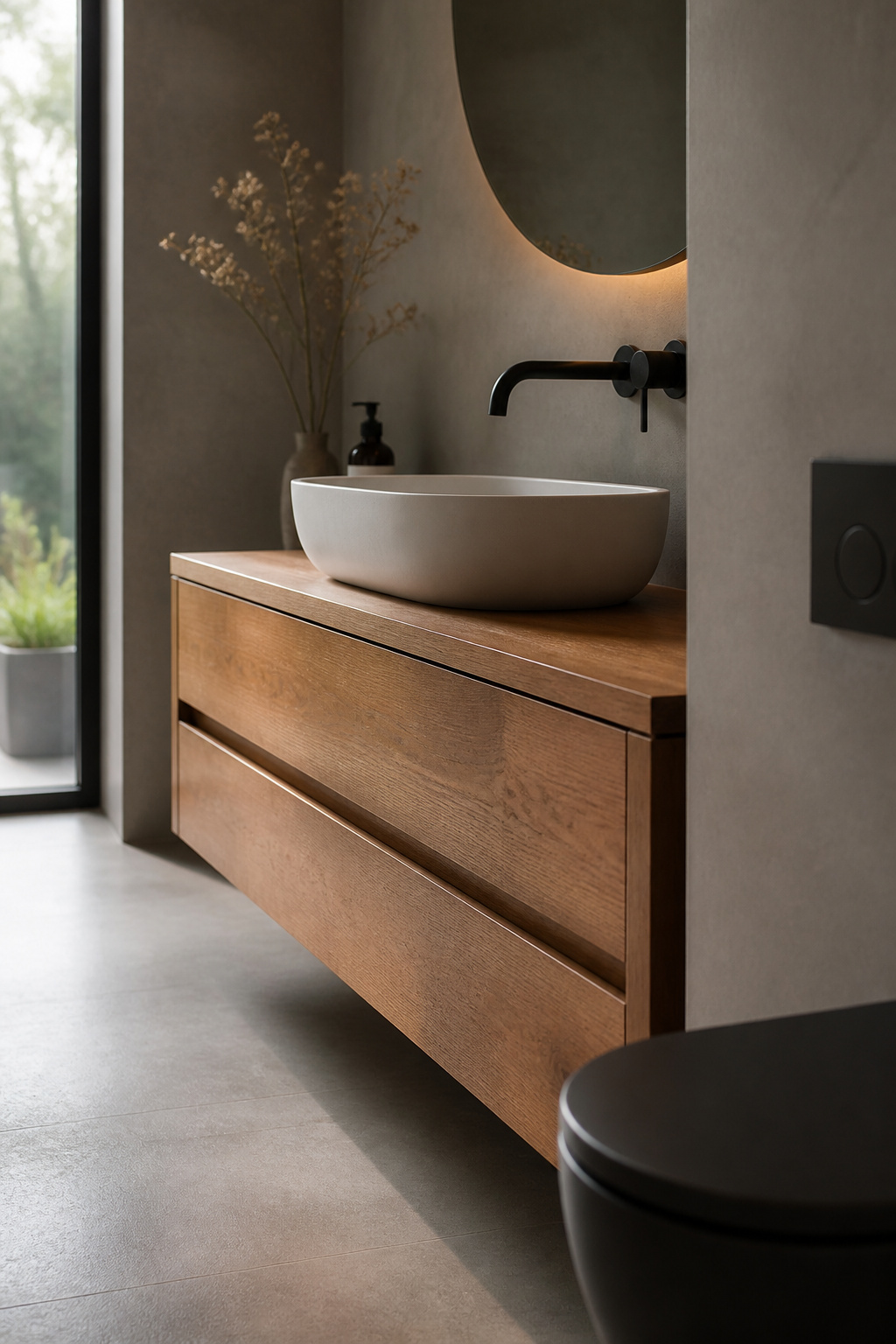
The two floating fixtures usually get decided together because one wall and one framing pass, in one day, can cover both. Plan them separately and you open a wall twice. The fixing, load and height detail belongs with the matching wall-hung vanity, so settle that first and come back with your framing decided.
Whether an older wall can take it
Can a hundred-year-old wall take a carrier? Sometimes, and the answer depends on the building’s structure rather than the toilet. Lath-and-plaster and narrow balloon-framed partitions often lack the depth and the blocking a carrier needs, and Rachel Blackwood’s piece on whether an older wall can take it works that through properly.

The verdict turns on the same question the cost section raised. If the wall behind your toilet is already six inches deep, or it’s coming apart for other work anyway, this is a fair-value upgrade: six to twelve inches of floor back, a floor you can actually clean, a rim height chosen rather than inherited. If that wall is staying put and sound, the premium mostly buys demolition you didn’t need, and that money is better spent somewhere you’ll notice daily. Pay for the anchoring either way, keep the access plate reachable, and see how the modern bathroom decisions stack up before committing.
FAQ
How long does a concealed cistern last before it needs replacing?
No manufacturer publishes a replacement lifespan. Geberit does guarantee spare-parts availability for a cistern’s mechanical components for 50 years, which suggests the wearing parts are meant to be serviced, not replaced wholesale. In practice, seals, gaskets and valves wear far sooner and swap out through the plate.
Are wall-hung toilets strong enough for adults of any weight?
Yes, with the right carrier. ASME A112.19.2 / CSA B45.1 sets a 500 lb minimum static load rating for wall-mounted fixtures, so that’s the floor any certified carrier clears. Reinforced residential carriers certify to 500–880 lb, and commercial carriers reach 1,000 lb. Capacity follows the carrier specified, not the bowl.
Can a wall-hung toilet be installed in a small bathroom?
Small bathrooms are where it pays off most, since the hidden tank returns roughly six to twelve inches of floor depth. The limiting factor isn’t square footage. It’s whether the wall behind the toilet has, or can be rebuilt to, the roughly six inches of finished wall depth a carrier and cistern need.