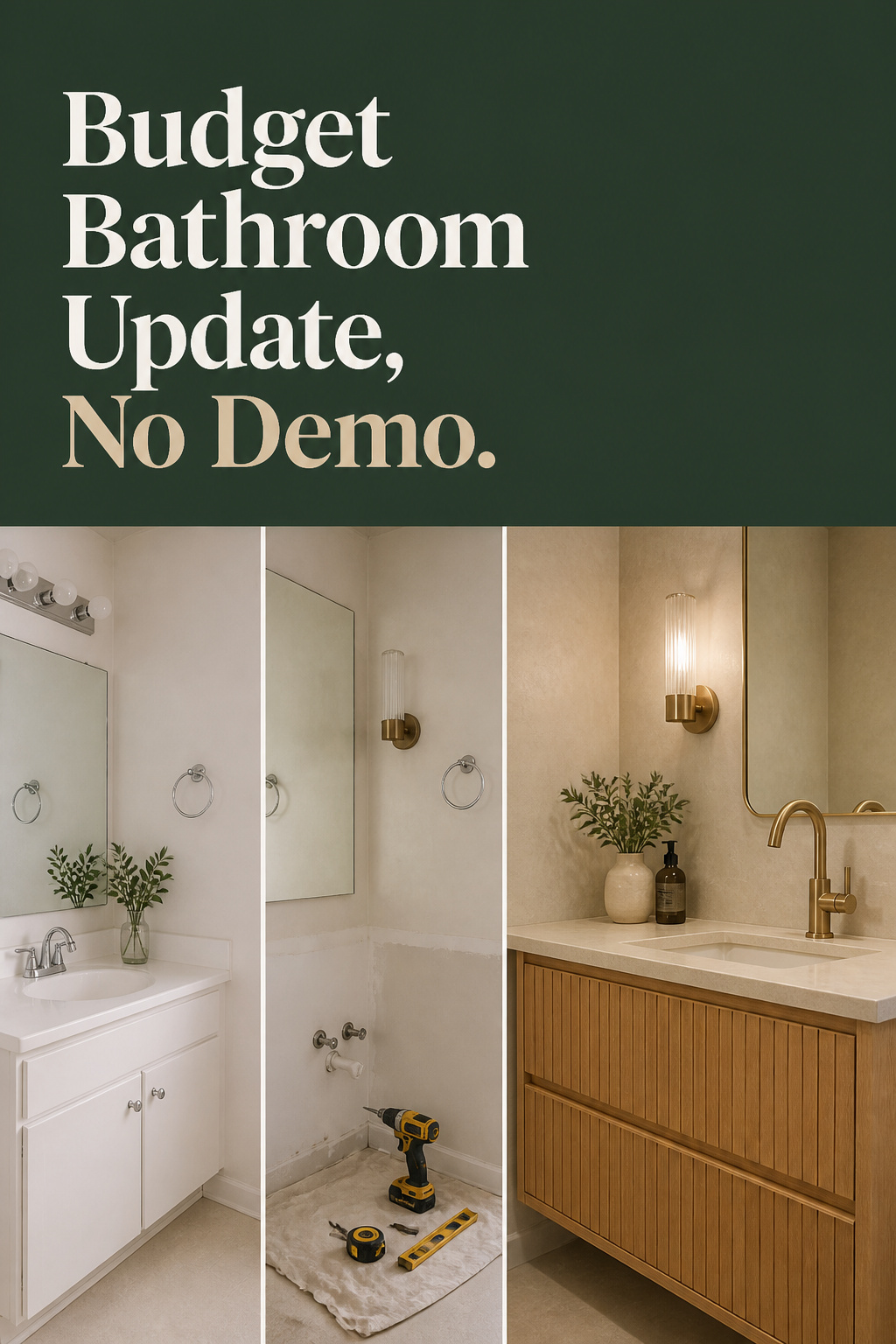
The kitchen island I built for my sister came to $212 in stock lumber and one long weekend. Her family still calls it “the showroom one”, and nobody has ever asked what it cost. A budget bathroom update runs on that same gap between what a thing costs and what it looks like it cost. What makes a bathroom look current sits on the visible half-inch, in the things you touch and the things that reflect, starting with whatever your hand lands on before you’ve had coffee. Almost none of it needs a drain moved.
TL;DR
- A sink faucet changes the most per dollar: $170–$360 professionally installed, $50–$550 for hardware alone, 1–4 hours DIY.
- A vanity stays a swap when the drain sits at its standard 18–20 inches above the floor and the new trap keeps 14–16 inches of clearance below.
- The false economies are material: budget faucets built on zinc alloy and plastic mounting nuts, mirrors hung on adhesive with no mechanical backup.
What a budget bathroom update can reach without a remodel
The scope comes first: a no-demo update means fixture, hardware, mirror and door swaps onto plumbing that stays where it is. Tile painting and tile refinishing are out of scope here, since tile gets its own guide. Anything that moves a drain is a remodel wearing a smaller word.
What the five swaps run, hired out and done yourself:
| Swap | Typical cost | Time | Skill level |
|---|---|---|---|
| Vanity onto existing plumbing | $100–$2,600 cabinet, plus $200–$1,000 labour | A weekend | Confident builder |
| Sink faucet | $170–$360 installed; $50–$550 hardware alone | 1–4 hours DIY | Some builds |
| Shower trim kit | $30–$120 | An hour, once brand-matched | Some builds |
| Cabinet and drawer hardware | $5–$30 a piece if a pro fits it | Under an hour | First build |
| Interior door | $155–$688 installed; $50–$500 slab, $50–$300 pre-hung materials | 1–2 hours pre-hung, 2–4 slab | Confident builder |
Add the DIY figures across faucet, trim kit, pulls, mirror and a pre-hung door and you land in the low-to-mid hundreds in parts. That’s my arithmetic off this table, and nobody surveyed it. The sticker price also leaves out water damage: This Old House puts it at nearly a quarter of vanity jobs turning up damage nobody budgeted for. Price a contingency, then be pleased if you keep it.
Swapping the vanity onto plumbing you already have
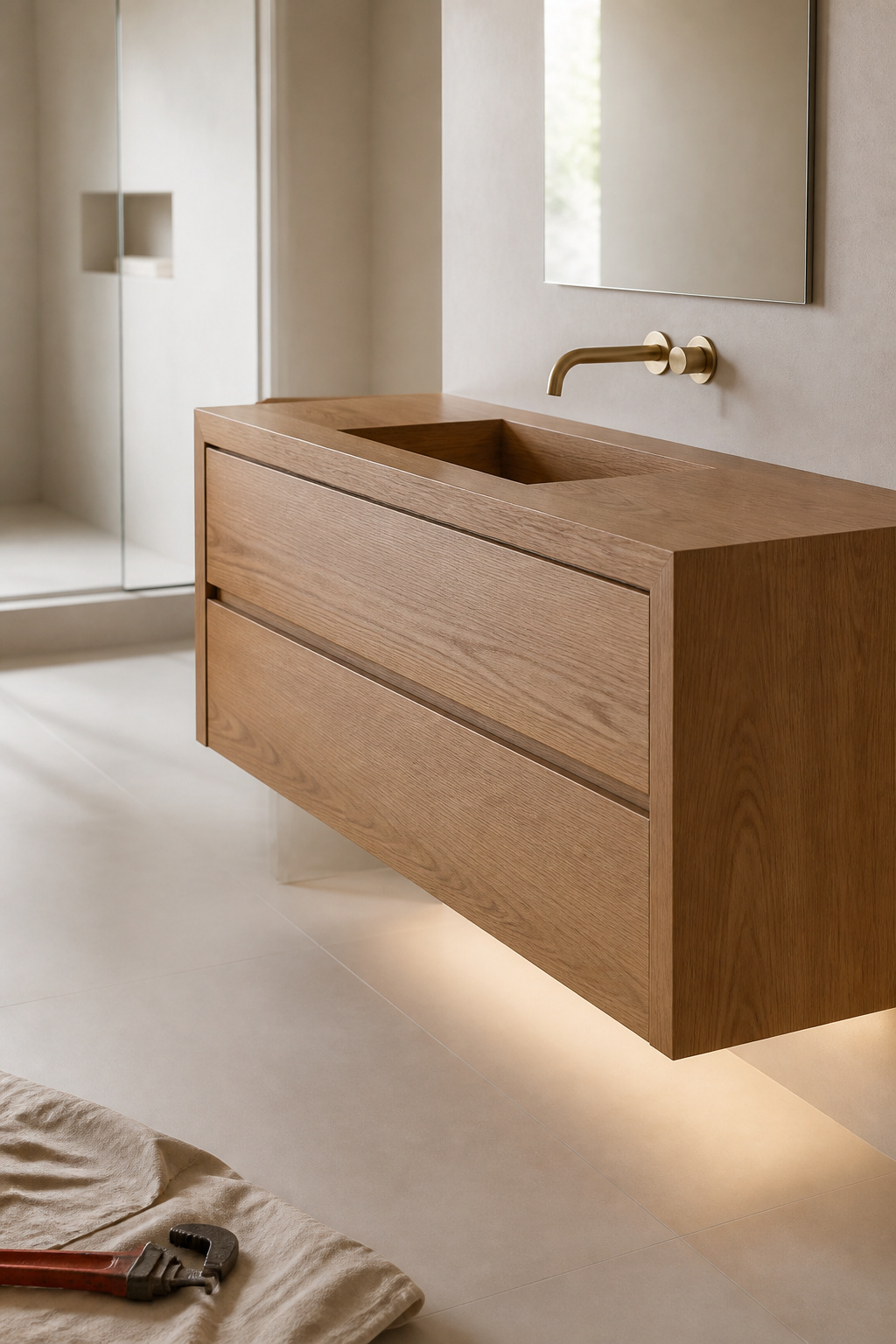
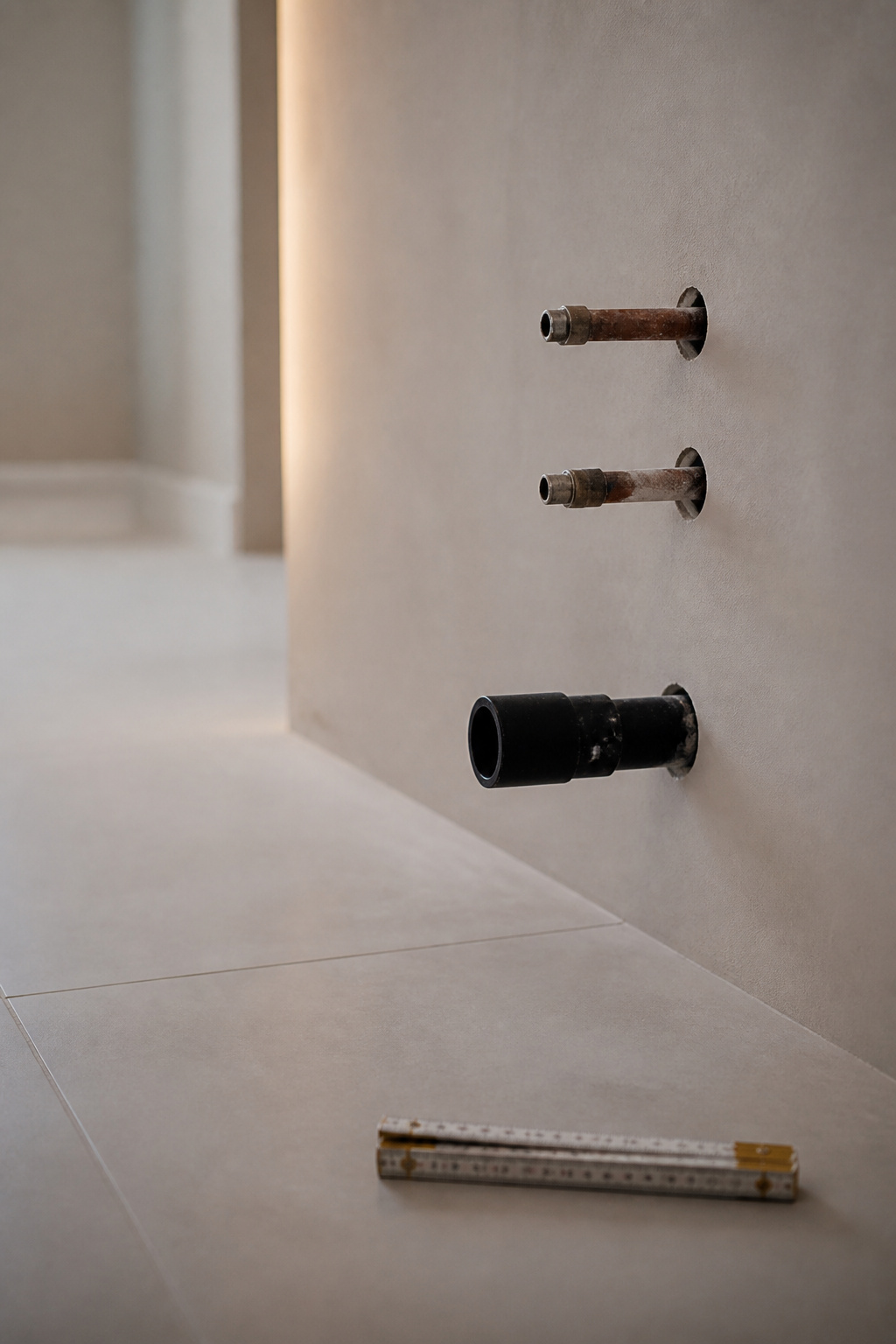
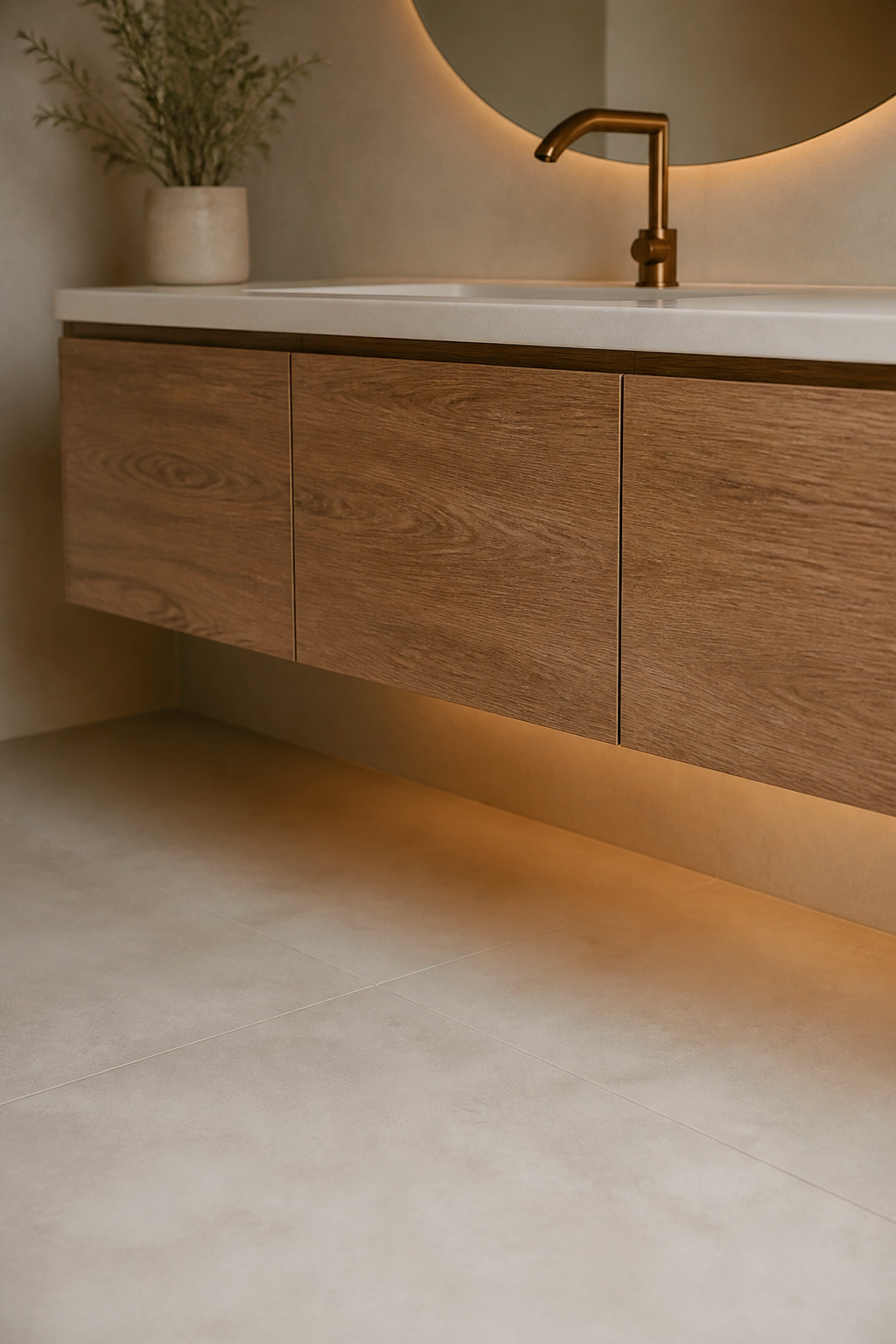
Two measurements decide whether this stays a swap. The drain stub-out sits 18 to 20 inches above the finished floor, and the P-trap under the new basin needs 14 to 16 inches of clearance below. Take both before you shop: a shallower cabinet crowds that clearance, and you learn it with the old vanity on the driveway.
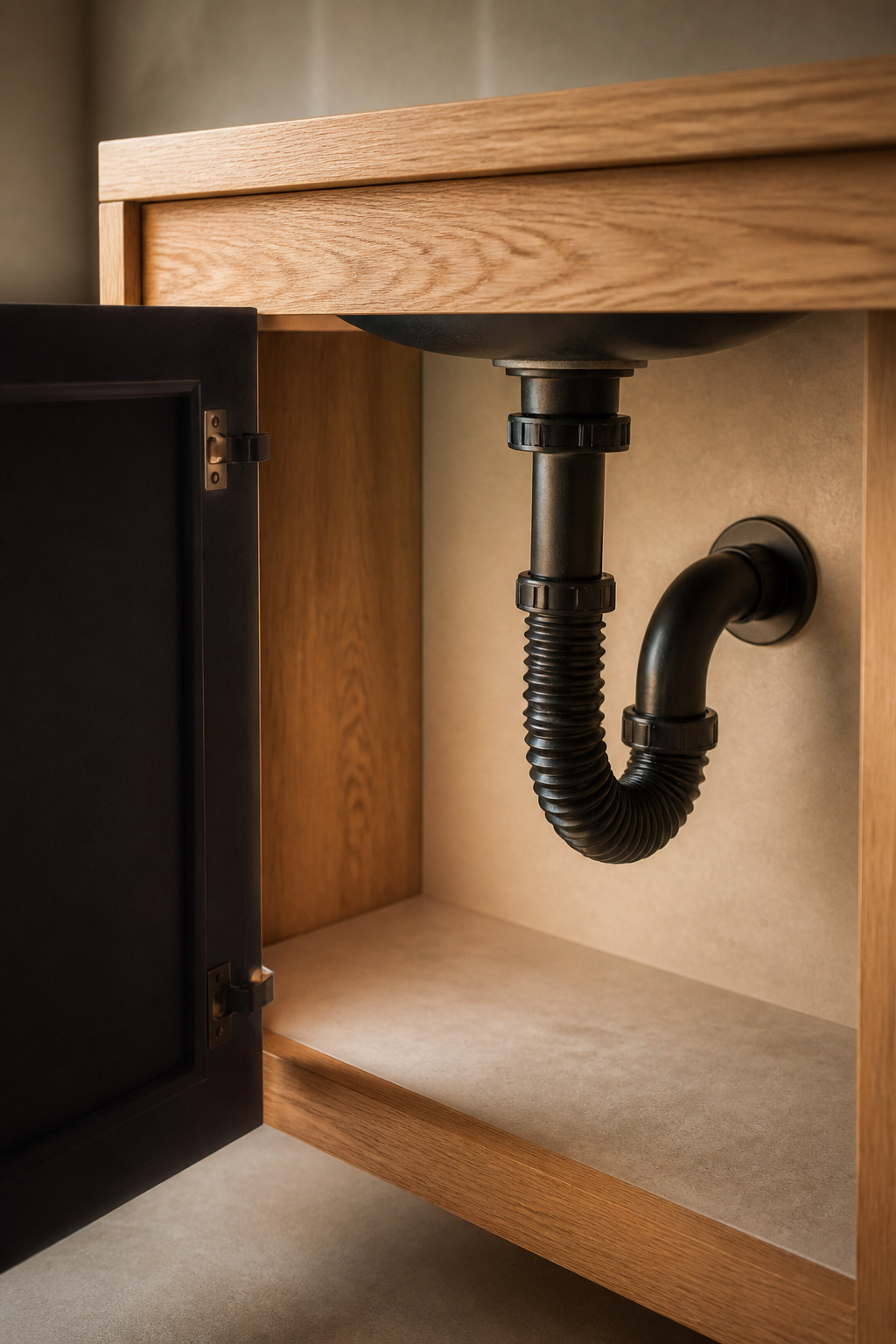
Then the offset. If the new sink’s outlet lands a few inches off the existing drain, a flexible waste kit bridges it. That’s a bendable connector used in place of custom-cut PVC, and it’s beginner-friendly once the gap is measured. Some jurisdictions restrict flexible waste pipe, so call the building department before the demolition-free demolition starts.
Bathroom sinks take 1-1/4 inch pipe, kitchen sinks 1-1/2, and the kits hang on the same shelf. Grab the wrong one and it costs an hour and a drive. I budget that trip out loud, because it happens to people who know better.
Faucet and shower trim swaps
Take the handle and escutcheon plate off a shower and the valve body sits there in the wall, untouched. New trim (handle, plate, showerhead) goes on with a kit matched to that valve for $30 to $120, and no tile comes off. Replacing the valve body behind it runs $225–$575 and means opening the wall.
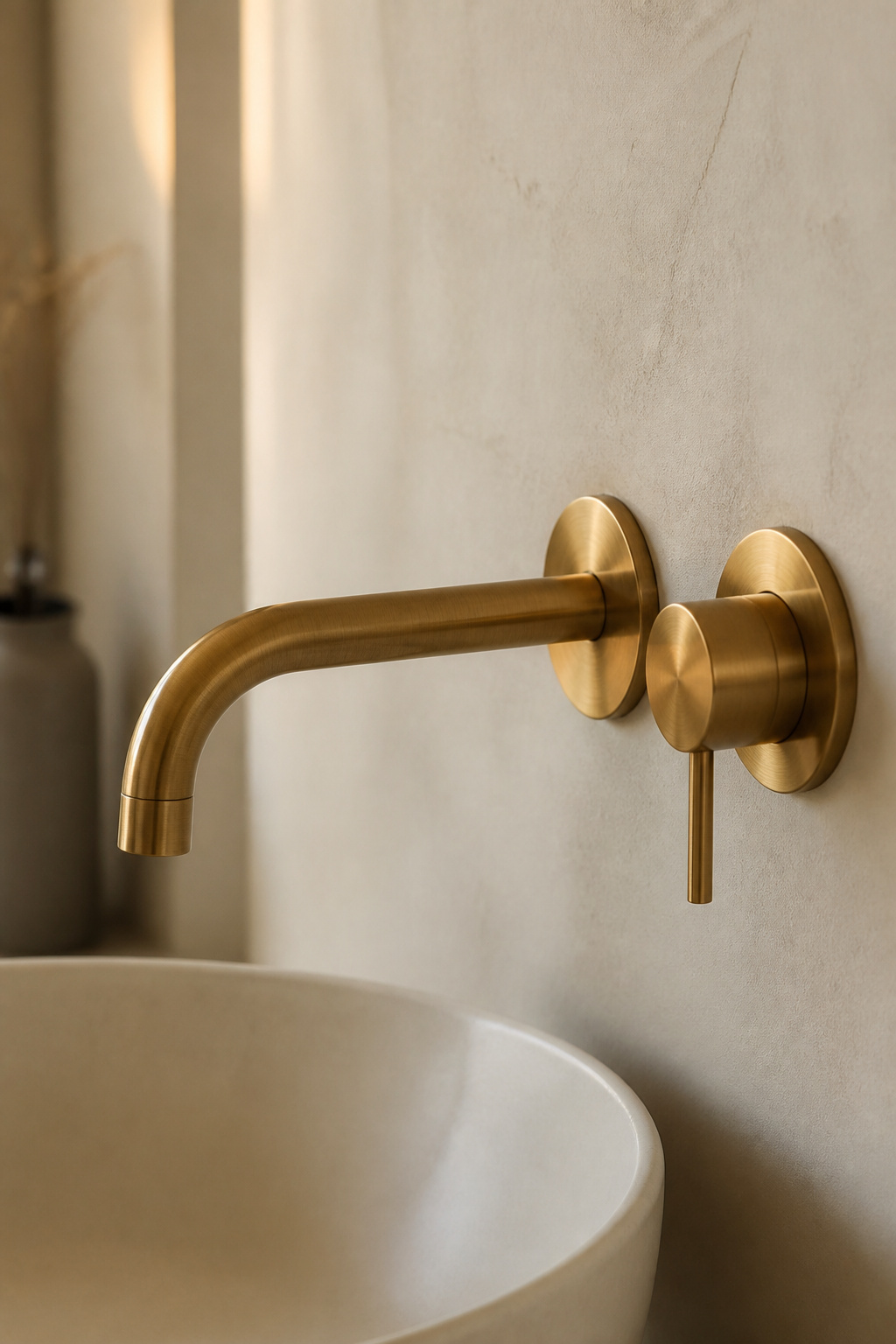
Match the kit to the valve manufacturer before ordering: trim is brand-specific to the stem behind the tile, so one that looks correct will not seat on another maker’s valve.
What a faucet swap involves
A sink faucet costs $170 to $360 all in professionally, $130 to $350 of that labour, or $50 to $550 for hardware alone if you fit it yourself. A straightforward swap takes an hour, closer to two with a new drain assembly. I still tell first-timers to hold a one-to-four-hour window, because what eats the afternoon is a corroded supply nut.
Test the shutoffs first: close them, open the tap, and see whether the water genuinely stops.
Hardware, mirror and door swaps
The usual mistake with the cheap swaps is treating them as casual ones, when what makes them fail is placement rather than the product.
Cabinet and drawer hardware
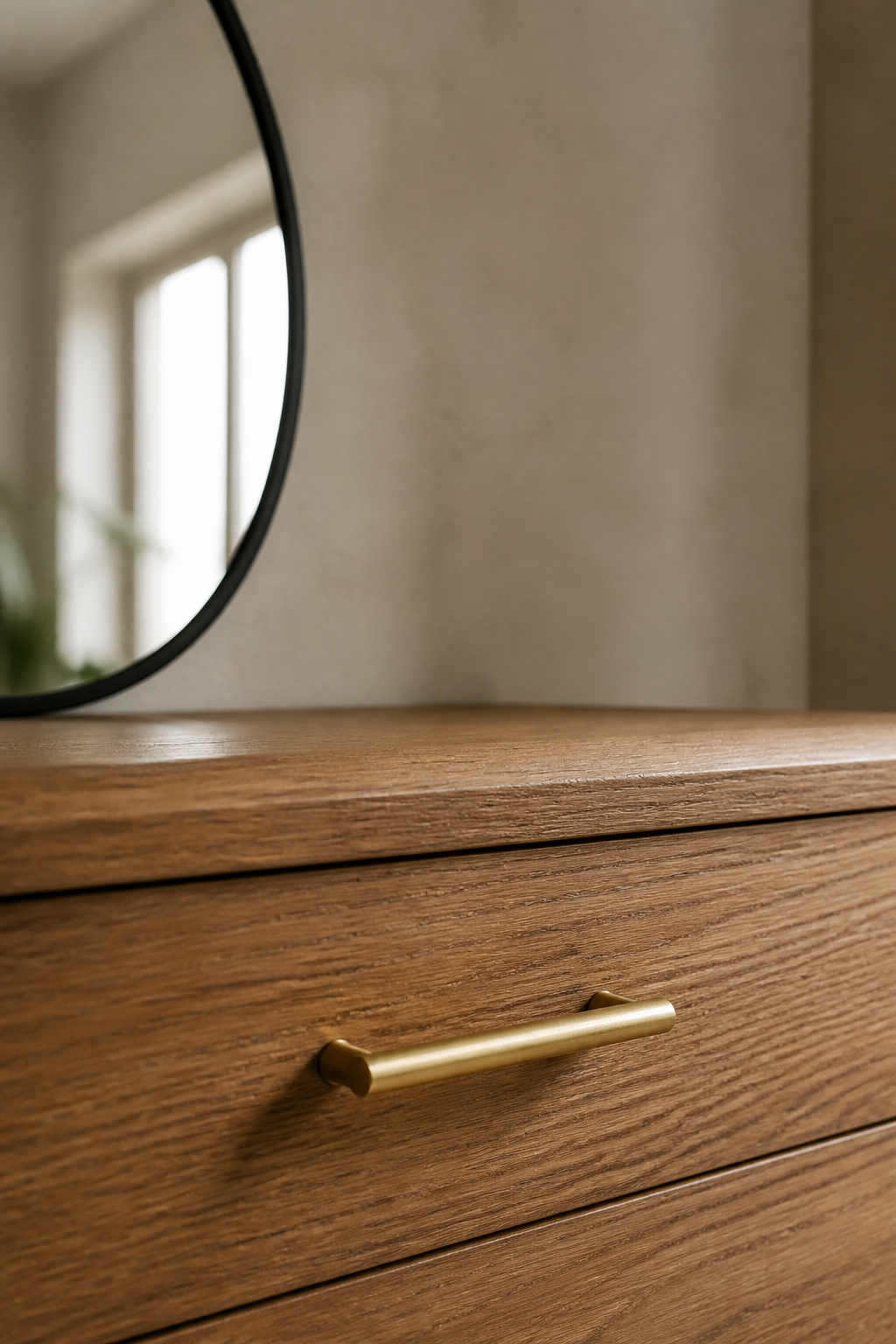
Door pulls go 2.5 to 3 inches up from the bottom edge and 2.5 to 3 inches in from the side opposite the hinge. Drawer pulls follow the thirds rule: pull length about a third of the drawer width, centred. Use a placement template rather than measuring each face. A vanity stacks its fronts vertically, so a sixteenth of drift shows.
Swapping the mirror
Buy anchors rated to at least twice the mirror’s weight; toggle bolts rated 50 to 100 lb are the practical drywall standard. Two mounting families:
- Clips and J-channel are mechanical and reversible, load into the studs, and need no cure time.
- Mirror mastic is permanent, takes 48–72 hours to cure, and has to be mirror-rated, because ordinary construction adhesive can corrode the reflective backing.
Above roughly 10 kg (about 22 lb), the trade habit is both: the channel carries the weight, the mastic resists the tip. That threshold comes from installer practice rather than a written standard.
Replacing the door: slab vs pre-hung
Materials are the small half: $50–$500 for a slab, $50–$300 for a pre-hung unit with frame and hardware. Labour is the difference. Pre-hung goes in in 1–2 hours, a slab fitted to an existing frame 2–4, since planing for square and mortising hinges is fussy. Without hanging experience, hand the slab to a handyman. A hollow-core 36×80 door runs 25–35 lb against 50–80 lb solid-core, so the heavier one needs hinges to match.
Going over the tile you already have
Anyone pricing a refresh eventually asks whether a seamless coating can go over the existing tile instead of tearing it out. Substrate prep decides that, and Henrik Larsson works it through in going over the tile you already have. Painting or refinishing the tile itself is out of scope here.
Which finishes are worth the swap
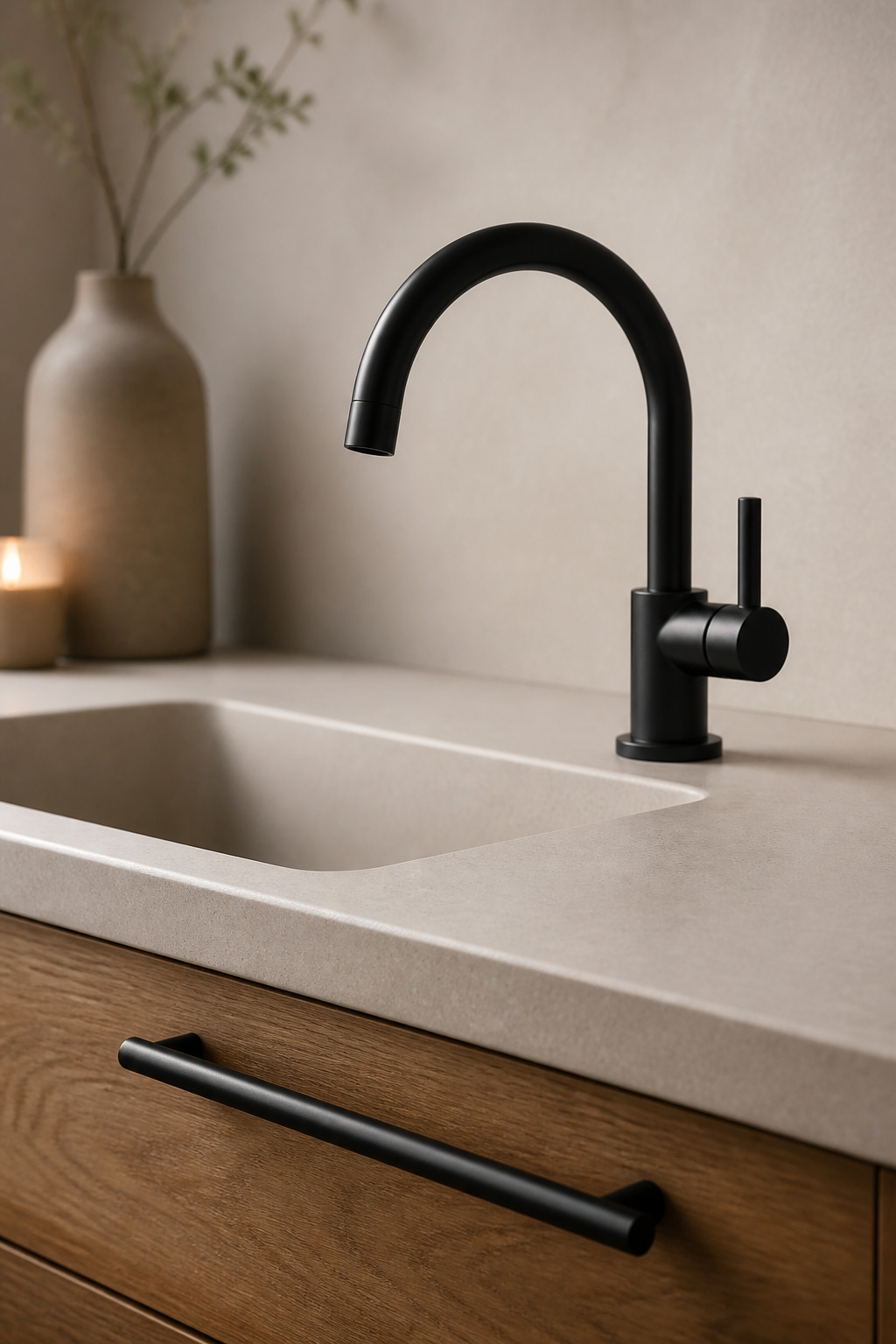
Pull the faucet, waste, shower trim and pulls into one finish family and the room looks deliberate for the price of hardware. Which metals survive daily cleaners and hard water is Rachel Blackwood’s territory, so read which finishes are worth the swap before committing a room to one.
The swaps that look cheap and aren’t
Roger Wakefield, a licensed plumber, pulled apart a $49 best-seller and found the weak point in the plastic mounting nut rather than the finish: its threads strip under ordinary tightening until the faucet wobbles. That teardown was a kitchen faucet, but the material argument carries over to bathroom ones, with zinc alloy and coated plastic where solid brass belongs.
What makes it a false economy is that it works. Out of the box, a cheap faucet is fine. The wear arrives months later, and budget brands often stock no cartridge or repair kit, so you fit a second faucet rather than repair the first. Judge it on cost per year of use.
The mirror runs on the same logic: adhesive alone, with no mechanical backup, bets that the bond outlasts the tipping load.
No swap fixes a room that never had a plan, either. If the door catches the vanity, the small-bathroom guide is right that something has to give. That is an argument about layout, though, and it doesn’t support the belief that a modern bathroom starts with a dumpster in the driveway. Read what makes a bathroom read as modern and price these swaps against it.
The whole plan turns on ten minutes with a tape measure before any money gets spent. Start with the vanity door open, then take the drain height off the finished floor, the offset from the sink centreline and the trap size stamped on the pipe, plus a phone photo of the brand mark on the shower handle. Those numbers say whether Saturday is a faucet, a whole vanity, or a call to a plumber. All three cost less than the remodel you were bracing for.
FAQ
How much does a no-demo bathroom refresh typically cost?
A faucet swap runs $170–$360 professionally installed, or under $100 in parts for a confident DIYer. A vanity adds $200–$1,000 in labour if hired out, plus $100–$2,600 for the cabinet. Hardware, mirror and door swaps stay under $200 each, so adding those swaps up puts a DIY pass in the low-to-mid hundreds.
How long does a weekend bathroom update actually take?
A faucet swap takes 1–4 hours yourself, cabinet hardware under an hour with a template, a pre-hung door 1–2 hours professionally and longer on a first attempt. Budget a full weekend for vanity, faucet and hardware together, plus the trip back for the part that does not fit.
Can you replace a vanity without hiring a plumber?
Yes, when the new vanity’s drain and supply lines land close enough to the existing rough-in that a flexible P-trap connector bridges the offset. Measure that gap first. Check local plumbing code, since some jurisdictions restrict flexible waste pipe, and call a plumber if the centreline sits well off.