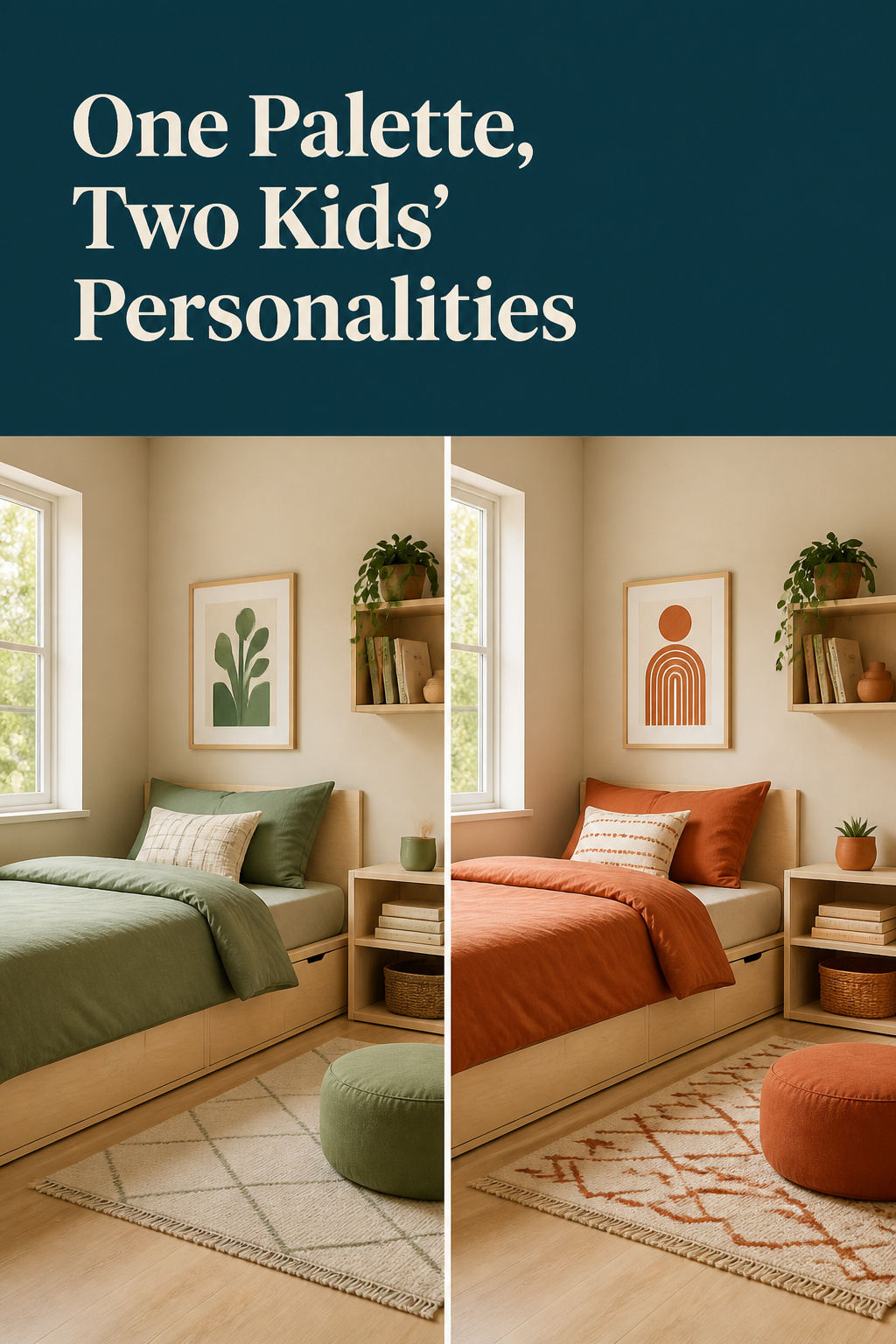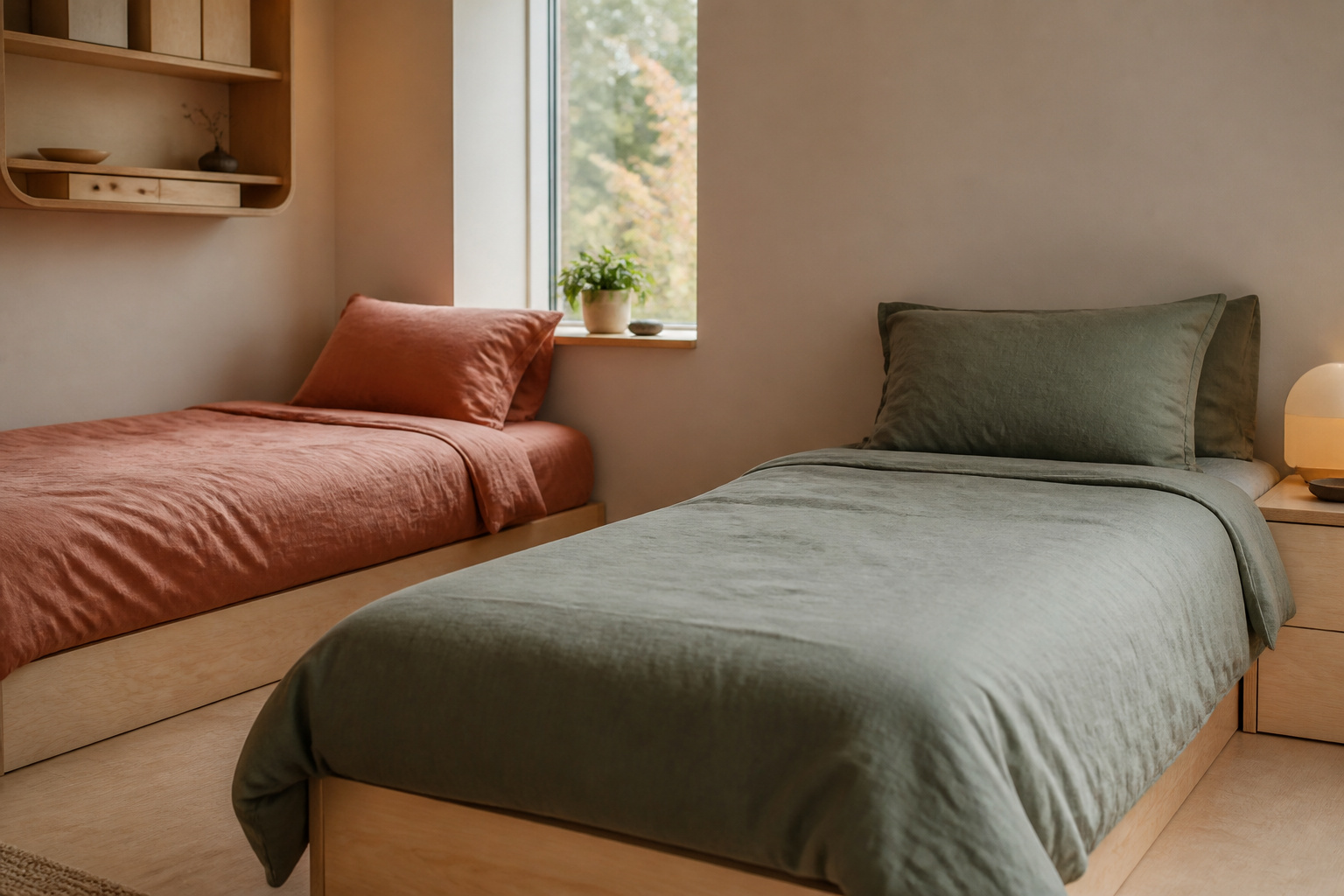

You know the room I mean. Sage green stops halfway along the wall, terracotta takes over, and the seam lands behind a nightstand. Two beds, two colours, one bedroom that never settles into being one room. Most boy and girl shared room ideas start there, because a line down the middle looks like fairness. It isn’t.
TL;DR
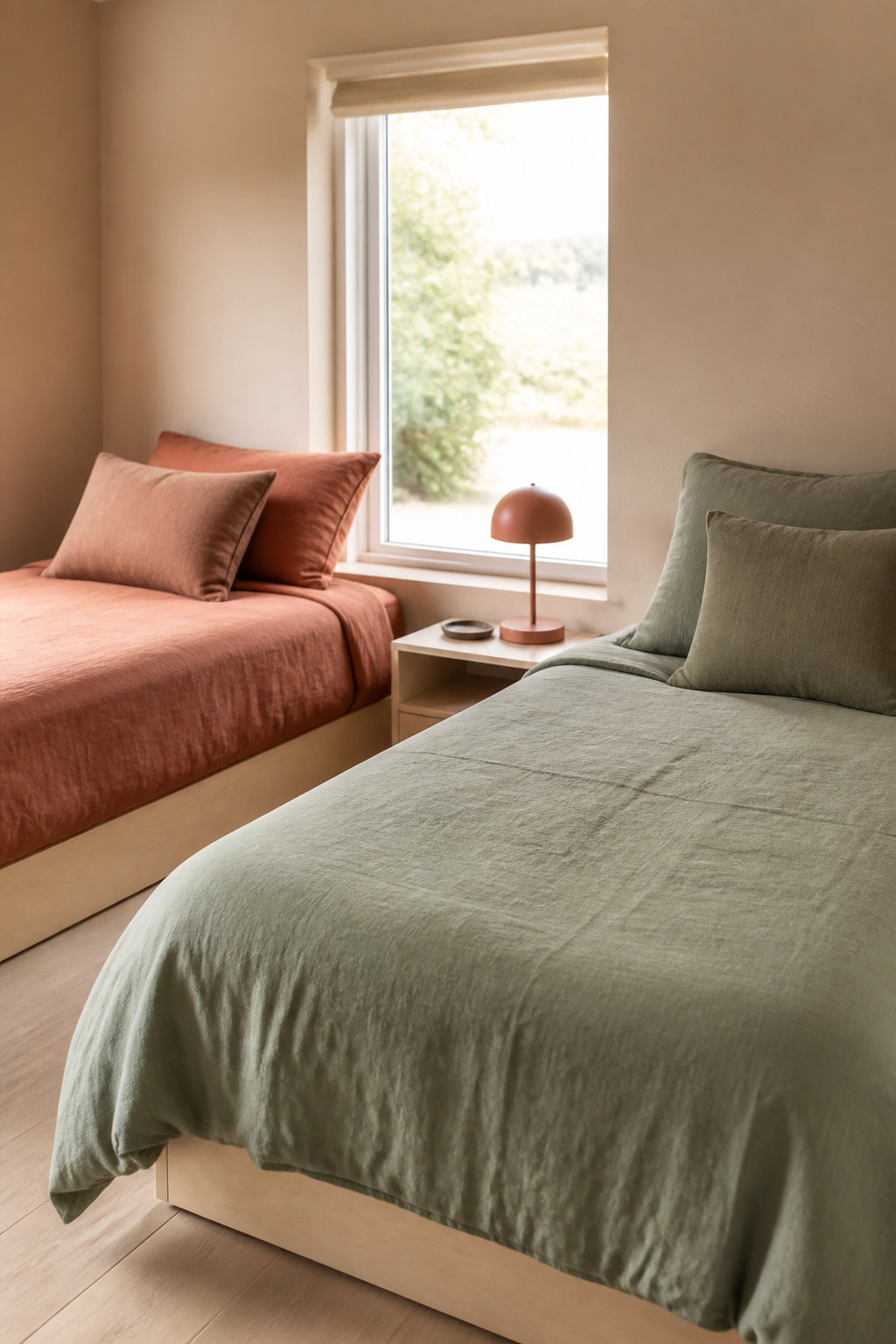
- One shared base carries walls, floor and large furniture: the 60% tier of the 60-30-10 rule. Each child gets one accent in the 10% tier.
- Put personality where it is cheap to change. Repainting 144 square feet runs $200–$350 DIY; a kids’ bedding set is $17–$40 and swaps in an afternoon.
- No US law makes opposite-sex siblings stop sharing at any age. The age-6 figure online is a foster-care licensing threshold: Texas 26 TAC §749.3029, Illinois DCFS §402.9.
Most Boy and Girl Shared Room Ideas Split the Room Down the Middle
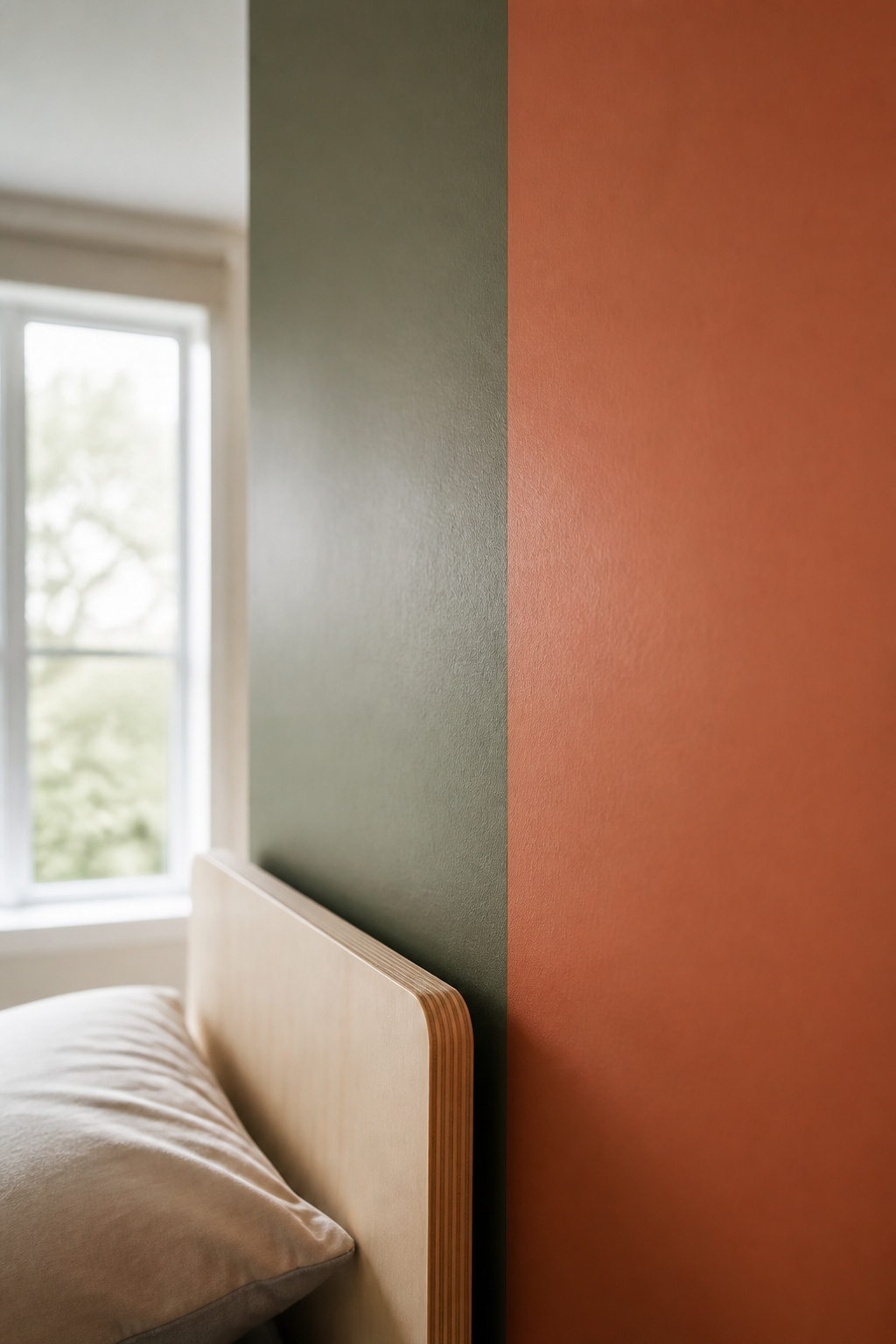
Nothing crosses the midline in a colour-split room, and that is the whole failure.
What a colour-split room gets wrong
The wall changes at the seam, the bedding changes with it, so the eye finds no surface belonging to the whole space. The fix is a single constant: one surface type — walls, floor or large furniture — identical from door to window. Beds come first, though, sequenced in the guide to how siblings sharing a room actually works.
Why kids don’t actually want “their half”
Nobody has studied this, and I’d rather say so. No research compares children’s attachment to bedroom colour against bedroom space, so this is design reasoning, not developmental science. Ask a seven-year-old which part is theirs and they point at the shelf they arranged, the drawings they pinned up. Never at the paint.
The Palette Method: One Base, One Accent Each
Sixty, thirty, ten. That old proportion rule sorts a room by how hard each layer is to undo.
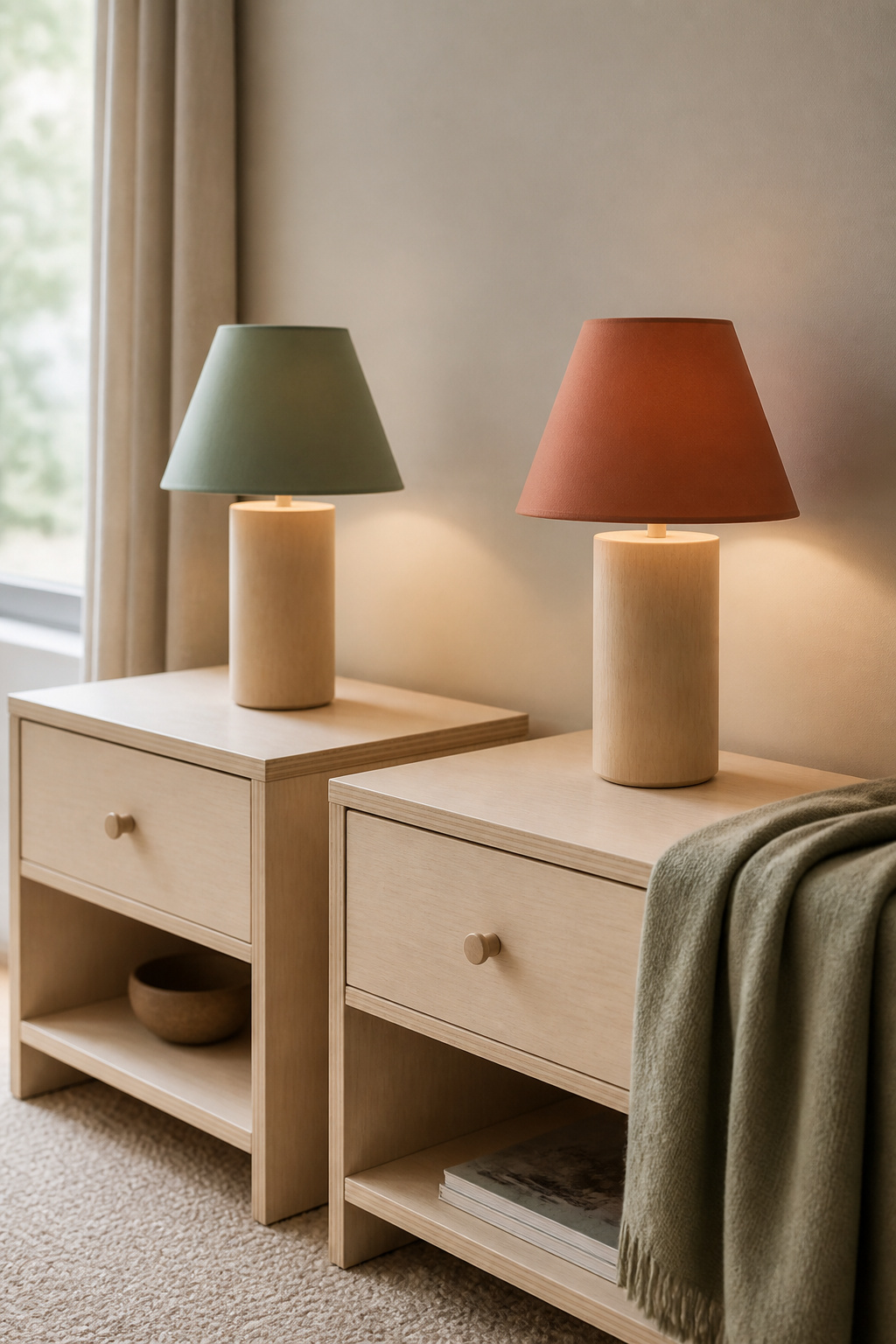
Choosing the shared base for walls, floor and big furniture
It spreads colour in three tiers: 60% dominant across walls, floor and large furniture, 30% secondary in upholstery, rug and curtains, 10% accent in art and objects. That 60% goes shared, wall to wall. Nate Berkus makes the same split: matching bedside tables or lamps balance a room even when the bedding differs.
You will be told to pick the base by mood: blue calms, red energises. No study stands behind that for children’s bedrooms. Kwallek and Lewis in 1990, and Mehta and Zhu in Science in 2009, measured adults doing tasks in coloured rooms. Nothing pediatric-specific exists, so choose on daylight and durability.
The finish matters more than the hue. Under ASTM D2486, a Class 1 paint survives 1,000-plus scrub cycles under a 454-gram load; Class 2 manages 300 to 500. Buy Class 1 for the base.
Picking a personal accent that isn’t gendered
The accent tier is where a child’s own taste goes. Three approaches beat pink-versus-blue:
- A colour the child actually chose. Not one assigned to their sex. Marigold if she picks marigold.
- A motif instead of a hue. An animal, a pattern, a shape: same identity work, none of the baggage.
- A muted primary. Softer than the literal pink-and-blue pair, easier against a neutral base.
All three live in the textiles and the art, never on the wall, which is also why I won’t put a licensed character there. A paintable surface and a swappable duvet outlast any franchise.
Swapping accents in an afternoon as tastes change
The reason personality belongs in the 10% tier isn’t taste. It’s arithmetic.
| Layer | Covers | Cost to change | Time |
|---|---|---|---|
| Base, 60% | Walls, floor, large furniture | $200–$350 DIY, $400–$800 pro, per 144 sq ft | A weekend plus drying |
| Middle, 30% | Upholstery, rug, curtains | $200–$1,000 a chair, $600–$1,800 a couch | Weeks, off-site |
| Accent, 10% | Bedding, art, lamp shades | $17–$40 a bedding set | An afternoon |
Children change their minds faster than the top two rows can absorb.
Where Personal Identity Lives Without Splitting the Room
There is a doorframe I have taken through two moves. Unscrewed, wrapped in a blanket, rehung twice. Pencil marks, dates, one wobbly line where somebody stood on tiptoe. The least designed object in my house, and the first thing I’d grab in a fire. Personal is the layer that records who lived there, almost never the paint.
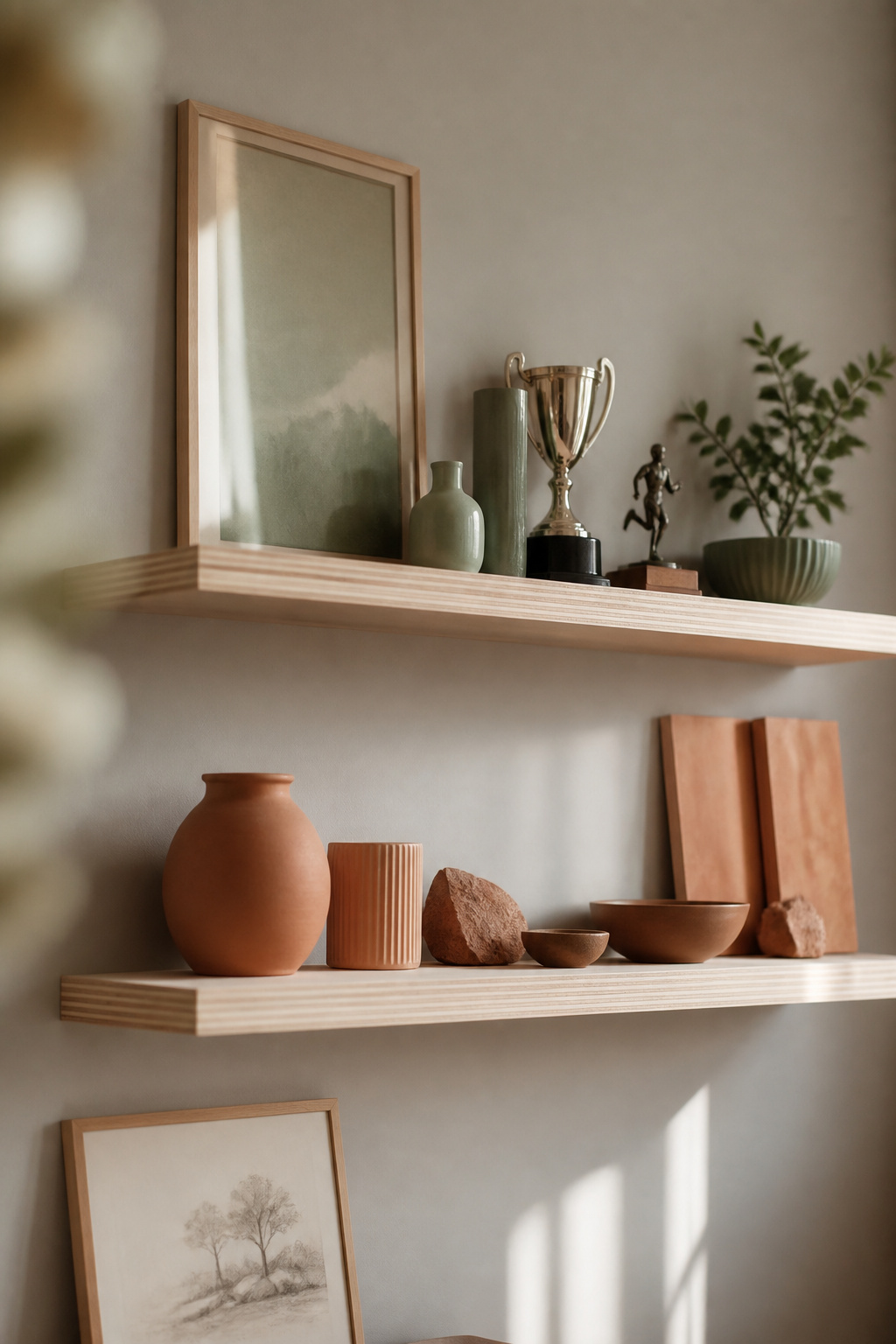
Art and textiles as the identity layer
Bedding and art carry identity because they are the only layers a child can change without a family budget meeting. So hang the child’s own work rather than a bought print: free, and unmistakably theirs.
Trophy shelves, collections and each child’s own display space
Give each child one display surface that is theirs alone, on opposite walls or side by side. That is design logic rather than a researched finding — published guidance here is thin.
The detail that stops a shelf rebuilding the seam: match the shelf. Same material, same bracket, same height, low enough to reach without help. Vary only what stands on it — the trophies, the rocks, the seven identical dinosaurs.
A Divider That Gives Each Child a Boundary
Which complaint are you actually hearing?
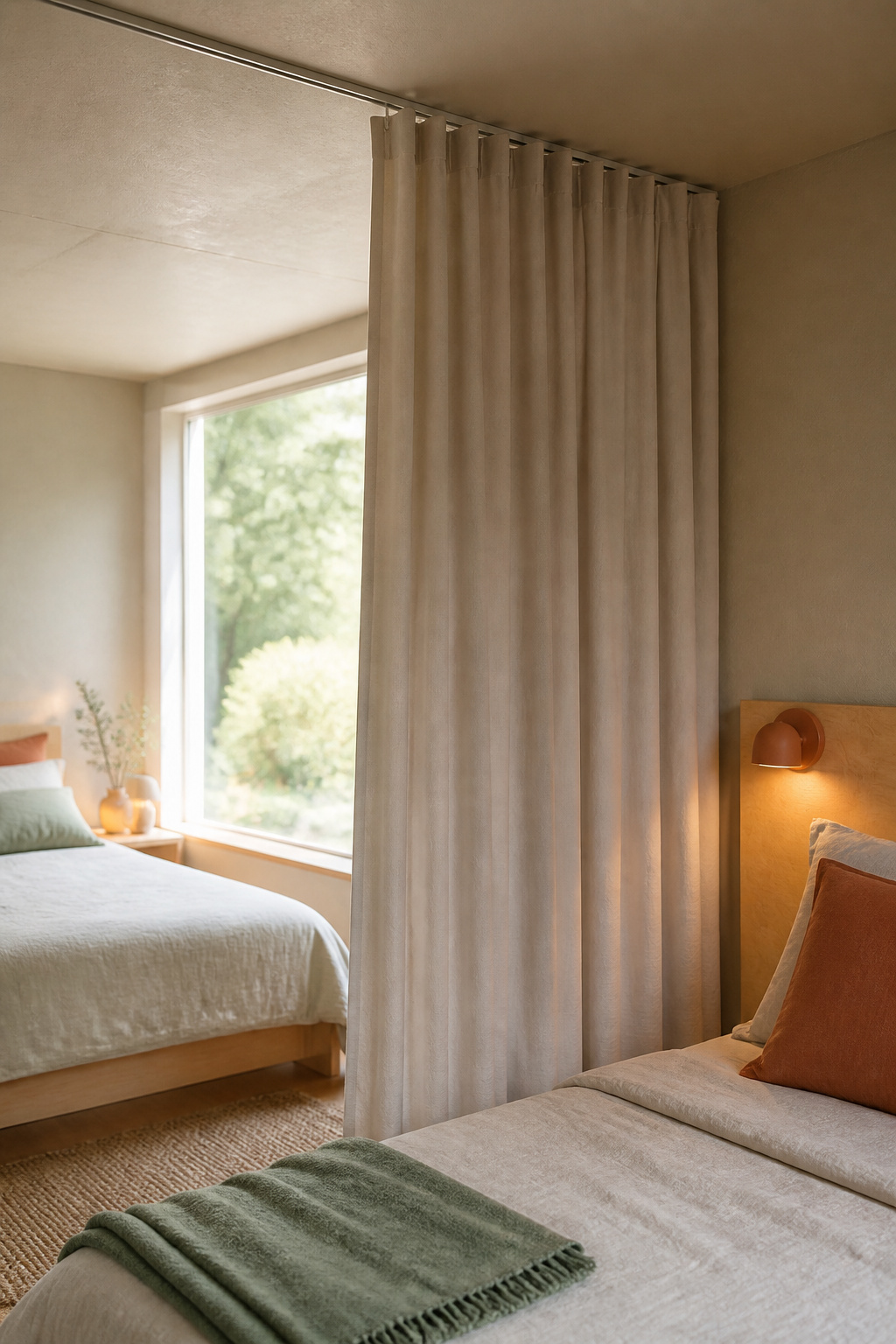
When physical separation matters more than colour
Colour answers an identity complaint: nothing in here is mine. A divider answers a spatial one: he watches me get dressed. Different problems, different fixes, and they combine well.
Choosing a divider that doesn’t reintroduce the two-halves problem
One rule governs this: the base runs through. Same wall colour, same flooring, continuing past the boundary. Finish each face of a screen differently and you have rebuilt the seam one line over. Beyond that it is a cost and daylight question, and Tess Carver has costed every reversible option: a divider that gives each child a boundary.
Changing Privacy Needs as a Boy and Girl Get Older
Search this and you will be handed the age-6 answer that circulates everywhere. It comes from foster-care licensing, and it does not apply to your family.
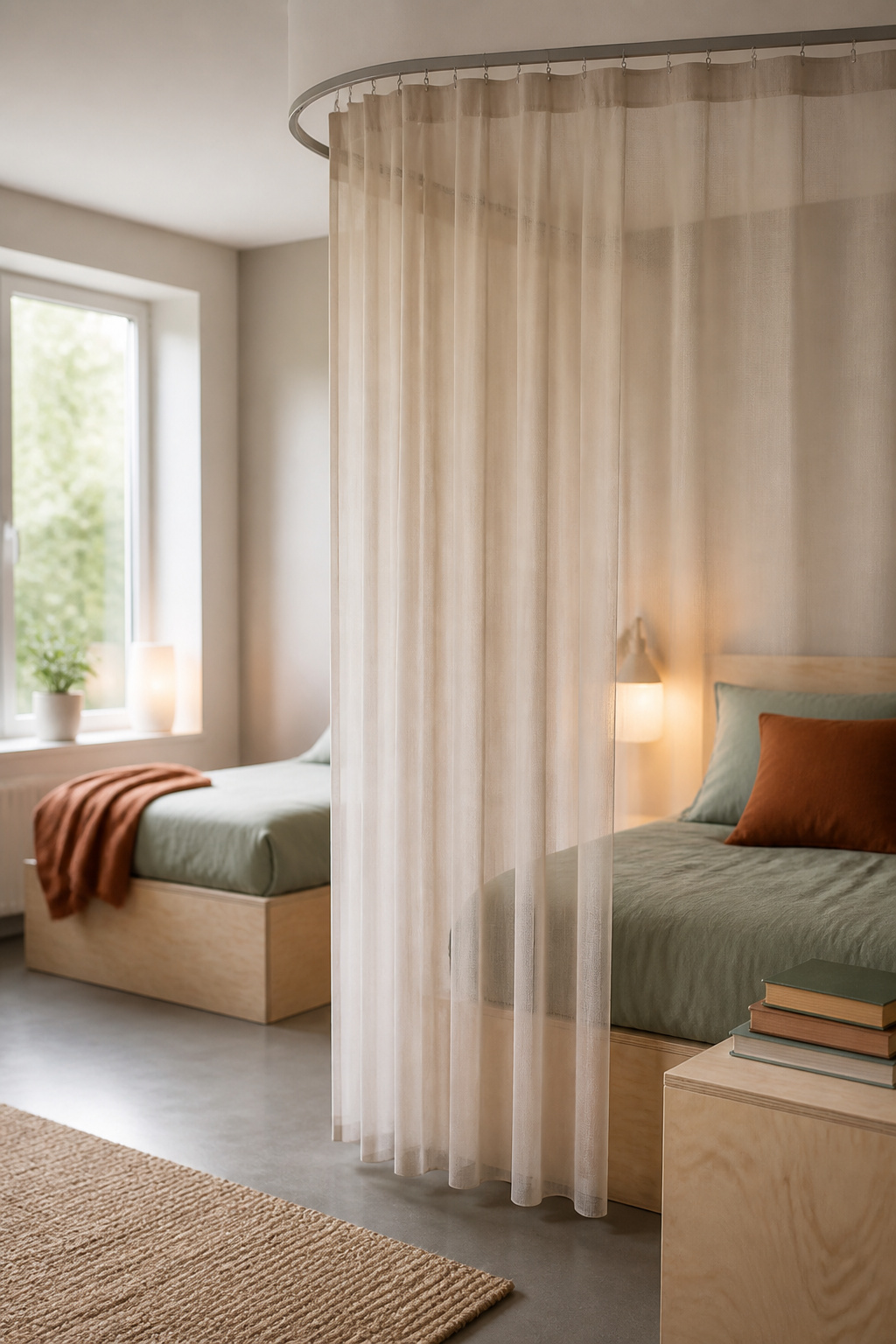
The age where mixed-sex sharing usually needs to change
There is no US federal or state law requiring opposite-sex siblings in a private home to stop sharing a bedroom at any age. None. A brother and sister can share from infancy through their teens without breaking a statute.
The number is real somewhere, just not in family law. Texas rule 26 TAC §749.3029 sets the age-6 foster-care licensing threshold: a child six or older must not share a bedroom with a child of the opposite gender in a licensed child-placing-agency foster home. Even there, siblings are among the documented exceptions. Illinois DCFS §402.9, another licensing rule, lets related opposite-sex children under six share if each has a separate bed. Both govern homes a state licenses and inspects. Neither reaches into your house.
So ask what that threshold stood in for: what does this child think about privacy this month? Licensed counselor Emily Kircher-Morris puts it developmentally — school-age children start noticing modesty, and by puberty most find sharing uncomfortable.
What changes first: dressing, sleeping, or the room itself
Privacy arrives in three stages, in this order:
| What changes | The cue you’ll notice | What it takes |
|---|---|---|
| Dressing and changing | Doors closing, “don’t look”, school-age modesty | A screen or a curtained corner |
| Sleeping and bedtime | The older child’s routine pulling away | Staggered bedtimes, one reading light |
| The room itself | The first two stop being enough | A divider, separate rooms eventually |
Work down that table in order. Most families solve dressing privacy first with a curtain and buy years.
When the Younger One Is Still a Baby
The instinct when a baby joins the room is to repaint it. Resist that.
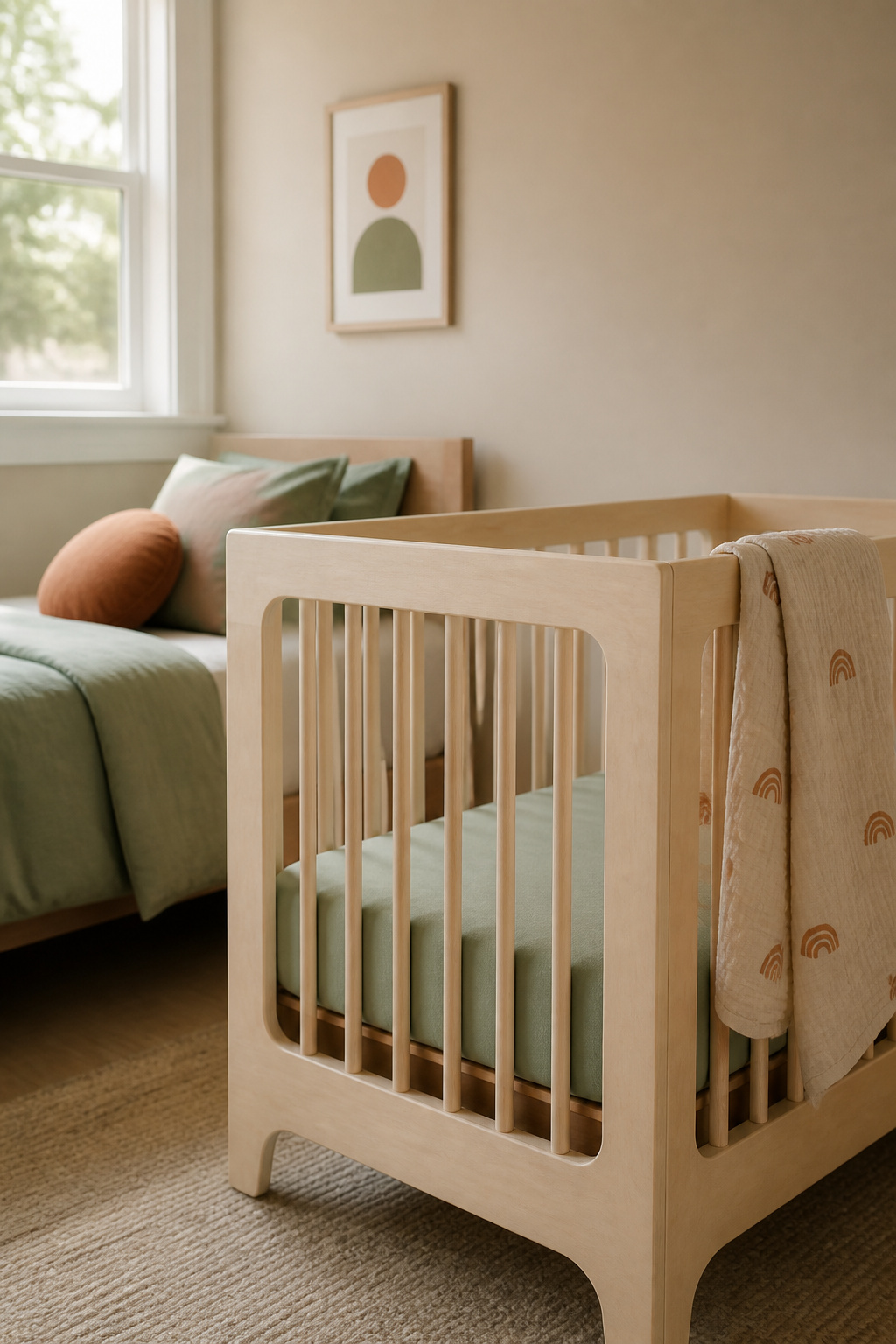
Why the palette method still works with an infant in the mix
A neutral base was chosen to outlast one child’s tastes, so it survives a second child arriving. The baby’s personal layer lands in the same 10% tier: a crib sheet in her accent colour, a mobile, one piece of art at crib height.
One thing gets stricter, and it is air rather than colour. GREENGUARD Gold holds formaldehyde emissions to 7.3 parts per billion against 50 ppb for standard GREENGUARD, and was written for schools and nurseries. An infant breathes that room far longer than an older sibling, so pay for it on the base coat.
What changes when one sibling is a baby
What changes is the clock, not the scheme. Different waking hours are a scheduling problem, and no palette decision touches them. Crib placement, safe-sleep constraints, sound and light separation and staggered bedtimes live in the guide to when the younger one is still a baby.
Go back to that seam. You now have the replacement: one base across walls, floor and large furniture in a Class 1 finish; one accent each in the $17-to-$40 layer; one matched display shelf per child. When privacy starts to matter, read these two children rather than a threshold borrowed from foster-care licensing.
So kneel in the middle of the room at your children’s height and name every surface that crosses the midline. If the answer is none, you’ve found the only repaint worth doing — $200–$350 DIY for a 144-square-foot room, spent once instead of every time a favourite colour changes.
FAQ
Is there a legal age limit for opposite-sex siblings sharing a bedroom?
No. No US federal or state law sets an age at which a brother and sister must stop sharing a bedroom in a private home. HUD’s 1998 Keating Memo calls two per bedroom generally reasonable, but that is non-binding fair-housing guidance for landlords, silent on sex. The age-6 figure comes from foster-care licensing.
Do boy-girl shared rooms need two closets?
Nothing about a room serving a brother and a sister specifically requires two closets. Personal identity here lives in accent colour, textiles and one display space each, rather than duplicated storage. How one closet gets divided fairly between two children is a storage decision, separate from palette.
How do you handle friends visiting a shared boy-girl room as kids get older?
A curtain used only when friends visit usually solves it without a permanent change. The deeper issue is social comfort, not design: the same developmental window that governs sibling privacy — school-age modesty, then puberty — shapes when a child stops wanting friends in a room they share.