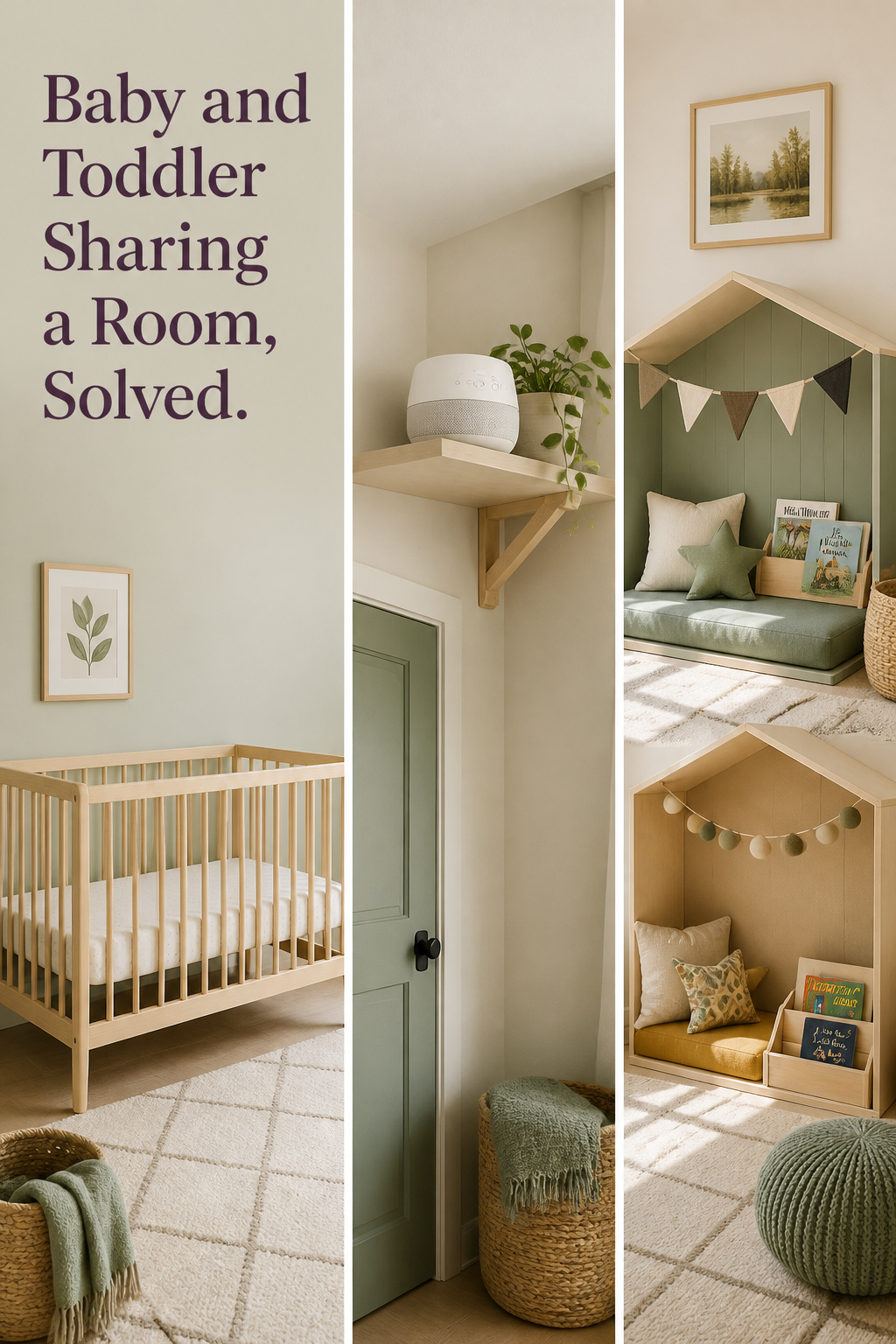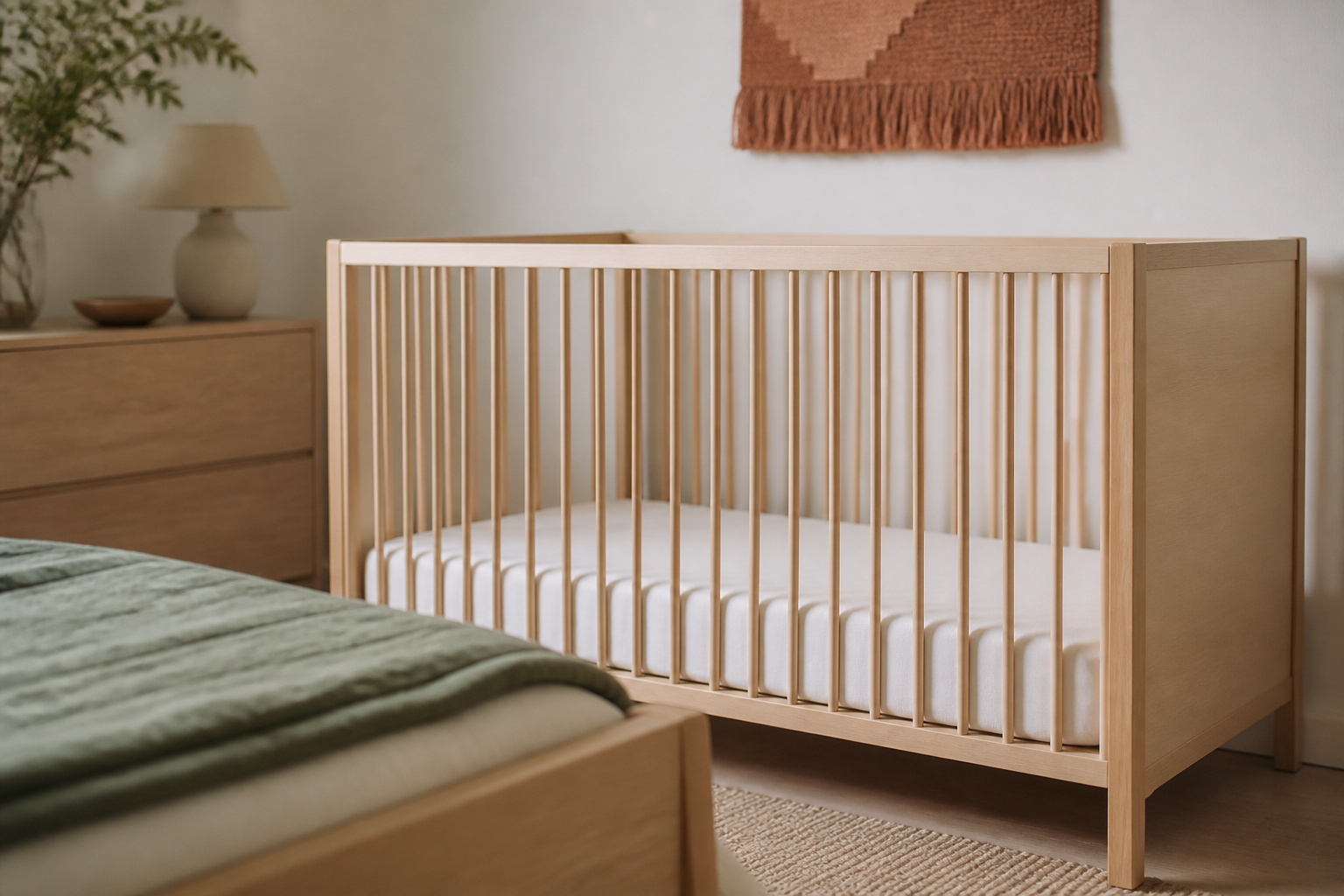

My first classroom in Albuquerque had its reading corner in the wrong place. I spent a term managing behaviour before I moved the rug and low shelf away from the door and the block bins. The trouble stopped inside a week. The children hadn’t changed; the room had. That’s the lens I bring to a baby and toddler sharing a room: change the room before the children.
TL;DR
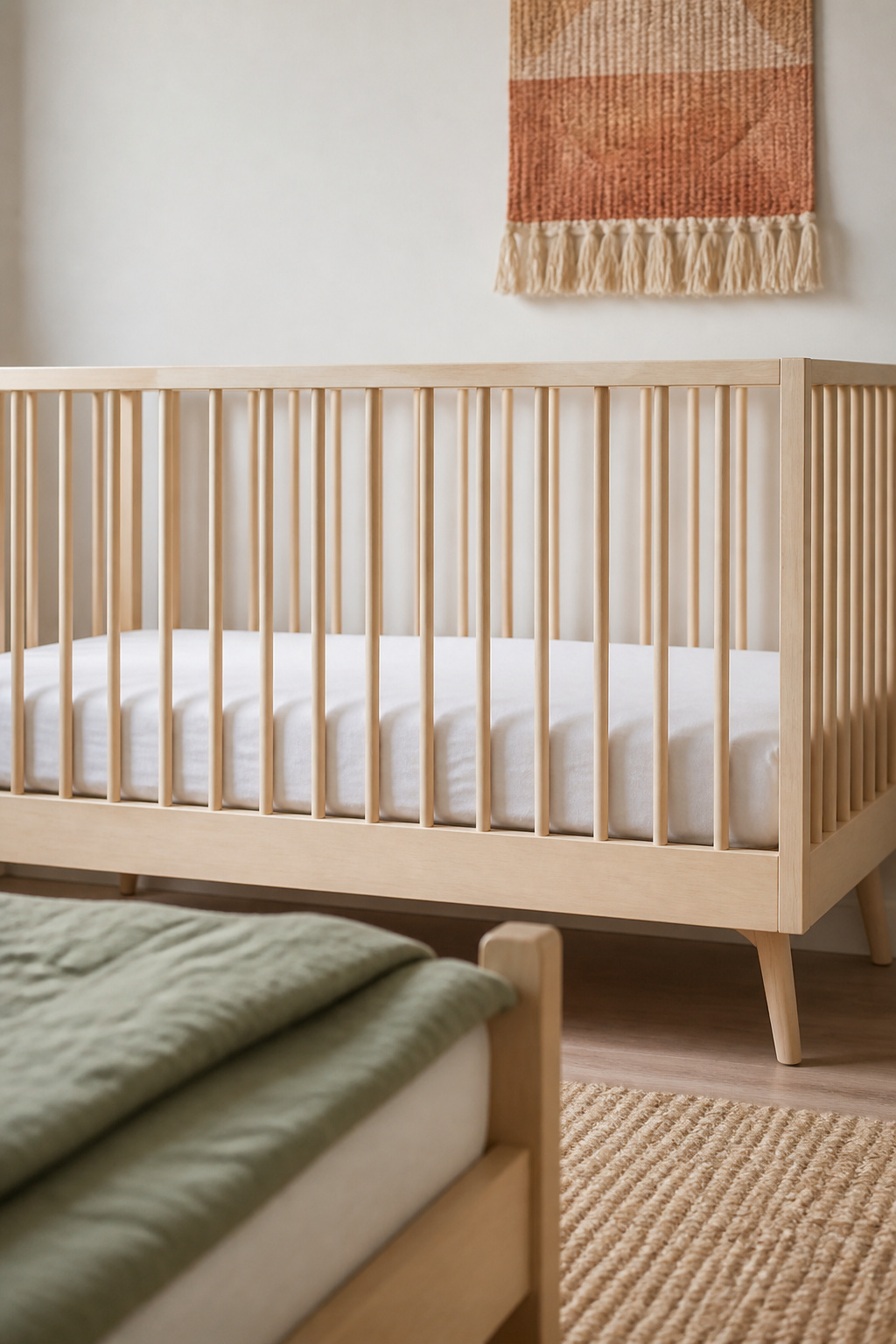
- Safe sleep sets the layout: back sleeping until one, a firm flat surface with a fitted sheet and nothing else in the crib, slats no wider than 2⅜ inches, crib clear of windows and cords.
- Infant sleep machines measured a mean maximum 79 dBA at one foot and 63 at seven — keep yours as far from the crib as the room allows, never on it, at the lowest useful volume.
- Run two bedtimes, not one: baby first, the toddler’s routine held outside the room.
Baby and Toddler Sharing a Room: The Schedule Collision Nobody Warns You About
Seven-fifteen. The baby is finally down; the toddler wants water, a story and a conversation about dinosaurs.
What actually happens the first week
These two aren’t on different schedules; they’re on different biology. A newborn needs 14 to 17 hours of sleep a day across fragmented cycles, a toddler 11 to 14 in one block plus a nap. Those are National Sleep Foundation ranges.
A newborn also has no day-night pattern yet: circadian hormones don’t follow a daily cycle until roughly eight or nine weeks. That phase lasts months, not the fortnight parents brace for.
Why “they’ll adjust” isn’t a plan
Room-sharing guidance is safety guidance. It says nothing about whether two sleep schedules will coexist, which is what makes “they’ll adjust” feel like a decision. The wider sequence of bed, storage and privacy calls sits in the shared kids bedroom ideas guide.
One sibling waking the other is commonly reported but unmeasured, as is the week or two of adjustment quoted online. Treat both as practice, not finding. Then name the lever you’ll pull: sound, light, or bedtime order.
Crib Placement and the Safe-Sleep Rules That Come First
Almost everything else here is a preference. This part isn’t.
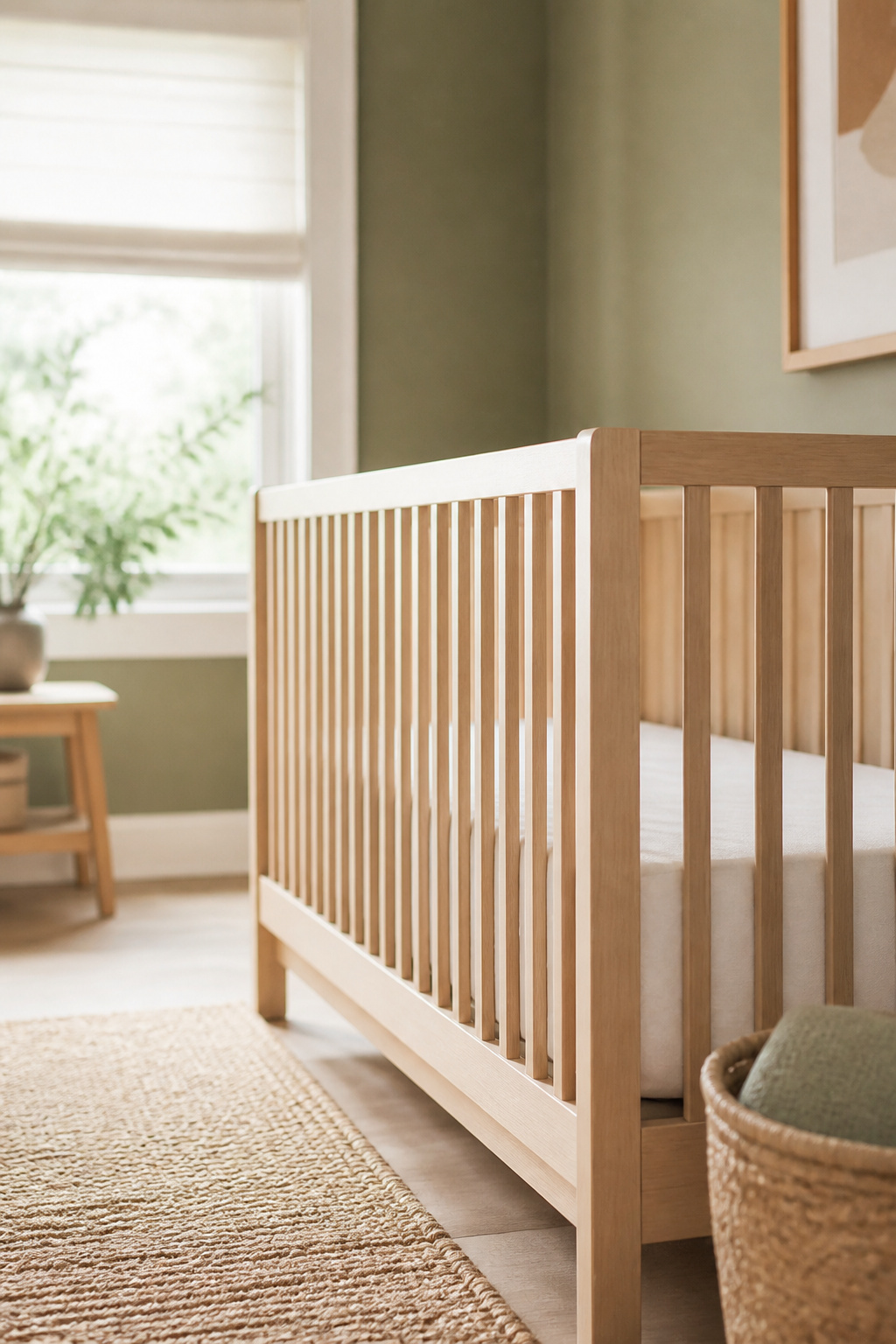
Where the crib can and can’t go
The AAP’s 2022 policy statement (Moon, Carlin and Hand, Pediatrics) governs the sleep surface: infants go down on their back for every sleep, by every caregiver, until they turn one, on a firm, flat, non-inclined surface with a fitted sheet — nothing else in the crib.
Then the distinction I most want you to carry out of this article. Room-sharing without bed-sharing can reduce SIDS risk by up to 50%, the AAP’s highest evidence grade — but that figure comes from studies of a baby sharing with a caregiver, and it has never been studied for a baby sharing with a sibling, so an older brother or sister in the room does not carry that protective effect. The AAP recommends caregiver room-sharing for at least the first six months, which is itself a constraint on when a baby can move in with a sibling at all.
Federal standards govern the crib, and inherited furniture is where parents get caught:
| Crib rule | The figure | Source |
|---|---|---|
| Bumpers, inclined sleepers | Banned from sale since 12 Nov 2022 | Safe Sleep for Babies Act |
| Slat spacing | 2⅜ in maximum | 16 CFR 1219 / 1220 |
| Corner posts | 1/16 in maximum above the end panels | 16 CFR 1219 / 1220 |
| Drop-side rails | Banned since June 2011 | CPSC |
An attic crib predating that date fails current standards however sound it looks. The mattress must also sit tight enough that a baby can’t slip beside it, though CPSC publishes no number — “two finger widths” is a rule of thumb, not a measurement.
Distance from windows, cords and the toddler bed
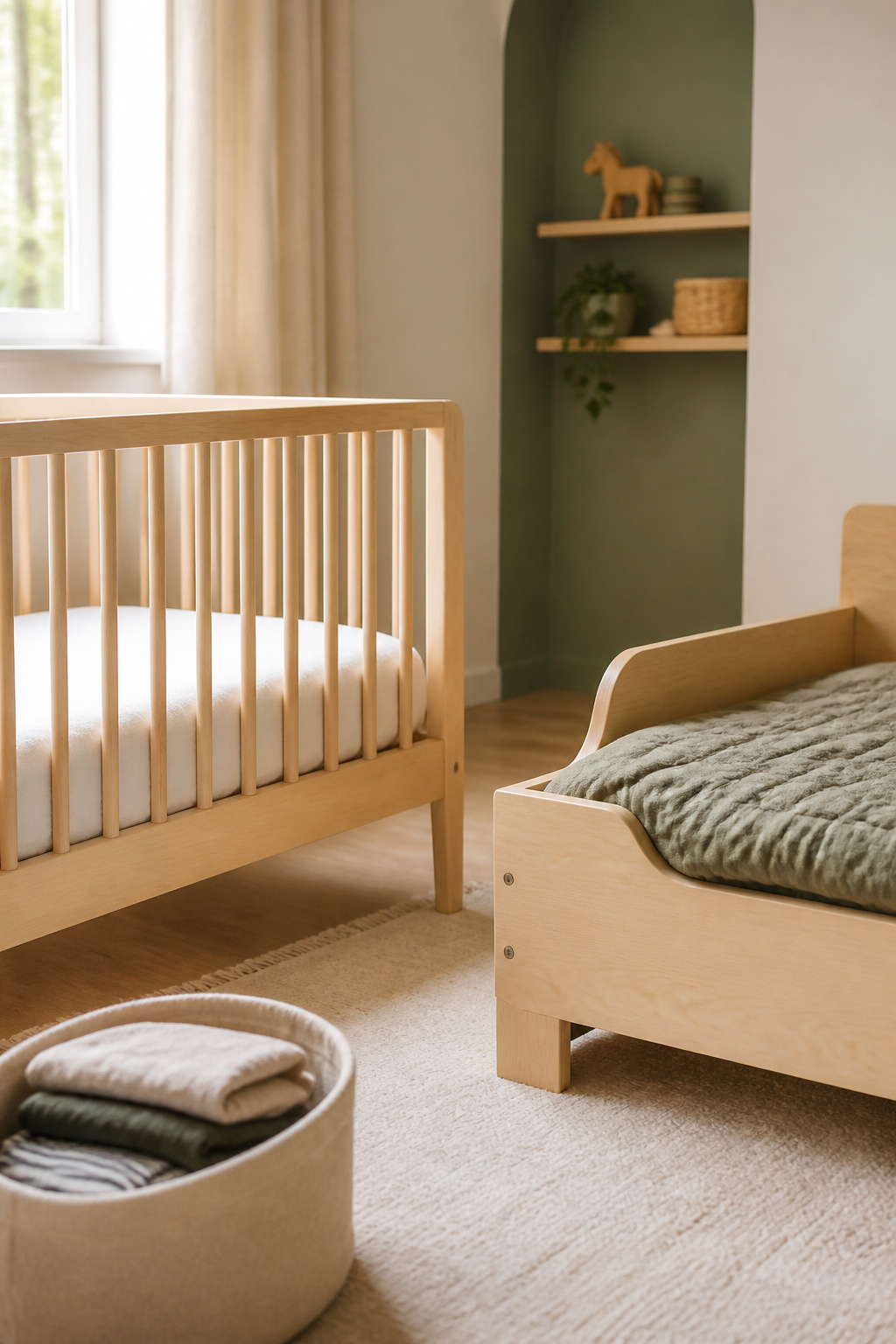
CPSC is blunt: “Place cribs or playpens away from windows to avoid window covering or fall hazards.” Its home-safety guidance extends that to beds and furniture — the toddler’s bed included.
Newer coverings help: since 30 May 2023, stock coverings must be cordless or carry cords no longer than eight inches, with the custom standard following on 1 June 2024. Older blinds are the hazard: at least 440 US children eight and under have been strangled by corded coverings since 1973, 93% of them three and under.
Separating Sound and Light Between a Napping Baby and a Non-Napping Toddler
Seventy-nine decibels: the mean maximum measured a foot from 14 commercial infant sleep machines (Hugh et al., Pediatrics, 2014). Three of the 14 exceeded 85 dBA there, the adult hearing-damage threshold.
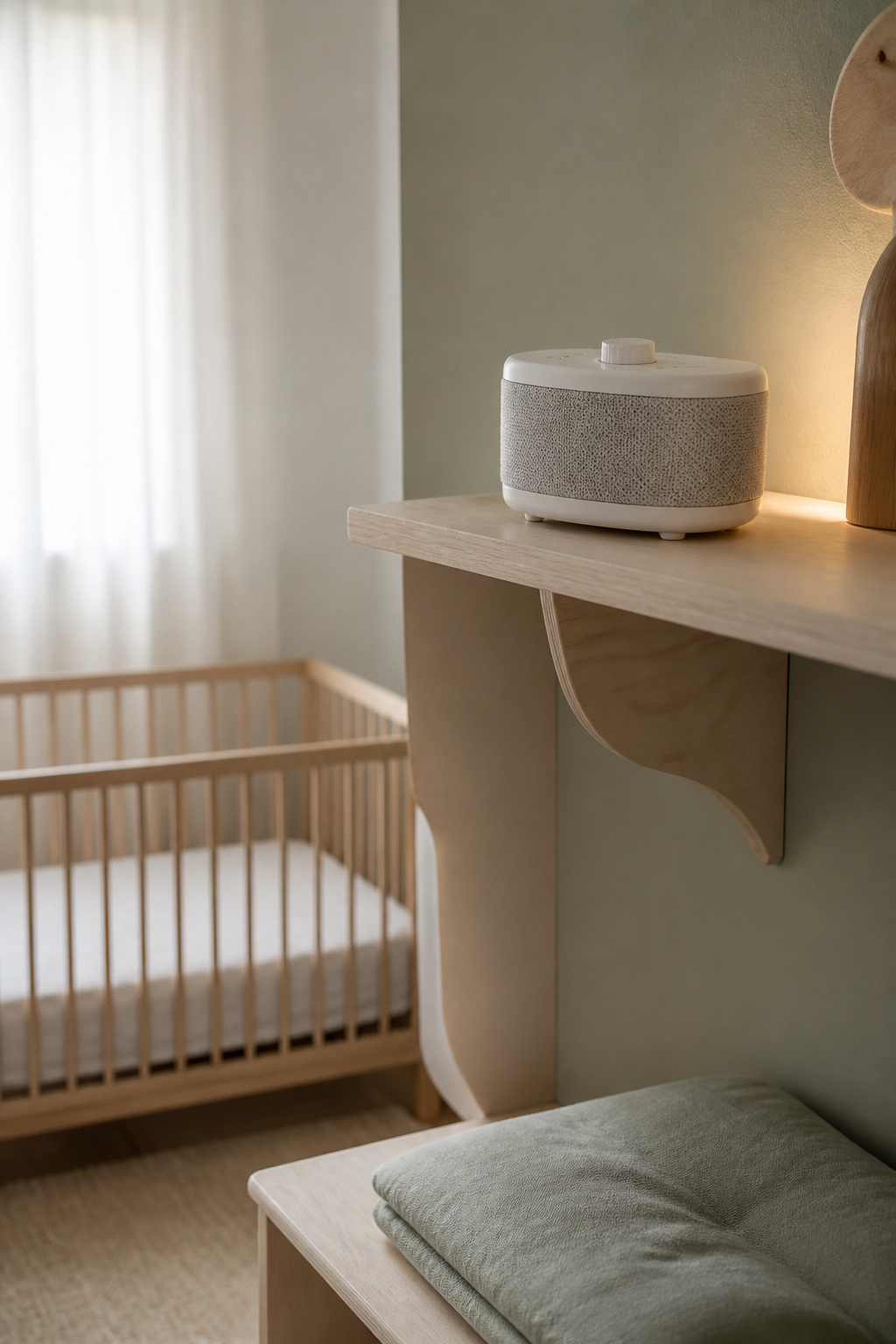
White noise placement that actually isolates, not just adds noise
The same study measured 71 dBA at three feet and 63 at seven, and nearly every machine exceeded 50 dBA — the hospital-nursery ceiling — at all three distances. So the answer isn’t a better machine but placement: as far from the baby as possible, never in the crib or on the rail, lowest effective volume, limited duration.
You also have two problems — toddler noise during the nap, baby noise overnight — from opposite corners at opposite hours. One machine on the far wall serves the nap better.
Blackout and light-leak fixes for two schedules
Blackout fabric blocks roughly 95 to 99% of light through the cloth; room-darkening liners manage 70 to 90%. Even the best-rated yardage still leaves the room bright if light slips in around the edges — top, bottom, sides — and for a baby napping mid-afternoon, that gap matters more than it does anywhere else in this silo. Mount the rod eight inches above the frame and ten past each side, then seal the door gap for daytime naps.
Building a Staggered Bedtime That Survives Reality
No pediatric authority has studied bedtime sequencing for a baby and toddler in one room. What follows is the order I’ve watched work — practice, not evidence.
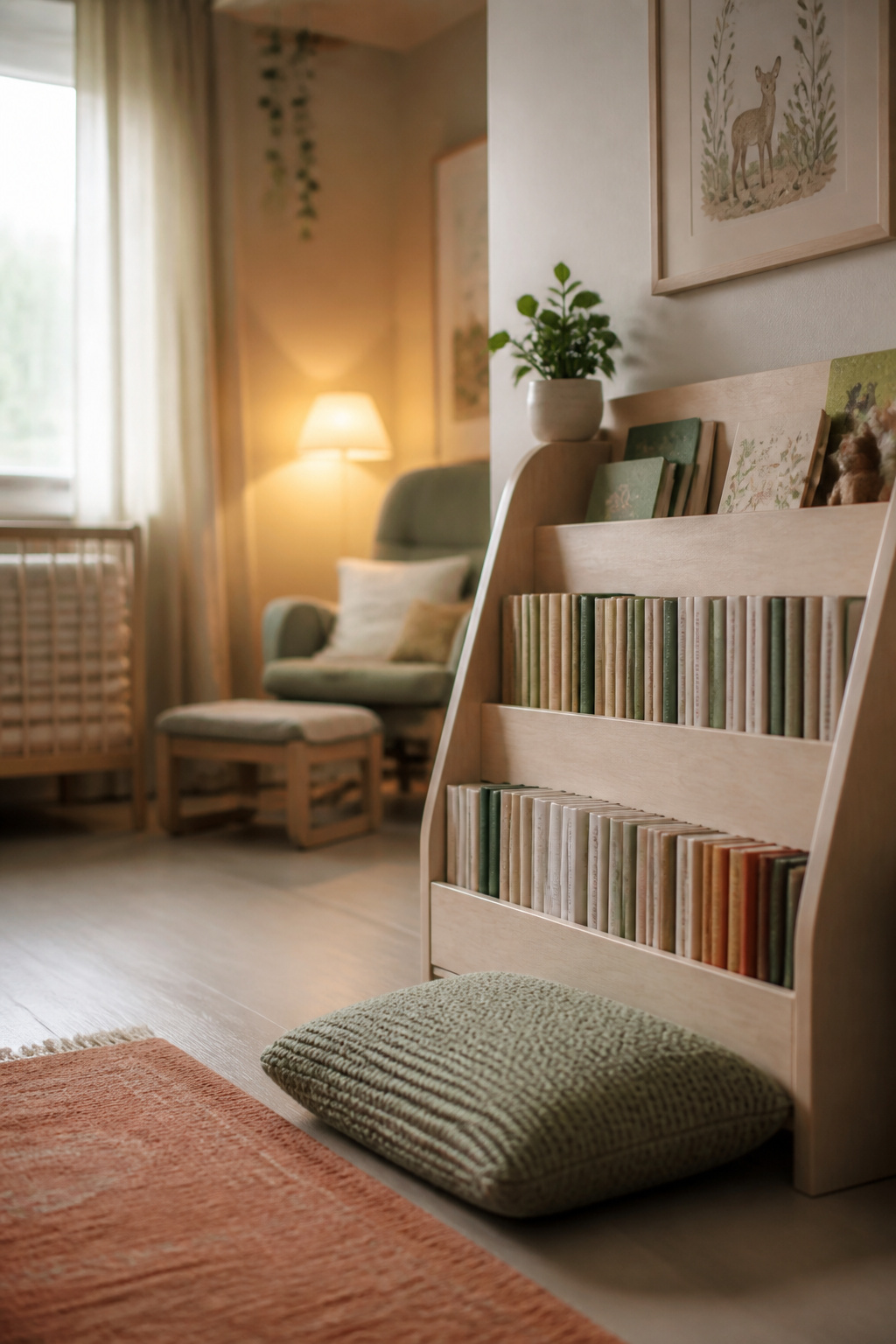
Run two routines that share a room:
- Start the baby’s wind-down 30 to 60 minutes ahead of the toddler’s, lights low.
- Put the baby down first — babies this age need the earlier bedtime anyway.
- Take the toddler’s routine out of the room: bath, pyjamas, teeth, stories.
- Bring him back wound down, for one quiet book, then lights out.
- Revisit the order every couple of months, as the baby’s schedule shifts.
That order isn’t arbitrary — here’s why baby goes first.
The order that causes the fewest wake-ups
Baby first works for a second reason: it hands the toddler back what a new sibling took — undivided attention, at the hour he wants it most. That buys more cooperation than any sleep rule I know.
What to do when the toddler stalls on purpose
Stalling is developmentally normal at three. It has simply acquired an audience, and a three-year-old works out fast that the stakes rise when someone else is asleep. So move the negotiating where his leverage doesn’t live: settle the story count in the hallway, then keep the in-room part identical nightly.
Splitting One Closet Between Two Ages
What goes in the closet on day one? That can’t wait for the furniture.
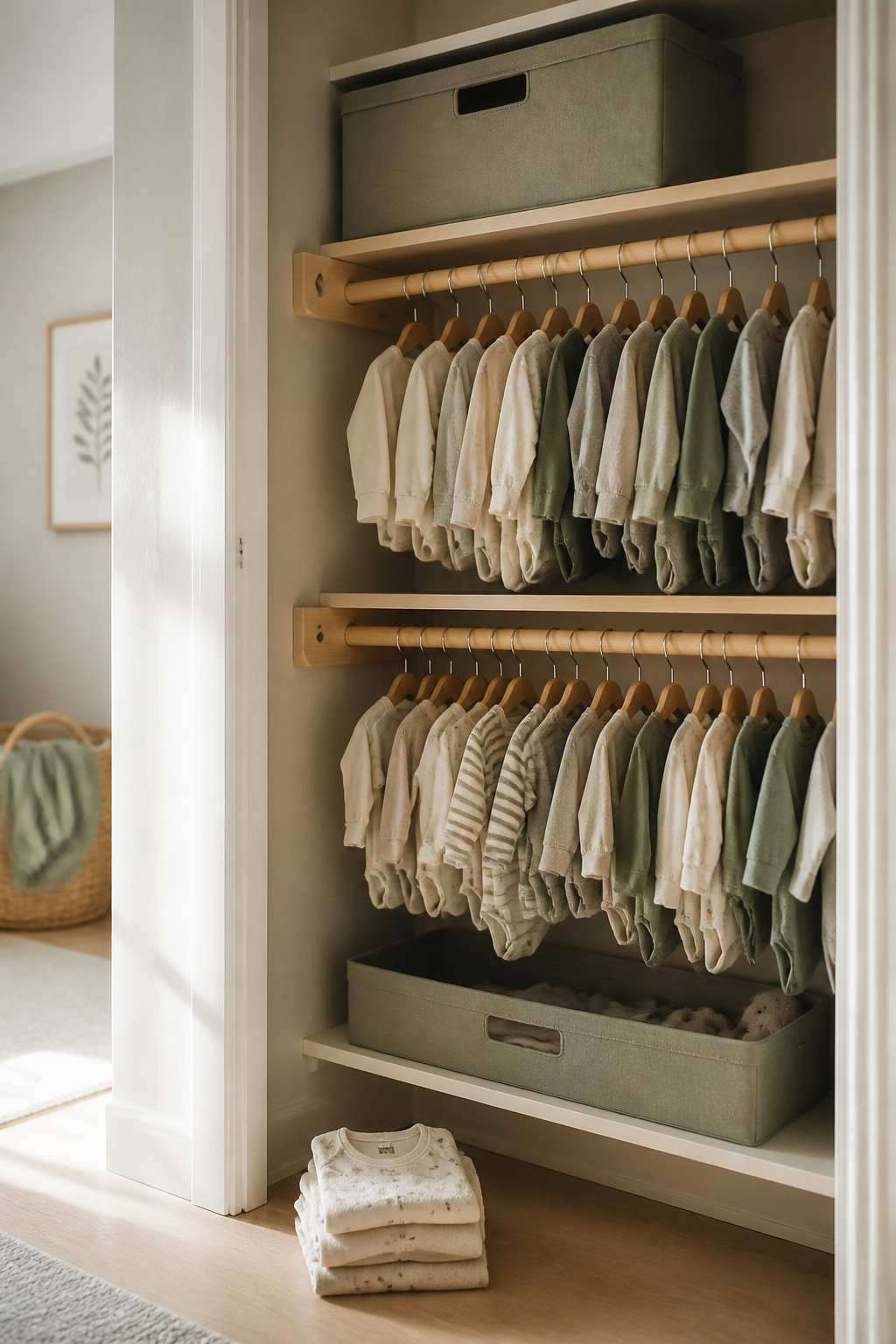
Why storage is worth resolving before furniture
Two children close in age need the same categories in different quantities, so an even split works. A baby and a toddler don’t overlap: one needs closed bins of diapers and swaddles at adult height, the other a low rod and open bins he can reach. Split by category and reach, not by the rod.
What’s shared versus separate at this stage
Changing supplies go high or behind a door, out of toddler reach — organisation that doubles as safety. Off-season clothes and bedding share a bin; daily items stay separate, within each child’s reach. The system itself is Henrik Larsson’s territory: his article covers splitting one closet between two ages in full.
What to Delay Buying Until the Baby Is Mobile
Of 217 tip-over deaths recorded nationally between 2013 and July 2023, 55% were children aged one to three, and 47% involved a television.
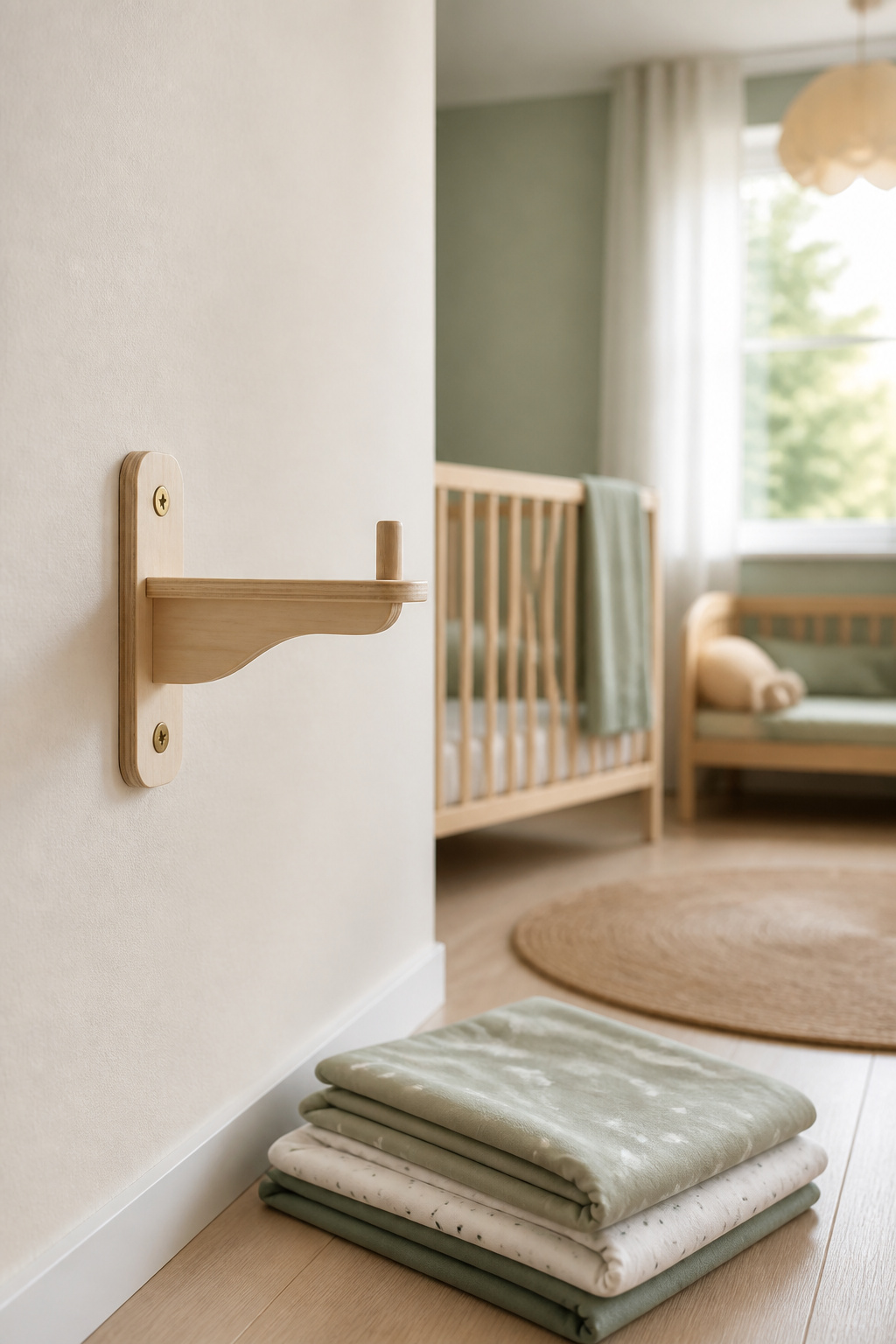
Furniture and decor worth waiting on
That age band is where this room’s baby is heading, which changes when you buy rather than what. CPSC says anchor TVs and furniture to the wall; failing that, use a sturdy low base and keep cords out of reach. Mine is simpler — nothing tall enters this room until the anchor is in your hand.
Delay the toddler bed too. The AAP frames that switch as a capability, not a birthday: once a toddler can climb out of the crib, it may be time for a big-kid bed. Wait for the signal.
How the room evolves as the baby becomes a toddler
Babies start pulling to stand and cruising along furniture in the second half of the first year. Walk the room again then, not just at move-in. The changing table beside the crib was harmless in month two; by month nine it’s a step. Once that stage and the under-one window pass, the decisions turn into decorating ones — where a scheme that survives the baby growing up picks the room up.
None of this makes a newborn and a three-year-old keep the same hours — nothing does, and no design changes a baby’s biology.
What changes is whether the room is working against that mismatch or with it: a crib that meets every rule instead of most of them, sound and light finally split for two different schedules, a bedtime order built to survive a toddler who’s found new ways to stall it.
That’s the same principle my reading corner in Albuquerque taught me — change the room before you try to change the children, and the rest gets easier to live with.
FAQ
Can a baby and toddler share a room from birth?
Yes, provided the crib meets every safe-sleep requirement regardless of who else sleeps there. The AAP recommends the baby room-share with a caregiver for at least six months, which usually decides timing. Expect fragmented newborn sleep to disrupt the toddler until roughly four months.
Does room-sharing increase the risk of SIDS?
No — the opposite. The AAP states that room-sharing without bed-sharing can reduce SIDS risk by up to 50%, its highest evidence grade. That figure comes from studies of babies sharing with a caregiver. No research measures the risk when a toddler sibling is the roommate, so the protection cannot be assumed here.
How long does it take for a baby and toddler to adjust to sharing a room?
Roughly one to two weeks is the figure that circulates, but no pediatric study measures it, so treat it as practitioner experience rather than a clinical timeline. Adjustment runs longer while the baby is still in the fragmented phase, and shorter where a staggered bedtime exists.