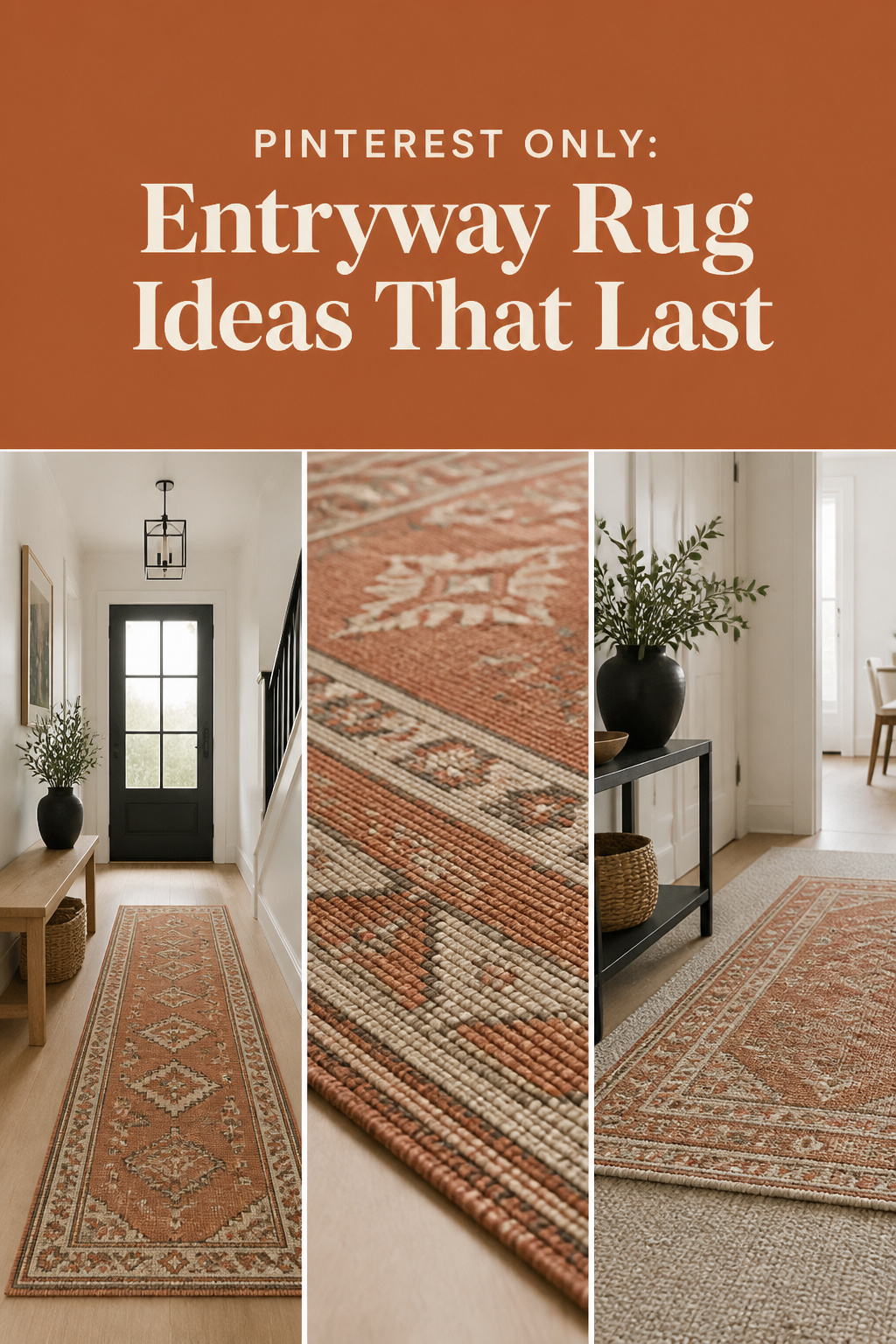
Any rug will do by the door. It sounds like the least risky opinion a person can hold about a floor, and in an entry it is wrong twice: once on size, once on fibre. Atlanta Designer Rugs’ own fibre comparison is blunt about the second: jute laid inside a front door commonly flattens and sheds within about a year. Most entryway rug ideas are sold on pattern and shade. Two duller decisions settle whether the rug is still there next winter.
TL;DR
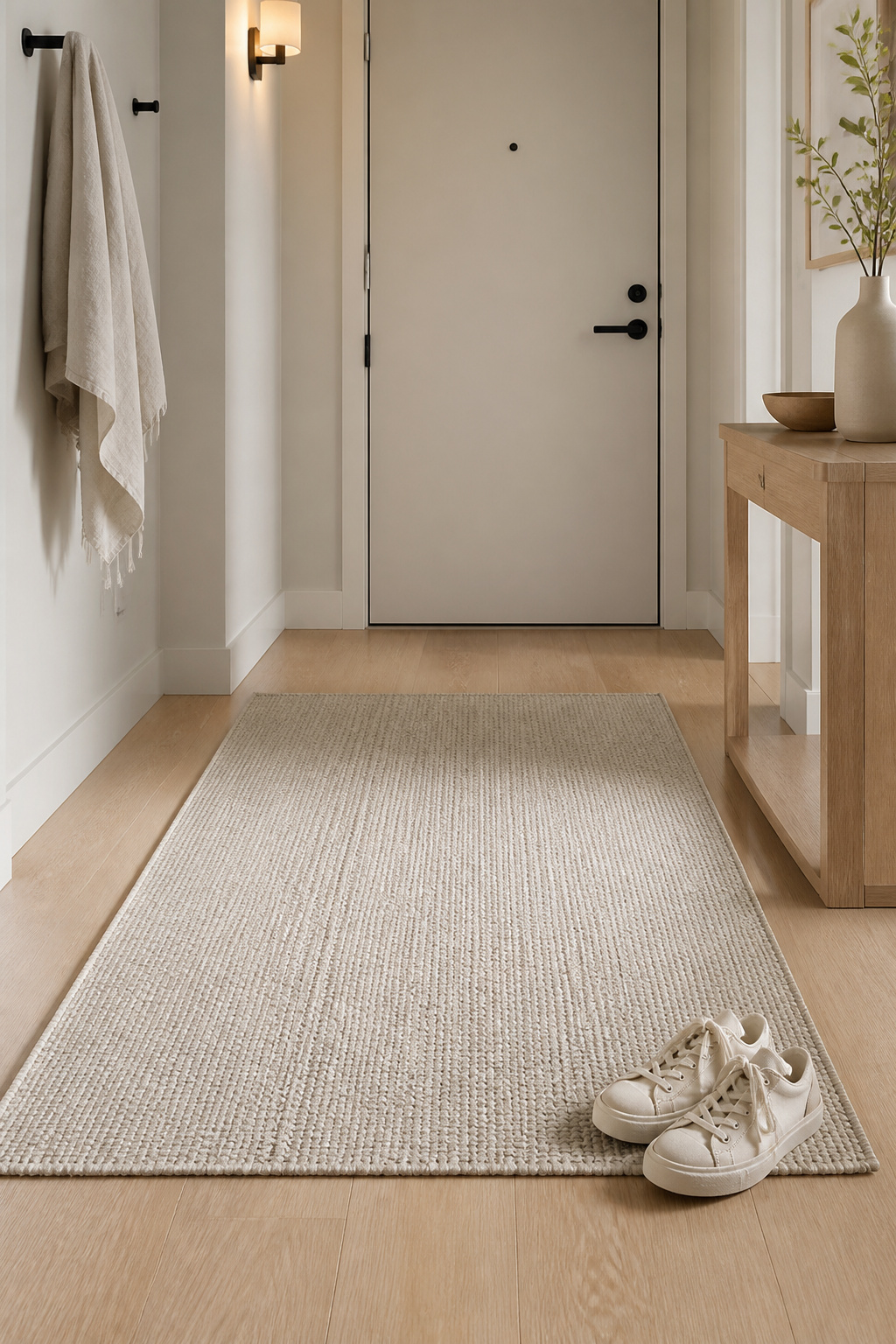
- Size from the layout: a front-door landing takes a 2×3 or 3×5 ft rug, a small foyer 3×5 to 5×7, a narrow hall a 2ft-wide runner, with 4 to 6 inches of floor showing each side.
- Fibre sets the lifespan: trade guides put synthetics at 2-3 years in an entry, wool at 20-50, and jute can shed inside a year at a front door.
- Match the pad to the floor, not the rug: rubber-only pads can bond permanently to hardwood, and rug plus pad should stay under 1 inch at the edge.
The rug myth that wrecks a small entry
Nobody sets out to buy a bad rug. They buy one for the room’s average day, and an entry has no average day. It has the fortnight in March when everyone arrives wet.
What “any rug will do” costs you
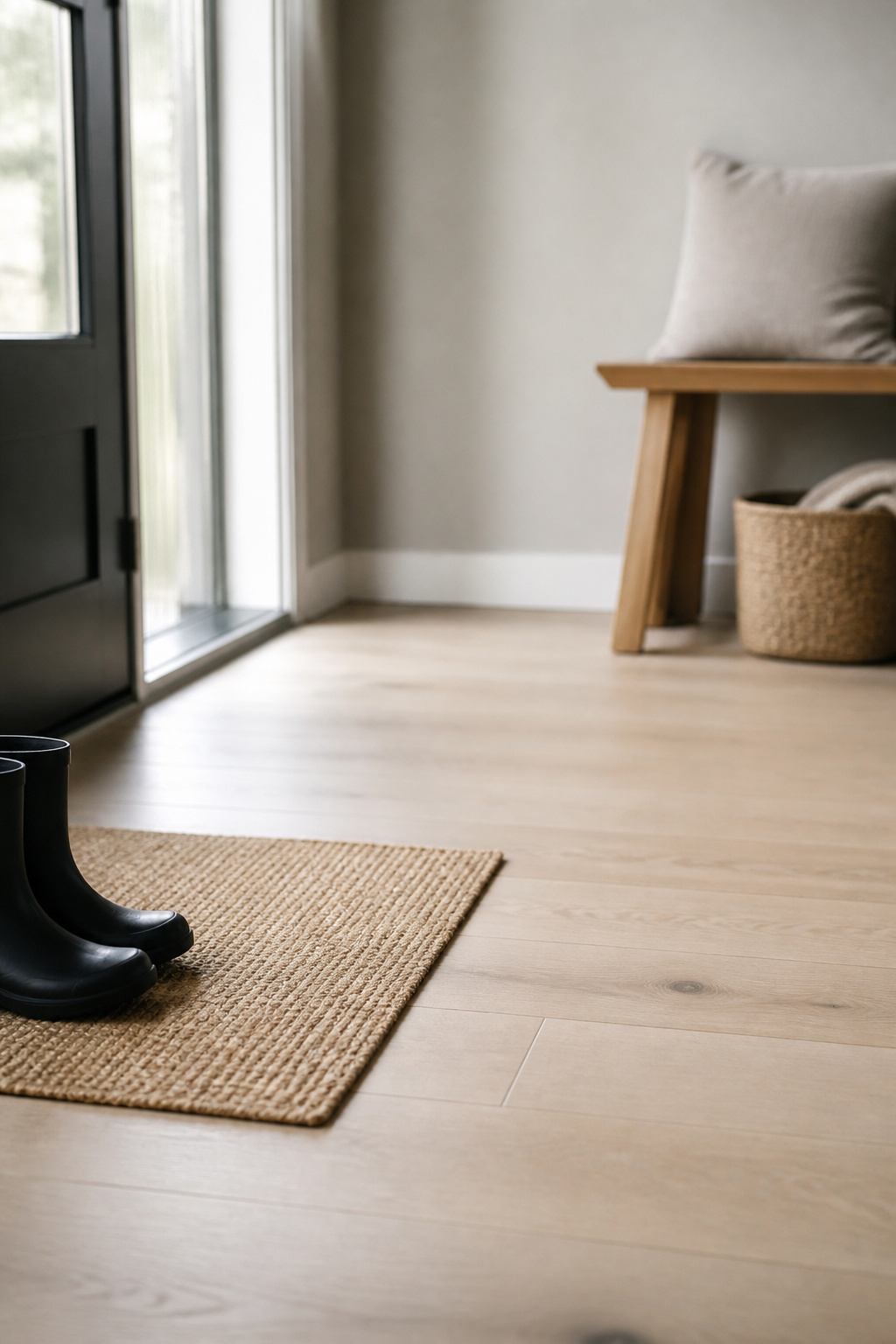
The cost arrives as a replacement you didn’t budget for. Jute is the clearest case: a soft stem fibre SisalCarpet flatly doesn’t recommend for heavy traffic, and Atlanta Designer Rugs describes exactly that failure: a rug bought because it photographed well, then flattened and shed within about a year of entry duty.
The two variables that matter: size and material
The first variable is fit: a rug sized to the entry you have rather than the one in the photograph. The second is fibre, rated for grit and moisture rather than for looks. Ashley Macuga of Collected Interiors treats a well-chosen rug as the room’s anchor.
What to decide first
Three questions, in order: how big for your layout, which fibre for how wet it gets, and how the rug sits on a floor you didn’t choose. Defining a zone with that rug is a separate move. This piece sticks to choosing the rug itself.
Sizing a rug for a tight entry
A 2×3-foot rug is the right answer more often than people expect. Small entries fail on rugs that are too big as readily as on rugs that are too small.
Standard sizes for a 60-120cm entry
Rugs Direct’s sizing guide scales the rug to the layout rather than the room:
- Front-door landing (roughly a 60-90cm zone): 2×3 or 3×5 ft
- Small foyer: 3×5, 4×6 or 5×7 ft
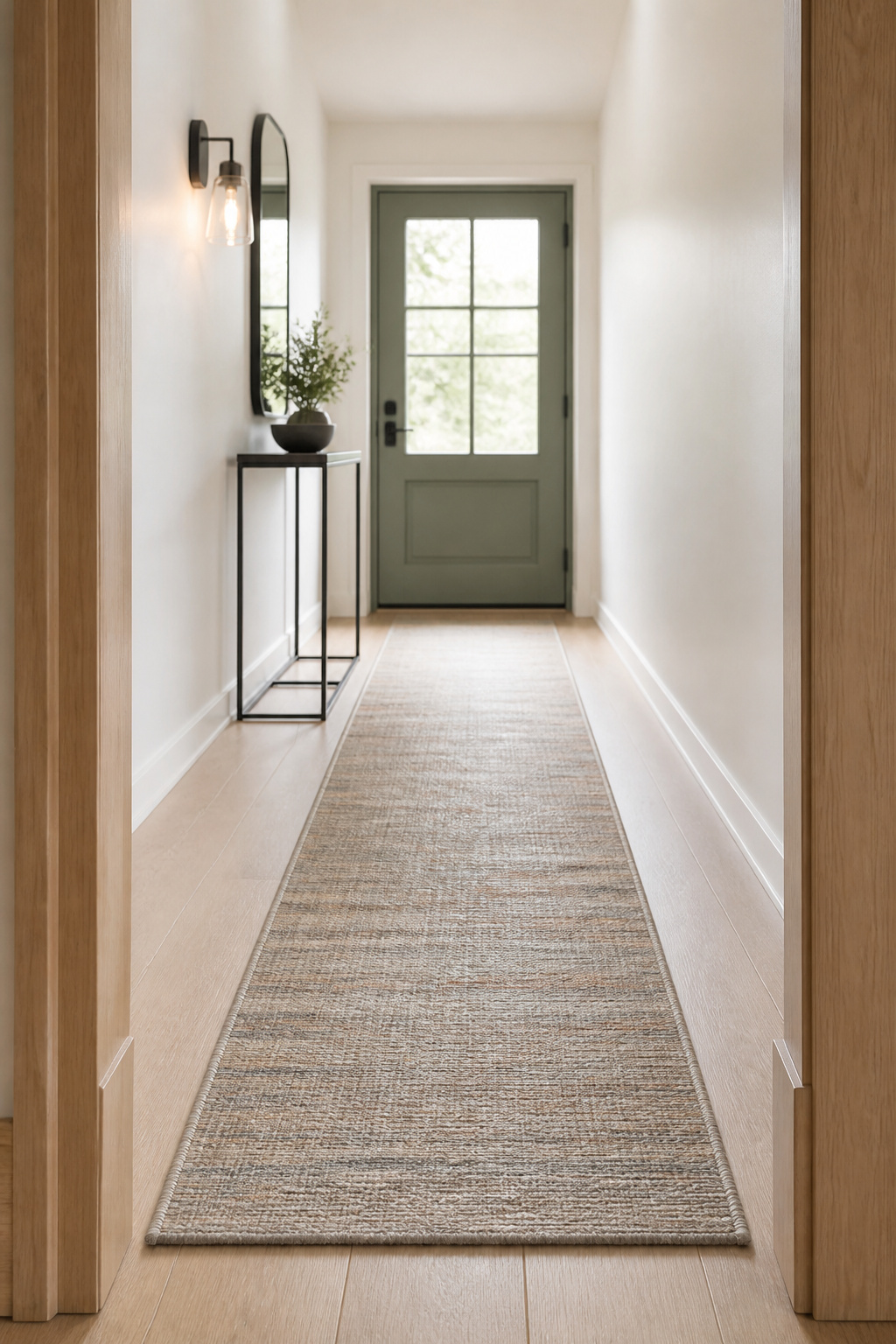
- Narrow hallway entry: a runner, 2×6 up to 2×14 ft
Leave 12 to 24 inches of visible floor around the rug where space allows. Tighten to 6 to 18 inches in a small entry, and 4 to 6 in a genuinely narrow one. Tsar Carpets confirms the same two bands.
Runners vs. mats: which shape fits your layout
Runners come in two standard widths, 2 feet and 3 feet, in lengths from 5 to 14 feet. Sue Jones of OKA warns a runner can make a narrow entryway seem narrower than it is. Leave 5 to 6 inches of exposed floor each side instead of running it wall to wall. Layering a mat over a rug has fixed proportions: a 36-inch door takes an 18×30-inch coir mat over a 2×3-foot rug, while wider doors take a 24×36 mat over a 3×5.
Sizing rules experts use, and why
The hallway rule is arithmetic: subtract 10 inches from the hall’s width, 5 per side, for the runner width. A 2’10” hall takes a 2-foot runner, a 3’10” hall a 3-foot one. Then check the gap between floor and door bottom; a rug that catches the door gets moved within a week, so stay low-pile, flatwoven or washable.
Materials that survive grit and wet shoes
The rug trade doesn’t agree with itself here, and the disagreement is more useful than a clean answer.
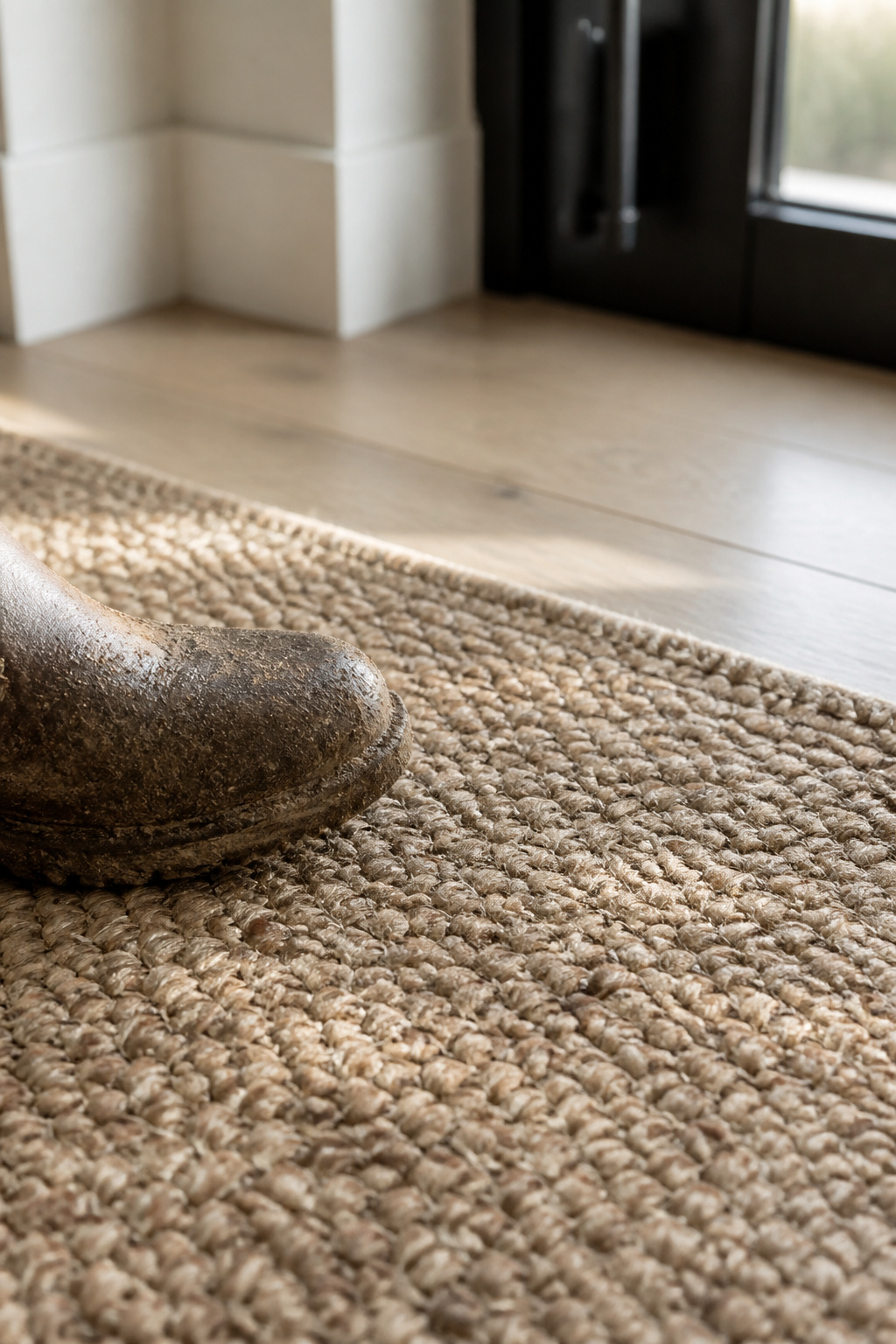
Flatweave wool vs. jute blends: abrasion and moisture, compared
Atlanta Designer Rugs makes the case for sisal over jute. Sisal comes from agave leaves rather than jute’s softer stem, so it resists abrasion better and dries faster on the surface, while jute absorbs moisture, turns musty, and can show watermarks inside a rainy-climate front door within its first season.
SisalCarpet’s own trade blog then argues against its headline product: natural sisal absorbs moisture, marks easily and is hard to clean once mud sets in, so it recommends a treated version or woven vinyl for a true entrance mat.
I side with the second. A seller arguing against the fibre it’s named for has little reason to be wrong. Wool flatweave or a treated fibre at the threshold, raw sisal further in if you want it. One caveat covers every number here: these come from rug-trade guides, not independent testing, and no Wyzenbeek or Martindale data exists for entry rugs that I can find.
Washable rugs: what “washable” means
The word on the label oversells it. Rugs Direct: it isn’t standardised. Some washable rugs go in a machine, others are rated spot-clean only, so the care label decides cycle, detergent and drying, and many run too large for a home machine. Cotton carries its own tax: 2 to 5% shrinkage on the first wash, so cold water and air-drying only.
What fails first in each material
Every fibre fails; how yours goes is the shopping decision. These are trade-guide figures, not lab results.
| Fibre | How it fails first | Entry lifespan |
|---|---|---|
| Jute | Fibre breakdown and shedding, not staining | Around a year at a front door |
| Polypropylene / nylon | Flattening and fading | 2-3 years in high traffic |
| Cotton | Absorbs water, flattens quickly | Unsuited to a regularly wetted spot |
| Wool flatweave | Slow, even wear | 20-50 years at moderate traffic |
Wool is the one I’d spend money on. The gap in that last column is the argument. Polypropylene’s edge is that it’s hydrophobic: spills bead instead of soaking in, and it resists mildew where cotton can’t. Standing water in your entry means buy the synthetic and accept the shorter life.
Layering a rug over a rental floor you didn’t choose
A rug pad can cost you a deposit. Rubber-only pads bond to hardwood over time and leave marks that don’t come out.
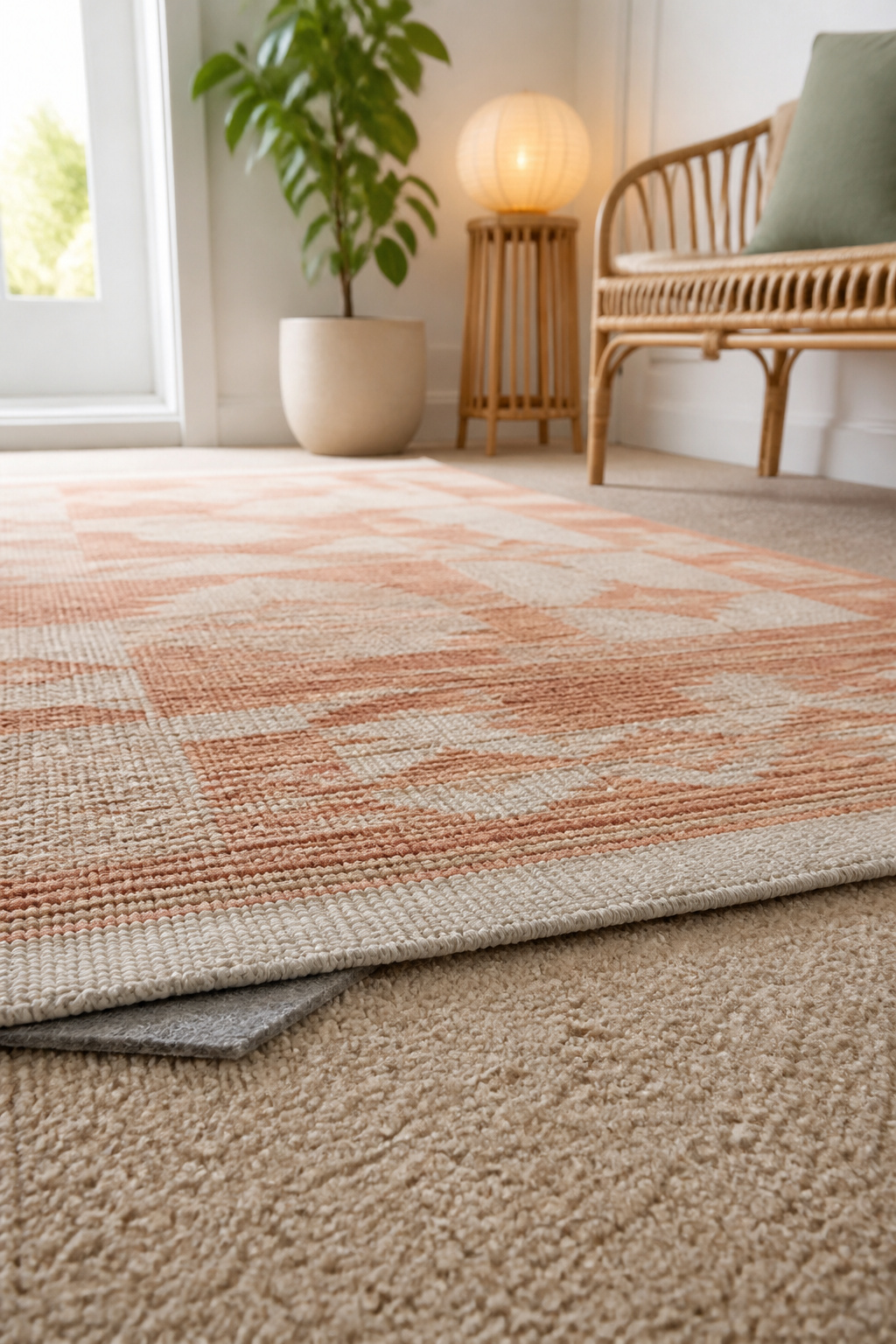
Layering over ugly rental flooring without it looking like a patch
Relate the rug to the floor instead of fighting it. CORT’s guidance: pick a rug that deliberately matches, enhances or contrasts the floor’s colour or pattern, so a large neutral rug centred over it reads as a decision, not a cover-up. If it still looks dropped in place, layer a second, smaller rug at a slight angle or partial overlap.
A rug pad that won’t stain the floor underneath
Felt-and-rubber pads solve the hardwood problem. Emily Henderson’s team tested eleven and rated the nuLOOM Eco-Friendly and Mohawk Home Non-Slip Gripper best for grip without residue risk. Over carpet the logic inverts: a felt bottom grips the carpet fibres while a rubber top holds the rug, like RugPadUSA’s Carpet Lock. Size the pad an inch smaller than the rug all round, and keep the two together under an inch at the edge.
Anchoring a rug so it doesn’t travel
The pad is the single best anchor, cut 1 to 2 inches short all round so the rug’s edge lies flat. For the two entry-specific failures (a door-kicked rug, a curling runner end), small adhesive corner grippers are the fix. Double-sided tape holds harder still, but match it to your floor type: in a rental, residue is a deposit question.
Using the rug as the entry’s anchor
A large rug sets a zone’s palette and style before any other object is chosen, which is why it belongs at the top of the shopping list, not the bottom.
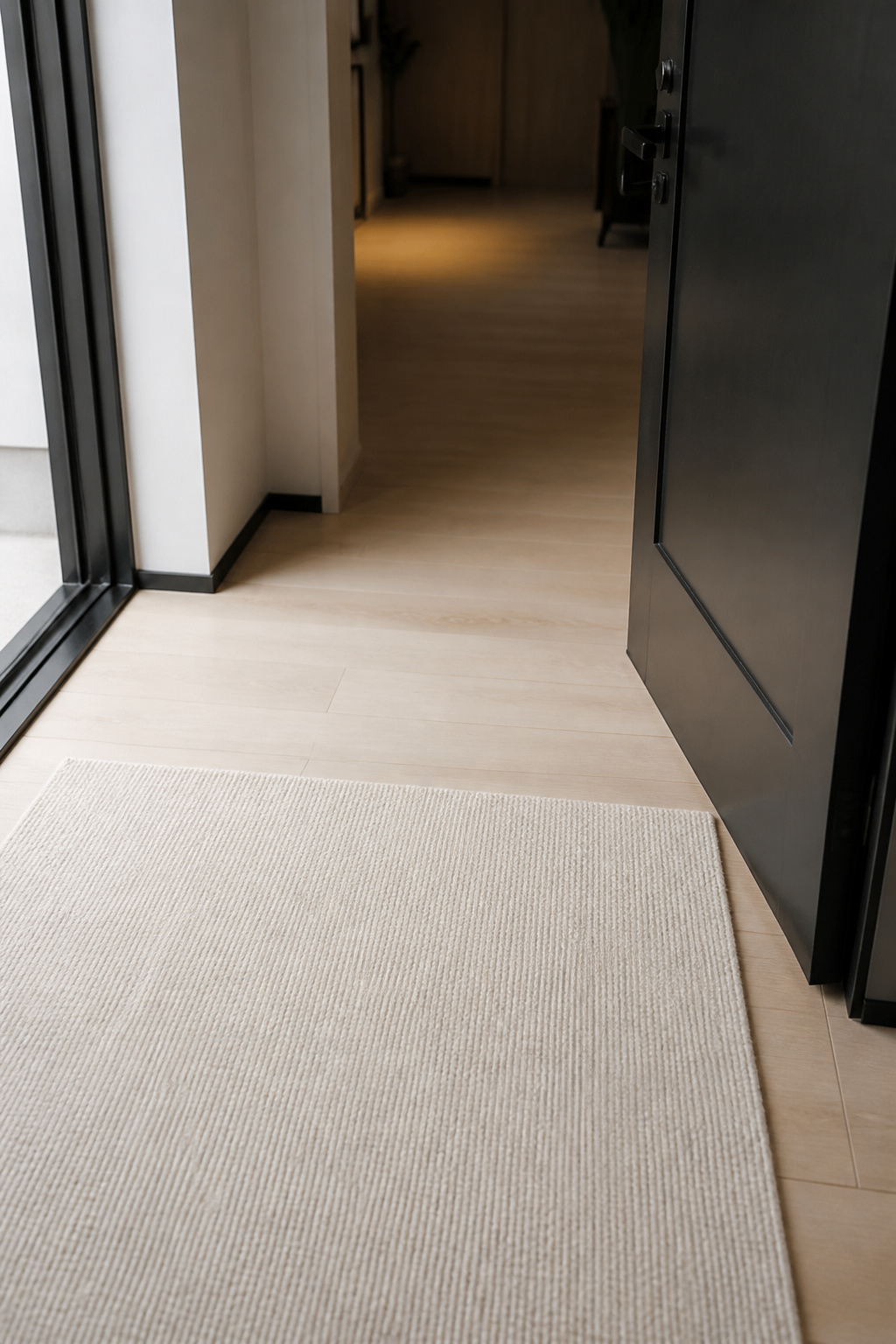
Why the rug is the fastest way to mark an arrival
The technique of using the rug to mark the entry threshold, alongside paint boundaries and reoriented furniture, belongs to a companion guide; this one stops at choosing the rug.
Placement relative to the door swing
Measure the floor-to-door gap first. Thick pile catches, and a rug dragged clear every time someone comes in stops being furniture and becomes a chore. Low-profile, flatwoven or washable constructions clear a standard door comfortably.
Pairing rug tone with a dark-hallway fix
Pale shades work harder in a dim entry: cream, beige and soft grey reflect ambient light, and a flatweave keeps the floorline light where plush pile adds weight. That puts a pale low-pile rug in the same no-rewire toolkit as mirrors and plug-in fixtures. Our guide to brightening a windowless hallway covers the other three moves.
Entryway rug ideas: buying the right one the first time
Most entry rugs are bought on a phone, standing in the room they are meant for, with nothing measured.
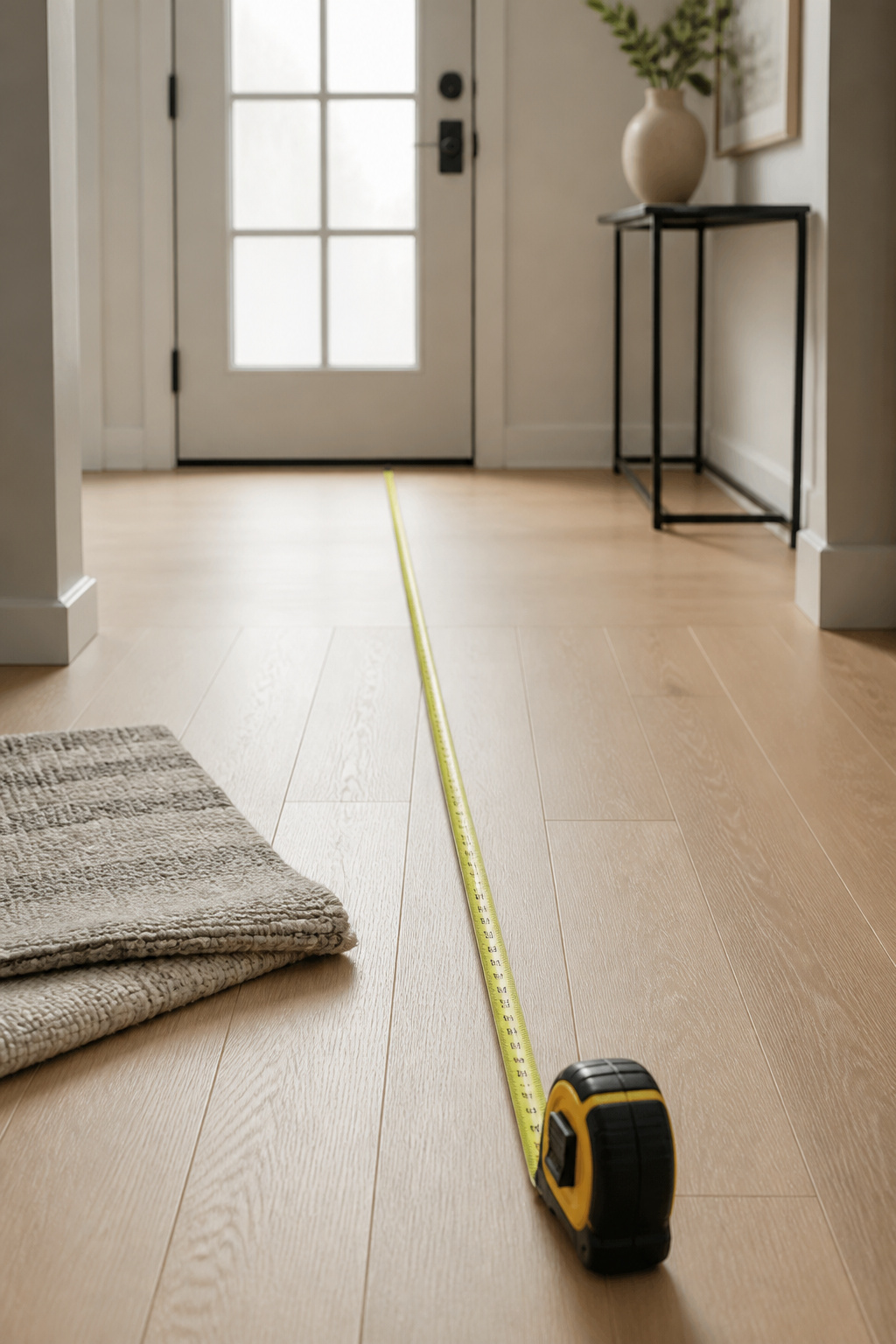
The one measurement to take before you shop
Two numbers, one tape measure: the width of the entry zone, wall to wall or door to furniture line, and the gap between floor and door bottom. Every guide behind this article converges on that pair, and together they eliminate most of the catalogue.
A simple size-and-material decision rule
With those numbers, two questions finish the job:
- What is my layout? Landing, small foyer or narrow hall. Take the size straight from the chart above.
- How wet does it get? Regular wet shoes means flatweave wool, or a treated or synthetic natural-look fibre. Raw jute and untreated sisal belong somewhere drier.
That rule replaces the myth: buy against the wettest fortnight of the year, not the average day, and the decision holds for a decade.
Where the rest of the entry ideas live
Sizing, fibre and layering settle the rug. The rest of the arrival (storage, light, a zone where no walls exist) sits in our wider survey of entry ideas for small apartments.
Fit and fibre are two-thirds of the decision. The third is the pad. Match it to the floor, and you keep the deposit instead of losing it to a slipped edge or a bonded mark.
FAQ
What size rug do I need for a small entryway?
A front-door landing takes a 2×3 or 3×5 ft rug, a small foyer takes 3×5, 4×6 or 5×7, and a narrow hallway takes a 2ft-wide runner. Leave roughly 6 to 18 inches of visible floor around the edge, tightening to 4 to 6 inches in a genuinely narrow entry.
Can I put a rug over rental carpet?
Yes, provided the pad matches the carpet. Use a felt-bottom, rubber-top pad: the felt fastens into the carpet fibres while the rubber grips the rug. Choose a rug that matches, enhances or contrasts the carpet’s colour rather than hiding it, and angle it slightly to avoid a flat, patched look.
How often should an entryway rug be replaced?
It depends almost entirely on fibre. The trade guides put synthetics at 2 to 3 years under high entry traffic against 3 to 5 in a normal room, and wool at 20 to 50 years with proper care. Jute, rated 10 to 20 years in a living room, can shed within a year at a front door.