


Venetian plaster goes back to roughly 500 BC: lime and crushed marble burnished onto Roman walls. Tadelakt, the Moroccan lime plaster sealed with olive-based soap, is nearly as old and still goes on by hand at 5 to 20mm. A microcement bathroom joins that family two thousand years late, at 2 to 3mm, and that thinness is why it asks so much of whatever sits underneath it.
TL;DR
- It goes over sound tile, concrete, plaster, drywall or cement board with the right primer. Never over vinyl, laminate, or anything loose or actively damp.
- Water resistance comes from the sealer rather than the plaster itself, so wet areas need a wet-zone sealer, pH-neutral cleaning, and a fresh coat once the surface darkens when wet.
- Installed, it runs roughly $30–$75+ per square foot against $10–$50 for ceramic or porcelain tile, and lasts 20+ years with no grout.
How microcement differs from tadelakt and polished plaster
Microcement, tadelakt and polished plaster often get treated as one material, but they behave differently in a room where water lands daily.
Microcement vs. tadelakt
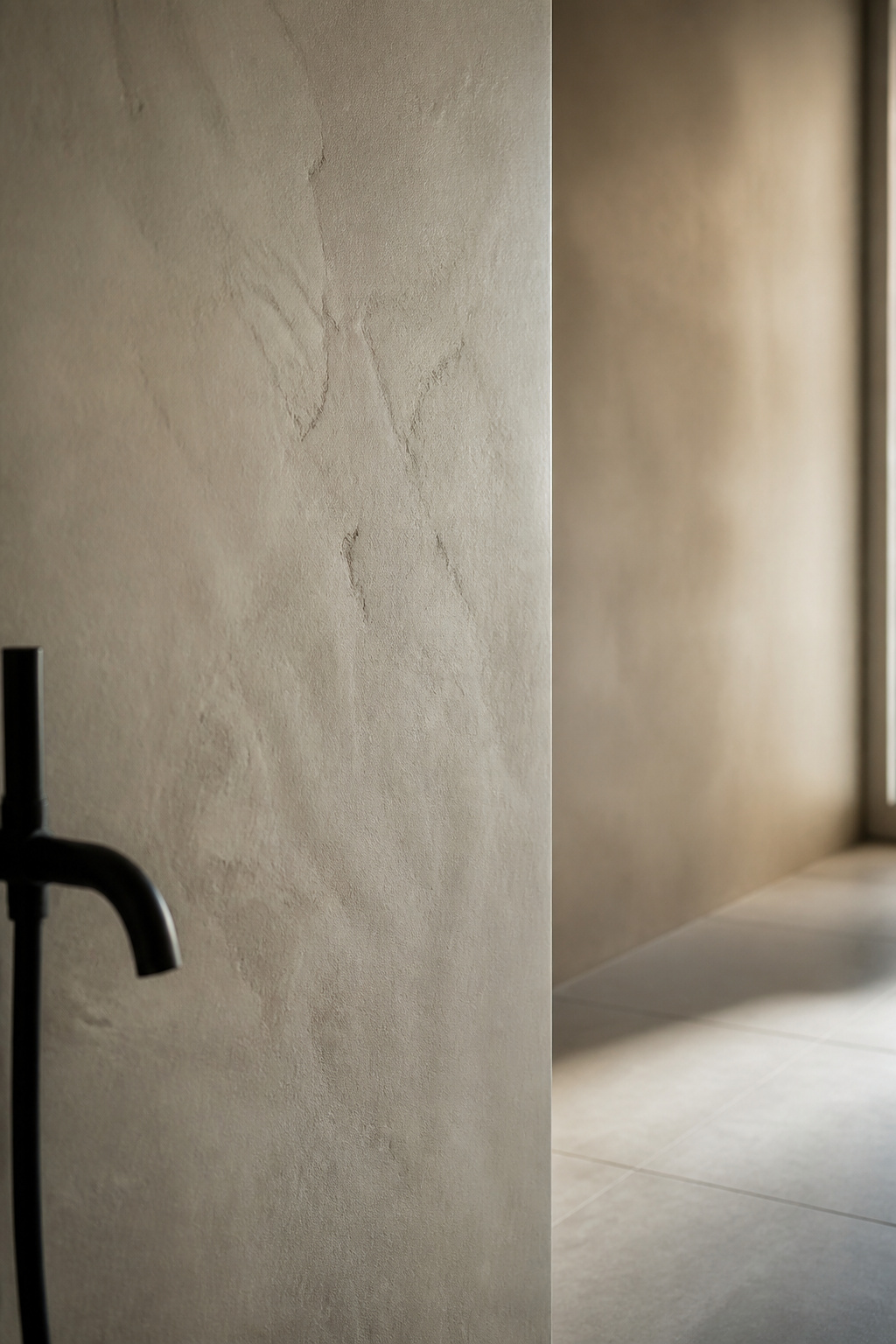
Microcement is cement, fine aggregates, polymers and resins. Tadelakt is lime, black soap made from olives, and natural pigments. Thickness follows: 2 to 3mm for microcement, buildable to 8mm, against tadelakt’s 5 to 20mm.
Water behaviour differs too. Microcement has low water permeability while staying vapour-permeable. Tadelakt resists water once burnished with soap, but absorbs and degrades if that step is skipped or never renewed. Renewing it means hand-burnishing, which is a craft, whereas microcement’s layered coats are standardised.
Microcement vs. polished plaster
Venetian or polished plaster is a lime-and-crushed-marble mix tinted with pigment, and it suits lower-traffic dry areas. Near moisture it needs beeswax or a sealer, and it is not specified for wet rooms.
Duncan MacKellar, technical and creative director at Armourcoat, calls microcement “cement and a polymer resin binder combined with a fine sand or stone aggregate,” and notes its layers and sealers can make it dearer overall than polished plaster. Of the three, microcement is the only one specified for the wet parts of a bathroom.
The substrate it needs underneath it
At 2 to 3mm the finish is a skin over whatever is beneath it, so whatever that surface does, the finish does too.
Movement joints and mesh
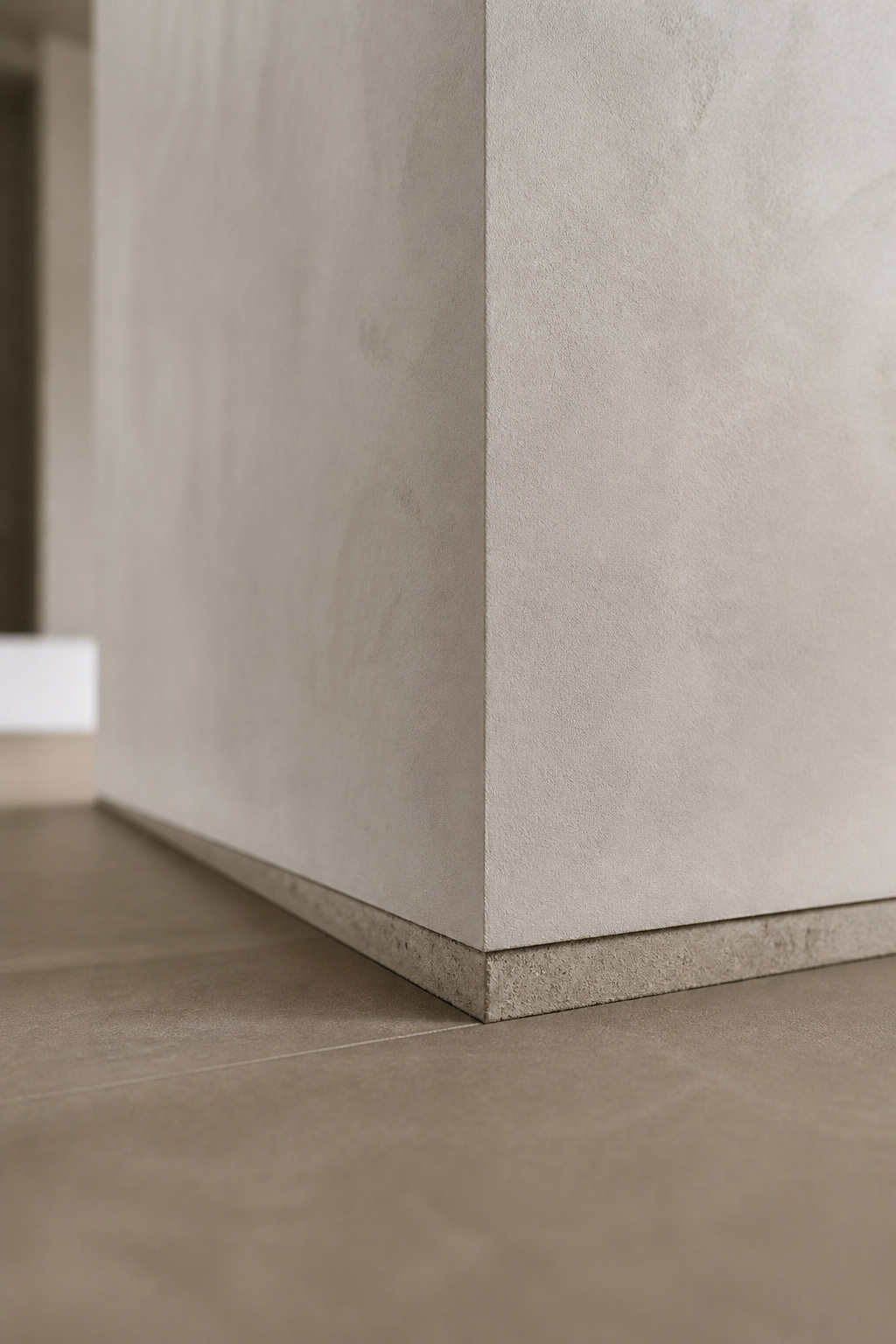
Microcement needs no expansion joints of its own; the substrate does. Any joint already cut into a slab or screed has to be carried up through the new surface, not skimmed over. Joints sit at thresholds, near windows, and in runs over about 5m by 5m. That is bigger than most bathrooms, so the rule bites where the finish carries on into a hallway.
Then there is the mesh: fibreglass, embedded in the primer coat, overlapped 10cm at joints, reinforced at internal corners, and 100g/m² over heated floors. Nobody sees it and it takes time to lay, so it is the first thing a cheap quote drops.
Surfaces it can and can’t go over
The substrate list is short, and worth having before you call anyone.
- Standard prep: concrete, drywall, plaster, cement board and backer board, self-levelling compound.
- The usual renovation case: sound, well-adhered tile, primed by sanding or a bonding agent rather than ripped out.
- Plywood, at countertop scale only, with a flexible primer and mesh for the wood’s movement.
- Not suitable: vinyl and laminate flooring. Both are flexible and layered, so they come up before anything is coated.
- Fix first: loose or crumbling tile, and any active moisture.
The finished surface is waterproof on top, but no moisture barrier for what goes on behind it.
Sealing and cleaning a microcement bathroom
The sealer is the only layer keeping water out of these walls; the base coats under it do not.
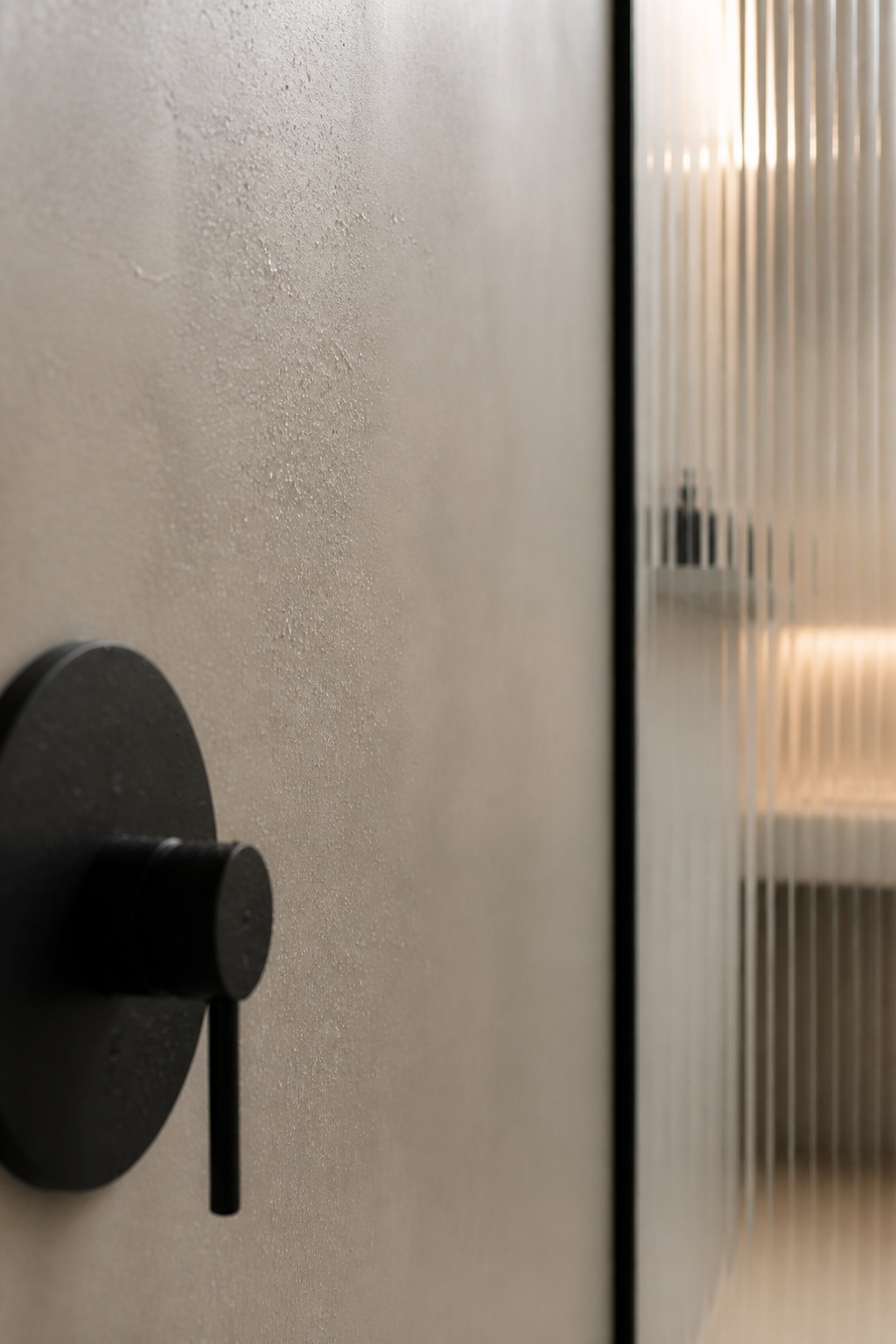
Bathrooms and showers need the wet-zone sealer variant with chlorine-tolerant chemistry, because a standard interior sealer fails there. Old wax must be stripped before a polyurethane sealer goes over it; the two never bond.
You reseal when the surface tells you to. Darkening when wet, or fresh staining, is the cue; either one within weeks of installation means the first seal was insufficient. High-traffic floors get resealed every two to three years or so, a bathroom wall many years longer. Clean with a damp cloth and pH-neutral cleaner only: bleach, vinegar, citrus and abrasive pads all degrade the sealer, which is the part doing the work.
Slip resistance is where the data runs out. No standards body publishes an R-rating or DCOF value for microcement as it does for tile, so there is no comparable number. Grip comes down to the sealer’s finish: matte or satin, trowel texture left unpolished, an anti-slip additive in the last coat.
How it ages: hairline cracks and normal patina
Two marks on a five-year-old wall can look identical and mean opposite things: one is the material behaving, and the other is a bill.
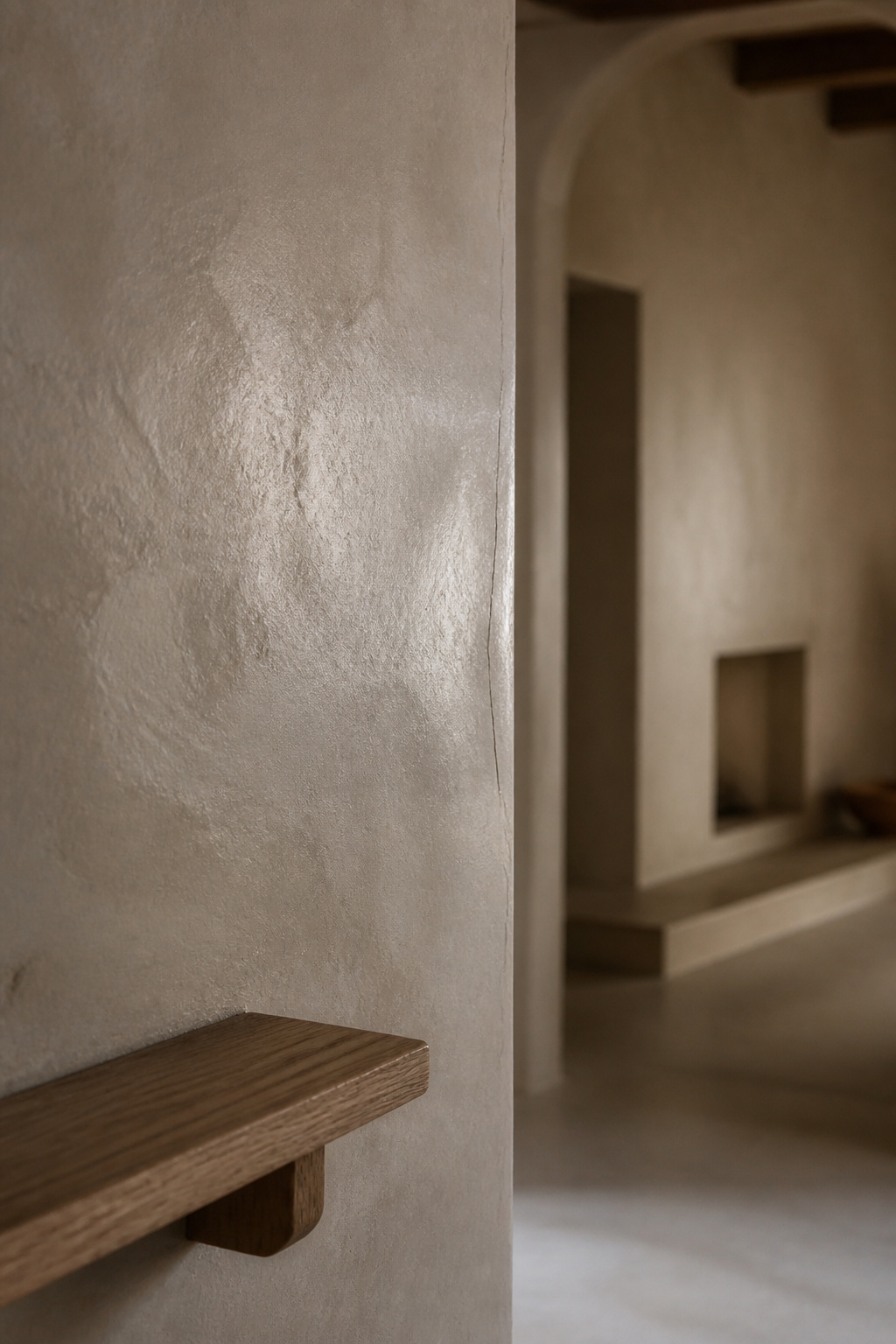
Hairline cracking is the most common bathroom complaint, and one UK microcement specialist’s own call-out records trace roughly 80% of it to fibreglass mesh missing from the primer at quote stage. That makes it a specification failure rather than the material ageing. Colour blotching ranks next, usually from installers re-tempering the mix with extra water in hot weather. Efflorescence, the white salt bloom, is rarer and reports damp behind the surface rather than a fault in the finish. It surfaces a moisture problem sooner than tile would, which I count as a service.
Genuine patina is quieter: sheen softening, colour settling, slight wear where hands go. Properly installed and maintained, 20+ years is the commonly cited service life.
If the budget forces a choice between a cheaper installer and a smaller area of microcement, take the smaller area.
What it costs against tiling the same area
Microcement is not the cheap option. Professionally installed, it runs roughly $30–$75+ per square foot, driven up by complexity, substrate condition and custom colour work.
Tile installed runs $10–$50 per square foot by grade and format, per this site’s cost library. Manufacturer pages cap tile at $25, which undersells its top end: stone, mosaic and designer formats reach microcement’s territory.
| Microcement | Ceramic/porcelain tile | |
|---|---|---|
| Installed cost | $30–$75+ per sq ft | $10–$50 per sq ft |
| Routine care | Damp cloth and pH-neutral cleaner; periodic resealing | Grout cleaning; periodic grout resealing or regrouting |
| Service life | 20+ years, dependent on keeping the seal intact | 50+ years for the tile body itself; grout needs attention long before |
The service-life figures in the last row measure different failures. Microcement’s twenty years is surface integrity that depends on resealing. Tile’s fifty-plus years belongs to the tile body alone and says nothing about grout, which is where a tiled bathroom wears out.
Older walls that are never quite square
I photograph rooms in February, at seven in the morning, when the light is grey and low and arrives almost sideways. It is the least forgiving light of the year, and a room that holds up in it holds up in June. On a continuous surface, that light rakes along the plane instead of landing flat, so every bow in the wall behind shows as a shadow.
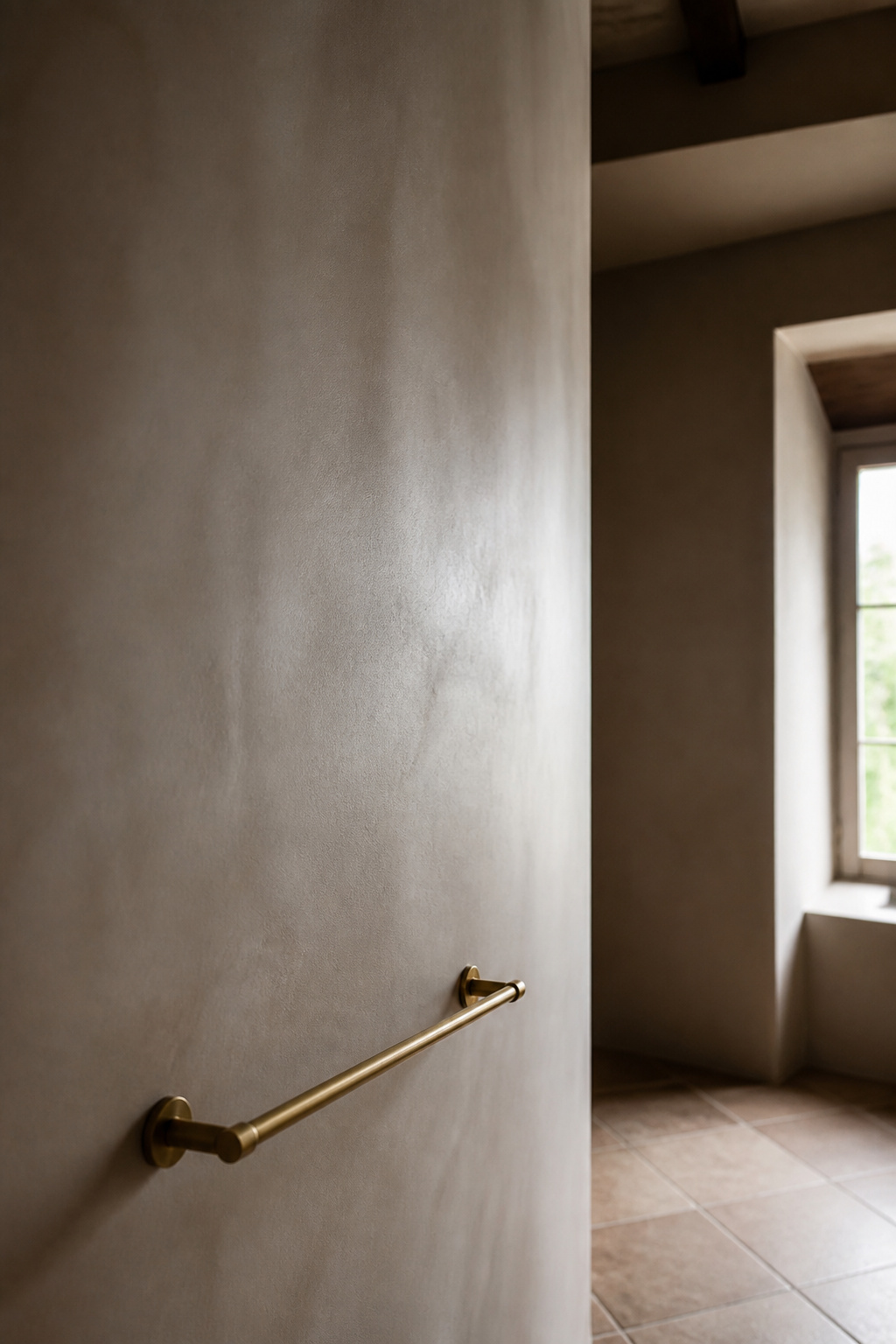
Tile absorbs small variance: each grout line resets the eye, and a wall an eighth of an inch out of plumb hides in the grid. Microcement has no grid to hide in. In an older building, price that levelling rather than fear it (older walls that are never quite square are their own subject).
Deciding what a small room spends on
A small bathroom shouldn’t hand its whole surface budget to seamless walls before deciding what else it gives up. The appeal is real, since a continuous surface removes the grid lines a small tiled room is read through. But at $30–$75+ installed, it is rarely the cheapest square footage there. That trade-off belongs with deciding what a small room spends on, and the order these choices happen in with modern bathroom design.
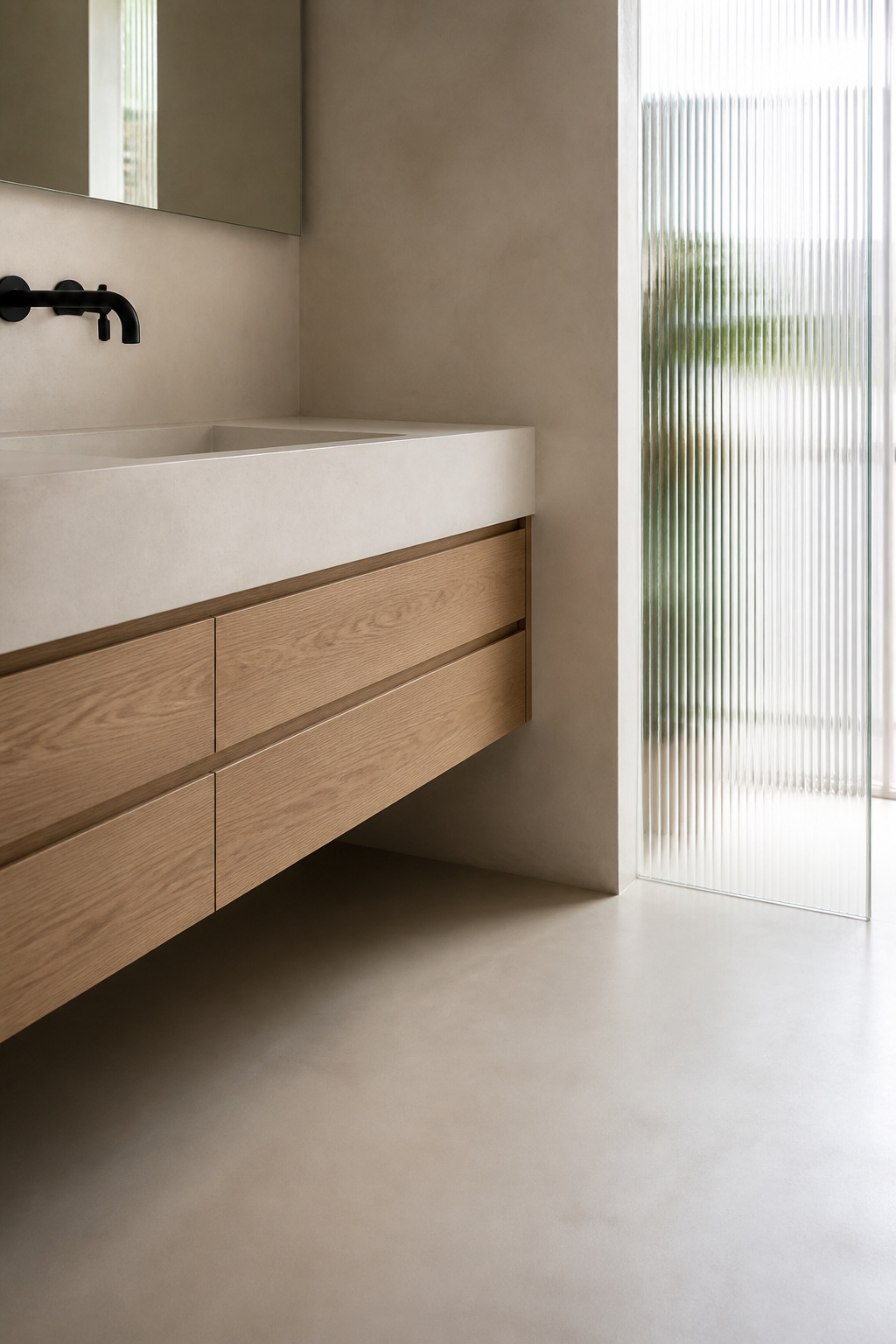
Most of the confusion goes once the material is named correctly. Microcement is the wet-area member of an old plaster family, thin enough to go over what you own and to report every fault beneath it. Whether it succeeds depends on two things no photograph shows, what is under it and what seals it, so ask any installer two questions before signing: is fibreglass mesh going into the primer, and which sealer variant goes in the wet zone? Confident answers to both are worth more than any sample board.
FAQ
Can microcement be applied directly over existing bathroom tile?
Yes. Sound, well-adhered tile is the most common substrate it goes over in a renovation, primed by light sanding or a bonding agent rather than removed. That is much of its advantage over a full re-tile. Loose or crumbling tile must be stabilised first.
Is microcement flooring slippery when wet?
It can be, particularly with a very smooth, glossy sealer, much like polished tile or stone in the same finish. Matte or satin sealers, a trowel texture left unpolished, and anti-slip additives in the final coat improve wet grip. Gloss reduces it.
How often does a microcement bathroom need resealing?
There is no fixed calendar interval. The signal is the surface darkening when wet or showing new staining, rather than a set number of years. As a guide, high-traffic floors may want resealing every two to three years, while a bathroom wall goes many years without.
