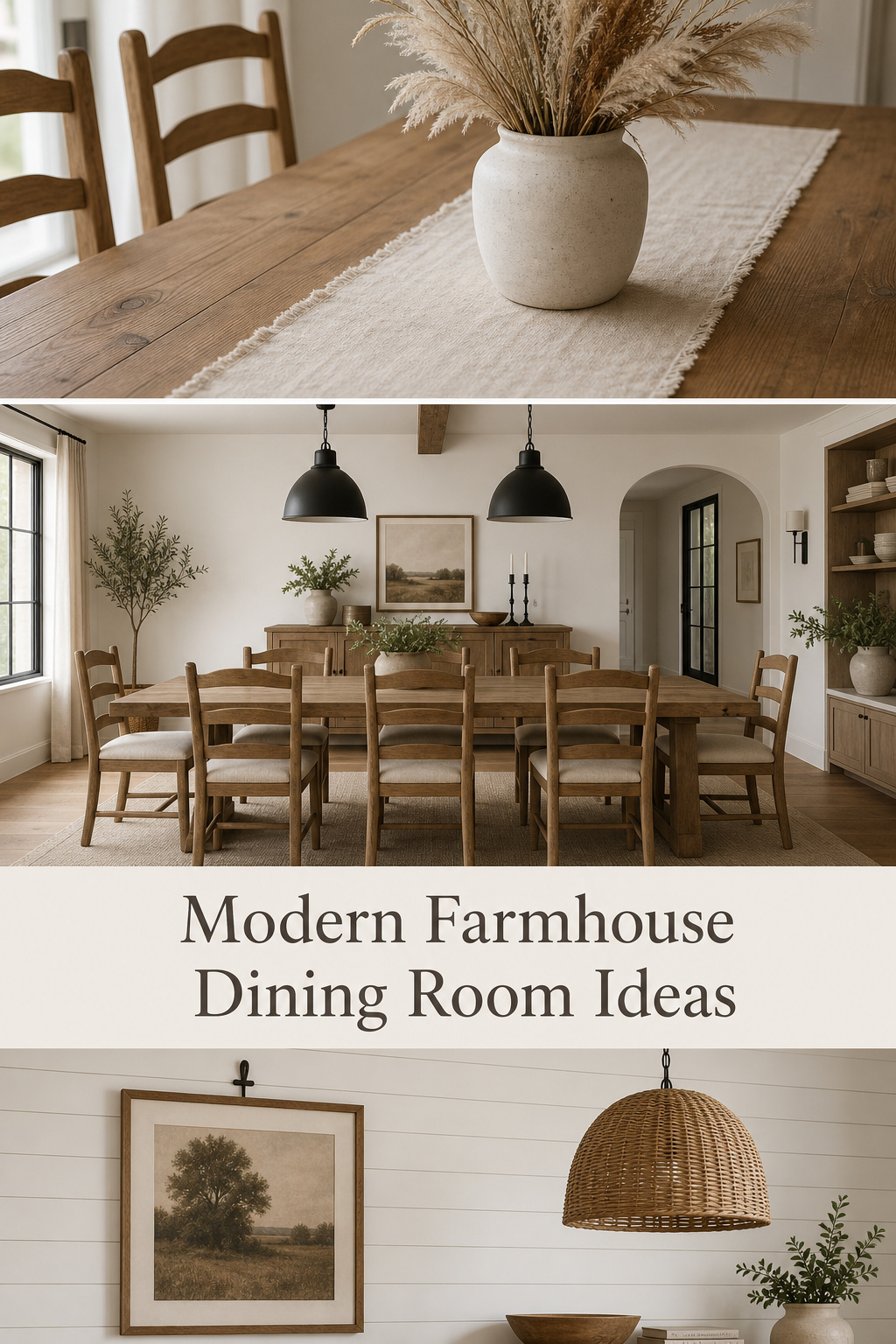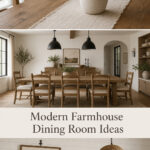
Before you choose a single object, ask what you want the room to do. A dining room is where a family slows down at the end of a day, so the real question behind any style decision is how you want to live in that hour. A modern farmhouse dining room answers it with restraint rather than abundance. It keeps the warmth of farmhouse tradition — the wood, the linen, the gathered feeling — but edits away the clutter and the applied aging. The result is calm, useful, and quietly generous, which is exactly what a shared meal needs.
TL;DR
- A modern farmhouse dining room pairs clean-lined solid wood with a warm neutral palette; character comes from layered texture, not distressing.
- Anchor the room with a generously proportioned solid table — 72–80 inches for six, 84–96 inches for eight — and leave 32–36 inches of clearance to the nearest wall.
- Warmth lives in the soft layers: a jute rug, linen runner, matte-black or rattan pendants, and 2700–2800K bulbs on a dimmer.
What Sets the Modern Farmhouse Dining Room Apart
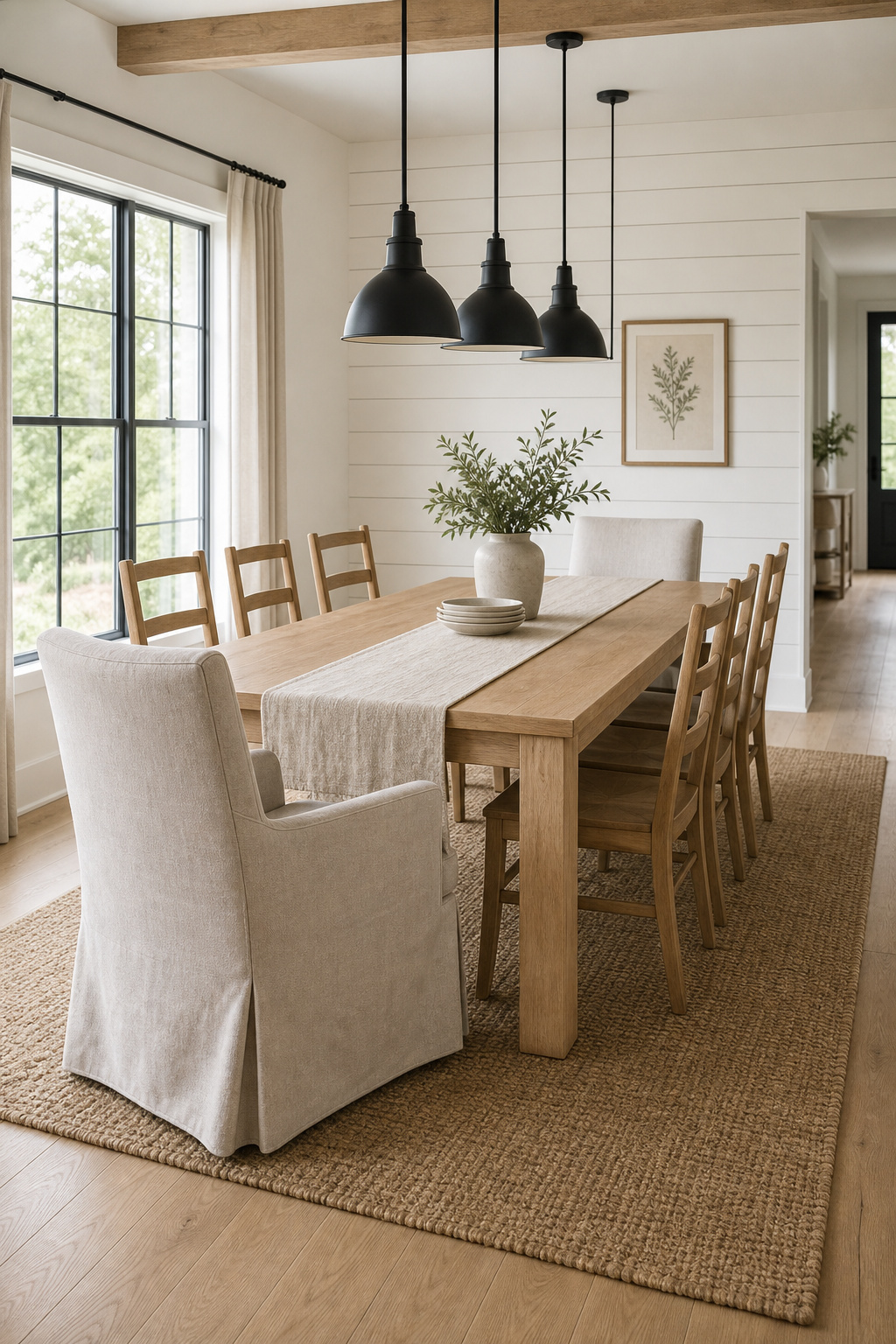
The modern interpretation is defined as much by what it leaves out as by what it keeps. It borrows farmhouse honesty — natural wood, woven baskets, shiplap — but trades distressed finishes and maximalist layering for clean lines and restraint. As Charlotte Olby of Homes and Gardens puts it, the look is about striking a balance between old and new in a way that feels unique to your home, not a formula. That balance is the whole discipline.
Restraint here is not coldness. Less decoration leaves more room for the few good things to be felt. The palette does the warming work: warm whites, oatmeal, soft sage, and charcoal rather than stark white. Designers have moved away from the cookie-cutter all-white look toward muted, colour-inflected neutrals — olive green, warm beige, soft grey — that read more authentic. Interior designer Mindy Laven describes using colour instead of simply painting it white, because moody hues feel less trite.
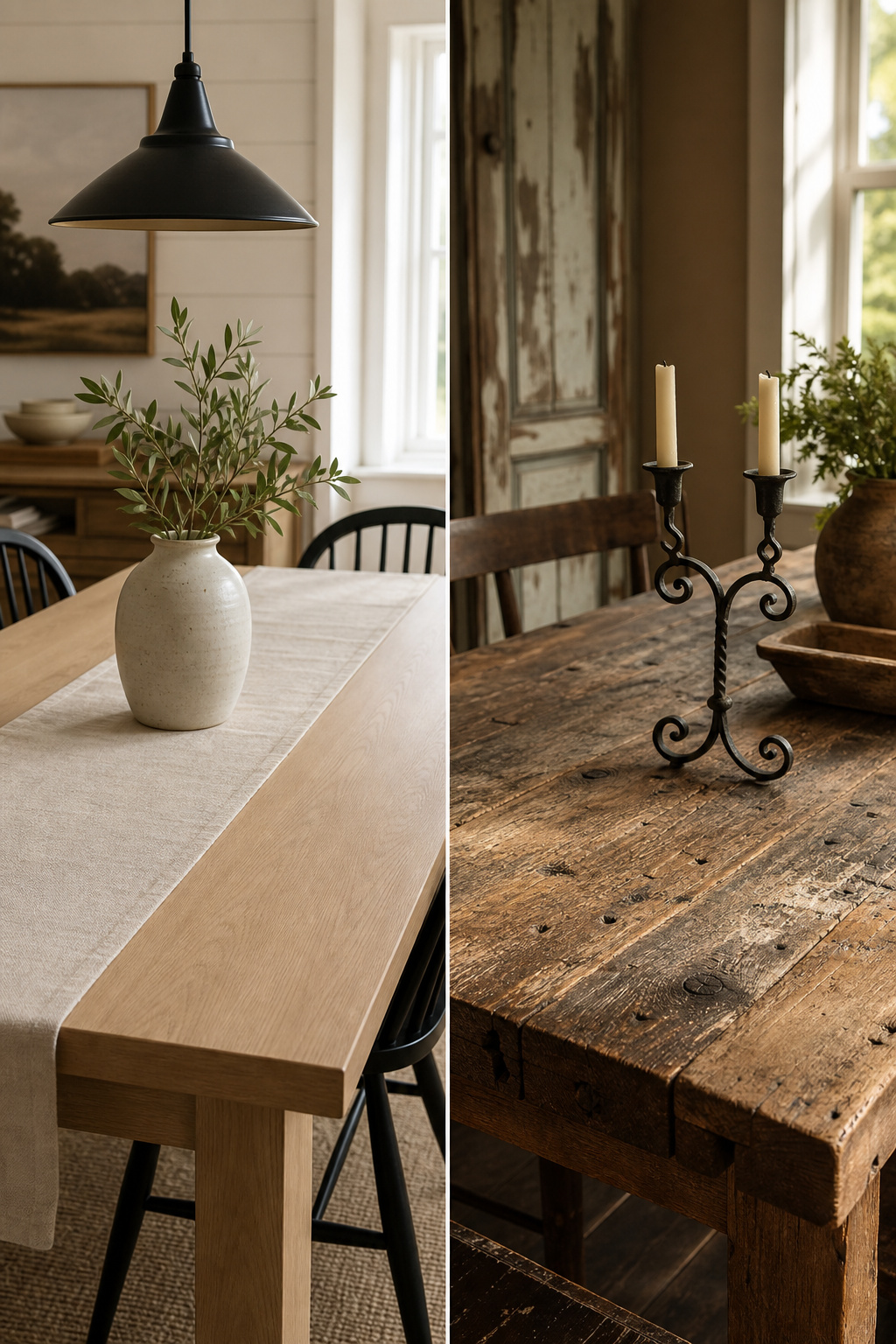
So what does this look deliberately leave behind? Heavy distressing, salvaged mismatch, and the impulse to fill every surface. Where the rustic farmhouse approach embraces rough-hewn beams, reclaimed timber, and iron fixtures, the modern version stays fresh and intentional. The table below sets the two side by side.
| Element | Modern Farmhouse | Rustic Farmhouse |
|---|---|---|
| Palette | Warm white base, controlled neutrals | Muted earthy tones |
| Finish | Smooth, sanded, lightly oiled | Distressed, weathered, reclaimed |
| Wall treatment | White-painted shiplap | Raw timber, stone, brick |
| Seating | Clean-lined wood plus linen upholstery | Turned legs, spindle backs, salvage |
Modern Farmhouse Dining Tables: Proportion Over Personality
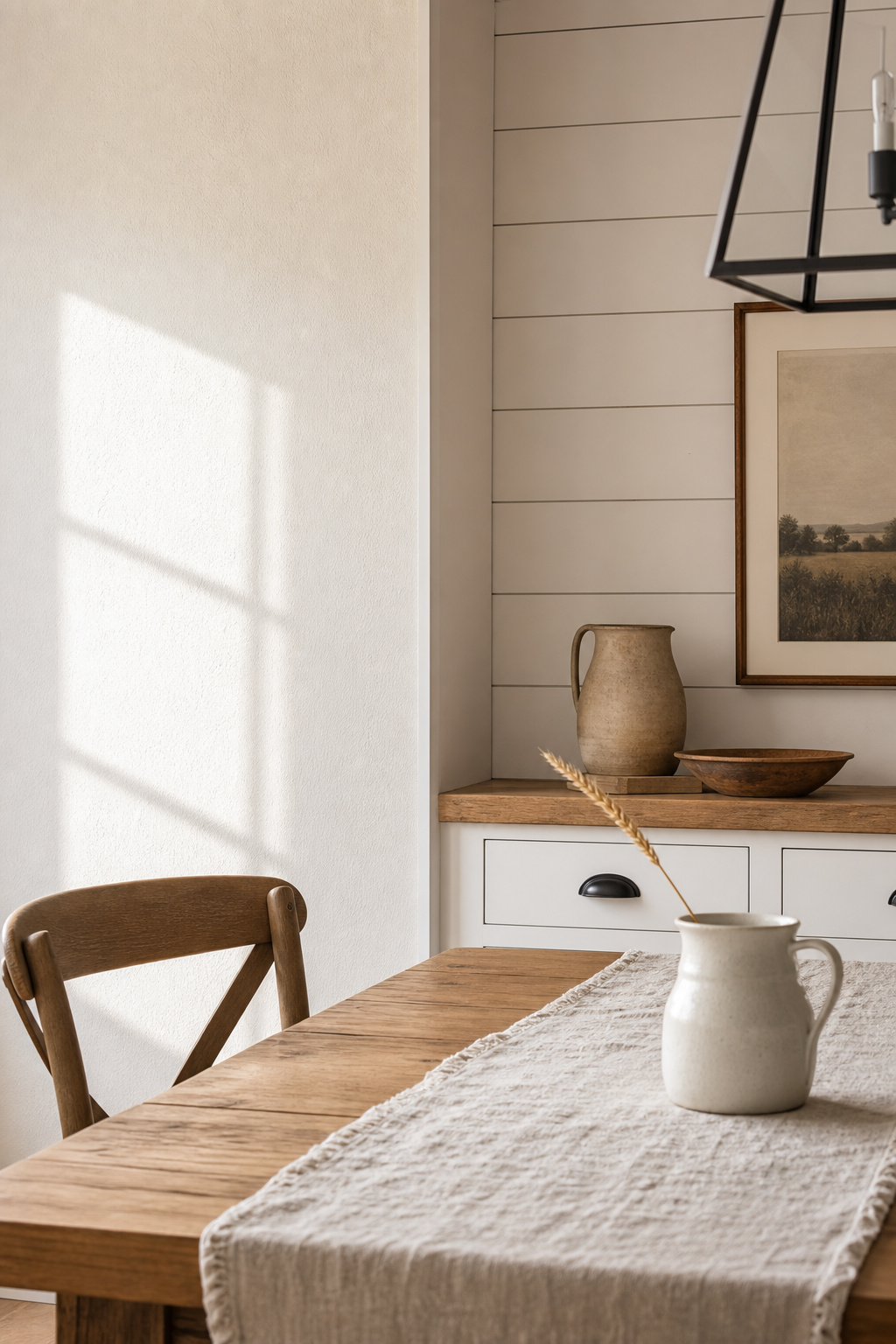
The table is the anchor, and its first decision is proportion, not finish. As interior designer Kathy Kuo puts it, the anchor of any modern farmhouse dining room should be a beautiful table that exudes a cozy farmhouse aesthetic and features clean lines and of-the-moment design elements. Choose a solid wood profile that earns its keep: a trestle base, simple tapered legs, or a Parsons-inspired silhouette. My one recommendation is straight, Shaker-style legs in solid white oak — the joinery outlasts most retail alternatives, and the plain line never tires.
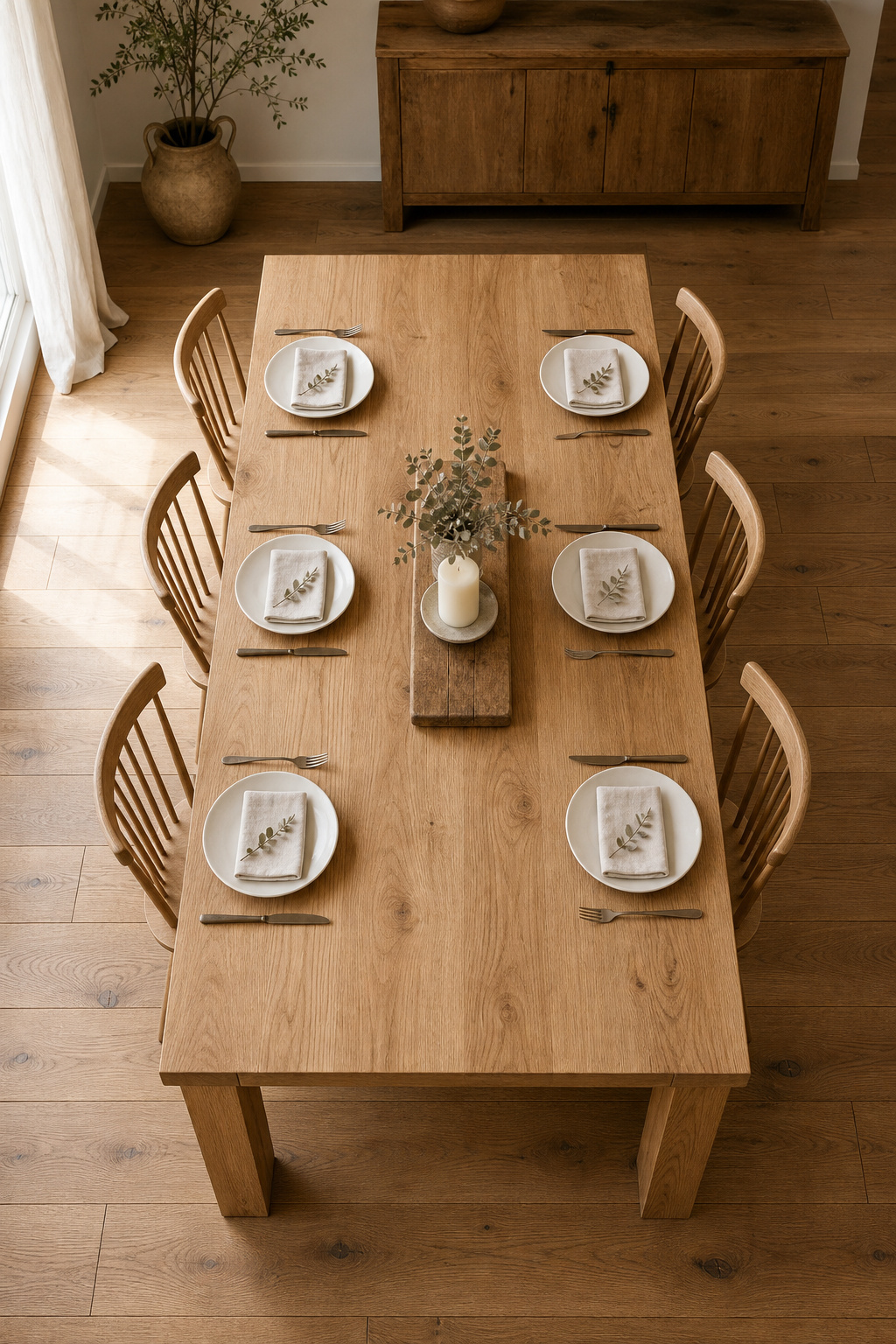
Generous proportions matter because the farmhouse look depends on them. For six people, look for 72–80 inches long by 36–40 inches wide; for eight, 84–96 inches long by 38–44 inches wide. A standard 36–38-inch width still leaves the centre clear for a low runner or candles. If a bench tucks under one side, a slight overhang gives knees somewhere to go.
Finish is the second decision, and it should stay quiet. Natural oiled, whitewashed, or limed wood all suit the modern reading. Heavily wire-brushed or distressed surfaces pull the room toward rustic instead. A smooth sanded top that shows the grain honestly is the truest choice here — the wood is allowed to be what it is.
Seating That Balances Farmhouse Character with Modern Comfort
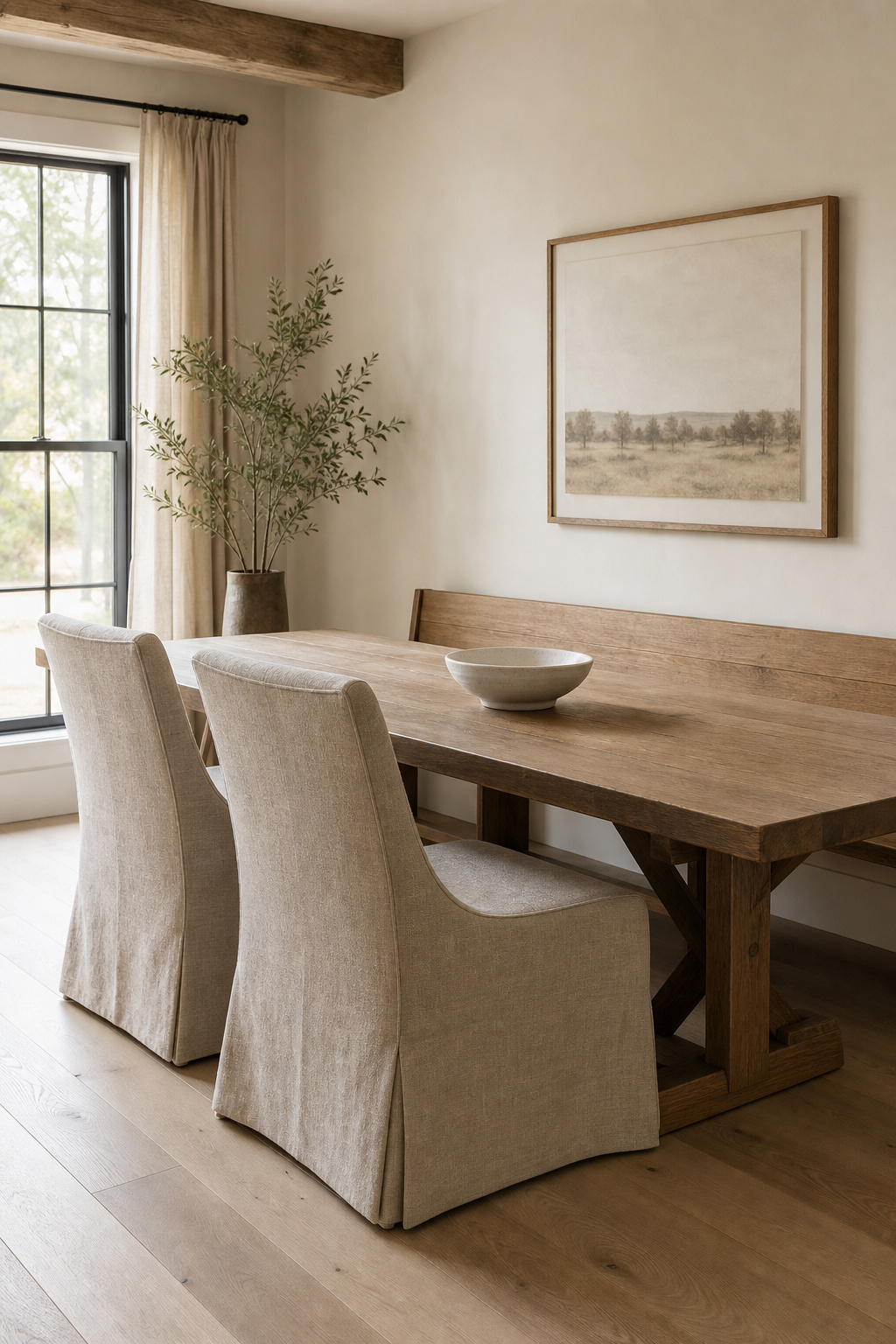
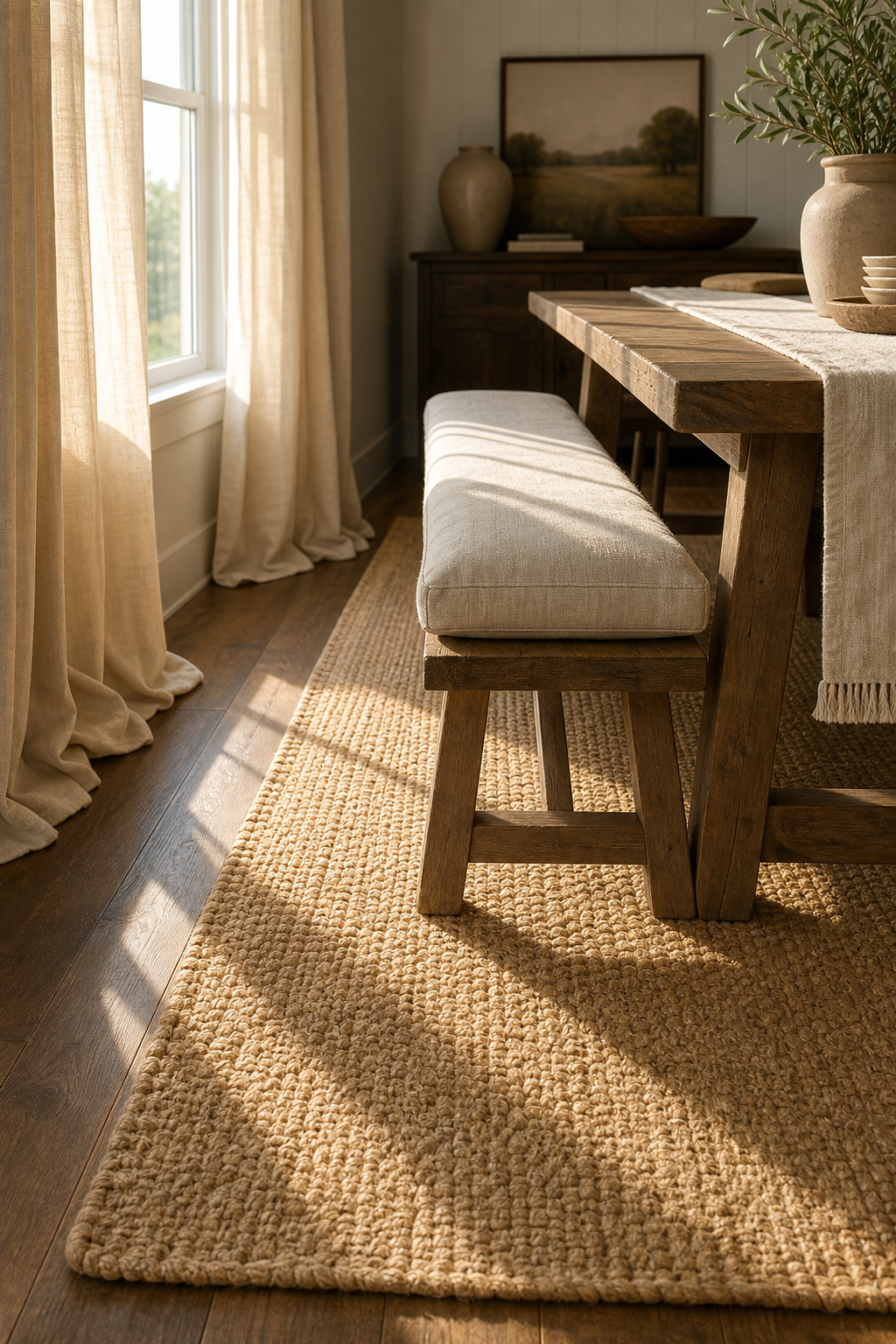
Modern farmhouse seating is mixed on purpose. The canonical formula puts a wooden bench along one side and upholstered chairs along the other, or blends several chair styles that share one thread. As designer Cathy Nordström notes, the look consciously steers away from mood boards — pieces should feel gathered, and nothing really needs to match. A great combination is linen slipcovered armchairs at the heads with pale oak side chairs down the length.
Fabric keeps the seating within the palette while adding the softness wood alone cannot provide. Linen and performance-fabric upholstery in cream, oatmeal, or soft greige read luxurious yet stay neutral. Because farmhouse dining is casual and frequent, performance fabric earns its place — it resists the spills that come with the territory. For balance, here is how to proportion seats to a table:
- Size the table to the seat count: about 72–80 inches long seats six comfortably, so no one is fighting for elbow room.
- A bench should run roughly the length of the tabletop, seating three where two chairs would sit.
- Keep one unifying thread — shared colour or silhouette — so the mix reads collected, not accidental.
These ratios assume a roomy footprint. If you are working with a tight corner instead, a small farmhouse dining nook leans on benches and built-ins to do more with less.
A Modern Farmhouse Palette That Works Across Seasons
Start with a warm white rather than a stark one. Warm whites harmonise with natural wood and make a dining room feel inviting instead of clinical. Benjamin Moore Simply White OC-117 is the most consistently recommended; White Dove OC-17 and Sherwin-Williams Alabaster SW 7008 are close, well-loved alternatives. Greige — a grey-beige blend — works beautifully too, pairing with soft black accents and warm grain without any single colour dominating.
Accents stay disciplined: one or two, always muted and nature-referencing. Sage, dusty blue-grey, soft terracotta, and deep charcoal all hold their place without shouting. A deeper accent wall in charcoal or sage makes the room feel more intimate at night, which suits the way a dining room is actually used after dark.
Here is the test I trust. Photograph the room — or just stand in it — at seven in the morning in February, in the worst light of the year. A palette that still feels warm then will feel warm in every other season. Texture does the rest: layering wood, linen, and ceramic substitutes for colour and keeps a neutral room from reading flat.
Textiles and Lighting: Where Modern Farmhouse Gets Its Warmth
This is the section where the room stops looking like a showroom and starts feeling like home. As Courtnay Tartt Elias, founder of Creative Tonic Design, puts it: the key to modern farmhouse is layered textures — the more the merrier. A jute rug under the table grounds it and absorbs sound; a natural linen runner connects the textile layer to the wood, leaving 6–8 inches of bare table at each end. Linen or cotton curtains in a shade close to the wall keep the window quiet.
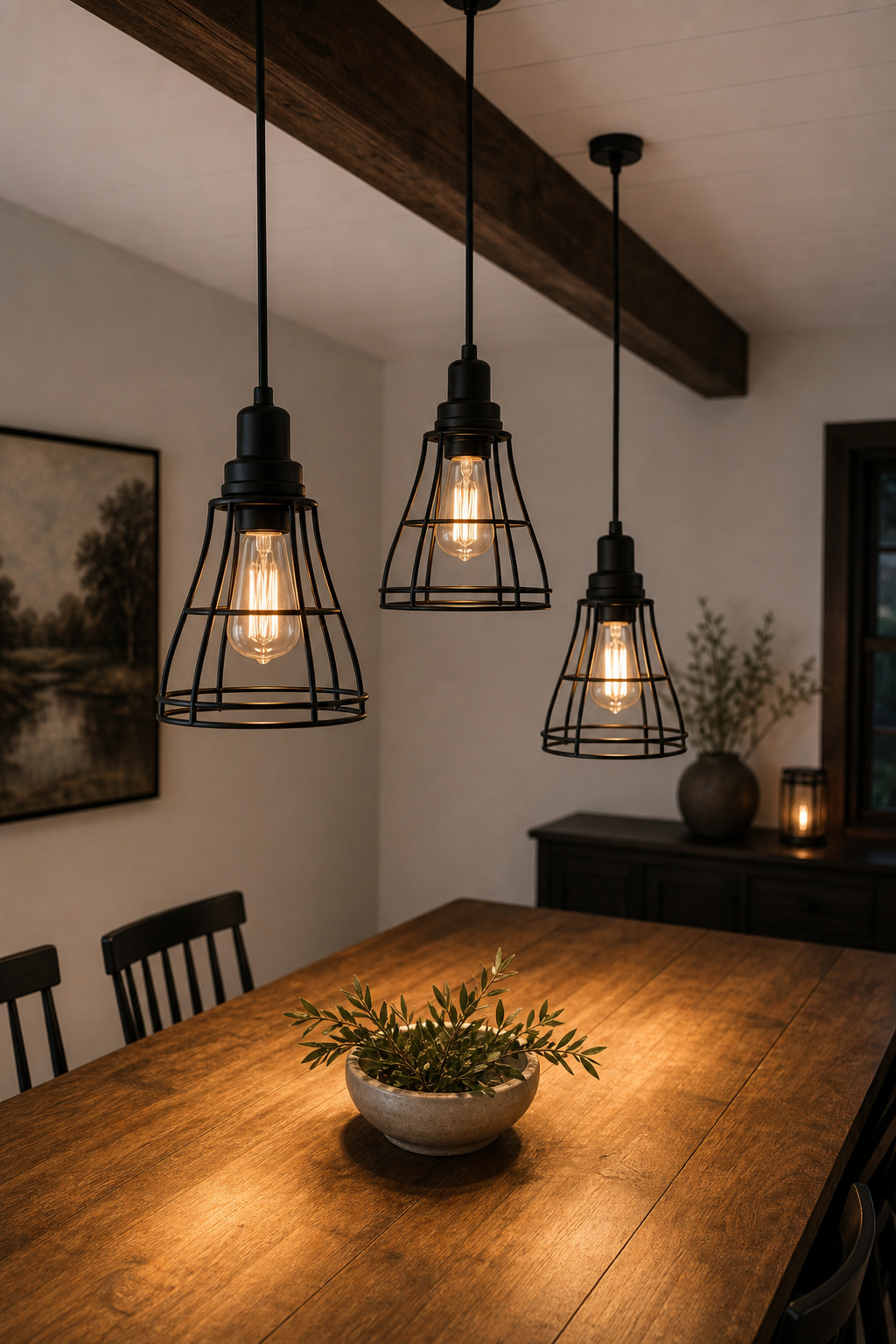
Lighting is where the two aesthetics meet in a single object. A cluster of matte-black pendants or a woven rattan shade carries enough visual weight that the table below can stay simple. Hang the fixture’s lowest point 30–36 inches above the table on a standard ceiling. Whatever you choose, a dimmer is essential — it shifts the room from a bright working space to an intimate one for the evening meal.
Bulb temperature finishes the job, and it is easy to get wrong. Use this as a quick guide:
- 2700–2800K — warm and inviting; animates wood, linen, and neutral walls. This is the modern farmhouse default.
- 3000K — slightly crisper; fine for task areas but cooler on wood tones.
- 3500K and above — daylight register; greys out wood and linen and reads sterile in a dining room.
Candles and lanterns add pockets of warm light at eye level that overhead fixtures cannot reach.
Modern Farmhouse Decor: What to Add and What to Edit Out
The accent layer is governed by one habit: stop before the surface feels full. White-painted shiplap on a single accent wall gives texture and a backdrop for a single large piece of art — a botanical print or an abstract canvas, not a gallery cluster. Open oak shelves beside or above a sideboard display white stoneware, a ceramic pitcher, and a trailing plant. A disciplined palette on those shelves is what reads as farmhouse in one glance.
For accent language, lean on natural materials that rotate with the seasons: woven baskets, a clay vase of dried pampas grass or eucalyptus, a wooden board, a few sprigs of real greenery. Metal stays matte — black iron or aged brass, never polished chrome. Mixing those two metallic tones adds depth without busy-ness, as long as the finishes stay natural.
What breaks the look is over-theming. Word signs, faux distressing, plastic greenery, and more than three or four objects on a sideboard all pull against the restraint that defines the style. Storage that requires constant tidying has already failed — the system must be easier than the mess it replaces. Keep the surfaces honest, and the room holds together with very little effort. For the full picture of how these pieces work together, see our farmhouse dining room ideas guide.
The modern farmhouse dining room is, finally, a way of choosing enough over more. Get the proportions right, keep the palette warm, layer the soft materials, and edit the rest with a steady hand. What you are left with is a room that works in February light and welcomes a crowd in December — clean, cozy, collected, and built to last well beyond any trend. That balance is within reach, and it asks for restraint far more than budget.
FAQ
What is the difference between a modern farmhouse dining room and a rustic farmhouse dining room?
Modern farmhouse features clean lines, smooth or lightly oiled wood, matte metal finishes, and a bright neutral palette — character comes from material quality and texture layering. Rustic farmhouse goes raw, with rough-hewn beams, reclaimed distressed timber, and iron fixtures. The simplest test: if a piece looks newly made, it leans modern; if it looks salvaged, it leans rustic.
What size dining table is right for a modern farmhouse dining room?
For six people, a farmhouse table of 72–80 inches long by 36–40 inches wide is standard; for eight, look for 84–96 inches long by 38–44 inches wide. The NKBA recommends a minimum of 32–36 inches of clearance from the table edge to the nearest wall, and 44 inches for a traffic aisle behind seated diners.
What colors work best for a modern farmhouse dining room?
The foundation is a warm white or greige — Benjamin Moore Simply White OC-117, White Dove OC-17, and Sherwin-Williams Alabaster SW 7008 are the most consistently recommended. Accent colors stay limited to one or two: sage green, dusty blue-grey, soft terracotta, or deep charcoal. Keep them muted and nature-referencing rather than bright or saturated.