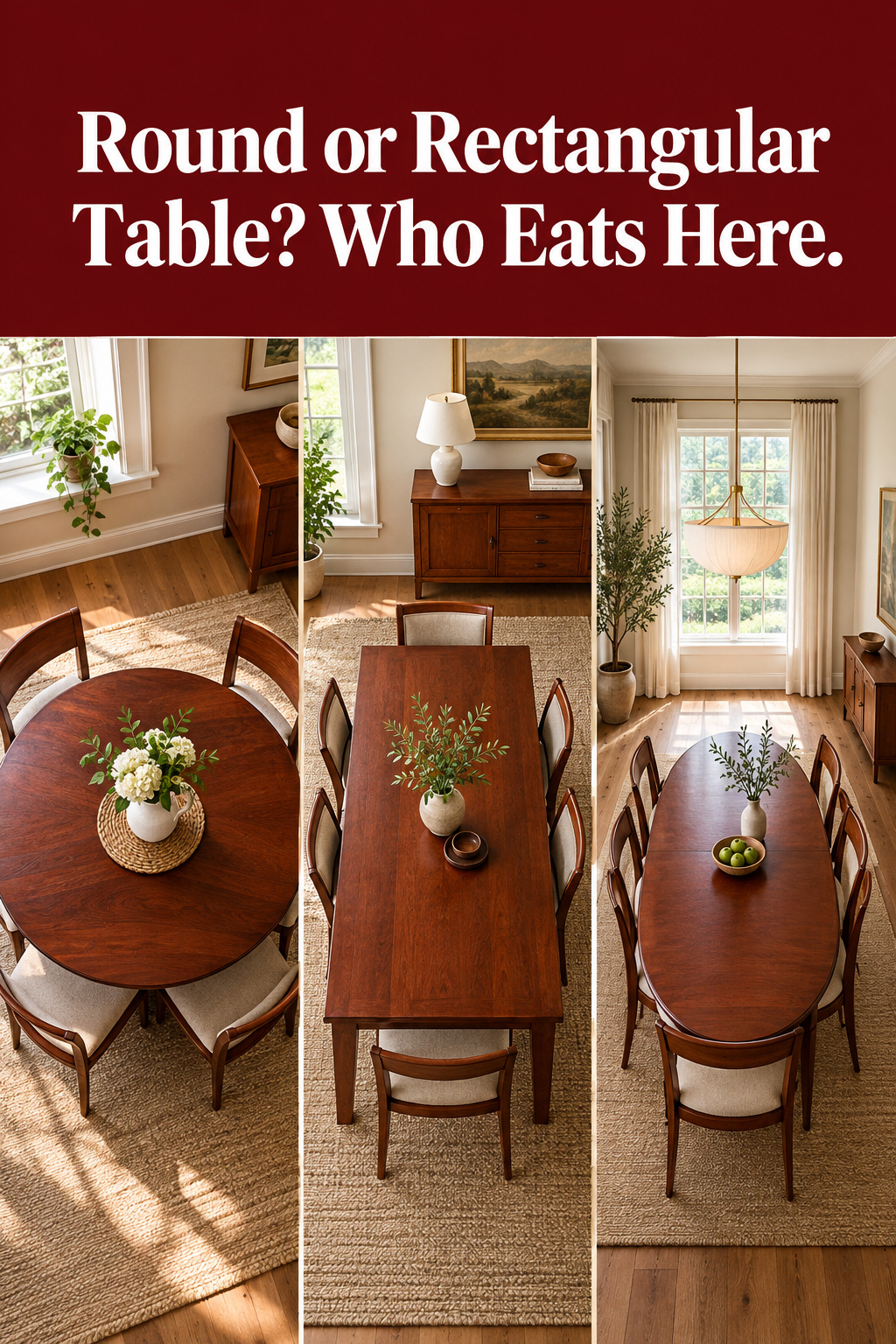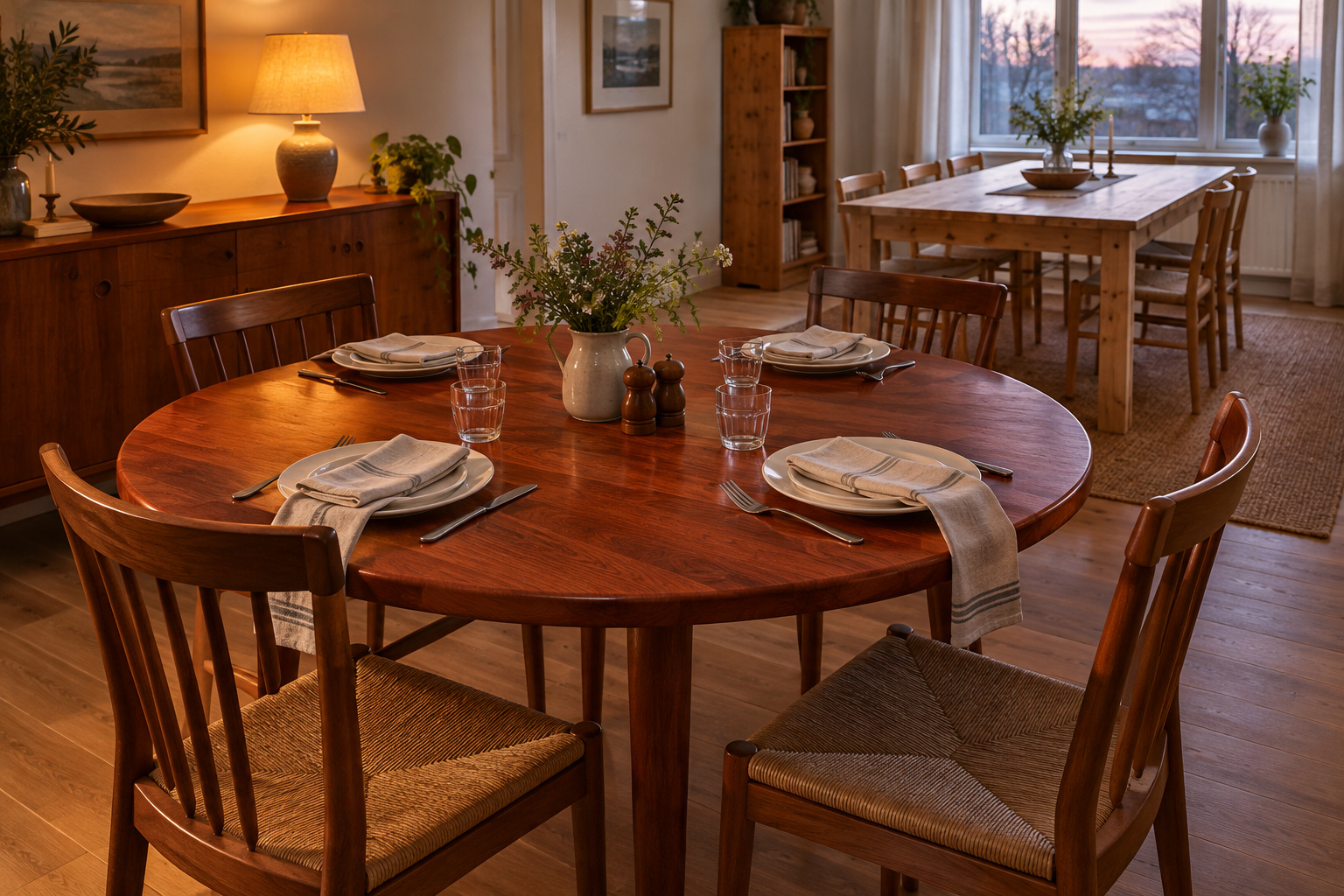

Picture an ordinary Tuesday at your table. Someone small is kneeling on a chair to reach the bread. Someone else gets up for the water jug and has to squeeze past two backs to do it. The platter starts at one end and never quite makes it to the other. That is the scene to bring to the round vs rectangular dining table question, because the showroom never shows it. At my own table the youngest always takes the seat closest to the kitchen, every single night, whatever I lay out. The shape you buy is a decision about who reaches, who passes and who gets seen. Most advice says round is sociable and round saves space. One is opinion, the other is mostly wrong, and the wrong shape costs floor or elbow room for years.
TL;DR
- Choose by who eats there most nights: round is comfortable for about six, and eight only sits well at about 66 to 72 inches, so past eight you want a rectangle or an oval.
- Round does not save floor at equal seat counts once you add 36 inches of clearance: four diners need 90.2 sq ft at a 42-inch round and 90.0 at a 48 by 36 rectangle.
- Round does win in a small square nook, where a 36-inch round for four needs 81.0 sq ft against 90.0 for the rectangle, and anywhere you use the corners.
Round vs Rectangular Dining Table: Start With Who Eats Here Most Nights
Count the people at your table on a normal weeknight, not at Thanksgiving. Then count how many of them are short, how many get up mid-meal, and who serves.
That nightly number matters more than any talk of mood. Designers quoted by Livingetc give the usual split: Emma Deterding says a circular table “immediately encourages conversation”, and Rebecca Hughes says rectangles make excellent use of a space and take more guests without feeling cramped. Both are reasonable, and neither is measured.
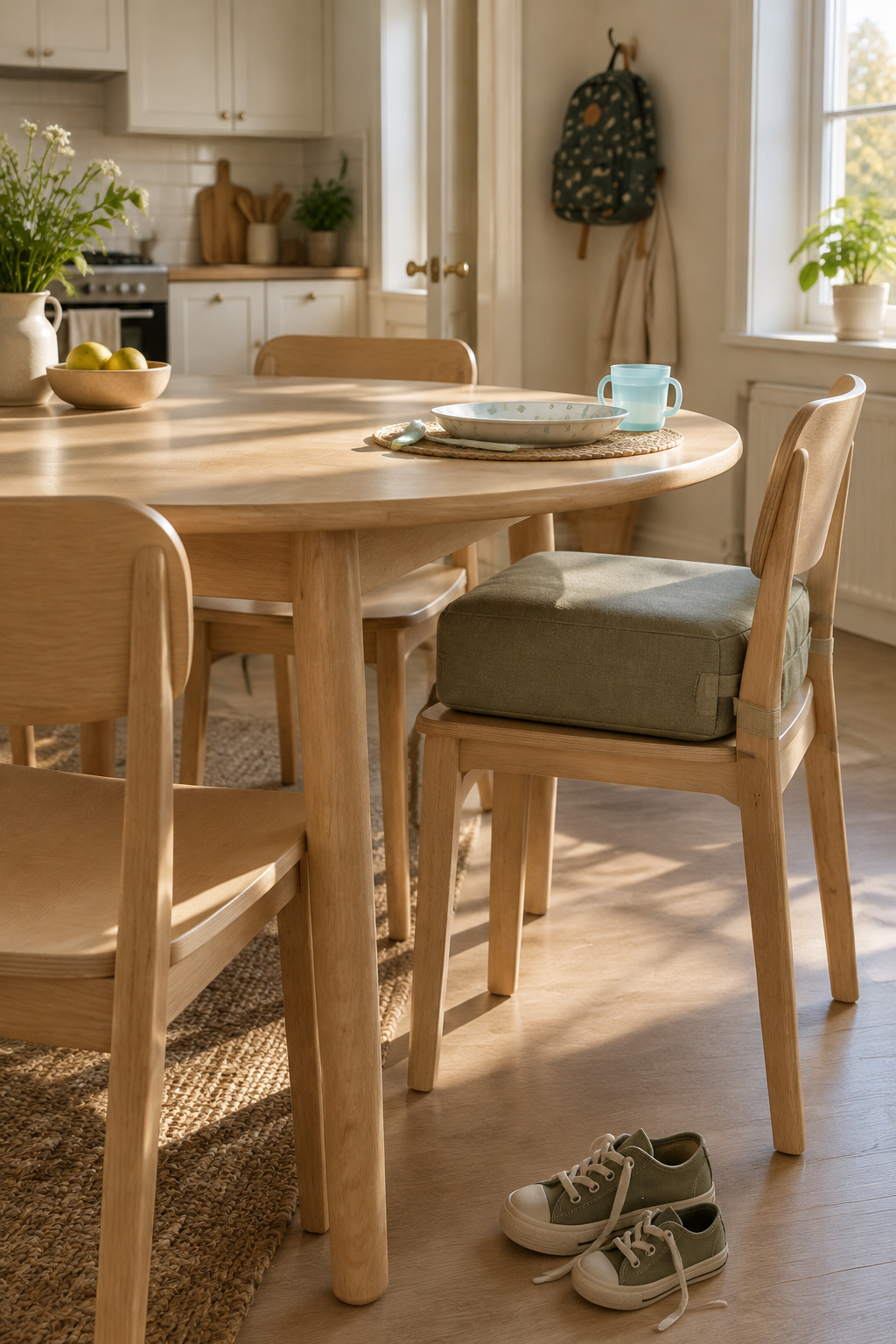
Kids belong in this decision as diners. At a round table the smallest person faces the middle along with everyone else, and nobody is stuck at a far end. Retail copy also says round is better for young children because it has no corners to bump into. I get why that appeals, and the retailer cites no injury data.
In my kitchen there is a low drawer of kid plates and cups so the kids can set the table themselves, and it makes me think about shape from their side. If a child is laying four places, a round table means every plate goes the same distance from the edge. A long rectangle means someone small walks the length of it with a stack of cups.
A playroom is often less used than the kitchen floor. Families live where they actually gather, and for most of us that is the table.
Do Round Tables Really Save Space? The Footprint Math With Clearance Included
Round tops are smaller, yes. But every table needs room around it for chairs and bodies, and the usual planning convention is about 36 inches from the table edge to a wall or furniture on every side.
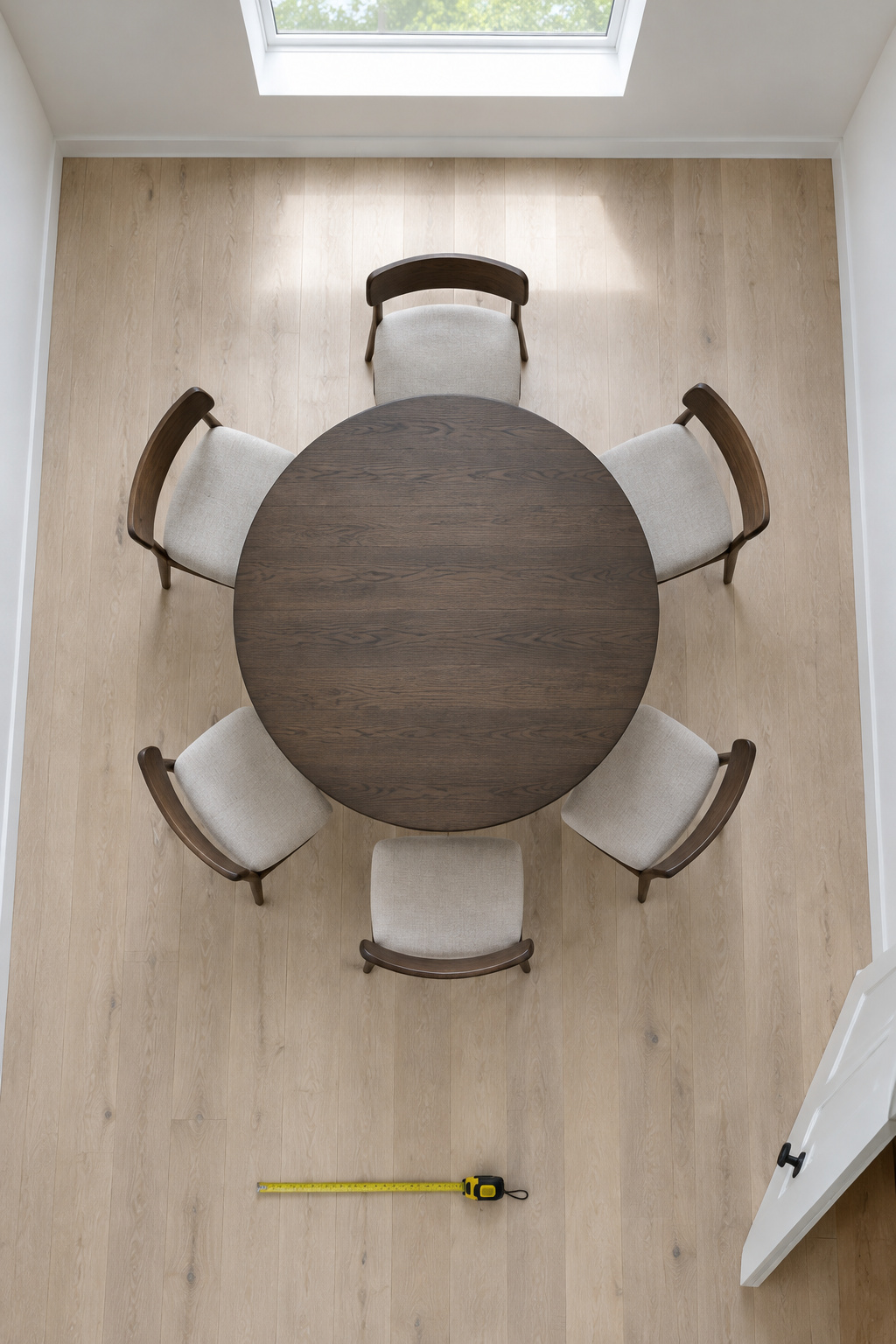
Add that ring and do the sum. A round needs a square of room (its diameter plus 72 inches, both ways). A rectangle needs its length plus 72 by its width plus 72. The circle a round sweeps is smaller than its square, but you only gain that difference if something useful lives in the corners. Here are the numbers at common retail sizes, which vary by a few inches between charts:
| Diners | Round | Room needed (round) | Circle it sweeps | Rectangle | Room needed (rectangle) |
|---|---|---|---|---|---|
| 4 | 42 in | 90.2 sq ft | 70.9 sq ft | 48 x 36 in | 90.0 sq ft |
| 6 | 54 in | 110.2 sq ft | 86.6 sq ft | 72 x 36 in | 108.0 sq ft |
| 8 (tight) | 60 in | 121.0 sq ft | 95.0 sq ft | 96 x 40 in | 130.7 sq ft |
| 4, small nook | 36 in | 81.0 sq ft | 63.6 sq ft | 48 x 36 in | 90.0 sq ft |
At four and six it is a tie: a 42-inch round plus 72 inches is a 114-inch square, 90.2 sq ft, against 90.0 for the rectangle.
At eight the 60-inch round looks like a winner until you seat people at it, because it is the tight size. Move up to a 66-inch round, where eight people fit well, and it needs 132.2 sq ft against the rectangle’s 130.7. A tie again.
Round saves floor only where the room’s corners get used, by a plant, a low sideboard or a high chair, and in a small square nook, where a 36-inch round for four takes 10% less room than the rectangle. That agrees with the usual small-nook advice. Everywhere else, buy round for the people, not for the square footage.
Where Round Stops Working: Six Is Comfortable and Eight Is the Ceiling
Six is where round is happiest. A 54-inch round gives six people about 28 inches of edge each, which is room to eat without bumping elbows.
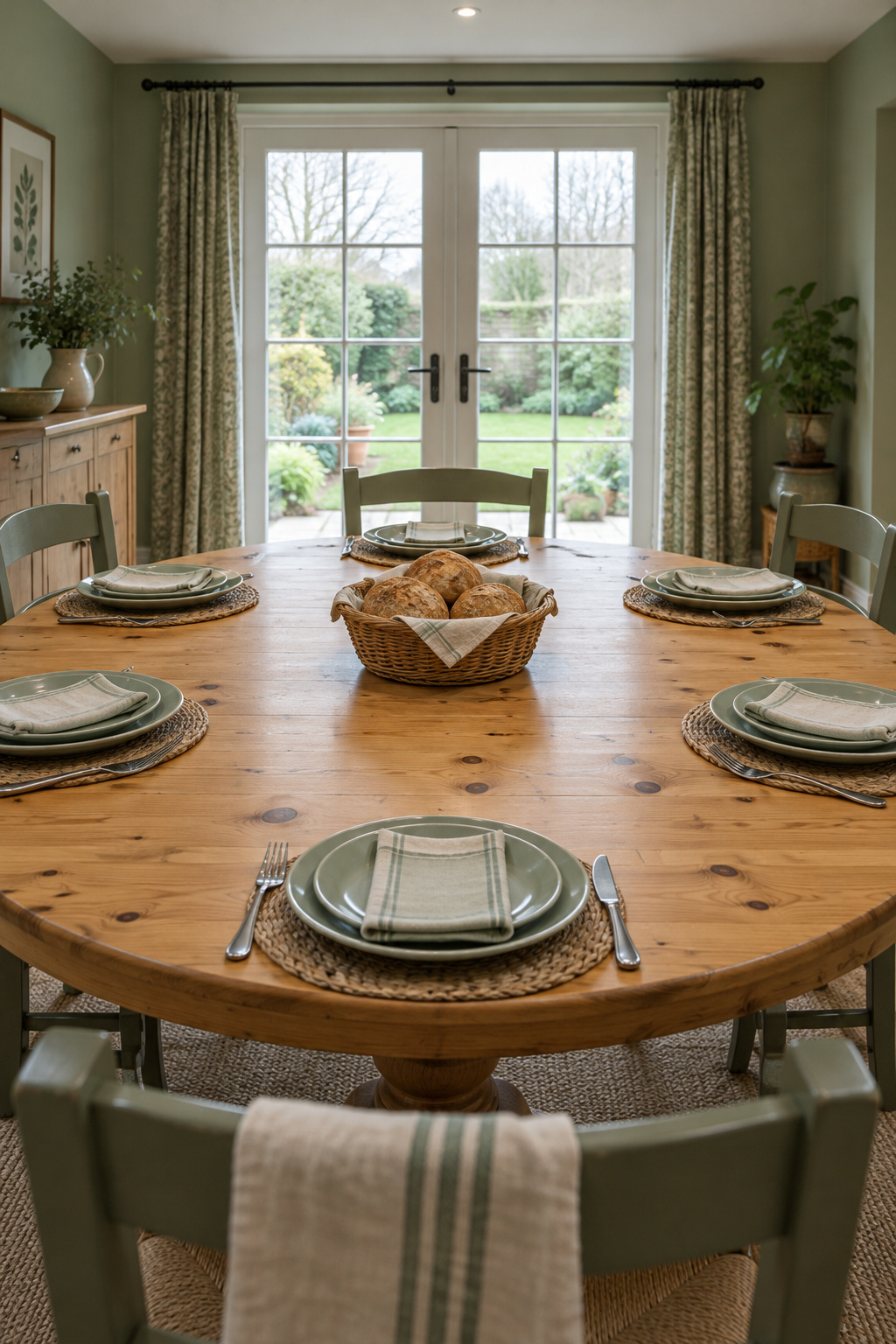
Eight is harder. A 60-inch round has 188.5 inches of edge, and divided by eight that is 23.6 inches each, under the 24 inches per person the usual convention asks for. So eight will fit on 60 inches only as a squeeze, and they sit comfortably at about 66 to 72 inches. Past eight, a round is the wrong shape, and a rectangle or oval does the job better.
Reach and passing food
The bigger a round gets, the farther away the middle is. Median forward grip reach, measured standing, is about 27.2 inches for women and 29.8 inches for men in the US Army’s ANSUR II survey, and the center of a big round sits past that before you allow for a plate. That is what a lazy Susan is for, and it turns dinner into a lot of spinning.
Get down to a child’s height and look across a 60-inch top from a dining chair. The bread basket in the middle is out of reach, and a small diner will climb for it. At a rectangle three a side, the dish travels across 36 inches of width instead.
Once you have settled on round, the next question is the diameter your chairs need, because chair width changes the seat count.
What we know about round tables and conversation
Round tables feel more conversational to a lot of people, me included. That is opinion. The studies that exist look at small groups on tasks, in classrooms and workplaces, with mixed results, and none look at a family dinner. If the face-to-face feeling matters to you, trust what you notice at your own table.
Oval and Square Tables: The Middle Answers for Six and for Four
If your household fails the round test, you do not have to jump straight to a long rectangle.
Oval for six and beyond
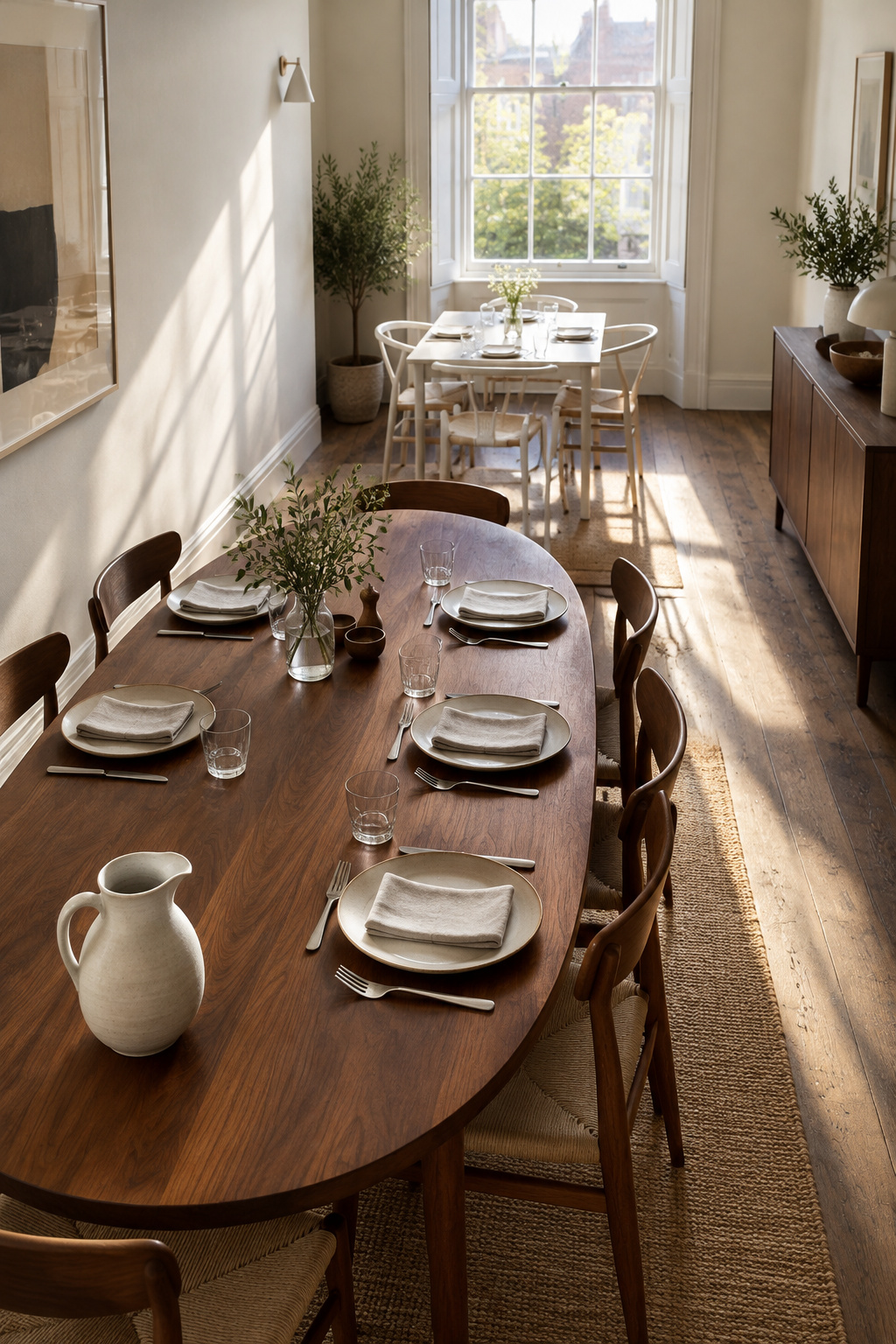
An oval is sized like a rectangle of the same length, with the ends softened. A 72 by 42 inch oval seats six comfortably, and eight wants 84 to 96 inches of length. You give up a little top area at the ends, and in return nobody catches a hip on a corner. One retailer says sightlines stay good until about 84 inches long, and past that talking across the table gets harder. Long rooms favor a rectangle or an oval anyway.
Square, and what its corners cost
A square is lovely for four. Sizes around 36 to 44 inches suit four people in a square room. Go much bigger and the corners start to cost you. Each corner place gets shared by two neighbors, and a large square puts the middle out of reach in the same way a large round does.
Whatever shape you land on, the rug doesn’t have to copy it. If you are planning one, look for a rug sized for the chairs and shaped by the room.
Count the Seats You Need Twice a Year, Then Let the Room Break the Tie
Size the table for the nightly household. The holiday crowd is a different problem.
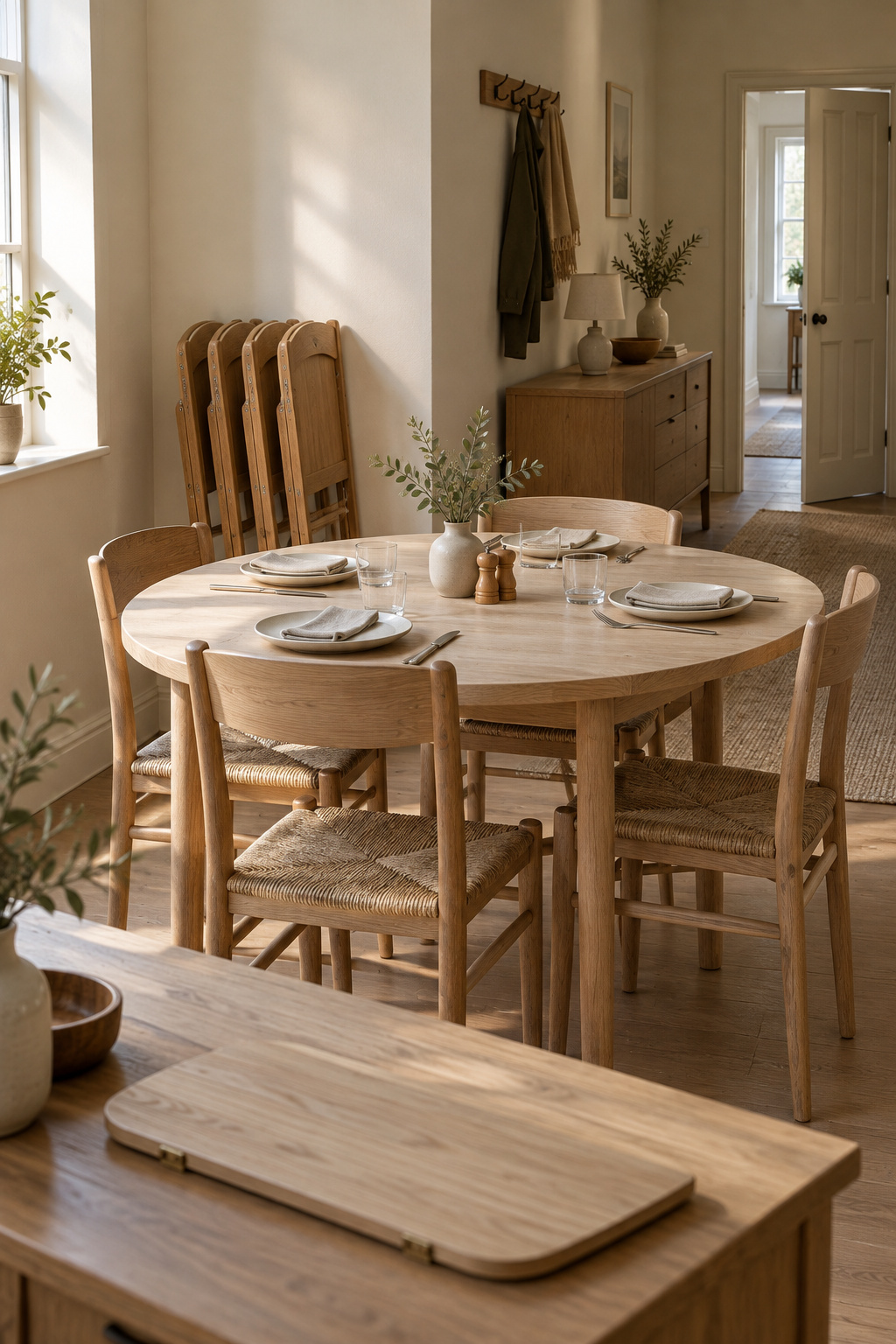
A retailer that lists an everyday count and an occasional maximum shows the gap: a 60 to 72 inch by 36 to 40 inch rectangle seats six comfortably and eight occasionally. For the twice-a-year nights, a leaf or extra chairs beats a table that is too big for the rest of the year.
If who-eats-here still leaves you torn, let the room decide. Long rooms take rectangles or ovals. Square rooms take round or square, and so do open rooms with several ways in. Then check what opens near the table, from cabinet doors to the back door. Door swings have no standard allowance, so open each door with a chair pulled out and see what hits.
Rules of thumb worth keeping:
- Leave about 36 inches from the table edge to walls and furniture.
- The room needs the table plus 72 inches in each direction.
- Three diners a side need about 72 inches of rectangle, four a side about 96.
Tape Both Shapes on the Floor Before You Order
You need painter’s tape, a tape measure and the chairs you already own.
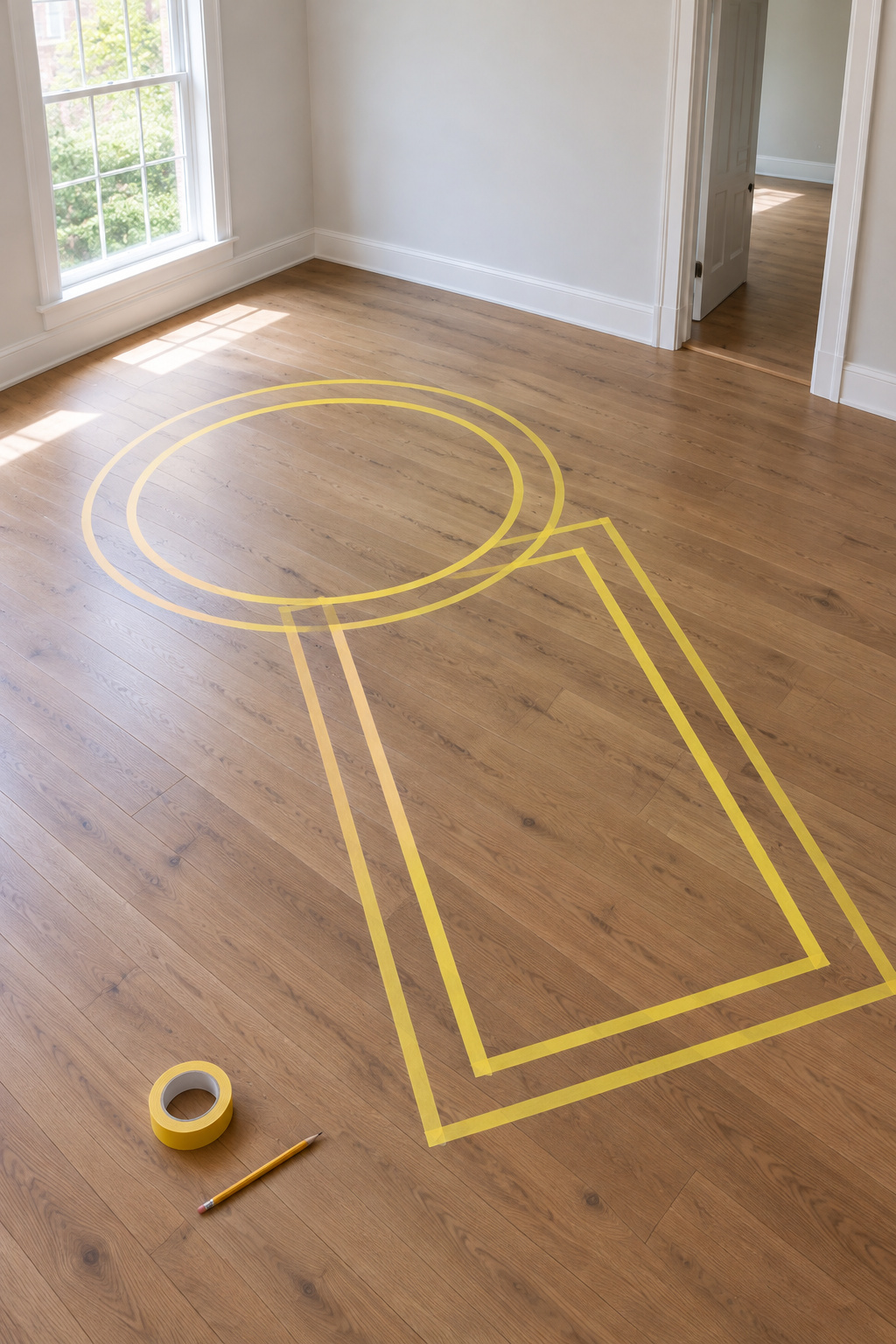
- Write down who eats at the table most nights, including the smallest and the one who always gets up.
- Tape the footprint of each shape you are considering, with its 36-inch ring. A 54-inch round needs a 126 by 126 inch square of room; a 72 by 36 inch rectangle needs 144 by 108 inches.
- Set your own chairs around each outline and slide each one back to where it sits mid-meal.
- Sit in the chairs. Have the shortest person reach for the middle.
- Pass a dish all the way around and see where it gets stuck.
- If an outline feels tight, go down one size. Rooms feel smaller once the furniture arrives.
A roll of tape on the floor tells you more than a month of photos. Once the shape is settled, move on to planning a round dining table from the chairs and the base up, if round is where you landed.
FAQ
Do round tables feel more casual than rectangular ones?
Designers and retailers say round feels relaxed and rectangular more formal. That is opinion, and nobody has measured it. Chairs, cloth and the room count too, and rounded corners and warm wood soften a rectangle. Judge the look in your own room, with the chairs you plan to use, before the shape decides.
Does a round table make a room look smaller?
One designer says a small round feels more open because it removes corners and visual bulk. A large one can do the opposite. A 72-inch round needs 144.0 sq ft of room against 130.7 for a 96 by 40 rectangle, so at big sizes the round can start to dominate.
Are round dining tables more expensive than rectangular ones?
Not consistently. Size, top material and the base drive the price, and shape shows no steady premium. Within the same collection, some brands price the round lower than the rectangle and others price it higher. Compare tables of a similar size and material, and treat the shape as a separate decision.