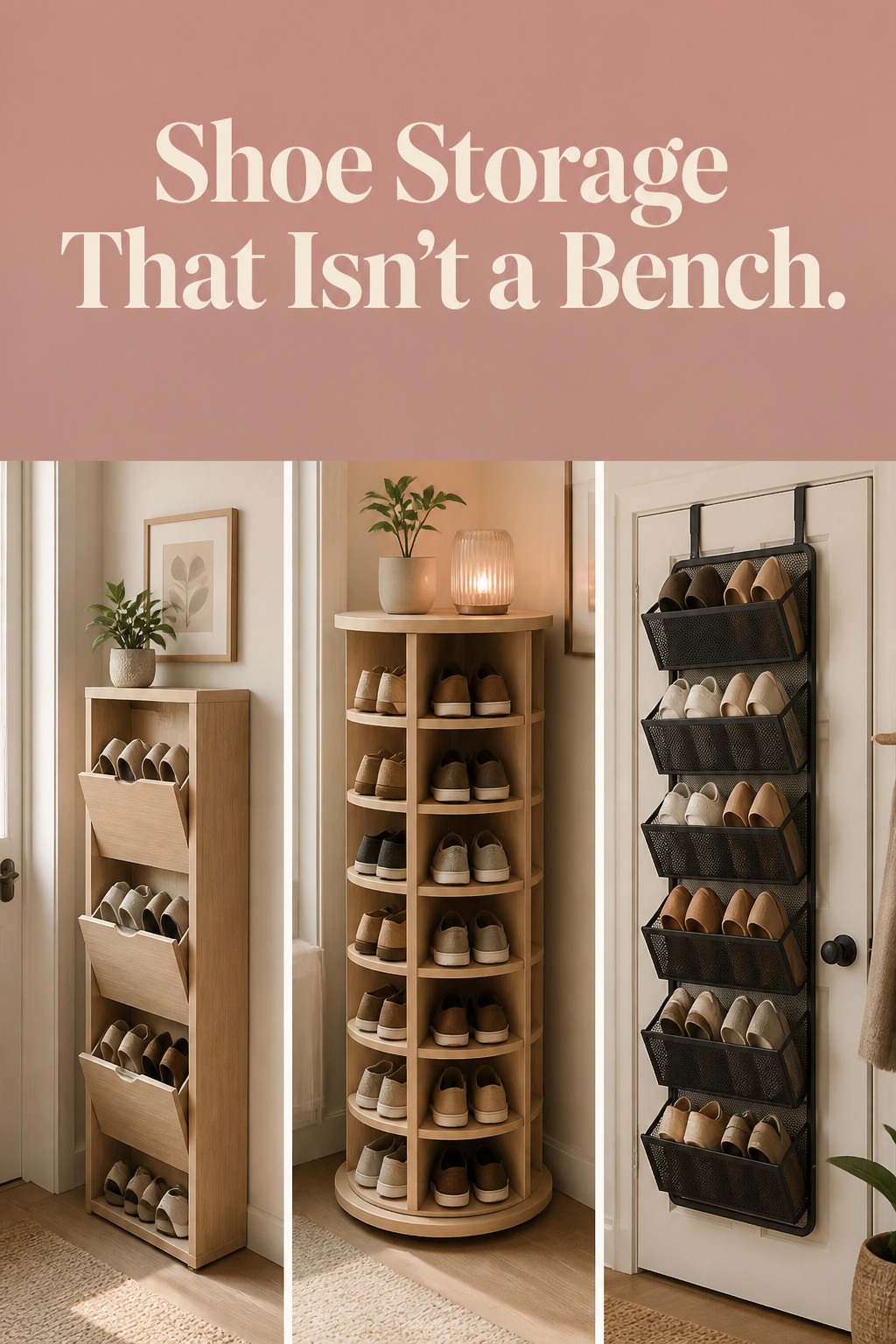
A shelf built for shoes wants 12 to 15 inches of depth. A hallway under 48 inches wide can spare 12 inches of furniture total, before it gives back any walking clearance. That gap is why small entryway shoe storage keeps failing: the product is sized right for shoes and wrong for the hall. Depth is the one number a product photo can’t show you. Genuinely shallow storage exists, stocked and cheap. IKEA’s STÄLL cabinet is 6¾ inches deep and holds 8 to 12 pairs.
TL;DR
- The depth band that fits a rental entry runs 2.25 to 9.5 inches: over-door organizers at 2.25, IKEA STÄLL at 6¾, the deepest slim cabinets at 9.5.
- Over-door is cheapest per pair by a wide margin: 24 pairs for $19. The pockets fit flats and sneakers, not boots.
- Rotating carousels are marketed at 18 to 35+ pairs on a fixed ~23×23-inch base, so they need a corner to spin in, not a hall that still owes 36 inches of walkway.
The word “compact” on the box is what usually fails you, not the apartment. It was printed by someone who never measured your wall.
The depth problem nobody mentions
Standard shoe-storage depth vs. what a 60-120cm entry actually offers
Start with the shoe, not the shelf. Regular shoes need 12 to 15 inches of shelf depth, size 9 and up pushes that to 14, and boots want 16 to 18. Now measure the hall. Under 48 inches wide, furniture caps at 12 inches deep; at 50 to 60 inches you can run 14 to 16. The International Residential Code sets a 36-inch minimum hallway width under R311.6. So the honest slim category is 10 to 13 inches, and tipping-drawer designs reach 7 to 9 by tilting the storage face instead of stacking it flat.
Why this guide skips benches on purpose
The arithmetic rules them out. Bench cubbies run 12 to 15 inches deep for sneakers, 16 to 18 for boots, deeper than most cabinets here. Then a bench needs 36 inches of clear floor in front so someone can sit while someone else gets past, on top of its own 14 to 18 inches of seat depth. Call it 50 to 54 inches of committed floor. A 60 to 120cm entry can’t give that up and keep a door swing. If yours can, the site’s entryway bench guide is your page instead.
How every option below is measured
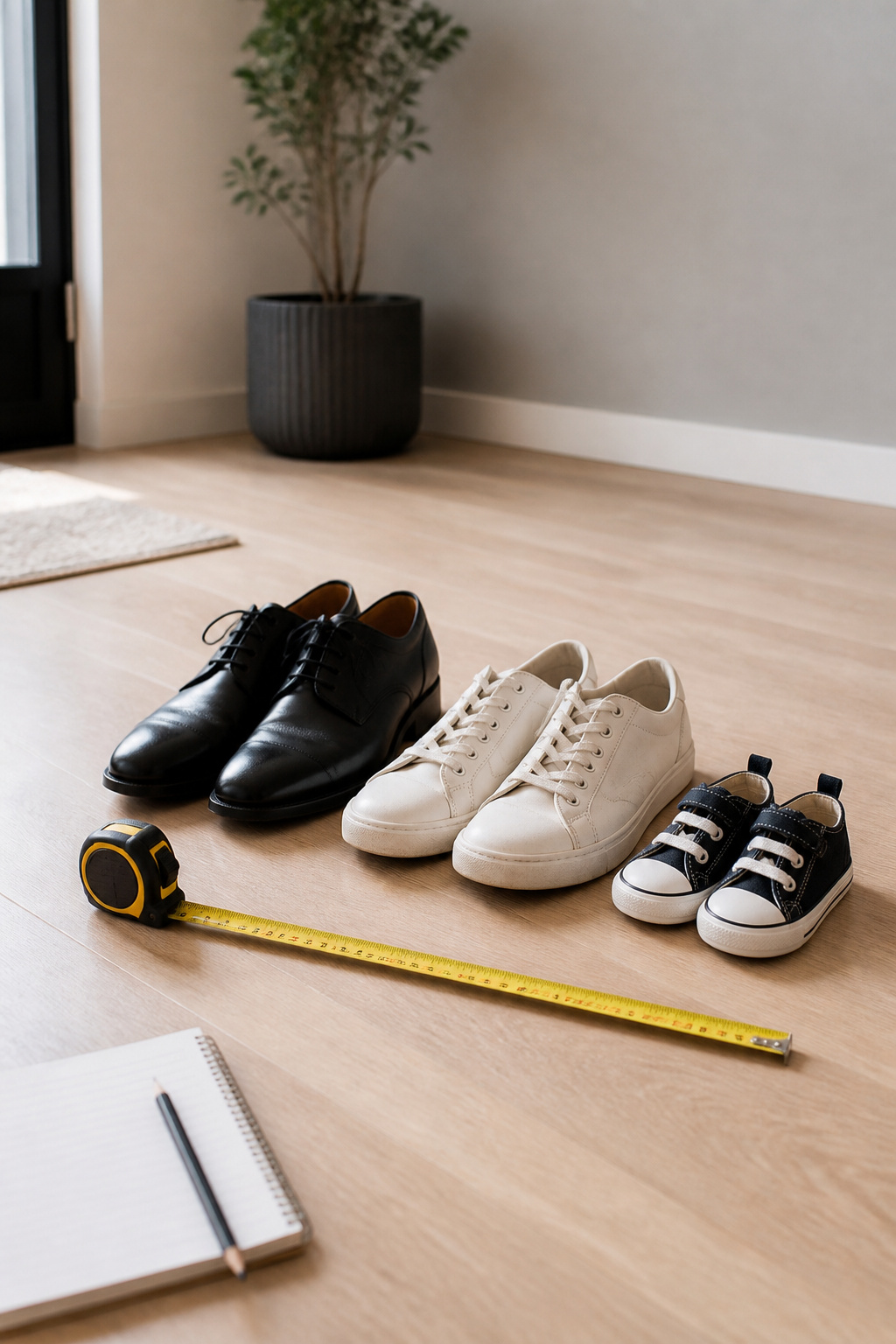
Three numbers, applied identically to everything here: footprint depth, honest pair capacity, and price, with no “up to” figures without the context that produced them. “Enough” gets a number too. Household occupants times three is the practical count of daily-rotation pairs that need to live at the door, so a solo renter sizes for three pairs, not for a collection. The rest is seasonal and can live anywhere else.
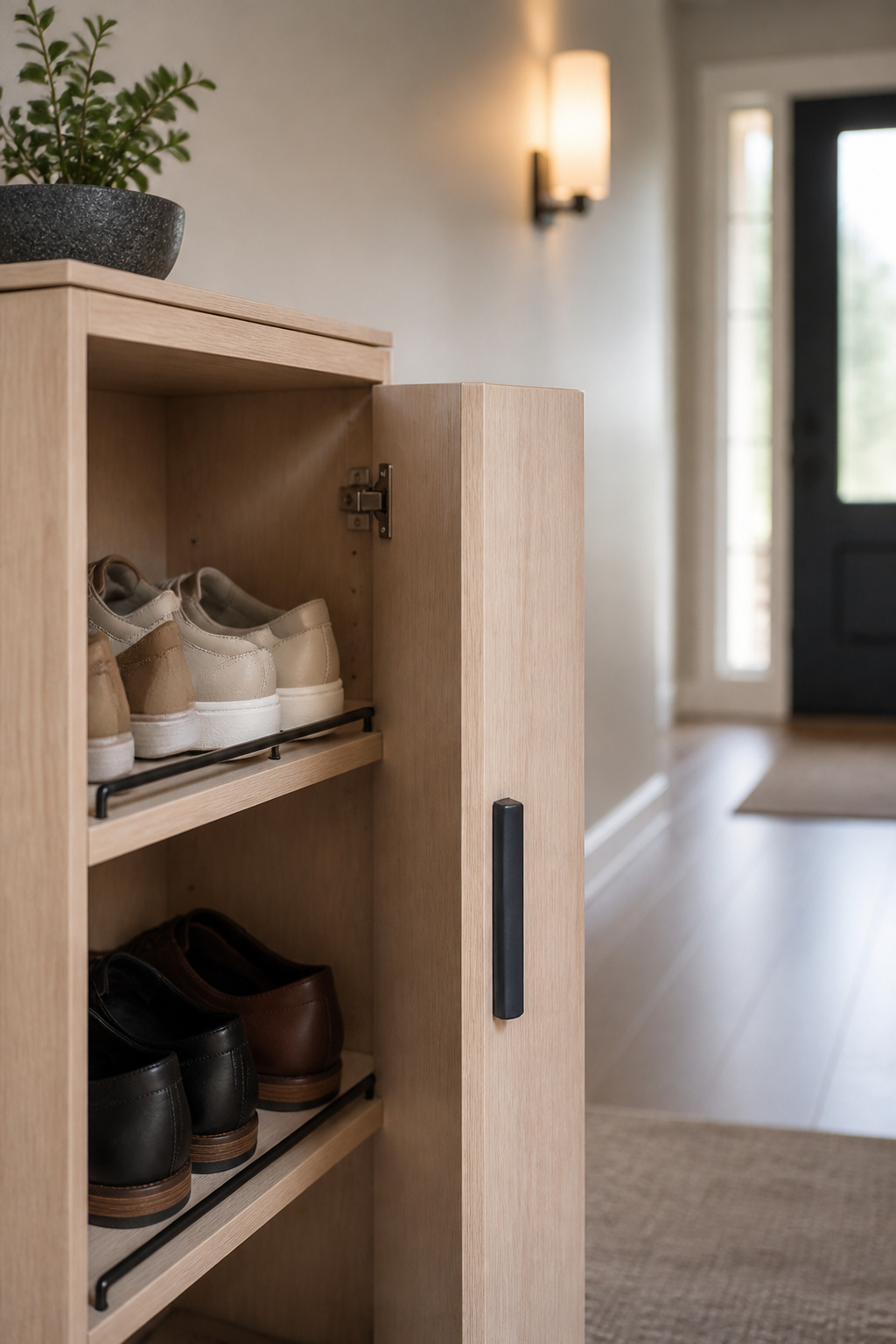
Slim cabinets (18-24cm deep)
Open your front door and a cabinet door at once in a 40-inch hall, and they meet in the air above the doormat.
Pair capacity at this depth
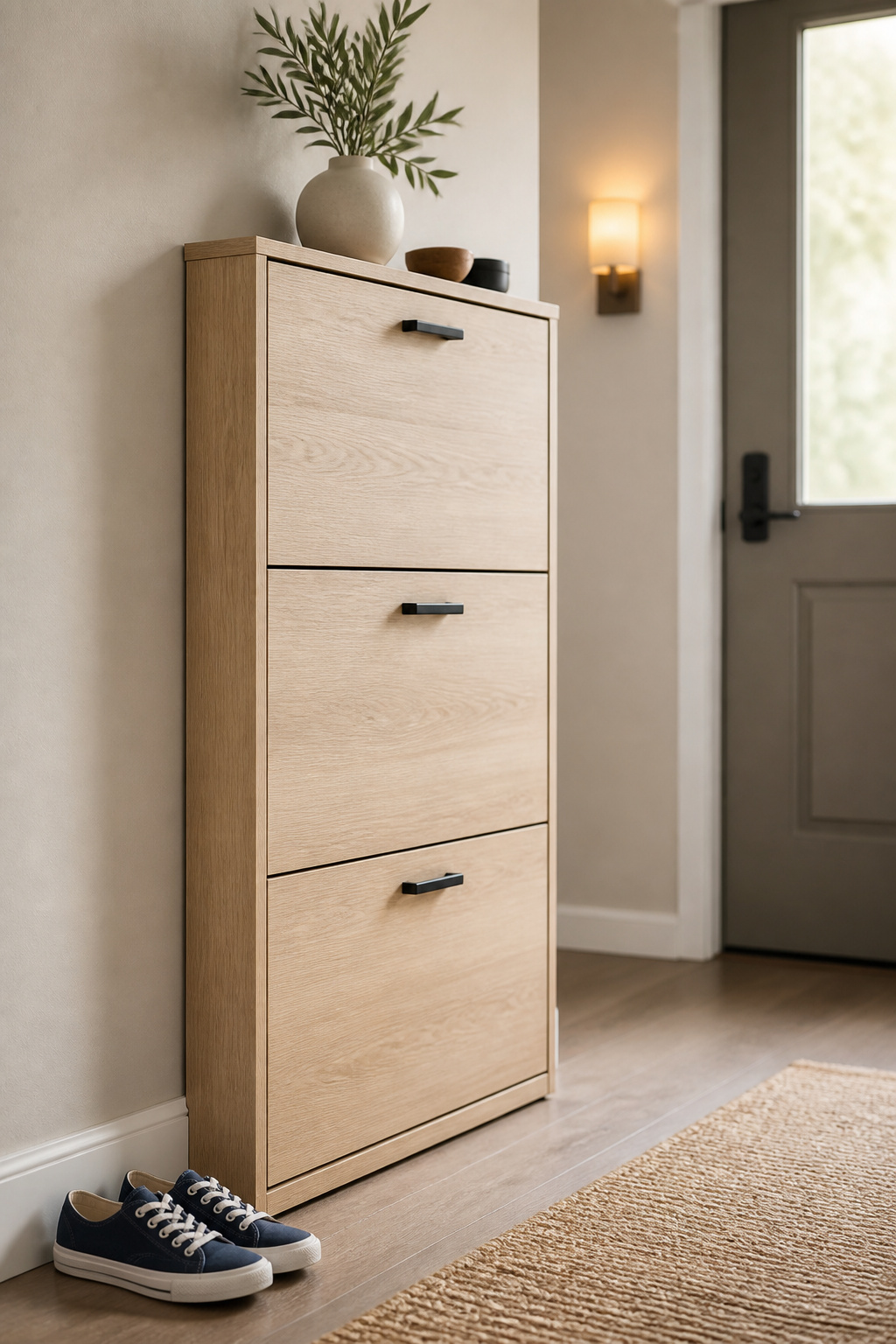
The category is stocked. IKEA’s STÄLL is 6¾ inches deep, 37¾ wide, with four compartments holding 8 to 12 pairs. TRONES is 7⅛ deep and about four pairs per unit, sold as a 2-pack for $39.99, so you stack them to reach eight. Article’s Envelo hits 9.5 inches and 12 pairs on tilt-out drawers. Tvilum’s three-drawer unit stays under 10 inches and swallows 21 pairs, the best capacity-per-inch of the group.
Door swing vs. sliding fronts in a tight hallway
A hinged door needs clearance roughly equal to its own width in the direction it opens: a 24-inch cabinet door wants about 24 inches, wider fronts 32 to 36. In a 36 to 48-inch hall, that clearance and your front door’s swing want the same air. Tilt-out drawer fronts pivot forward instead of outward and sidestep it entirely. Take the push-to-open front over the protruding pull, too. A handle at coat-pocket height is the one you catch a sleeve on daily.
What to look for so it doesn’t tip
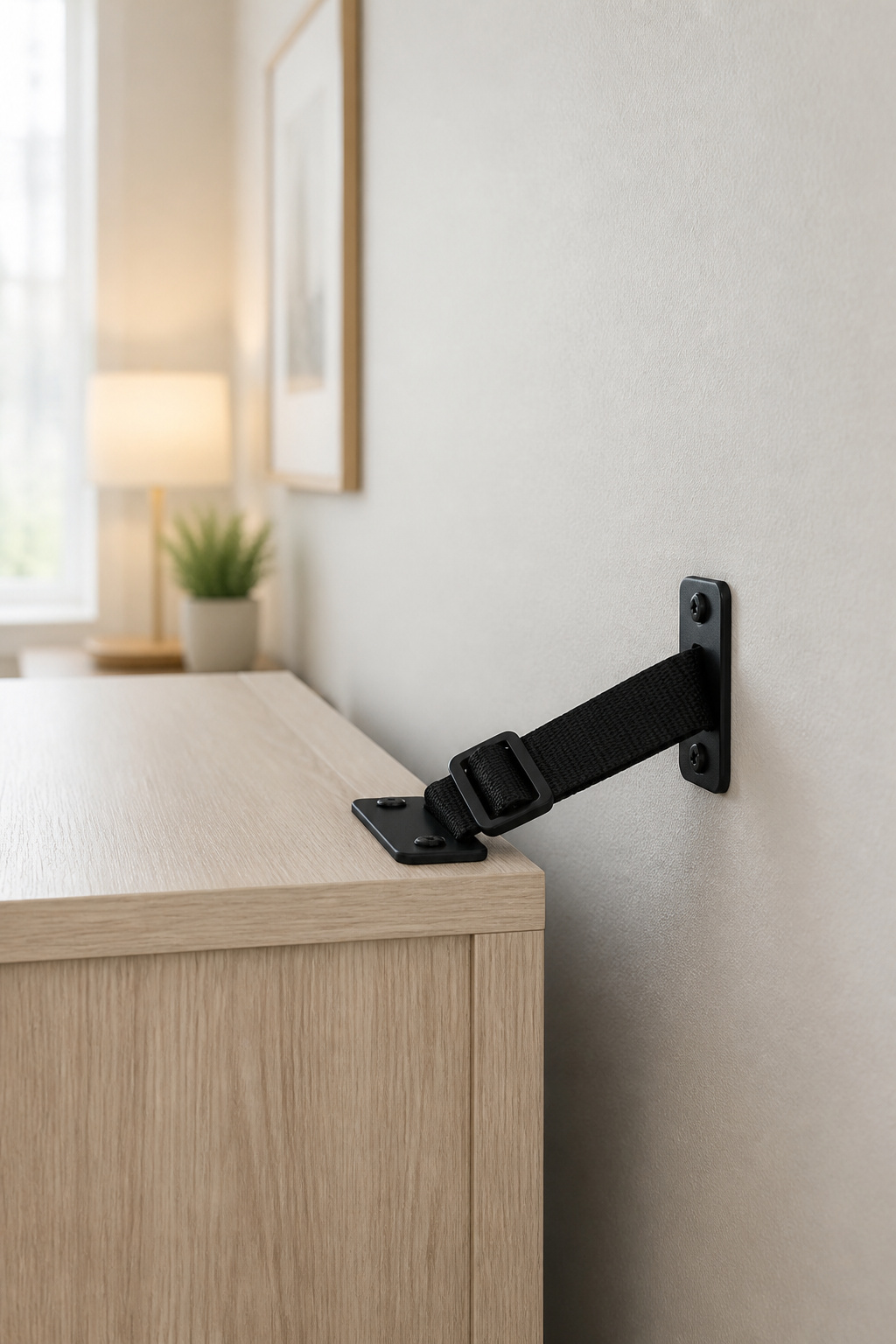
Shallow and tall is an unstable shape. Push depth down to 7 inches and the center of gravity climbs, so anchoring stops being optional the way it is on a deep dresser. What holds is the anchor point, not the strap: Consumer Reports found kits held 347 pounds fastened into a wood stud and failed at 58 pounds in hollow drywall. Renting? An adhesive strap or a ceiling-braced tension rod anchors without drilling and comes off clean.
Vertical and rotating racks
How a rotating carousel trades width for height
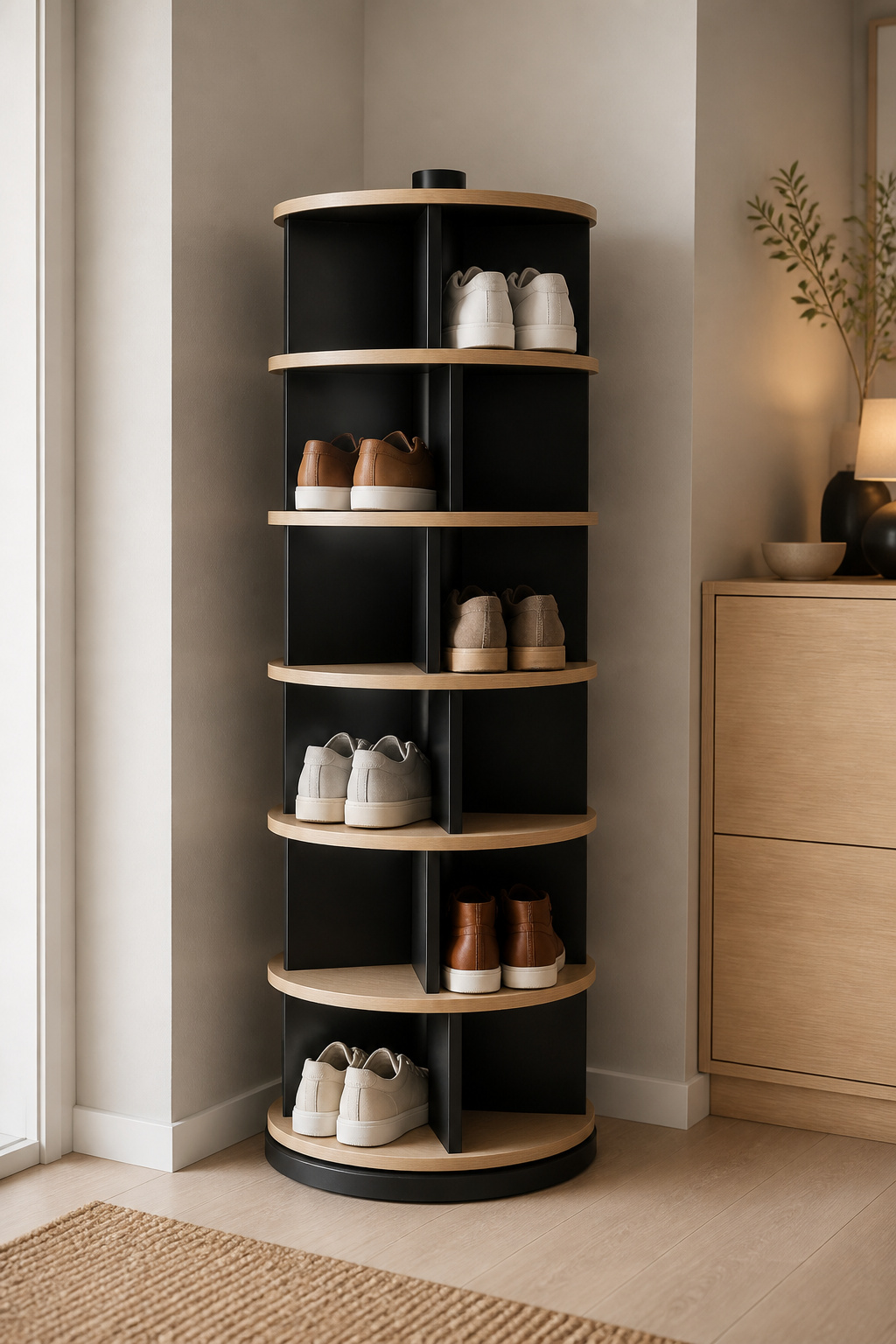
Sometimes the wall isn’t the constraint at all. A carousel answers that by going up instead of out. SpaceAid’s 7-tier is 23.2 inches square and 63 inches tall, listed at $199.99. Drop to a 4-tier and the base stays 23.2 inches square while the height falls to 36.5. The footprint is fixed; height is the variable. Capacity costs you ceiling, not floor.
Pair capacity and load limits
Read the capacity numbers as marketing: that’s where they come from. A three-tier Lavish Home tower is listed at 18 pairs, a seven-layer Spaco cabinet is rated up to 28, and a seven-tier Weinstein tower is marketed as holding over 35. All three come from manufacturer and retailer listings rather than independent testing, so treat them as ceilings, not verified counts.
Where it works and where it just gets in the way
I’d talk most renters out of one. A 23-inch base needs clear radius on every side to spin, so it claims a dead patch of floor about 24 by 24 inches, and the hallway still owes 36 inches of walking width on top of that. The category is marketed as fitting inside standard closet widths, which tells you what it was built for. At 63 inches tall, check the seven-tier against a ceiling fixture before it arrives. Got a dead corner? This is the one to buy. Got a straight hall? It’s a bollard.
Over-door and behind-door systems
Weight limits for hanging on a hollow-core door
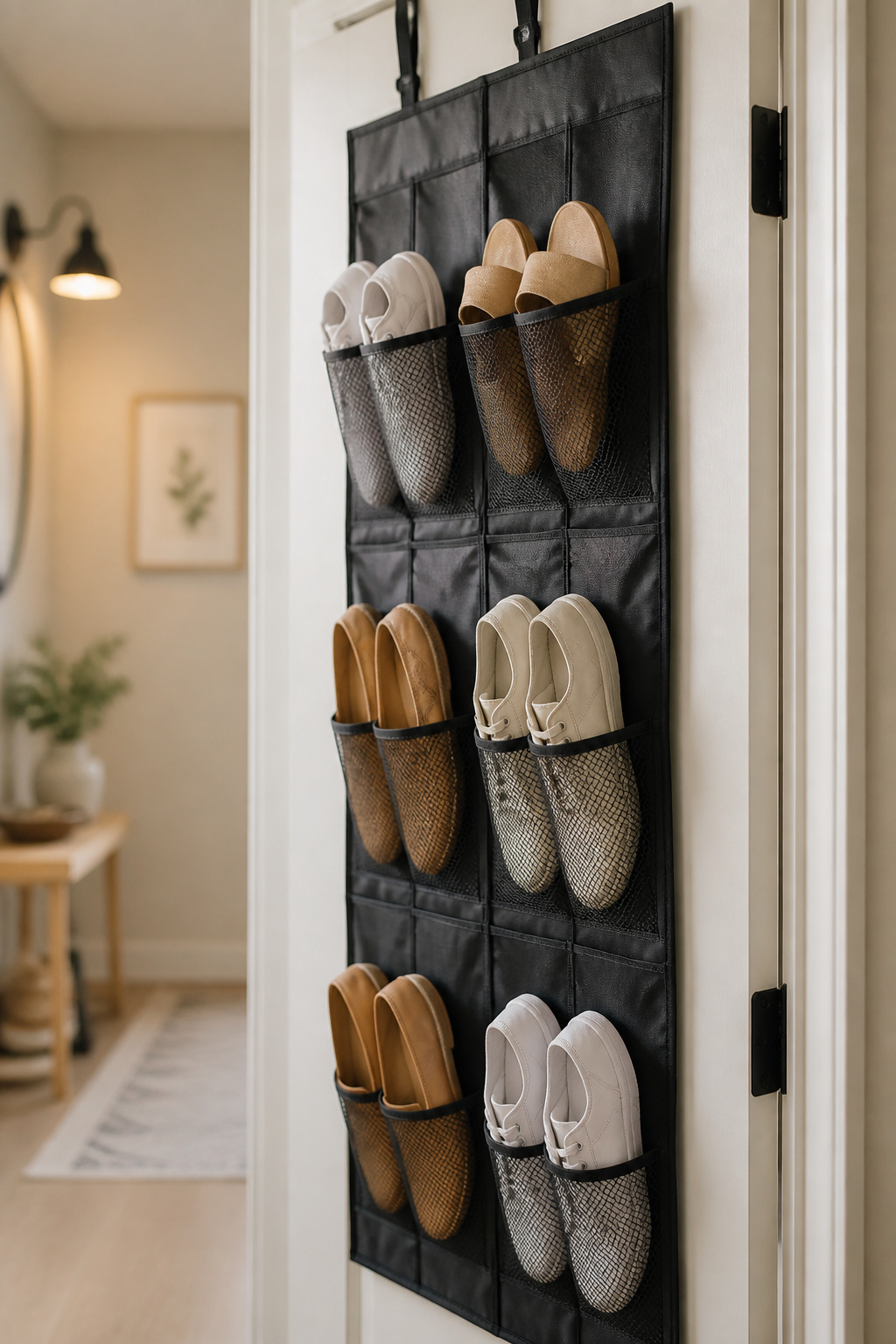
Nineteen dollars, 24 pairs, 2.25 inches deep. Target’s Brightroom mesh organizer fits doors up to 1.5 inches thick and is rated to hold 25 pounds total across all 24 pockets. A hollow-core door at 36 by 80 inches weighs only 25 to 35 pounds itself, and it’s the hinges carrying that assembly over time, not the organizer’s hooks.
What fits in each pocket realistically
One shoe per mesh pocket, and the pocket was cut for a flat or a sneaker. Boots and chunky trainers routinely don’t fit the pocket depth and need a different category. Every crew I ran kept a $40 multi-tool in the truck that nobody respected. Wrong tool for every job on paper, and it saved every install anyway. A $19 mesh organizer is that tool: the ugliest thing on this page, and I’d hang one behind a door before spending $200 on a carousel.
The one mistake that pulls these off the door
Loading pockets with something denser than a shoe. “Over-the-door organizers aren’t designed to bear significant weight, so storing heavy tools like hammers or hardware kits can compromise the integrity of both the door and the organizer itself,” says Elissa Hall of Awning.com. Wine bottles and cleaning supplies do it slower, sagging the fabric until it rips. It’s cumulative: 24 pairs of daily shoes already sits near that 25-pound rating.
Comparing small entryway shoe storage by footprint, capacity and cost
Footprint, pair count and price at a glance
The mistake at this stage is picking by photo. Same three numbers, all three categories:
| Option | Depth or footprint | Pairs | Price |
|---|---|---|---|
| Slim cabinet | 6.75-9.5 in deep | 4-21 (verified specs) | $30-600+ |
| Rotating rack | ~23 x 23 in floor footprint | 18-35+ (marketed) | ~$100-200 |
| Over-door organizer | 2.25 in off the door | 20-30 | $19-40 |
Cabinets cost the most per pair. That buys concealment and a surface for keys.
Matching an option to your actual wall width
Under 48 inches of hall, depth caps at 12 inches and the 36-inch walkway isn’t optional, so you’re choosing between the slimmest cabinets and an over-door system. Between 50 and 60 inches, the 14 to 16-inch range opens up. A dead corner near 24 by 24 inches is the only floor plan that suits a carousel. Before committing floor, though, look at your doors: one that opens into the entry is free storage at zero floor cost. Since these hang or lean rather than screw in, no-drill mounting that survives move-out decides whether they stay up.
When two small solutions beat one big one
Split the capacity. An over-door system for the daily rotation plus a slim cabinet for the rest beats one larger cabinet on both counts, because the over-door half adds pairs at essentially zero floor footprint. Use the occupants-times-three number as the split point. One warning first: if coats want the same wall, plan both at once, because coat storage that shares the wall has to fit whatever’s left.
Getting it onto the wall without losing your deposit
What to check before you buy, not after
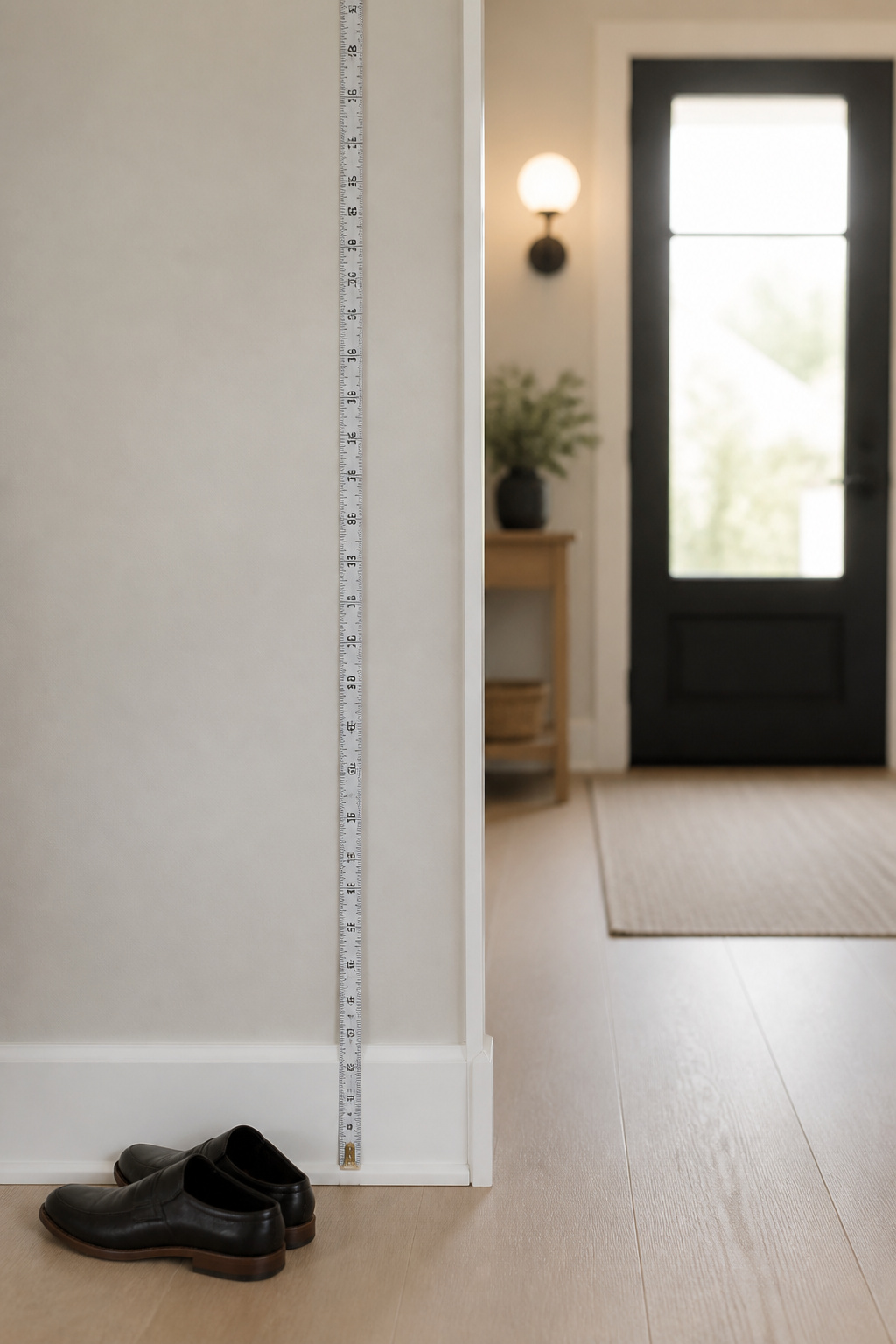
Ten minutes measuring saves a return-shipping label. Three checks:
- Measure the clear wall width: the wall itself, not the wall plus baseboard, since a door’s swing clearance comes off that same face.
- Measure your door’s thickness if an over-door system is in play. Interior doors are 1-3/8 inches, solid-core and fire doors 1-3/4, and hook products state a compatible range.
- Find a stud before buying anti-tip hardware for a tall, shallow cabinet: 347 pounds into a stud against 58 into drywall alone.
Skip step three and the cabinet holds until the day the drywall doesn’t.
The first measurement to take today
One number decides everything above: your wall width. Under 48 inches of hall, you’re shopping 7 to 9-inch tilt-out cabinets or hanging something on a door. With a dead corner, the carousel finally makes sense. With neither, it’s over-door, and it always was. Compare these on depth, honest pair count and cost per pair instead of on photography. Once shoes are handled, the rest of the entry ideas for small rentals can have the wall you didn’t spend.
FAQ
How many pairs of shoes should I keep by the front door?
Size it to household occupants times three, the average daily rotation per person. A solo renter is storing about three pairs; a couple lands near six. Everything beyond that is seasonal or overflow and belongs in a closet, not on the entry wall.
Is a shoe cabinet worth it in a small apartment?
It’s worth it when concealment matters as much as capacity. Cabinets protect shoes from dust, sunlight and moisture and keep a small entry tidy, but ventilation can trap odor and access is slower than an open rack. The compact sweet spot is 24 to 40 inches wide by 10 to 15 deep, at $80 to $250 in engineered wood.
Where do I put shoe storage if there’s no wall space at all?
Use a door instead of a wall. A 24-pocket over-door organizer needs 2.25 inches of clearance and no floor at all. A dead corner or shallow closet takes a rotating carousel’s roughly 23-by-23-inch base. If neither exists, under-bed rolling bins move daily shoes out of the entry entirely.