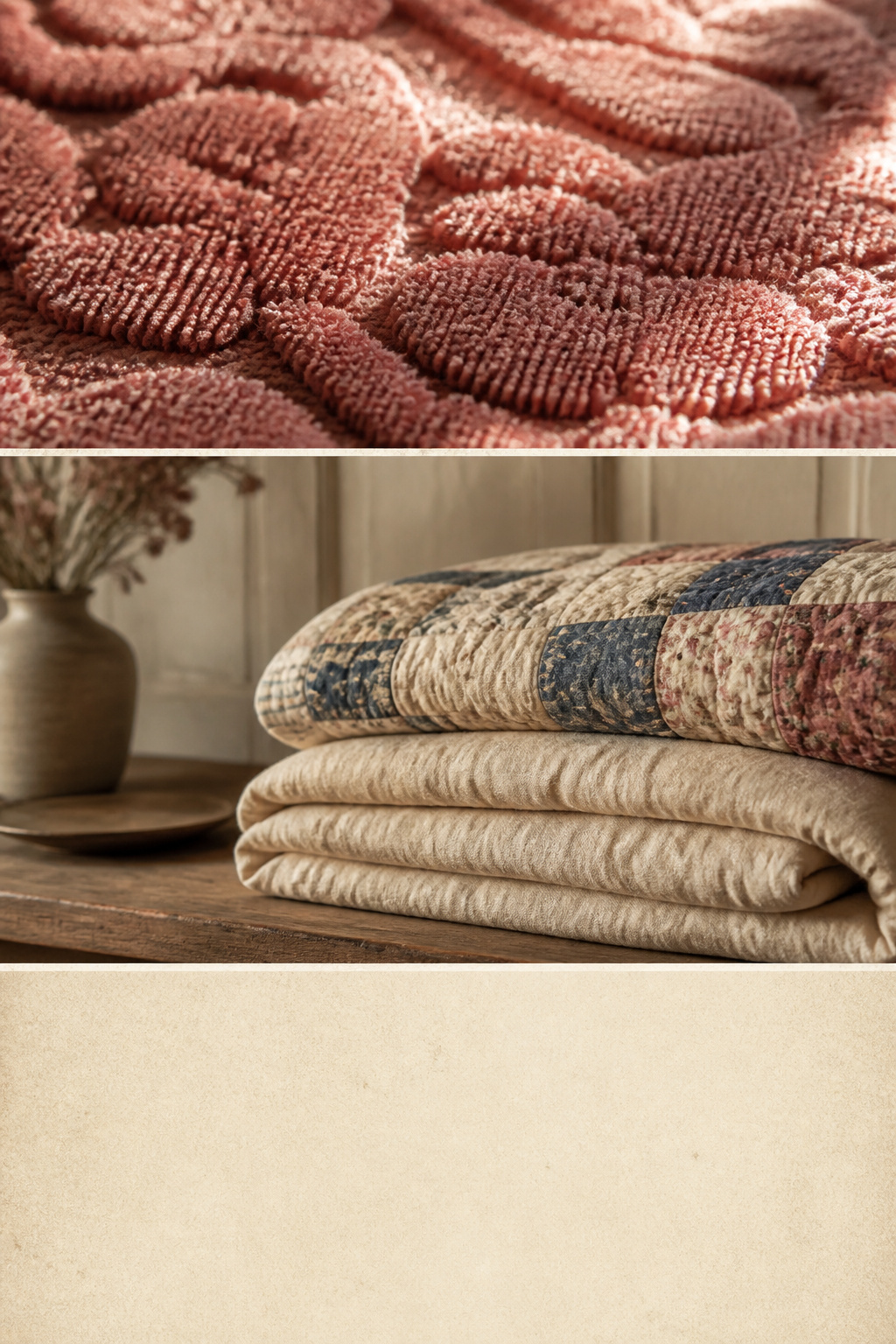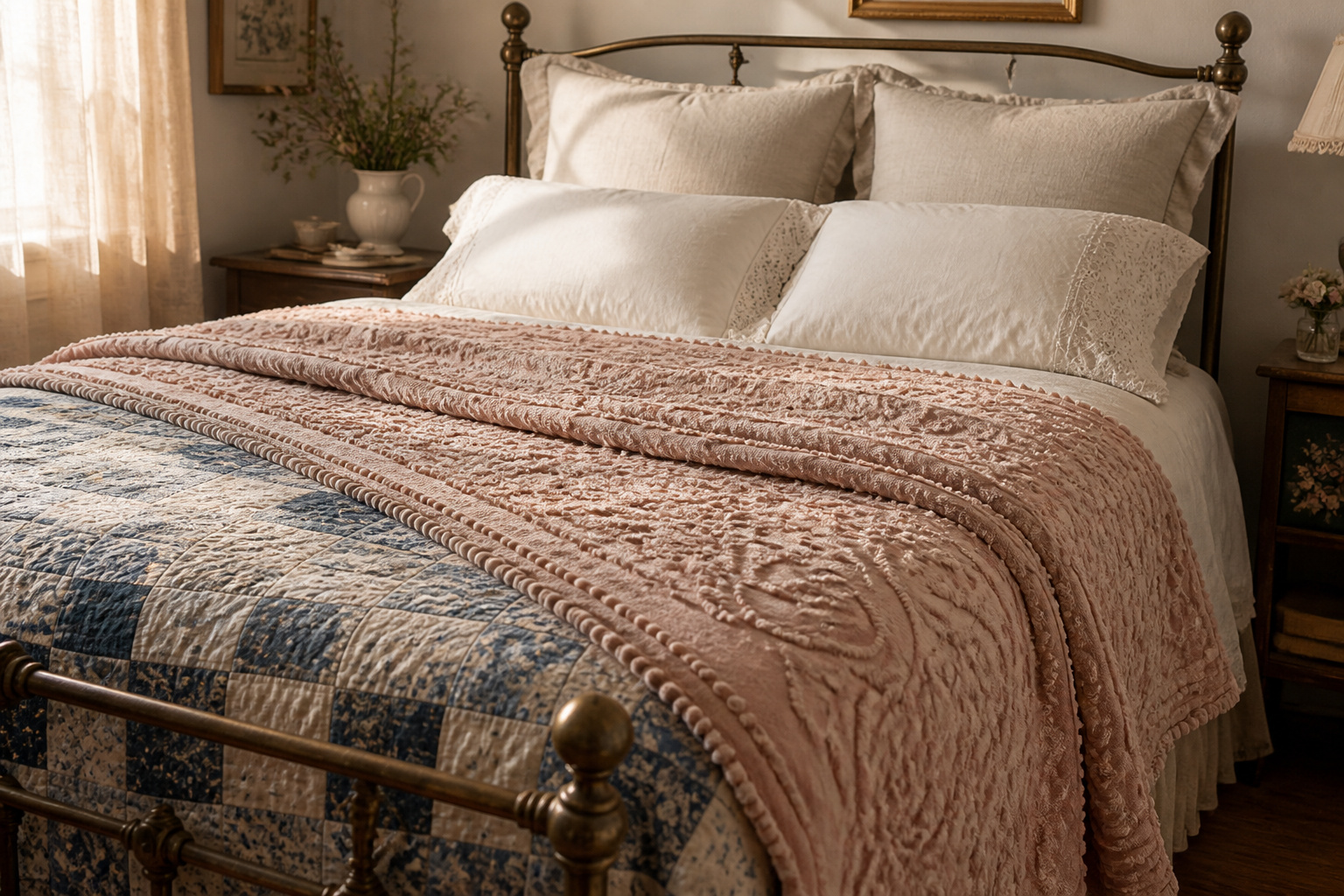
You feel it before you see it. Your hand meets weight, then texture, then a softness that gives slowly. Cool cotton underneath, a raised pile that catches the light, an edge of open lacework against your wrist. The bed holds you rather than merely receiving you — and the room goes quiet, the way a room does when its softest surface has been considered rather than bought in one box. Most beds skip that feeling. These vintage bedding ideas are about earning it back, layer by layer.

TL;DR
- Layer in order — fitted sheet, flat sheet, quilt, then a chenille or washed-linen mid-layer folded back one-third to reveal the quilt, then one restrained accent at the foot.
- A genuine cotton quilt (low-loft batting, roughly 1/8 inch) gives the flat, hand-stitched depth a down duvet erases; vintage chenille at $20–$80 from estate sales is the fastest period mid-layer.
- Care, not fragility, is the real question: hand-wash quilts, never put chenille in a top-loader with an agitator, dry flat, and test old dye for colour bleed before any wash.
The bed is the largest soft thing in the room, so it sets the room’s nervous system more than the walls do. A flat surface tells the eye there is nothing to rest on; a layered one tells it to settle. What follows is the order the layers go in, the textiles worth finding, and the care that keeps them — part of your wider vintage bedroom decorating ideas.
Where Vintage Bedding Ideas Begin: What a Layered Bed Feels Like
Begin with the sensation, not the shopping list. A layered vintage bed has weight, texture and warmth at once — three things a single cover cannot offer together.
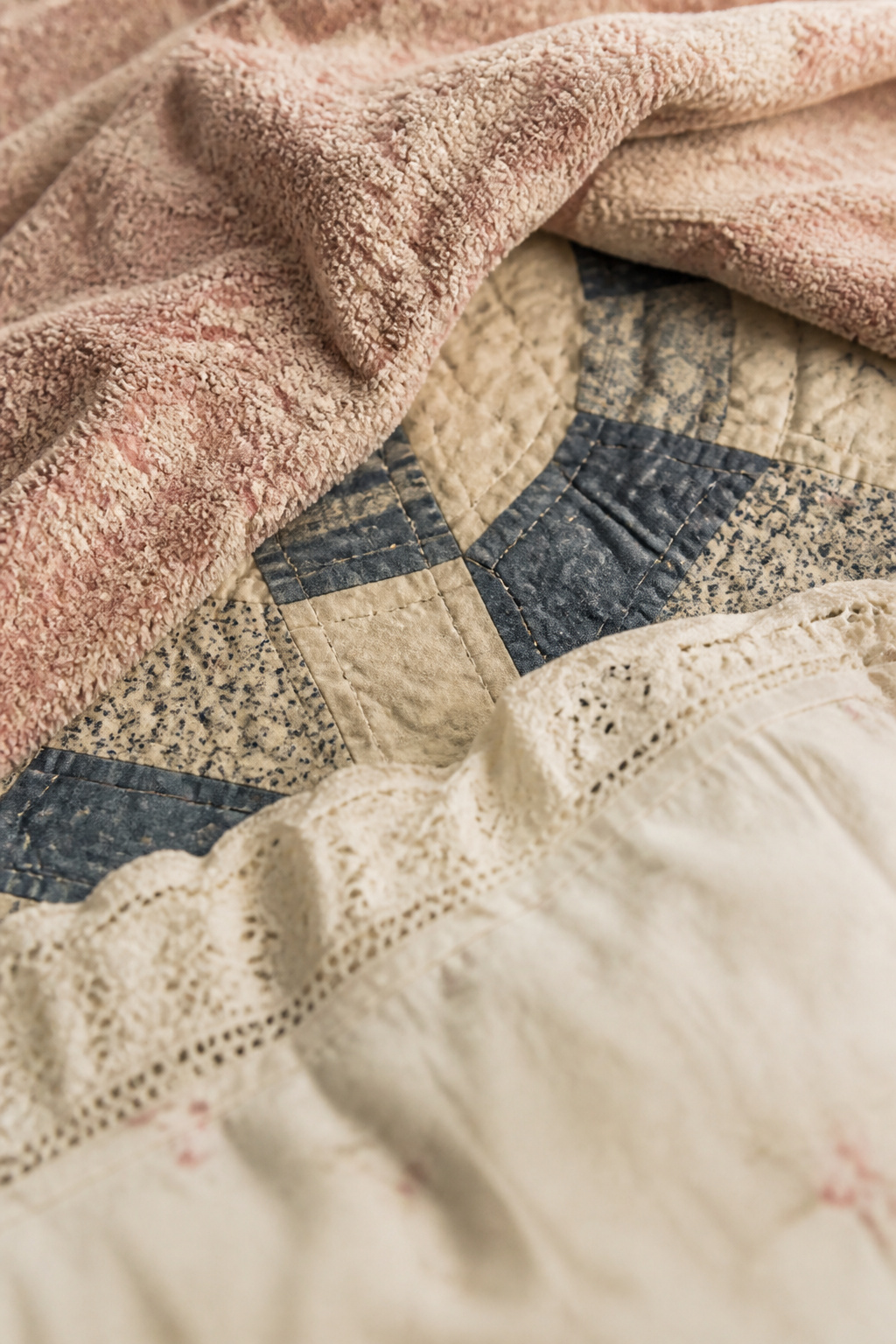
The sensation of settling into a bed that has weight, texture and warmth at once
Natural fibres produce that feeling. Cotton breathes — cool in warm months, warm when layered in cold ones — which is why a cotton quilt makes such a forgiving foundation. Layer muslin, cotton and linen over one another and the bed gains graduated warmth and a quiet visual weight that no single engineered fill can match. You are not assembling a product; you are building a surface the body recognises.
Why modern duvets flatten a vintage bedroom even when everything else is right
A duvet is a single architecture: lightweight fill inside a cover, soft and uniform. That uniformity is the problem. The loft puffs into a pillowy surface that erases the flat, stitched texture vintage bedding lives on, and keeps no record of pattern the way a quilt’s pieced top does. You can have the right iron bed and the right heritage walls, and the duvet will still flatten it all into a hotel surface — the all-in-one cover quietly undoes everything around it.
Why the best vintage beds look as though they were never styled
The beds that feel most alive were never matched. A plaid throw over a rose quilt, mismatched pillows, gingham beside faded floral — nothing has to agree exactly; it only has to feel right together. That is the difference between a bed that reads as gathered and one that reads as purchased: the gathered bed mixes eras and a little wear, where the matching “vintage-inspired” set announces itself as one decision. Heirloom style does not need to be heavy — it can stay light, quiet, lived-with. Tonight, before you buy anything, pull your duvet back and notice how flat the bed reads without it.
The Base Layer: Quilts and What They Do That Duvets Can’t
The quilt is the single largest change you can make, and the layer the others rest on — so choose it for what it is rather than what it shows.
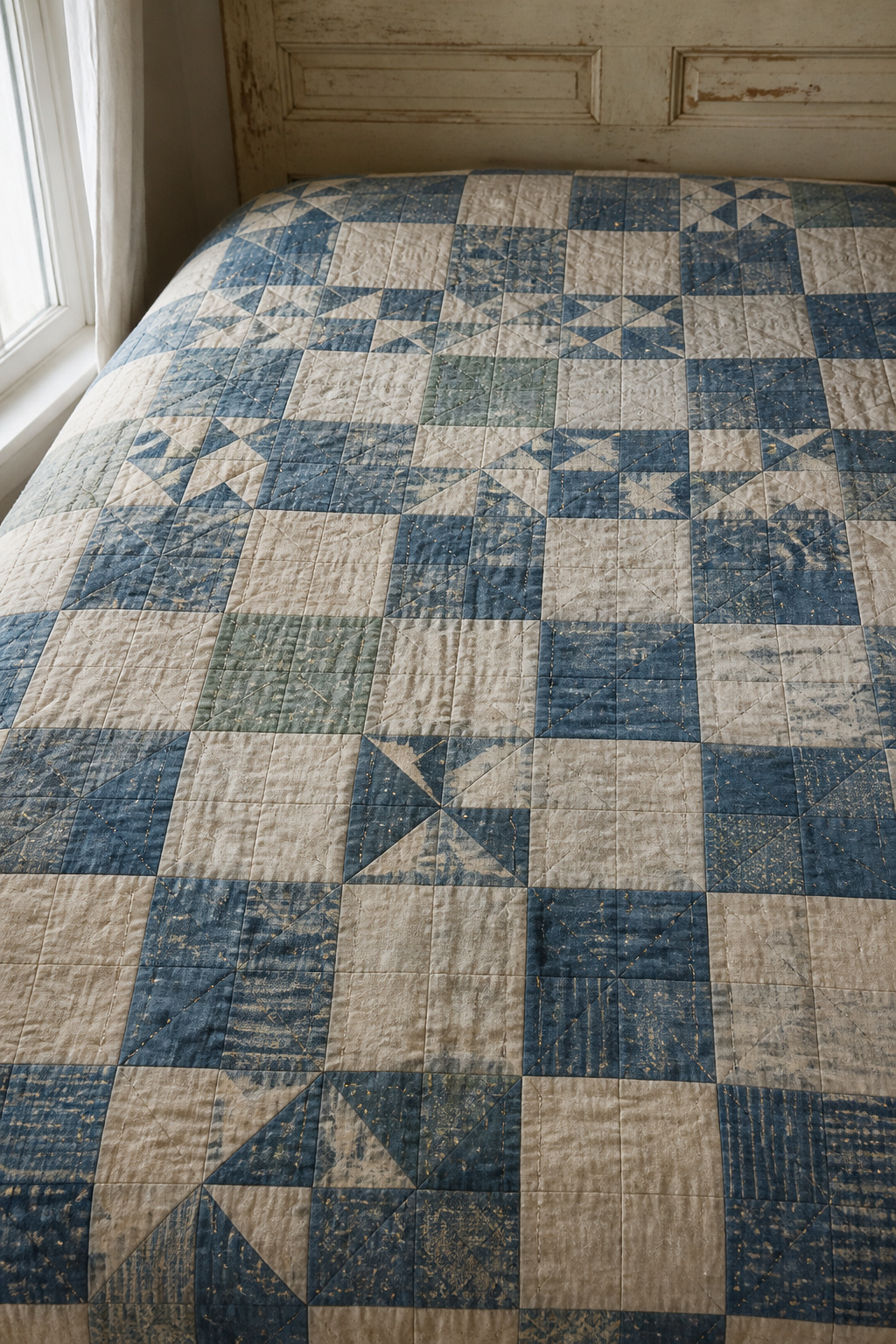
Patchwork quilts vs whole-cloth quilts: what each reads as in a bedroom
Both use the same three-layer build — top, batting, backing — but they speak differently. A patchwork top is pieced from squares, triangles or hexagons, so it carries pattern and movement; it reads as energetic against plain walls. A whole-cloth quilt uses one fabric panel and lets the quilting stitches be the surface — quieter, more refined, easier to live with beside busy heritage wallpaper. If your walls already do the talking, choose whole-cloth and let it calm them. Popular twentieth-century patchwork patterns — Grandmother’s Flower Garden, Double Wedding Ring, Dresden Plate — also help date a piece.
Weight and warmth: how to choose a quilt for year-round use vs a seasonal layer
Reach for cotton-batting quilts as your default. The batting is low-loft, roughly 1/8 inch, which keeps the quilt flat and breathable — warm, but not heavily so, an all-weather base you layer with in winter and use alone in summer. Cotton also develops that crinkled, settled look after washing that synthetic fills never reach; the texture deepens with use rather than flattening. If your room runs genuinely cold, a wool-batting quilt carries more warmth for its weight and can stand alone without adding bulk.
Where to find genuine vintage quilts (and the reproduction tells to avoid)
Genuine vintage quilts were made between the 1930s and 1965; anything over a hundred years old is properly antique. They turn up reliably in a handful of places, and a few signs separate the real from the reproduction:
- Where to look: eBay, Etsy, Ruby Lane and 1stDibs online; estate-sale specialists and regional antique stores in person.
- Hand-stitching: genuine quilts show slightly uneven stitch spacing and varied stitch size — perfectly uniform stitching almost always means a machine and a modern date.
- Period dye: Nile green paired with cream signals 1930s–40s work; vivid synthetic colour suggests post-1950.
- The label test: genuine vintage rarely carries any care label at all, while reproductions almost always do.
- Date by the newest feature, not the oldest — blocks from 1850 joined and quilted in 1920 are a 1920 quilt.
Buying online, always ask for close-up photos of the stitching, backing and binding before you commit; as quilt historians note, the age lives in the wear and the dye, not in a paper provenance slip.
The Mid-Layer: Chenille, Linen and the Texture That Reads ‘Vintage’
This is where most layered beds earn their character. The mid-layer is the one you touch and the one the light rakes across, so it carries more of the sensory work than any other piece.
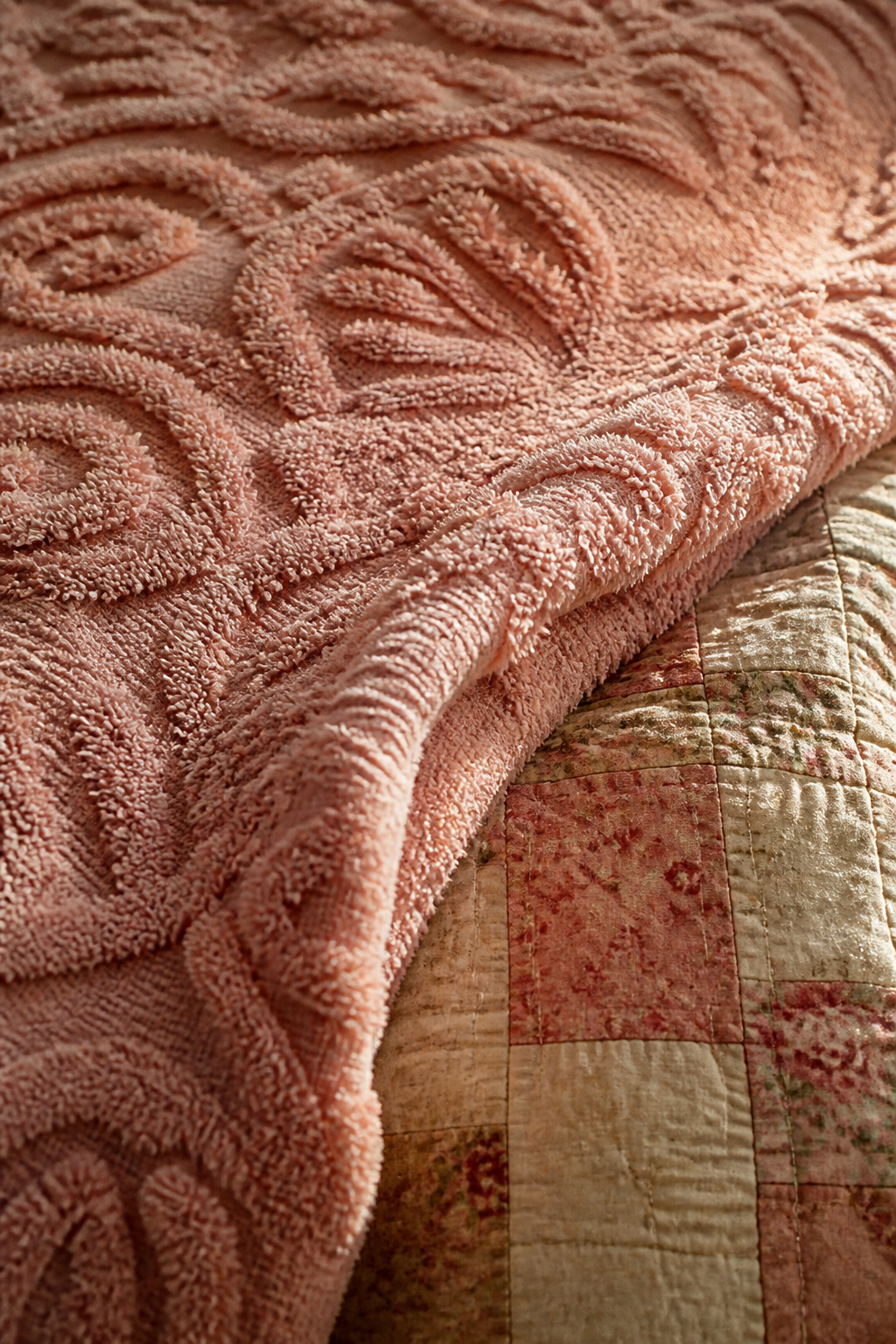
Chenille bedspreads: the mid-century texture that is inexpensive and instantly period
No single find reads “vintage” faster, or costs less, than a chenille bedspread. The word is French for caterpillar — it names the fuzzy tufted pile, a construction rather than a fibre, and genuine vintage chenille is almost always cotton, which breathes and softens with age. Between roughly 1930 and 1960, Dalton, Georgia became the chenille capital of the world; thousands of women hand-tufted designs onto cotton sheeting and sold them roadside along Highway 41, the stretch known as Peacock Alley. The spreads were washed hot to shrink them and lock the tufts, which is why a genuine piece feels denser and sits lower than a reproduction. Originals run about $75–$300, reproductions $30–$80 — and a tag reading “Made in India”, “China”, “Pakistan” or “Turkey” tells you which you hold.
Washed linen as a modern mid-layer that bridges old and new without reading contemporary
When you would rather buy new than hunt, stonewashed linen is the honest bridge. The stones rub the yarn and loosen the weave, leaving it softer and lightly faded — a crumpled, lived-in surface that looks aged rather than new. No two pieces are alike, so it sidesteps the uniformity that flattens a vintage bed. It also keeps the layers breathing: linen runs roughly twice as breathable as cotton, so it stops a stacked bed from feeling heavy in summer, and grows softer with every wash instead of pilling.
Layering order: which goes under, which goes over, and why proportion matters
Proportion is the whole trick, and it rests on one move. Build from the bottom: fitted sheet, flat sheet, the quilt centred and flat, then the chenille or linen over it — folded back by a third at the top. That fold turns two flat layers into readable depth; without it, they merge into a lumpy cover and the effect is lost.
My first dedicated sitting space taught me this before I ever made a bed for it. It was a four-by-six-foot corner of a rented Chicago apartment — a single jute rug, one cushion, a paper screen, and nothing else. I had wanted to fill it. I added a low table, then a second cushion, then a throw, and each time the corner held less stillness, not more. When I took everything back down to the rug, the cushion and the screen, the space finally settled. It was the corner, not the square footage, that did the work — and it was the restraint, not the count, that made it a place to sit. A vintage bed asks for the same discipline. A considered three-layer fold reads deeper than five layers piled on, because the eye can follow what it can separate. Choose a mid-layer that contrasts the quilt rather than matching it, so each stays legible, then drape one more thing — a throw folded across the foot — for the “gathered” note styled beds never quite manage. Fold your top layer back one-third tonight and see how much the bed gains from that single gesture.
The Accent Layer: Lace, Crochet and the Details That Finish a Bed
Here the instinct is to add. Resist it. The accent layer finishes a bed by restraint — placing one or two textures where they will be seen, not stacking them until each disappears.
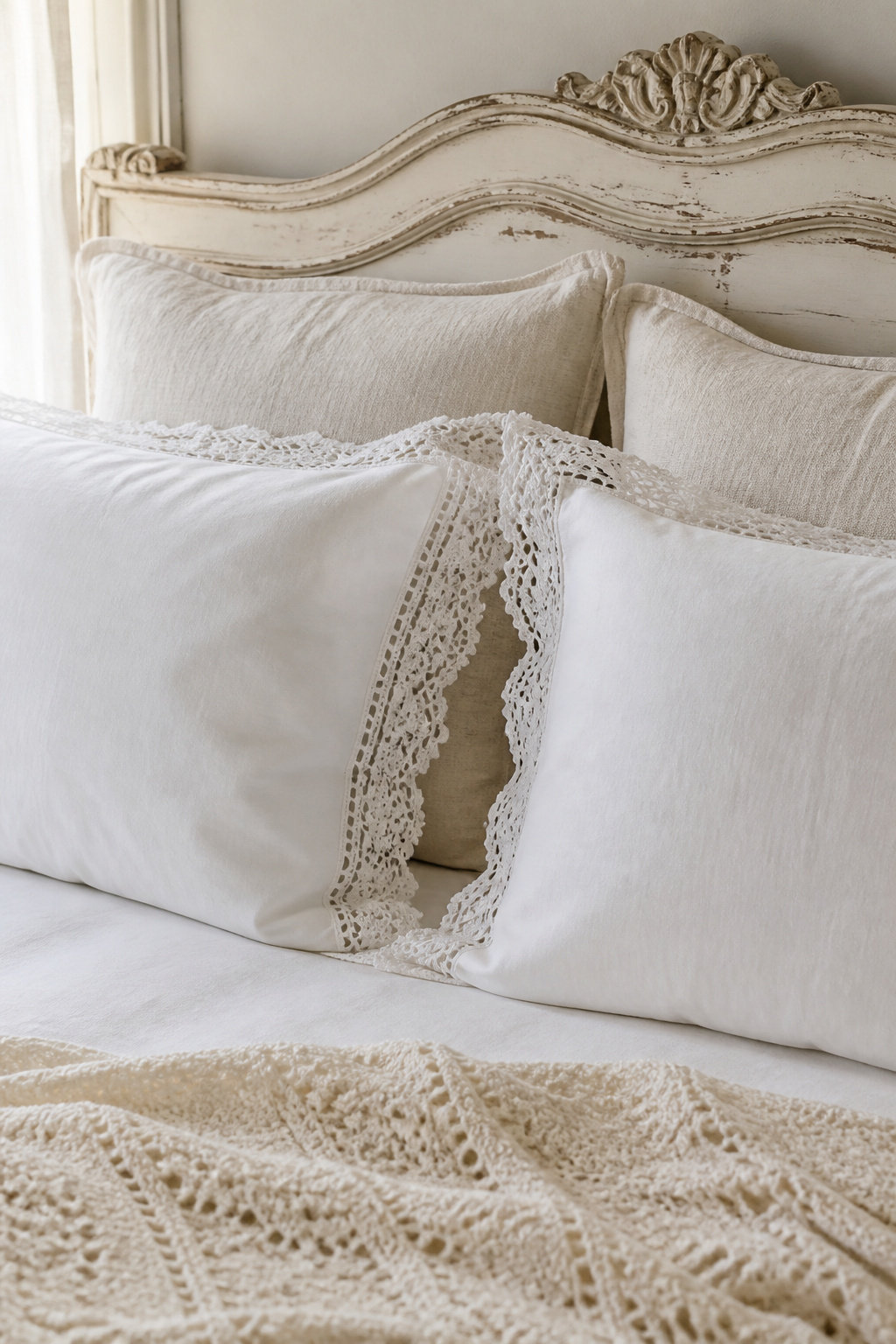
Lace pillowcases: how much is enough and what to layer them over
Lace wants something behind it. A lace pillowcase reads best over a plain cotton or linen liner, where the solid colour shows through the open work and the pattern becomes legible instead of a transparent muddle. One pair, as the outermost visible layer, is usually enough — hand-worked lace, with its slightly irregular repeat, carries more quietly than the machine kind. Adding lace shams and a bolster on top turns a calm accent into noise, so let the pillowcases do the work alone.
Crochet throws and bolsters: weight, placement and what they add to the tactile story
Crochet adds the one texture nothing else offers: open, structured weave you can see through. A genuine hand-crocheted cotton bedspread has real heft — a full-size piece can weigh around 7.5 lbs — and that weight is a gift, because a crochet throw folded at the foot stays where you place it and reads as purposeful rather than tossed. The openwork lets the quilt show through, adding depth without hiding the pattern. Where chenille is dense and soft, crochet is airy and architectural — one of each, chenille as mid-layer and crochet at the foot, gives the bed a full range of texture.
Euro shams and decorative cushions in a vintage bed: the restraint rule
A vintage bed asks for fewer cushions than a hotel one — the textiles already carry the decoration. Set the arrangement by bed size and let the count stay quiet:
- Euro shams (26 x 26 inches) upright against the headboard — one for a twin, two for a queen, three for a king.
- Sleeping pillows in plain or lightly textured covers in front of the shams.
- One lace-edged pair as the visible front layer, plus at most one small bolster or cushion in a different texture.
Then do the one thing that protects the whole arrangement: remove a single cushion. If the bed looks the same or better, leave it off. A vintage bed reads strongest when each layer stays legible rather than buried under the next.
Caring for Genuine Vintage Fabric: What Actually Harms It
The worry that stops most people is that old fabric is fragile and doomed to fall apart in the wash. It is not — but it does ask for the right method. Three things harm vintage textiles: agitation, heat, and bad storage. Avoid those and an old piece outlives most new ones.
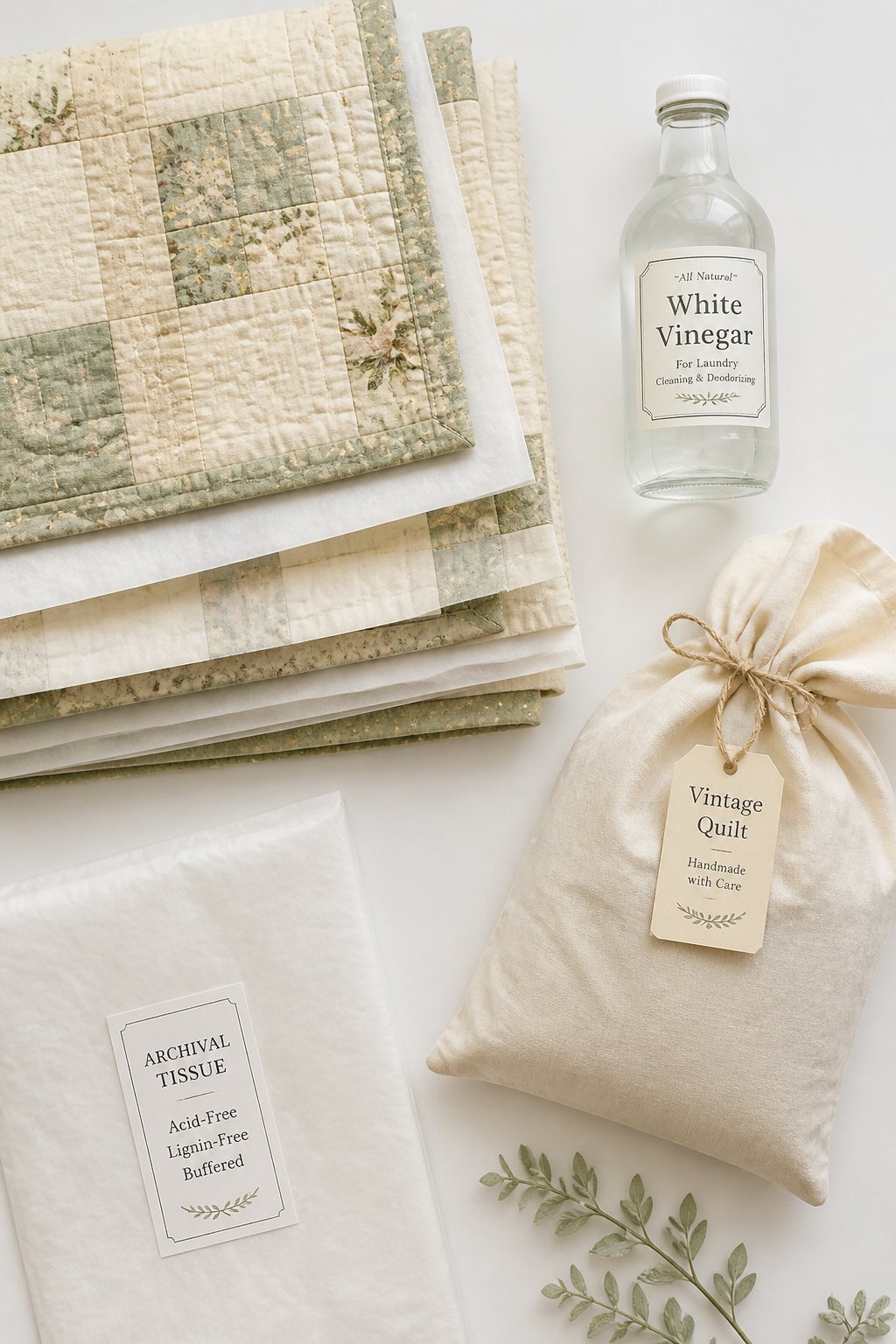
Washing vintage quilts and chenille: temperature, agitation and the dry-flat rule
Hand-wash genuine quilts in warm water with a gentle detergent, and add half a cup of white vinegar to the rinse to clear residue and brighten colours without bleach. Machine agitation shreds old fibres, and a wet quilt’s weight tears its own seams — so skip the machine and never hang it; spread it flat in shade for two days. Chenille can usually take a gentle cold cycle, but never in a top-loader with a central agitator: the fabric catches and tears, and as one dealer bluntly warns, in that contest the machine always wins. Before any wash, test old dye — dampen a white cloth, rub a hidden spot, and if colour transfers, wash the piece alone and off heat, which sets the dye permanently.
Storage between seasons: what deteriorates fabric and what protects it
Four things degrade stored textiles: humidity, acid, light and pests. Fold pieces with acid-free tissue between the folds to soften the crease lines, then keep them in a cotton or muslin bag — never sealed plastic, whose plasticisers can alter old dyes. Avoid attics and damp basements, and keep fabric off raw cedar, whose acid eats the fibres over time. The gentlest storage asks for no folding at all: lay a quilt flat on a spare bed under a clean sheet.
Mixing genuinely old textiles with new — when care needs differ in the same layer
When old and new share a bed, wash each to the most delicate item’s needs — never launder a vintage quilt with a modern duvet cover, whose heat and spin will harm it. Use washed linen as your anchor: it is the most durable layer, so anything needing more care than linen gets hand-washed alone. The table keeps the differences in one place:
| Textile | Wash method | Dry method | Storage note |
|---|---|---|---|
| Vintage cotton quilt | Hand-wash, warm, vinegar rinse | Flat in shade, 2 days, never hung | Acid-free tissue; flat on a spare bed if possible |
| Vintage chenille | Gentle cold cycle, no agitator | Flat or low tumble; air-dry preferred | Muslin bag; test dye before first wash |
| Lace / crochet | Hand-wash cold, mild detergent | Flat, reshape while damp | Acid-free tissue, never hung by the edge |
| Washed linen (new) | Machine delicate, 40°C | Line or low tumble | Cotton bag or open shelf; most forgiving |
Cared for this way, the old pieces keep their quiet marks — the faded patch, the small repair — which is exactly what gives a layered bed its depth. Pull the textile palette from your vintage color and wallpaper rather than matching it, finish the room with warm vintage lighting, and the bed you pictured at the start is now one you can build and keep. Layer in order, contrast rather than match, treat the old fabric gently — and the bed stops being furniture and becomes the softest, most restful thing in the room.
FAQ
How do you layer a vintage bed without it looking too heavy or old-fashioned?
Keep the palette restrained — aged cream, dusty rose, faded indigo — and fold each layer back to reveal the one beneath rather than stacking them flat. Limit the accent to one textile, lace or crochet, not both at full quantity. Grounding one genuine vintage piece — chenille, a quilt — over a newer linen base keeps the character without the bulk.
Can you machine wash a vintage quilt without damaging it?
For genuinely old or handmade quilts, hand-washing in warm water with gentle detergent is safest, because a machine’s agitation — especially a top-loader’s agitator — can shred vintage fibres. If the quilt is structurally sound, a front-loader on a cold, gentle, no-spin cycle is lower-risk. Either way, add white vinegar to the rinse and dry flat in shade.
Where can I find genuine vintage chenille bedspreads that aren’t expensive?
Estate sales are the best value — good pieces run $20–$80, and arriving early beats the dealers to them. Thrift stores stock chenille at $5–$25, while eBay and Etsy span $15–$300 by condition; filter for “vintage chenille bedspread cotton” and check photos for the heavier muslin backing. Specialist dealers cost more but verify colourfastness and condition for you.