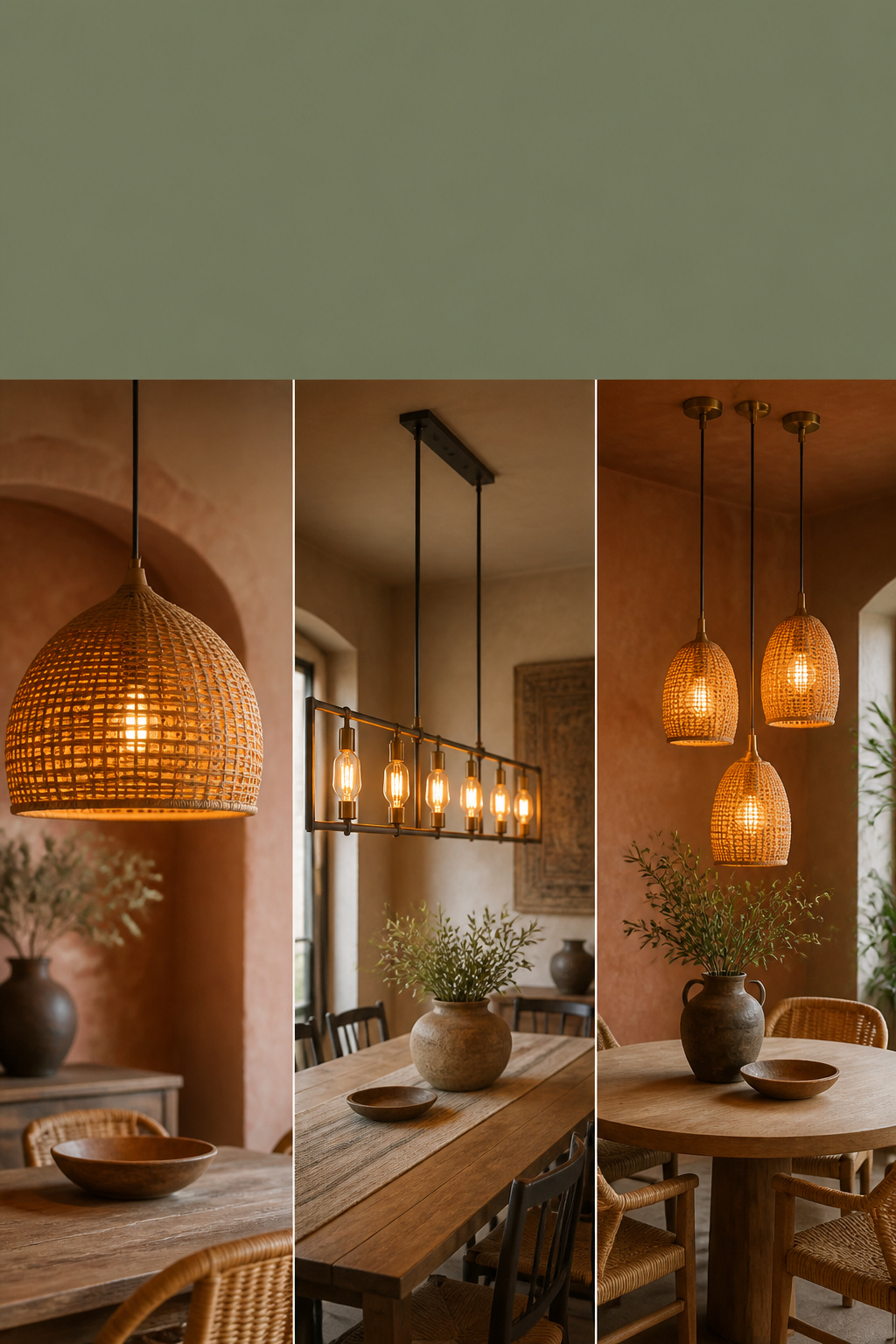
Open twelve tabs of rattan pendants and they blur into one shade. Dome, drum, lantern — the same woven silhouette against the same pale wall, priced within a few dollars of each other. The listing shows you the shape. It cannot show you the thing that matters most once the fixture is hung and the bulb is warm: what the shade does to the light, and what that light does to the room.
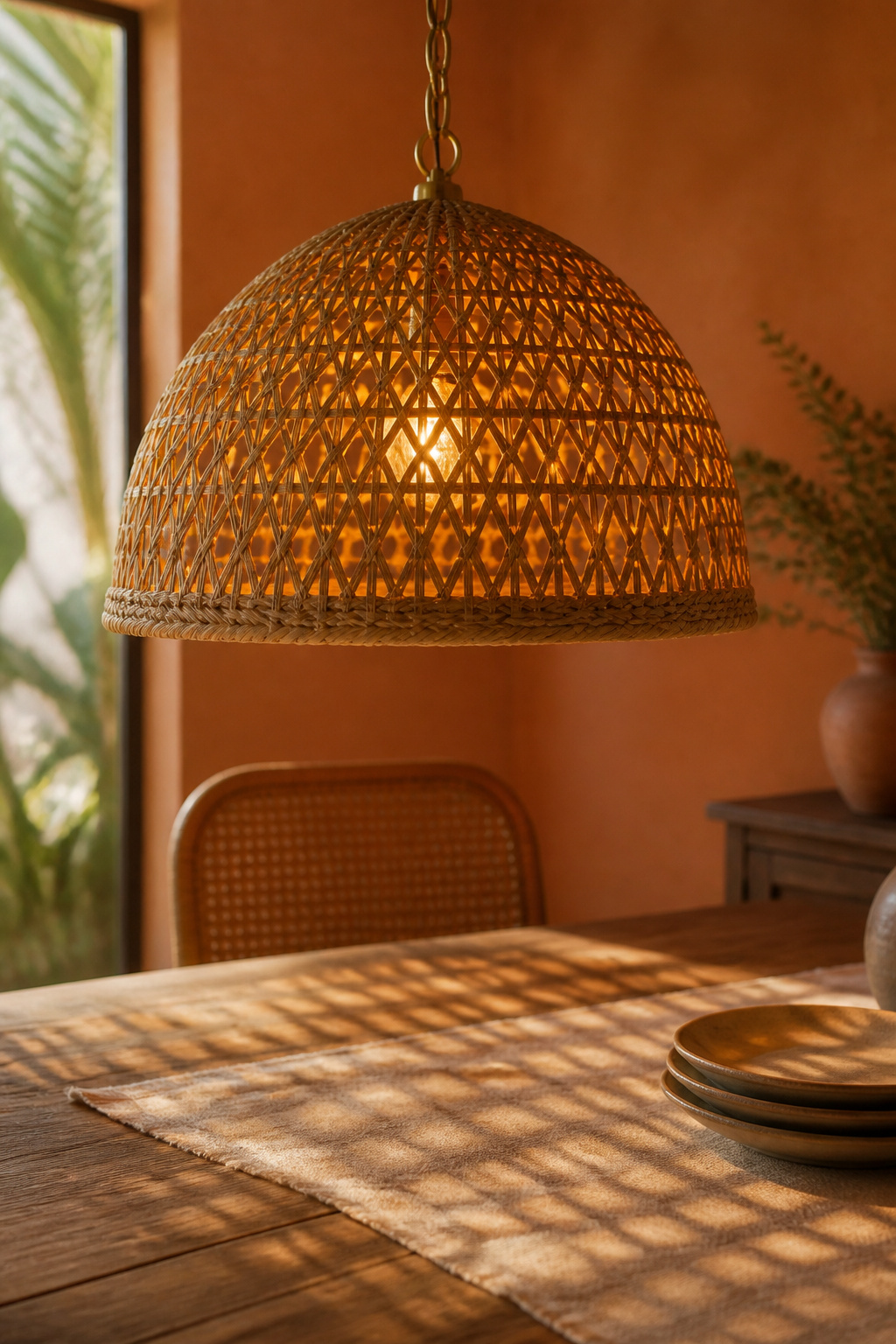
That is the part boho dining room lighting turns on. Not brightness, not even shape, but the character of the glow and the shadow it throws across your table and up your walls.
TL;DR
- The single decision that separates near-identical woven pendants is weave density: an open weave scatters light through its gaps and throws dappled shadow across the room, a tight weave holds the light in and gives a soft, even glow.
- Size the fixture to your table, not your ceiling — its diameter should fall between one-half and two-thirds of the table’s width, and never exceed it, or it visually disappears above the furniture it should anchor.
- Hang the lowest point 30 to 36 inches above the table on a standard 8-foot ceiling, and keep at least 7 feet of clearance from the floor as a separate safety line that never bends.
Boho Dining Room Lighting: Why Every Rattan Pendant Looks the Same
Start with the feeling of being lost, because that is where most people begin. Rattan and woven pendants dominate boho dining searches, and nearly every retailer carries the same dome, drum, and lantern shapes with only small shifts in the weave. Underneath, the materials vary — rattan, bamboo, seagrass, jute, linen, paper rope, often over a hidden metal frame — but a thumbnail flattens all of it into one look.
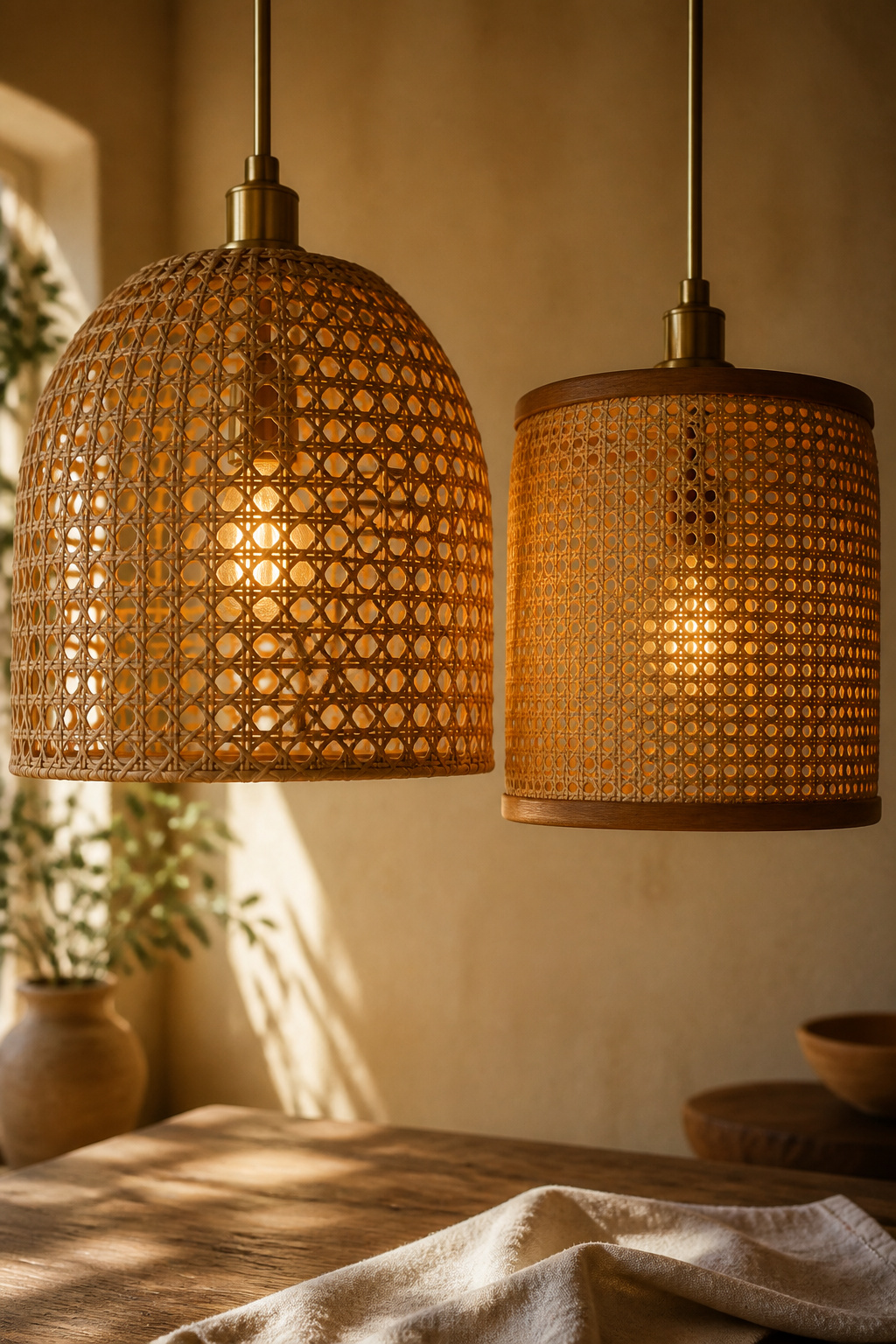
So set the photo aside. What matters is what happens when you switch the shade on above people who are eating, talking, staying a while — a shade is not decoration you hang and forget, it is an instrument that shapes every bit of light passing through it.
I narrow the whole choice to three things a listing can’t tell you: weave density, scale against your table, and hanging height. Get those three right and the fixture almost chooses itself.
Woven Shades and What They Do to the Room
Before you weigh materials, name the mood you want at the table. A quiet, even light for nightly family dinners is a different instruction than a room you want alive with pattern — and the weave answers to that instruction more than the price or the finish does.
I once had a client in tech who couldn’t settle in a beautiful new room until we took down a single wall clock — one object had been holding the whole room hostage. Over a dining table, the pendant is that object. Its shade decides not just the light but the shadow, and the shadow is what you actually sit inside.
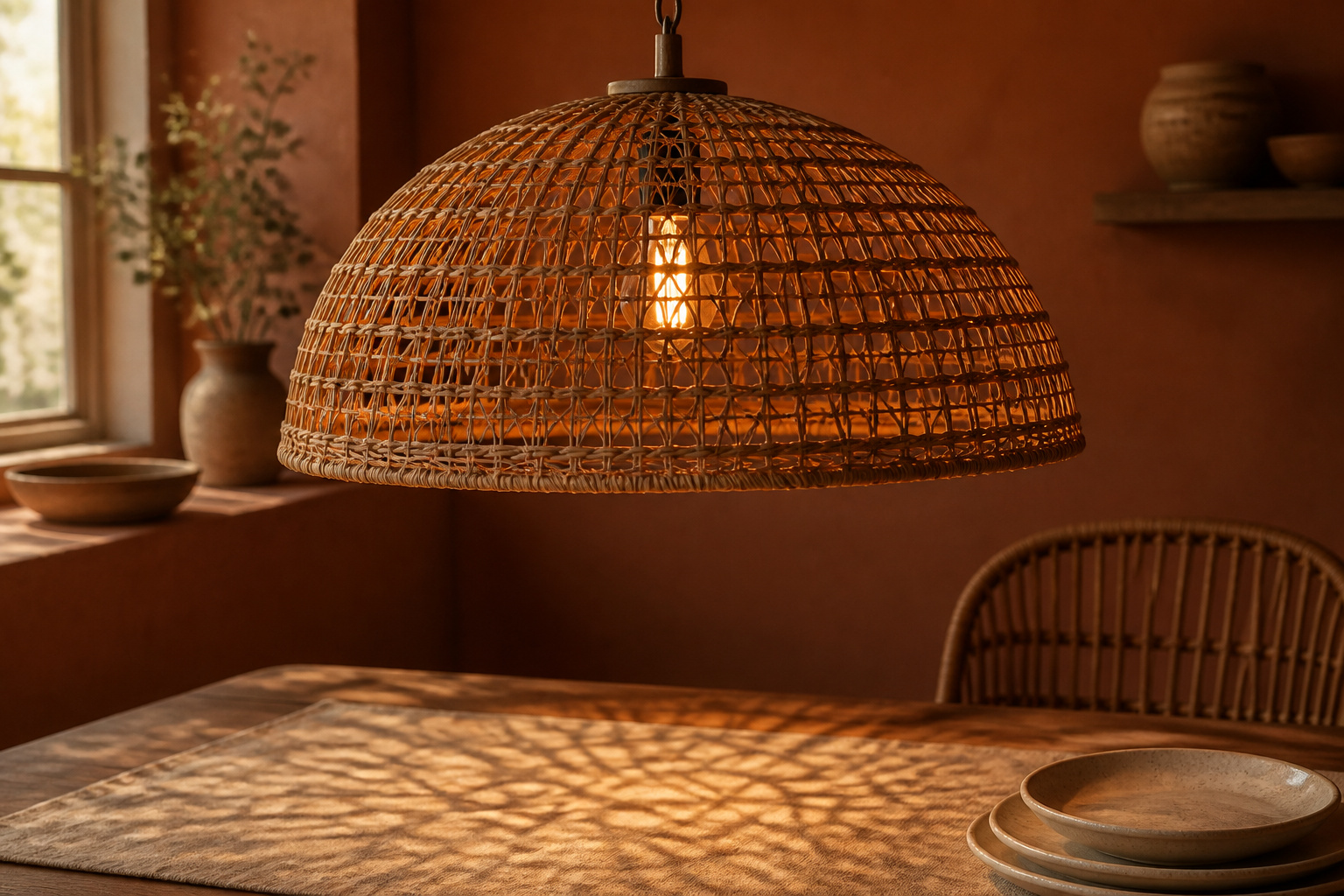
Here is the mechanism, plainly. A tight weave holds the light inside and lets only a soft, diffused glow escape — the fixture stays quiet and warm, the walls stay calm. An open or wide weave does the opposite: light radiates through the gaps and scatters dramatic, dancing shadows across the ceiling and walls. On a hand-woven cone with a herringbone pattern, that shadow becomes texture the room didn’t have before.
The bulb decides how far the effect runs. A clear or exposed-filament bulb behind an open weave sharpens the shadow into hard, dancing lines; a frosted or enclosed bulb in the same shade softens it toward a gentle wash. Shape matters too: a tight cone concentrates light down onto the table for eating, while an open lattice globe scatters it outward for the room.
For the boho warmth without the shadow play, stay in the same natural-fiber family and step sideways to paper rope or a block-printed linen drum. These diffuse light softly into an even, relaxed glow — the woven look, minus the drama on the walls.
Brass and Warm Metal as the Counterpoint
A room built only from woven fiber and pale wood can go soft — pleasant, but without a line your eye can rest against. Brass is the counterpoint that grounds it: brass and bronze carry a warmth that agrees with rattan and wood instead of fighting them, where chrome and nickel sit against natural fiber like a cold hand on a warm one.
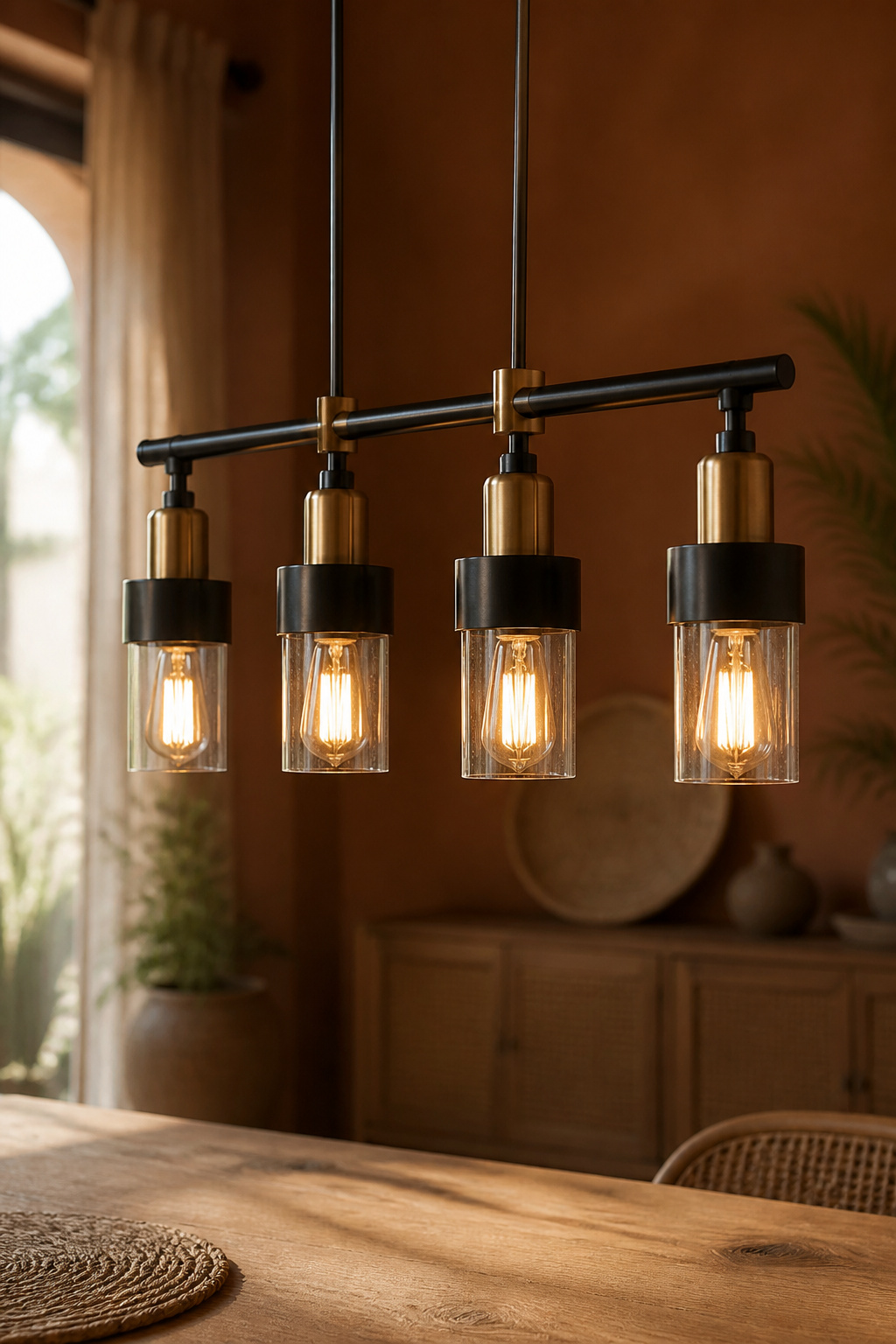
Matte black iron does the other half, grounding the softer boho elements while brass supplies the warmth over the top. One discipline holds a mix of fixtures together: repeat a single element — one brass finish, or one rattan material — across every fixture in the room. That thread is the difference between a scheme that feels gathered and one that feels like three separate purchases.
There is also a case where I would skip the woven dome entirely. Over a long rectangular table, a linear brass-and-iron fixture lays light evenly down the whole length instead of pooling it in the middle — a single wide dome leaves the ends dim. The same holds in a narrow room or breakfast nook, where a broad woven shade overwhelms the proportions and a slimmer metal fixture fits better — my own read, drawn from how these fixtures behave over a table rather than a spec sheet, but one I’d trust over a photo every time.
Pick your metal to match the woven shade’s warmth, then repeat that finish once more somewhere in the room.
Choosing the Right Scale for Your Table
Now the decision that quietly wrecks otherwise-good rooms: scale. Size the fixture to your table, not your ceiling. As 1800Lighting puts it, a pendant hung above a table should have a diameter between one-half and two-thirds of the table’s width, and never exceed it. Go smaller and the fixture visually disappears — it floats above the table, undersized, anchoring nothing.
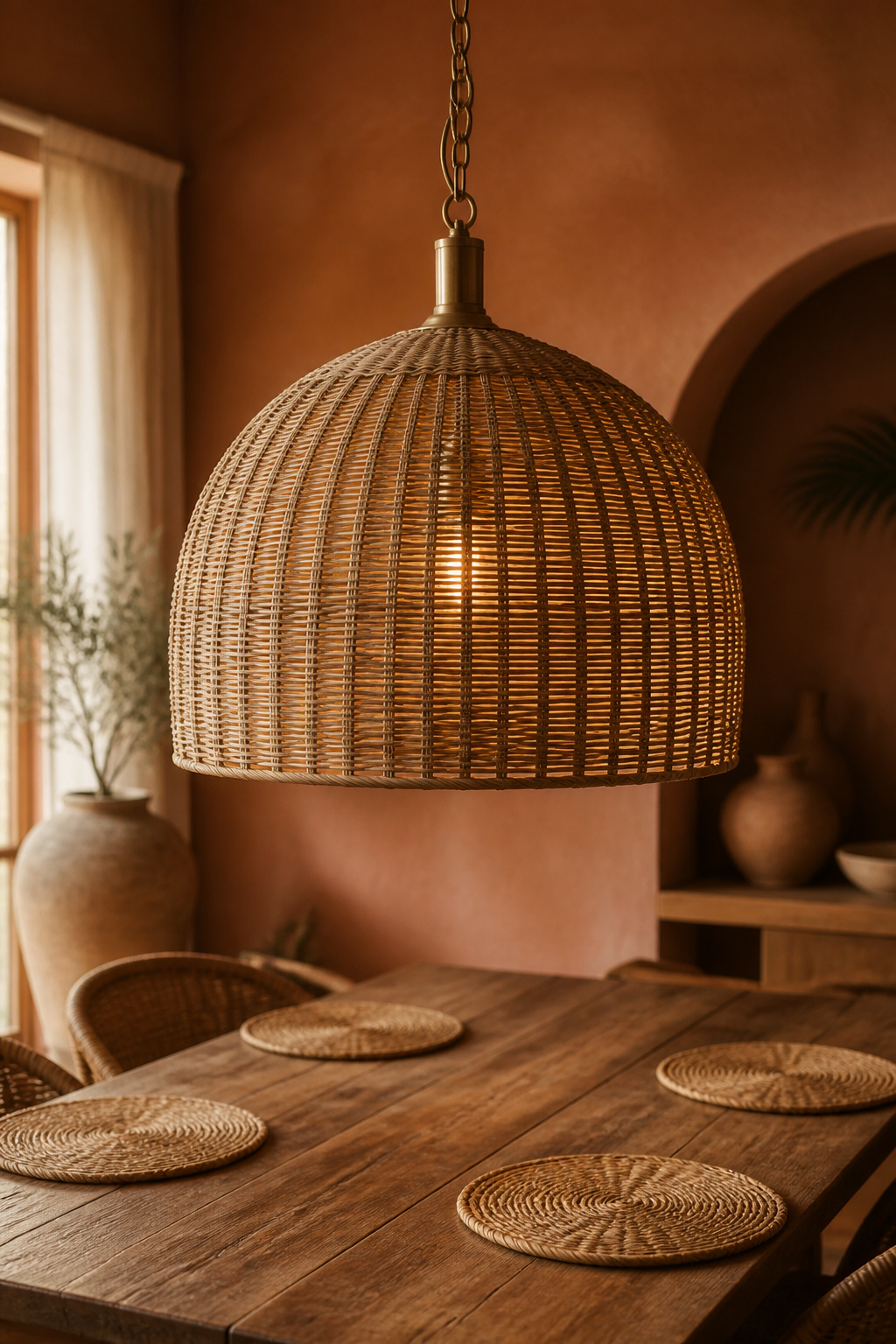
A second measure keeps everyone comfortable: leave at least 12 inches between the pendant and the table’s edge on every side, so no one meets the fixture standing up. The room-size formula is only a sanity check — add the room’s length and width in feet for a rough diameter in inches (a 12-by-14-foot room lands near 26 inches) — but the table ratio is what decides.
The table below is the standard I actually work from.
| Table width | Fixture diameter (½–⅔ rule) | Setup that suits it |
|---|---|---|
| 36 in (small round) | 18–24 in | One pendant, open weave to keep it airy |
| 48 in | 24–32 in | One dome, or two small pendants |
| 60 in | 30–40 in | One larger fixture, or two pendants |
| 96 in (long rectangular) | Two–three pendants | Linear run, ~32 in apart |
Over a long table, a row of two or three smaller pendants usually beats one oversized fixture — it lays light evenly end to end instead of pooling it in the middle. Measure your table’s width first, then let that one number decide.
Hanging Height Over a Table That Gets Used Daily
Height is where a fixture stops being a picture and becomes something you live under. The baseline: on a standard 8-foot ceiling, the pendant’s lowest point should sit 30 to 36 inches above the table surface. That range keeps sightlines clear and the bulb out of seated diners’ eyes, so conversation crosses the table instead of ducking under a fixture.
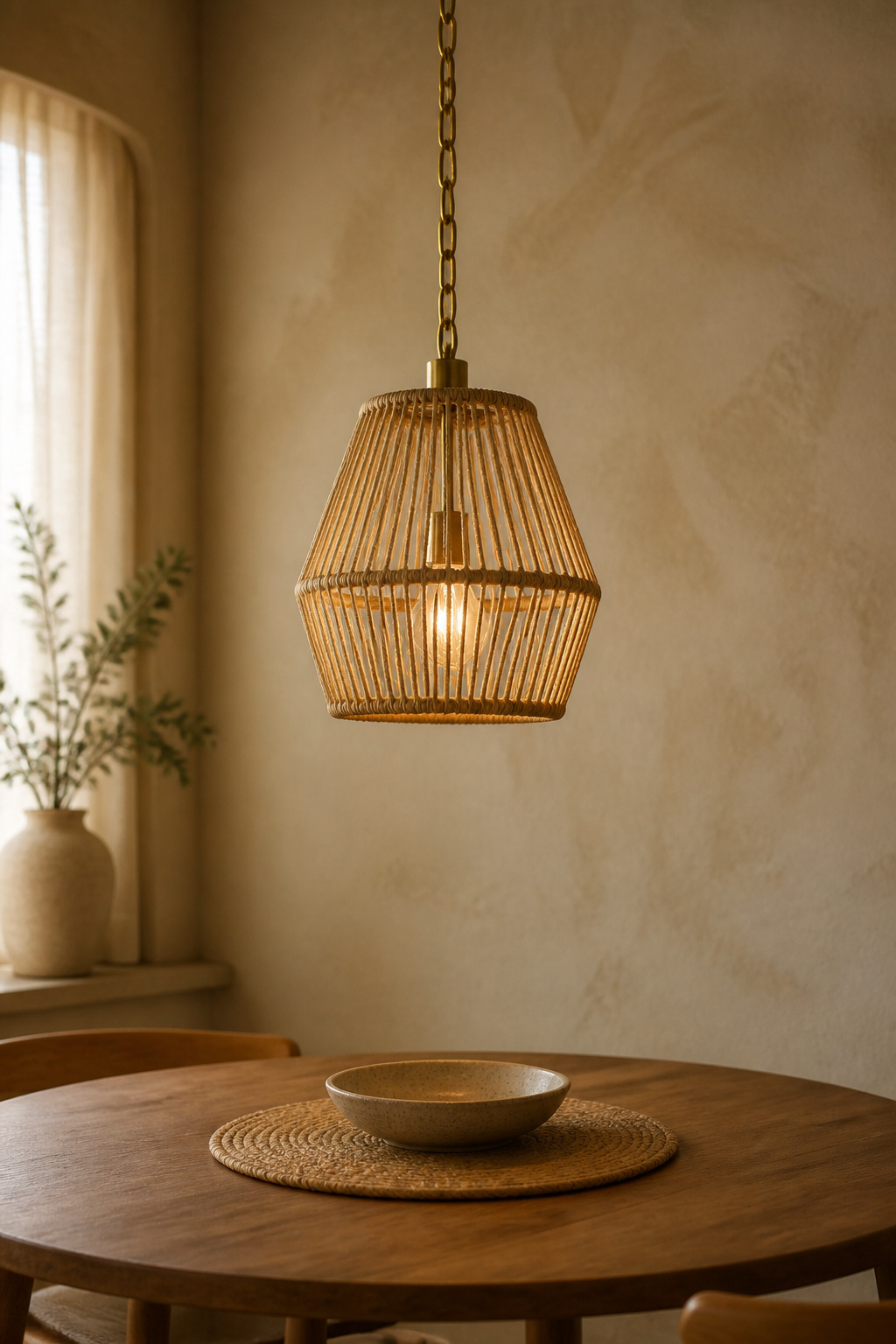
Ceiling height moves the number. Add roughly 3 inches to the baseline for every foot of ceiling above 8 feet — a 9-foot ceiling wants 33 to 39 inches, a 10-foot ceiling 36 to 42 inches. One rule lives apart from that measurement, though: every fixture in a dining or passage area must keep at least 7 feet from the finished floor to its lowest point, so anyone standing to serve never strikes it — a pendant can sit perfectly within the table range and still be unsafe if a low ceiling has forced its floor clearance under 7 feet, so check both before you fix the mount.
Small rooms want a lighter touch. Hang toward the lower end — around 28 to 30 inches — so the fixture stays proportionate and the room doesn’t feel top-heavy, and choose an open-frame, airier shade; a flush or semi-flush fixture is the fallback when the ceiling is genuinely tight. The same care carries over to scaling lighting for a small dining room, where every inch of fixture is felt more sharply. Hold a broom handle at your intended height and eat one imaginary dinner under it before you drill.
A Fixture Worth Living Under
Return to the three things: what the shade does to the light, how it scales to your table, and how high it hangs. Carry those questions to any listing and the wall of identical pendants sorts itself — you’ll know at a glance whether a fixture is right for your table or just right for a photograph.
One addition finishes the job. Put the fixture’s circuit on a dimmer. It is the single change that lets one pendant carry a bright weeknight dinner and a slow, candlelit one without a second fixture for the mood — pair it with warm bulbs no cooler than 2700K, and check the bulb is rated for dimming so it doesn’t flicker. That is the difference between a light you switch on and a light you can settle into.
If you’d rather make than buy, the fixture is one of the more forgiving weekend projects in the room. A basic drum shade comes together from cane webbing, embroidery hoops, and a pendant cord kit, and a tired rattan shade takes acrylic paint well after a soft-brush clean and light sanding. One upcycle I’ve seen built for around $40 stood in for retail rattan that runs into the hundreds — treat that figure as one person’s tally rather than a promise, but the point holds: a custom-scaled shade is a project, not a special order. For the full walk-through, a DIY project for your pendant light picks up where this leaves off, and our boho dining room style guide sets the fixture back into the whole room.
The right fixture stops asking for your attention the moment it’s hung — it just quietly makes the table a place you want to stay.
FAQ
Are rattan pendant lights safe over a dining table with a low ceiling?
Yes, with the right bulb. Rattan is a natural fiber that can burn if overheated, but modern LED bulbs run cool enough to pose no realistic ignition risk, so LEDs are the standard choice — avoid high-wattage incandescent or halogen. In a low-ceilinged room, keep at least 7 feet of floor clearance and choose an open-frame shade.
Do woven pendant shades need a separate dimmer to work well for dinner?
A dimmer isn’t required, but it’s what lets one pendant serve both a bright, functional family dinner and a low, intimate evening glow without a second fixture. Not every bulb dims, so choose one specifically rated for a dimmer circuit or it may flicker. Warm 2700K bulbs on that dimmer give the cozy, inviting glow a dining room wants.
How many pendant lights does a long dining table need?
The “Rule of Three” generally applies once a table reaches 8 feet or longer; tables in the 4-to-6-foot range usually look best with two or three evenly spaced pendants instead. When hanging multiple pendants, space them 24 to 36 inches apart — three over a 96-inch table land near 32 inches, distributing light evenly end to end.