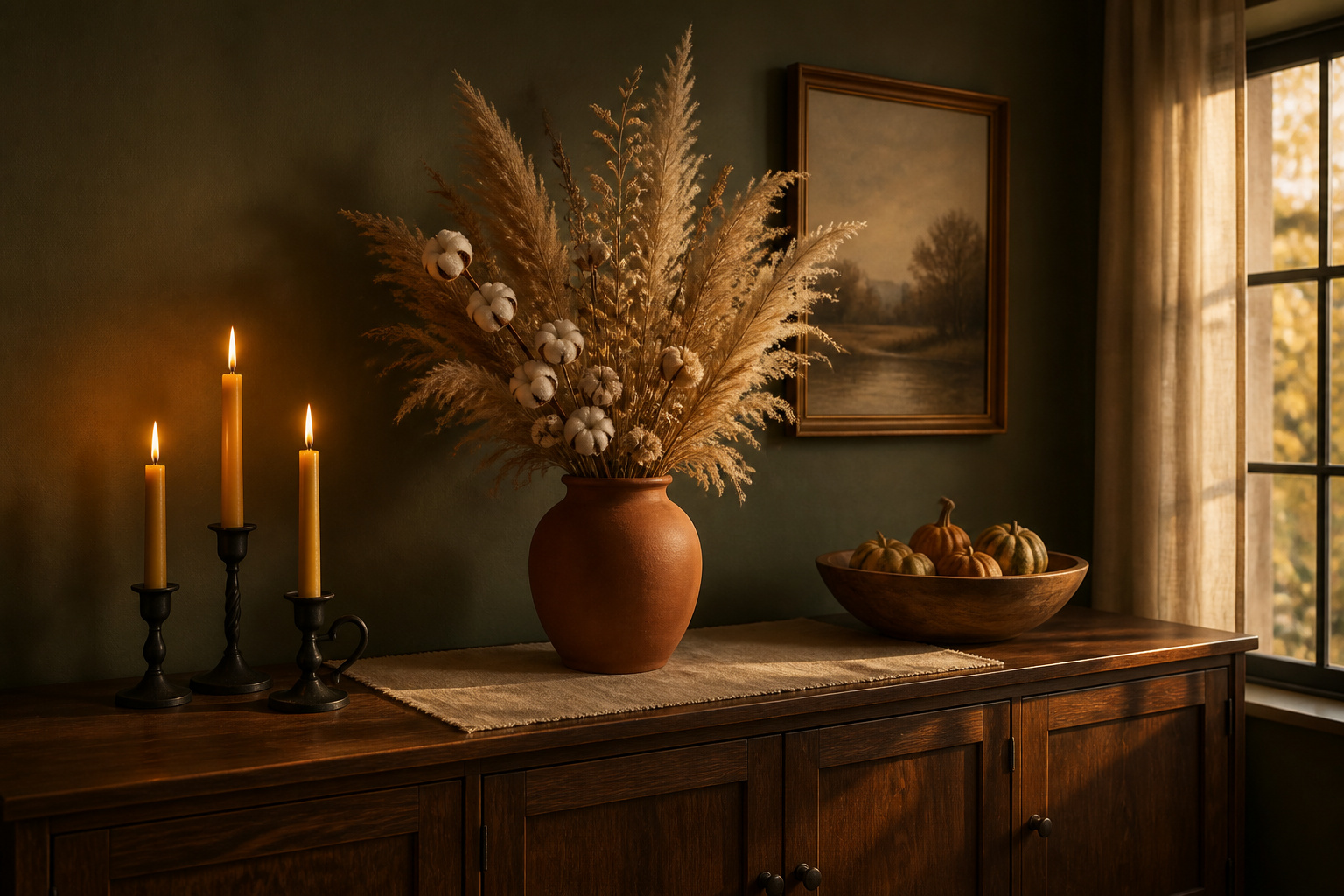
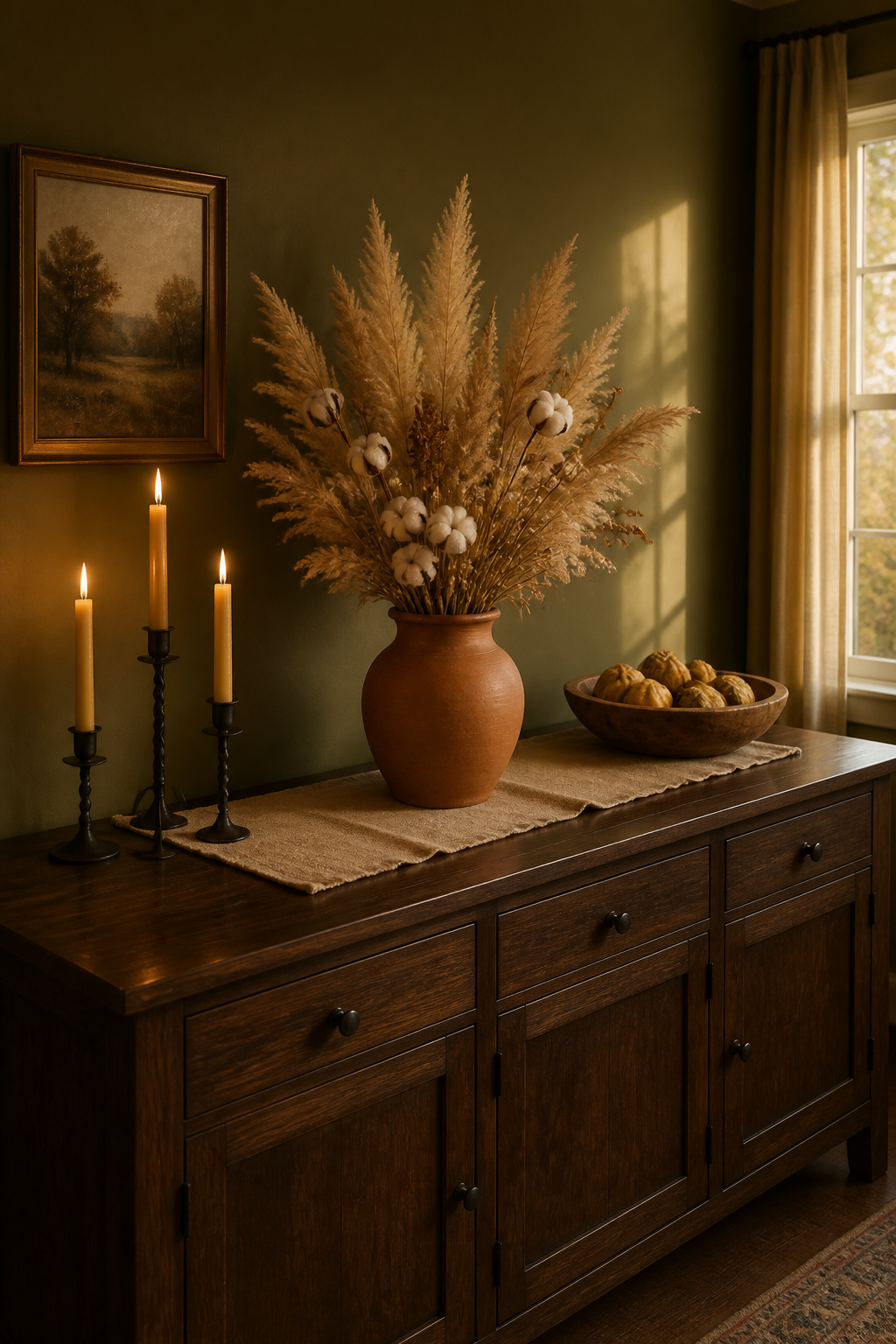
It is a November evening, and the sideboard is the warmest thing in the room. Three beeswax tapers burn in wrought-iron holders of uneven height, throwing an amber light no bulb can match — candle flame sits at roughly 1800K, well below even a warm-white LED at 2700K. The light catches the rough plumes of dried pampas grass in a matte terracotta vase; the clay drinks it in rather than bouncing it back. Beneath all of it runs a plain undyed linen runner, the same one that was there in spring and will be there at Christmas. The room smells faintly of the candle. That feeling — settled, unmistakably autumn — is the whole point of seasonal sideboard decor, and it is easier to build than it looks. Most of what you are seeing never moves.
TL;DR
- Style your buffet in two layers: a permanent anchor layer (lamp, mirror, a quality neutral vessel, an undyed linen runner) that never moves, and a seasonal accent layer that swaps three to four times a year.
- Each refresh takes about five minutes once the anchors are set — clear the accents, place the season’s dominant piece first (dried botanicals in fall, fresh greenery in spring, garland at the holidays), then edit out anything that competes.
- Dried botanicals like pampas and cotton hold their form for one to three years away from direct sun; fresh holiday garland indoors lasts only two to three weeks with misting, so choose preserved garland when candles are on the surface.
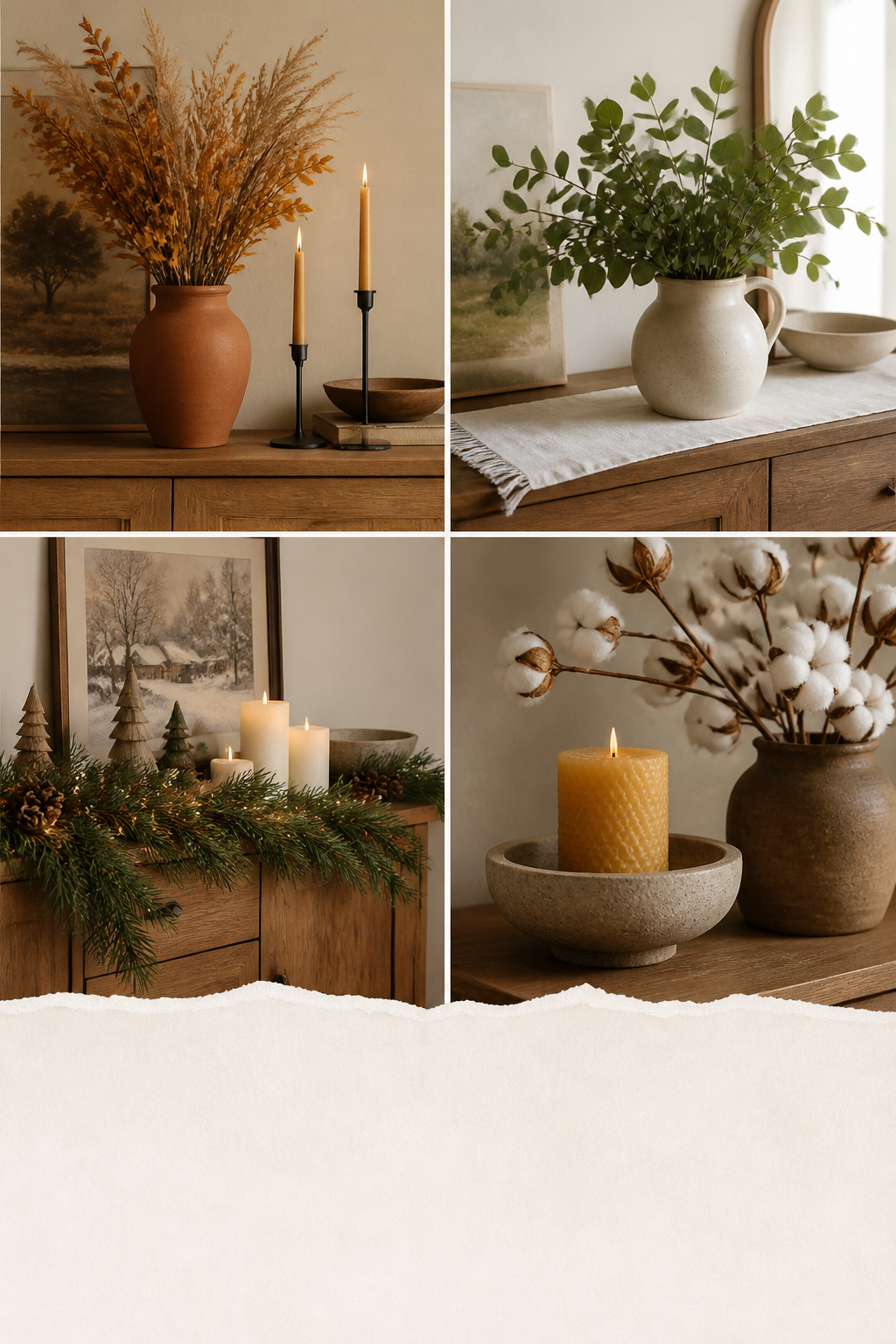
The mistake that freezes a sideboard for years is believing a seasonal change means a seasonal shop. People either over-buy cheap single-season decor or leave one display up indefinitely and let it go stale. A styled buffet has a permanent foundation and a thin changing layer on top — once you see the two apart, the whole year opens up. The broad principles live in our dining room buffet decor guide; here I want to walk you through how the surface changes across the calendar.
The Sideboard in November: What a Seasonally Styled Buffet Feels Like
The scene above is the brief. A fall sideboard works on three sensory levers: candlelight, dried texture, and warm neutral cloth. Soft flame paired with dried stems works because low, moving light animates rough texture in a way overhead lighting flattens. Set candles at different heights and the eye travels rather than stopping dead. Terracotta is the right vessel precisely because it is matte; glazed ceramic throws candlelight back as glare. Fragrance counts — a candle and diffuser on a tray register on the nose before the eye reaches the arrangement.
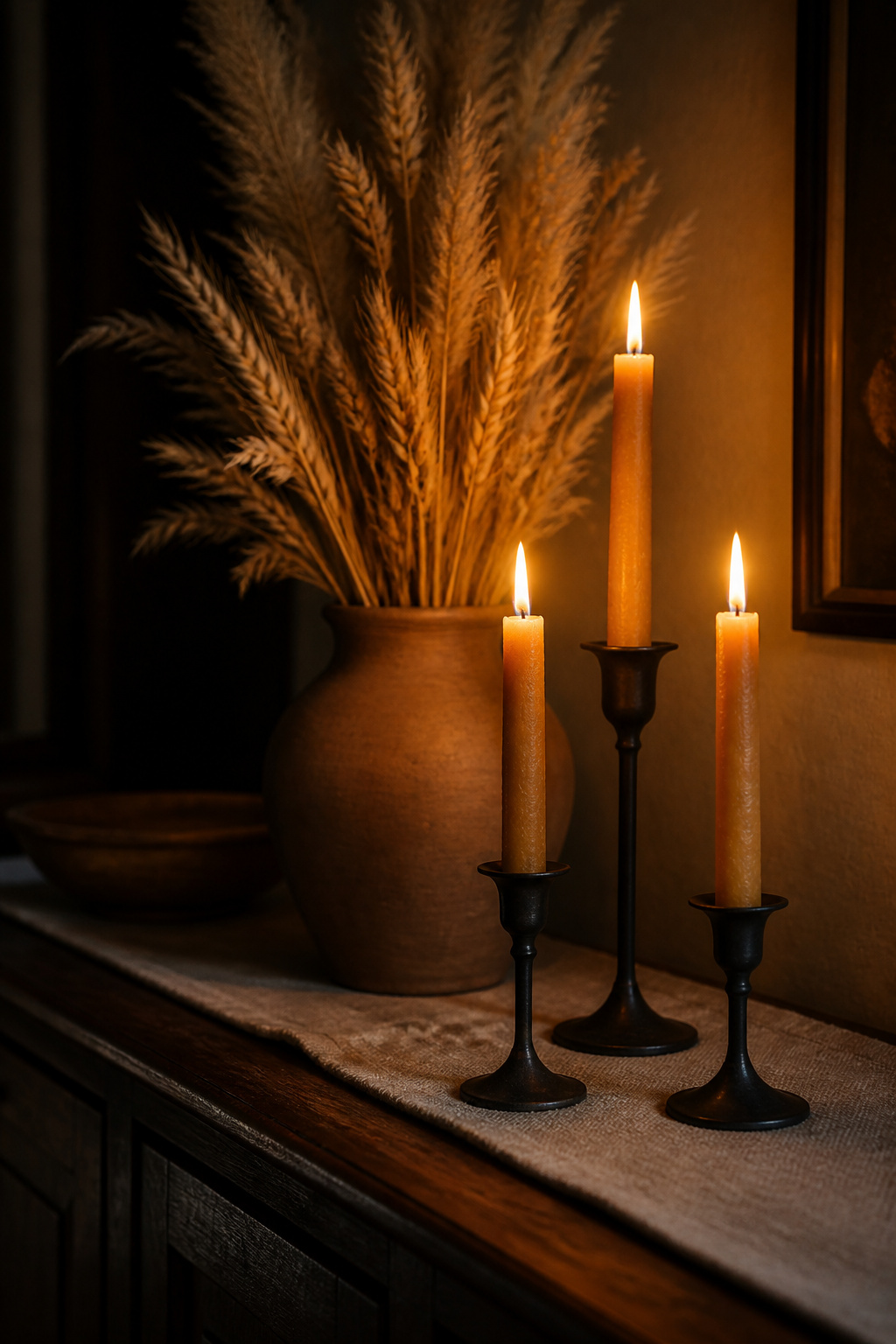
Almost nothing in that scene is seasonal. The runner is permanent. The vase is permanent. Only the stems and the candles belong to fall — and the stems last years. That is the two-layer principle: anchors stay, accents rotate. Once they are in place, a seasonal swap is editing, not replacement.
The Permanent Layer: The Foundation of Seasonal Sideboard Decor
The permanent layer is your investment — get it right and every seasonal change is a five-minute job. An object earns a permanent place by meeting three tests.
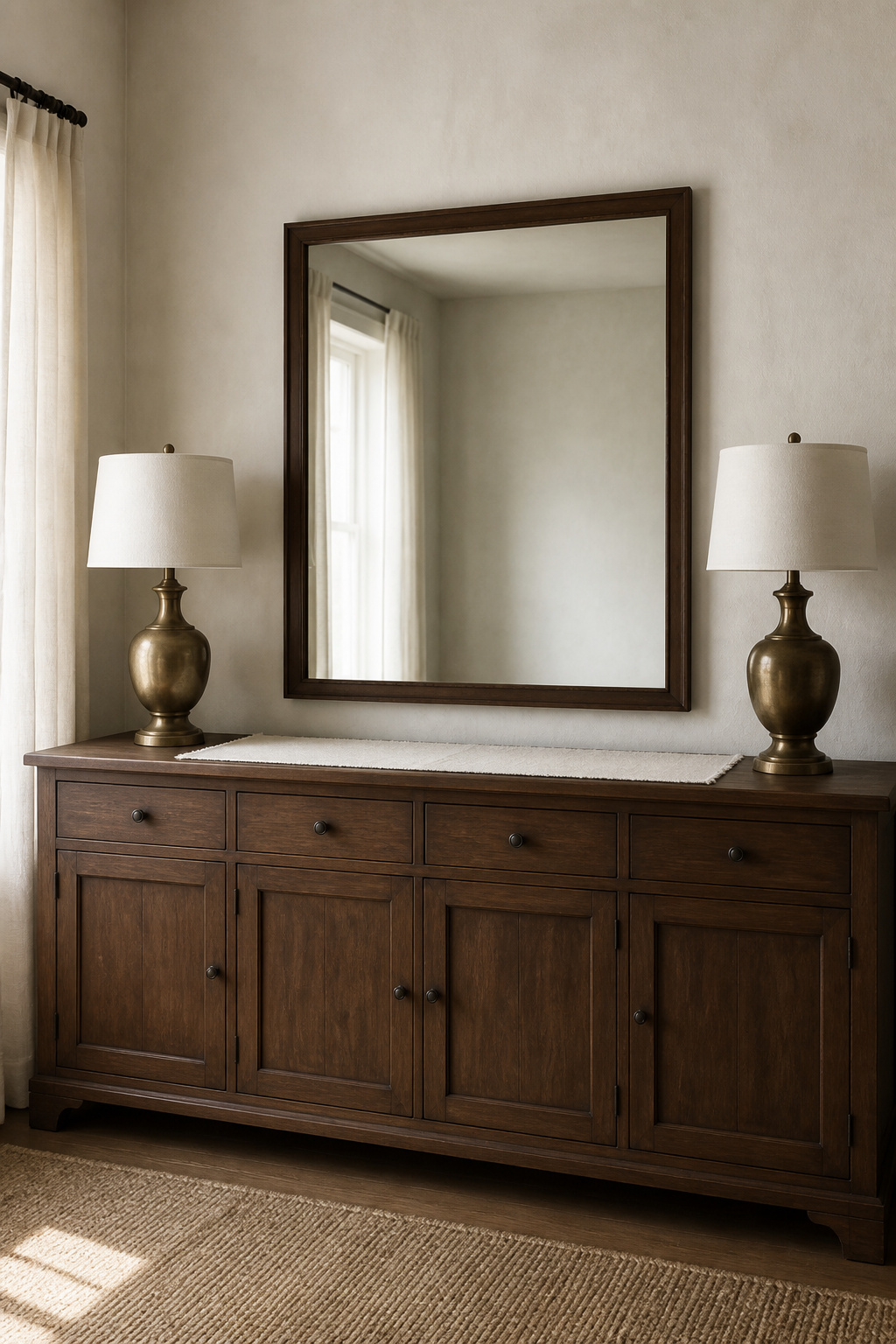
- Material quality. It must read as worthwhile with no seasonal context around it. A hand-thrown stoneware vessel passes; a painted ceramic pumpkin does not.
- Scale. It must hold the surface alone — adding height and structure without leaning on accents to look finished.
- Neutrality. Its colour must work under every palette you rotate through. Cream, aged brass, iron, natural wood, matte black. A strongly coloured anchor limits which seasons the surface can carry.
By those tests, two pieces almost always qualify. The first is a table lamp: height, atmosphere, and most people never change it with the seasons. Designer Linda Merrill notes a lamp must be proportionate to the furniture beneath it — and aged brass is the most forgiving finish, warm against fall terracotta and antique against spring greenery. (Specific height ranges are the lighting spoke’s territory.) The second is a mirror. Hung above the buffet, it reflects whatever the accent layer places below — amplifying the seasonal effect without ever changing itself.
Painted pumpkins, holiday figurines, blossom sprigs are accent-layer objects by definition. Parking them permanently is what makes a display look decorated-for-one-season-and-forgotten.
Spring Refresh: Greenery, Lighter Textures and the Season’s Natural Palette
Spring is the lightest change of the year and the best place to learn the method. Subtraction first: anything carrying winter in colour or material comes off — leftover gourds, pinecones, evergreen, dark candle vessels. A coloured runner goes too; the undyed linen stays.
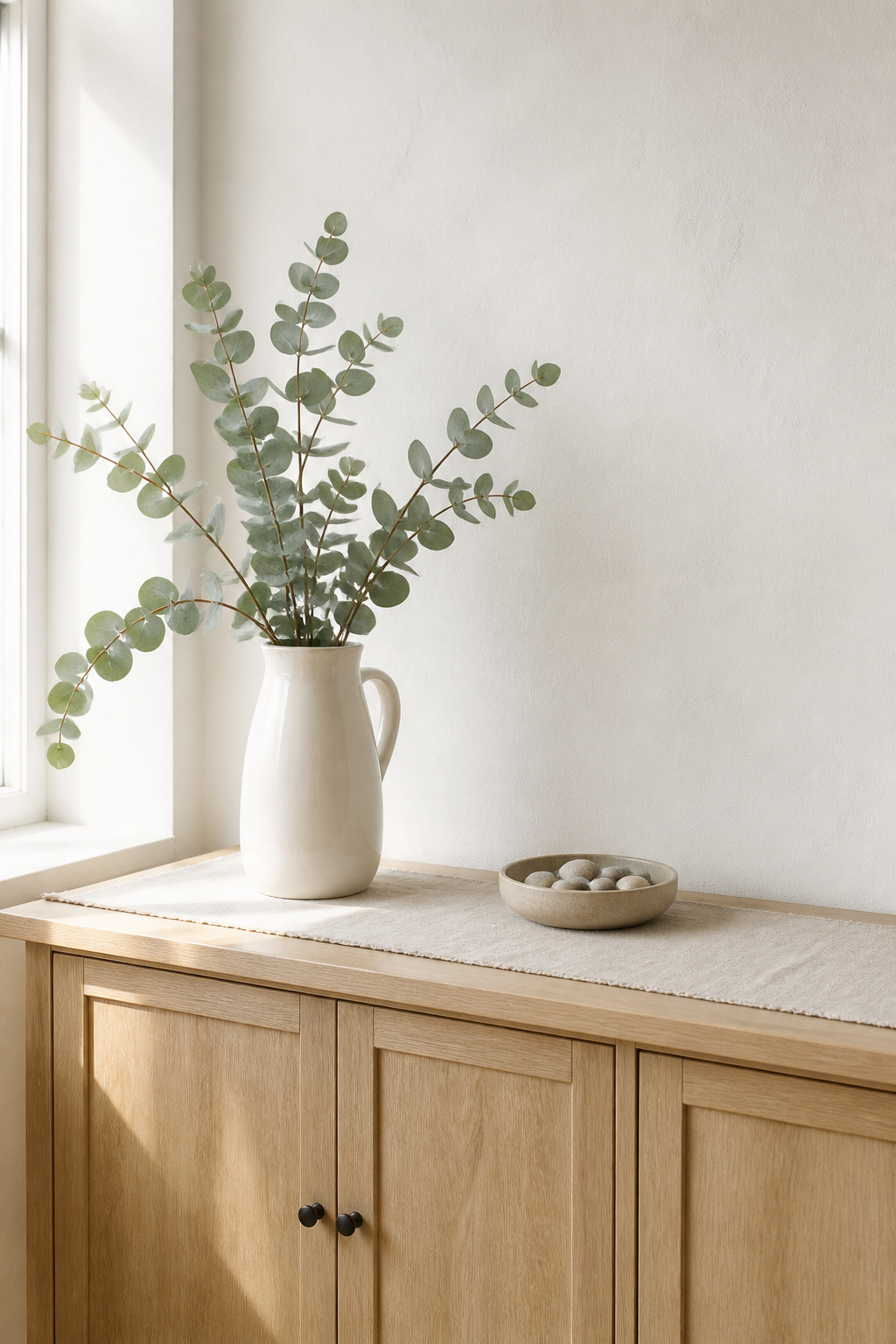
Add sparingly.
- One tall structural branch — eucalyptus, cherry blossom, simple garden foliage — in a ceramic jug or stoneware pitcher. Height and movement read as spring before any colour does.
- A lighter candle vessel: pale stone or clear glass in place of the dark winter holders.
- The container matters: a stoneware pitcher grounds the greenery; clear glass pushes it lighter and more contemporary.
Resist additions. A scatter of pastel eggs tips into clutter; a single long stem in water says spring more clearly. Lay the jug and a trailing stem along the runner so they read as one line.
Across the styling sources I trust, one principle holds so consistently it is worth naming: replace the dominant element and the whole surface changes mood with nothing else touched. Swap the dried stems for a fresh green branch and, in most rooms, you are done. Call it the one-change rule.
Fall Styling: Dried Botanicals, Warm Textures and the Harvest Palette
Fall is where this method shows its best return, because the season’s signature material — dried botanicals — outlasts every other accent on the calendar. Skip the standard red-orange-yellow, which dates inside a month, and reach for amber, terracotta, deep olive and warm wood. These tones read as natural — found in a field or a forest — rather than pulled from a product range, and they hold that quality against raw linen and oiled wood.
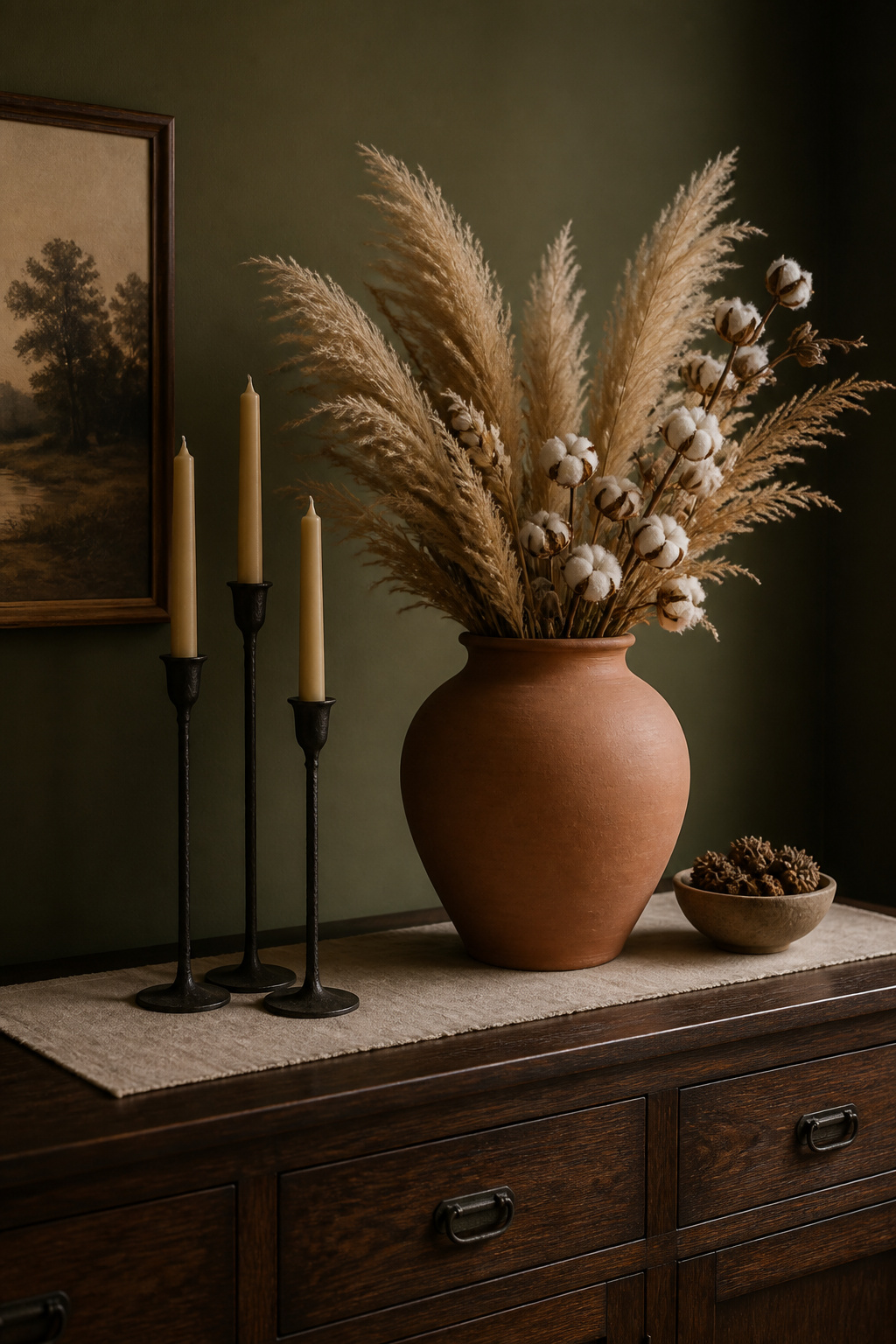
The botanicals comparison — what actually lasts indoors:
| Botanical | Lifespan indoors | What it gives the surface |
|---|---|---|
| Dried pampas grass | 1–3 years, away from direct sun | Soft height and movement; the signature fall plume |
| Cotton stems | Longest-lasting; won’t fade if kept dry | October-through-January crossover; bridges into the holidays |
| Wheat bundles | A full season or more | The most historically grounded harvest reference |
| Dried seed pods | Six months to a year-plus | Low, sculptural filler at the front of a grouping |
Keep dried stems away from south- and west-facing windows — direct afternoon sun fades colour and turns stems brittle within weeks. Wheat earns its place: a bundle tied with twine in a stoneware crock references the harvest without a carved pumpkin in sight. The same restraint defines genuine farmhouse styling, where one provenance-rich object beats a tableful of props.
Then light it. Candlelight at 1800K is the third fall essential, and the safety rules are not optional. The NFPA requires at least 12 inches of clearance on every side of a flame and 12 inches of vertical clearance above it before any shelf or mirror — which means tapers, not wide pillars, under a mirror. Space candles at least 4 inches apart and group them in odd numbers; a trio in iron holders at varying heights forms the triangular cluster the eye reads as composed.
Winter Holiday Styling: Garland, Candlelight and Heirloom Pieces
December is when every available festive object wants onto the surface at once — when the two-layer method earns its keep. Begin with the one real decision: the garland. Fresh cut evergreen indoors lasts only two to three weeks — a diagonal cut, a full soak before display, misting every two or three days, and distance from flame required. Dried garland (hops, eucalyptus, lavender) lasts months but loses the pine scent. Preserved garland is the practical middle path for a sideboard under a mirror, where fresh needle-drop becomes a weekly chore. Six feet draped with drops at each end is the holiday statement on its own.
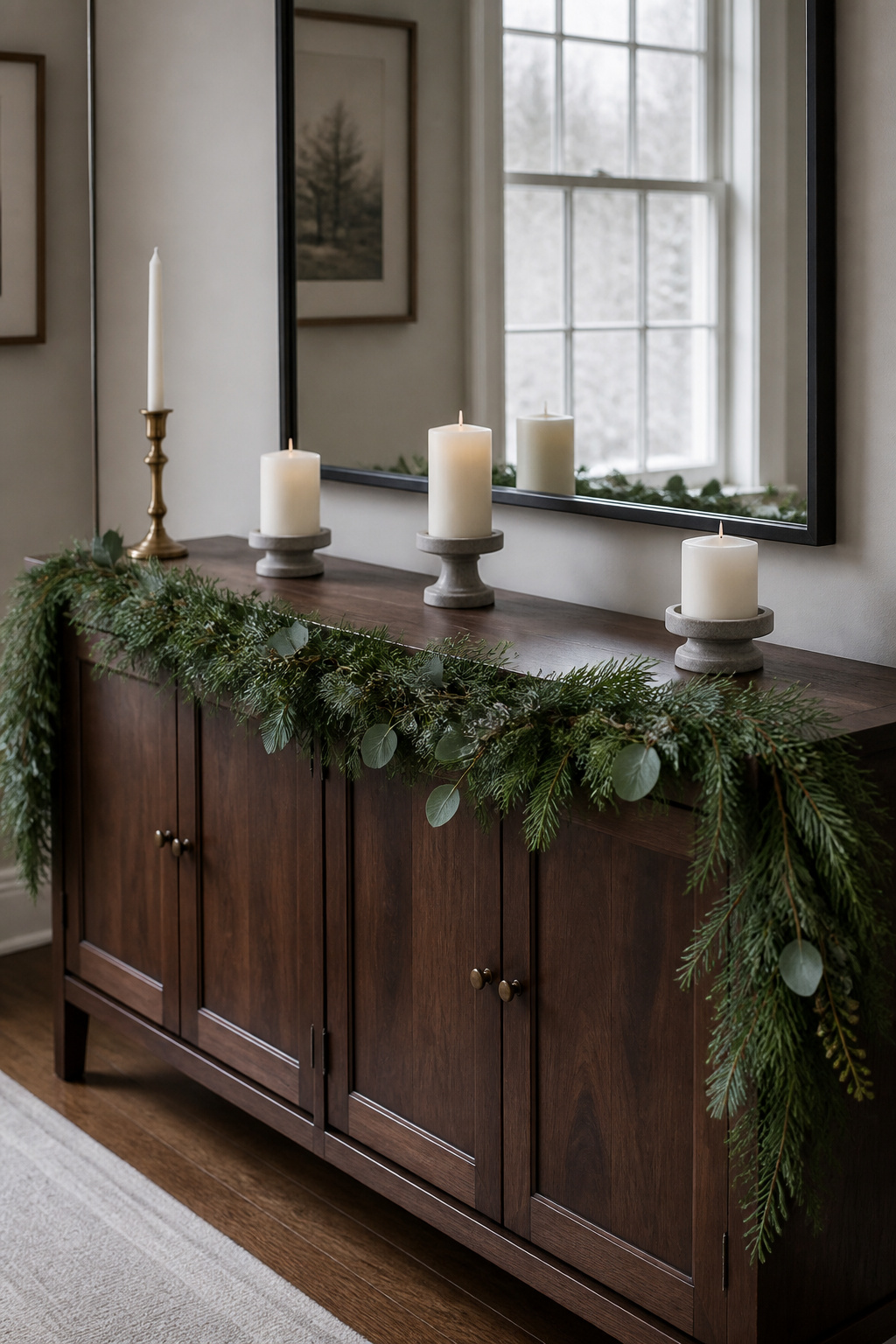
The piece that turns a holiday sideboard from assembled to inhabited is almost always an heirloom. I learned this restoring a Victorian terrace with my father: in every room it was an inherited object or two that carried the feeling, not the new things brought in around them. Let one heirloom lead and build the season around it. One inherited candlestick flanked by garland, the surface otherwise clear, reads as curation. Five mismatched heirlooms competing reads as storage.
Restraint is hardest exactly when it matters most. Luxury seasonal looks are built on textural contrast, not object count — one garland or one statement piece, the surrounding surface kept clear. And remember the mirror: three candles and a garland edge read as six candles and a full surround once reflected. Under-fill on purpose. What looks almost sparse in the room looks complete in the glass.
The Refresh Method: A Practical Sequence for Each Season Change
The same three moves, every season. Done in order, the refresh takes minutes.
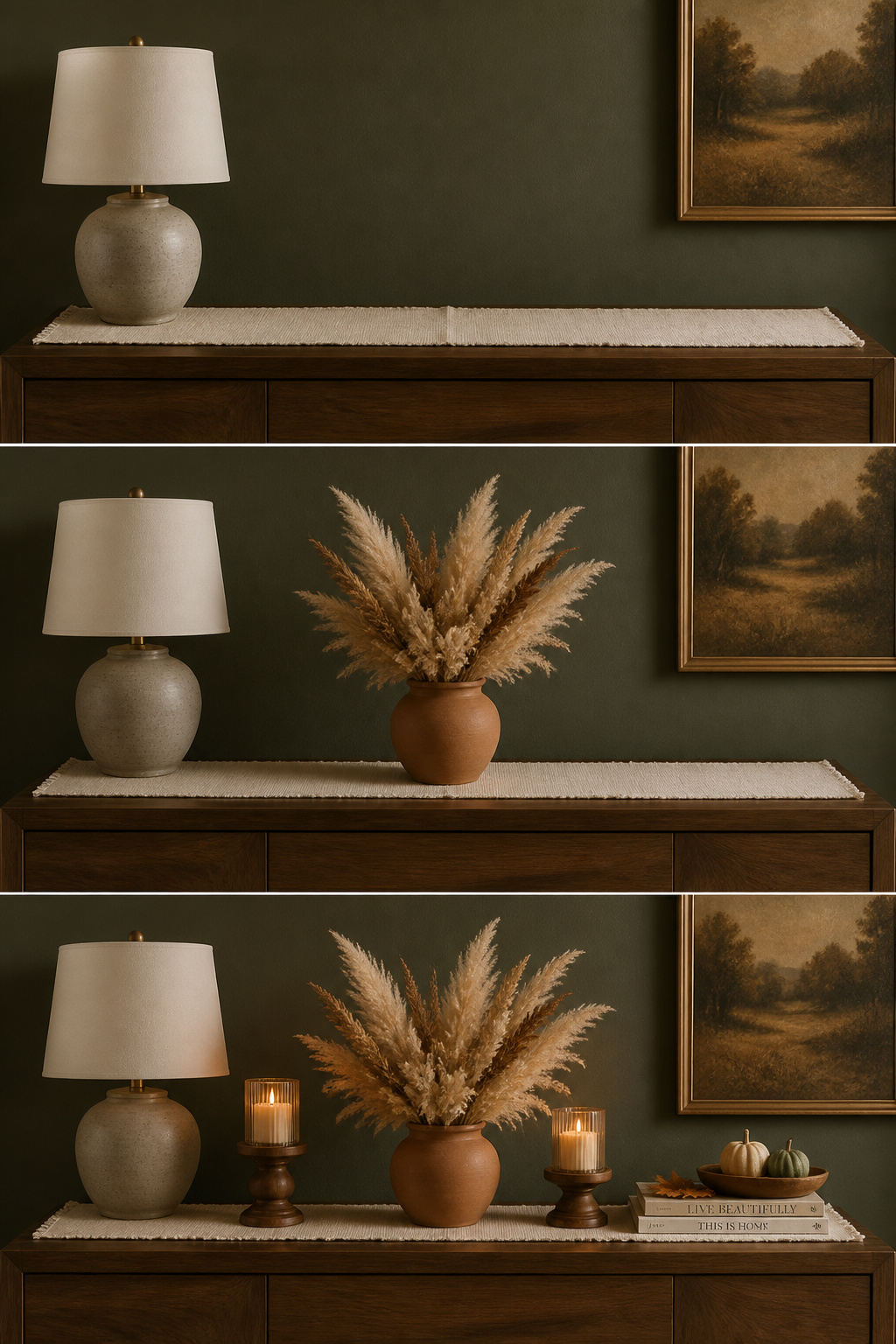
- Clear the accent layer and assess. Remove everything seasonal and look at the permanent layer alone. Ask of each piece: does it work with zero seasonal context? If it only looks right surrounded by accents, it was never permanent.
- Place the dominant accent first, then fill around it. Set the season’s lead object — the dried arrangement in fall, the fresh branch in spring, the garland in winter — before anything else. Then bring in secondary pieces at lower heights. Reverse this order and you leave nowhere for the centrepiece.
- Edit out what competes. Ask whether each remaining object supports the lead piece or fights it. A candle holder taller than your botanical undercuts it — swap shorter or remove. This is the step most people skip, which is why displays tip into clutter.
The decisions happen before the swap, not during it. A narrow surface tightens every step, and that constraint has its own approach in our guide to styling a small sideboard.
Picture that November sideboard again — the candlelight, the dried stems, the runner that has been there all along. You can reach that scene this season, and the spring and the holidays after it, without buying the room twice. Keep the base, change the accents.
FAQ
What do you put on a sideboard for fall?
Build a fall sideboard from three things: one dominant dried botanical arrangement — pampas grass, cotton stems or wheat in a matte terracotta vase — a cluster of taper candles in iron holders at varying heights (three or five, never an even number), and a natural linen runner beneath. Dried stems are preferred because they hold their form for one to three years.
How do you decorate a buffet for Christmas?
Drape roughly six feet of fresh or preserved garland along the surface, letting it fall at each end; that single element is the statement. Fresh garland lasts only two to three weeks indoors and needs misting and clearance from candle flame, so preserved garland is easier under a mirror. Keep the rest of the surface clear — restraint reads as luxury here.
How often should you change your sideboard decor?
Refresh with the seasons, three to four times a year — fall, the winter holidays, spring and summer — rather than monthly, which prevents both staleness and decorating fatigue. With the two-layer method each change takes about five minutes. Dried botanicals blur the line: replace them when colour fades or stems turn brittle, not on a fixed calendar.