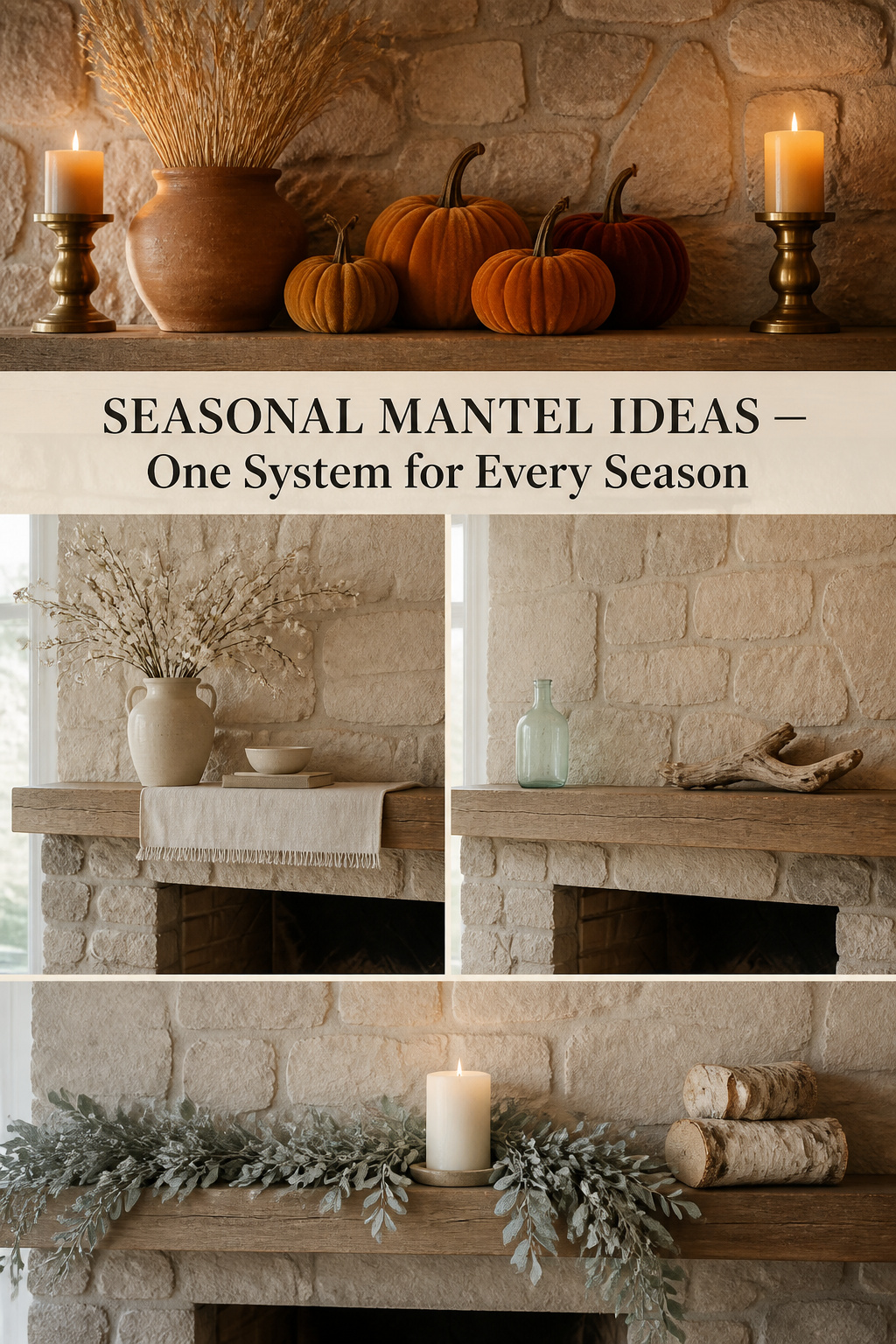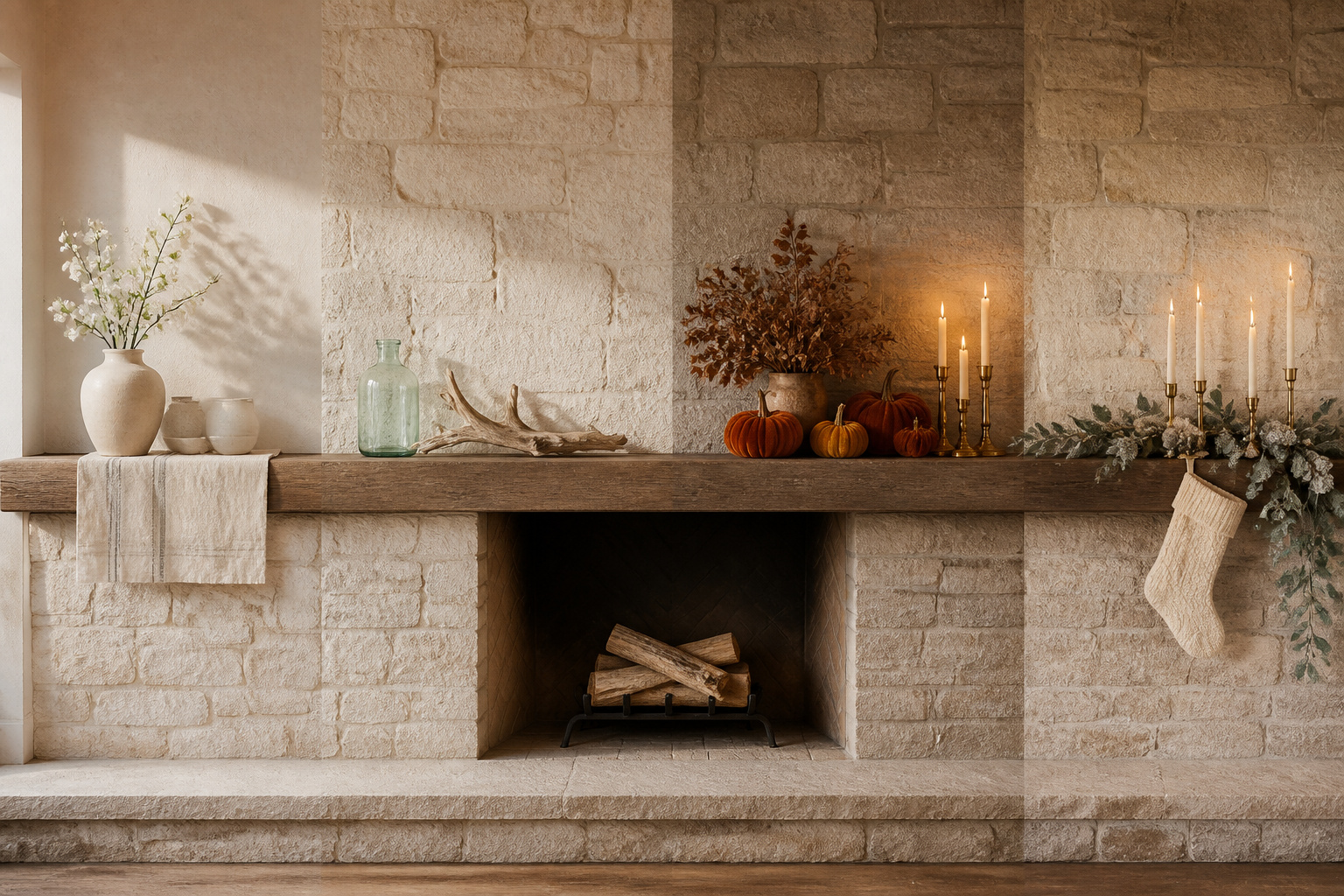
Walk into a room in late October and a well-dressed mantel tells you the season before you’ve taken your coat off. Brass catches low candlelight, dried wheat throws a soft shadow, the shelf smells faintly of beeswax. Come March, that same shelf reads cool and pale — blossom in a stone vessel, linen laid flat, daylight doing the work. The feeling shifts, but the bones underneath never move.
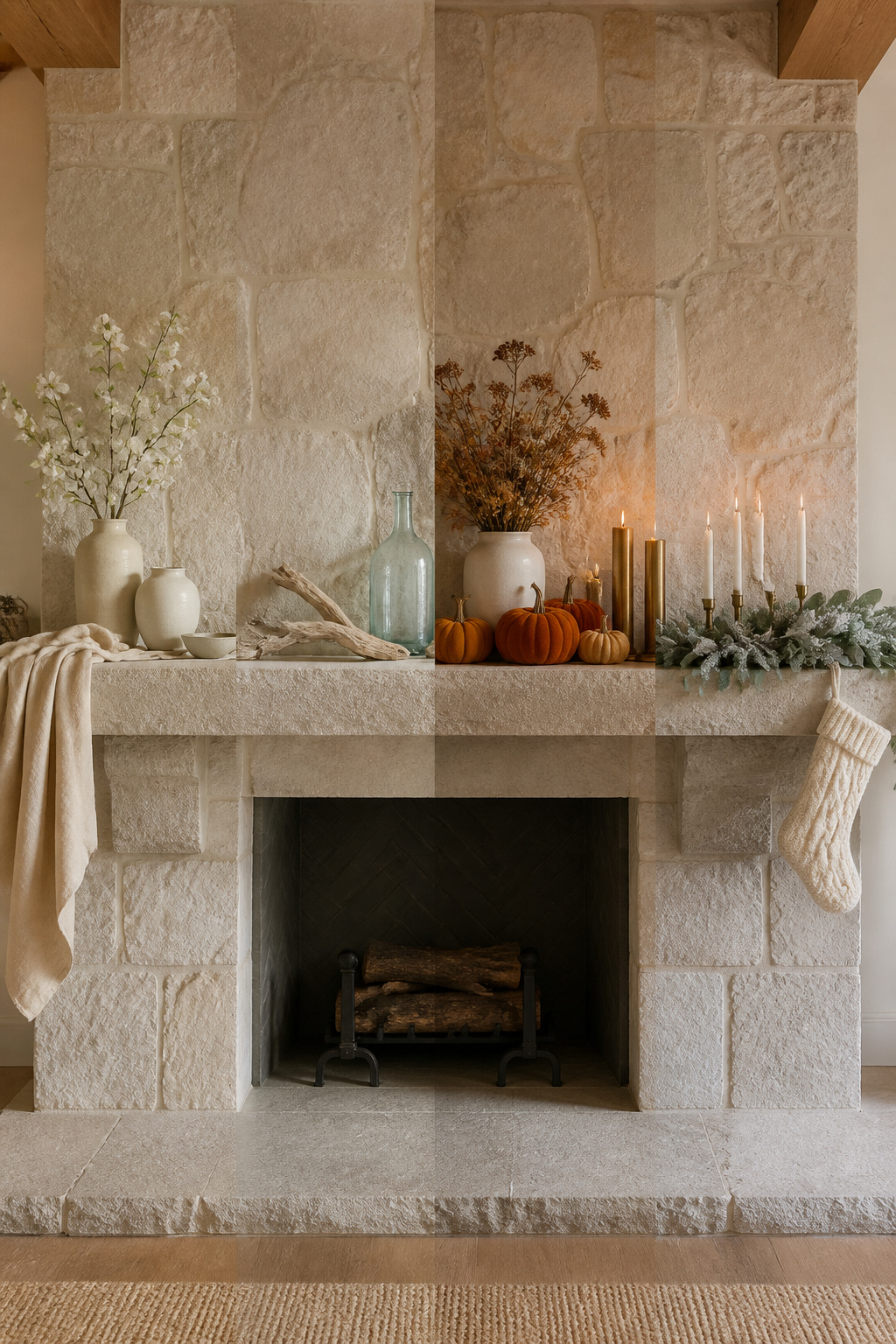
That last part is the trick most people miss. The best seasonal mantel decorating ideas aren’t about owning four different displays — they’re about keeping a steady base layer all year and changing only a handful of pieces on top. Do it that way and the swap takes twenty minutes, not an afternoon, and the mantel always looks intentional.
TL;DR
- Keep a permanent base layer — an anchor sized to roughly two-thirds the mantel width, flanking candlesticks, and one neutral vessel — then change only 3–5 seasonal accent pieces on top.
- Use fewer objects, not more: summer wants 30–40% fewer pieces than Christmas, and grouping in odd numbers beats spreading items individually across the shelf.
- Store each season’s accents in one labelled clear bin, leave the base layer in place, and the full swap takes about 20 minutes four times a year.
The Base Layer: What Stays on Your Mantel All Year
Choosing a permanent anchor that earns its place in every season
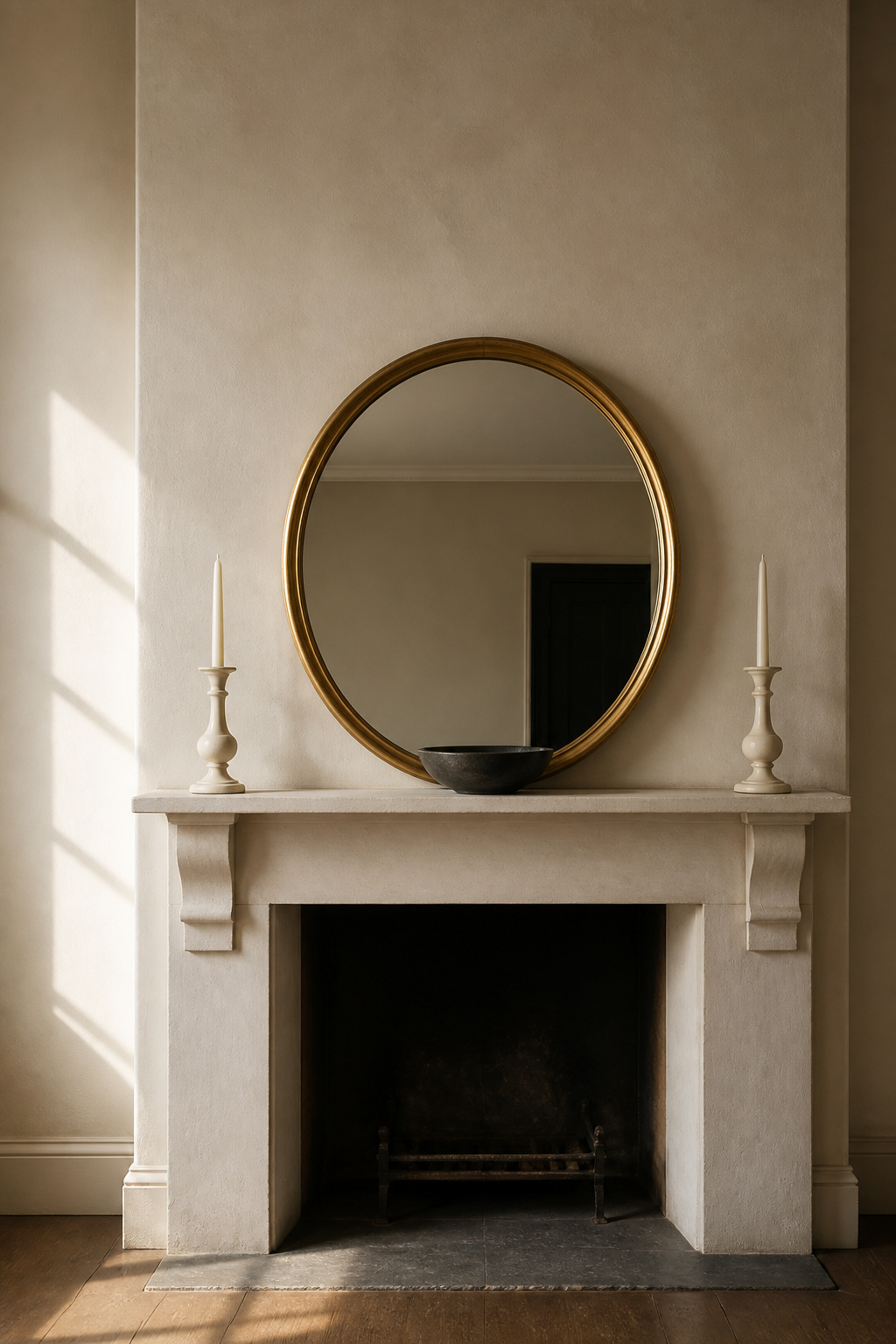
Build the permanent base first and every season becomes a light overlay. The anchor is the one large piece the whole arrangement hangs off — a mirror, a framed work, or an architectural clock — sized at roughly two-thirds the mantel width to ground it without crowding the wall. A mirror earns its keep best of all: it has no colour of its own, never argues with the season, and throws candlelight back into the room. An everyday mirror turns Christmas-ready with greenery and warm light alone. As a scale check, treat the cantaloupe as your floor: anything smaller simply vanishes on a shelf.
Year-round objects that work with any seasonal overlay
Around the anchor, choose materials with no inherent season — neutral ceramics in cream or terracotta, plain pillar candles, wooden objects with honest grain. Tall candlesticks flanking the anchor are the single most useful year-round element: they add height every month, and the candle colour swaps seasonally for almost nothing. A large vase of faux eucalyptus gives you base greenery to top up with dried pampas in autumn or frosted sprigs in winter. The prevailing direction treats the mantel as permanent architecture, with just three to five pieces on it — the logic behind our full fireplace mantel decor guide.
How to store seasonal pieces so the swap takes 20 minutes
Swaps drag not because of the styling — it’s the search. Sort accents into one labelled bin per season and the unpacking stops being a memory exercise:
- Use clear plastic bins with tight lids, one per season, so you can identify contents without unpacking.
- Label each bin with its contents, not just the season, so you see what’s there and what’s gone missing at a glance.
- Store the current season’s bin at the front and the previous one directly behind, so rotation is just pull forward, push back.
With the base layer in place and only the 3–5 accents moving, the swap takes about 20 minutes.
Spring and Summer Mantel Decor: Light, Green, and Breathing Room
The lighter half of the year asks for a tonal reset: clear the heavier winter objects, drop the count, and let the daylight carry more of the load.
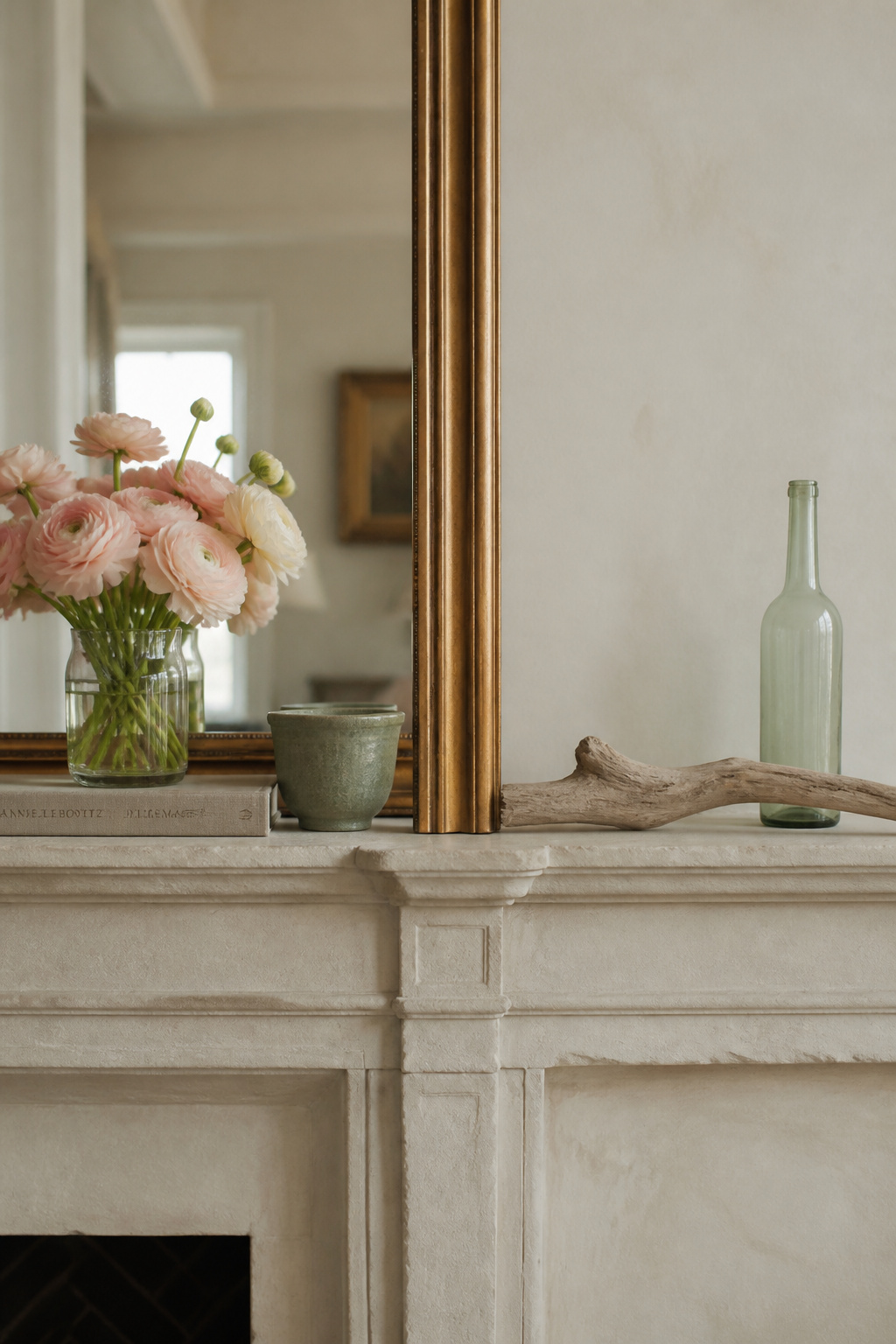
Spring leans on soft botanicals and pale ceramics. Flowering branches — cherry, forsythia, quince — give height; a small grouping of tulips or ranunculus gives colour; a pale linen runner gives texture, in a palette of gentle pinks, sage greens and warm creams. Linen rewards a closer look: woven from flax worked into cloth for thousands of years, a draped runner carries a provenance a polyester throw can’t borrow.
Summer pulls back further. The palette mirrors the coast — whites, soft blues, sandy neutrals — and natural objects carry it: bleached driftwood, a sea-glass bottle, a plain terracotta pot. This is the season for negative space. As the Designthusiasm editors put it, one large vase of sculptural greenery against a clear shelf reads as confident restraint. A summer mantel wants 30–40% fewer pieces than a Christmas one — if three objects look complete, a fourth will crowd it.
Autumn Mantel Decor: Warmth, Foliage, and the Harvest Palette
Autumn is where material quality starts to show — the gap between a collected mantel and a bin-bought one is widest here.
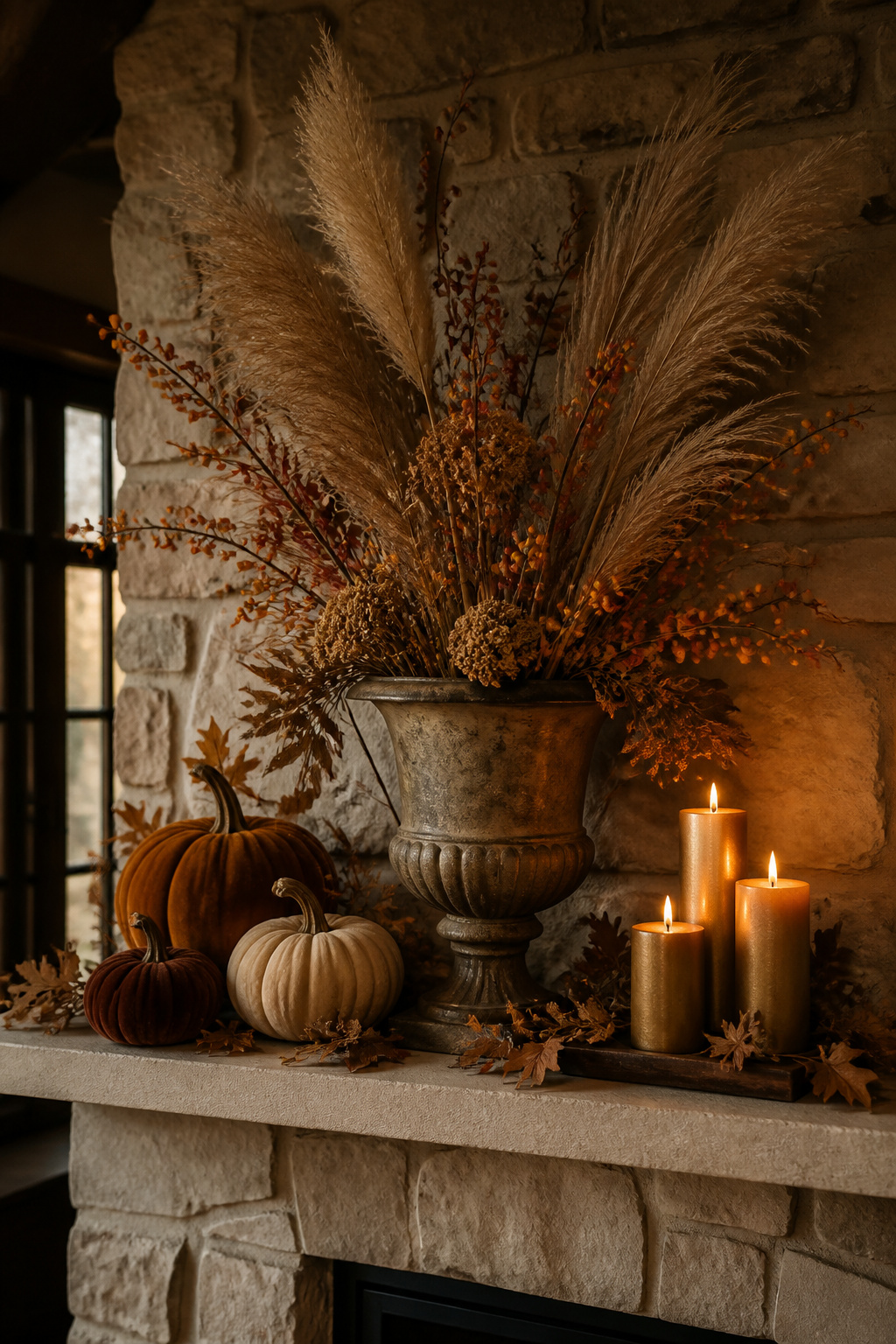
The fall mantel colour palette: amber, rust, deep green, and natural wood
The fall palette is well settled — burnt amber, deep rust, olive and moss green, warm chocolate brown — grounded with cream so it never reads muddy. The current direction layers those earthy tones with airy complements like muted blush and buttery ivory, plus copper and brass for warmth: “quiet luxury” rather than maximum harvest. One caution: lead with amber, rust and deep green, and let pure orange stay a single note, or the mantel tips into Halloween.
What to put on a fall mantel: pumpkins, dried botanicals, lanterns, and candlelight
Group, don’t scatter. Designer Will Hunt Lewis of Hunt & Bloom clusters small-scale gourds and pumpkins en masse, adds dried yarrow, hydrangea and oak leaves, then brings height with tall bittersweet branches. The same objects spread individually read as clutter; grouped in threes and fives they read as intentional. Material carries the rest: velvet pumpkins read warm and tactile in candlelight where plastic ones go shiny and flat. Candlelight is non-negotiable — a trio of pillar candles at 8, 10 and 12 inches throws the low flicker the season is built on. This is the palette where a rustic mantel styling approach pays off most: salvaged wood and collected vintage pieces are the natural home for a harvest display.
Thanksgiving transitions: taking autumn into the table-focused season
Thanksgiving barely needs a mantel edit. It’s a table-focused holiday and a clean autumn arrangement reads as harvest-themed straight through the weekend, provided you chose botanicals that last. As designer Cindy Rinfret notes, hearty foliage holds, and a single red or blue velvet ribbon turns a neutral arrangement festive without touching the structure underneath. Pull any lingering Halloween objects and the mantel is done.
Christmas and Winter Mantel Ideas That Don’t Look Like a Bin Exploded
Christmas is the peak season and the one most likely to go wrong through over-decoration. The fix professionals agree on: edit first, decorate second.
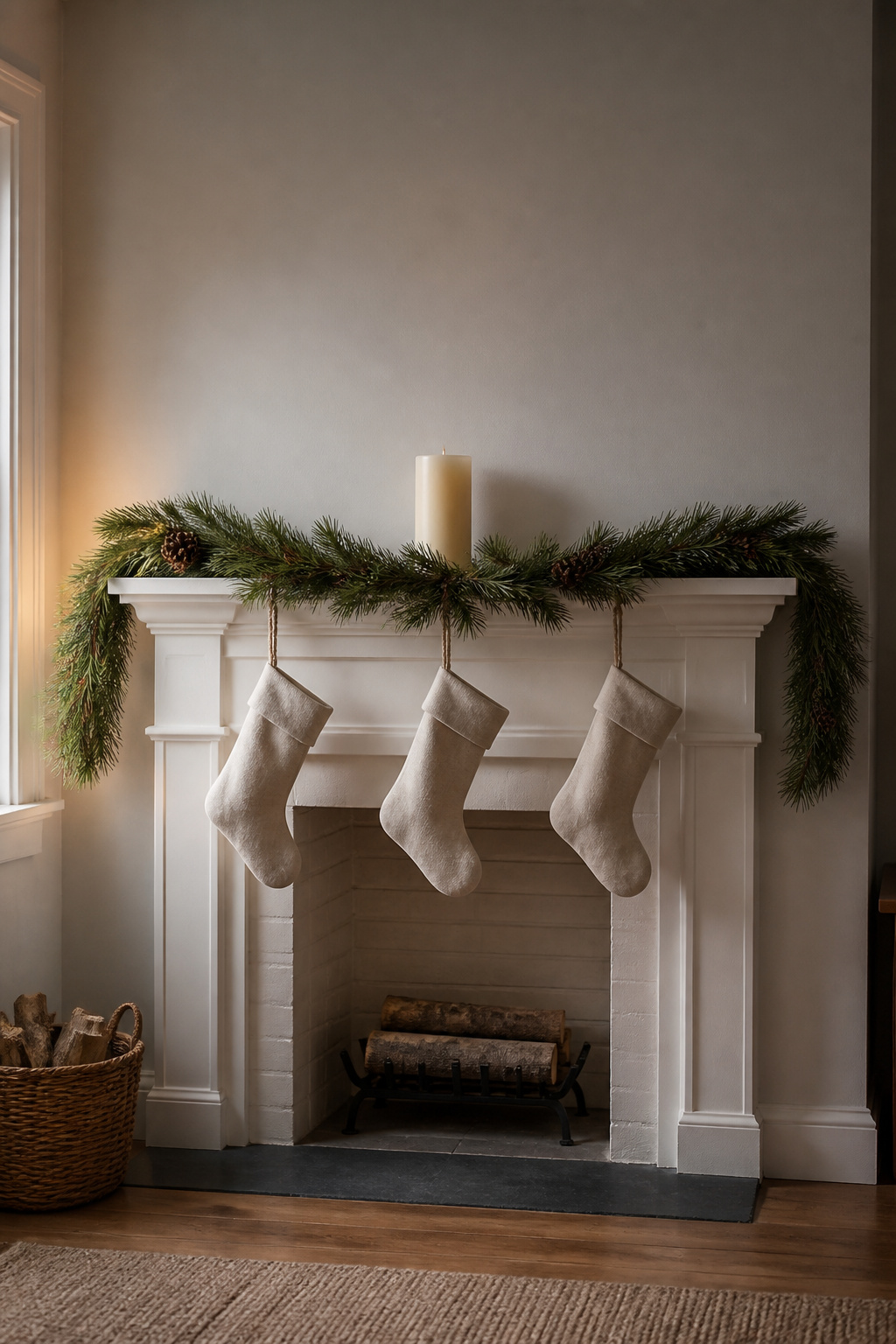
The edit-first principle: less decoration, more intention
Decide the style and palette before a single object goes up. Stocking texture sets the tone — velvet reads traditional, chunky knit reads cottage, linen reads Scandinavian-minimal — and the rest follows from that first decision. The most consistent expert position across Christmas guides is simple: a mantel with fewer, larger items beats one filled with many tiny ones. Think confident, not cluttered. A well-chosen garland and stockings in one or two colours are already a complete mantel.
What to hang, drape, and stack: garland, stockings, and the one-colour rule
Order matters. Set your stocking solution first — hooks, rod or brackets — then hang the garland so it never blocks the hooks. For length, measure the mantel width and add four feet: that leaves two feet of drop at each end. Then the rule that does more than any other to prevent the exploded-bin look: hold the whole display to one or two colours. One safety note from Diane at South House Designs: if you’re burning real logs, slide stockings to the outer edges and never fill them before Christmas Eve, since the heat will melt the contents.
Post-Christmas winter: keeping the mantel warm through February
This is where the base-layer system earns its keep. Take down only the specifically Christmas objects — stockings, red ribbon, ornaments — leave the greenery and neutral pieces, and you reach a clean winter mantel in about ten minutes. The January target is cozy-without-Christmas: muted greens, raw wood tones, cream ceramics, layered candlelight. Frosted eucalyptus draped loose, pinecones in a hurricane, birch logs stacked at one end, and a plain wreath leaned without its ribbon all fit the register. Cream-and-grey pottery reads as authentically winter, sharing frost’s colour temperature.
The Seasonal Swap in Practice: A Simple System That Actually Gets Done
Swaps get skipped not for lack of ideas but because people think the whole mantel needs dismantling. With the one-box system above and the base layer staying put, the reset is four moves:
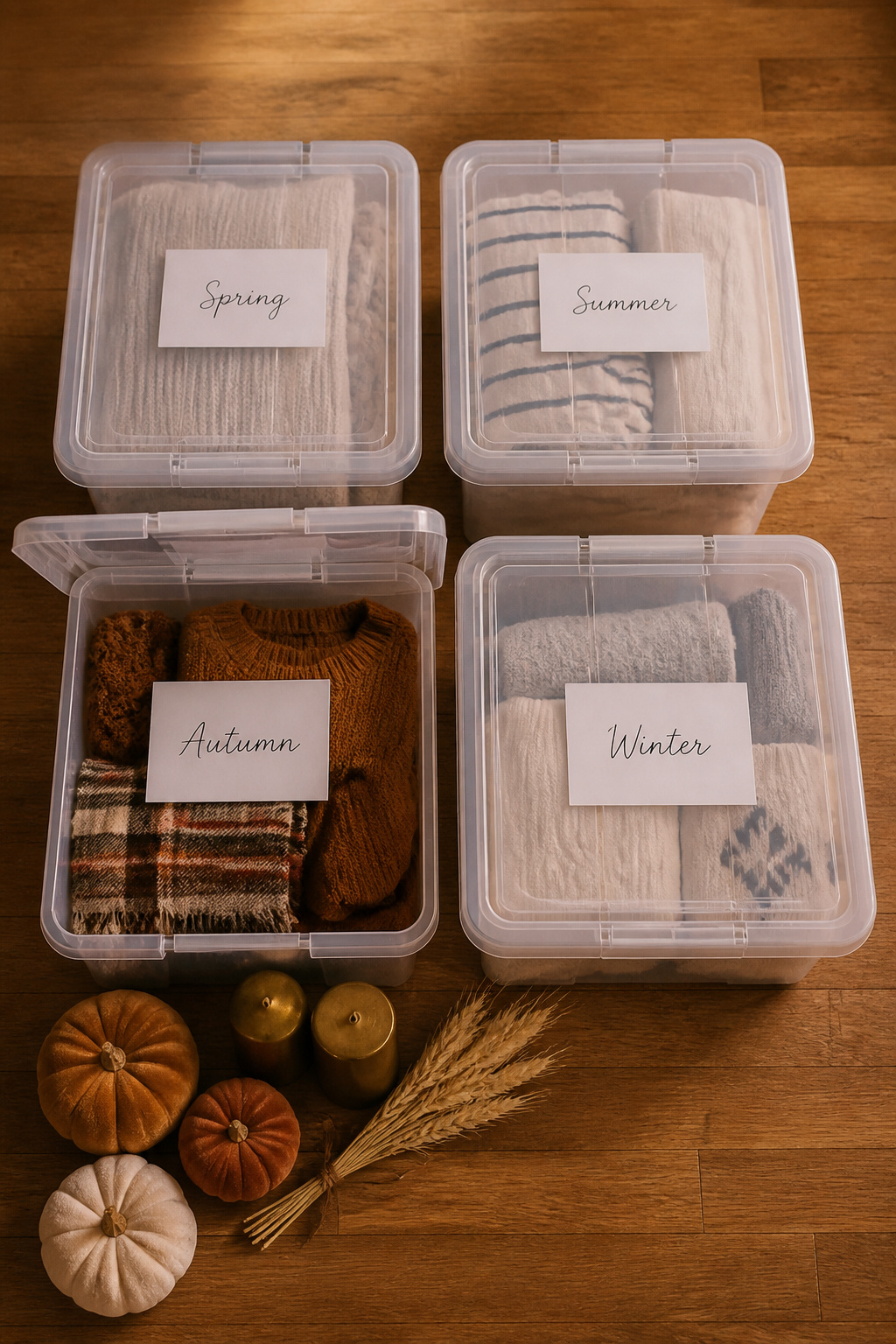
- Pack out the old season. Lift the 3–5 accents into their bin.
- Pull the new bin forward. It’s already at the front of storage.
- Place the new accents. Set them in odd-numbered groups around the untouched anchor.
- Store the empty bin. Re-label if anything’s changed and push it to the back.
Trigger each swap by the weather, not the calendar — autumn decor goes in when the evenings cool, not on 1 September. When an object resists the swap it’s usually right in kind but wrong in scale; move it to the hearth.
Seasonal Mantel Ideas for Brick and Stone Surrounds
A brick surround changes the maths because the backdrop already carries colour — red brick contributes warm amber and rust, which has clear consequences for each season’s palette.
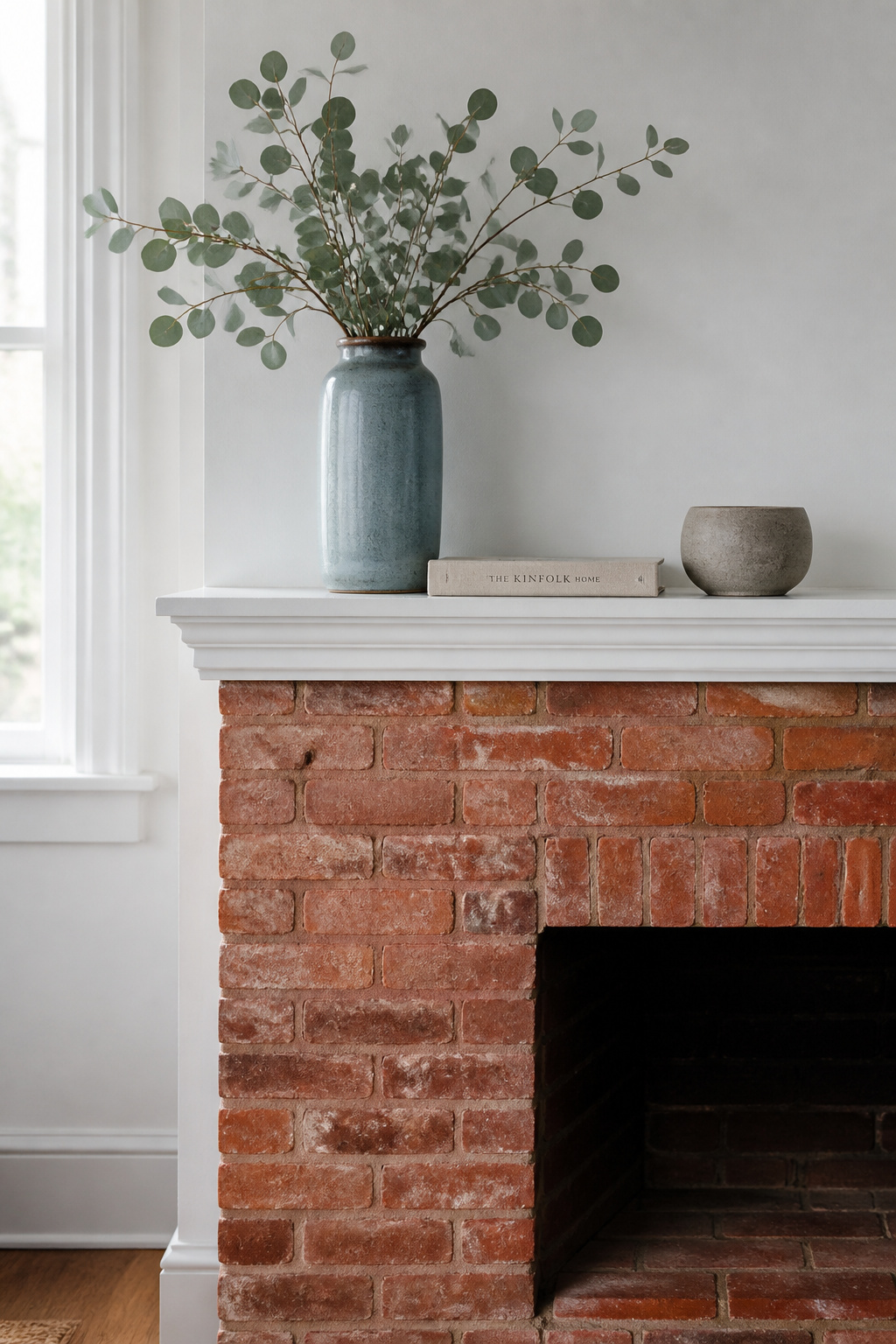
Warm seasons harmonise with brick; cool seasons need to contrast with it. Autumn flows naturally — but since the masonry already supplies amber, lead with deep green and chocolate brown or the wall over-saturates. Spring and summer reverse the logic: pale cream objects disappear into brick’s warmth, so reach for cooler tones, with dusty blue the single most reliable partner for red brick. Scale up throughout: small objects get lost in masonry texture, so favour oversized vases.
If every season looks flat or over-saturated, the surround itself may be the issue. Limewash is the more reversible option — mineral-based, power-washable within five days of application — while whitewash uses a paint vehicle that lasts twenty to thirty years on interior brick and is removable only by stripping. As Laura Gaskill notes at Houzz, a gentle limewash is a fair compromise short of fully painting, because the chalky, variable finish still reads as exposed brick from across the room. The full treatment is in our guide to decorating a brick fireplace.
Style it this way and the mantel stops being four annual projects. It becomes one quietly evolving fixture — a base you trust, a small box of seasonal pieces, twenty minutes four times a year. The room still announces the season; you’ve simply stopped rebuilding it from scratch.
FAQ
How often should you change your mantel decor?
Four times a year is the realistic standard — one swap per season — timed to when the weather and light shift rather than to strict calendar dates. Because a permanent base layer stays put, each change moves only 3–5 objects and takes about twenty minutes. Some homes add smaller mid-season touches instead of a full swap.
What can I put on my mantel for summer when there is no fireplace vibe?
Go pared-back: one sculptural botanical at height (curly willow, eucalyptus, or bleached pampas in a vase), one low natural object like driftwood or a smooth stone, and deliberate empty shelf space. Pale ceramics, sea-glass bottles and small terracotta pots read as summer indoors. A large mirror does its best work here, reflecting bright light into the room.
How do you keep a Christmas mantel from looking cluttered?
Decide a colour palette and stocking style before anything goes on the shelf — a defined palette filters out most purchases before they reach the mantel. Group small objects rather than scattering them: three pinecones in a hurricane read as one element; three scattered read as debris. Hang garland first, then stockings, then add no more than two or three accents.