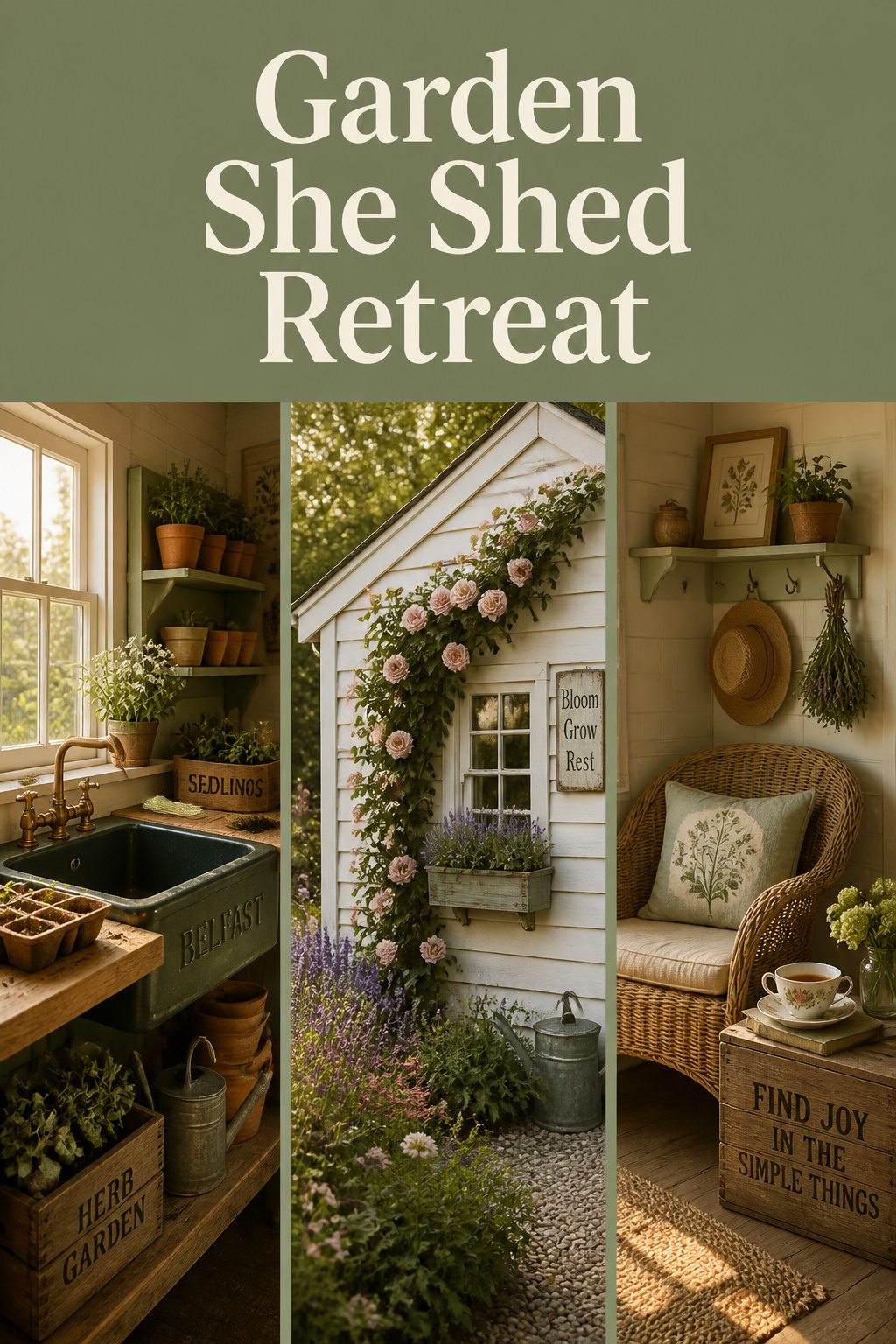
If you already know which corner of the garden gets the first sun and where the frost sits longest, you have outgrown the wheelbarrow corner of the garage. A garden she shed retreat is the next move for a gardener at that stage — not more storage, but a building designed around the work itself. Tracey Hiebert, who built her Southern Ontario potting shed in 2018, calls it “my little sanctuary”: a place to pot a plant as the sun pours in and the wind howls outside. That is the gap between a shed with plants in it and a shed that belongs to the garden.
TL;DR
- A garden she shed retreat needs four things storage sheds lack: a potting bench at 34–36 inches high, natural light sized for plants, a wall-mounted tool system, and at least one seat.
- Orient the shed south for winter light, and a south-facing window alone starts cool-season crops; tomatoes and peppers need grow lights at 25–50 actual watts per square foot.
- Plant the shed into the garden with a climber on the facade and a pea gravel path, so it reads as a garden structure rather than a building dropped on the lawn.
This guide moves through the facets in the order they matter: the bench, the light, the storage, the planting, and the retreat quality that lifts the whole thing above pure utility. For siting across every kind of shed, the she shed design guide covers the wider ground; this is the gardener’s half.
The She Shed That Grows With the Garden
The evolution: from wheelbarrow corner to a shed with intention
The corner of the garage works until it doesn’t. What separates a real garden she shed from a tool store is intention: the building is designed around gardening rather than around stowing things out of the rain. That single decision reorganises everything that follows.
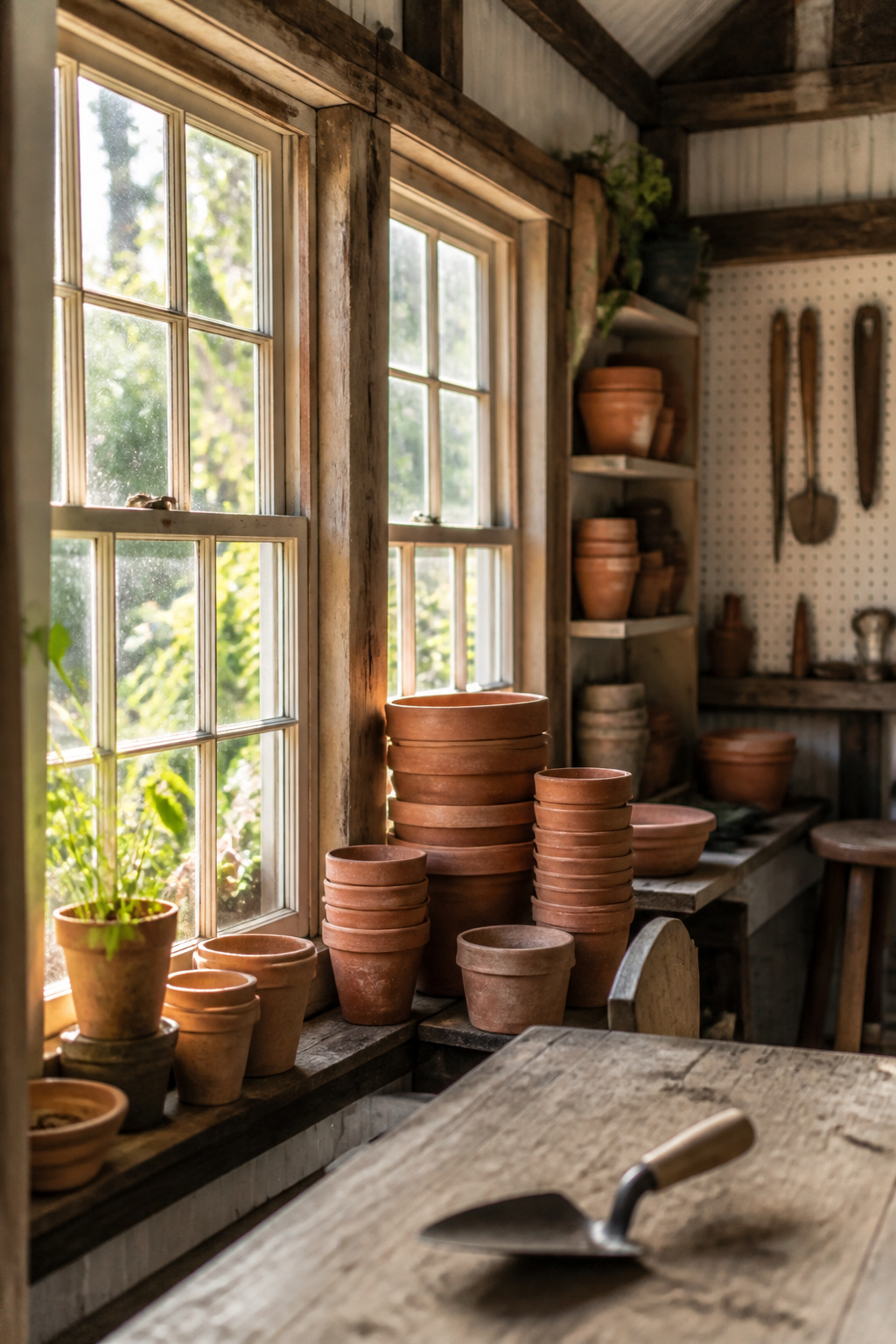
What separates a garden she shed from a storage shed with plants in it
Four elements draw the line: a dedicated potting bench, natural light sized for plant health, tool storage with a system, and at least one seat. Hiebert’s own brief captures the duality — “a place to store my pots, potting soil, garden supplies, but also a spot to curl up and flip through a magazine.” Get the work surface, the light and the seat right, and the shed becomes a sanctuary.
How the shed and the garden design each other
Here is the reversal that makes these sheds work: the building shapes the garden, not the other way round. “The shed was the starting point for our garden ideas,” Hiebert says. “We have created gardens all around it.” Site it close to the beds, too, so the daily walk with tools, soil and water stays short — proximity decides how often the space gets used.
The Potting Bench: The Heart of a Garden She Shed
The bench is the organising element of any potting shed retreat — everything else orients around it. Two questions decide it: built-in or freestanding, and what specs make it comfortable.
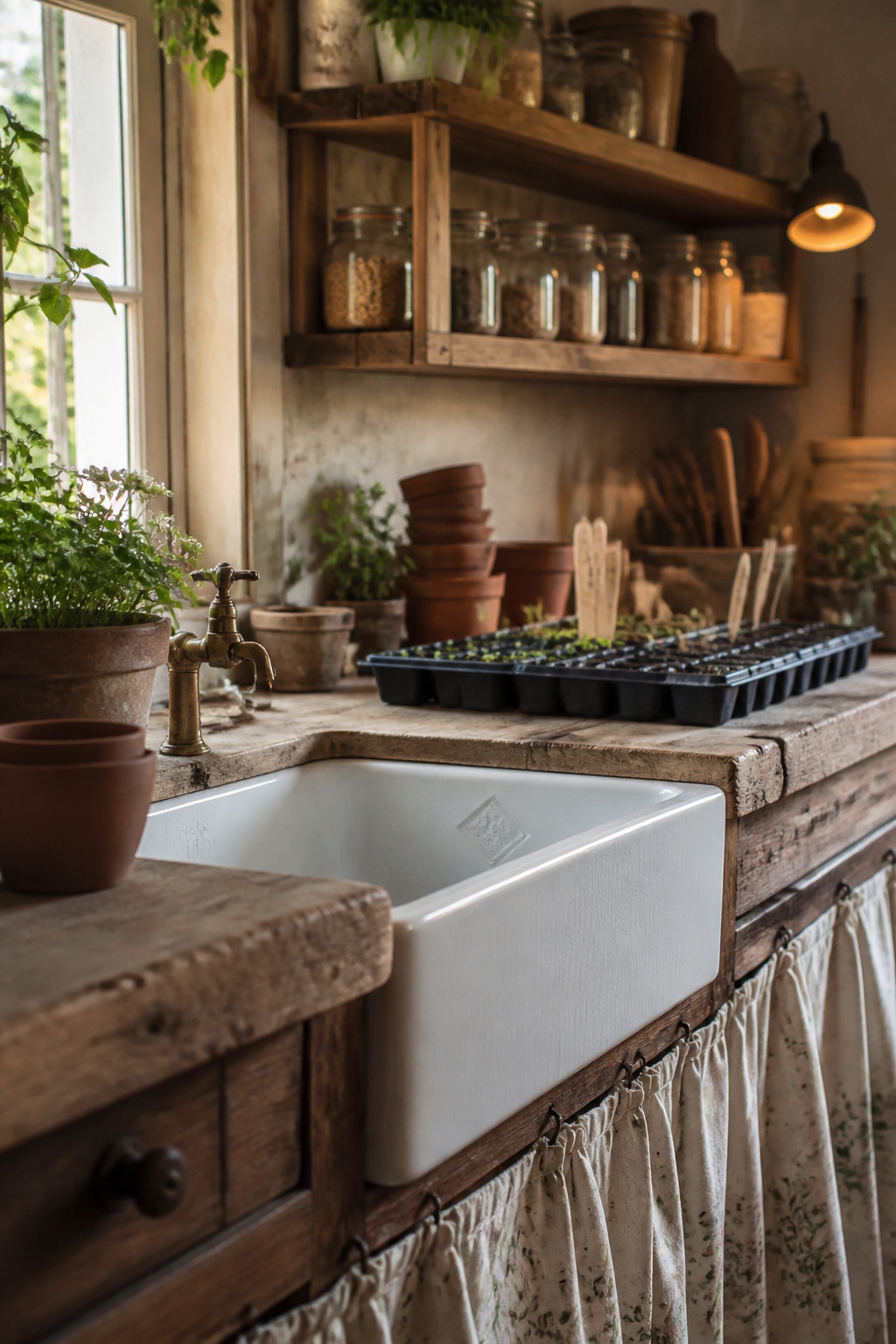
| Bench type | Cost range | Storage | Flexibility | Best for |
|---|---|---|---|---|
| Built-in (DIY) | ~$800–$1,158 | Bespoke, integrated | Fixed permanently | Long-term garden workspaces |
| Freestanding | $50–$250 | Shelf-based, modest | Repositions by season | Smaller kits, evolving layouts |
Built-in vs freestanding: what each gives you and what each costs
A DIY built-in bench runs roughly $800, or $1,158 with beadboard cladding, and for a long-term shed it is the professional pick: run it along the back wall under a window and the floor stays clear. Freestanding benches cost $50 to $250 and keep a flexibility the built-in surrenders once it is fixed — Hiebert moves her cast-iron-sink bench wall to wall by season.
Height, depth and the sink question
Set the surface at 34–36 inches — kitchen-counter height, the most cited spec for working without back strain. The test: the top sits at your wrist when your arms hang loose; go too high and you can’t see into the pots as you fill them. Give it 18–24 inches of depth, since 24 holds a full seedling tray plus a working margin. A reclaimed cast-iron sink, plumbed with a hose for supply and a bucket for drain, turns the bench near-professional with no permanent pipework.
Storage below and above: where tools, pots and seeds actually live
Below the bench, a galvanised trash can with a lid swallows a full compost bag, keeps moisture and rodents out, and doubles as a step-stool. Above, open shelves at 12–18 inches keep seed packets and labels at arm’s reach, and glass jars make seeds findable at planting time. A burlap or vintage-print skirt hides the plastic without doors or cabinetry.
Light for Plants — and for the Gardener
Orienting the shed for maximum winter light
Ask where the March light lands before you set a single post. A south-facing orientation is the standard for any garden building meant to grow things — a south face catches 8–10 hours of direct sun in summer, and, more importantly, holds the low winter light the interior needs most for seed starting. Turn the largest openings away from the prevailing wind, too, or you trade light for draughts.
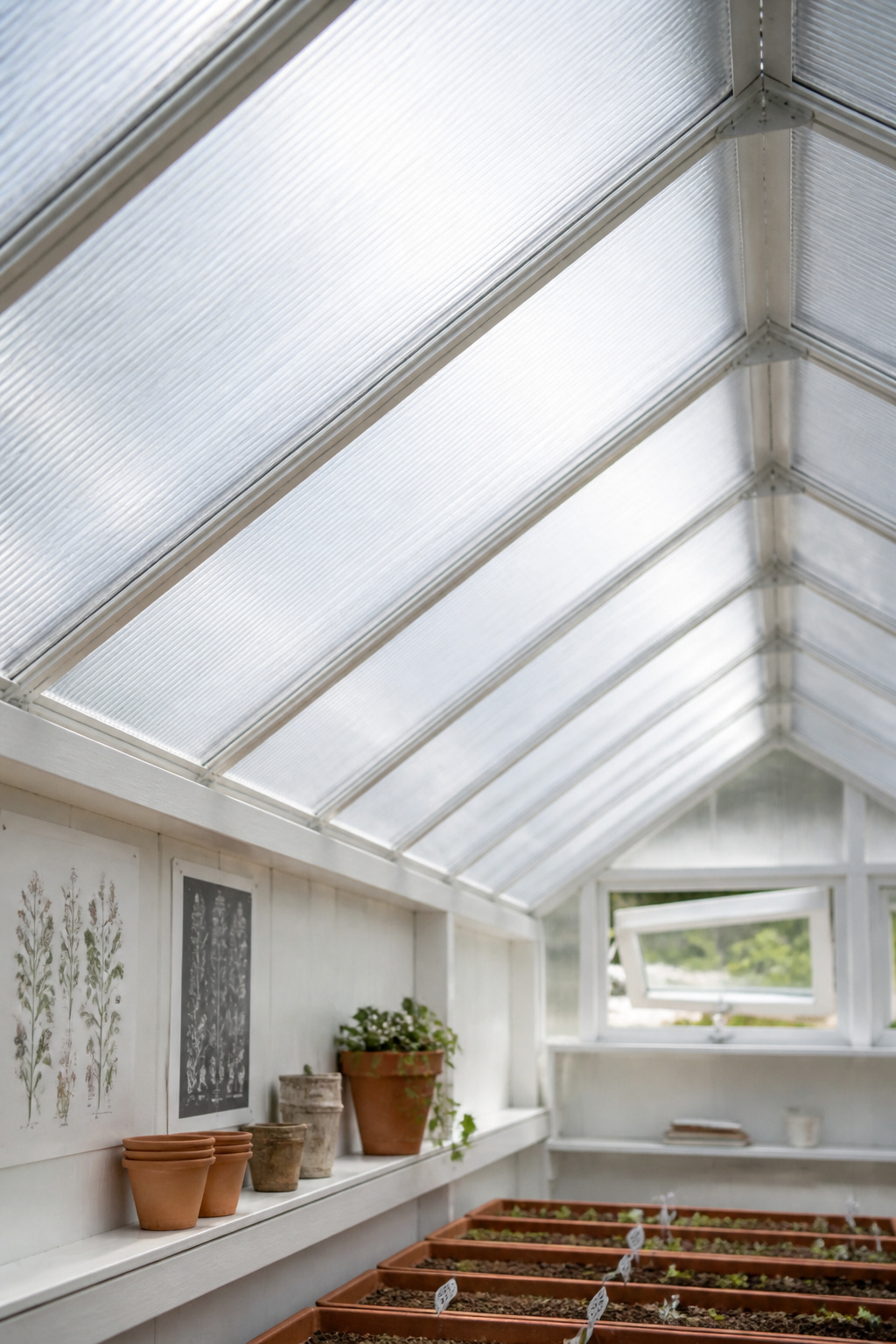
Glazed roof panels and clerestory windows: the greenhouse lean
Twinwall polycarbonate roof panels transmit around 80% of available light, insulate far better than single glass, block up to 98% of UV, and resist impact up to 250 times better than tempered glass. A few genuine glazing options for a part-greenhouse build:
- Twinwall polycarbonate roof panels — diffuse daylight onto the bench, light enough to install over a standard frame.
- Clerestory windows, set 8–12 feet up in a raised roof section — flood the interior while preserving wall space for shelving.
- Awning-style openers, hinged at the top — ventilate even in light rain, and let warm air escape so the shed cools itself in summer.
Grow lights for seed starting: what a part-time greenhouse needs
An unobstructed south window alone starts cool-season seeds — salad crops, brassicas, herbs. Warm-season crops like tomatoes and peppers need supplemental light or they go leggy. The University of Maryland Extension specifies 25–50 actual watts per square foot from the wall — actual draw, not the marketing “equivalent” figure. For a 4-foot shelf, two 4-foot LED strips at 5,000–6,500K give even coverage and stocky seedlings.
Tool Storage and Organisation That Makes Sense
The wall-mounted tool organiser: why it beats a floor pile
Get the tools off the floor and onto the wall, where visibility and fixed positions kill the time cost of searching and the space cost of pile-ups around the bench. A French cleat wall — 3/4-inch plywood cut with 45-degree bevels — is endlessly reconfigurable, and a single 4×8 sheet runs under $50 in materials. For a modest garden she shed, a pegboard with purpose-made hooks does the same job for less and shows the whole kit at a glance.
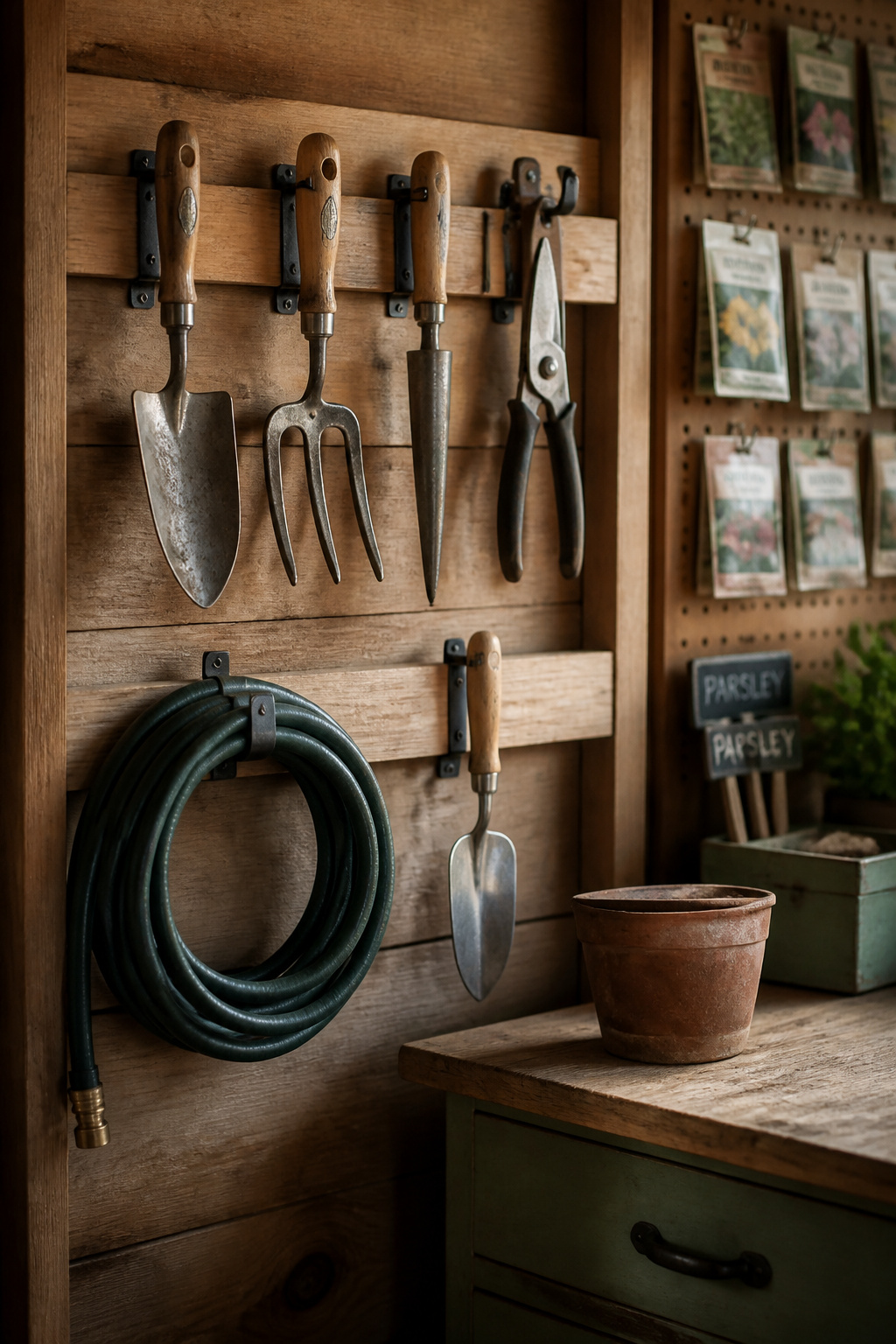
Potting supply storage: soil, grit, fertiliser and where each lives
Soil, grit and perlite belong in lidded bins under the work surface — sealed against the moisture that draws pests. One rule matters most: keep bags elevated on a pallet or shelf, never on bare concrete or earth, or the soil wicks moisture from below and turns clumpy and anaerobic. Keep fertilisers in their original sealed containers, stored apart from seed and compost, since some off-gas in an enclosed shed.
The seasonal rotation: what’s in the shed in April vs October
The system you won’t bother reorganising in November is the wrong system — so build a “middle tier” of accessible storage where things move forward or back by season rather than getting unpacked. In April, I bring seed trays, labels, propagation compost and hand tools to the front, and pull the wheelbarrow and stakes down from overhead. By October, I reverse it: clean and oil the metal tools, drain and hang the hoses, sharpen the pruners, and send the bulky kit back up to ceiling hooks so the bench stays clear for winter potting.
Planting the Shed Into the Garden
This is where a landscape eye earns its keep. A shed reads as part of the garden when the planting, the path and the materials carry the garden right up to and over the building.
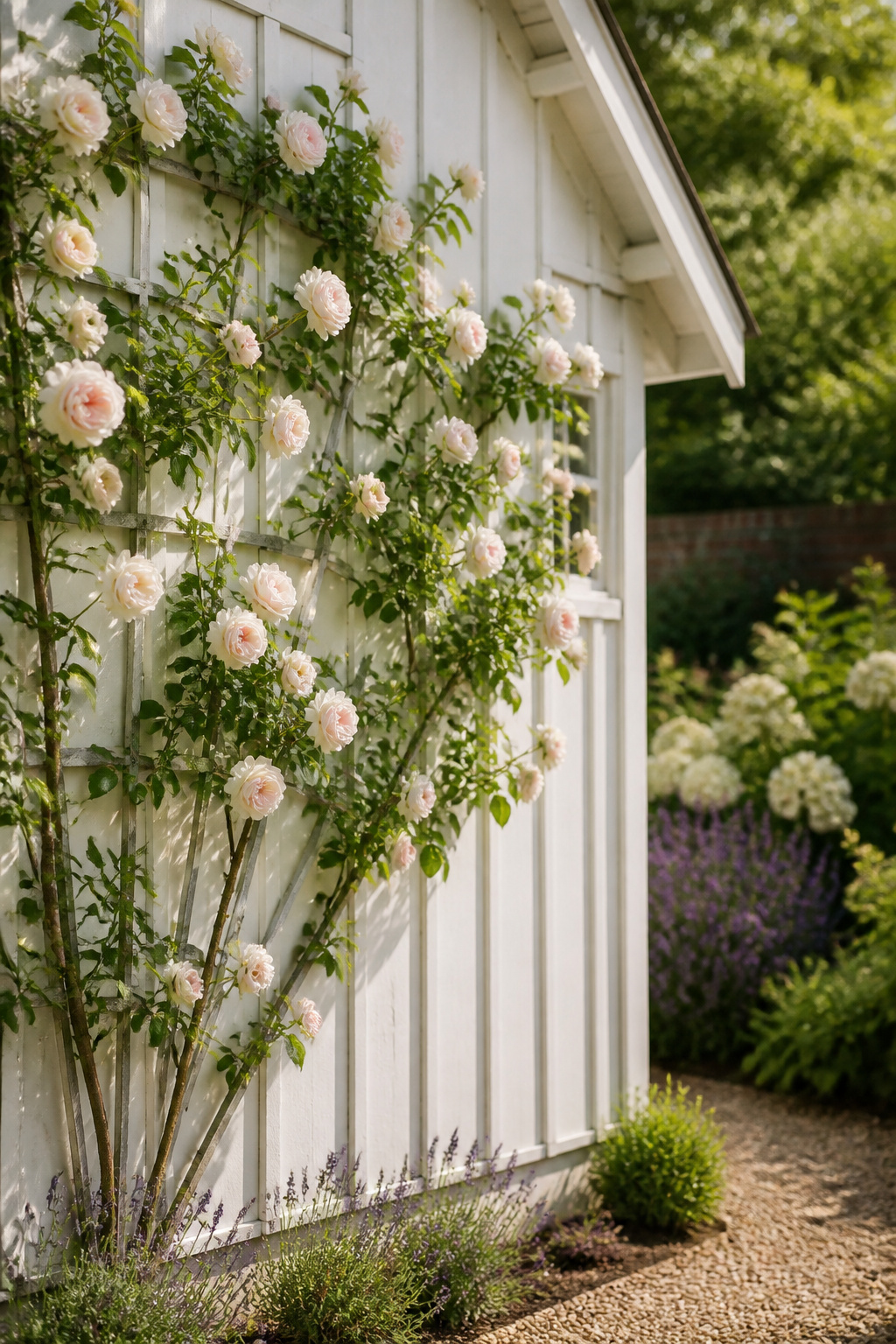
Exterior planting: climbers, window boxes and the shed as a garden structure
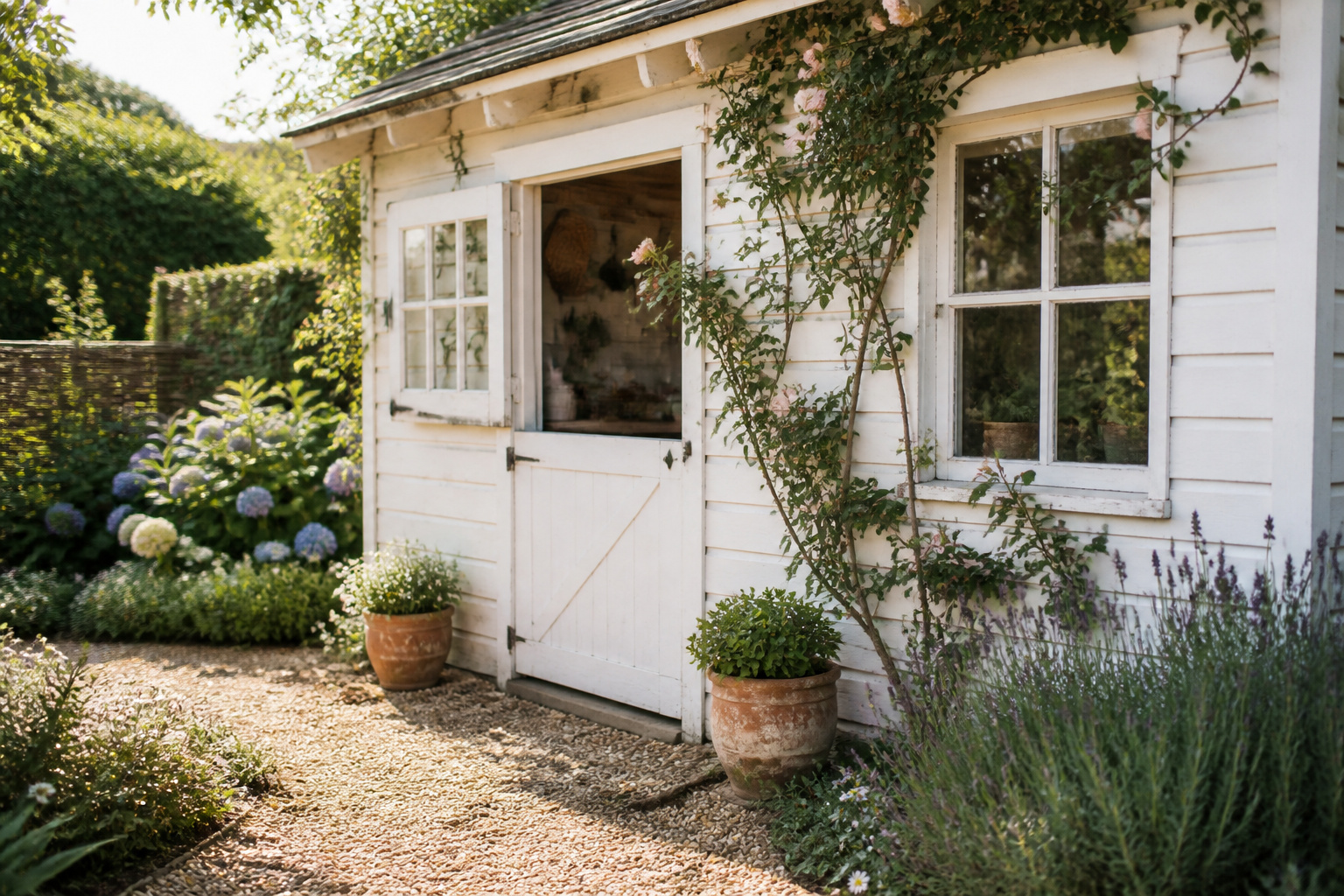
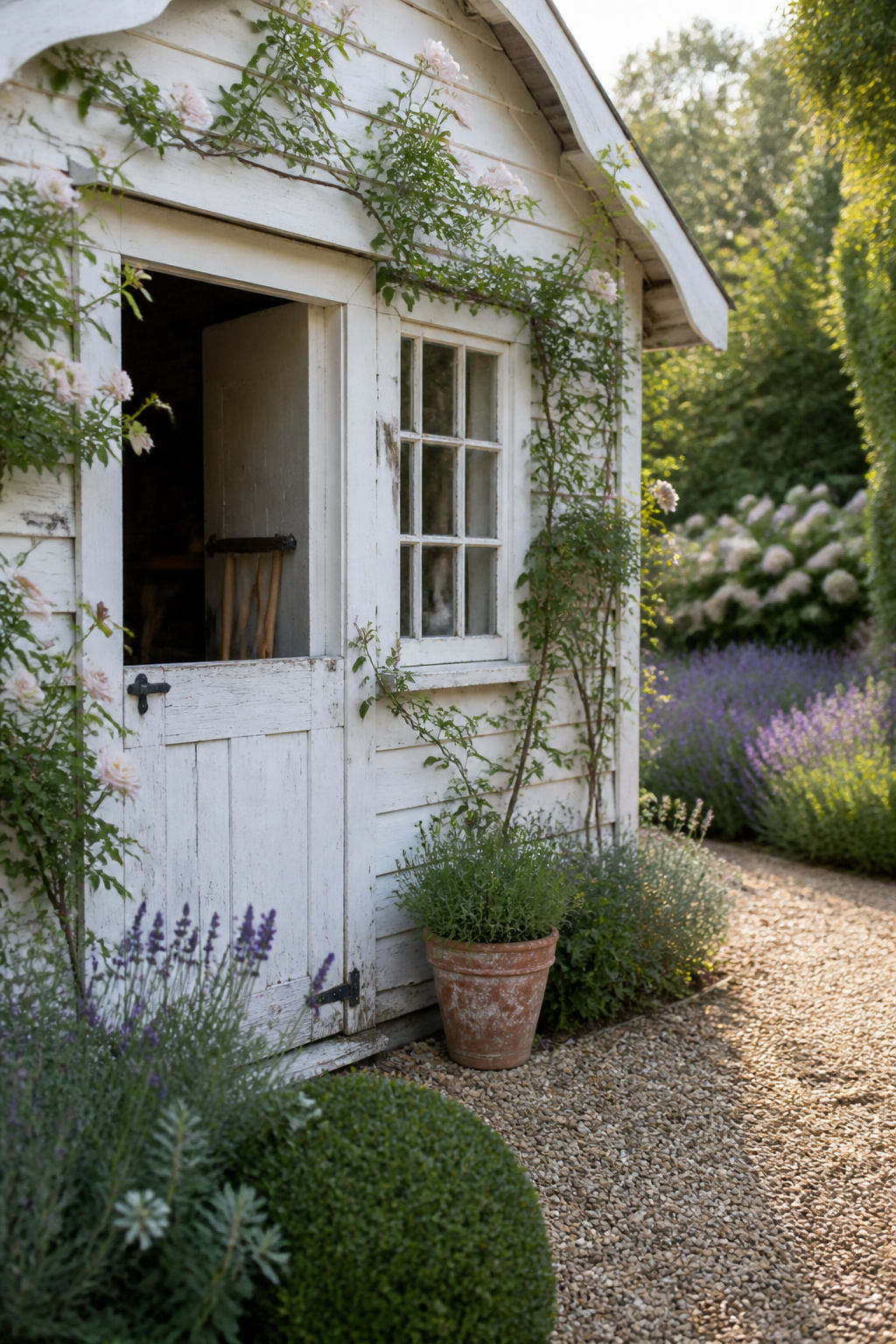
Train a climber on the facade from the first season and the shed disappears into the garden within two or three. The cottage-garden classics — climbing rose, clematis, jasmine, wisteria — all suit roughly USDA zones 5–9, so confirm hardiness for your own area first. Roses train on a fan trellis and pull in pollinators; jasmine covers a wall fast; wisteria is glorious but needs a sturdy frame and hard pruning. A south-facing lavender window box scents the entrance and asks almost nothing once established.
Paths and thresholds: how you arrive at the shed matters
How you arrive matters as much as where you end up. Make the path at least 36 inches wide so a wheelbarrow fits, and set stepping stones 18–24 inches centre to centre for a comfortable pace. Pea gravel between them drains well and reads as cottage garden. For Hiebert, the “pea gravel pathways to meander on” came before the shed itself — siting the building at the end of a path gives the garden a destination.
Materials that read as garden, not construction site
Choose siding that speaks garden vernacular. Board-and-batten — wide boards with narrow battens over the seams — is one of the oldest wood styles, best cut from cedar or redwood for rot resistance. Then match the shed’s colour and texture to the garden’s existing fencing and hardscaping so it looks purposeful rather than placed at random. A potting retreat shares the unhurried, considered intent of a calm retreat shed — the difference is only what happens at the bench.
Making It a Retreat, Not Just a Workspace
The seat inside the potting shed: where to put it and why it matters
A single seat is what turns a workroom into a retreat, and it costs almost no floor area tucked in a corner near the best light. Keep it scaled to the building: a wicker chair, a salvaged stool or a small bistro chair suits an 8×10 or 10×12 shed, where a full armchair would eat the room. Face it toward the south window so the garden becomes a view you don’t have to step outside to enjoy.
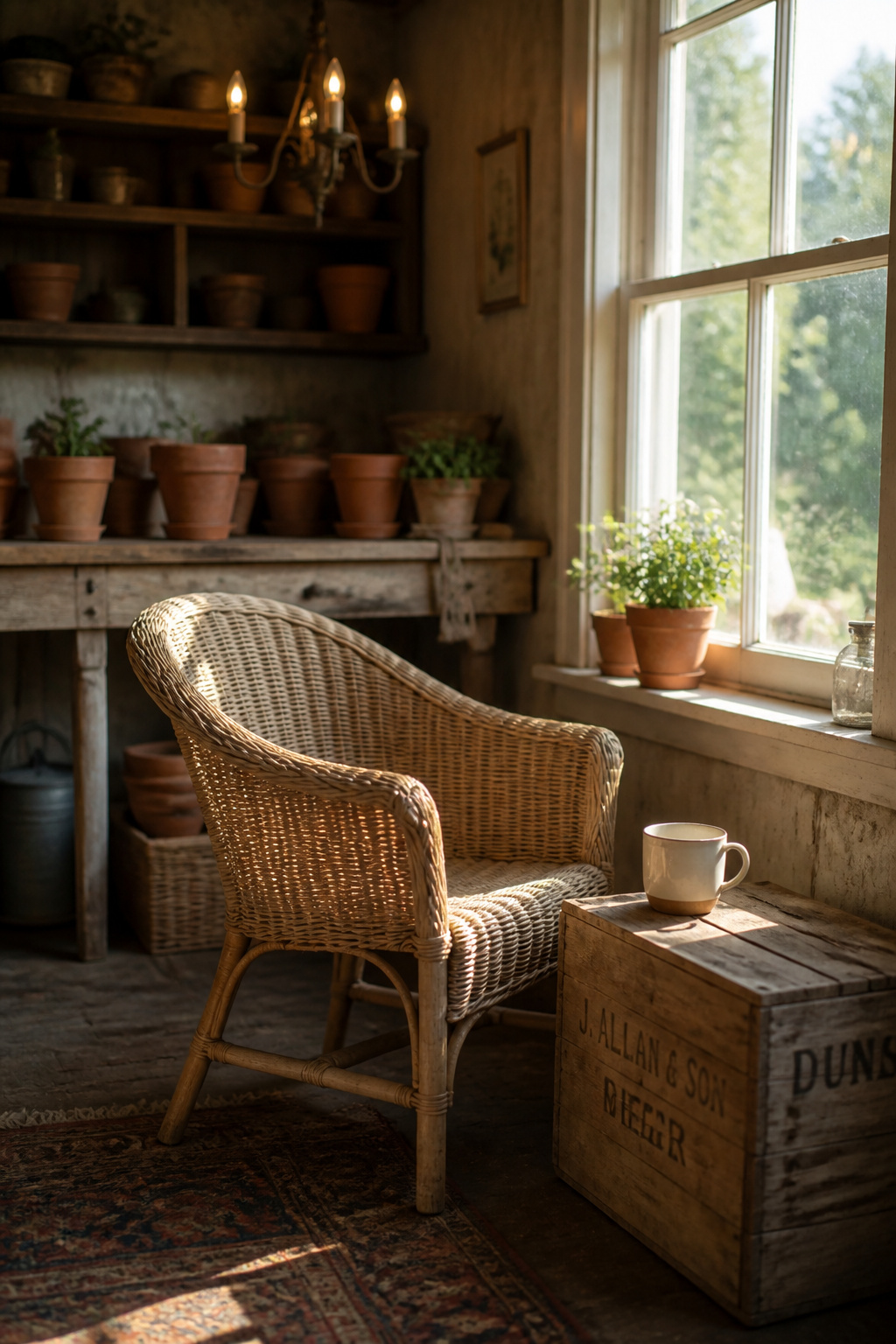
A kettle, a shelf of seeds and five minutes before the garden: the retreat ritual
The morning cup before the tools come out is not wasted time — it is the reason the shed gets visited every day, and a visited shed is a tended garden. A few moves earn the retreat quality without taking workspace:
- An earthy palette — sage green, terracotta, warm white — paired with wood and salvage finds.
- Battery candles and jar lights for evening ambience, no wiring required.
- Greenery indoors — hanging plants, dried flowers — to hold the garden connection on wet days.
The design choices that make a working shed pleasant to be in
Layer the light: bright task lighting over the bench for close work, and a softer second source — a salvaged pendant, string lights — for the seat. Hiebert found her chandelier on Facebook Marketplace for $25, which is the lesson exactly: salvage gives the retreat quality where new fittings rarely justify the cost. A washable indoor-outdoor rug shifts the register from utility without compromising a floor that still has to take muddy boots. For more of where these finds come from, see thrifted and salvaged decor.
Build it this way and the shed stops being somewhere you fetch tools from and becomes somewhere you go. The bench catches the winter sun, the climber thickens over the door each season, and the chair in the corner waits for the five quiet minutes that start the gardening day. That is a garden she shed retreat: a working space and a sanctuary at once, well within reach of any gardener ready to give their practice a proper home.
FAQ
How do I turn a garden shed into a potting retreat?
Install a potting bench at 34–36 inches high with 18–24 inches of depth under the best light source. Then add a wall-mounted tool system, lidded under-bench bins for soil and grit, and a small seat in a corner. Finish with one salvage light fixture and a washable rug to make it a retreat rather than storage.
What plants can I grow in a she shed with natural light only?
An unobstructed south-facing window supports cool-season crops without grow lights: salad leaves, brassicas, and herbs like basil, cilantro and parsley. Rosemary, thyme and mint tolerate lower light best. Warm-season crops such as tomatoes and peppers need supplemental lighting or they grow leggy. Rotate seed trays daily so seedlings get even light.
How do I make a garden shed look like part of the garden?
Match the shed’s siding material and paint colour to the garden’s existing fencing and hardscaping, and repeat plant species from the main beds in a border at its base. Train a climber on the facade from the first season using a fan trellis. Add a deliberate pea gravel path with stepping stones spaced 18–24 inches apart.