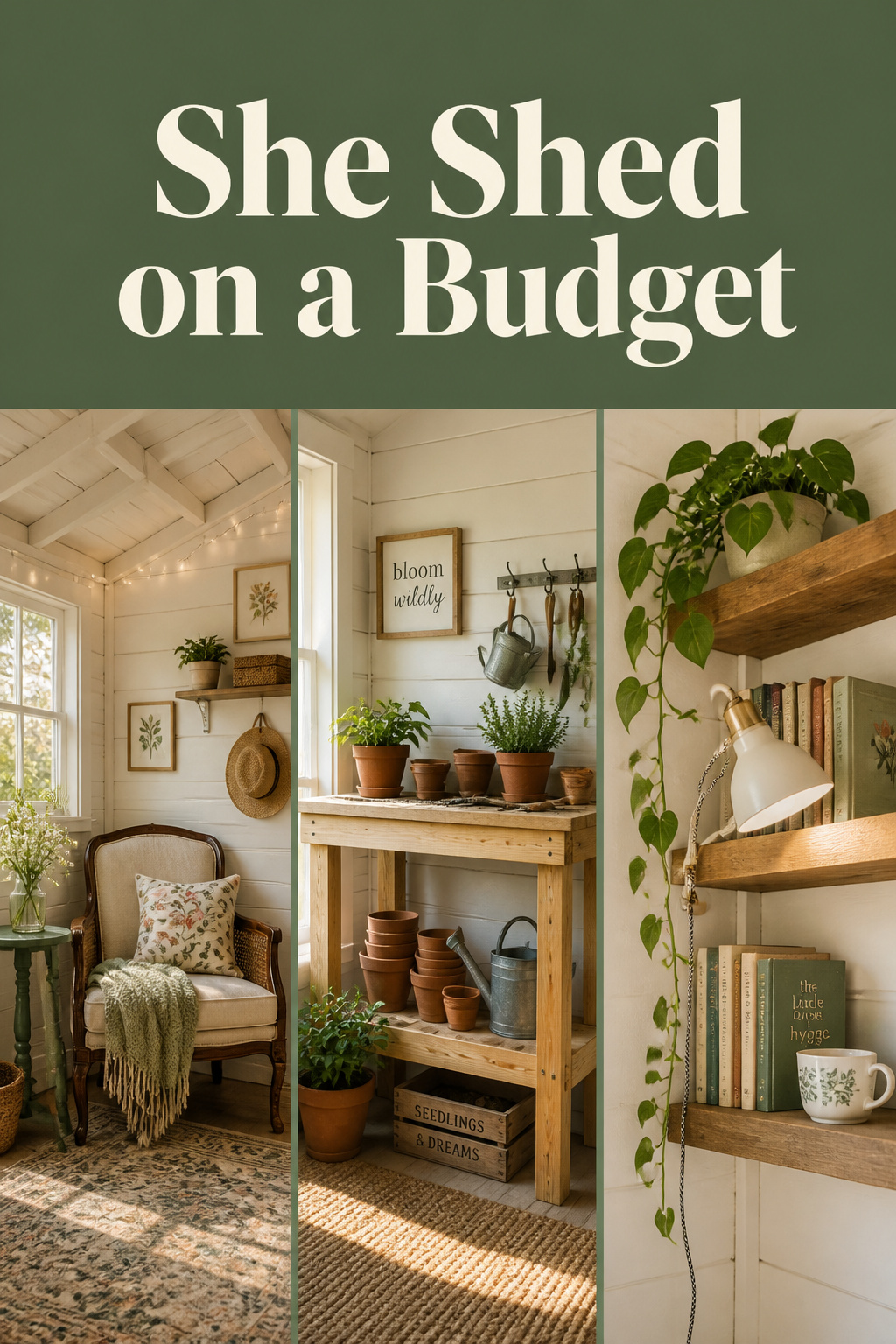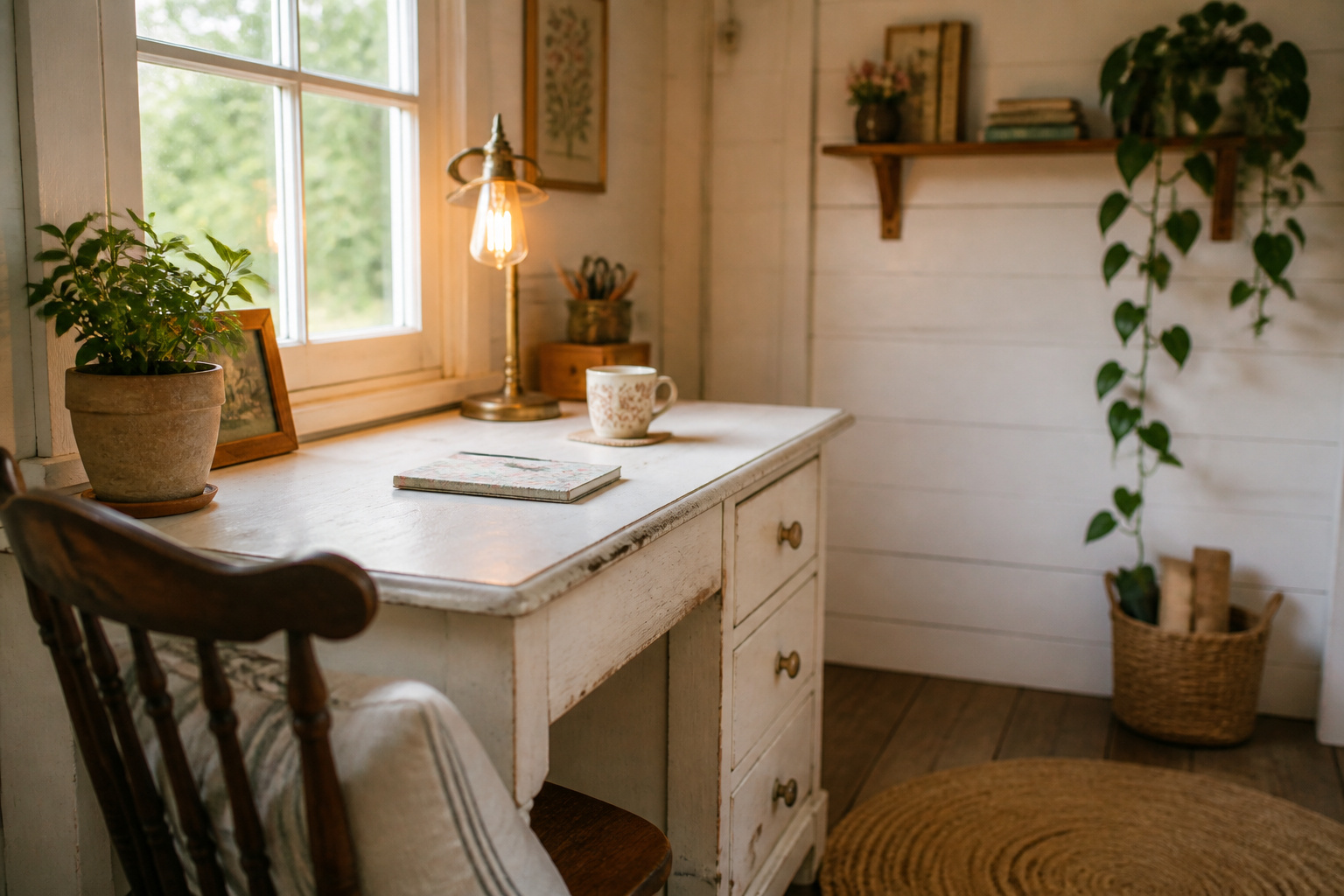

Here’s the belief I want to knock down first: that a she shed worth showing off needs a four-figure decorating budget. It doesn’t. The big numbers you’ve seen — $3,000 to $30,000, per HomeGuide’s 2026 data — are for building the structure. Decorating one you already have is a separate, much smaller line item. I’ve watched people furnish a good-looking shed for under $300: a gallon of paint, a few thrift runs, a weekend with a drill. Spend in the right order and the math works in your favor.
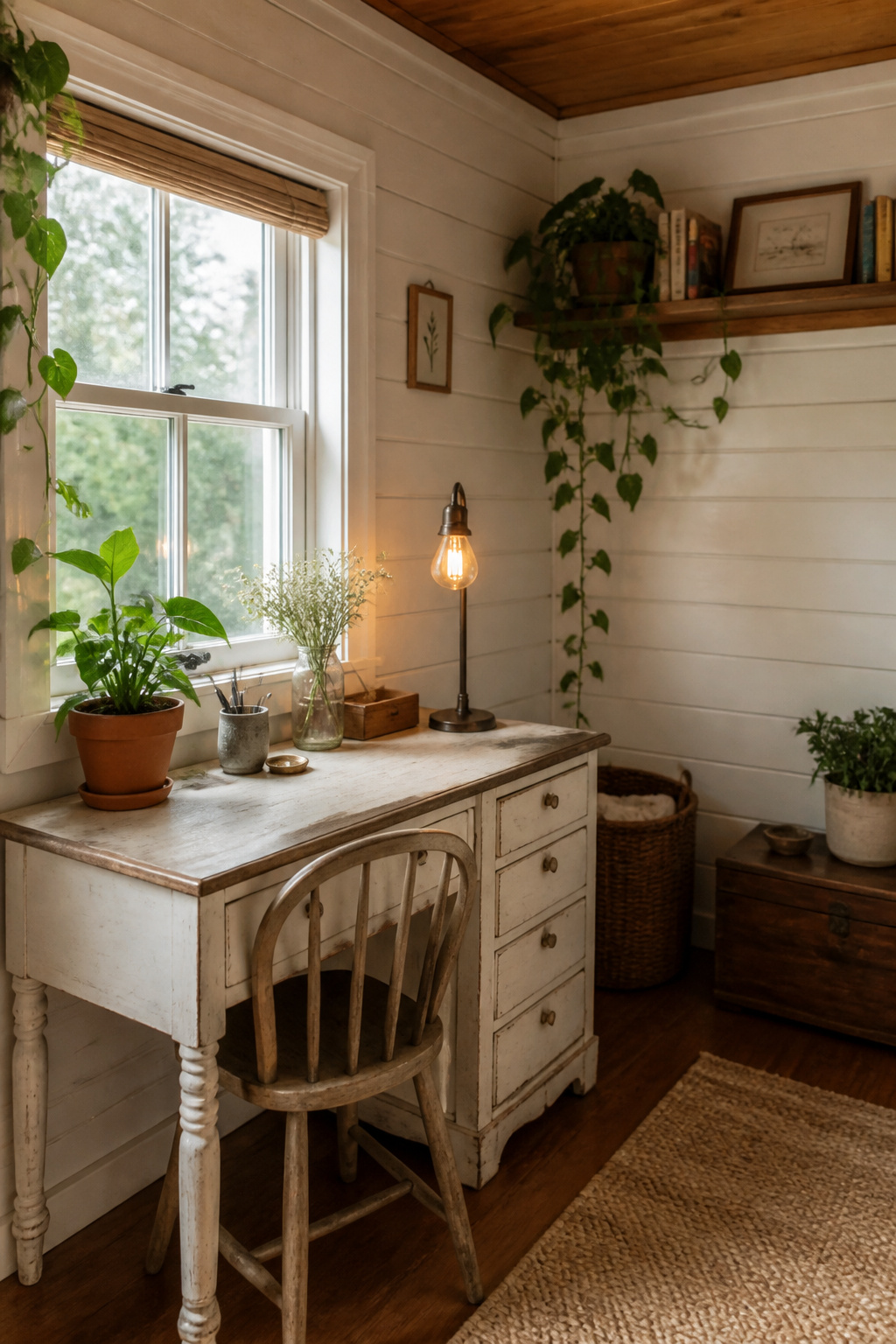
TL;DR
- A functional, styled she shed interior costs $200-$500 with thrift finds, a single gallon of paint, and one or two DIY builds — roughly half what new furniture runs.
- Spend your money on wall paint ($25-$40 a gallon), one decent rug, and lighting; save by sourcing furniture secondhand (a Facebook Marketplace desk runs $25-$35).
- Work in order: paint walls, paint the floor, build and install, then style. Doing decor first is why so many budget sheds look unfinished.
What a Budget She Shed Actually Costs — and What It Doesn’t Have To
The misconception: a styled shed needs a big spend
Once you have four walls, the parts that matter are smaller. HomeGuide pegs interior painting at $100-$300 and furniture at $500-$1,000 — both drop fast with thrift and DIY. Budget decorators routinely finish an existing shed for under $300 by combining what they own with secondhand finds and paint.
Real budget ranges: $200, $500, $1,000+ — and what each buys
Three tiers. $200 buys paint, a Marketplace desk and a thrift footstool — a functional reading or craft corner. $500 adds a thrift chair, string lights, two rugs and shelf materials for a finished room. $1,000+ brings a painted floor, a DIY potting bench, curtains and a reupholstered chair — completely styled.
Where to spend vs where to save (the only rule you need)
The one rule that matters:
| Category | Spend here | Save here | Why |
|---|---|---|---|
| Walls | Quality paint, $25-$40/gal | — | Highest impact per dollar in the space |
| Floor | One anchoring rug | Layer cheap accent rugs on top | The rug grounds the main zone |
| Furniture | — | Buy secondhand | A $25 Marketplace desk works as hard as a $200 new one |
| Decor objects | — | Thrift, repurpose, forage | A $4 can of chalk paint adds character for nothing |
Paint is the move: one gallon covers a small shed interior and changes everything. For the bigger picture, the complete she shed guide covers siting, structure and seasons.
Thrift Store and Salvage Finds That Do the Work
What to look for at estate sales, Facebook Marketplace and barn sales
Facebook Marketplace is your main hunting ground for big pieces. Search “antique desk” or “vintage chair,” filter by distance, and a usable desk lands at $25-$65. Estate sales via EstateSales.net and AuctionNinja deliver higher-quality older furniture than thrift stores — single-owner storage is kinder than a back room. Barn sales surface rustic pieces that read as intentional with no restoration. One documented haul: a $65 chair, an $8 footstool, a $30 loveseat base — three zones for $103.
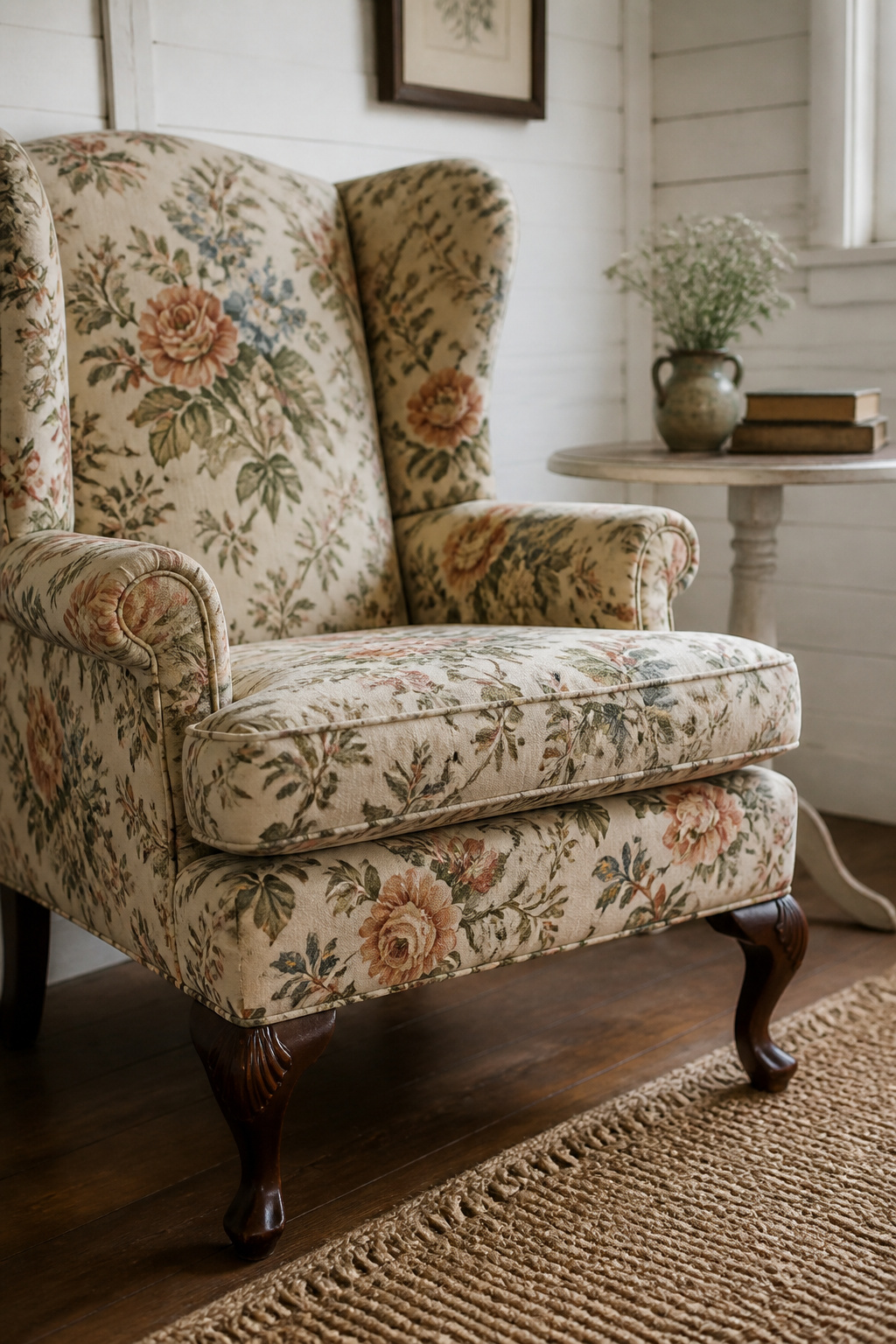
The thrifted she shed core four: desk, chair, rug, curtains
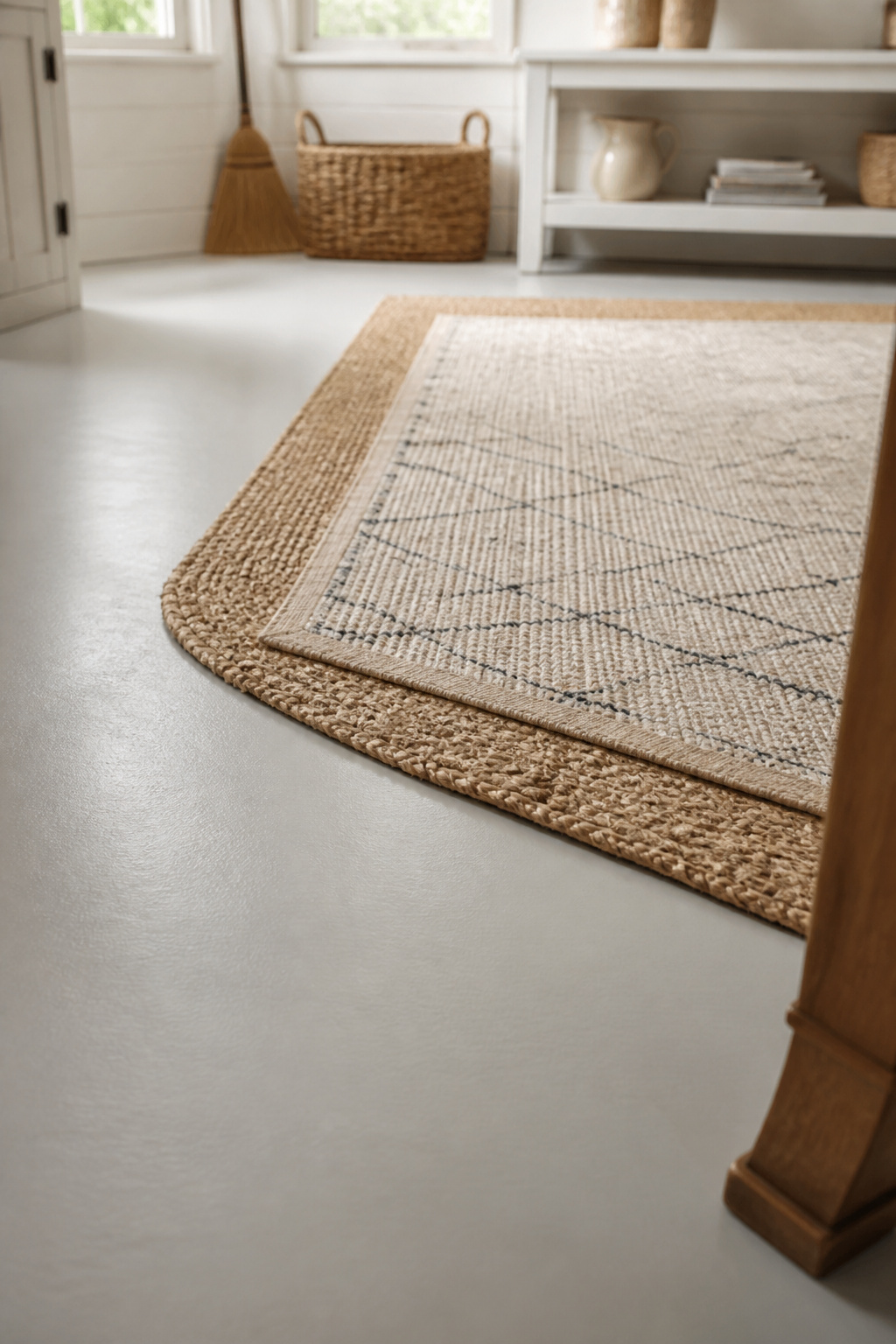
A thrift desk starts around $35, or $25 on Marketplace if you collect it yourself. For the floor, a jute rug is the budget anchor — durable, hides dirt, reads right in cottage and rustic styles. Curtains come from a thrift store for $0-$8, or no-sew: cut old sheets to length and hang them on a tension rod ($5-$12).
How to clean and prep secondhand finds without over-restoring them
Before you hand over cash, test the piece. Grip the backrest and gently twist — creaking or flex means loose joints. Then check the list:
- Joints: press the stretchers between the legs for wobble.
- Wood: avoid swollen or softened areas — that’s water damage and rot.
- Upholstery: press the foam to see it bounce back, and smell it. Mildew in foam is a disposal job, not a cleaning one.
Don’t over-restore — a worn desk or scuffed leg reads as charm, and heavy sanding erases the patina that made it interesting. The mistake I see most: buying upholstery without the sniff test. Sniff first. Always.
Paint: The Cheapest Transformation in the Shed
Exterior paint choices that last against weather
The outside takes the weather, so that paint choice is a real decision. Here’s how the main options compare:
| Paint type | Cost per gallon | Lifespan | Notes |
|---|---|---|---|
| 100% acrylic latex (mid-range) | $40-$70 | 8-12+ years | Breathes, resists peeling; best all-round choice |
| Budget latex exterior | $15-$25 | Shorter | Covers protection needs on a tight budget |
| Oil-based exterior | $50-$95 | 5-7 years | Slower drying; worse long-run value than acrylic |
Skip the premium tiers. One rule: never put interior paint on the exterior or vice versa — formulations differ for weather resistance and VOC safety.
Interior: why white or off-white is the budget decorator’s best tool
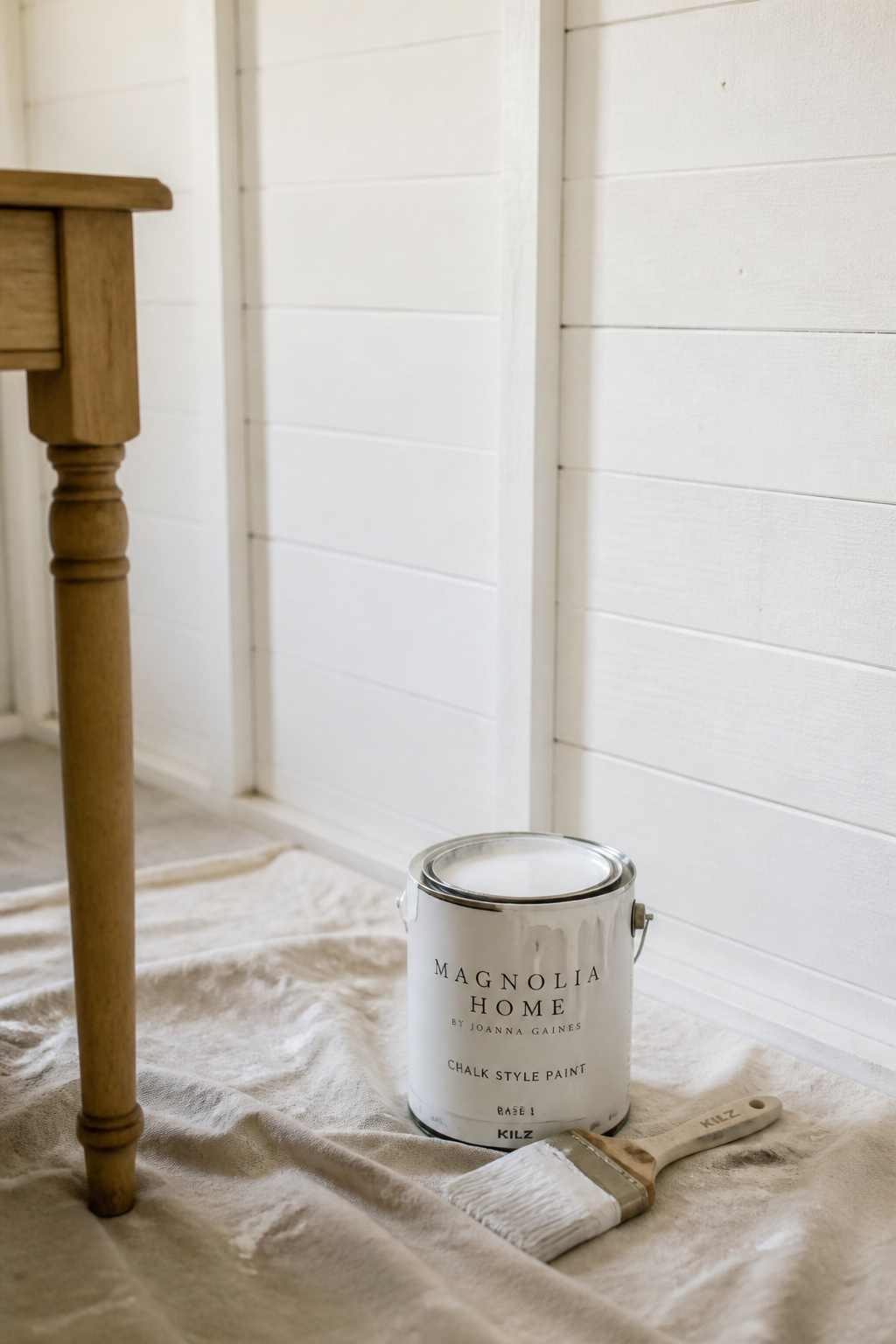
White reflects more natural light than any other color — critical in a small, window-limited shed — and it’s usually cheaper than colored paint. The real budget reason is versatility: secondhand furniture in any finish reads intentional against white instead of mismatched. That’s the difference between “collected” and “chaos.”
Painting the floor — the $40 transformation with a five-year life
A painted floor is the most underrated budget move in the shed. Rust-Oleum Porch & Floor covers 350-400 square feet per gallon in two coats ($35-$45) and lasts 5-10 years — per-year cost beats budget vinyl plank. Prep is what people skip: sweep, scrape loose fibers, wipe and dry. Bare wood drinks the first coat unevenly and costs you a third.
DIY Furniture Builds That Cost Less Than IKEA
The $60 potting bench from two boards and a sawhorse base
The most-cited free beginner plan is Ana White’s Simple 2×4 Potting Bench: about $50 in materials — one community build came in at $48.85, against $150+ for a store model. Skip cutting joints with sawhorse brackets ($15-$20 a pair), and the base lands under $40. Start to finish:
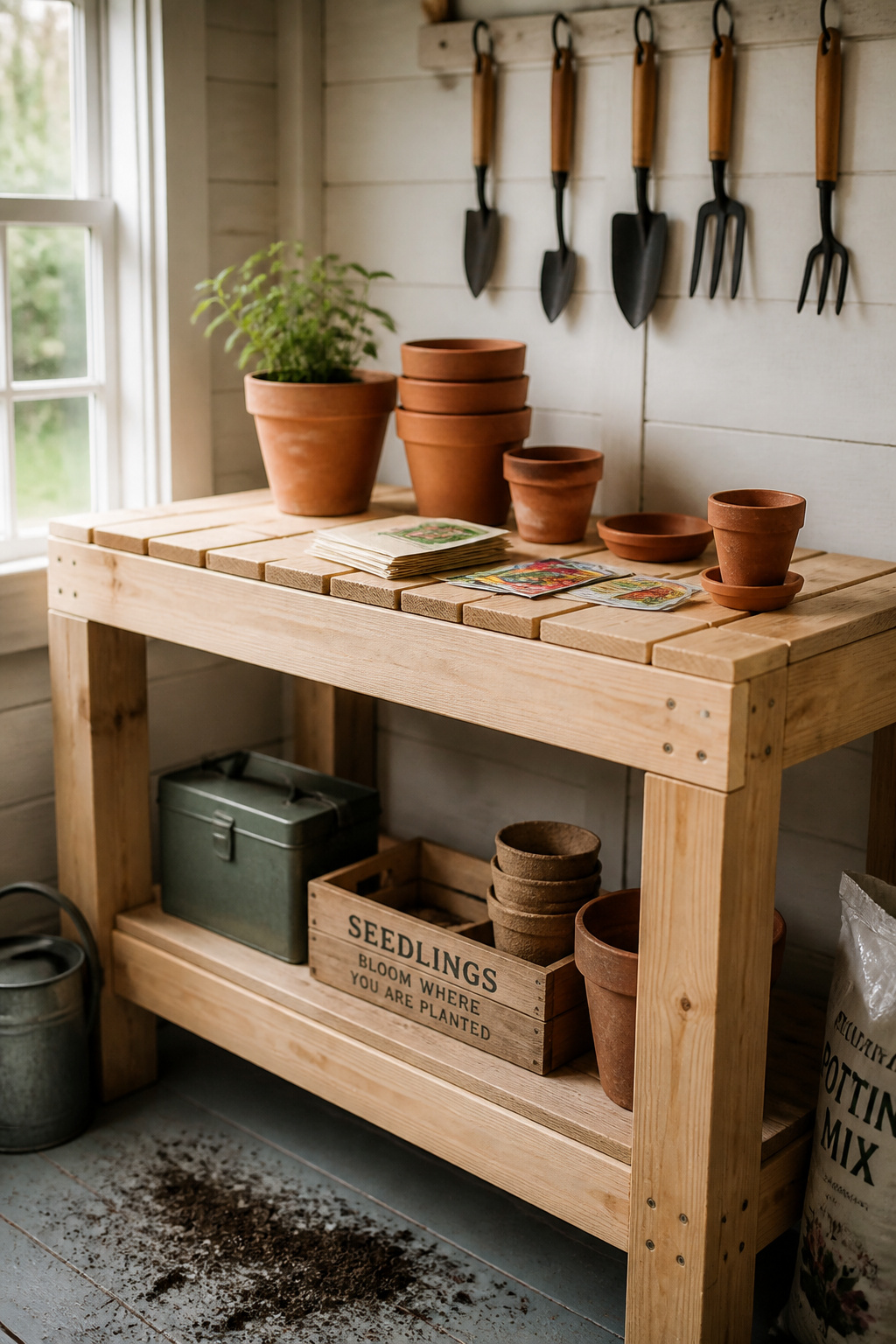
- Buy two 8-foot 2x4s (~$5-$7 each) and a pair of sawhorse brackets.
- Cut the 2x4s into four legs at working height (~36 inches).
- Slot the legs into the brackets and tighten.
- Cut a 2×12 or half-inch plywood to length for the top, screw it down, and sand the edges.
Skill level: first build. The mistake to avoid: interior-grade pine on a bench that will see moisture. Use cedar or treated lumber for anything garden-adjacent.
Floating shelves with pocket-hole joinery — first build skill level
A basic floating shelf in 1×10 lumber costs under $10. The one tool you might not own is a mini Kreg Jig ($20) — pocket-hole joints pull closed under load, which matters when the shelf holds plants and books. Glue-and-screw works too if you’d rather skip it. Shelves are the simplest way to claw back floor space, which ties into making a small shed feel bigger.
Reupholstering a thrift-store chair: the one afternoon project that changes everything
Start with a dining chair that has a removable seat pad — no sewing, 3-5 hours, under a yard of fabric. Documented cost for two thrift chairs: $10 each plus $30 for fabric and supplies, just over $50 for the pair, against $150-$300 retail. One caution: staple a 6-inch sample to the frame and check tension before cutting the full yardage.
Budget She Shed Decor That Looks Intentional
Lighting: fairy lights, clip-on lamps and the $25 pendant swap
Lighting is the highest-payoff styling dollar, and it stays cheap. String lights at 33 feet cost $15-$25; warm-white LEDs draped across the ceiling make any room feel deliberate, and solar versions skip the wiring entirely. Clip-on reading lamps ($12-$20, USB-powered) handle task light. Add a $20-$25 pendant swap where a light box exists and you’ve got layered lighting for under $75, no electrician needed.
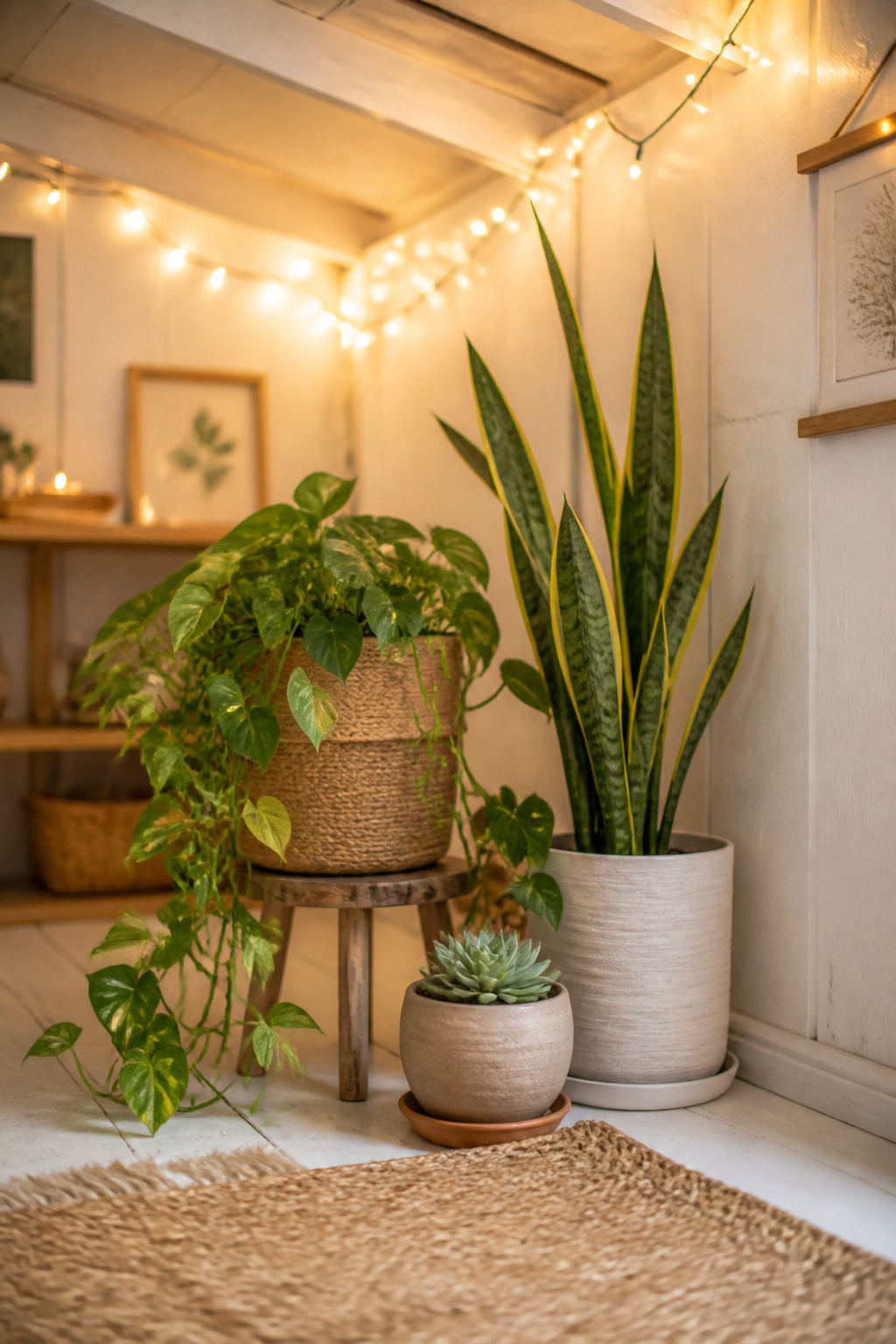
Textiles: a single decent rug and two throw pillows do most of the work
Don’t scatter your budget across small accents. One jute rug ($30-$60 for a 5×7) and two throw pillows ($10-$20 each) do more decorating work than a shelf of trinkets — they signal a deliberate palette. A thrift quilt ($5-$15) draped over a tired loveseat works as slipcover and textile at once, saving a reupholstery job on the big pieces.
Plants and found objects: free decor that breathes
Here’s where free does the heavy lifting, by spend tier:
- Free: pothos or snake plant cuttings from a friend, a 6-inch cutting rooted in a mason jar, galvanized watering cans and old step ladders from the garage.
- Under $15: a pothos, snake plant or monstera from a nursery; vintage seed packets from a thrift store.
- Under $75: a jute rug, two throw pillows and a clip-on lamp — a complete styling pass.
Lay the rug and textiles first — objects on a bare floor look cheap. If your shed is heading toward desk duty, this thrift-led approach carries into a low-cost backyard office.
The Budget She Shed Project Plan: Start to Finish
Weekend one: sourcing run and the paint job
Source first, before you commit to a palette. Spend Saturday morning hitting estate sales, Marketplace pickups and one thrift store for the core four, then paint the interior that afternoon — one gallon of white covers a small shed in two coats. Painting the floor too? Let the walls cure 24 hours, then coat the floor so it’s walkable by Monday. Weekend 1 runs $153-$210.
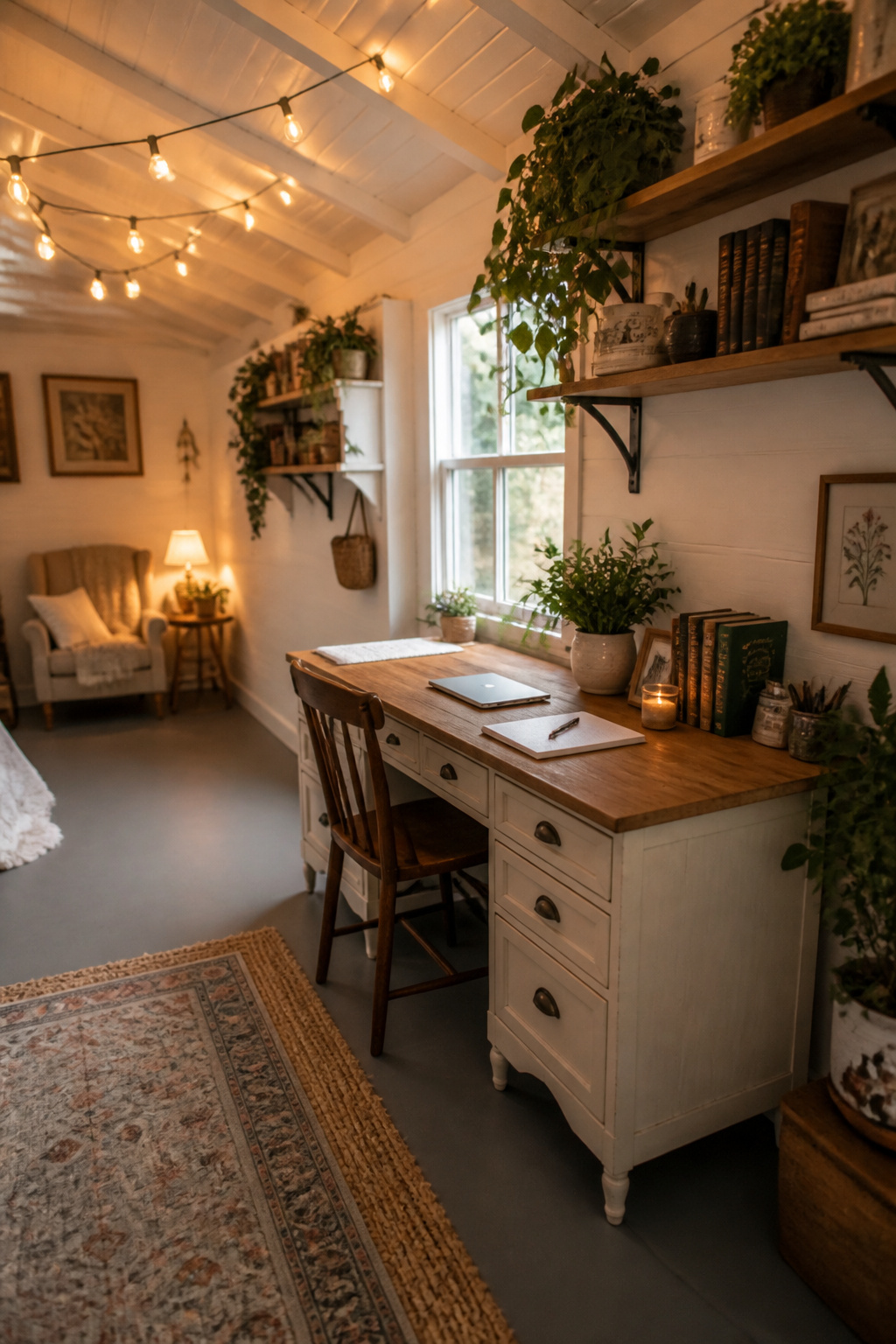
Weekend two: builds, installs and the styling pass
Buy lumber Friday — the build runs long if you shop Saturday morning. In order:
- Saturday morning: build the potting bench or floating shelves.
- Saturday afternoon: install shelves, hang curtains (under an hour with tension rods).
- Sunday: the styling pass — plants, fairy lights, textiles, found objects.
Style last. It’s the step most people do first, which is exactly why so many budget sheds feel unfinished.
The honest total — and what to tackle next
Honest entry-level total: $30 paint + $35 desk + $65 chair + $8 footstool + $25 lights + $8 curtains + $20 rug = $191 — functional and inviting. The $500 tier adds $143-$175 in builds and finishing.
Once it’s styled, make it year-round: foam board insulation ($0.25-$0.50/sq ft) plus a small electric heater is all it takes. But the step worth taking this Saturday is the sourcing run — go find the desk.
FAQ
How much does it cost to decorate a she shed on a budget?
A functional, styled she shed interior — desk, chair, rug, curtains, paint, fairy lights and plants — runs $200-$500 using thrift finds, DIY and one gallon of paint. Adding DIY furniture and a painted floor takes it to $500-$800, still roughly half HomeGuide’s $500-$1,000 figure for new furniture alone.
Where can I find cheap furniture for a she shed?
Facebook Marketplace is the top spot for large pieces: desks at $25-$35, chairs at $40-$65, bookshelves free to $20. Estate sales (EstateSales.net or AuctionNinja) deliver higher-quality older furniture than thrift stores. The Craigslist free section rounds out the options.
What is the cheapest way to insulate a she shed for winter use?
Foam board insulation ($0.25-$0.50 per square foot) is the cheapest conventional option — a small 8×10 shed insulates for under $100 as a DIY job. Fiberglass batts (~$0.60 per square foot) fit standard stud bays with exposed studs. Add a $30-$60 electric space heater for year-round use.