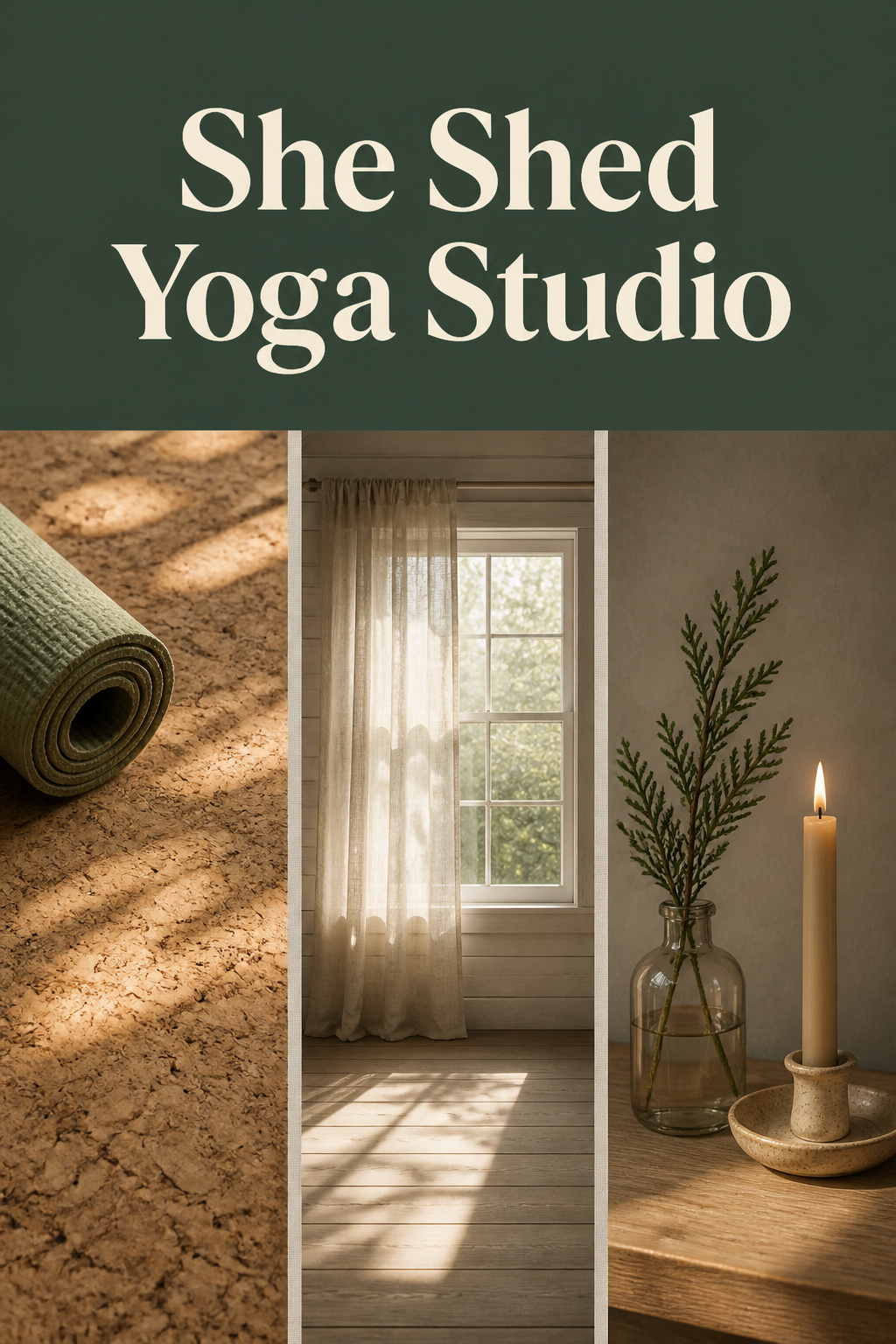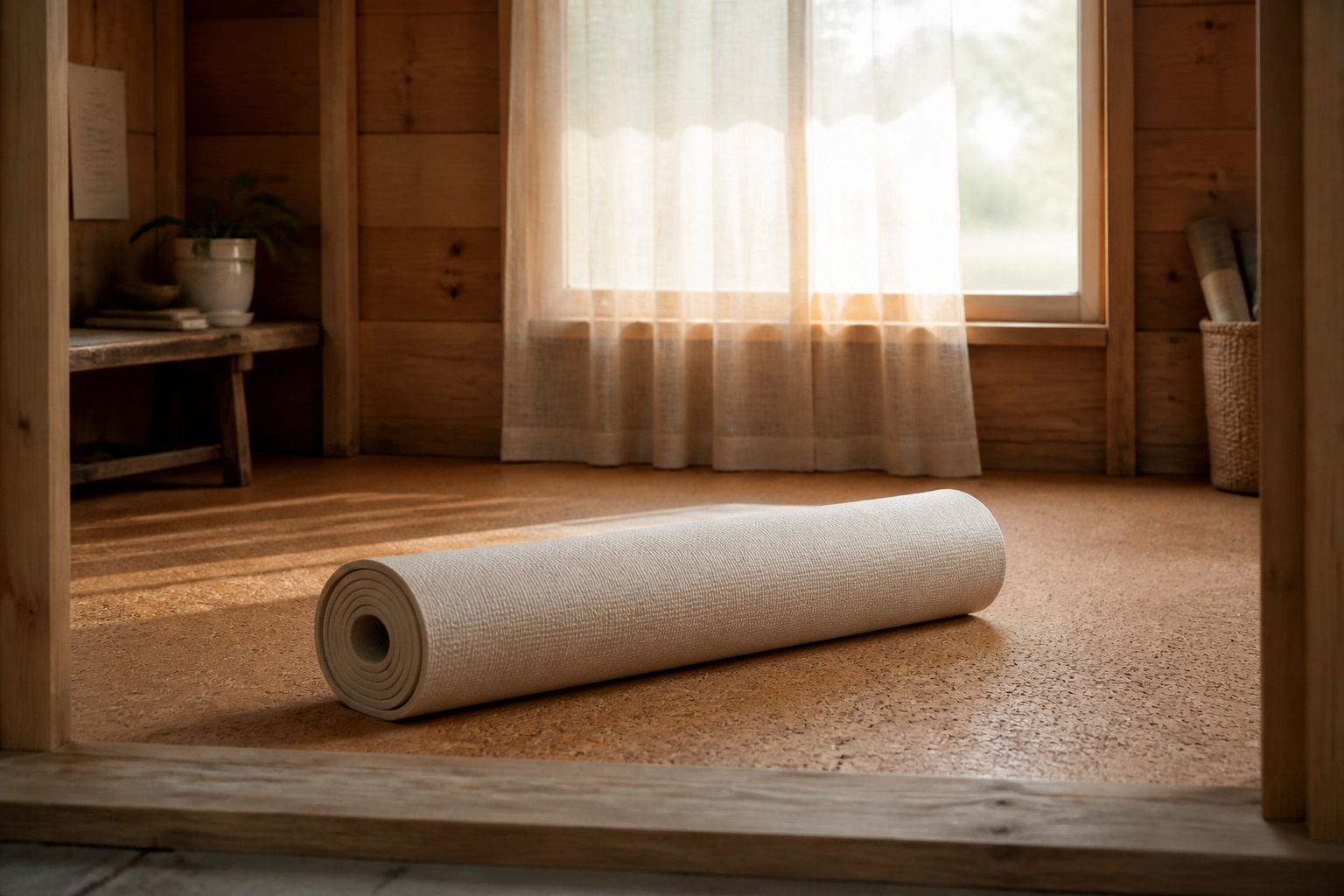
Ask what you actually want from a yoga space and the honest answer is rarely an object. It is a feeling — the body settling before the mind is asked to. A she shed yoga studio earns that feeling in a way an indoor room cannot, because the walk across the yard is itself a threshold: as Yoga Journal puts it, the yard becomes a ritual, signalling to the nervous system that practice is beginning before the mat is unrolled. The shed need not be large; it needs to ask nothing of you.
TL;DR
- Design by subtraction first: a 10×12 ft shed (120 sq ft) leaves 50–60 sq ft of clear practice floor after a prop corner, and that emptiness is the design.
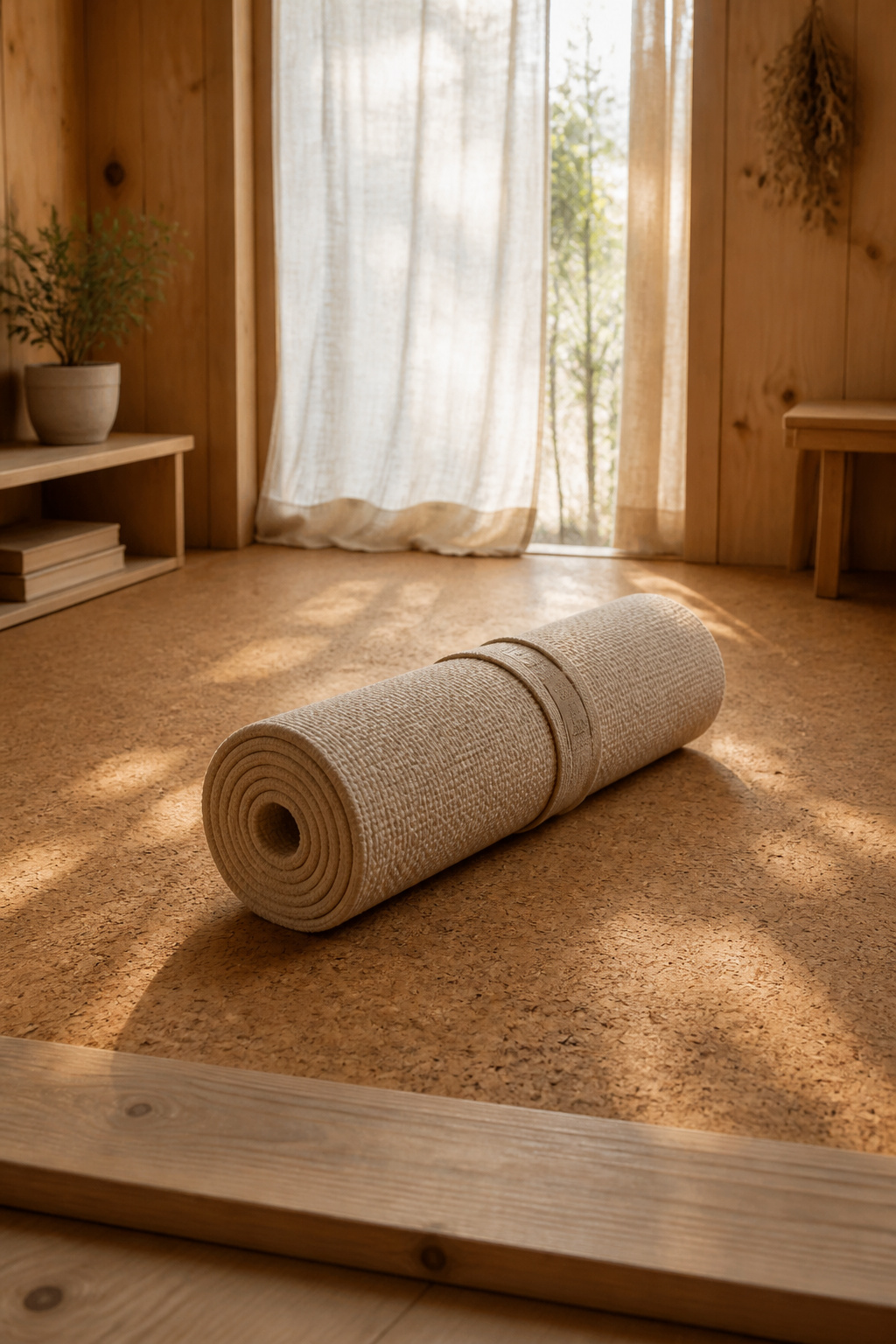
- The two decisions that do the most work are cork flooring (warm underfoot, NRC 0.2–0.6) and diffused east-facing morning light through sheer linen.
- Treat sound and scent as design materials: target 30–35 dBA, keep the garden’s birdsong, and anchor practice with one natural scent.
A Space That Asks Nothing of You
Why a backyard shed is the right container for practice
The advantage is separation. An interior room competes with the laundry and the task next door; a shed in the garden sits outside all of it. Studio Shed names the cue: the walk to a distinct structure primes the nervous system before you sit. A 10×12 ft shed is roomy enough, and converting an existing one usually does — the work is floor, light and sound, not structure.
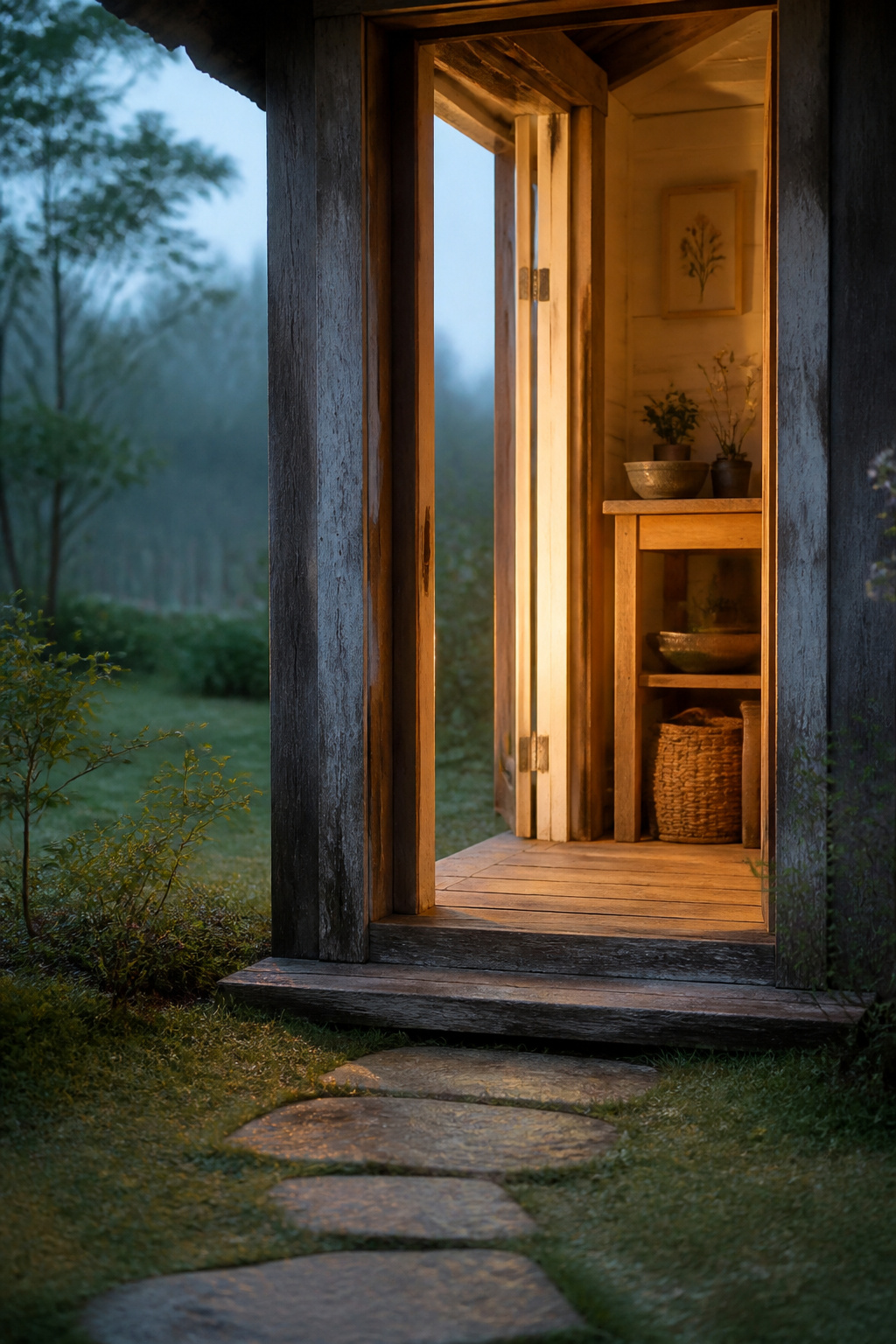
The subtractive principle: design by removing, not adding
Begin with the room empty and add only what practice requires; this is how attention works, not a preference. The obstacles designers name most — clutter, visual noise, hard overhead light — are things to remove, not buy. My own first sitting space was a four-by-six-foot apartment corner — a jute rug, a cushion, a paper screen — and it worked because nothing asked anything of me.
What this space needs to feel — before any object enters it
Three words recur when practitioners describe a space that works: warm, quiet, still. Each is a material decision, not a mood — warm is the floor, quiet is the wall and the seal, still is the light. As HGTV’s wellness designers put it, the most effective practice spaces don’t ask you to do anything; the space itself is the invitation — the instinct designing a she shed begins from.
Floor and Underfoot: The Foundation of a Yoga Practice
The floor is in contact with the body the whole session — the most consequential material in the room.
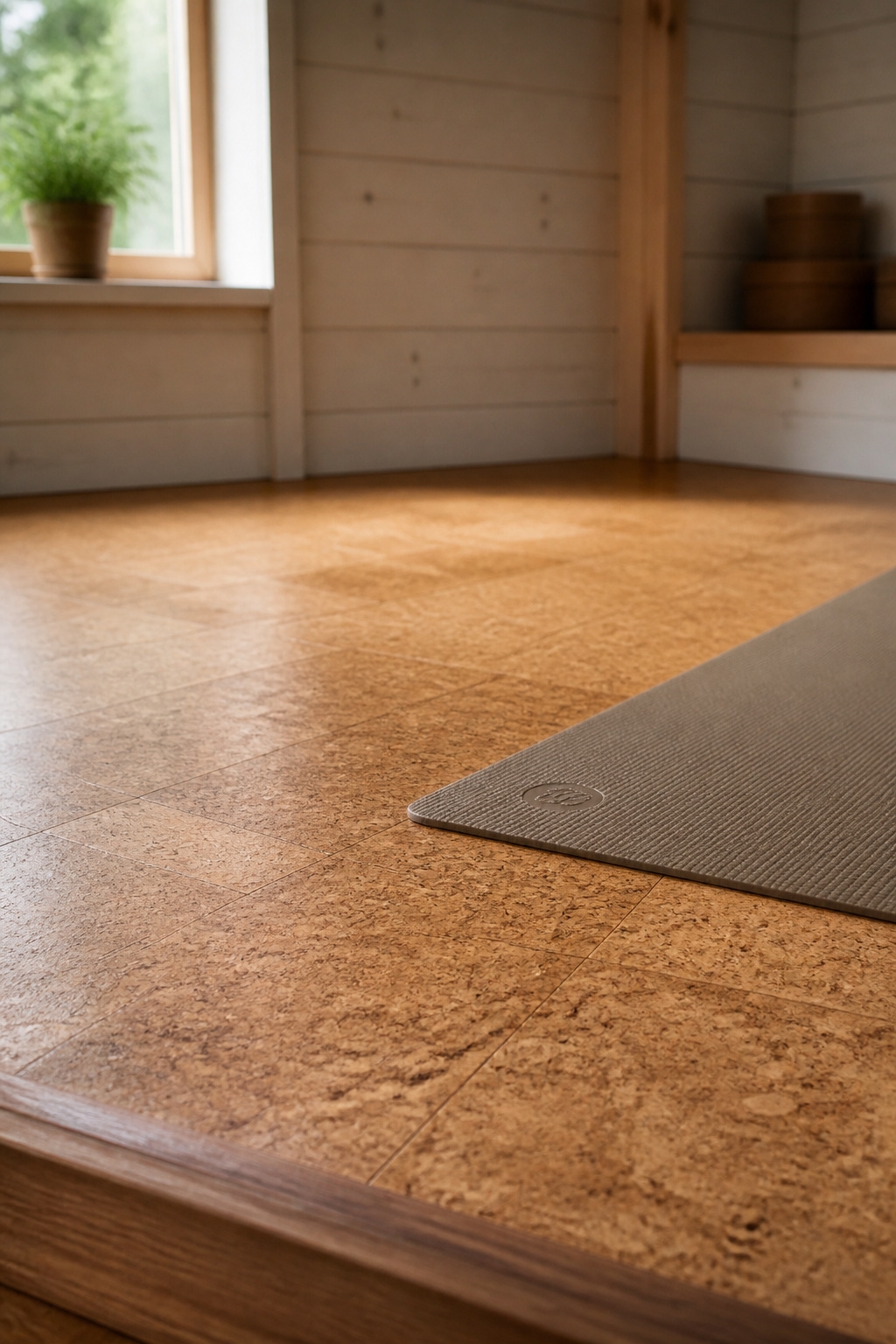
Cork, rubber and hardwood — what each does beneath a mat
Cork and rubber are the two surfaces worth considering; hardwood is a distant third, lovely but prone to warping in a shed’s humidity. Cork is warm, antibacterial when naturally finished, and at 5–6mm cushions knees and spine without unsettling balance — ICork Floor, yoga flooring specialists, call it the closest a permanent floor comes to a yoga mat. Rubber (8–12mm) is the most hygienic and durable but runs cold.
| Flooring | Feel underfoot | Warmth | Sound absorption | Approx cost / sq ft |
|---|---|---|---|---|
| Cork (5–6mm) | Soft, cushioning | Warm, self-insulating | NRC 0.2–0.6 | mid |
| Rubber (8–12mm) | Firm, grippy | Cold without heating | Good underlay | $2–$10 |
| Hardwood (3/4 in) | Hard, classic | Cold; warps in humidity | Low | high |
The floor temperature problem in a backyard shed
The ground beneath a shed is a thermal sink, so an uninsulated floor can run 10–15°F colder than the air above it. Cork’s cellular structure resists that heat transfer and stays warm without supplemental heating; rubber, by contrast, needs a mat over it in a cold shed.
Subfloor insulation: why the floor is always the last thing people remember
A beautiful surface over a cold subfloor still gives cold feet in October. Lay a 6-mil polyethylene vapour barrier over the ground, then rigid foam between the joists — XPS resists moisture and delivers R-5 per inch; aim for R-19 to R-30 by climate.
Natural Light and How to Shape It
Light is the first thing the body reads on entering a room; for practice, quality matters more than quantity.
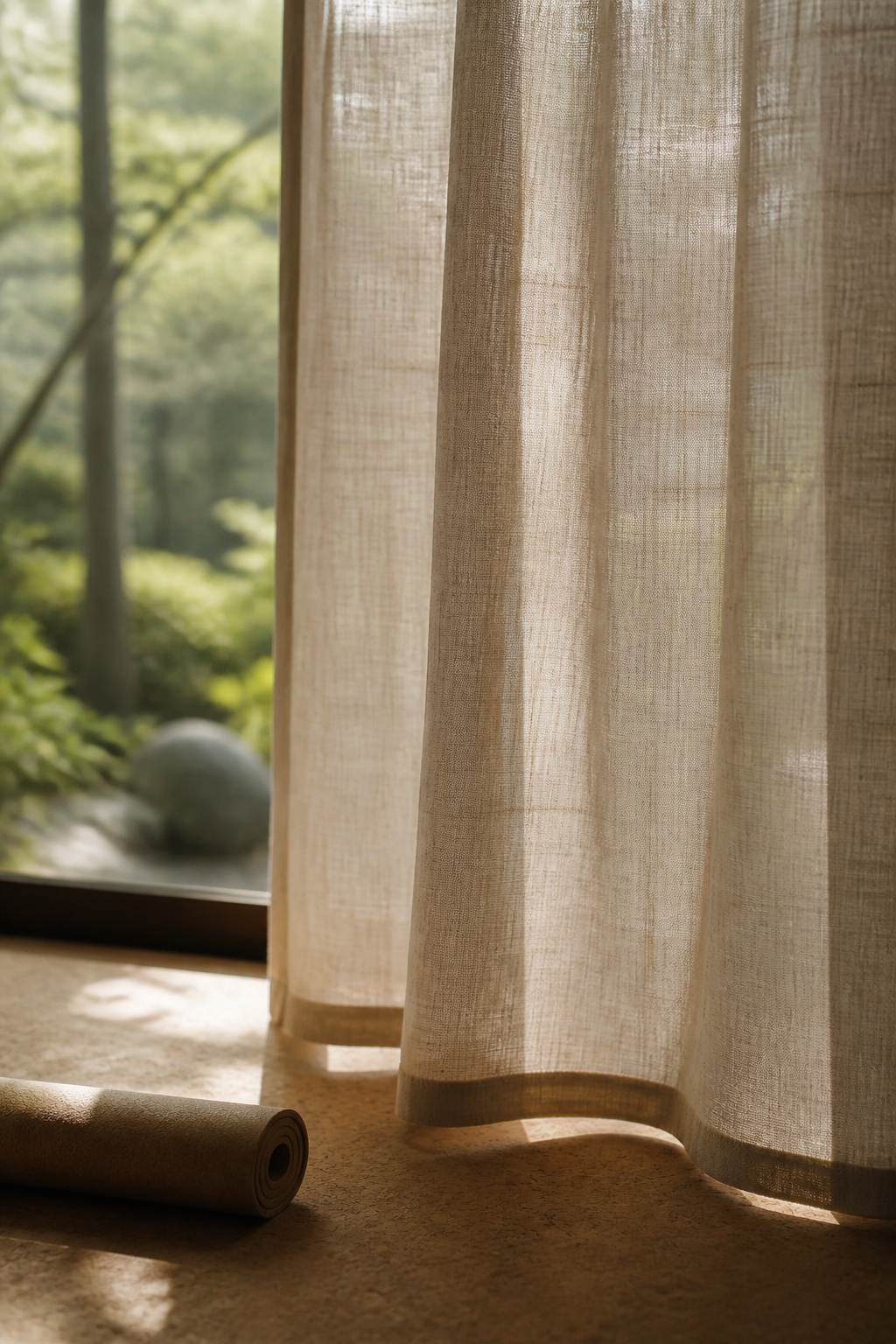
Orienting the shed so morning light lands where practice happens
East-facing windows catch direct light only in the morning — the hours most home practice happens — then shade by mid-morning, so the shed never overheats and the low light crosses the floor rather than striking your face mid-pose. North-facing windows are the consistent shadow-free fallback.
Diffused vs direct: window treatments that soften without darkening
A direct beam creates glare, and glare creates tension — the restlessness both balance poses and meditation work against. Sheer linen curtains or woven bamboo shades turn that beam into an even glow while keeping the garden in view; cellular shades cut solar heat gain 15–20%. Diffused light even lifts serotonin.
The single candle rule: why artificial light should work at one level
A warm 2000–3000K colour temperature — candlelight, late sunset — downregulates the nervous system as cool white never will. My own single candle rule: artificial light should dim to one warm level at floor height, not split into zones or shift colour. A design stance, not a lux figure. Take out whatever competes with that level:
- Overhead LED strips fixed bright with no dimmer
- Any cool-white or daylight-spectrum bulb
- Mirrors and glossy surfaces that bounce a hard beam back
Sound and the She Shed Yoga Space
Scent and sound are design materials equal to colour, and most rooms ignore both. Sound is two problems: blocking what intrudes, keeping what belongs.
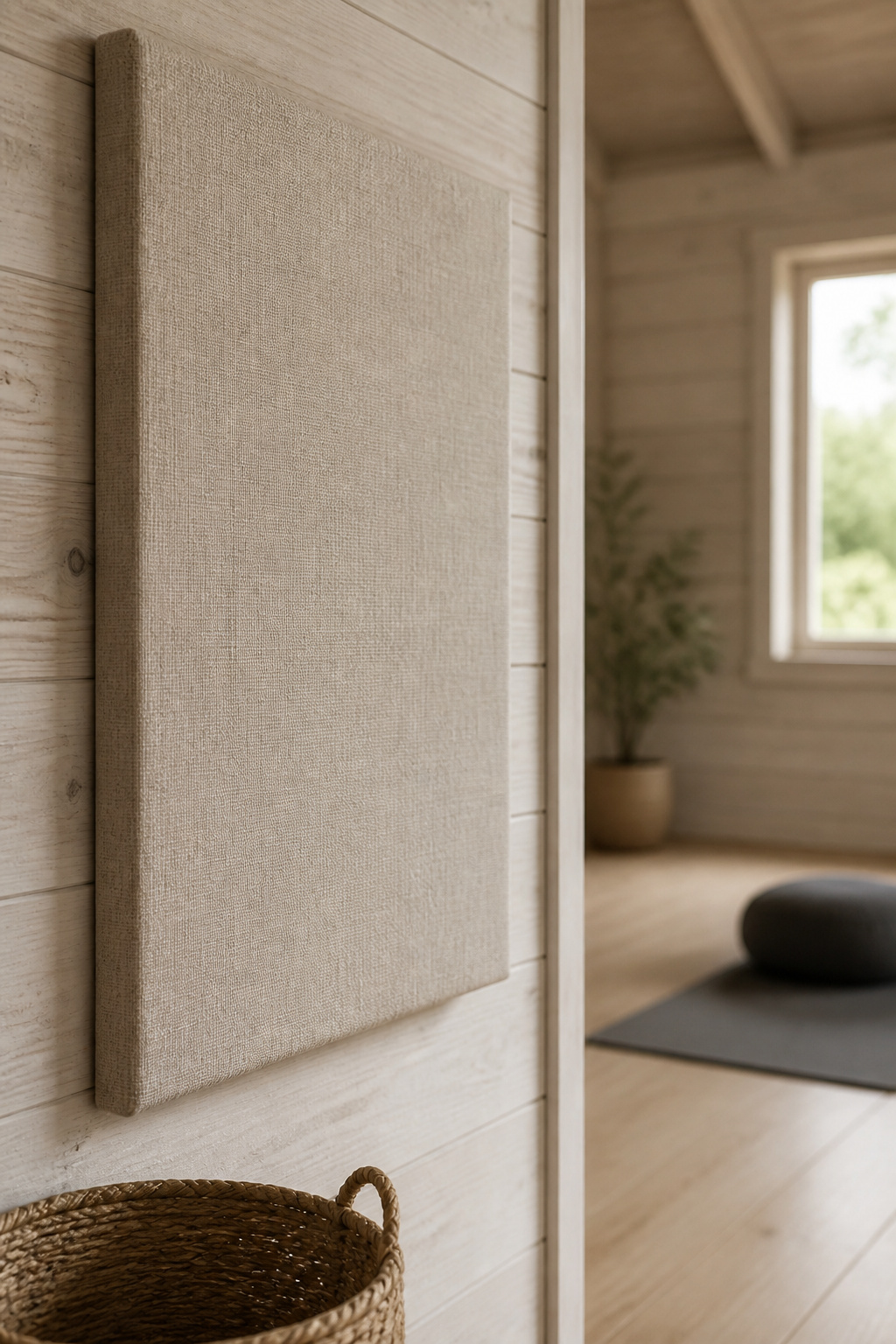
What gets in: traffic, neighbours, wind, the house
An untreated wooden shed wall rates around STC 20–25 — fine against conversation, useless against a lawnmower or traffic at 70–90 dBA. But the leaks matter more: a hollow-core door is acoustically an open window, so sealing gaps and fitting a solid-core door is the highest-impact, lowest-cost move.
Mass and absorption: the two tools that quiet a wooden shed
Blocking wants mass; interior calm wants absorption. For mass, layer mineral wool batts between the studs and mass loaded vinyl over them — a stack that carries an unlined wall from STC 20 to STC 40–45. For calm, fabric-wrapped panels at reflection points quiet the room.
| Sound source | Enters via | Treatment | Cost level |
|---|---|---|---|
| Traffic / lawnmower | Walls, gaps | Mineral wool + MLV ($1–$2/sq ft) | mid |
| Voices, the house | Door, seals | Solid-core door, acoustic caulk | low |
| Interior echo | Hard surfaces | Fabric-wrapped panels (NRC 0.80+) | low–mid |
What should stay: birdsong, rain on a metal roof, natural rhythm
Silence is not the goal. Birdsong anchors the practitioner to the present, and rain on a roof gives what acoustic designers call a soft noise bed — a steady sound that softens every other intrusion and eases meditative entry. A metal roof is a feature here, as long as cork and a few panels keep it from turning reverberant. So the aim is selective: block the mechanical and the human-voiced, keep the garden — the instinct behind a garden retreat shed.
Scent and the Sensory She Shed
The sense most designers leave out has the shortest path to the nervous system: smell runs straight into the brain’s emotion centre, so a consistent scent settles the body faster than any visual cue.

Scent as a practice anchor — the one thing most designers ignore
One scent, used the same way every time, becomes a conditioned cue — within weeks it alone begins to trigger the settling response. The oils studios reach for are frankincense to ground, lavender to calm, sandalwood to centre, and cedarwood for the forest note that answers the garden.
Natural vs synthetic: what I actually use and why
I use pure essential oil, not synthetic fragrance, and it is not snobbery: synthetic fragrance smells similar but carries none of the chemical compounds responsible for the effect — the whole point in meditation. A passive ceramic diffuser, no heat or electricity, with five to eight drops of frankincense or cedarwood is enough for a 120 sq ft shed. What I won’t bring in is mass-produced “spiritual” scent sold as costume; honest sourcing matters as much here as in decorating simply and cheaply.
Ventilating a small shed so scent doesn’t overwhelm
In 120 sq ft, more scent is not more calm — over-diffusion gives headaches, so keep it subtle (practical guidance, not a CFM target). Cross-ventilation does the work — a window on one wall, the door on the other — and ten to fifteen minutes open between sessions resets the air.
Layout for a She Shed Yoga Studio: What Goes Where
A solo practice needs less floor than people assume; the mat is small, and what competes with it is what you manage.
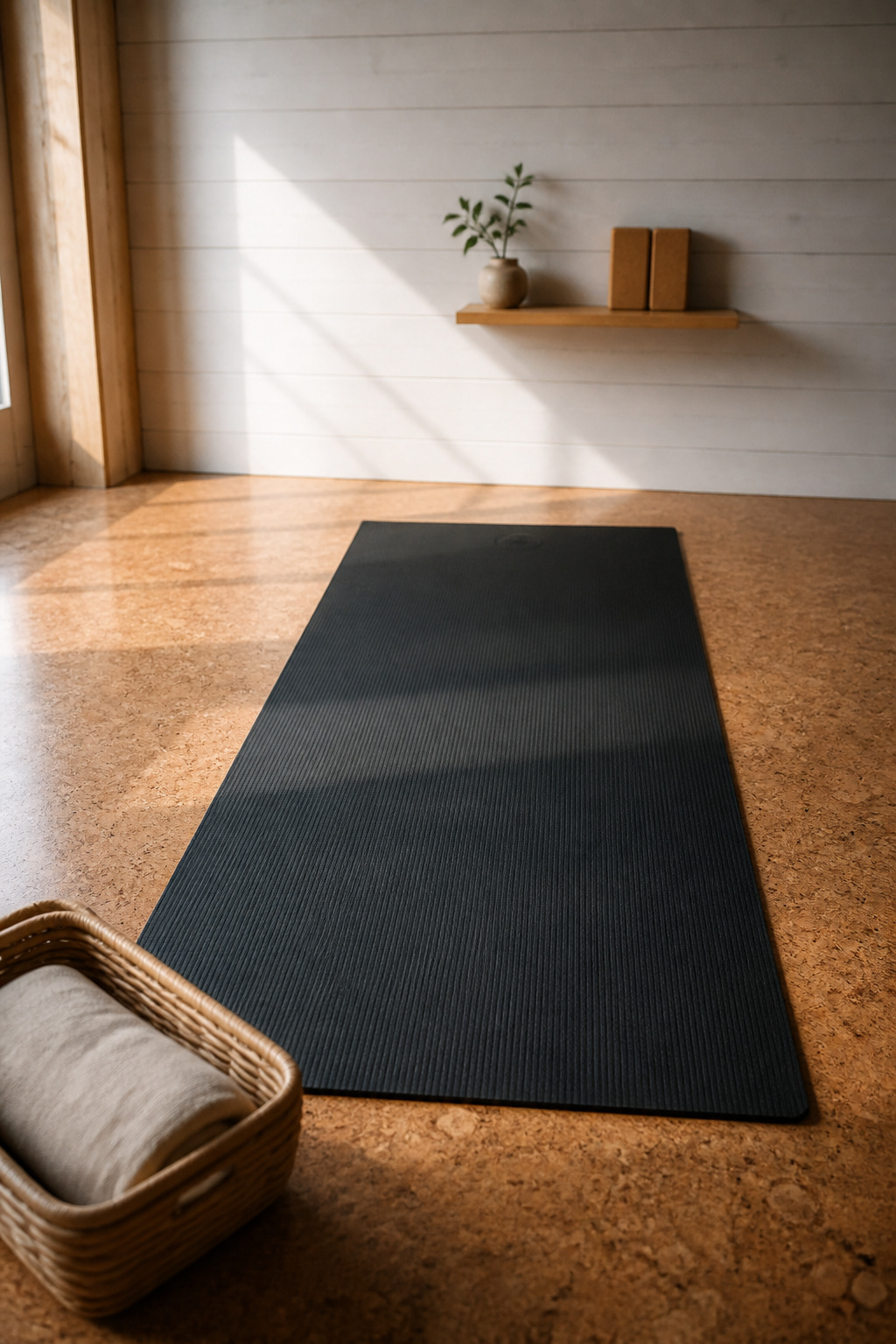
How much space a yoga mat actually needs — and what surrounds it
A standard mat is 24 inches wide and 68 inches long. Add 24 inches of clearance on all sides for wide-armed poses and the practice zone is roughly 21–26 sq ft — easily inside a 120 sq ft backyard yoga retreat shed, leaving 50–60 sq ft clear after a prop corner.
The prop corner: blocks, bolsters, straps without visual noise
Keep props off the floor and out of the eyeline. A wall hook holds the rolled mat; one shelf 10–12 inches deep takes blocks, a bolster and a strap, or a wicker basket hides them until the lid lifts. Put that corner opposite the mat, behind you in practice.
The doorway test: how to know when the room is done
My own check, not an industry rule: stand in the doorway of the finished room and notice where the eye lands first. If it travels to anything that isn’t the mat, the floor, the window or one intentional accent — a plant, a candle — remove it. I once had a client who couldn’t use a beautiful room until I took down a wall clock. Before adding a prop, take out what quietly asks for attention:
- Decorative shelving with objects on display
- Visible technology — speaker wires, a phone dock
- Furniture beyond a single cushion or bolster
The room is done when the first impression is emptiness — when the space is all that meets you.
FAQ
How much space do I need for a yoga studio in a she shed?
A standard mat is 24 inches wide and 68 inches long; add 24 inches of clearance on all sides and the minimum practice zone is about 50 sq ft. A 10×12 ft shed (120 sq ft) holds that plus a prop corner; an 8×10 ft shed (80 sq ft) works if props are stored externally. Allow 8.2–9.8 ft of ceiling height.
What is the best flooring for a backyard yoga studio?
Cork is the best choice: warm underfoot, antibacterial, cushioning, sound-absorbing at NRC 0.2–0.6. Rubber (8–12mm) is the most durable and hygienic if the shed is heated, at $2–$10/sq ft, but feels cold to bare feet in winter. Hardwood is handsome but warps in an unheated shed’s humidity.
How do I soundproof a she shed for meditation?
Target 30–35 dBA; an untreated wooden shed runs 45–55 dBA. Seal every gap and fit a solid-core door first, then add mass — mineral wool batts between the studs plus mass loaded vinyl at $1–$2/sq ft, moving a lightweight wall from STC 20 to STC 40–45. Acoustic panels calm interior echo affordably.