Two minutes in a house you do not know well, and you have just shut a door behind you. The voices drop away. The light in here is warmer than the light you left. Then your hands come up out of the water, looking for something to dry them on, and that searching half-second is the test of the room. Most lists of powder room essentials answer a decorating question. This one asks what a stranger needs in order to use the room.
TL;DR
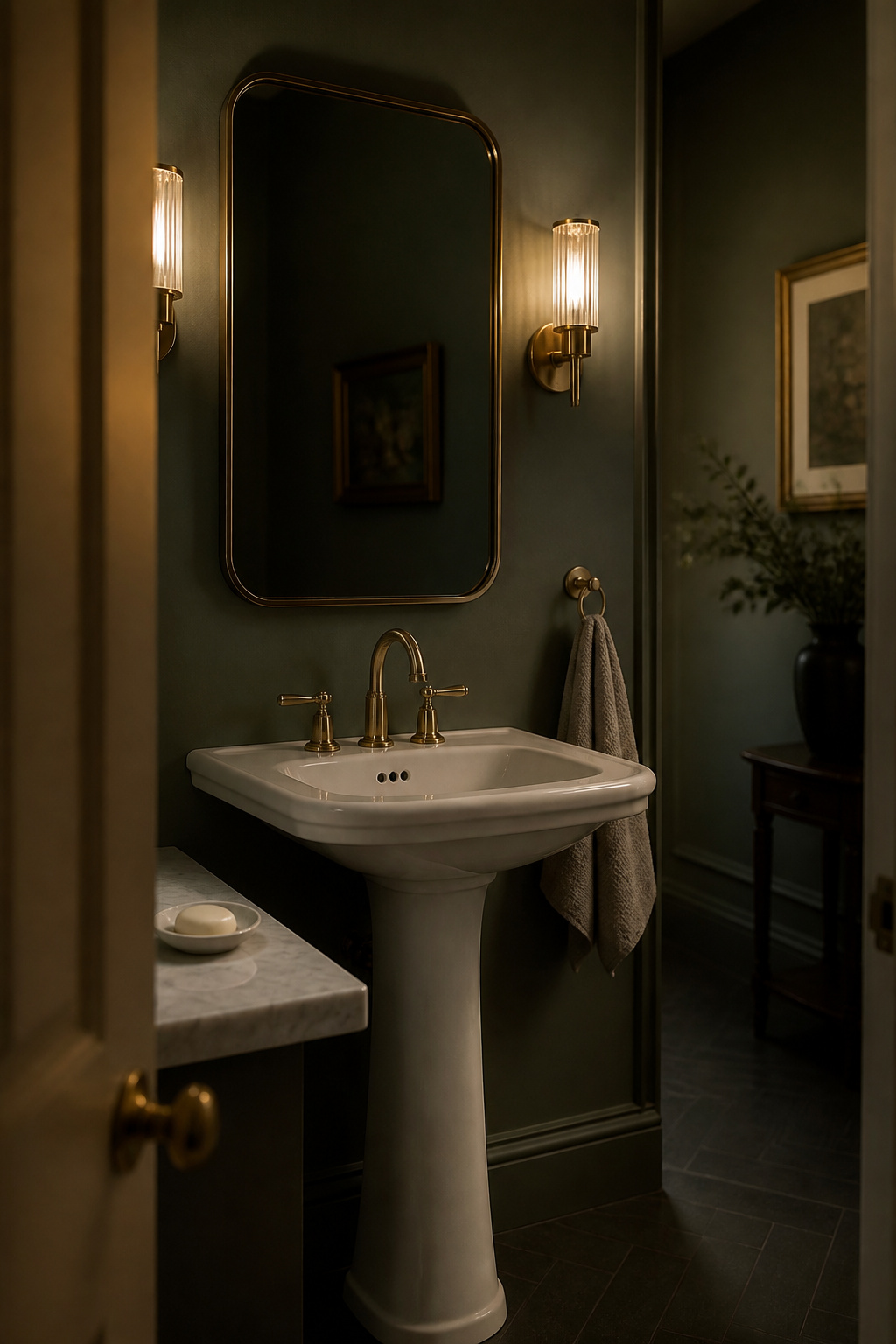
- Guest lists that name real objects keep landing on the same few: the door latch, the tap, soap, a hand towel and a spare roll you can find.
- A room that feels unfinished usually needs things taken out. One professional organizer’s rule is that anything a guest does not need belongs behind a closed door.
- Guests notice failures, and nobody remarks on a well-stocked shelf. That is why I hold this room to about five objects, a ceiling of my own rather than a surveyed number.
Two minutes in someone else’s powder room
This room should leave a guest feeling that nothing was asked of them. Delight and admiration matter less here than the quiet of a space where the questions were answered before they arrived.
What a hand touches in that time
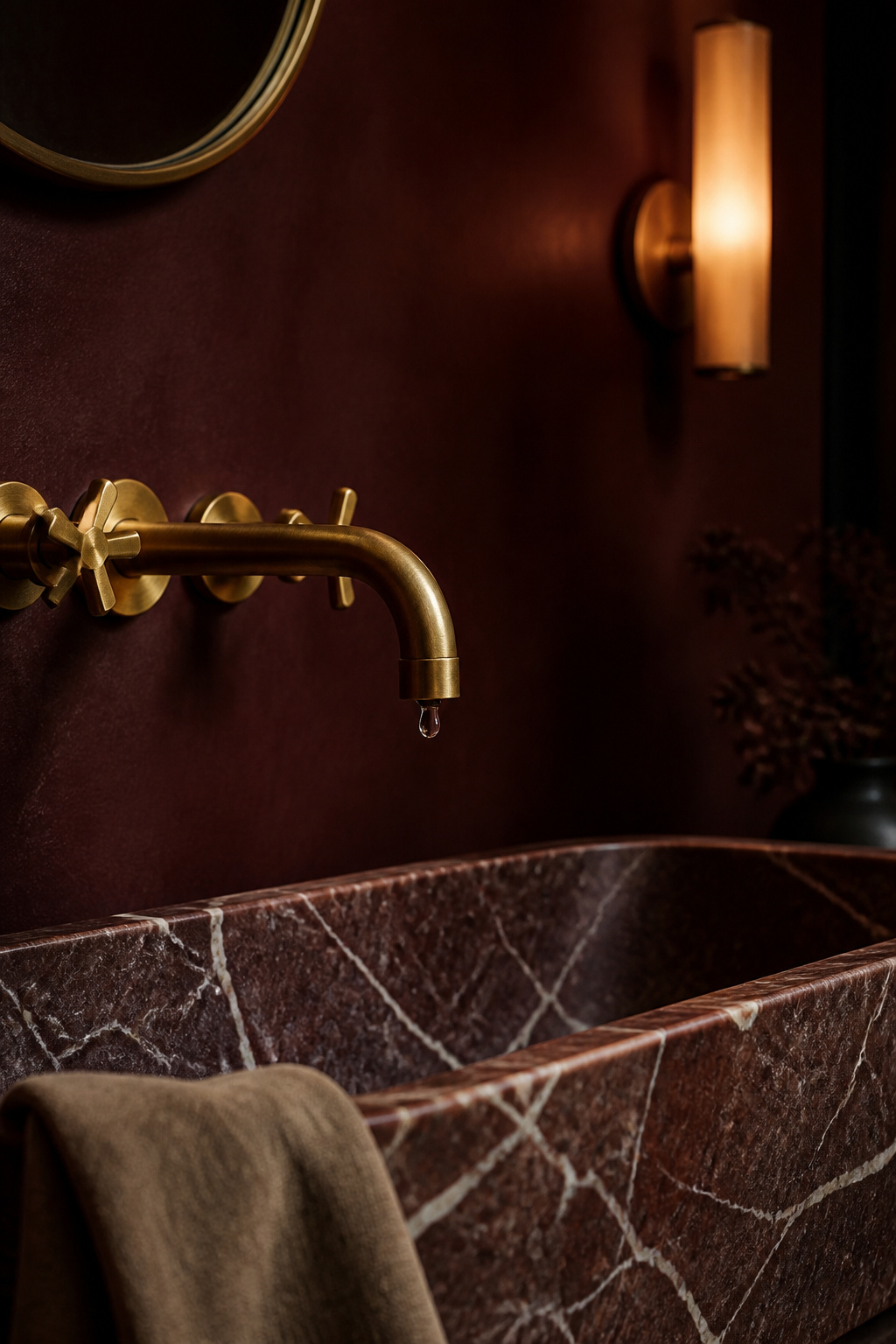
Read enough guest-bathroom guides and the specific lists stop disagreeing. Whenever one names objects rather than moods, it names the same handful: the door and its latch, the faucet, hand soap, a hand towel, the toilet paper. Candles, floss picks and lotion are elaboration around that core and never stand in for it. Katrina Teeple, founder of the organizing practice Operation Organization, puts it in one instruction: see the space from a guest’s perspective, because it needs to feel less like yours and more like theirs.
Why nobody notices when this room works
The guides on this subject share a grammar: nobody wants to, no one wants to see, avoid. Failures register and competence goes unnoticed. Designer Alexandra Peck moves family photographs out of a guest bathroom on that logic: a personal object makes a guest notice whose room they are in.
Powder room essentials: what to remove before you add anything
Almost everyone’s instinct with an unfinished-feeling room is to add to it, and here that is backwards. Nothing enters a small space without a reason, and in a room a stranger uses alone the reason has to be theirs. Take things out first:
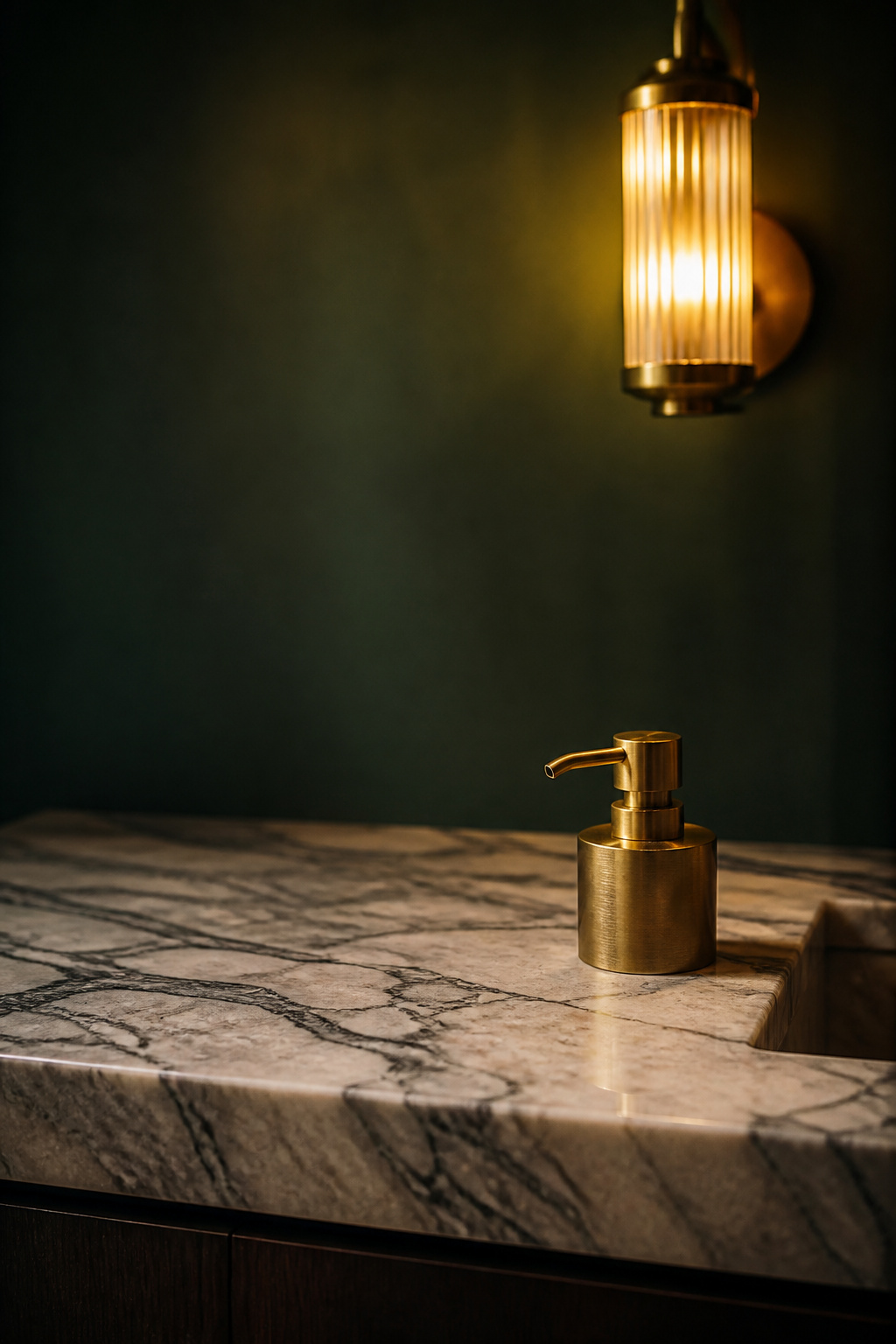
- Anything expired, separated or empty, since an empty bottle hides what is available.
- Half-used duplicates. Professional organizer Lucy Wahl keeps one of each product open and one backup out of sight.
- Single-use hotel soaps. A guest cannot tell whether they may open one, and hesitating at the sink is the friction this room is supposed to remove.
- Any towel that is stained, torn or bleach-spotted. Interior designer Rachel Street keeps an unblemished set for guests; a marked one makes people wonder who used it last.
- The decorative tray with nothing assigned to it. Given no single job, it stops looking like order and becomes a contained pile.
Usually nothing fills the gap, and that is fine. An empty counter is the surface a guest needs, so leaving it bare does not make the room unfinished.
The doorway test, applied to a half bath
I stand at the threshold of a finished room and notice only where my eye goes first. If it lands on something that asks something of me, the room is not done. I built the habit for meditation spaces; here it takes a second.
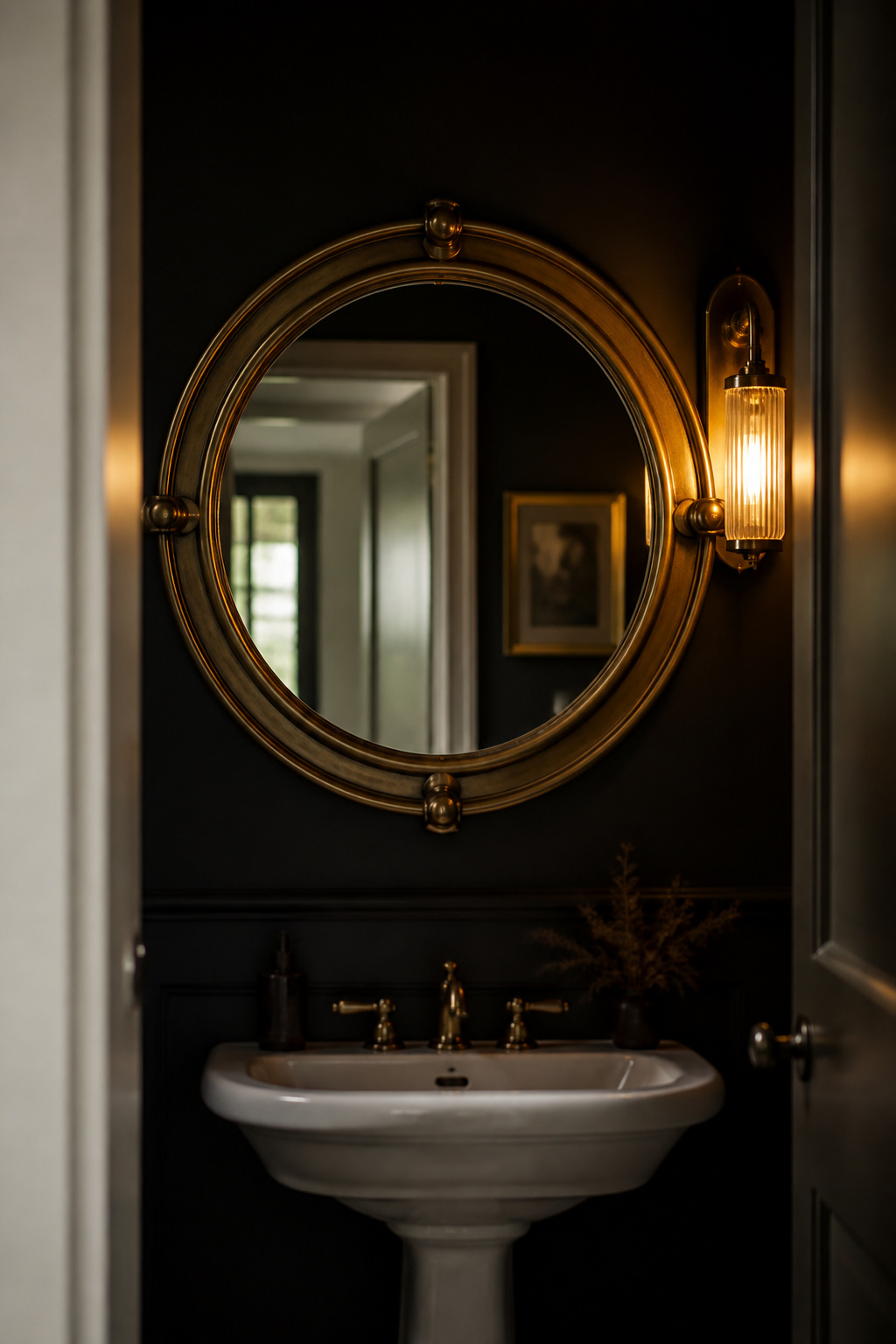
Where the eye lands first in a room this small
Interior designer Jen Dallas describes emphasis as the principle giving an observer a focal point to see first without overpowering the room, and Bethany Prince calls that point the base the design develops from. Both are written for a living room, where an eye has time to travel. Here it has none. Everything in the doorway sightline arrives in one glance (that is my application of their principle, not a separate finding). The glance usually goes to the mirror, directly opposite the door in most layouts, and whatever sits beside it competes.
What “asks something of you” means in a powder room
An object asks something of you when it makes you decide something you should not have to in someone else’s house. Is this folded towel decorative, or may I use it. Is that pump nearly empty. Is that door locked, or occupied. Each is an unanswered question rather than an aesthetic problem, and a guest with a wet hand answers it by guessing. Apartment Therapy’s case for disposable guest towels rests on the same point: they remove the doubt.
Stand at your own threshold tonight and name the first thing your eye lands on.
Small failures a guest registers
A guest does not notice the tile. They notice these, several of which turn up in guides that are not borrowing from each other:
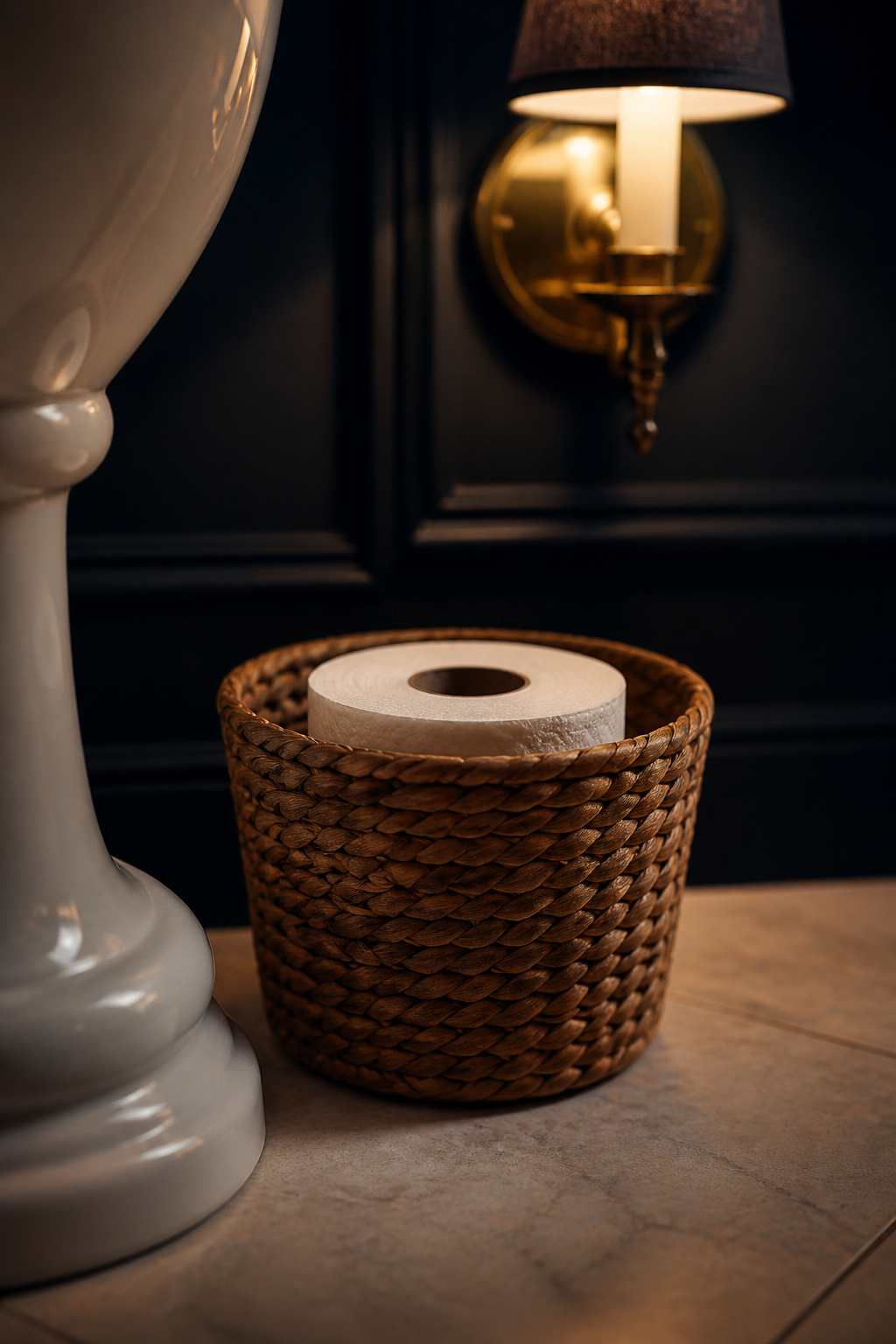
- No visible spare roll. Principal interior designer Evelina Juzėnaitė wants it where a guest can see it: a basket, a shelf or a holder beside the toilet. Cottonelle’s guidance agrees.
- Nowhere to set a phone down. Elizabeth Vergara, CEO of Vergara Homes, names insufficient clear counter as a fault she sees constantly. A guest needs one dry place for a phone or a watch, and a wet basin edge does not count.
- No hook. Someone holding a used towel with nowhere to put it drapes it over the tank and feels bad about it. A better option than a hook screwed to a wall at random is building the hook rail into the panelling, where the joinery settles the height.
- A light switch that takes hunting for. No standard governs where a switch falls for an unfamiliar hand in the dark, so it stays a repeated annoyance, and it is the first thing that happens.
- A door that looks locked when it isn’t. Someone standing in the hall, unsure whether the room is occupied, has already had a worse time than the finishes can repair. Door hardware and swing are covered in the separate article on powder room privacy.
Rather than more objects, the room needs its answers placed where a stranger will find them.
Restraint as hospitality: five objects, not fifteen
Restraint in this room is hospitality more than minimalism or taste: it takes decisions away from someone with no map of your house.
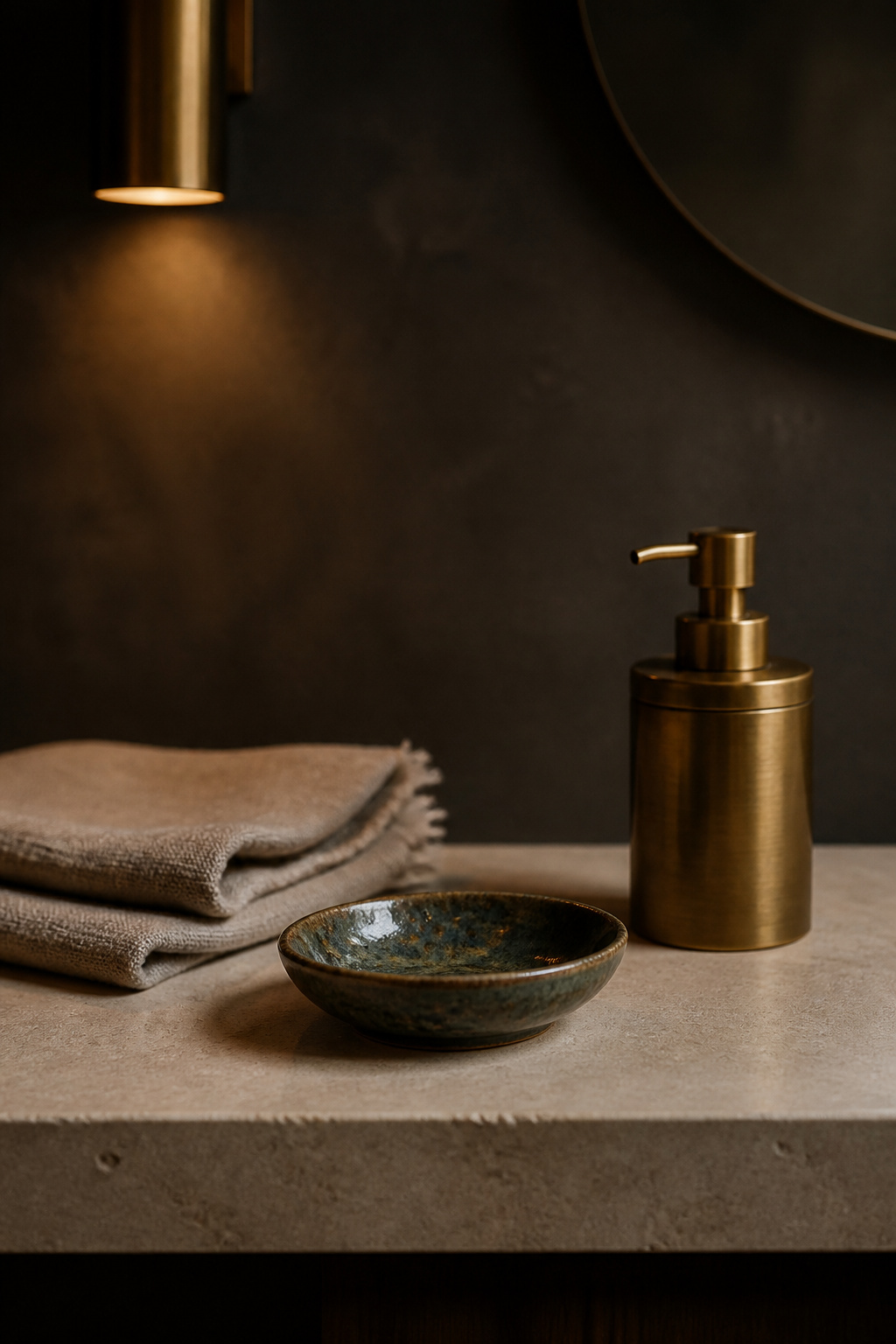
Where a small room reaches clutter
My first dedicated sitting space was a corner of a rented Chicago apartment, barely deeper than the jute rug that defined it: a cushion, a paper screen, nothing else. One more object and it would have stopped reading as a place to sit and started reading as a place to put things down. It was about the floor area of the room you are reading about, which is why I trust what it taught me.
So I aim for about five objects, and I would rather be under than over. The ceiling is my own, drawn from how close everything sits to the eye in here, and no study or survey backs it.
One study does get cited on this point, usually for something it does not say. Darby Saxbe and Rena Repetti, in Personality and Social Psychology Bulletin in 2010, had sixty dual-income couples tour their own homes aloud; the wives whose language dwelt on clutter and unfinished projects showed flatter diurnal cortisol slopes over the following days (a pattern associated with worse health outcomes), while wives whose language emphasised restfulness showed steeper, healthier ones. It is correlational, it is about how a person describes a whole house rather than anything measured in a bathroom, and the association appeared in the wives specifically, not the husbands. It does not show that “clutter raises cortisol”, and it says nothing about your guest. I take it as a reason to treat the feeling of a crowded surface as real, and no further.
Against the decorative-tray-of-nothing school of small-bathroom styling
The tray is where restraint gets faked. Given no single assigned purpose, it collects whatever has no other home, so it looks like order in a photograph and works as a contained pile in a house. That criticism circulates with nobody’s name on it, so take it as mine: I have never seen a tray solve a clutter problem it was not creating.
The amenity version is the same error with better manners. A candle, a match striker and lotion in a nicer bottle are each offered as generosity, and each is one more object between a guest and a dry towel. If odour or fan noise is the worry underneath, styling will not touch it; the real fix for the odour and the noise is a door and a fan.
Two minutes from now someone will shut your door, and the room will either ask them something or it won’t. You can name the questions already: is that towel mine, where is the spare roll, is anyone in here. Stand in your own doorway, take away whatever answers a question nobody asked, and let the room settle at what remains. For the surfaces around it, our overview of half bath design covers the rest.
FAQ
Should a powder room have a scented candle, or does that create its own problem?
The scent is fine; the flame is the problem. The National Candle Association’s first rule is never to leave a burning candle unattended, and this is by definition a room you are not in while a guest uses it. Vergara treats scent as the goal and the method as flexible, so a diffuser or plug-in works unsupervised.
How often should a guest bathroom actually be restocked?
No published source states an interval, because a calendar is the wrong instrument here. Hosting guides tie restocking to events instead: check the room before people arrive, not on a rota. So the honest answer is once per gathering: fresh towel out, soap topped up and spare roll visible before anyone reaches the hall.
Is it rude to have only a hand towel and no paper towels in a powder room?
No etiquette authority states a rule in either direction, so nobody can tell you that you have broken one. What sourcing there is argues from hygiene: organizer Jamie Hord prefers disposable single-use towels to one cloth towel shared by many guests in an evening. A middle option is biodegradable linen-style guest towels.