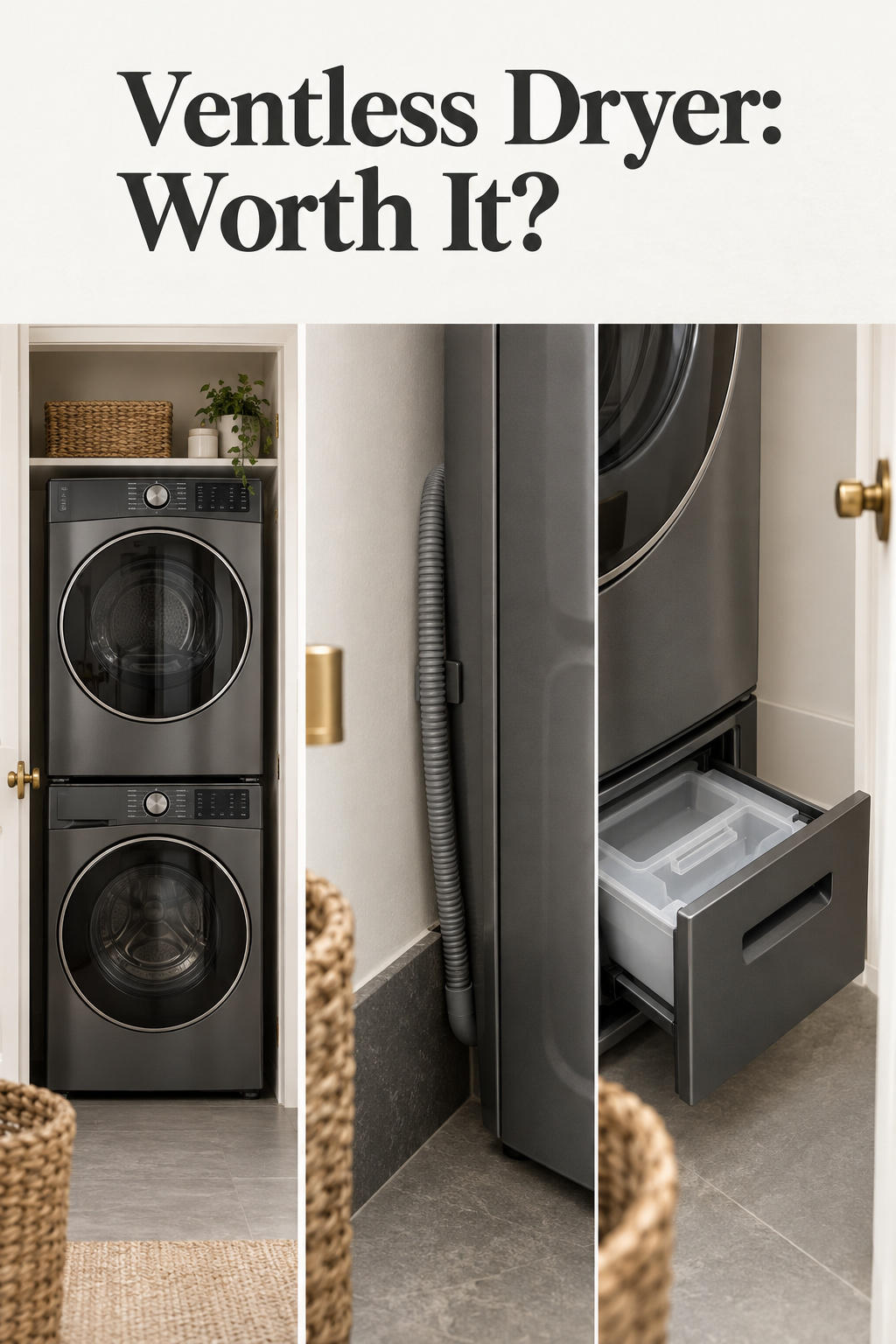
Three technologies, a dozen brands, and marketing copy that all says the same thing: no vent needed. “Ventless” covers two very different machines, heat pump and condenser, and choosing between them for a laundry closet is a ten-year trade between energy cost, cycle time and what the room can absorb. I cut the field down by looking at the room first, starting with the duct.
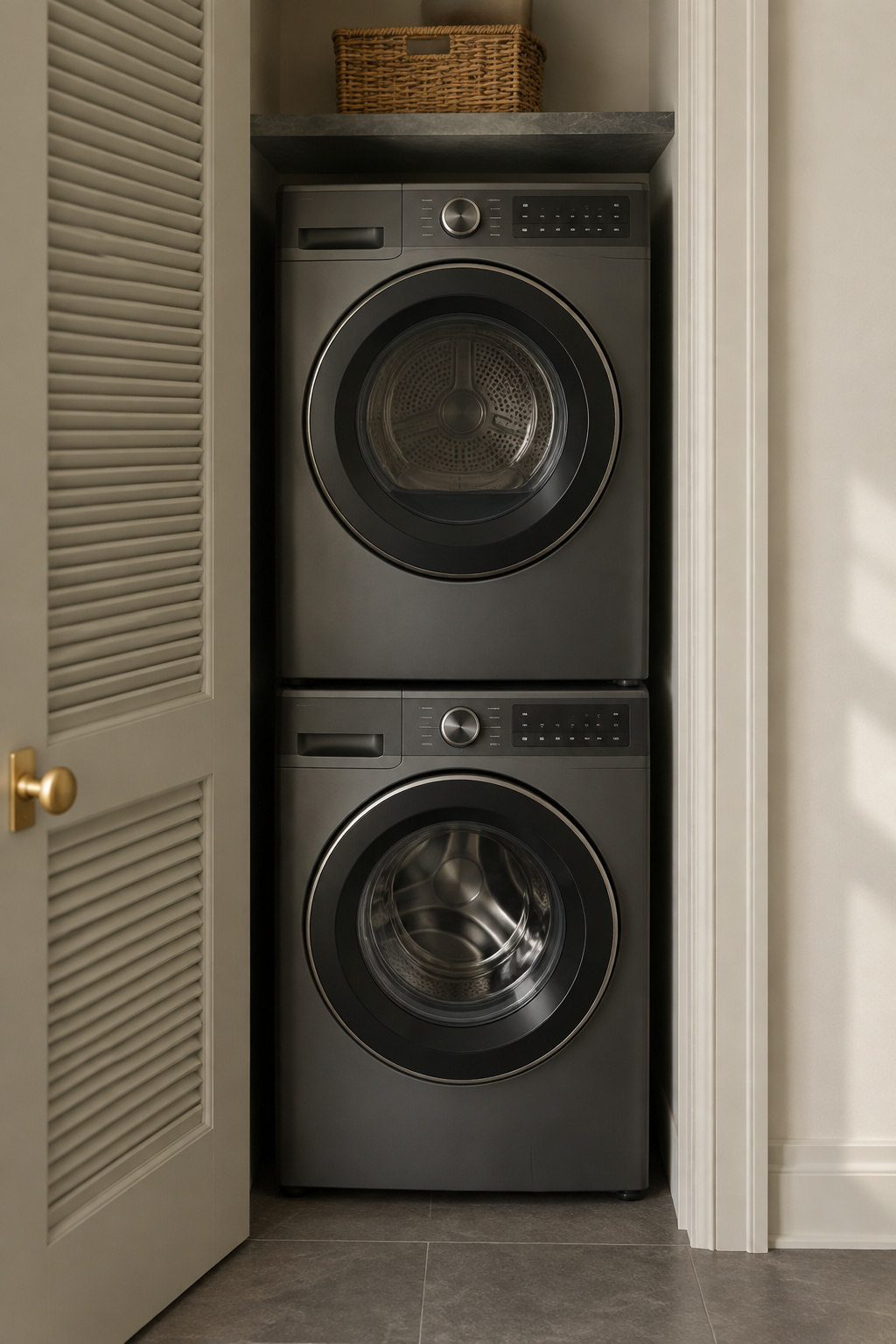
TL;DR
- Check the duct before the dryer. IRC M1502.4 allows a 35-foot equivalent run, minus 5 feet per 90-degree elbow. A room that fails that test has already chosen ventless for you.
- Heat pump for a closet with drain access and warmth above roughly 40°F; condenser where you want ventless without the roughly $650 premium and can live with more heat and humidity.
- Ventless dryers still need moisture management: the water goes into a plumbed drain or a tank you empty by hand, and the machine pauses mid-cycle and beeps if you forget.
What a ventless dryer buys you in a laundry closet
The rooms a vented dryer rules out entirely
What rules out a vented dryer is geometry. IRC M1502.4 requires rigid smooth metal duct of at least 4 inches diameter, with a maximum equivalent length of 35 feet; each 90-degree elbow deducts 5 feet, each 45-degree elbow 2.5 feet.
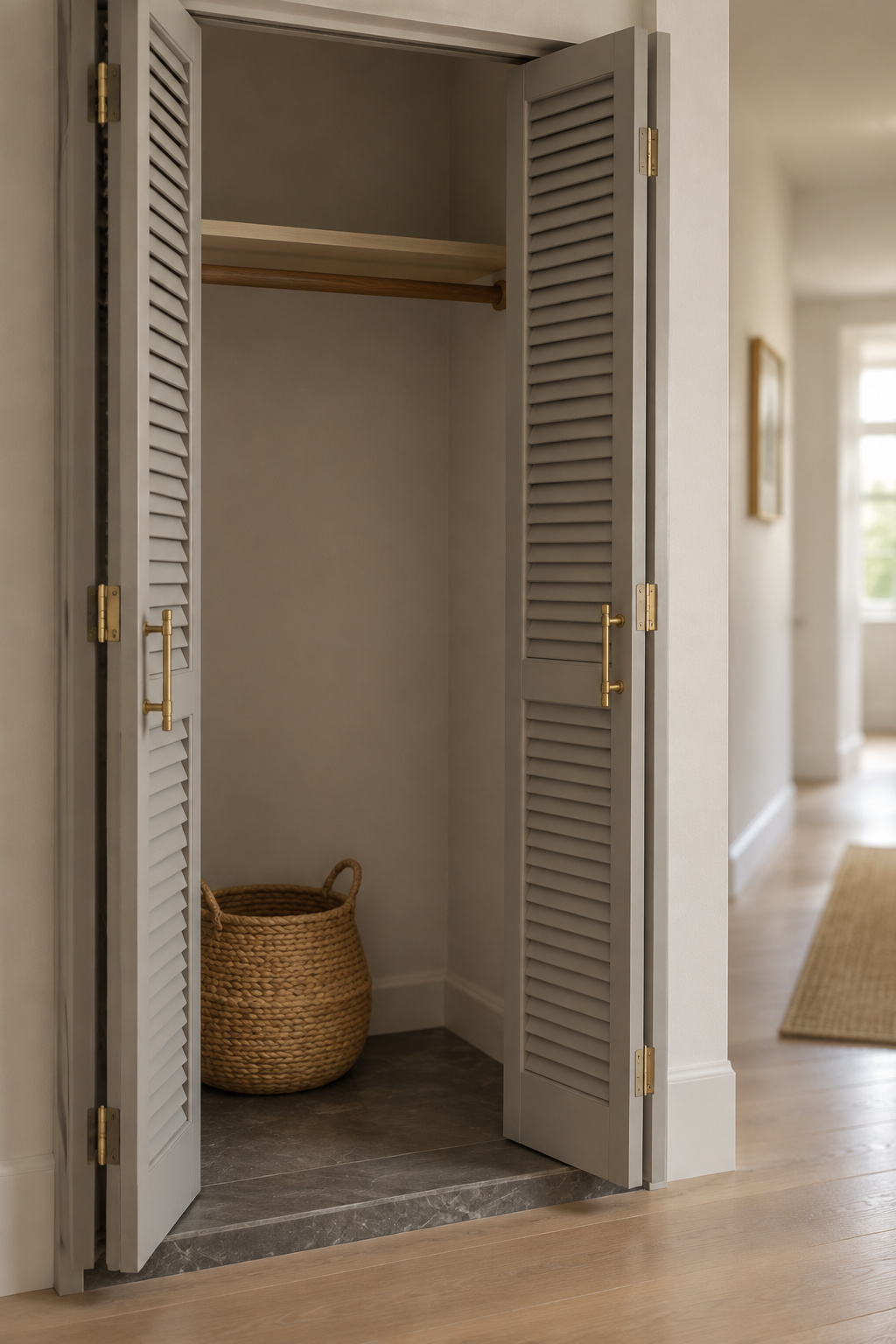
Picture a windowless interior bathroom, or a top-floor closet with no exterior wall in reach. Three or four elbows can eat that allowance before the duct clears the room. A heat-pump dryer needs no duct: a closed refrigerant loop condenses water out of the air instead of throwing warm air outside.
Why ventless has changed which closets can hold laundry
ENERGY STAR promotes heat-pump dryers specifically for small spaces, additions and apartments without vent access. Rooms disqualified ten years ago are now ordinary laundry closets. Condenser dryers are the older duct-free option, still sold, though industry coverage treats them as largely superseded. Both still want air movement in the room they stand in: a door open during a cycle, or a louvered one.
The question to ask before the technology question
Before weighing heat pump against condenser against vented, check whether the room has a compliant duct path. If it does not, vented is already off the table.
Check the temperature at the same time. Heat-pump dryers need a minimum ambient temperature, commonly cited around 40°F, so an unheated porch closet fails on warmth even with no duct problem at all.
Heat-pump dryers: the ten-year case
Energy saving, and why the number is a range
I will go slowly with the savings figures, because the industry’s own sources do not agree with each other.
ENERGY STAR’s “Ask the Experts” page says certified heat-pump dryers use around 70% less energy than conventional dryers. ENERGY STAR’s own Product Finder page, for the same claim, says almost 30%. Both are live pages on the same government site, disagreeing by more than double. Consumer Reports independently says at least 28%. Field measurement lands between: a University of Central Florida study in 53 Florida homes measured a median saving of 34%, and the Northwest Energy Efficiency Alliance found 20 to 25% for first-generation US models and over 30% for later ones.
So the answer is a spread. Measured savings cluster in the 30 to 50% band, and the headline 70% sits well above anything recorded in a house. Every number in that spread is still a saving, though, and you collect it for ten years.
Lower drying temperatures and what that means for fabric life
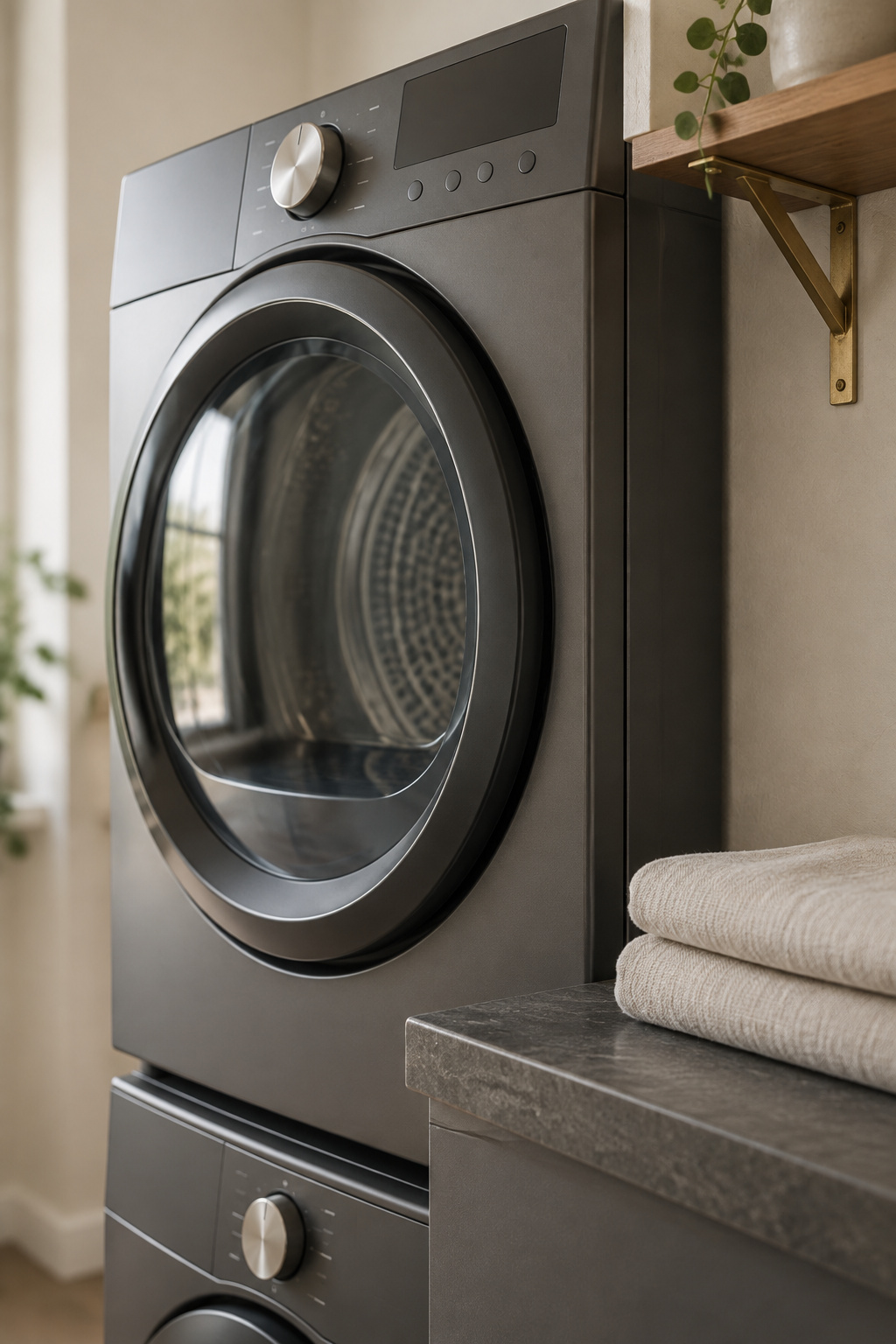
A heat-pump dryer tops out around 122°F. A condenser runs roughly 158 to 167°F, and a vented dryer can reach 185°F. ENERGY STAR says lower temperatures are gentler on clothes. I will not give you a percentage for that, because nobody has published one worth quoting, but over hundreds of cycles less heat means less wear.
The trade: longer cycles and a higher purchase price
Yale Appliance puts a vented dryer at roughly $949 and a heat-pump dryer at roughly $1,799, with heat-pump cycles running 15 to 40 minutes longer per load. Reviewed.com found a wider gap: about 45 minutes vented against over an hour and a half ventless.
Judge that $650 over ten years rather than at the checkout. Yale estimates three to five years of savings to recover it, and after that the savings are yours to keep.
Condenser dryers: the middle option
How a condenser dryer differs from a heat pump
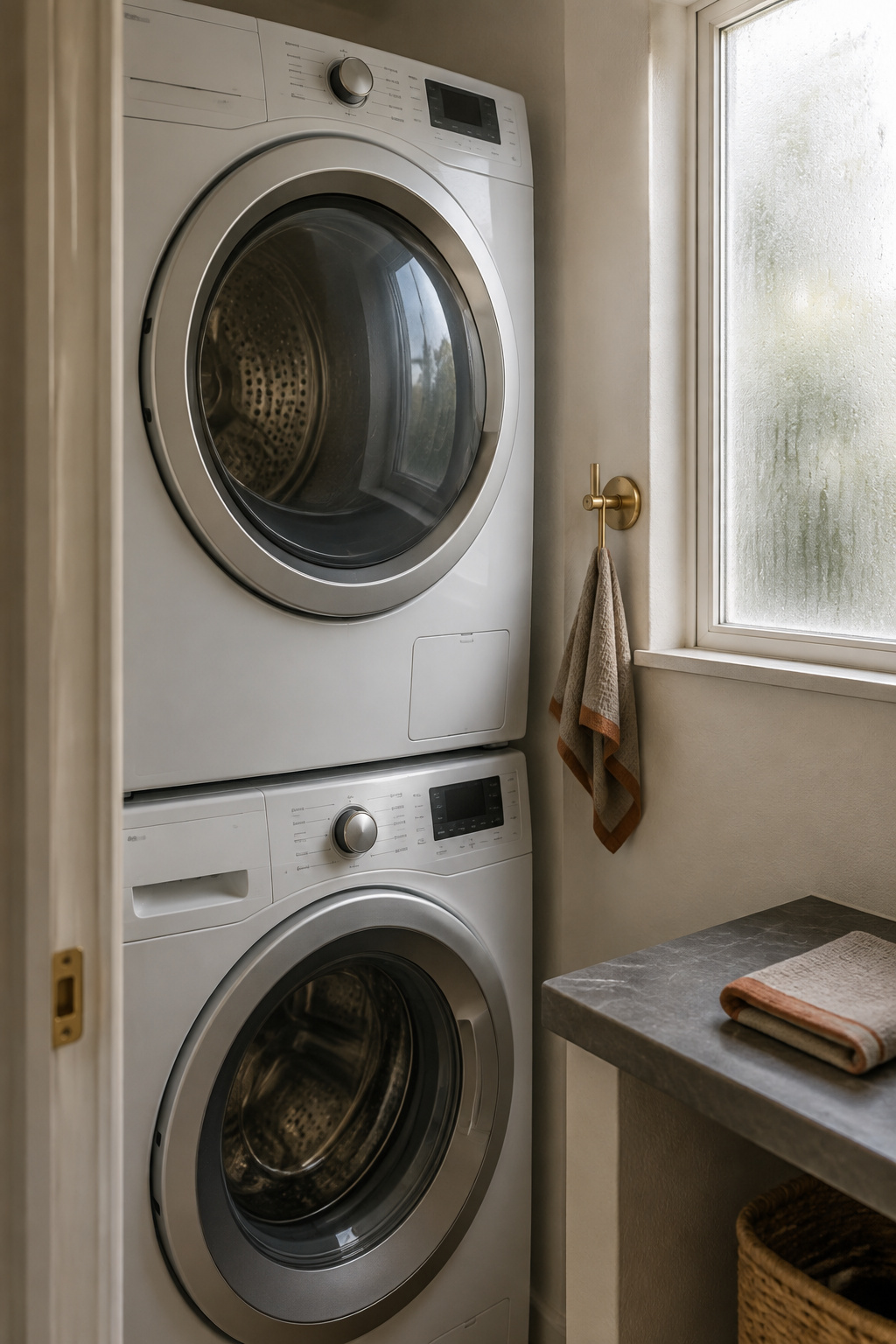
Both are sold as “ventless,” so it helps to know how each one works. A condenser dryer heats air with a conventional element, passes it through the drum, then routes the damp air through a condenser chamber where it meets cooler air and drops its moisture. A heat-pump dryer runs a closed refrigerant loop instead, recycling warm dried air rather than reheating fresh.
Where condenser still makes sense
A condenser dryer runs hotter, so its cycles are faster. It also costs less: Reviewed.com prices condensing dryers from around $1,000 against roughly $1,699 for a comparable heat-pump model, a real gap for a household that wants ventless without the premium.
Its real drawbacks in daily use
A condenser dryer releases significant heat while it runs, and when that warm air meets a cool wall or window it condenses there instead. In a cold, poorly ventilated closet that shows up as damp. Lower-quality models also let internal moisture escape into the room.
The condensate drain or tank you now own
Plumbed drain vs. empty-the-tank reality
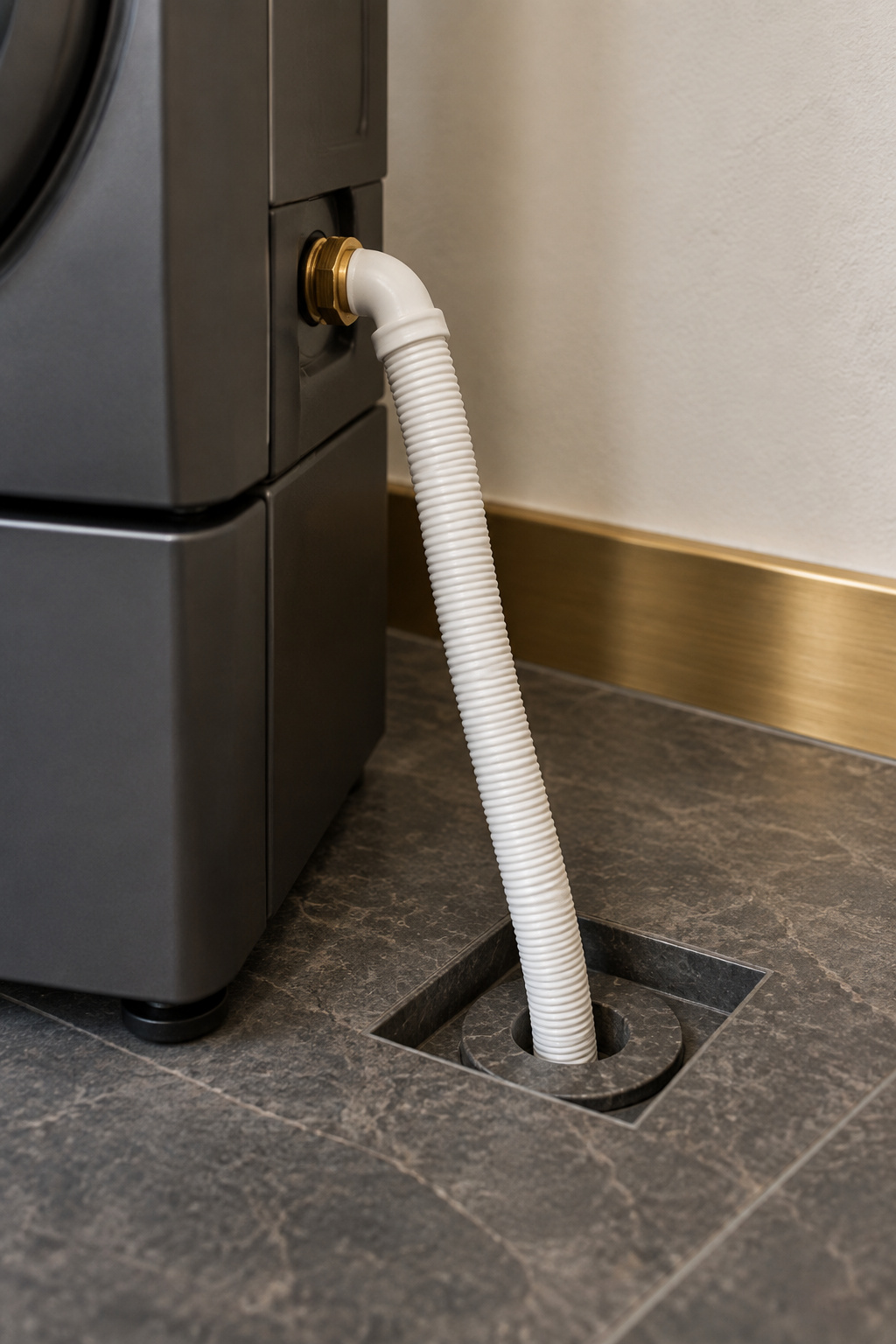
Every ventless dryer sends its condensate one of two ways: through a hose into the washer’s drain line, a floor drain or a utility sink, or into a drawer you empty by hand, as GE’s own support documentation sets out. Maintenance is lighter than people fear: BSH technical services manager Mike Peebles puts condenser cleaning at once a month, and notes owners who stretch it to three.
What a missed tank empty costs you in a cycle
Fisher & Paykel’s user guide says that if the water tank fills, the dryer pauses and sounds an alarm, and you must empty it before drying continues. The cycle then resumes where it stopped, so nothing is ruined. Still, an interrupted cycle is a small daily tax, and I am firm on this: a setup that only works when you remember to empty it has already failed.
Whether your closet can take a drain line
The simplest route reuses what is there. A closet with a plumbed washer usually has the drain access a ventless dryer needs, which is why the hose is the default wherever plumbing allows. Where no drain is reachable, you will be emptying the tank for as long as you own the machine, so decide now whether that suits you.
Where a combo machine fits into this decision
The natural next comparison once you’ve accepted longer cycles
Most combo units are ventless, using the same mechanisms covered above, and I go through the full format decision in all-in-one combos. If you have made peace with a longer ventless cycle, look there next. Be ready for long cycles, though: Consumer Reports measured a tested GE Profile combo taking about 3.5 hours to dry a 12-pound load.
When a combo beats a separate ventless dryer
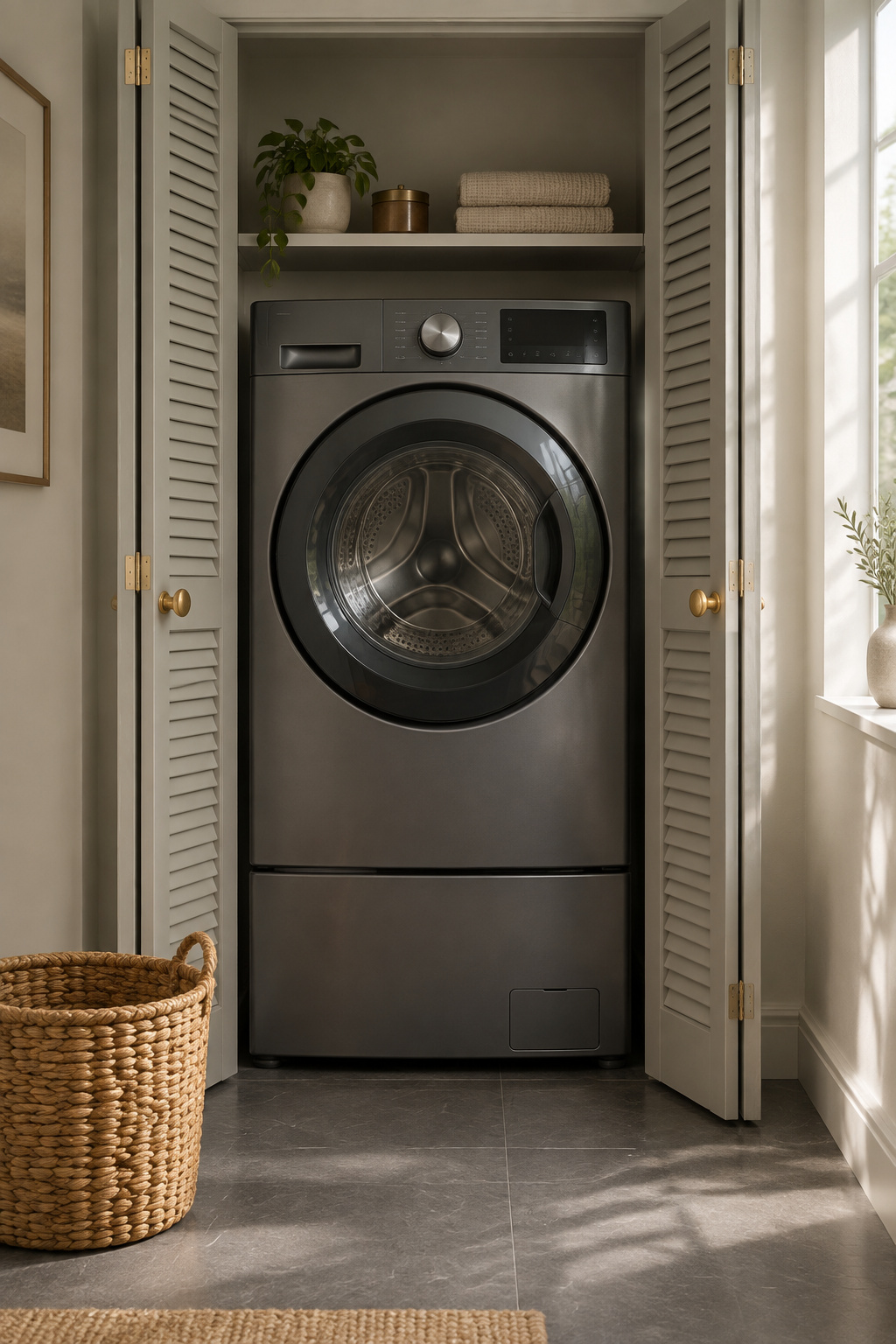
A combo takes one footprint, and you never move wet laundry from one machine to another. In the tightest closets, where even a slim ventless stack is a squeeze, that can decide it.
A bathroom with no duct path
Why a bathroom laundry is the clearest ventless use case
Years ago a client kept apologising to me for her bathroom. Small, she said, every time we walked in, as though the room were a personal failing. Eighteen square feet, and it was exactly enough once we stopped treating the size as the problem. I think about closets that way now. A closet with no duct path has already told you which dryer to buy, and bathrooms make the case cleanly, with drain access right there and often no exterior wall to duct through.
Moisture and make-up air considerations a duct would otherwise handle
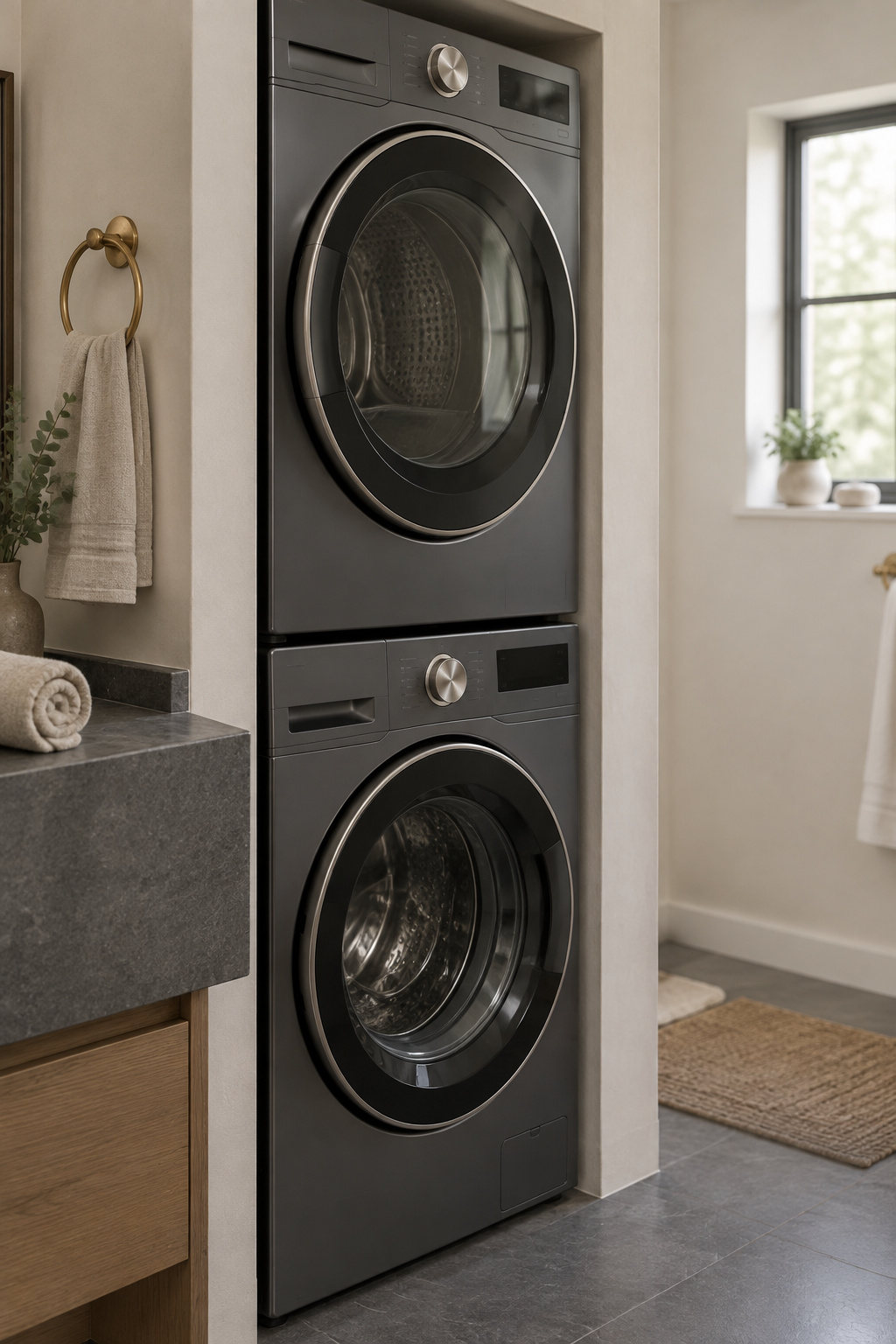
A ventless dryer still produces warm, humid air. The duct that would have carried it outside is gone, so the room’s exhaust fan or louvered door becomes the make-up-air path.
Most buying guides miss that ventless dryers still heat the room. The University of Central Florida field study found unvented heat-pump dryers released significantly more heat into the room than a conventional dryer, warming utility rooms enough to raise cooling energy use in some homes. In a small sealed bathroom in a warm climate, expect that heat to show up on your cooling bill.
What to check before assuming ventless solves the room
Three checks: drain access, an ambient temperature above the machine’s minimum, and a fan that can take the extra humidity. I cover the room-by-room reasoning for laundry in a bathroom in a separate article.
The decision
Heat pump, condenser or vented: the one-line rule for each room type
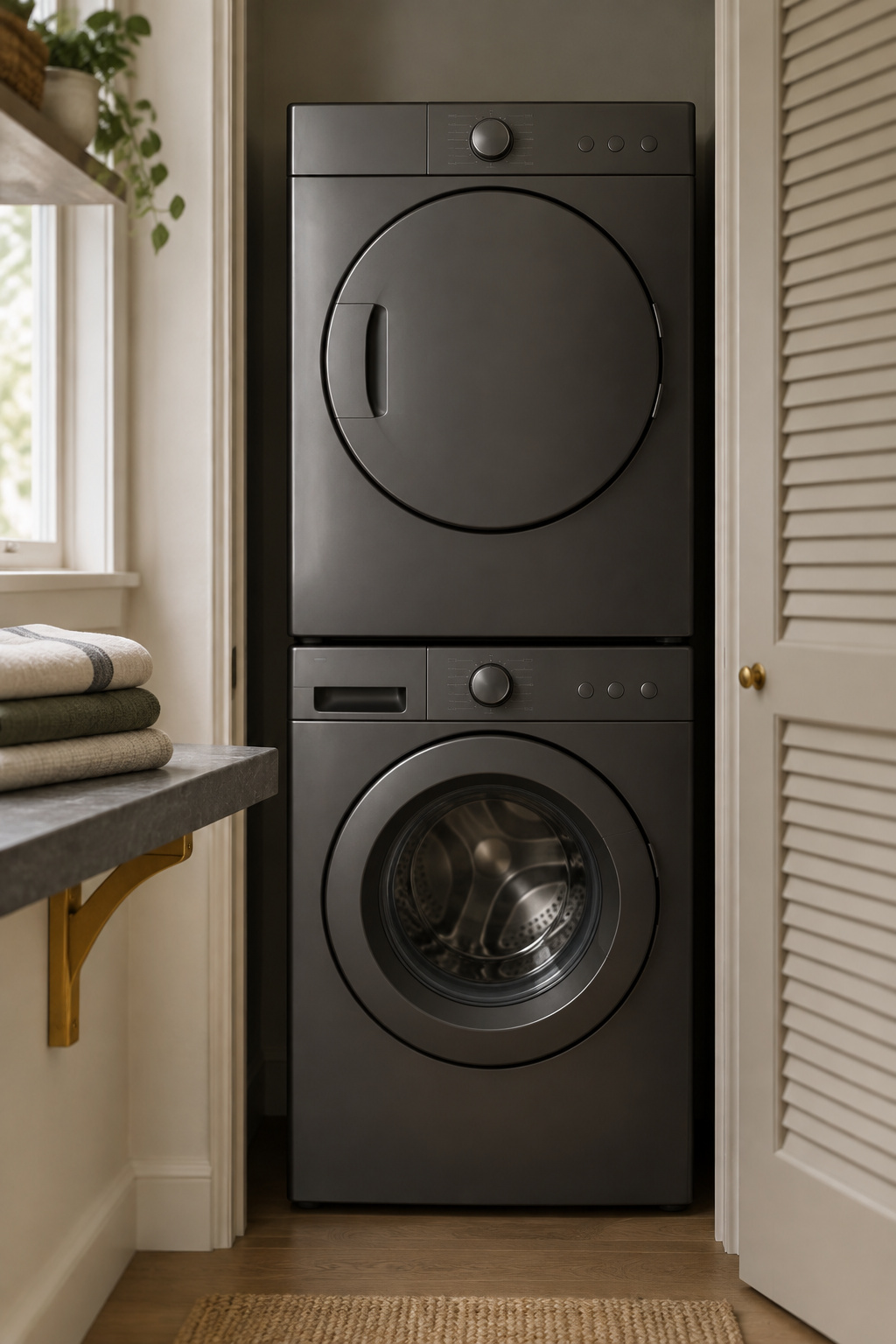
I do not treat these as three equal options on a shelf. Match the technology to what the room already gives you (a duct, a drain, stable heat) and the choice narrows before price enters it.
| Room condition | Choose | The trade you accept |
|---|---|---|
| Duct path inside the 35-ft budget | Vented | The duct and its maintenance |
| No duct, drain access, above ~40°F | Heat pump | Longer cycles, roughly $650 more |
| No duct, no drain or no budget | Condenser | Room heat, humidity, manual emptying |
The middle row is the one I would commit to for most closets, because it is the only one that improves with time.
What to check on the spec sheet before you buy
- A stacking kit manufacturer-matched to your exact washer and dryer pair.
- The minimum ambient operating temperature, commonly around 40°F on heat-pump models.
- The condensate method: plumbed drain or manual tank.
- The voltage: many compact and ventless units run on 120V, where a full-size electric dryer wants 240V.
The mistake: buying on price alone for a ten-year appliance
That $650 gap looks like an easy saving at checkout and completely different across a decade of bills. Decide the room first, then the machine. If you are still weighing where the stack goes, start with the ways to lay out a stacked laundry.
FAQ
Do ventless dryers take longer to dry clothes?
Yes, consistently, though the gap varies by source. Yale Appliance cites 15 to 40 minutes longer per load than vented. Reviewed.com found a bigger gap: about 45 minutes vented against over 90 minutes ventless, and over three hours for bulky loads. ENERGY STAR gives a typical heat-pump dry time of 37 to 70 minutes per load.
Can a ventless dryer be stacked on a washer like a vented one?
Yes. Stacking is independent of vent type, and Samsung sells a dedicated stacking kit for its heat-pump dryer paired with a matching washer. The usual rule applies: the kit must match your specific washer and dryer pair, because cross-brand stacking is not supported industry-wide.
Is a heat pump dryer worth the extra cost?
For most households keeping the appliance long term, yes. Yale Appliance estimates the roughly $650 premium is recovered in three to five years of energy savings, and everything after that is benefit. The saving percentage behind that payback varies sharply by source, from 28% to 70%, so treat it as a decade-scale judgement.